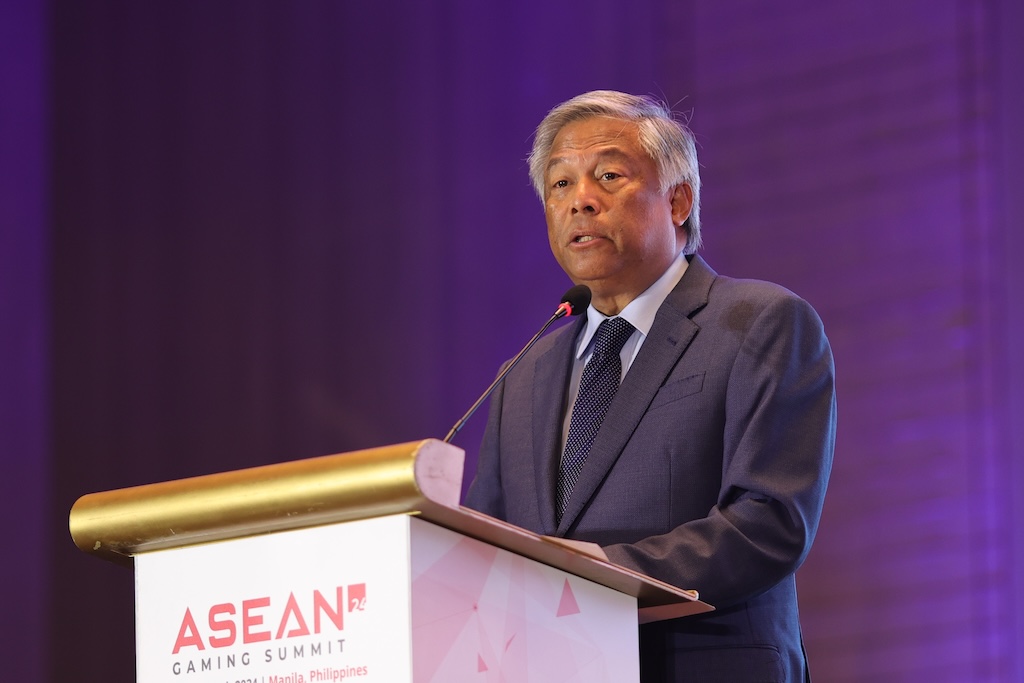
Philippine Senator Sherwin Gatchalian has filed a Senate Resolution aiming to improve scrutiny over cryptocurrency use in the country, in particular linked to scam operations.
The official linked the scam operations with Philippine Offshore Gaming Operators (POGOs), which have been ruled illegal since January 1st.
Philippine Senator Sherwin Gatchalian
Speaking of the scams themselves, Gatchalian noted that “These fraudulent activities are frequently linked to organized cybercriminals including illegal online gaming operators and cryptocurrency transactions that provide perpetrators with an untraceable means of transferring and laundering illicit fund”.
Gatchalian aims particularly to improve monitoring and enforcement measures, with a focus on crypto, stating “The use of cryptocurrencies in these scams also warrants a second look as it poses a significant challenge to regulators and law enforcement due to the cross-border nature of these transactions and its concealability”.
The senator says that further measures are needed beyond the POGO ban and the nation needs to “reassess the use of cryptocurrencies in the country”.
The Philippine National Police Anti-Cybercrime Group reported some eight cases of online love scams in January of this year, with 72 cases in 2024.
One such case involved some 5,000 Australians who were targeted by a love scam center based in the Philippines. Total losses amounted to AU$24 million ($15.3 million) from victims that were mostly male and aged 35 to 80. The victims were targeted using online dating apps.
Gathalian is aiming to improve police and government action to track down scammers across borders, saying that current legislation is insufficient to curtail scam activities.
The Victorian Gambling and Casino Control Commission (VGCCC) has concluded a landmark investigation into underage gambling, resulting in 14 prosecutions, 98 charges, and fines totaling nearly AU$500,000 ($318,850).
The case, which involved a 17-year-old boy with neurodiversity, exposed systemic failures by multiple gambling operators to prevent minors from accessing gambling services between May 2022 and October 2023.
VGCCC CEO Annette Kimmitt
In a press release on Monday, VGCCC CEO Annette Kimmitt AM described the harm caused to the boy’s family as irreparable, commending the mother for coming forward to report the issue. “When industry players are not diligent about complying with their legal and social obligations, the consequences for everyday Victorians can be serious and long-lasting, which is why the VGCCC is determined to hold operators accountable,” Kimmitt stated.
The investigation, which spanned over 2,000 hours, targeted 10 entities, including major operators like Tabcorp Wagering and Australian Leisure and Hospitality Group (ALH).
Tabcorp faces 43 charges and fines of AU$274,000 ($174,728), while ALH was penalized AU$175,000 ($111,597) for 23 charges across five venues. Smaller operators, including hotels and gaming venues, received fines ranging from AU$2,500 ($1,595) to AU$15,000 ($9,566) for breaches of the Gambling Regulation Act 2003.
The final case concluded on February 13th, 2024, with Correct Bet Pty Ltd, operator of the Coburg TAB, fined AU$3,000 ($1,914) and ordered to pay AU$5,500 ($3,508) in costs. Magistrate Hodgson noted the operator’s lack of prior convictions and its implementation of additional safeguards, such as staff training and CCTV monitoring.
Kimmitt emphasized that the case serves as a stark reminder to the gambling industry: “It is a venue’s responsibility to ensure minors do not access a designated gambling area, let alone gamble, no matter how determined or convincing a child might be.”
Good morning. Off from the grey zone. The Financial Action Task Force (FATF) announced that the Philippines is no longer under increased monitoring, recognizing the country’s significant progress in enhancing its anti-money laundering and counter-terrorism financing (AML/CFT) regime. The removal from the grey list marks an important achievement and will boost investor confidence, but the regulatory landscape will likely remain unchanged, a legal expert told AGB. Things are also looking better for Sands China investors, as the Macau gaming operator announced its first dividend in five years, representing a total dividend payout of $260 million.
The Philippines’ removal from the Financial Action Task Force (FATF) grey list marks a significant achievement, enhancing the country’s reputation as a secure market for gaming investments, according to Tonet Quiogue, a legal expert. While this milestone is expected to boost investor confidence, particularly among foreign operators hesitant due to the previous grey list status, Quiogue noted that the regulatory landscape will remain unchanged as the Philippine Amusement and Gaming Corporation (PAGCOR) has already implemented stringent anti-money laundering (AML) protocols.
In 2024, 1xBet achieved significant breakthroughs and successes, solidifying its position in the iGaming industry. The brand secured major partnership deals, received prestigious awards, and showcased its innovations at the world’s leading forums.
Hong Kong-listed International Entertainment Corp. expects to report a loss attributable to its shareholders of no less than HK$90 million ($11.6 million) for 2H24.
This marks a significant increase from the loss of approximately HK$36.1 million ($4.7 million) reported for the same period in 2023, largely driven by elevated operating costs.
According to a filing with the Hong Kong Stock Exchange on Friday, the company attributes the increased loss to several factors, with one of the primary contributors being the rise in general and administrative expenses, mainly due to staff costs, depreciation, and amortisation. These expenses have been incurred for operating and managing the casino, as well as for the development of an integrated resort in Manila, Philippines.
International Entertainment took over the casino operations at New Coast Hotel Manila in May 2024 under a provisional gaming license granted by the Philippine Amusement and Gaming Corporation (PAGCOR) in September 2023.
Additionally, the company has faced higher interest expenses on bank borrowings related to the establishment and ongoing operation of the casino and resort development under the provisional license.
The gaming operator notes that it is still in the process of finalising its interim results for the period. The official interim results are expected to be published on February 27th, 2025.
A week ago, International Entertainment’s subsidiary in the Philippines, New Coast Leisure Inc., signed a PHP1.47 billion ($25.5 million) agreement for the renovation of its New Coast Hotel Manila property.
The renovation contract was signed with Kimberland Construction Inc. on February 14th, 2025. This move is part of the company’s broader efforts to enhance both hotel and casino operations.
The renovation plan includes expanding the gaming space on the ground floor, increasing the number of gaming tables and the number of slot machines. The company is optimistic that these upgrades will drive future revenue growth for the casino.
International Entertainment’s commitment to its integrated resort project in Manila remains strong, with an investment pledge of between $1 billion and $1.2 billion for development.
In 2024, the UAE’s gaming landscape saw significant shifts, with the spotlight firmly on the UAE Lottery, according to a report released by the Dubai Casinos platform.
The report notes that one of the year’s most remarkable trends was the shift in public interest from the General Commercial Gaming Regulatory Authority (GCGRA) to the UAE Lottery.
GCGRA is the federal regulatory body established in UAE to oversee and regulate the commercial gaming and gambling industry. Formed in 2023, GCGRA aims to create a world-class regulatory framework that ensures the integrity, innovation, and responsible operation of gaming activities across the UAE.
Search interest in the GCGRA dropped by 58.5 percent, while searches for the UAE Lottery surged by an astounding 3,100 percent following the granting of the first gaming license to The Game LLC.
This unprecedented increase made the UAE Lottery the biggest winner of 2024, capturing the public’s attention and reshaping the market’s focus.
While physical casinos, such as Wynn Al Marjan in Ras Al Khaimah (RAK) and MGM Dubai, continued to garner steady interest throughout the year, the UAE Lottery’s explosive growth demonstrated a clear shift towards regulated gaming sectors.
Public curiosity about traditional casinos remained moderate, though interest peaked in October following Wynn Resorts’ licensing. The ongoing licensing processes and construction projects signal further momentum for physical casinos in the years ahead.
Additionally, online gambling saw notable growth, increasing by 61 percent in 2024. Though not yet regulated, digital gaming platforms and online casino searches grew steadily, suggesting a continued shift towards virtual experiences. As the GCGRA begins to oversee online gambling, further developments are expected in 2025.
Sands China, a major gaming operator in Macau, has announced its first dividend in five years. The company revealed on Friday that it will pay a final dividend of HK$0.25 ($0.032) per share for the financial year ending December 31st, 2024.
The dividend will be distributed on June 20th to shareholders registered by May 30th.
The decision was widely anticipated by investment analysts. Based on the number of shares outstanding as of January 31st, 2025, the total dividend payout is expected to be approximately HK$2.02 billion ($260 million), according to the company’s statement.
In a separate release, Sands China reported a profit of $1.05 billion for the year ending December 31st, 2024, marking a 51 percent increase from $692 million the previous year. The company also noted that its total net revenues for 2024 reached $7.08 billion, up 8.4 percent from $6.53 billion in 2023.
Net casino revenues totaled $5.35 billion, a 10.4 percent increase compared to $4.84 billion in 2023. This growth was mainly driven by higher table games and slot volumes, reflecting increased visitation across Sands China properties, though it was partially offset by declines in rolling chip win and slot hold percentages.
Sands Chairman Robert Goldstein
In his statement, Chairman Robert Glen Goldstein reaffirmed that the company expects to have largely completed the Londoner capital investment program by the second quarter of 2025. Phase 2 of the transformation of The Londoner Macao includes the renovation of the Sheraton and Conrad hotels, as well as the revamp of the Pacifica casino space into the Londoner Grand Casino.
Goldstein also noted that the company’s ten-year gaming concession, which began in early 2023, has paved the way for significant capital investments in 2024. “We are pleased with the opportunity to further our decades-long commitment to enhancing the tourism appeal of Macao and supporting its development as a global tourism hub,” Goldstein said. “To date, we have invested approximately $17 billion to help Macau diversify its economy and evolve into Asia’s leading leisure and business tourism destination.”
This investment includes over 10,000 hotel rooms and suites, approximately 2.1 million square feet of retail space, and around 1.7 million square feet of MICE (Meetings, Incentives, Conferences, and Exhibitions) capacity.
The Curacao Gaming Authority (CGA) has introduced a new Responsible Gaming Policy aimed at enhancing player protection and regulatory compliance for licensed operators.
The policy mandates strict guidelines to ensure that gambling remains an enjoyable form of entertainment while minimizing risks associated with problem gambling.
The policy covers key aspects such as age verification, self-exclusion mechanisms, deposit limits, and player protection measures. All licensed operators under CGA’s jurisdiction must integrate responsible gaming principles into their platforms, with mandatory compliance checks and ongoing regulatory oversight.
One of the major requirements is the implementation of robust age verification processes. Operators must ensure that no underage players gain access to gambling platforms, using government-issued IDs and secondary verification measures to prevent minors from participating.
Player protection mechanisms include self-assessment tools, behavior tracking, and intervention strategies. Operators must monitor players’ gambling habits, detect problematic behaviors, and take appropriate action, including direct player interactions and potential restrictions.
The policy introduces self-exclusion protocols, allowing players to voluntarily block themselves from gambling activities. Operators must offer multiple exclusion periods, including one-year, three-year, five-year, and lifetime bans. Once activated, self-exclusion measures must take immediate effect, preventing further access to gambling services.
To help players maintain control, the policy mandates deposit limits and reality checks. Players can set daily, weekly, or monthly deposit limits, and any request to increase limits is subject to a mandatory waiting period. Reality check notifications inform players of their gaming duration and expenditure, helping them make informed decisions about their gambling activities.
Advertising and marketing regulations are also a focal point of the policy. Operators are prohibited from targeting vulnerable individuals, including minors and self-excluded players. Marketing materials must not portray gambling as a financial solution or use misleading tactics to encourage excessive betting. Social media influencers and affiliates promoting gambling services must adhere to strict responsible gaming standards.
Operators are required to train their staff to identify and handle problem gambling cases. Employees must recognize signs of gambling distress and be prepared to intervene appropriately, directing players to available support services. Regular reporting and compliance audits ensure that operators uphold responsible gaming commitments.
The CGA has also set strict compliance and regulatory obligations, requiring operators to submit detailed reports on responsible gaming measures. Failure to comply may result in penalties or the revocation of gaming licenses.
The new Responsible Gaming Policy takes effect with a four-month transition period, after which operators will be subject to active monitoring and enforcement. This initiative underscores CGA’s commitment to fostering a fair, safe, and responsible gaming environment for all players.
The Philippines’ recent removal from the Financial Action Task Force (FATF) grey list is a landmark achievement that significantly enhances the country’s credibility as a stable and secure market for gaming investment, according to Tonet Quiogue, a legal expert and founder of Arden Consult.
Tonet Quiogue, a legal expert and founder of Arden Consult
Arden Consult is an advisory firm specializing in regulatory guidance for the gaming and gaming-related sectors. Quiogue has extensive experience helping companies navigate the complex landscape of gaming regulations in the Philippines.
Despite the removal from the grey list, Quiogue emphasized that there would be no immediate changes to the gaming industry’s regulatory landscape, as the Philippine Amusement and Gaming Corporation (PAGCOR) has already implemented robust anti-money laundering (AML) protocols.
Quiogue told AGB that “PAGCOR has already established strong AML protocols, and I expect it will continue to enforce these rules with the same level of scrutiny. The policies and compliance measures are already in place, and the exit from the grey list only underscores the regulator’s effectiveness in implementing them.”
“The industry’s commitment to compliance remains unchanged, but this milestone enhances the Philippines’ credibility as a stable and secure market for gaming investment.”
Tonet Quiogue
PAGCOR Chairman Alejandro H. Tengco
Under the leadership of Chairman Alejandro Tengco, PAGCOR has worked closely with casino operators, junket operators, and online gaming companies to ensure strict adherence to AML guidelines. Quiogue highlighted that PAGCOR’s proactive stance in issuing directives to the industry has played a key role in securing compliance. “PAGCOR issued the most directives to casino operators, both land-based and online, as well as junket operators, aimed at preventing money laundering,” she added.
Although some operators initially viewed these measures as burdensome, Quiogue pointed out that the long-term benefits of maintaining financial integrity have been clear. “Their cooperation was crucial in demonstrating the sector’s commitment to financial integrity, which in turn paved the way for a more stable and investment-friendly gaming environment,” she explained.
Improved investment confidence
The Philippines’ removal from the FATF grey list is expected to have a profound effect on investment, particularly among foreign operators and financial institutions. Prior to this development, international investors, especially those operating across multiple jurisdictions, were cautious about committing to the Philippine gaming market due to concerns about the country’s grey-list status.
“Certain clients and potential investors—particularly foreign operators holding licenses in multiple jurisdictions—were previously hesitant to invest or expand in the Philippines,” Quiogue explained. “The grey-list status was a significant concern, with some investors explicitly stating they would wait until the Philippines was removed before making any commitments.”
With this milestone achieved, Quiogue believes that many investors will now feel more confident moving forward with their plans.
“This milestone will undoubtedly encourage investors to reassess their plans and potentially open new avenues for investment”.
Tonet Quiogue
PAGCOR’s continued role in ensuring compliance
In a statement following the FATF’s decision, PAGCOR Chairman Tengco expressed pride in the role the regulator played in the country’s removal from the grey list. “We are honored to have played a crucial part in this development,” Tengco said. “The public can rest assured that PAGCOR will continue to ensure that all our licensees are compliant with all anti-money laundering rules and regulations.”
Tengco further emphasized PAGCOR’s ongoing commitment to upholding the fight against money laundering and terrorism financing across the gaming industry. “We also commit to sustaining the fight against money laundering and terrorist financing in the entire Philippine gaming industry, including our online gaming operators, land-based casinos, and junket operators,” he added.
A step toward sustaining financial integrity
The FATF’s decision to remove the Philippines from its grey list reflects the country’s significant progress in addressing key strategic deficiencies. In its statement, the FATF praised the Philippines for implementing effective risk-based supervision of Designated Non-Financial Businesses and Professions (DNFBPs), particularly casino junkets, and for improving the use of financial intelligence in AML investigations.
“The Philippines has completed its Action Plan to resolve the identified strategic deficiencies within agreed timeframes and will no longer be subject to the FATF’s increased monitoring process,” the FATF noted.
However, the organization also encouraged the Philippines to continue strengthening its counter-terrorism financing (CTF) measures and to work with the Asia/Pacific Group on Money Laundering to sustain improvements in its financial systems.
Following the successful launch at Palace Casino, ZITRO has announced that Big Bola Casinos has elevated entertainment at its Pedregal venue in Mexico City by introducing the cutting-edge CONCEPT cabinet line and new Zitro games, including Legendary Sword, Triple Charm Journey, and Lucky Vault.
Legendary Sword, a medieval-themed adventure, casts players as noble knights wielding a Magic Sword to achieve Honor and Glory. The “Legendary Sword” Bonus unfolds on a grand 6×5 reel, boosted by features like “Honor” (multiplying wins), “Glory” (awarding extra spins), and the “Magic Sword” itself, which doubles all prizes in its column.
Triple Charm Journey introduces innovative mechanics like “Rise,” which progressively increases wins with each spin during the bonus round; “Collect,” which amasses the values of Link symbols; and “Enigma,” which multiplies its own value and that of select Link symbols on the screen.
In Lucky Vault, players crack open colorful vaults to reveal hidden prizes in the base and free games. During free games unleash features like “Multiplier” (offering Wild Multipliers) and “Bank,” which grants access to Mega, Super, Minor, or Mini jackpots by collecting matching symbols. Four identical Minor/Mini symbols or five identical Mega/Super symbols unlock their respective jackpot values.
“The CONCEPT cabinets and new games have made a huge splash at our Pedregal casino,” said Rafael Blanco, Commercial Director of Big Bola. “Players are captivated by the stunning graphics, innovative gameplay, and premium sound design. We’re thrilled to add Zitro’s latest and greatest to our entertainment lineup again – they’re always a winning choice.”
Zitro’s founder, Johnny Ortiz Viveiros added, “We’re delighted to continue our partnership with Big Bola Casinos. This launch underscores our strong alliance and reflects our dedication to innovation and excellence in the gaming industry.”
According to an announcement by the international watchdog on February 21st, ‘the Philippines is no longer subject to increased monitoring by the FATF’.
This is attributed to the jurisdictions’ ‘significant progress in improving its AML/CFT (anti-money laundering/counter financing of terrorism) regime’.
The FATF indicates that enhanced nine principal areas, including improving its AML/CFT controls to mitigate risks associated with casino junkets as well as ‘demonstrating that effective risk-based supervision of DNFBPs (designated non-financial businesses and professions) is occurring’.
The Philippines was also praised for its work on ‘demonstrating an increase in the use of financial intelligence and an increase in ML (money laundering) investigations and prosecutions in line with risk’.
A further improvement was ‘applying cross-border measures in all main international sea/airports, in line with risk’.
Despite the upgraded situation, the Philippines has been asked to continue to work with the Asia/Pacific Group on Money Laundering (APG) ‘to sustain its improvements in its AML/CFT system’.
The removal from the FATF’s grey list was one of the priorities of the government, including the Securities and Exchange Commission (SEC) the Philippine Amusement and Gaming Corporation (PAGCOR), and the Department of Justice (DOJ) – with the nation’s president also weighing in on the issue.
Hopes were for an exit of the grey last back in October of 2024, during the FATF’s plenary session, however the official removal from the list only took place after an on-site visit from the FATF’s Asia/Pacific Joint Group this year. A subsequent plenary session confirmed the nation’s efforts.
“The plenary agreed to take the Philippines off the grey list in recognition of the completion of their action plan, which was agreed in June of 2021. Amongst other efforts and results, the Philippines is now actively combating the risk of dirty money flowing through casinos in the country,” stated FATF President Elisa de Anda Madrazo.
“The Philippines is expected to sustain the implementation of the reforms and importantly to do so in a way that is consistent with the FATF standard. The country will continue to work with the Asia-Pacific Group (APG) on money laundering and will start preparing soon for their next evaluation,” noted Madrazo.
The Philippines is facing a new assessment in 2027, “which means that they will soon start preparing. And of course, that will be an opportunity for the FATF to verify that the measures are sustained and still in place,” stated the FATF official.