Push Gaming has announced a major step in its European footprint by entering the Bulgarian market through an exclusive deal with Kaizen Gaming’s Betano brand, marking a milestone in its expansion into globally regulated markets.
For 12 weeks, tier-one operator Betano will have exclusive rights to Push Gaming’s portfolio in the country as it brings the studio’s hugely popular titles to Bulgaria for the first time.
Push’s extensive back catalogue of major hits, including Razor Shark, Razor Returns, Jammin’ Jars, Big Bamboo and Wild Swarm, are now ready to be enjoyed by players in Bulgaria, with more recent releases due to roll out imminently.
The launch enhances Push’s relationship with Kaizen Gaming, which has already seen success with its award-winning content in Greece, Denmark, and Brazil.
Agreements with over 15 direct integration partners have been achieved in 2024, and the supplier’s significant growth will be bolstered by several more announcements in the remainder of Q4.
Fiona Hickey, Chief Business Development Officer at Push Gaming, said: “Bulgaria is a territory we’ve been working on for some time, so it’s particularly pleasing to launch there with such an established and respected name as Betano. We know the strength of our product, and allied with Kaizen Gaming’s prominent positioning across regulated markets, we can make the most of our regional entries. They’re a fantastic strategic partner to work alongside, which breeds exceptional confidence that every launch period will perform strongly.”
Evangelos Dedoulis, Director of Product, Gaming and Rewards at Kaizen Gaming, added: “Push Gaming is responsible for some of the finest games on the market, and as such, we have been eagerly anticipating bringing them to our Betano platform in Bulgaria too. In other markets where we have integrated Push Gaming’s titles, the reception from our audience has been exceptional, and we expect the same in this case too.”
RubyPlay, an innovative B2B iGaming development studio, has announced a major step in its international market expansion after being granted an online gaming license by the Alcohol and Gaming Commission of Ontario (AGCO).
Meeting the AGCO’s regulatory standards, the provider is now able to offer its innovative portfolio of games to licensed operators in Canada’s second-largest province.
Players in Ontario will soon gain access to some of RubyPlay’s award-winning titles, including Immortal Ways® Diamonds, Mayan Cache and Diamond Explosion 7s, underpinning the company’s commitment to expanding into regulated markets worldwide.
The license is the latest development in RubyPlay’s ambitious international growth strategy, opening up new opportunities for the studio and strengthening its foothold within the North American iGaming market.
The news follows the provider’s recent launch into the US with Rush Street Interactive and FanDuel in New Jersey, signalling an exciting period of expansion for RubyPlay in the region as it solidifies its position and continues to enter new territories.
Dr. Eyal Loz, Chief Product Officer at RubyPlay, said: “Our goal at RubyPlay is to bring our expansive portfolio of unique and innovative games to as many players as possible around the world. We’re therefore thrilled to have obtained our Ontario license and build our reach in Canada.”
“RubyPlay has an outstanding track record empowering our partner’s brands through our innovative and time relevant product offering. We believe that North America will be a strong growth engine for us, where building and maintaining a strong brand is key.”
The implementation of a 28 percent Goods and Services Tax (GST) has significantly affected the real-money gaming sector in India’s online gaming industry, according to Ranjana Adhikari, a partner at IndusLaw specializing in technology and gaming law.
“The industry has raised its concerns at various fora regarding higher operational costs, lower margins, and dwindling investments,” Adhikari stated, highlighting that many gaming platforms are absorbing the GST burden by offering cashback to players, leading to considerably lower profit margins.
The GST framework categorizes deposits in online money gaming as taxable under “specified actionable claims,” following amendments made by the GST Council in August of 2023.
Adhikari explained that the valuation mechanism prescribes that the total amount deposited with online gaming operators is subject to taxation.
“However, industry stakeholders contest this, arguing that the tax should apply to gross gaming revenue (GGR) or the platform fee, rather than the total amounts deposited by end-users.” This contention reflects a fundamental disagreement over how the tax should be assessed and who should bear its burden.
The implications of this valuation approach are significant. By taxing the total deposits, online gaming operators face higher tax liabilities, which they often pass on to players, thus affecting overall participation in the gaming ecosystem. This has raised alarms about the sustainability of the industry and its ability to attract investment.
Legal proceedings and Supreme Court hearings
The contentious issue of GST valuation is currently before the Supreme Court of India, with a crucial hearing scheduled for March 2025 that could clarify the valuation and rate of GST for the sector.
Adhikari emphasized the importance of this upcoming hearing, stating: “This could be instrumental in determining how the industry operates moving forward, especially in terms of compliance and profitability.“
Recent GST Council meetings have provided no relief for the industry. In its 53rd and 54th meetings, held on June 22nd and September 9th, 2024, respectively, no significant changes to the 28 percent levy were discussed.
Ranjana Adhikari, Partner at IndusLaw
During the 55th meeting on December 21, 2024, officials maintained that the industry was “settling in” to the new tax regime. Moreover, the Council mandated that online gaming operators record the state of unregistered recipients on tax invoices, complicating compliance and increasing administrative burdens.
Adding to the industry’s challenges, the Directorate General of GST Intelligence (DGGI) has flagged the online gaming sector as high-risk for GST evasion, identifying around 658 non-compliant offshore platforms.
“This designation puts additional pressure on compliant operators, who must navigate an increasingly complex regulatory environment,” Adhikari noted.
In response to the rising concerns about compliance, the Union Ministry of Finance has appointed a nodal officer, the Additional/Joint Director of the DGGI, to oversee the blocking of non-compliant entities under the IGST Act.
This move reflects the central government’s commitment to enforcing GST regulations and holding offshore operators accountable for their tax obligations.
Interim relief from the Supreme Court
Amid these pressures, the Supreme Court recently issued an interim order on January 10th, 2025, staying show-cause notices issued by the DGGI to several online gaming companies, which collectively face tax demands exceeding INR1.12 lakh crores ($130 million).
“This interim relief prohibits coercive action by tax authorities while we await a final determination on these issues,” Adhikari explained. The stay ensures that the show-cause notices remain valid until the court resolves the underlying legal questions.
The Supreme Court has consolidated all pending cases and scheduled them for a comprehensive hearing on March 18th, 2025. Adhikari cautioned that “it would be premature to comment on the likely verdict and its potential fallout at this stage.”
The legal proceedings will involve both sides presenting their arguments, and the outcomes could have profound implications for the future of GST valuation in India’s online gaming industry.
As the industry awaits the Supreme Court’s decision, stakeholders are keenly observing the legal landscape. The resolution of these issues is crucial for restoring investor confidence and ensuring the long-term viability of the online gaming sector in India.
“The gaming industry is at a crossroads, and the decisions taken in the coming months will significantly impact its growth trajectory.”
Altenar, a leading turnkey sportsbook provider, has announced a new agreement that will see its sportsbook used to expand the sports betting offering of leading iGaming group Immense, formerly known as Videoslots.
The partnership will see Altenar’s award-winning sportsbook used globally by popular casino brands Mr Vegas, Videoslots, MegaRiches and more.
Based in Malta, Immense Group provides leading online casino sites to players around the world with more than 12,000 games from hundreds of the industry’s leading game providers. Recently the operator launched its first sports-led brand called DBET.com which is intended to be an international challenger on the online sportsbook market.
Altenar is a leading sportsbook provider with its innovative features, customisable design and premium data feeds allowing operators to grow their brands in highly regulated and competitive markets.
The agreement with Immense Group is an exciting collaboration for both companies and continues Altenar’s focus on helping casino operators expand their operations when it comes to sports betting.
Sam Hill, Sales Director at Altenar, said: “We’re delighted to be entering into this long-term partnership with Immense Group and their various brands. We look forward to enhancing their existing sports offering as they look to grow their position across many regulated markets. Altenar is ideally placed to support casino-led brands by adding our managed sportsbook vertical and executing their specific trading strategy for them, and we can’t wait to get going.”
Klas Winberg, Chief Commercial Officer at Immense, said: “We conducted an extensive review of existing sportsbook providers and Altenar came out looking very strong on all parameters. I am happy to say that they have not disappointed. From onboarding, integration to launch, all has worked seamlessly. We expect that the Altenar sportsbook will be a very strong contributor, if not the biggest, for growth this year. So far we are very happy with what we see.”
The Board of Directors of Belle Corporation approved a cash dividend of PHP0.06 ($0.001) per share last Friday.
The decision was made in light of the company’s resilient business performance throughout last year.
According to a filing with the Philippine Stock Exchange on Monday, the total payout, amounting to approximately PHP582 million ($10.1 million), will be distributed to common shareholders on March 21st, 2025. As of March 7th, 2025, shareholders of record will be entitled to receive the dividend.
The company achieved a 5 percent increase in consolidated revenues last year, rising to PHP5.89 billion ($101.8 million) from PHP5.6 billion ($96 million) in 2023. Additionally, consolidated recurring net income grew by 7 percent, reaching PHP2.4 billion ($42.2 million) compared to PHP2.3 billion ($39.4 million) the previous year.
Belle’s consolidated net income for 2024 remained stable at PHP2.4 billion ($41.9 million), slightly up from PHP2.42 billion ($41.8 million) in 2023. Despite this modest increase, the company’s financial stability remains solid.
Armin Raquel Santos, President and Chief Executive Officer of Belle Corporation, remarked, “In 2024, the Belle Group remained profitable due to the resilience of our businesses, strategic focus and healthy balance sheet. Relying on our tried and tested business models, we worked with our management teams, employees and business partners to provide the finer things in life to our loyal patrons and customers.”
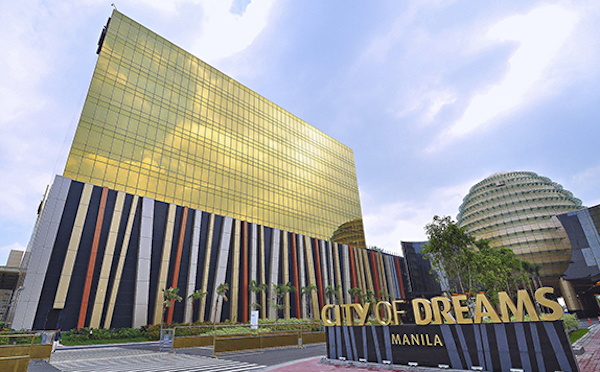
Belle Corp is the parent company of Premium Leisure Corp, which operates City of Dreams Manila.
7777 gaming has announced an exclusive partnership with WA.Technology to expand its presence across emerging markets in Africa and Latin America.
This collaboration combines 7777 gaming’s extensive portfolio of innovative online casino games with WA.Technology’s comprehensive iGaming solutions, tailored to the specific needs of operators in these regions.
WA.Technology is a full-spectrum iGaming provider that offers online casinos, sportsbooks, fantasy sports, and affiliate business solutions. Its expertise spans turnkey solutions and individual products, empowering operators to launch or scale their businesses efficiently in emerging markets.
Elena Shaterova, Chief Commercial Officer at 7777 gaming, said: “The collaboration with WA.Technology is a pivotal step in our expansion strategy for Africa and Latin America. By joining forces with a provider as versatile and innovative as WA.Technology, we aim to deliver premium gaming experiences to operators and players in these growing markets. Together, we’re shaping the future of iGaming in these regions.”
Laura Festen, Director of Casino at WA Technology, highlighted the partnership’s value: “7777 gaming enables operators to launch and scale effectively in competitive global markets by catering to a broad player base with quirky, original concepts. The studio creates captivating and reliable content, positioning it as a versatile choice for operators aiming to expand player engagement. Thus, we are extremely excited about the newly formed partnership.”
7777 gaming’s portfolio includes over 150 titles, spanning multiple genres and formats, designed to deliver diverse and immersive gaming experiences. From fan-favorite slots like Candy Anyways and Medusa The Wild Temple to instant-win games like Mayan Gold and classic table games like European Roulette and Blackjack, the company’s offerings cater to players with varied preferences. All games are supported by HTML5 cross-platform technology, ensuring seamless gameplay across desktop and mobile devices.
The partnership promises to unlock new opportunities for operators in Africa and Latin America, offering them cutting-edge games and technology designed to enhance player experiences and drive growth.
Delta Corp has finalized the sale of its online gaming subsidiary, Deltatech Gaming (which operates under the Adda52 brand), to Head Digital Works (A23 brand) for Rs4.91 billion ($57 million) in a cash-and-stock deal.
The deal marks a significant shift for Delta Corp, India’s only listed casino operator. This strategic move strengthens Head Digital Works’ market position while enabling Delta Corp to reallocate capital toward its core operations.
As part of the transaction, Head Digital Works will acquire a 51 percent stake in Deltatech Gaming, followed by a full merger of the two entities. In exchange, Delta Corp will secure a 5.7 percent stake in Head Digital Works, allowing it to maintain a foothold in the rapidly growing digital gaming sector.
In 2016, the Indian gaming operator acquired Adda52’s parent company, Gauss Networks, for approximately Rs1.5 billion ($17 million) and had previously attempted to acquire Head Digital Works, although the latter deal did not materialize.
The sale of Deltatech Gaming comes shortly after Delta Corp divested its Nepal business to Ability Games in February 2024 and announced the demerger of its hospitality and real estate businesses into Deltin Hotel & Resorts and Delta Penland in December 2024.
The transaction provides Delta Corp with a much-needed capital infusion amid challenging market conditions. The company reported a 3.5 percent year-on-year increase in net profit in the third quarter of FY25, although its revenue from operations declined by 7.5 percent.
Delta Corp’s market capitalization has also been under pressure, dropping to below Rs30 billion ($346 million) from around Rs90 billion ($1.04 billion) in 2022, primarily due to government tax demands and broader stock market corrections. The deal is expected to stabilize operations and provide liquidity to navigate these challenges.
For Head Digital Works, majority-owned by Canadian private equity firm Clairvest Group, the acquisition represents a strategic consolidation in the online gaming sector.
However, the gaming industry continues to face regulatory hurdles, with a batch of petitions challenging over Rs1 trillion ($11.53 billion) in tax demands set to be heard by the Supreme Court in May 2025.
Investment bank UBS projects that Sands China’s dividend per share (DPS) could rise to HK$1.0 ($0.13) in FY25, offering a yield of around 6 percent.
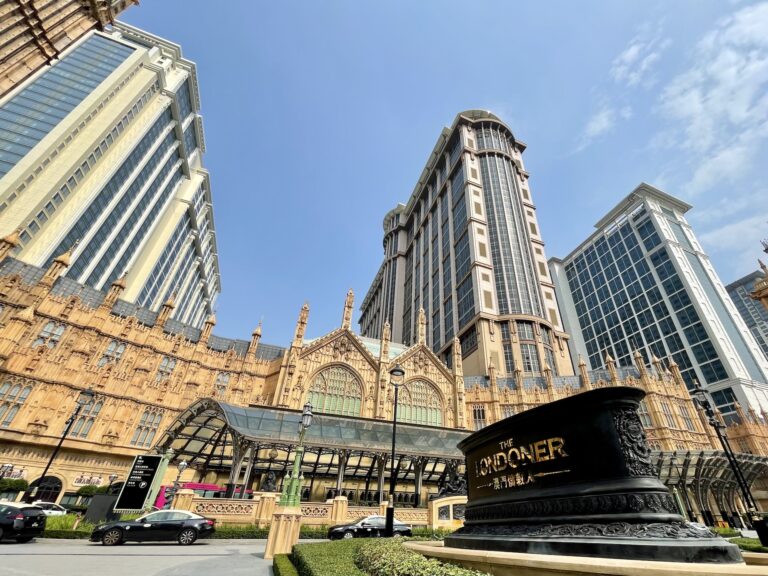
This growth is expected to be driven by the ongoing expansion of the Londoner Phase 2 and anticipated market share gains. By FY26, Sands’ DPS could reach HK$1.5 ($0.19), which represents 9 percent yield, marking a significant rebound compared to the pre-COVID average yield of 4 percent.
In an investment memo released after the company announced its dividend payment resumption last Friday, UBS commented that Sands China had made an early move in its recovery. The company announced a full-year dividend of HK$0.25 ($0.032) per share for FY24. This marks Sands’ first dividend payment since the COVID-19 pandemic, signaling a positive outlook for shareholder returns.
The announced dividend, offering a yield of approximately 1.5 percent, exceeded consensus, which had anticipated a resumption of dividends around mid-2025. The payout represents about 25 percent of earnings per share (EPS) and 30 percent of free cash flow (FCF) for FY24, reflecting the company’s strong financial health moving forward.
According to checks by AGB, the market responded positively to the news, with Sands China’s shares jumping 5.24 percent on the first trading day after the dividend announcement. Other Macau gaming operators saw gains as well, with Galaxy Entertainment—who resumed dividend payments a year ago—rising by 4.41 percent. Other gaming concessionaires saw their stock prices increase by 1.48 percent to 3.72 percent, reflecting investor confidence in the sector’s ongoing recovery.
Morgan Stanley, which had expected a more conservative dividend of HK$0.20 ($0.026) per share for FY24, noted that the HK$0.25 ($0.032) dividend was in line with their forecast but lower than some investors’ expectations of HK$0.50 ($0.064) per share.
The brokerage expects Sands to increase its DPS to HK$0.70 ($0.09) in 2025, with interim and final dividends of HK$0.30 (0.039) and HK$0.40 ($0.051), respectively, yielding 4 percent. If Sands meets Morgan Stanley’s more bullish projection of HK$1.0 ($0.13) per share in 2025, the yield would climb to 6 percent, the highest in Macau’s gaming sector.
In the past, Sands paid an annual dividend of HK$1.99 ($0.26) per share regularly between 2014 and 2018. The market anticipates the company will return to similar levels as EBITDA recovers to pre-COVID levels, which could happen by 2027 or 2028. At that point, the dividend yield could reach as high as 12 percent, based on the current share price.
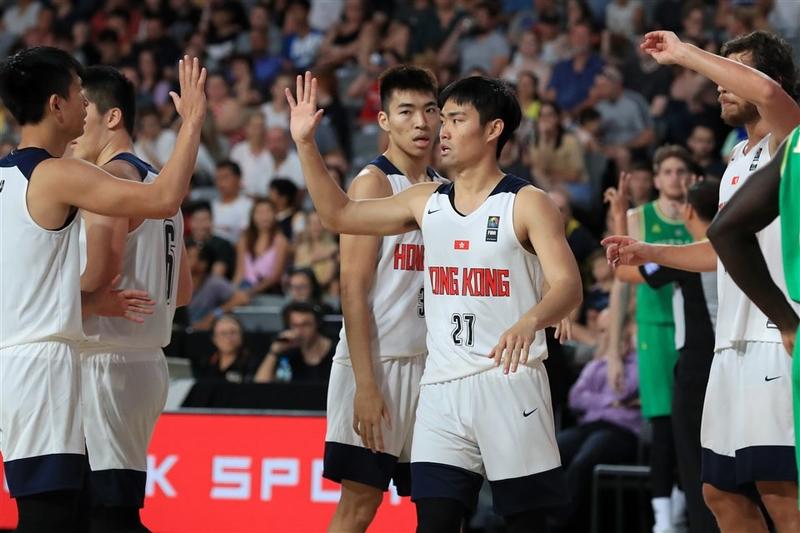
Hong Kong’s government is considering legalizing basketball betting as part of its strategy to address the city’s growing fiscal deficit, which is estimated at nearly HK$100 billion ($12.9 billion).
If implemented, the move could generate substantial revenue, potentially adding over HK$26 billion ($3.3 billion) in government income, based on the 50 percent duty currently levied on football betting.
This development was first reported by the South China Morning Post on Monday, just two days before Financial Secretary Paul Chan Mo-po’s annual budget speech.
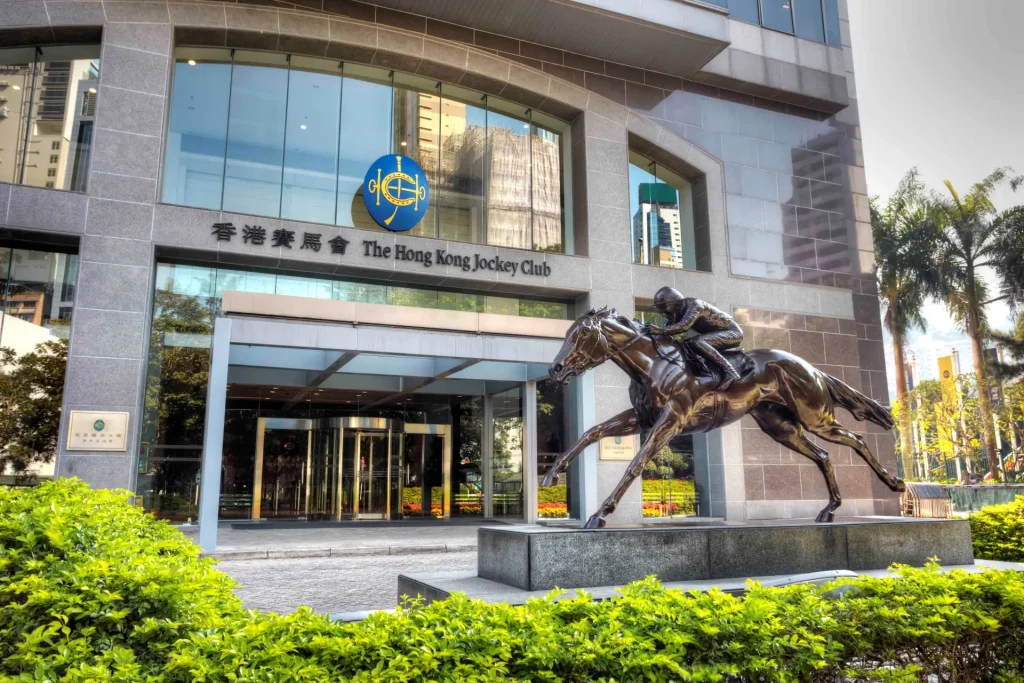
According to sources, the government is considering expanding the Hong Kong Jockey Club’s (HKJC) betting offerings to include basketball, thus increasing revenue from betting duties.
As reported earlier by AGB, the city’s deepening fiscal shortfall has led to growing calls for the expansion of legalized sports betting. Key stakeholders have advocated for new measures to boost government revenue, with a particular focus on adding more sports options to the betting menu.
The Hong Kong government is set to unveil its new budget on February 26th (Wednesday), a plan that has already attracted considerable public interest. Among the proposals is a suggestion from Heung Yee Kuk, a council representing the New Territories’ interests, calling for the legalization of basketball, snooker, and tennis betting. This request echoes previous calls by lawmaker Adrian Ho.
Winfried Engelbrecht-Bresges, Chief Executive of the Hong Kong Jockey Club, has also expressed support for NBA betting, should the government approve it. He emphasized the significant potential of legalizing basketball betting to capture a large share of the current illegal betting market. Engelbrecht-Bresges estimates that up to 60 percent of the 150,000 Hong Kong punters currently engaged in illegal basketball betting could shift to legal platforms.
The surge in illegal sports betting over the past five years has been largely driven by digitalization and the rise of cryptocurrency, with many punters turning to offshore accounts, particularly during the COVID-19 pandemic. Engelbrecht-Bresges reports that approximately 560,000 Hong Kong residents used illegal bookmakers last year, with 100,000 to 150,000 of them betting on basketball. Legalizing basketball betting could redirect many of these bettors to the HKJC, reducing the influence of illicit platforms.
The illegal sports betting market in Hong Kong is estimated to have a turnover of around HK$350 billion ($45 billion), with basketball accounting for approximately 15 percent of that total. If legalized, basketball betting could generate an estimated turnover of HK$52.5 billion ($6.7 billion), making it comparable to football betting revenue within the HKJC.
However, Engelbrecht-Bresges cautioned that significant infrastructure investment would be needed to establish basketball betting. He estimated the setup costs could range from HK$1.5 billion (US$191.7 million) to HK$2.5 billion ($319.6 million). Additionally, he predicted that the legislative process to legalize basketball betting could take up to 18 months, similar to the timeline for the introduction of football betting legislation.
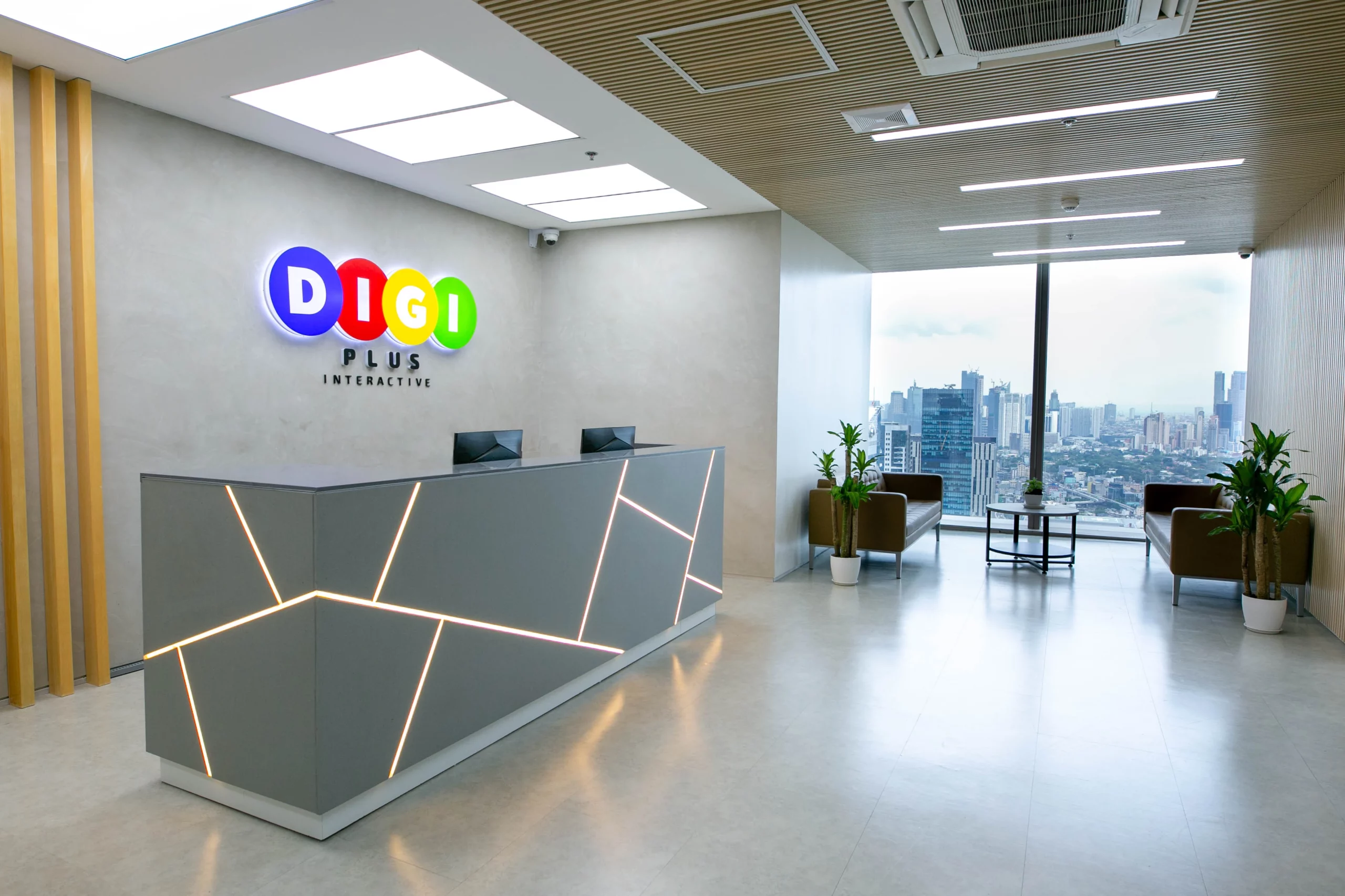
Digital entertainment group DigiPlus Interactive Corp has announced that it has secured a spot on the UK’s Financial Times Stock Exchange 100 Index (FTSE) All-Cap Index and Total-Cap Index.
According to an announcement on social media, the changes take effect at the close of March 21st of this year.
The company noted that the company has ‘advanced from the FTSE Microcap Index in 2024, marking a significant step in its market positioning’.
In February of 2024, the company announced that it was going to be included in the Microcap segment of the FTSE Global Equity Index Series, with the group’s President Andy Tsui noting at the time that the inclusion was “a testament to our commitment to shareholder value and team dedication, reinforcing our robust business model”.
The inclusion was aimed at increasing the company’s visibility as well as its investor base.
DigiPlus has been prominent in the news recently, after announcing it would begin its Brazilian gaming operations with sports betting, with activities expected to launch by the end of the year.
The group also recently clarified that a new capex allocation of PHP3 billion ($52 million) for 2025 for expansion plans does not include funding for potential new investments in other markets, but does include investments in its Brazil operations. The company had already allocated PHP660 million ($11.4 million) to cover initial costs – such as licensing fees, capitalization, financial reserves and other operational expenses for the first three months of its operations in Brazil.