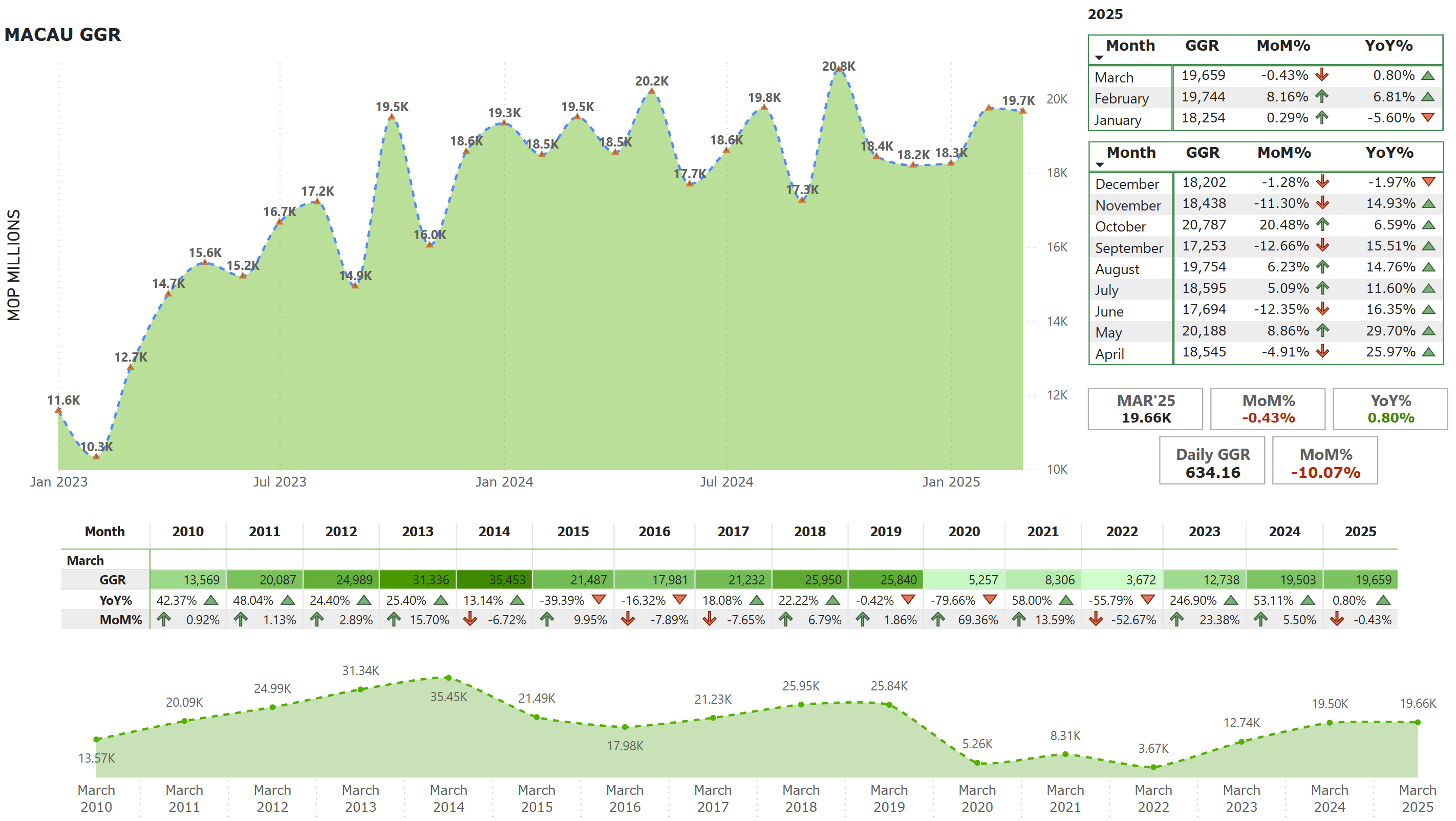
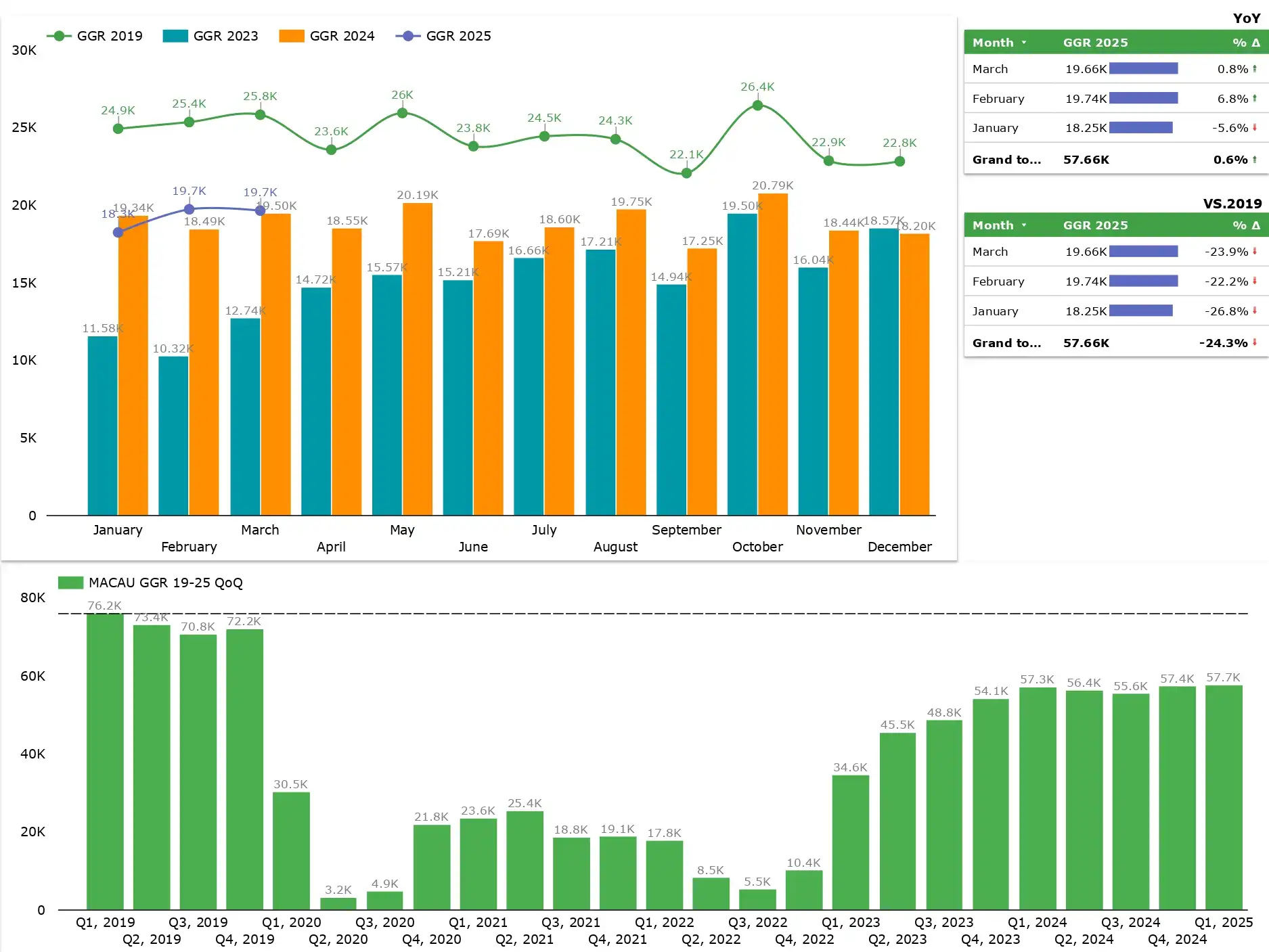
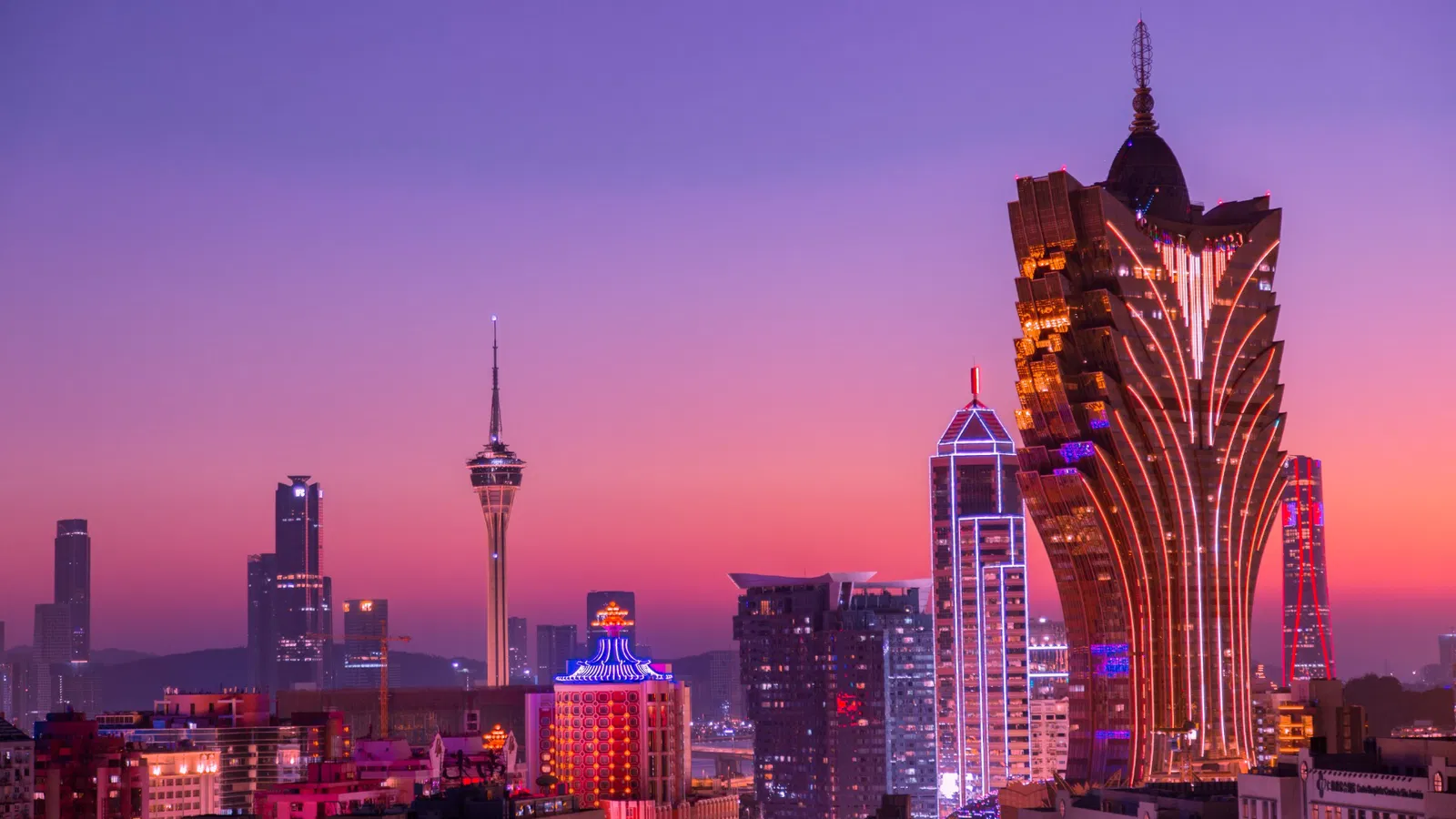
Macau’s gross gaming revenue in March amounted to MOP19.66 billion ($2.46 billion), representing an annual increase of 0.8 percent.
March was largely expected to see slower business due to the period lacking any public holidays. It’s also typically considered a low season as it follows the Chinese New Year period.
According to data released by the local regulator, the Gaming Inspection and Coordination Bureau (DICJ), the March figure represents a 0.4 percent decrease from February’s GGR, despite February having three fewer days.
For the first quarter of 2025, Macau’s casino GGR reached MOP57.66 billion ($7.20 billion), up 0.6 percent from last year. However, this figure remains 24.7 percent lower than the first quarter of 2019, which was MOP76.15 billion ($9.46 billion).
Analysts from Citigroup had predicted that yearly GGR growth for 2025 would rest anywhere between 4 percent and 9 percent.
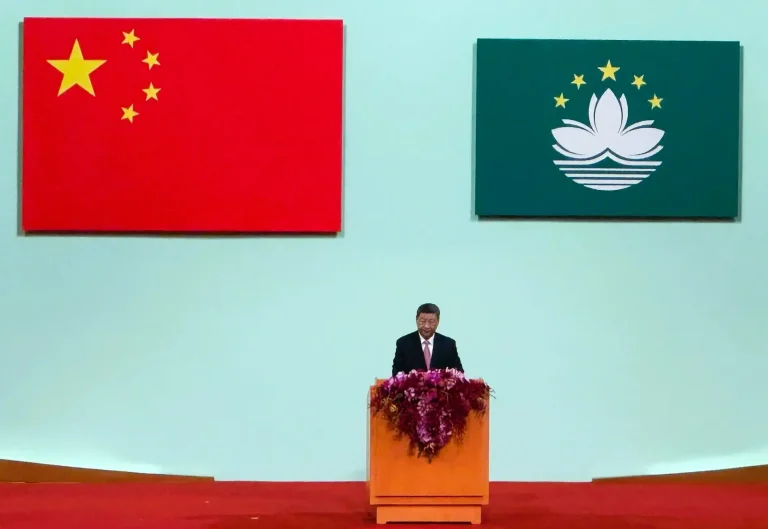
Good Morning: National Security. A top focus for China and consequently for Macau. Changes to Macau’s gaming legislation focused on national security could raise problems, however, potentially leading to increased oversight of gaming operators and decreased flexibility in their operations. Speaking of legislation, Thailand could see its entertainment complex bill debated by April 9th, confirming the government’s confidence in going ahead with its casino plans. Meanwhile, results continue to pour in from across the board, with both ups and downs.
What you need to know
Macau’s gaming industry is undergoing a significant transformation with the prioritization of national security in its legal framework: legal analysis.
Changes in the legal framework for Macau’s gaming industry could raise significant concerns for gaming operators, including decreased flexibility and increased oversight. A top lawyer indicates that Macau’s gaming legislation is focusing more on national security than in the past, potentially raising concerns over cybersecurity and issues for United States-linked companies.
Macau’s gaming industry is undergoing a significant transformation with the prioritization of national security in its legal framework, a recently published legal analysis points out.
According to lawyer Bruno Ascenção in an article titled ‘Macau’s gaming law: when national security trumps the house’, published at OBSERVARE – the academic research center for International Relations studies at Universidade Autónoma de Lisboa – this shift, highlighted by the 2022 amendments to the Macau Gaming Law, is expected to have far-reaching implications for the region’s socioeconomic and political landscape.
In the study, the lawyer argues that the original Macau Gaming Law, enacted in 2001, aimed to establish Macau as a “major player in the global gaming industry” and focused on ensuring “fair and honest operations”, promoting tourism, and protecting the region’s economic interests.
However, according to Ascenção, the amended law, driven by concerns over national security, places this principle above all other objectives.
“A brief comparison with the original 2001 draft shows, among others, the introduction of the concept of national security, which has become recognized as the primary public policy objective of the amended Macau Gaming Law”, the study signals.
For the lawyer, this signifies the government’s commitment to preventing the gaming sector from becoming a source of instability.
Key concerns and implications
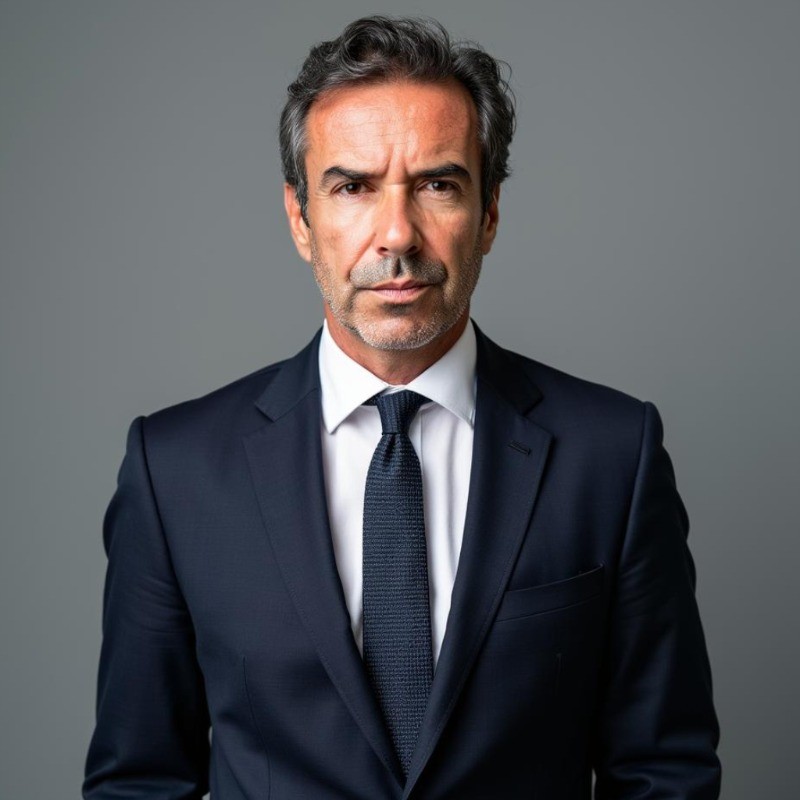
Bruno Ascenção, lawyer
The study concludes that Macau’s ability to balance national security with economic growth and social well-being will be crucial in determining its future as a leading global gaming destination.
“The Macau government is actively pushing for diversification into sectors like healthcare, finance, technology, and culture, considered essential for sustainable economic growth and resilience against external shocks”, Ascenção adds.
The study suggests that if potential investors perceive the regulatory environment as unstable or overly politicized, they may seek opportunities in more favorable jurisdictions. This could lead to a contraction in the gaming sector and a decline in vital tax revenues.
Furthermore, the prioritization of national security may result in increased government oversight and control over the gaming industry, potentially limiting the autonomy of casino operators.
The emphasis on national security brings new concerns, including cybersecurity risks and potential political risks tied to Sino-American relations. The handling of vast amounts of sensitive customer data by casinos raises the specter of cyberattacks and espionage.
The revised law also reflects China’s broader focus on national security, particularly concerning capital outflows. “The Chinese government views illegal capital cross-border flows not only as an economic issue but also as a significant national security risk,” the study notes.
As national security becomes a priority, increased government oversight and control over the gaming industry is anticipated. This transition may result in a more centralized decision-making process, limiting the autonomy of casino operators.
Such constraints could hinder their ability to adapt swiftly to market changes, potentially stifling innovation and growth within the sector.
For Ascenção, the implications of these regulatory shifts are significant, with the potential to impact not only foreign investment but also the overall health of the gaming industry.
Hong Kong-listed LET Group has indicated that it is expecting to record a loss amounting to approximately HK$215.6 million ($27.71 million) for 2024, compared to a profit of HK$58.7 million ($7.54 million) for 2023.
The group attributes the expected loss to increased expenses and the dissolution of a joint venture. In December of 2024, the group dissolved Gold Yield Enterprises, which was engaged in the Hoiana integrated resort in Vietnam.
The group indicated that the trading in its shares will continue suspended and that the dispatch of the company’s annual report for 2024 will be delayed until the end of June.
Trading in the company’s shares has been suspended since February 14th, 2024.
Meanwhile, the group’s subsidiary Summit Ascent Holdings announced that it is expecting to record profit of HK$38 million ($4.88 million) for 2024, reversing a loss from 2023. The group attributes the profit to an increase in revenue from gaming and hotel operations of 12 percent, totaling approximately HK$414.5 million ($53.28 million).
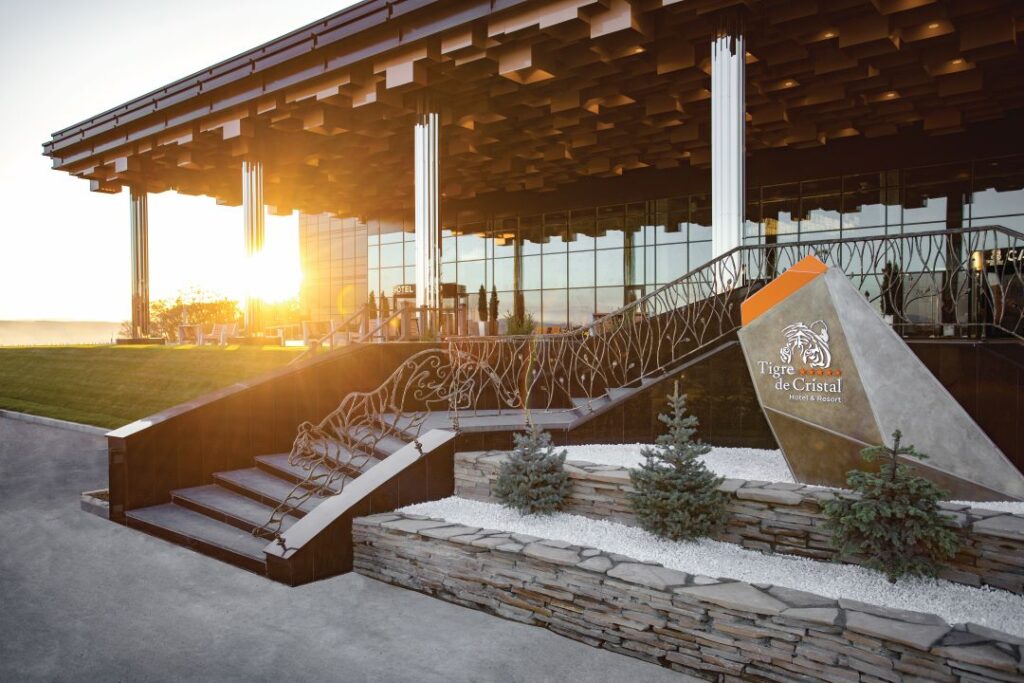
The group further notes this is due to ‘outstanding performance in mass table business’. The group operates the Tigre de Cristal hotel and casino in Vladivostok, Russia. Trading in shares of Summit Ascent also continues suspended, having been suspended at the same time as LET’s.
Electronic gaming product distributor Asia Pioneer Entertainment (APE) returned to profit in 2024, registering a gain of HK$3.76 million ($483,300) compared to a loss of HK$1.9 million ($244,000) in 2023.
The group attributes the profit to a 70.9 percent increase in its revenue, to approximately HK$50.75 million ($6.52 million).
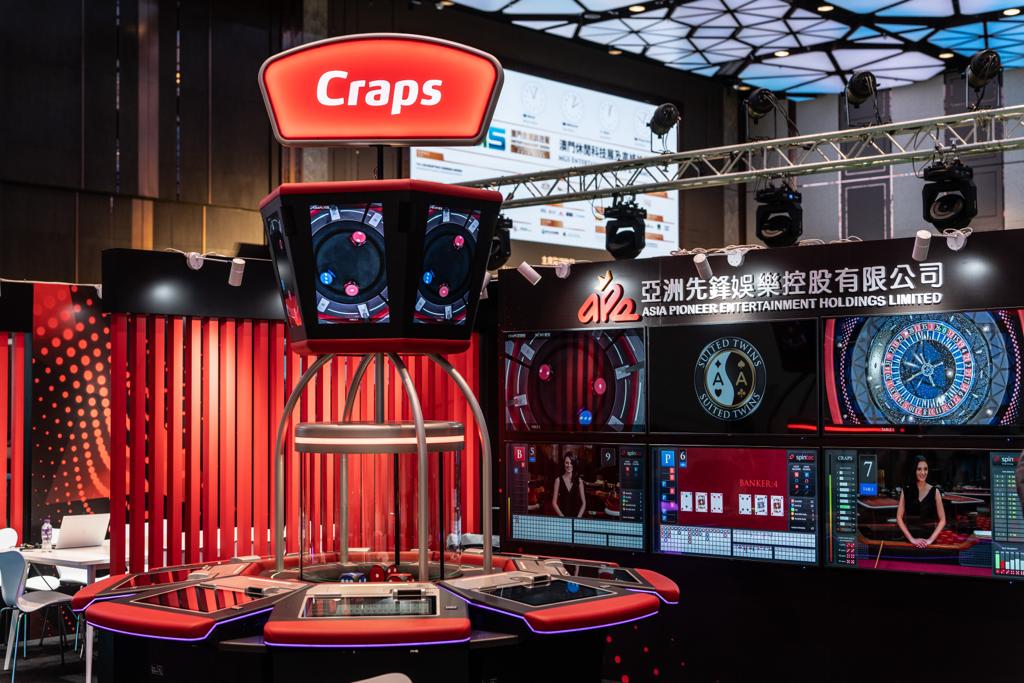
The majority of the group’s revenues and profits were derived from its electronic gaming equipment (EGE) business, driven by casino customer orders mainly from Macau.
Total revenue from the EGE business in 2024 was approximately HK$48.5 million ($6.23 million), an increase of about 77.3 percent yearly. The revenue from the technical sales and distribution of EGE amounted to HK$38.97 million ($5 million), a yearly increase of 178 percent. The group also derived revenue of HK$8.77 million ($1.13 million) from its consultancy and technical services segment, a decrease of approximately 25.6 percent.
As measured by the number of seats, 180 seats were sold for four electronic gaming machines, down by 93 percent yearly. The number of ETG seats sold totaled 176, a 214 percent yearly rise.
By geographical market for EGE sales and distribution, Macau continued to dominate, with revenue of HK$43.26 million ($5.56 million). This is a significant increase compared to the HK$26.31 million ($3.38 million) registered in the same market in 2023.
Malaysia became the group’s second highest performing market, bringing in HK$6.93 million ($890,700) in revenue.
Speaking of the results APEC chairman Allen Tat Yan Huie noted that: “We expect this resurging growth to continue in 2025 and beyond as casinos continue to strengthen their financial positions […] Strategically, the Group continues to seek opportunities to grow our overall business. We believe the gaming industry as a whole has ample room for growth. We believe the Group can leverage off its Macau SAR background and gaming industry experience to expand its business for our Shareholders”.
The Chairman also noted “We hear of new casino opportunities in Abu Dhabi and Thailand in the future”.
ZITRO, a global leader in the gaming industry, has announced that it has obtained ISO 14067:2019 certification regarding its Product Carbon Footprint. This certification recognizes the company’s continuous efforts to reduce its carbon footprint throughout the entire life cycle of its products.
Since 2021, the company has had a greenhouse gas (GHG) management system certified under the ISO 14064-1 standard, which allows it to quantify and improve its CO2 emissions. With the attainment of ISO 14067, Zitro takes a step further, focusing its efforts on quantifying and communicating the specific carbon footprint of its products.
This certification validates the accurate measurement of each product’s environmental impact and allows for the definition of more ambitious and specific improvement objectives within its value chain.
“Obtaining ISO 14067 certification is an important step in our commitment to sustainability,” said Marta Cuesta, VP of Product and Development at Zitro. “We are aware of the environmental impact that our industry can have, and we feel responsible for leading by example, adopting practices that benefit not only our customers but also the planet.”
Yggdrasil, a leading provider of online gaming content and technology solutions for the iGaming industry, has boosted its UK presence after partnering with the iconic gambling brand Bally’s in a deal that has seen the provider’s full slot offering go live in the market.
Bally’s UK stable includes several major brands, including Virgin Games, Jackpotjoy, and Bally Casino.
The operator’s customers can now play recent hits and Yggdrasil favourites, such as the popular Vikings series, as well as enjoy its market-leading Game Engagement Mechanics (GEMs), including DoubleMax™, found across its portfolio.
Yggdrasil’s slots offering also includes a plethora of titles from its YGG Masters studio partners, such as 7×7 Zeus and Big Bucks Bison 10k Ways.
The agreement marks the latest commercial expansion in the UK-regulated market for Yggdrasil, as the provider continues to focus on boosting its reach across key territories.
Jose Simon, Chief Commercial Officer at Yggdrasil, said: “Bally’s has a major presence across the UK and we are delighted to roll out our comprehensive slot offering to its players. We have made a strong commercial start to the year which this deal only reinforces, with our goal of putting our best-in-class content in front of as many players as possible to further grow the Yggdrasil brand.”
Dezso Pazmany, Head of Product Operations at Bally’s, added: “Yggdrasil is widely recognised as a leading creator and distributor of exceptional content, and we take pride in offering our players top-tier games from the industry’s biggest names. Yggdrasil perfectly aligns with this vision, and this partnership allows us to bring a vast collection of well-established and highly regarded content to our online casinos.”
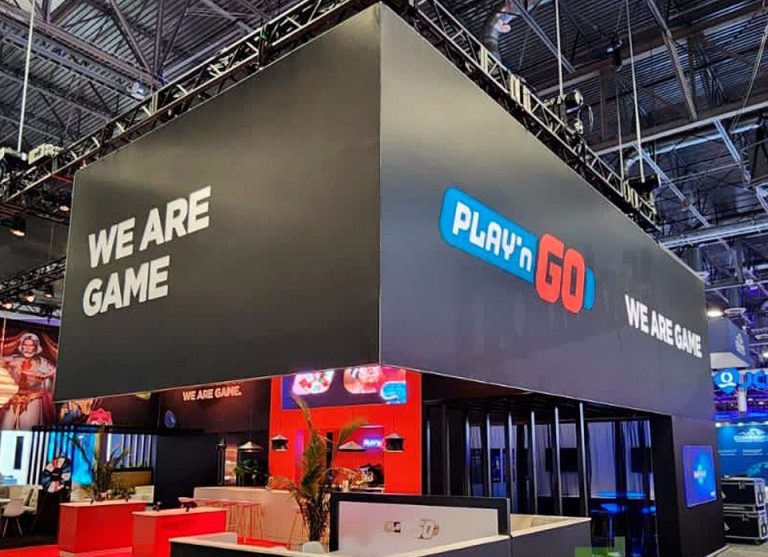
Play’n GO, the world-leading gaming entertainment supplier, has announced the release of its second annual sustainability report, highlighting significant progress made throughout 2024 in sustainability, player safety, innovation, and responsible growth.
Building on the success of last year’s inaugural report, this year’s edition demonstrates measurable advancement aligned with Play’n GO’s core sustainability pillars: Players, Partners, People, and Planet.
The report showcases Play’n GO’s significant strides, including entering 13 new regulated markets, releasing 56 innovative games, reducing Scope 2 carbon emissions by 80%, and achieving zero operational water usage in seven out of eight global locations.
Vanessa Arenram, Director of CSR at Play’n GO, said: “Our second annual Sustainability report highlights how Play’n GO continues to lead with integrity, innovation, and transparency. Sustainability isn’t just a report—it is a deeply ingrained part of our culture and strategy. We’re committed to shaping a responsible, safe, and entertaining future for the industry, and this report illustrates the real progress made possible by the passion and dedication of our teams and partners.”
Key achievements from the 2024 Sustainability Report include:
Recognition as the first and only B2B licensee to achieve the prestigious ESG-C Tier 2 certification from the Malta Gaming Authority;
Achieving an 80% reduction in Scope 2 emissions;
Successfully advocating against predatory game mechanics, including publishing groundbreaking survey results that highlight broad public support for the ban on Bonus Buy features;
Completing the transition to a Digital First culture that significantly reducing environmental impact and achieving zero water usage across nearly all operational locations;
Strengthening employee engagement through sustainability-focused training, volunteer opportunities, and a new Volunteering Time Off program, positively impacting local communities globally.
Play’n GO remains dedicated to transparency and accountability, aligning actions with all 17 UN Sustainable Development Goals and internationally recognized ESG frameworks. In 2025, the company will further enhance its sustainability metrics, focusing on continual innovation and deeper collaboration with partners who share its values.
Success Universe, investor in Macau’s Ponte 16, recorded a 50 percent drop in revenue for 2024, totaling HK$51.4 million ($6.61 million). this comes as the group’s shared a profit of the associates relating to Ponte 16 amounted to approximately HK$112 million ($14.4 million), down 22 percent.
Despite the expected fall in revenue, profit attributable to owners of the company amounted to HK$93.4 million ($12 million). This represents a 44.8 percent yearly decrease.
During the period, the group registered a gain on the disposal of overseas listed equity securities of approximately HK$31.1 million ($ million), and a fair value gain on overseas listed equity securities of HK$89.2 million ($11.47 million).
In 2024, the group also recognized in an impairment loss relating to leasehold land and building property plant and equipment totaling HK$36.1 million ($4.64 million). It also saw a substantial increase in the fair value loss on its investment properties and the write down of carrying amounts of the group’s stock of properties amounting to HK$39.7 million ($5.1 million).
The Macau government, in November of 2024, approved a land concession modification of Ponte 16 – which includes a plaza and a commercial building to be developed as a mall, aiming to revitalize the region and expand non-gaming facilities.
At the end of 2024, the casino at Ponte 16 operated 109 gaming tables, comprising 103 mass tables and six high-limit tables.
Looking ahead, Yeung Hoi Sing, Chairman of Success Universe Group, indicated that “In this dynamic economic environment, we are well-positioned to navigate evolving market conditions by maintaining a balance of optimism and prudence. The Group will continue to closely monitor market dynamics, adopt its strategies to tackle challenges and remain steadfast in its dedication to enhancing its business portfolio, ensuring sustainable growth and seizing emerging opportunities”.
The group’s current bank borrowings of over HK$2 billion ($257.1 million), due to the group’s current financials may not be repayable. The group notes that even the current HK$166.4 million ($21.4 million) in default is unlikely to be repayable. In its most recent financials, the group indicates that ‘there exist circumstances that cast significant doubt on the Group’s ability to continue as a going concern’.
The group notes that the possibility to continue with sufficient working capital for at least 12 months from the end of 2024 ‘will depend upon the Group’s ability to generate sufficient financing and operating cash flows’.
This would only be possible via continual support from the lending banks to not take actions to demand immediate repayment of outstanding borrowings as a result of non-compliance with loan covenants. The group is also actively seeking support from the banks for the restructuring of the group’s outstanding installments due in 2025. The group is further seeking support from the controlling shareholder and substantial shareholders to not request repayment of shareholders’ loans of HK$339.4 million ($43.63 million). The group notes that it is also undertaking mitigating measures, including a cost control program.
During the year the group recorded total revenue of HK$771.5 million ($99.18 million), an increase of 4.3 percent yearly. Total gaming revenue for the period amounted to HK$393.1 million ($50.54 million), a yearly increase of 17.1 percent. This was all related to the service income received from Macau gaming concessionaire SJM for services and facilities provided relating to the mass market tables at the Legend Palace Casino.
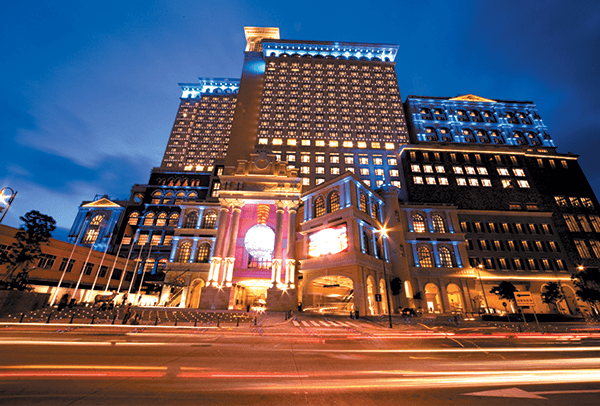
Also during the period, the group reported HK$378.3 million ($48.63 million) in non-gaming revenue, a drop of 6.4 percent yearly. This was attributed to a drop in the average daily room rate. The group operates two hotels in Macau, the Legend Palace Hotel and the Harbourview Hotel.