21VIRAL, a top games aggregator in Central and Latin America, has forged a strategic alliance with leading platform provider Virtualsoft, accelerating its regional growth.
This collaboration will integrate 21VIRAL’s extensive portfolio of games into Virtualsoft’s platform, providing enhanced content options for operators across key Central and Latin American nations. Virtualsoft is a key supplier with a strong presence in markets including Ecuador and Peru, delivering innovative gaming solutions to a diverse range of operators.
Christoph Härtel, CEO of 21VIRAL
Christoph Härtel, CEO of 21VIRAL, commented: “Partnering with Virtualsoft is a pivotal moment for 21VIRAL as we deepen our engagement with one of the world’s most rapidly advancing online gaming markets. Virtualsoft underpins numerous leading brands in the region, and integrating our GameConnector solution will allow swift access to their operational brands. We look forward to working closely with Virtualsoft’s talented team to deliver innovative and revenue-driving gaming experiences.”
Alejandro Velez, General Manager at Virtualsoft, stated: “21VIRAL has a strong reputation for seamless integrations and profound expertise in the Latin American gaming market, making them an ideal partner for us. Together, we are streamlining operations and elevating the gaming experience for players, aiming to set new benchmarks for the industry.”
QTech Games, a leading game aggregator, has appointed Ekaterina Mayorova as Sales & Account Manager for Africa and Eastern Europe, reinforcing its established presence in Europe while aiming to unlock new revenue streams across Africa’s dynamic markets.
Ekaterina arrives at QTech Games after successful stints at Trustly and, most recently, PandaScore, where she respectively proved herself in both account management and senior business development roles. Now, Ekaterina brings those talents to bear at the industry’s leading aggregator for developing markets, where she will be responsible for managing QTech’s existing partners in Africa and Eastern Europe, spearheading that progressive expansion into Africa’s diverse patchwork quilt of territories.
QTech Games CEO, Philip Doftvik, said: “We’re delighted to now have Ekaterina at QTech Games where she has hit the ground running and proved herself a quick study. Her extensive experience and network in our targeted territories is already serving us well, especially as we broaden our existing influence across Africa. She’ll be a true asset to both QTech and all our clients, as we grow in Africa to make it a substantial part of our total revenue mix. We have high growth hopes for the region in the coming years and we want to dominate by building a strong brand in the region.”
Ekaterina Mayorova added: “I’m thrilled to be underway at QTech Games, a company with the most customizable content suite and focus on emerging markets. Beyond that, I’ve already found a cohesive and collaborative structure with an organisational culture to match – I think the team is fantastic! Having worked across iGaming, esports, and fintech, I’m thrilled to take on this new opportunity—bringing innovative gaming solutions to some of the most dynamic and fast-growing markets. Africa holds a special place in my career journey, and I’m looking forward to deepening partnerships, driving growth, and collaborating with forward-thinking operators and platforms in the region.”
QTech Hybrid – join Ekaterina and the team in Ghana to find out more!
QTech Hybrid will next be showcased at the upcoming SBWA+ show in Ghana in August, where QTech Games delegates will be on site to unpack its breakout technology and salient applications for joining up the retail and digital-mobile experience.
QTech Hybrid is a software service that joins up QTech Games’ AI-powered casino lobby (a leading game-personalisation engine known as QTech Play) to a land-based (retail) management system and a state-of-the-art integrated AMS (Agent Management System) to manage both retail outlets and agents. This allows operators to scale their brick-and-mortar operation online. QTech Hybrid simplifies transactions by enabling deposits, withdrawals, and gameplay while allowing access to players both in-store and on personal devices.
For the player, the net resultis that they can now enjoy all the games from the comfort of their own home, or on the move. For the operator, there is no need for expensive terminals, as QTech Hybrid runs on cost-effective computers/tablets. In short, it’s ideal for operators looking to extend their reach across multiple platforms, providing the flexibility to operate both land-based and online through the AMS.
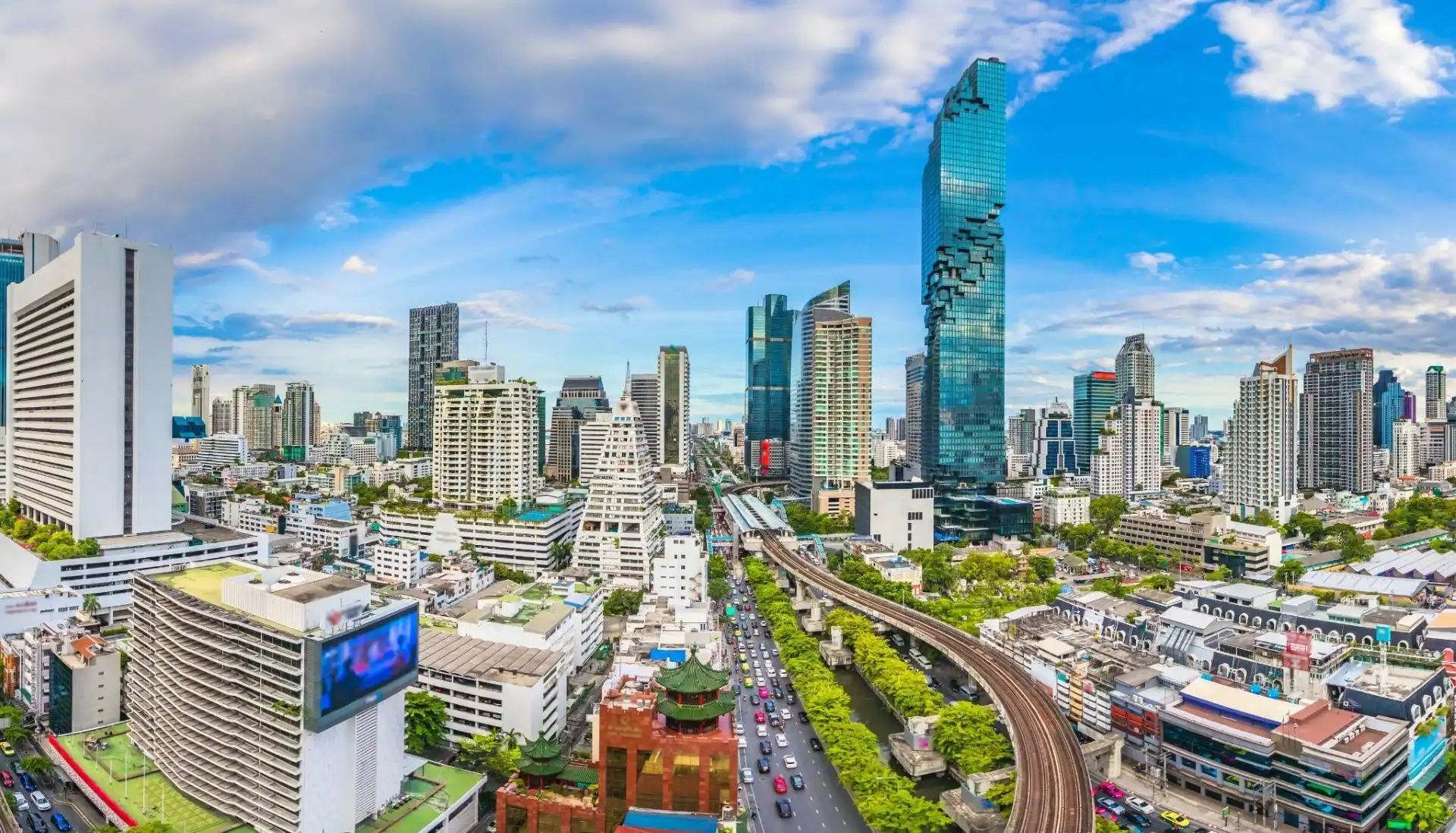
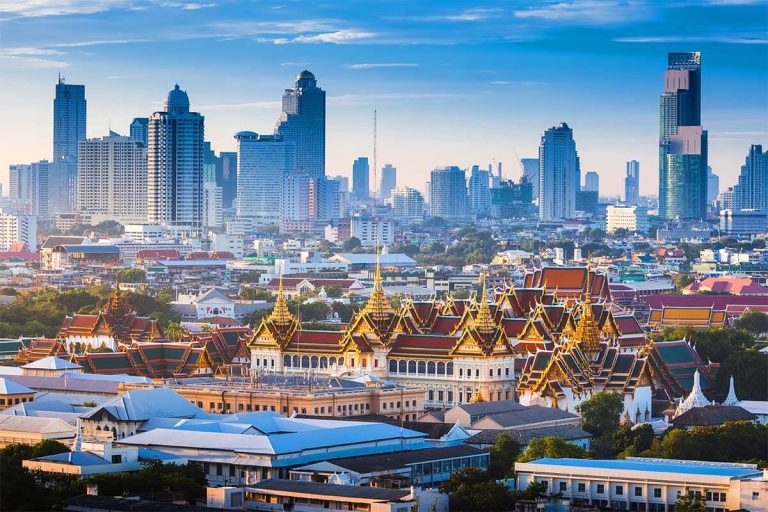
Thailand’s push to legalize casinos has always been at the whim of circumstance. But winds that were favorably blowing towards implementation have now reversed, with the political proponents of the plan now struggling to maintain their political sway. Gaming veteran and author Daniel Cheng points out exactly how the scene is playing out and what factors got it to where it is.
With over 30% of global gaming revenue projected to come from Asia soon, the window of opportunity is wide open. Bettorify’s white-label and turnkey solutions deliver what most platforms miss: sharp execution backed by real local expertise.
The opening of the billion-dollar-plus Westside City integrated resort in Manila has again been delayed, with the group behind its development – Suntrust Resorts – now indicating the main casino could only open in the third quarter of 2026.
This comes as yet another delay to the project, which has seen escalating costs and construction delays, pushing back its opening date by around two years from the initial expectation.
In a Philippine Stock Exchange filing on Thursday, the group indicated that the new date for completion and opening is ‘based on the PAGCOR approved Project Implementation Plan’.
It furthered that ‘currently is in the process of reviewing plans and actual construction status which may impact its previous launch estimate of December 2025’.
The company indicates that by the end of March of this year, construction and structural works ‘and major façade systems up to roof level’ were completed, while main mechanical, electrical, plumbing and fire protection systems ‘in major plantrooms have been substantially completed’.
Some parts have now undergone testing and commission, and further fit-out and landscaping works ‘are in progress’.
Given the delay in the opening, the group indicates that ‘Suntrust anticipates deferral of revenue generation’.
In May, the company indicated that it recorded some PHP2.97 billion ($53 million) in gross revenue for 1Q25, consistent with the previous year.
However, expenses surged by over 51 percent yearly to PHP205.31 million ($3.7 million), and the company’s total liabilities rose to PHP46.49 billion ($836 million).
Morgan Stanley expects Singapore’s two integrated resort operators—Genting Singapore (GENS) and Marina Bay Sands (MBS)—to continue investing heavily in the next phase of development, projecting higher revenues and profitability as a result.
The forecast is part of a recent comprehensive industry report, as Singapore prepares to mark its 60th anniversary in August.
According to the report, Singapore’s gaming sector has demonstrated resilience and high margins since the launch of the city-state’s integrated resorts in 2010. Developed by global gaming giants Las Vegas Sands and Malaysia’s Genting Group, the initial SG$14 billion ($10.6 billion) investment benefited from favorable tax policies and stable regulatory conditions. The two operators have since generated a combined $30 billion in EBITDA as of December 2024.
Despite competition and regulatory changes—including a 3 percent increase in gaming tax rates and a 2 percent hike in goods and services tax—the operators are committed to investing an additional $14 billion over the next five years. This would bring total sector investment to approximately $30 billion. While these capital commitments are expected to slightly compress return on invested capital in the near term, Morgan Stanley remains bullish on long-term growth.
‘We expect GENS and MBS to continue to invest in the next phase and see higher revenue/profit from those investments,’ the report noted.
The Singapore model has served as a benchmark in Asia, balancing economic gain with responsible gaming oversight. According to Morgan Stanley, the integrated resorts contribute around 1.5 percent of Singapore’s GDP, support 22,000 direct jobs, and underpin another 40,000 positions in related sectors. At the same time, the sector has significantly boosted tourism and created iconic urban landmarks such as Marina Bay Sands.
Resorts World Sentosa 2.0
Singapore’s fundamentals shield it from regional competition
Singapore’s strong fundamentals and international appeal may allow it to maintain its relevance in the global gaming market, even as new regional entrants such as Japan and (potentially) Thailand prepare to launch integrated resorts. Morgan Stanley highlights the city-state’s stable regulatory framework, premium destination status, and robust infrastructure as key factors that continue to position Singapore as a preferred hub for both business and leisure travelers.
While regional competition is intensifying—particularly from the Philippines and Cambodia—Singapore has demonstrated resilience. The Philippine gaming market has grown steadily, with Entertainment City now hosting four licensed operators and generating over $4 billion in gross gaming revenue (GGR). Cambodia has also capitalized on Singapore’s ban on junkets and online gaming, capturing more business in the VIP and online segments.
Despite this, Morgan Stanley noted that Singapore’s gaming industry has remained stable, supported by a strong post-COVID rebound that has outpaced both the Philippines and Cambodia. The city-state continues to attract high-net-worth individuals and international tourists, contributing to sustained demand for its integrated resorts.
The research team expects this trend to support long-term growth for both Genting Singapore and Marina Bay Sands as they enter the next phase of development and increase capital investment.
In the coming years, Japan and Thailand are seen as potential competitors, but their integrated resorts are unlikely to become operational before 2030. While a significant portion of their business will likely rely on local and mainland Chinese customers, Thailand’s geographical proximity poses a more immediate challenge. Still, Singapore’s proven track record, high-value visitor base, and consistent policy environment are likely to preserve its standing in the region.
Thailand’s attempt to push through casino legislation has always been a roll of the dice. But recent political shifts are exposing just how fragile the possibilities are. Gaming veteran and author Daniel Cheng looks at exactly how the nation got into the current situation, and what’s in play.
It had begun so well.
Since 2021, when motions in the Thai legislature for casinos encapsulated within large-scale integrated entertainment facilities were introduced while the kingdom was under a military government, their progress has moved at a brisk clip that has left the Japanese green with envy. It took more than 20 years for the sun to rise over integrated resorts with casinos in Japan; now, they’re smirking in the Land of Smiles at the unimaginable prospect that a casino entertainment complex could welcome customers before the Osaka integrated resort, which will likely open only in 2031.
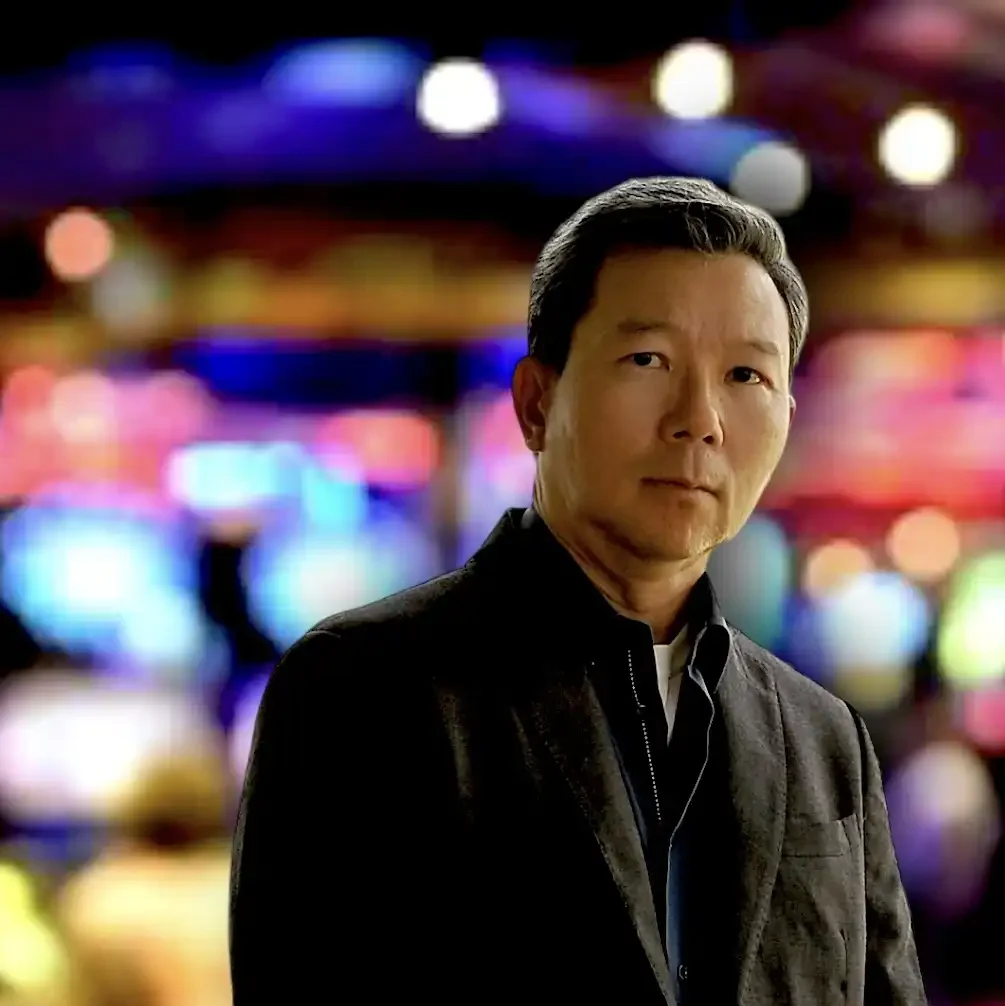
Daniel Cheng, gaming industry veteran and author
The cool market response to skepticism over whether the Thai plan could outlive the junta after the return of civil rule was quickly laid to rest when the Pheu Thai coalition government made it among its top priorities. Bipartisan political support has remained strong, and investors’ interest was suddenly piqued.
Optimistic origins
The watershed moment was the return from exile of Thaksin Shinawatra. Optimism rose even higher when the pro-economics former prime minister got back to his element as if he had never left and gave enthusiastic endorsement of the plan. When his daughter subsequently took over as prime minister, the entertainment complex bill immediately became the top agenda of her new administration.
At the same time, the father was already taking meetings with the CEOs of major international gaming companies. The Shinawatra family express couldn’t get to its destination quickly enough. Thai political horology runs on five-year cycles, a ticking clock within which the finish line has to be reached for the incumbent government to reap its fruits before the mandate ends.
Here we go again.
They say in Thailand, ช้าๆ ได้พร้าเล่มงาม, which is more or less equivalent to the proverb of ‘more haste, less speed.’ It was a harsh lesson learned in Japan when the government led by the late Shinzo Abe barreled the Integrated Resort bill through the Japanese Diet. This sheer tyranny of the majority achieved a landmark breakthrough but not without consequences, provoking public ire and resulting in a lackluster rollout of the sector that left two casino licenses begging.
Slow didn’t exist in Thaksin’s nomenclature, where he built his business empire in a world where hesitation meant failure. All that is fine and good for the entertainment complex’s prospects provided he could pull it off. And the odds had been more than fair, given a Shinawatra in the premier’s seat presiding over a majority parliamentary coalition.
Emulation but no success (yet)
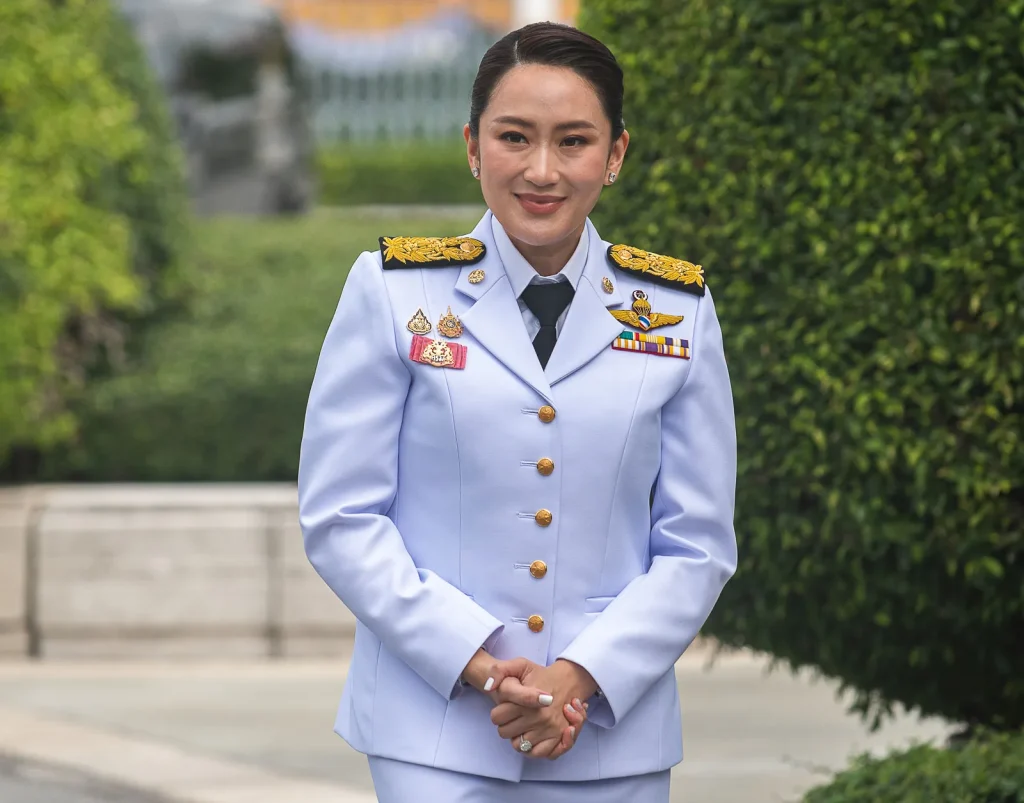
Paetongtarn Shinawatra, Prime Minister of Thailand
Prime Minister Paetongtarn’s administration was also going through all the necessary steps in the process: extraordinary parliamentary committee studies, publishing each iteration of the bill’s draft for public feedback, adhering to amendments by the Council of State, essentially emulating much of what Singapore did with its casino legislation. But Thailand is not Singapore. The same touches and processes that yielded results in the city-state can be cut and pasted for its ASEAN counterpart. They differ vastly in their political cultures, governance structures, levels of civil society engagement, and even economic realities.
What fits Singapore’s tightly managed model would be an imported model misfiring on Thai soil environment that is far more contested and unpredictable. The central issue is that Thaksin’s homecoming has reopened old and deep wounds with Bhumjaithai founder Newin Chidchob. The two longtime strongmen remain the de facto (some say “spiritual”) leaders of the Pheu Thai and Bhumjaithai parties. Once close allies and bosom buddies, they are now bitter enemies, ‘reunited’ in the uncomfortable position of leading the two dominant parties in the Thai government coalition (well, until a few days ago). It’s an uneasy truce, always one stray shot away from breaking.
And shatter it did as many expected, doesn’t matter who fired the first salvo. The welled up animosity came up hard, fast fraying the already delicate Pheu Thai-Bhumjaithai marriage of convenience. The battle royale prevailed over rational minds as each hit out at the other’s closest to the soul. And shatter it did, just as many had expected. It didn’t matter who fired the first salvo. The long-simmering animosity surged to the surface, tearing through the already fragile Pheu Thai–Bhumjaithai marriage of convenience. A battle royale overwhelmed reason as each side struck where it hurt most, at what the other held dearest.
For Newin, it was his beloved MotoGP event in his home province of Buriram along with the marijuana legislation. The Entertainment Complex Bill and the Land Bridge project were Thaksin’s brainchildren.
Impasse
In this standoff there can be no winners, only losers, as Team Red and Team Blue hold cards that effectively cancel each other out. The former controls all the key ministerial posts, thanks to having twice as many House seats as Bhumjaithai. The latter commands the Senate and a majority of provincial leadership positions. The worst kept secret brewing for weeks that Pheu Thai was planning to reclaim the powerful Interior Minister seat from Bhumjaithai proved to be the straw that broke the camel’s back. So it came as no surprise when Bhumjaithai withdrew from the government last Wednesday, leaving the ruling coalition with only a slim majority in the House of Representatives.
With no need for further pretenses, Bhumjaithai subsequently reversed its support for the Entertainment Complex legislation, putting the already unpopular bill in even greater peril. With the odds now heavily stacked against it, Pheu Thai grudgingly postponed the bill’s presentation in the House, which had been scheduled for July 9th.
It was Japan all over again, where the hubris of politicking derailed momentum to legalize casino gambling. In Japan’s case, the legislation still managed to stumble over the line. For Thailand, it will depend on how the political factions regroup on each side. But with Thaksin facing the possibility of reliving his jail sentence and his daughter potentially being ousted as Prime Minister, the plan for entertainment complexes will surely take a back seat even as the Red and Blue teams continue to slug it out from opposite sides of the aisle.
Nervous investors in the entertainment complex space, gathered in Bangkok, might be tempted to calm their nerves with some weed that is legally available in the kingdom. Oh wait, that, too, is on track to become collateral damage.
CreedRoomz, a leading company specializing in providing high-quality live dealer solutions, has announced a new strategic partnership with GR8 Tech, to develop the iGaming experience by merging CreedRoomz’s premium live dealer offerings with GR8 Tech’s advanced B2B iGaming platform.
CreedRoomz is dedicated to delivering stable and successful business growth for its partners, ensuring long-term success through uncompromising quality and outstanding products. Its state-of-the-art live dealer offerings have set a new benchmark in the industry, providing captivating and seamless gaming experiences for operators and their players. As part of this partnership, GR8 Tech’s platform has now seamlessly integrated CreedRoomz’s extensive portfolio of live casino games and captivating game shows, bringing a fresh and dynamic experience to its operator brands.
The CreedRoomz portfolio includes a diverse array of live dealer products, from classic casino staples like blackjack, roulette, and baccarat, to innovative and interactive game shows such as Richie Wheel and Richie Fruits Roulette that appeal to a broad range of players. These offerings are designed with the highest production quality, making them a valuable addition to any iGaming operator looking to expand and diversify its live dealer offerings. The seamless integration of these products into the GR8 Tech platform will enable operators to offer their players a richer, more immersive experience, ensuring higher engagement and loyalty.
GR8 Tech sets the standards for B2B iGaming platforms with high-performance solutions and innovative approaches. The company partners with a growing number of operator brands, delivering advanced technology that drives success in the highly competitive iGaming market. Its state-of-the-art platform is built with scalability and reliability in mind, making it an ideal choice for operators seeking robust and flexible solutions that can evolve with their business needs.
This strategic partnership aims to combine the best of both worlds – CreedRoomz’s expertise in live dealer products and GR8 Tech’s robust platform capabilities. Together, the two companies will provide an enhanced gaming experience that promotes growth, engagement, and satisfaction for operators and players alike. By combining their respective strengths, CreedRoomz and GR8 Tech are positioned to drive innovation across the iGaming sector, introducing new ways for operators to captivate and retain their audience.
“We are excited to join forces with GR8 Tech,” said Hayk Tovmasyan, Head of Live Casino of CreedRoomz. “This partnership allows us to expand our reach and deliver top-quality live dealer content to an even wider audience. Together, we are well-positioned to drive innovation and success across the iGaming industry. Our shared commitment to quality and excellence ensures that this collaboration will benefit both operators and their players, providing memorable and rewarding gaming experiences for all.”
With this strategic alliance, CreedRoomz and GR8 Tech reaffirm their commitment to pushing the boundaries of technology and entertainment within the iGaming sector. This partnership signifies a pivotal moment in the evolution of live dealer gaming, as it combines the best-in-class offerings of both companies to deliver a seamless, captivating, and rewarding gaming experience for all.
Century Entertainment International Holdings reported a widening net loss of HK$45.7 million ($5.9 million) for the fiscal year ended March 31st, 2025, nearly doubling from a loss of HK$24.2 million ($3.1 million) in the prior year, according to annual results filed Thursday with the Hong Kong Stock Exchange.
The company has halted trading as of June 26th, before the market opened.
The gaming company, which operates VIP rooms in Dara Sakor, Cambodia, recorded zero revenue for both fiscal years 2025 and 2024, while its auditors raised material uncertainties about the company’s ability to continue as a going concern. The group’s net liabilities ballooned to HK$125.5 million ($16.1 million) from HK$79.8 million ($10.2 million) the previous year.
The deteriorating financial position stems from increased costs of sales, financial costs, and impairment losses on other receivables totaling approximately HK$25.4 million ($3.3 million). Loss per share expanded to 35.67 HK cents from 18.88 HK cents in the prior year.
Century Entertainment faces severe liquidity constraints with cash and cash equivalents of just HK$4.1 million ($526,000) against net current liabilities of HK$102.6 million ($13.2 million). The company has been in default on HK$30 million ($3.9 million) in loans from an independent third party since 2020, with net cash outflows from operations reaching HK$23.9 million ($3.1 million) for the year.
Auditors issued a disclaimer opinion, citing insufficient evidence to support management’s going concern assessment due to lack of supporting data for forecasted results and cash flows.
Despite the financial challenges, Century Entertainment reported a non-binding memorandum of understanding on June 10th to establish a joint venture with a Philippines-based gaming company licensed by PAGCOR.
The Hong Kong-incorporated joint venture would see Century Entertainment hold a 51 percent stake, contributing technical support and market access while the Philippine partner provides gaming platform technology and intellectual property.
China’s lottery ticket sales increased by 19.8 percent year-on-year in May, reaching approximately RMB57 billion ($7.95 billion), according to data from the Ministry of Finance released on Wednesday.
The ministry attributed this growth to two main factors: a low sales base during the same period last year and an uptick in sports events in May, which drove higher sales of sports lottery tickets.
Sales of lottery tickets that support the country’s welfare system amounted to about RMB18.53 billion ($2.61 billion) last month, reflecting an 8.6 percent increase from the previous year.
Sales of sports lottery tickets surged by 26 percent year-on-year, totaling RMB38.51 billion ($5.44 billion) in May.
From January to May, total lottery ticket sales across the country reached RMB263.37 billion ($37.06 billion), marking a 4.3 percent increase compared to the same period last year.
According to China’s lottery management regulations, funds generated from ticket sales are used to cover administrative costs, support public welfare initiatives, and fund prizes.
Macau recorded a considerable uptick in international hotel guests in May 2025, reaching 100,000—an annual rise of 12.9 percent—according to the Statistics and Census Service (DSEC).
The growth was driven by key markets including South Korea, India, Japan, and Thailand. South Korean guests totaled 27,000, up 19.2 percent year-on-year. Arrivals from Japan surged 37.8 percent to 9,000, while India contributed 11,000 guests, a 2 percent increase. In contrast, visitor numbers from Malaysia and Singapore fell by 3.6 percent and 2.3 percent, respectively.
Macau welcomed approximately 1.2 million hotel guests overall in May, up 2.7 percent from a year earlier. Visitors from mainland China accounted for about 900,000 of the total, marking a 3.7 percent rise.
Hotel occupancy remained strong amid a reduced room supply. The average occupancy rate in May rose 4.5 percentage points to 87.8 percent. Five-star hotels led the segment with a 91.4 percent occupancy rate, followed by three-star hotels at 84.2 percent and four-star hotels at 80.7 percent.
At the end of May, Macau had 147 hotel establishments—four more than a year ago—while the total number of available guest rooms dropped by 3.7 percent to 45,000.
From January to May, the average occupancy rate stood at 89.2 percent, up 5 percentage points year-on-year. During the same period, total hotel guests declined slightly by 2.1 percent to 6 million, with an average stay length of 1.7 nights.
Inbound package tour visitors showed mixed trends. In the first five months, the total reached 855,000, up 0.7 percent year-on-year. International package visitors rose 12.4 percent to 99,000, with South Korea contributing 46,000 visitors—up 24.2 percent. Mainland Chinese tour visitors dropped 2.2 percent to 732,000.
In May alone, inbound package visitors declined 21 percent to 128,000, largely due to a 27.9 percent drop in mainland China tour visitors, who totaled 101,000. However, international package visitors rose 22.8 percent to 22,000, including 8,000 from South Korea, up 20.5 percent.