



The Thai government is pressing forward with legislation to establish entertainment complexes featuring casinos despite mounting opposition from former coalition partners and other sectors of society.
The controversial bill is set to face its first parliamentary reading on July 9th in what opposition lawmakers describe as a critical test for Prime Minister Paetongtarn Shinawatra’s administration.

According to local media outlet The Nation, Deputy Finance Minister Julapun Amornvivat confirmed this week that the government maintains sufficient coalition support to advance the entertainment complex legislation, even as the Bhumjaithai Party has explicitly rejected the bill for the first time since joining the opposition. The legislation, which includes provisions for casino operations, represents a flagship policy for the current administration.
“We are steadfast in implementing the Prime Minister’s policy,” Julapun stated, emphasizing that the ruling coalition retains adequate votes to push through the legislation within the originally projected one-year timeline. The government is currently conducting extensive briefings with parliamentary committees seeking clarification on the proposed law.
The political landscape surrounding the bill has shifted dramatically following Bhumjaithai’s transition from coalition partner to opposition. Party leader Anutin Charnvirakul made clear his party’s stance during recent statements, declaring that Bhumjaithai has “always been against casinos” and is now free to take independent positions without coalition constraints.
“When we were in government, we had to compromise. But now, as the opposition, we are free to make our own decisions,” Anutin said, marking the first explicit rejection of the casino legislation by the party that previously held significant influence in government economic policy.
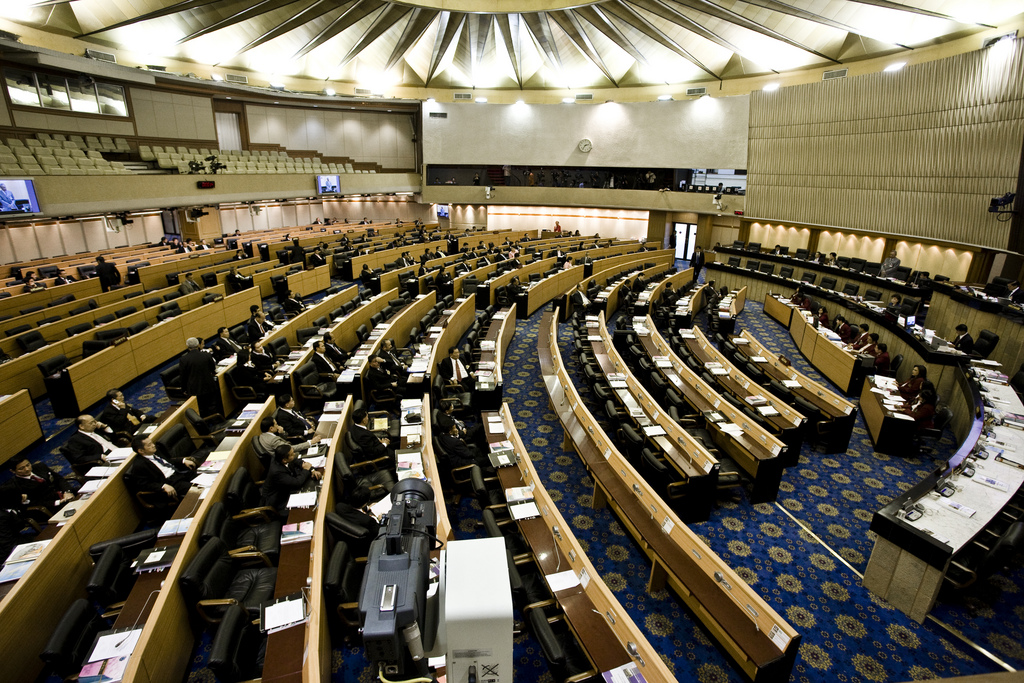
According to a report from the Bangkok Post, the opposition People’s Party has characterized the upcoming vote as a litmus test for the government’s survival. MP Parit Wacharasindhu noted that the bill has been fast-tracked ahead of other crucial legislation, describing it as a critical examination of the administration’s slim parliamentary majority.
Coalition fractures extend beyond Bhumjaithai, with the Prachachart Party already indicating it will vote against the bill. Opposition lawmakers warn that additional coalition members may also reject the legislation, potentially undermining the government’s stated confidence in securing passage.
Critics have raised concerns about the government’s preparatory process, with Parit expressing disappointment over the administration’s failure to produce comprehensive feasibility studies, establish frameworks to address gambling addiction and money laundering, or conduct public forums to gather diverse opinions before advancing the legislation.
The timing of the vote adds political pressure, as Thailand faces multiple urgent challenges including border tensions with Cambodia, Middle East conflicts affecting energy prices, environmental contamination from Myanmar affecting the Kok River, and various political and legal issues surrounding both the government and the Prime Minister.

People’s Party leader Natthaphong Ruengpanyawut has urged the House speaker to begin the parliamentary session on July 3rd as stipulated by royal decree, positioning the entertainment complex debate as the opening issue for renewed legislative activity.
The government’s approach emphasizes continuous public engagement and education about the project’s economic benefits, with officials highlighting anticipated job creation and sustainable economic stimulus. However, the administration now faces the challenge of maintaining coalition unity while advancing legislation that has become increasingly controversial among both political allies and civil society groups.
The July 9th vote will determine whether the government can overcome growing opposition to advance one of its most significant policy initiatives, with implications extending beyond the entertainment complex to questions about the administration’s overall legislative effectiveness and political durability.
According to previous estimates, Thailand aims to build its first entertainment complex as early as 2029, while several international gaming operators are closely following the development of the legislative process.