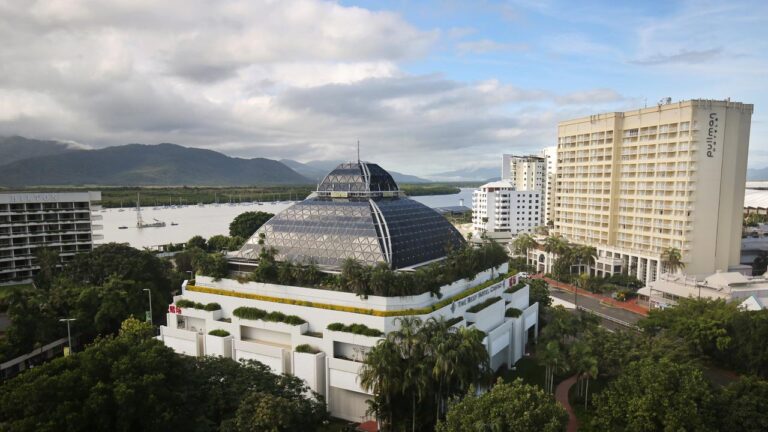
Reef Casino Trust (RCT) said it has agreed to a sweetened takeover offer from property investor Iris, which raised its bid to AU$3.87 ($2.52) per unit in a deal that values the trust at about AU$192.7 million ($125.6 million).
The new terms follow amendments to the takeover implementation agreement between RCT’s responsible entity, Reef Corporate Services, and Iris, lifting the previous AU$3.72 ($2.42) offer. The increase also raises the associated break fee to AU$1.9 million ($1.2 million).
‘The revised proposal will deliver additional value to unitholders’, said Independent Board Committee chair Wendy Morris in a dispatch.
Under the plan, Iris will make an off-market cash bid for all 49.8 million units in RCT, which owns Cairns’ Reef Hotel Casino. The offer represents a 4.3 percent premium to Wednesday’s closing price, and more than 40 percent above levels in February when Iris first approached RCT.
RCT’s board unanimously recommended the deal, subject to regulatory approvals and an independent expert declaring it fair and reasonable. The board members also said they intend to accept the offer for their own holdings.
Based in Sydney and part of Iris Capital, the Iris Hotel Group operates 13 hotels and two casinos, namely Casino Canberra – the first legal casino to open in Australia and formerly operated by Aquis Entertainment – and the Lasseters Hotel Casino in Alice Springs.
The trust’s two largest unitholders — France’s Accor and Casinos Austria International — who together control over 71 percent of units, have signalled support. They plan to accept the bid in the absence of a higher rival proposal.
The offer still faces conditions including an 80 percent acceptance threshold, approvals from casino and liquor regulators in Queensland, and final sign-off on related share purchase agreements.
The bidder’s statement is due to be lodged with regulators on August 29th, with RCT’s formal response expected by late September.
RGB International Bhd recorded a sharp contraction in earnings for the first half of 2025, with both revenue and profit falling significantly year-on-year, the company said in its filing to Bursa Malaysia.
For the six months ended June 30th, 2025, the Malaysian casino equipment supplier and distributor posted revenue of MYR168.5 million ($36.6 million), representing a 46 percent decline from MYR309.7 million ($67.3 million) in the same period last year. Profit attributable to owners of the company fell 36 percent to MYR26.4 million ($5.7 million) compared with MYR41 million ($8.9 million) a year earlier.
Operating profit slipped 39 percent to MYR26.2 million ($5.7 million), while profit before tax dropped 37 percent to MYR28.9 million ($6.3 million). The group’s gross profit narrowed 29 percent year-on-year to MYR49.2 million ($10.7 million).
Segmentally, revenue from the Sales and Marketing (SSM) division, its largest business unit, dropped 47 percent year-on-year to MYR128.1 million ($27.8 million), primarily due to lower product sales in the first quarter. The Technical Support and Management (TSM) segment posted a 39 percent revenue decline to MYR38.9 million ($8.4 million), reflecting weaker performance at key outlets affected by adverse weather conditions, high jackpot payouts, and the temporary closure of several venues in Cambodia’s Poipet region since June.
In the second quarter alone, revenue was MYR94.9 million ($20.6 million), down 5 percent from MYR99.6 million ($21.6 million) in the same period last year. Profit attributable to owners fell 26 percent year-on-year to MYR14.0 million ($3 million) from MYR18.9 million ($4.1 million). Profit before tax dropped 21 percent to MYR16.1 million ($3.5 million).
Despite the weaker results, RGB said it remains confident about its longer-term growth trajectory. In its outlook statement, the company highlighted favourable market conditions in Southeast Asia, particularly in the Philippines, where the state regulator PAGCOR expects gross gaming revenue to reach a record PHP450 billion ($7.9 billion) in 2025. RGB also pointed to its expanding footprint in Cambodia, noting its established role as a key slot machine distributor and a major participant in the machine concession business.
‘Barring unforeseen circumstances, the Group expects to achieve a satisfactory performance in 2025,’ the company said.
Good Morning. Is there a golden number? For Macau, that figure just keeps going up for visitor arrivals. Now 40 million is the main target, despite industry warnings that mass does not equal spend. So, how does this all play out? Looking further abroad, the Isle of Man continues to see an exodus as regulations hit and other jurisdictions call. Back to Macau, satellite casino operations are tapping out, with Paradise noting significant losses, due to the closure of its legacy operation.
Macau has done a lot to improve itself over the COVID lockdown years, with strong changes in infrastructure and healthy promotion of activities outside of its historical center. But is it still possible that the city could reach a saturation point? The massive concentration of people during key holidays and events begs the question of whether mass tourism is beneficial, or essential – for operators, citizens, and the government.
Every operator can launch, but few can lead. In Asia, leadership is won in the 90 days after go-live, when payments feel effortless, content resonates locally, and every touchpoint builds trust.
Winning Trust, Stopping Fraud. Asia Pacific’s iGaming market is expanding extremely fast, and a new wave of digital-savvy players is pushing demand through the roof. But the rise in adoption has outpaced regulation in many markets, and fraudsters have taken notice.
Stress tests. Night tourism. More improvements to transportation and infrastructure. All of these are needed for Macau to reach its goal of 40 million tourists in 2025 without hitting a saturation point.
“There’s no problem with 40 million tourists,” notes integrated resort expert and University of Macau professor Glenn McCartney.
The academic, who has been based in Macau for over 25 years, notes that the overtourism issue has long been a sticking point, even resulting in the proposal of a tourism tax – which was largely shot down by industry experts even before Macau reached its 39.4 million tourist peak in 2019.
But should Macau try and place a cap on how many people can enter the SAR?
“There’s no issue for Cotai. The big integrated resorts can handle mass numbers because they have such a large footprint. If you can gravitate a lot more people out of the heritage centers to the Cotai Strip, that relieves pressure. The Macau peninsula remains difficult,” notes the expert.
Saturation point
Anyone who has been in Macau during its key holidays – such as the Golden Weeks (huge contributors to gross gaming revenue) and Chinese New Year – know that the city becomes impossible to navigate, at least at key points such as St. Paul’s Ruins and the surrounding UNESCO-classified Heritage Center.
But the mass influx is expanding beyond the main expected dates, and even the improvements made to infrastructure during the three-year-long COVID shutdown that the city experienced can’t yet keep up.
Patrick Lo, lecturer at the Macao University of Tourism (UTM)’s Faculty of Creative Tourism and Intelligent Technologies, notes that “The most important thing is Macau as a travelling destination should always aim at making visitors and residents happy and satisfied with their surrounding environments and facilities.”
UTM’s International Center for Tourism and Hospitality Research (ICTHR) has for years been studying Macau’s tourism carrying capacity, looking at “different service aspects such as transportation (inbound and outbound), retail, hotel, food & beverage, tourism and recreational attraction,” notes Lo. And, instrumentally, this includes feedback from both visitors and residents.
The academic highlights that the way the best solution could lie less in policy and more in tourists understanding Macau’s dynamics.
“Education and promotion are more important and welcome to tackle the issue. Education to visitors that Macau always has worth-visiting activities round the year to enable spreading the visitors number more evenly by non-peak visits. And therefore Macau can explore more diversified activities such as music festivals, concerts and international sports events (both indoor and outdoor), in order to achieve the evenly widespread programmes throughout the calendar”.
Day-trippers
Professor McCartney notes that technology plays a key role in how Macau can evaluate exactly who Macau’s visitors are, what they want to see, where they go, and how to shuttle them around to avoid a city-wide standstill.
This is particularly important for key holidays but not only so. While there has been impressive facilitation of entry into Macau through its borders, and key visa policies which have pushed the influx of mass tourism, off-calendar events – driving up to 15,000 per show – have laid bare not only infrastructure shortcomings but also how few people are actually staying in hotel rooms (despite operators claiming 90+ percent occupancy).
In the first seven months of the year Macau welcomed 13.6 million ‘day-trippers’. With the liberalization of visa policies and its proximity to its main major market Guangdong, the proportion of people choosing to enjoy Macau without spending a night is unlikely to drop.
Sure, overnight visitation was up by 2.6 percent in 2Q25, but same-day visitation rose by 25.8 percent. And Macau wants to continue this drive of mass, as it assumes that non-gaming spend will increase along with it.
But that’s not the case.
Overall per capita spending is down. Visitors are more focused on social media content than consumption. Non-gaming spend by visitors in 2Q25 dropped 12.8 percent yearly, to just MOP1,950, even worse than the first quarter.
Events are the main salvation, with analysts noting a significant uptick in casino spend during periods such as Jacky Cheung’s concerts at Galaxy. But overtourism is truly looming.
Public-private collaboration and night tourism
“When the infrastructure has the issues of overcrowding at attractions, border clearances, transportation hubs and hotels, and if there is increased wear and tear of public facilities and civic places, these are main saturation indicators,” notes Lo.
So, what can be done?
Amongst ongoing calls from experts, Macau has also proposed to improve its ‘night tourism’, something it has objectively failed to follow through on, aside from the efforts by gaming operators in regards to events. Restrictive sound control rules and a harsh stance by the municipal affairs body limit any type of outdoor nighttime activity – even including esplanades for bars and restaurants.
How exactly this coincides with the granting of separate zones for the city’s six concessionaires to develop as non-gaming tourism drivers remains a question.
A potential workaround is the establishment of a “nighttime tourism economy director” – proposes Professor McCartney. This avenue could focus on synergy between venues and entertainment, but also allow for transportation and infrastructure support that would allow the shuttling of potential visitors between venues, something currently only available via the city’s taxi fleet (and select buses).
This could also potentially change ‘day-trippers’ into ‘night-trippers’ (not the best tourism slogan, granted), alleviating stress and offering more spending possibility, particularly as most of the patrons are unlikely to book a hotel room.
Macau may well track 40 million visitors this year and undergo the stress tests that come with it. But while the city may have the capacity, it may relegate itself to one-off visitation, lower spend, and possible pushback from the population who tire of clients who take photos and don’t want to open their wallets.
The mass market strategy may look good on paper, but if nobody’s making money, nobody’s happy.
B2B gaming supplier Push Gaming has partnered with bet365 to launch Razor Returns bet365, the first in a series of co-branded titles featuring the studio’s most iconic IPs.
Building on the success of Razor Returns, this customised version maintains the high-volatility gameplay and engaging mechanics that made the original a fan favourite.
The collaboration marks the debut of Push Gaming’s branded slot initiative, aimed at providing operators with customised content that reflects their brand identity while ensuring consistent performance.
Razor Returns bet365 brings a fresh visual identity to the hit game, with redesigned symbols and a fully reimagined background in signature bet365 colours.
The scatter, mystery, and Razor Reveal symbols now feature branded design elements, and the underwater world has been redesigned to include the operator’s logo throughout, from glowing sea creatures to sunken treasure.
Following this launch, Push Gaming is set to release additional co-branded games throughout H2 2025, further developing its strategy for customised content across regulated markets.
Shanel Cacciatolo, Account Manager at Push Gaming, said: “This launch is the result of a fantastic collaboration between our teams and a clear shared vision for bespoke, high-performing content.
“Razor Returns has already proven itself as one of our most successful titles, and this reimagined version is a great showcase of how we can adapt our strongest IPs for strategic partners.”
Leading iGaming operator BC.GAME has reinforced its African expansion strategy after its subsidiary, Blockdance Africa Limited, obtained dual regulatory approvals from Kenya’s Betting Control and Licensing Board (BCLB).
Kenya: A Strategic Entry Point into Africa
As one of the continent’s most dynamic betting markets, Kenya offers a unique combination of youth-driven demand, digital adoption, and a strong sporting culture. By gaining both a Public Gaming Licence and a Bookmakers Off-the-Course Licence, BC.GAME positions itself to compete in one of Africa’s most competitive regulated environments.
Raising the Bar on Compliance
Kenya’s regulator has introduced stricter measures in recent years, from higher licensing costs to tighter oversight of advertising and financial accountability. BC.GAME’s successful licensing process reflects the company’s ability to adapt to these elevated standards, highlighting its readiness to operate responsibly in fast-evolving jurisdictions.
Local Commitment, Global Roadmap
Beyond compliance, the new approvals signal BC.GAME’s intention to invest in localized offerings that connect with Kenyan players. The company plans to engage with local sports and cultural initiatives as part of its rollout strategy.
“This milestone underlines our long-term commitment to Africa,” a BC.GAME representative said. “Kenya is not just a market—it’s a hub for innovation and opportunity, and we’re proud to be part of its regulated ecosystem.”
Every operator can launch, but few can lead. In Asia, leadership is won in the 90 days after go-live, when payments feel effortless, content resonates locally, and every touchpoint builds trust. From Kate Pozdnysheva‘s perspective as the Chief Client Officer at GR8 Tech, the early phase is about practical optimization: localizing product and communication, aligning operations to regional realities, and executing with discipline. That’s what turns a launch into lasting success.
The Window That Makes or Breaks Operators in Asia
In Asia, player behavior is defined by precision. In India, 90% of bets are in-play on cricket and kabaddi. In the Philippines, basketball and social casino dominate. In Korea, it’s baseball, football, and esports. Across East Asia, baccarat and culturally attuned slots are non-negotiable.
Operators that miss these nuances lose trust fast. Payment rails, live dealers in the right language, and culturally relevant content aren’t “nice to have”—they are the market entry ticket. Get them right, and engagement and retention multiply.
At GR8 Tech, we’ve proven that localization at every layer, from odds formats and promotions to communication channels and technical infrastructure, is the only path to traction in Asia. That’s why we built geo-specific presets into our platform: to enable operators to launch quickly and optimize in line with real market habits from day one.
Why Many Operators Struggle Post-Launch
Even with clear priorities, many operators stumble in Asia. The most common mistakes we see:
Underestimating infrastructure gaps → Platforms that run fine in Europe can lag or crash on older Android devices common across Asia.
Treating payments as “set and forget” → Local payment methods work brilliantly, until they don’t. Outages and freezes can double support volumes overnight.
Missing cultural timing → Global campaigns ignore surges around Diwali, Lunar New Year, or Mobile Legends finals.
Overloading content → Flooding the lobby with global slots and sports leaves players cold if their local favorites aren’t front and center.
Ignoring price sensitivity → Margins are tighter in Asia. Aggressive odds and cashback are expected. Without efficiency, operators lose competitiveness fast.
The 30/60/90 Day Roadmap to Asian Market Success
First 30 Days—Stabilize the Core: Payments, odds, devices, support—everything must just work, because trust is won or lost here. Payments must run flawlessly through local rails with redundancy in place. Odds formats and languages should already be localized. Platforms need to run light on older devices. Support must be immediate, multilingual, and always available. From the player’s perspective, the platform should “just work.”
Next 30 Days—Drive Retention: Local loyalty mechanics, VIP programs, festival-driven campaigns. With stability in place, loyalty becomes the focus. Cashback and turnover rebates outperform deposit bonuses across Asia. VIPs expect managers, personalized rewards, and gamified loyalty programs like leaderboards or “Spin the Wheel.” Timing is everything: festival-driven campaigns and real-time alerts during IPL or MLBB, keep engagement high. Compliance is part of the retention engine: smooth KYC, transparent payout SLAs, and responsible gambling tools tuned to local expectations build trust where it matters most.
Final 30 Days—Scale and Differentiate: Content expansion, peak traffic readiness, visible responsibility. This phase separates entrants from leaders. Content expands with local favorites: kabaddi, anime-inspired slots, baccarat, esports. Operations must scale seamlessly to handle peak traffic: thousands of bets per second, real-time odds refreshes, and uninterrupted live casino streams.
This is why GR8 Tech has invested in Asia-specific infrastructure: automated deployments, a new regional data center, and optimizations that cut load times by 25% while delivering 99.96% uptime during events like the World Cup. With scale secured, operators can double down on long-term trust: responsible play tools, transparent service, and visible community engagement.
From Launch to Leadership
In Asia, launch is only the beginning. The operators who win treat the first 90 days as decisive: stabilizing the core, driving loyalty, and scaling with precision. Market-fit product, strong operations, service excellence, engagement, and compliance are the levers that transform a new entrant into a market leader.
The first 90 days decide your future in Asia. With GR8 Tech, you don’t just launch—you lead.
Meet us at SBC Summit Lisbon, 24–25 September 2025, Stand C350, or book a meeting beforehand. Let’s map how your first 90 days in Asia can outperform the market.
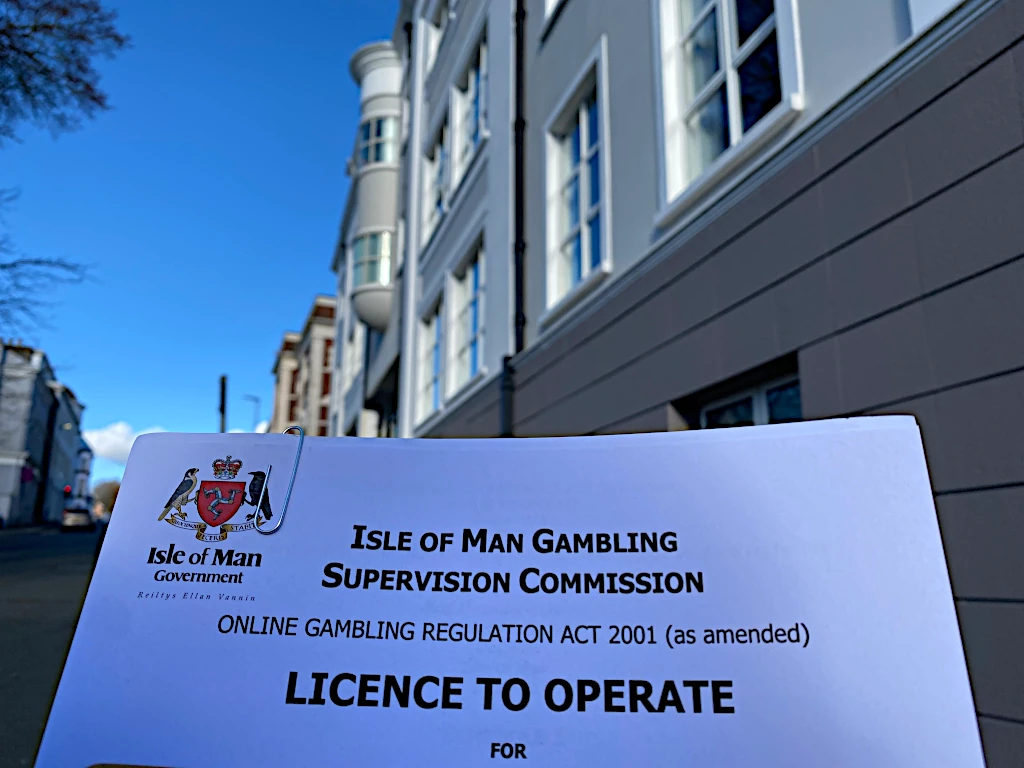
The Isle of Man Gambling Supervision Commission (GSC) is seeking to highlight progress in strengthening enforcement and anti-financial crime measures over the past year, as the jurisdiction works to maintain its reputation in an increasingly competitive global regulatory landscape.
Once regarded as a pioneer in online gambling regulation, the island has recently seen a number of license holders hand back licenses and exit, while rival jurisdictions such as Malta, Anjouan, and Curacao have expanded their global reach. Against this backdrop, the GSC is emphasizing its commitment to international standards and the integrity of the businesses still operating locally.
The GSC introduced a new enforcement framework in 2024 to bring its supervisory regime in line with evolving AML/CFT expectations. More than a year on, the framework has already been used to impose sanctions and civil penalties where remediation could not be achieved.
Since April 2023, the regulator has completed 57 AML/CFT-focused inspections using a risk-based approach that prioritizes licensees by size, model, and compliance history. Roughly 10 percent of inspections led to enforcement investigations, though most deficiencies were addressed through remediation and education.
The regulator has also leaned on thematic desk-based reviews, prompted by international reports such as those from the UNODC, to sharpen its oversight of emerging risks. These reviews have informed targeted inspections, contributed to the National Risk Appetite Statement published in May 2025, and shaped ongoing legislative changes aimed at strengthening the island’s defenses against criminal misuse.
Where material risks cannot be remediated, enforcement remains a necessary tool. However, the GSC stresses that remediation is the preferred route where possible, with enforcement reserved for cases of repeated noncompliance or serious risk. Notably, several enforcement investigations since April 2023 were curtailed when the licensees in question surrendered their licenses altogether, reflecting the broader trend of operators exiting the island.
The regulator has also expanded cooperation with local and international agencies. Earlier this year, the GSC entered into a data-sharing agreement with the Isle of Man Police, building on new powers under the Gambling (Permitted Disclosures) Order 2025. Memoranda of understanding with peer regulators are also being refreshed to enhance cross-border information sharing.
Looking ahead, the GSC says it plans to expand its ability to analyze data, refine its risk-based supervision, and further embed cooperation with stakeholders. Regulators are keen to underscore that these measures are designed to safeguard the island’s reputation and ensure that the Isle of Man remains a credible place to do business.
But the timing of the message is significant. With a shrinking pool of license holders, a MONEYVAL visit on the horizon, and other jurisdictions stepping up to capture market share, the Isle of Man’s challenge will be to prove that a strong regulatory approach can coexist with an attractive environment for operators.
As the B2C grey market model is slowly fading away, the island has to reinvent itself and focus on more sustainable models such as B2B, while modernizing processes within the GSC and carrying out internal reforms to catch up with the market and remain competitive.
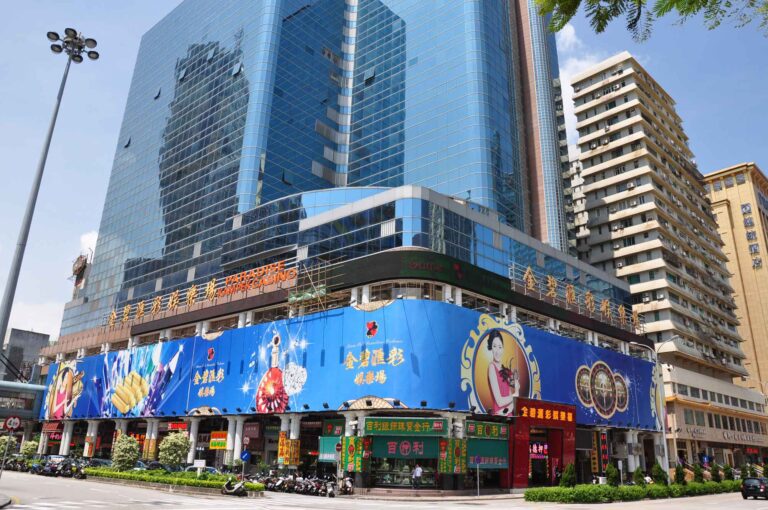
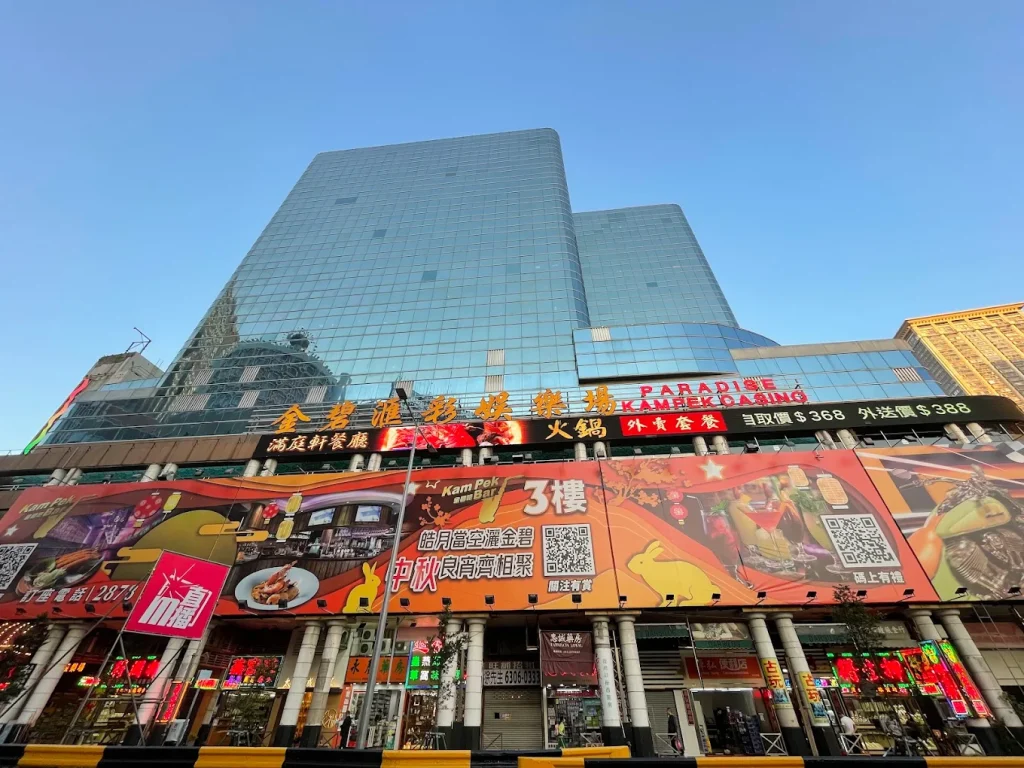
Paradise Entertainment has warned investors that it expects to report a ‘material reduction in the reported revenue and profit attributable to shareholders’ following the non-renewal of its casino management contract for Casino Kam Pek Paradise in Macau, which expires on December 31st, 2025.
The Hong Kong-listed gaming equipment supplier and satellite casino operator disclosed that it received notification on June 9th that its provision of casino management services to Casino Kam Pek Paradise would not be renewed or extended upon expiry of the service agreement with SJM Resorts. The company has managed the property since 2007, spanning nearly 18 years.
According to AGB’s calculations, revenue from the satellite casino operation reached HK$382.6 million ($49.1 million) in the first half of 2025, accounting for 75.3 percent of total revenue of HK$507.9 million ($65.2 million). This suggests the company could lose roughly three-quarters of its revenue once the satellite casino contract ends.
In an earlier interview with AGB, company chairman and managing director Jay Chun said Paradise Entertainment would pivot its business strategy to focus on gaming equipment operations.
Strong interim results despite looming contract expiry
Despite the impending contract termination, Paradise Entertainment reported solid interim results for the first half of 2025. Revenue rose 19.4 percent year-on-year to HK$507.9 million ($65.2 million), compared with HK$425.3 million ($54.6 million) in the same period of 2024.
Profit attributable to shareholders surged 48.5 percent to HK$172.5 million ($22.1 million).
The revenue boost was mainly driven by higher income from casino management services and strong sales of electronic gaming equipment and systems in Macau. Casino management services revenue climbed to HK$382.6 million ($49.1 million) from HK$356.5 million ($45.7 million) a year earlier. Meanwhile, gaming systems revenue nearly doubled to HK$125.4 million ($16.1 million) from HK$68.1 million ($8.7 million).
The company’s gaming systems segment performed particularly well, with revenue from sales and leasing of electronic gaming equipment in Macau surging 83.3 percent to HK$125 million ($16 million). Growth was largely driven by increased demand for Live Multi Game terminals and related products.
Gross profit for the period reached HK$328.6 million ($42.2 million), up 27.3 percent from HK$258.2 million ($33.2 million) in the first half of 2024. Adjusted EBITDA rose 43.4 percent to HK$211.8 million ($27.2 million), compared with HK$147.7 million ($19.0 million) a year earlier.
Casino Kam Pek Paradise continued to deliver steady performance in the first half of 2025, generating gross gaming revenue of HK$698.9 million ($89.8 million), up 7.2 percent from HK$651.7 million ($83.7 million) in the same period of 2024. The casino operates 30 gaming tables along with 100 slot machines and electronic table game machines under Paradise Entertainment’s management.
Dividend payout raised
Paradise Entertainment declared an interim dividend of HK$0.075 per share for the six months ended June 30th, 2025, compared with HK$0.05 a year earlier. The dividend, totaling HK$78.9 million ($10.1 million), is expected to be payable on October 15th to shareholders on record as of September 19th.
The company also distributed a final dividend of HK$0.11 per share for 2024, amounting to HK$115.7 million ($14.9 million), which was paid in June 2025.
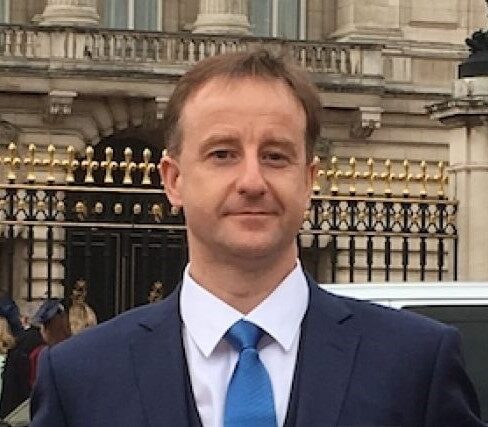
Philippines-listed technology provider DFNN has appointed Charles R. McIntyre, a senior New Hampshire Lottery executive, as Independent Board Advisor to strengthen its efforts against illegal gaming.
Charles R. McIntyre
The appointment, approved during a special board meeting on August 22nd, comes as the Philippines considers a potential ban on all online gambling due to social harm concerns.
According to the company’s filing with the Philippine Stock Exchange on Tuesday, McIntyre brings more than 20 years of leadership experience in the lottery and regulatory sector to DFNN’s advisory team. He previously served as Assistant Executive Director and General Counsel of the Massachusetts State Lottery Commission from 2003 to 2010, where he ‘managed legal compliance and operations for a $4.7 billion lottery system.’ McIntyre, a licensed attorney, was inducted into the PGRI Lottery Hall of Fame in 2017 in recognition of his expertise in gaming law.
DFNN said the appointment reflects its strategic response to growing regulatory pressure on the Philippine gaming industry. As government officials and lawmakers raise social harm concerns to justify potentially banning online gambling, industry players are intensifying responsible gaming measures to demonstrate compliance with emerging standards.
In its filing, the company stated: ‘Mr. McIntyre’s appointment strengthens DFNN’s commitment to expanding its global knowledge and expertise in compliance and in the unified issue of combating illegal gaming.’ DFNN added that his expertise will ‘further enhance DFNN’s compliance framework and governance structures, ensuring that its gaming sector operations continue to adhere to internationally recognised legal and ethical benchmarks.’