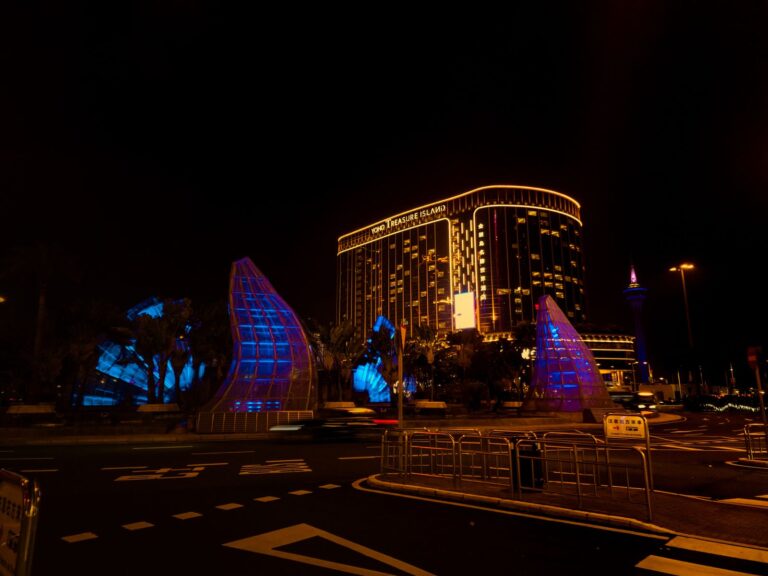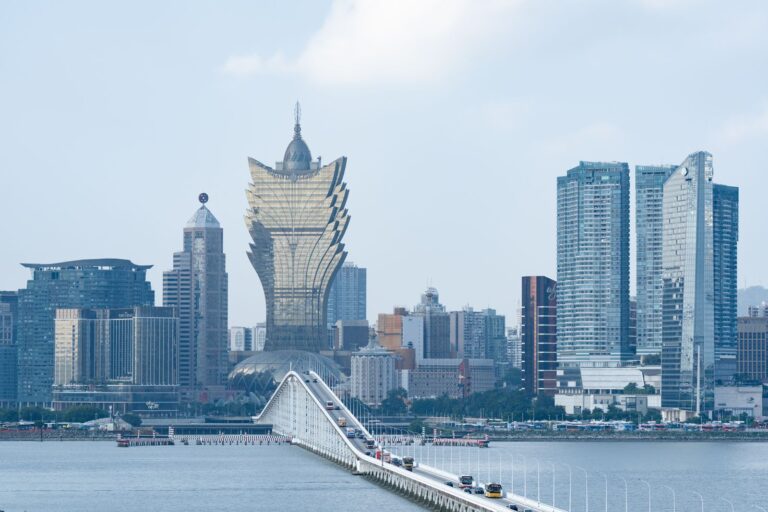

Stress tests. Night tourism. More improvements to transportation and infrastructure. All of these are needed for Macau to reach its goal of 40 million tourists in 2025 without hitting a saturation point.
“There’s no problem with 40 million tourists,” notes integrated resort expert and University of Macau professor Glenn McCartney.
The academic, who has been based in Macau for over 25 years, notes that the overtourism issue has long been a sticking point, even resulting in the proposal of a tourism tax – which was largely shot down by industry experts even before Macau reached its 39.4 million tourist peak in 2019.

But should Macau try and place a cap on how many people can enter the SAR?
“There’s no issue for Cotai. The big integrated resorts can handle mass numbers because they have such a large footprint. If you can gravitate a lot more people out of the heritage centers to the Cotai Strip, that relieves pressure. The Macau peninsula remains difficult,” notes the expert.
Saturation point
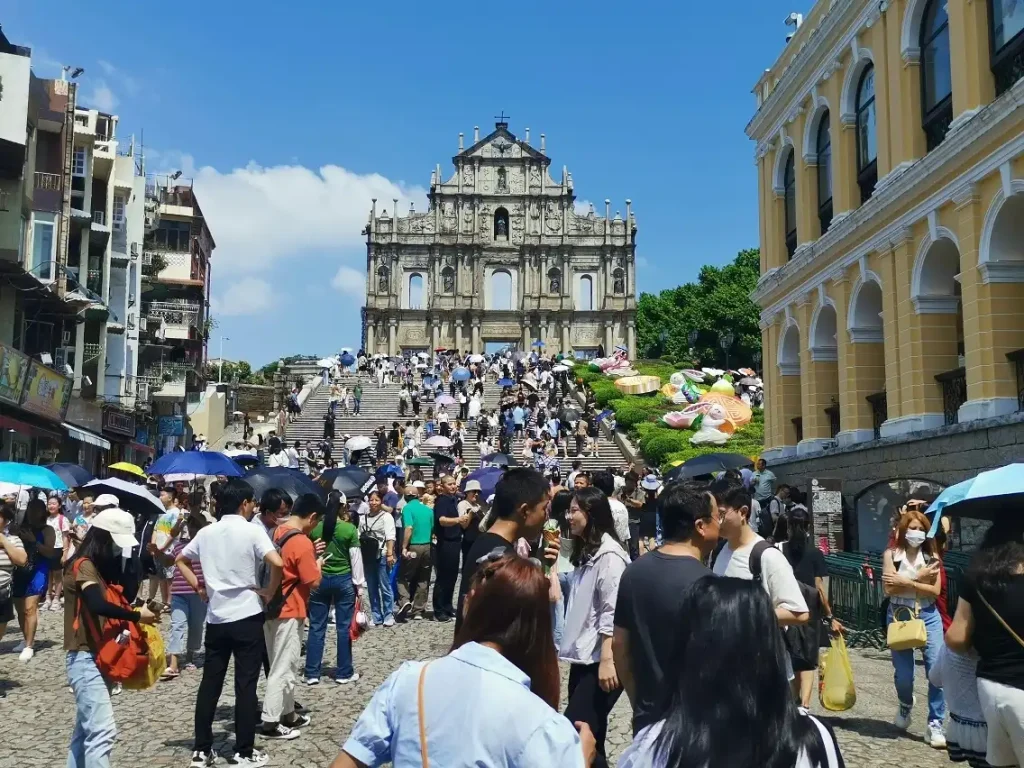
Anyone who has been in Macau during its key holidays – such as the Golden Weeks (huge contributors to gross gaming revenue) and Chinese New Year – know that the city becomes impossible to navigate, at least at key points such as St. Paul’s Ruins and the surrounding UNESCO-classified Heritage Center.
But the mass influx is expanding beyond the main expected dates, and even the improvements made to infrastructure during the three-year-long COVID shutdown that the city experienced can’t yet keep up.
Patrick Lo, lecturer at the Macao University of Tourism (UTM)’s Faculty of Creative Tourism and Intelligent Technologies, notes that “The most important thing is Macau as a travelling destination should always aim at making visitors and residents happy and satisfied with their surrounding environments and facilities.”

UTM’s International Center for Tourism and Hospitality Research (ICTHR) has for years been studying Macau’s tourism carrying capacity, looking at “different service aspects such as transportation (inbound and outbound), retail, hotel, food & beverage, tourism and recreational attraction,” notes Lo. And, instrumentally, this includes feedback from both visitors and residents.
The academic highlights that the way the best solution could lie less in policy and more in tourists understanding Macau’s dynamics.
“Education and promotion are more important and welcome to tackle the issue. Education to visitors that Macau always has worth-visiting activities round the year to enable spreading the visitors number more evenly by non-peak visits. And therefore Macau can explore more diversified activities such as music festivals, concerts and international sports events (both indoor and outdoor), in order to achieve the evenly widespread programmes throughout the calendar”.
Day-trippers
Professor McCartney notes that technology plays a key role in how Macau can evaluate exactly who Macau’s visitors are, what they want to see, where they go, and how to shuttle them around to avoid a city-wide standstill.
This is particularly important for key holidays but not only so. While there has been impressive facilitation of entry into Macau through its borders, and key visa policies which have pushed the influx of mass tourism, off-calendar events – driving up to 15,000 per show – have laid bare not only infrastructure shortcomings but also how few people are actually staying in hotel rooms (despite operators claiming 90+ percent occupancy).
In the first seven months of the year Macau welcomed 13.6 million ‘day-trippers’. With the liberalization of visa policies and its proximity to its main major market Guangdong, the proportion of people choosing to enjoy Macau without spending a night is unlikely to drop.
Sure, overnight visitation was up by 2.6 percent in 2Q25, but same-day visitation rose by 25.8 percent. And Macau wants to continue this drive of mass, as it assumes that non-gaming spend will increase along with it.

But that’s not the case.
Overall per capita spending is down. Visitors are more focused on social media content than consumption. Non-gaming spend by visitors in 2Q25 dropped 12.8 percent yearly, to just MOP1,950, even worse than the first quarter.
Events are the main salvation, with analysts noting a significant uptick in casino spend during periods such as Jacky Cheung’s concerts at Galaxy. But overtourism is truly looming.
Public-private collaboration and night tourism
“When the infrastructure has the issues of overcrowding at attractions, border clearances, transportation hubs and hotels, and if there is increased wear and tear of public facilities and civic places, these are main saturation indicators,” notes Lo.
So, what can be done?
Amongst ongoing calls from experts, Macau has also proposed to improve its ‘night tourism’, something it has objectively failed to follow through on, aside from the efforts by gaming operators in regards to events. Restrictive sound control rules and a harsh stance by the municipal affairs body limit any type of outdoor nighttime activity – even including esplanades for bars and restaurants.
How exactly this coincides with the granting of separate zones for the city’s six concessionaires to develop as non-gaming tourism drivers remains a question.
A potential workaround is the establishment of a “nighttime tourism economy director” – proposes Professor McCartney. This avenue could focus on synergy between venues and entertainment, but also allow for transportation and infrastructure support that would allow the shuttling of potential visitors between venues, something currently only available via the city’s taxi fleet (and select buses).
This could also potentially change ‘day-trippers’ into ‘night-trippers’ (not the best tourism slogan, granted), alleviating stress and offering more spending possibility, particularly as most of the patrons are unlikely to book a hotel room.
Macau may well track 40 million visitors this year and undergo the stress tests that come with it. But while the city may have the capacity, it may relegate itself to one-off visitation, lower spend, and possible pushback from the population who tire of clients who take photos and don’t want to open their wallets.
The mass market strategy may look good on paper, but if nobody’s making money, nobody’s happy.
In a saturated city, everything stops.