

Home Blog Page 299

Macau FY25 GGR increase could reach double digits: Seaport after LVS meeting

0

The rebound in Macau’s gross gaming revenue in recent months has been driven by ‘higher spend by wealthy Chinese, increased agency and junket business, more visitation and higher frequency’.

According to Seaport Research Partners Senior Analyst Vitaly Umansky, growth has mostly been ‘driven by higher ends of the market’. However, the overnight base mass is still ‘weak’ even as day-tripper business grows.

For the year overall, the outlook ‘looks good, with double-digit growth in GGR (gross gaming revenue) for the market possible’.

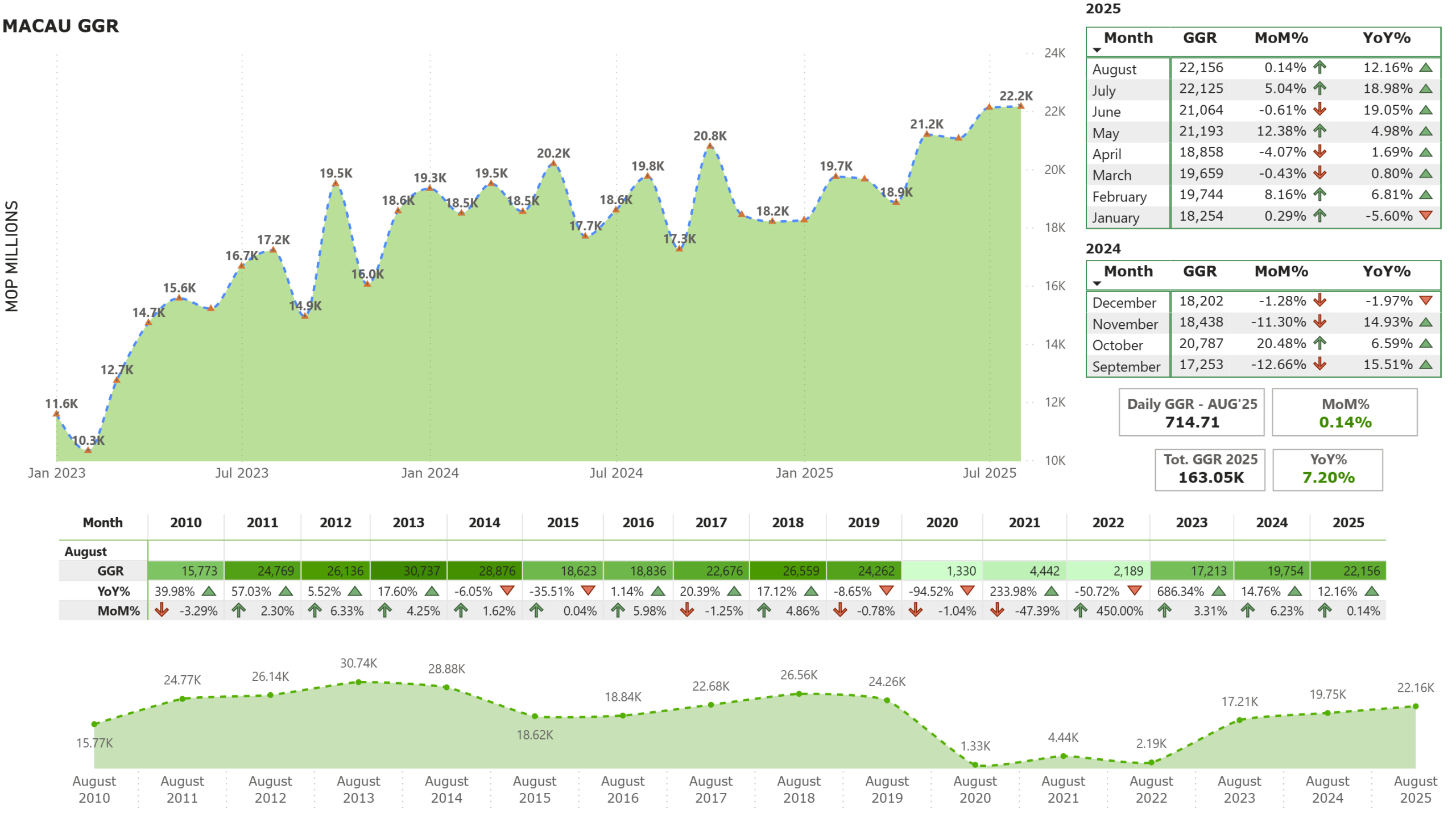
Macau saw a total of MOP140.89 billion ($17.51 billion) in GGR during the first seven months of the year, up by 6.5 percent yearly.

Earlier this month, Umansky highlighted that July had delivered the best GGR month since COVID, at MOP22.12 billion ($2.75 billion), up 19 percent yearly, noting it was ‘significantly better’ than initial expectations.

The analyst also noted that ‘visitation growth remains robust and spend per visitor is improving’.

The new analysis of the Macau market notes the possibility GGR growth could exceed its revised FY25 GGR growth forecast of 9 percent, driven by ‘increased marketing and improving China consumer sentiment, coupled with stronger higher quality average visitation into Macau’.

Outlook for Sands China

The indication of the possibility for double-digit growth this year comes after Seaport’s meeting with Las Vegas Sands, during Day 2 of its 2025 Seaport Annual Summer Conference.

Aside from the overall market takeaways from the meeting, Umansky noted that ‘Sands has been revamping its marketing and player reinvestment to be more competitive in the market and to grow revenue, EBITDA and share’. But he does caution that ‘Sands is still in the early days of the revamped marketing effort’.

The Londoner Macao, Sands China, Macau, Las Vegas Sands

Now that the revamp of its Londoner property is finalized, marketing efforts are likely to redouble.

‘Player reinvestment dollars will go up, but ratio to revenues may start coming down/holding steady from last quarter levels,” notes the analyst, also pointing out how operational expenditure should increase in the low single digits as more labor is required to operate more open gaming tables.

‘The company will grow EBITDA sequentially. Higher growth in the market may benefit Sands due to its large capacity in hotel rooms and gaming positions,’ he furthers.

The expectation is that Sands China could raise dividends ‘as business improves’, hoping to hit up to $1.5 billion, of which – notes Umansky – Las Vegas Sands will receive over 72 percent.

The analyst also opines that LVS may ‘continue to buy back some Sands China stock to increase its ownership’.

Reef Casino Trust profit plunges 23.9% in 1H25 amid regulatory costs and takeover bid

0

Reef Casino Trust, operator of the Reef Hotel Casino in Cairns, Australia, reported a significant decline in financial performance for the first half of 2025, with net profit attributable to members falling 23.9 percent to AU$1.65 million ($1.02 million) compared to AU$2.17 million ($1.34 million) in the same period last year.

The trust’s revenue from ordinary activities also decreased, dropping 3.3 percent to AU$11.24 million ($6.94 million) from AU$11.62 million ($7.18 million) in the first half of 2024. This decline in revenue, combined with higher operational costs, contributed to the reduced profitability.

Distributable profit, a key metric used to determine distributions to unitholders, fell 23.9 percent to AU$3.30 million ($2.04 million) from AU$4.34 million ($2.68 million) in the prior period. Consequently, unitholder distributions were reduced to 6.63 cents per unit compared to 8.71 cents per unit in the first half of 2024.

Chair Wendy Morris attributed the challenging performance to several factors impacting the trust’s primary income source – rentals from the Reef Hotel Casino complex. “Total revenues at the Reef Hotel Casino were above the prior comparative period, however, higher costs primarily the casino supervisory levy and costs in relation to achieving regulatory uplift requirements resulted in lower rentals for the Trust,” Morris explained.

The trust’s performance was further impacted by transaction-related costs associated with a proposed takeover bid. According to the report, distributable profit would have been approximately AU$536,000 ($331,000) higher without these costs.

Despite revenue challenges at the complex level, some segments showed resilience. Hotel room revenues increased 9.4 percent, supported by strong bookings from interstate visitors. Table gaming revenues also rose 6.8 percent, though this was offset by a 0.3 percent decline in electronic gaming revenue and a 3.3 percent decrease in food and beverage sales.

The trust faces ongoing challenges from regulatory changes following the Casino Control and Other Legislation Amendment Act 2024, which has resulted in increased compliance costs and regulatory fees. Additionally, the slow recovery of international tourism to pre-COVID levels continues to impact visitor numbers.

In the near future, the trust is subject to a takeover bid from Iris Cairns Property Pty Ltd, offering AU$3.72 ($2.30) per unit, which would value the trust at approximately AU$185.3 million ($114.5 million). The board has unanimously recommended unitholders accept the offer, subject to certain conditions including regulatory approval and an independent expert’s assessment.

The trust maintains total assets of AU$100.96 million ($62.39 million) and an unused debt facility of AU$13.0 million ($8.03 million), providing financial stability despite the current performance challenges.

Suspended Thai PM testifies in court ahead of crucial August 29th verdict

0

Thailand’s suspended Prime Minister Paetongtarn Shinawatra appeared before the Constitutional Court on Thursday, August 21st, to testify in a case seeking her removal from office. The court is scheduled to deliver its verdict on August 29th.

The 39-year-old, daughter of former Prime Minister Thaksin Shinawatra, faces accusations of failing in her constitutional duties during a leaked phone conversation with former Cambodian leader Hun Sen regarding Thailand’s border dispute with Cambodia.

Dressed in a black business suit, Paetongtarn smiled and greeted reporters as she arrived at the court in Bangkok alongside Prommin Lertsuridej, a senior adviser who is also named in the case.

The controversy stems from a June phone call between Paetongtarn and Hun Sen, Cambodia’s longtime ruler and father of the current premier, which was later leaked online. During the conversation, Paetongtarn addressed Hun Sen as “uncle” and referred to a Thai military commander as her “opponent,” remarks that drew sharp criticism within Thailand. Conservative lawmakers accused her of showing deference to Cambodia and undermining the military, a powerful institution in Thai politics.

The leak triggered major political fallout. The main partner in Paetongtarn’s ruling coalition withdrew in protest, nearly collapsing her government. A group of senators subsequently petitioned the Constitutional Court, arguing that she had violated constitutional provisions requiring “evident integrity” and “ethical standards” among ministers.

Paetongtarn, who has defended her conduct and insists she acted in Thailand’s national interest, assumed office less than a year ago after her predecessor was removed by the same court. She was suspended from duty last month while the case proceeds.

If ruled against, she would become the third Shinawatra family member to be forced out of office, following her father Thaksin and her aunt Yingluck, both of whom were ousted in military coups. The case highlights Thailand’s enduring political divide, with two decades of confrontation between the conservative, pro-military, pro-royalist establishment and the Shinawatra camp, seen by critics as a challenge to traditional order.

Adding to the uncertainty, the Thai government on July 9th, 2025, officially withdrew the Entertainment Complex Bill amid strong public opposition. The legislation, which proposed legalizing casinos and developing integrated resorts to spur tourism and spending, faced widespread political and social pushback before being scrapped.

The leaked conversation also strained Thai-Cambodian relations, contributing to their deadliest border clashes in decades in June. The fighting left more than 40 people dead and displaced 300,000 residents along the frontier.

MIXI Australia makes final cash bid for PointsBet, extends offer deadline

0

MIXI Australia on Thursday raised its all-cash takeover offer for bookmaker PointsBet and extended the bid deadline to August 29th, declaring its proposal “last and final” in a move that heightens pressure on rival bidder Betr.

In its latest dispatch today, MIXI Australia, a unit of Japan’s MIXI Inc, said shareholders who accept the offer would receive AU$1.25 ($0.80) per share, or AU$1.30 ($0.84) if MIXI secures more than 90 percent of PointsBet shares. The company stressed that the AU$1.30 ($0.84) price was final and would not be increased.

The cash offer, MIXI argued, provides “certainty” compared with Betr’s all-scrip proposal, which is subject to shareholder approvals and tied to the future value of Betr’s shares. MIXI currently holds 37.1 percent of PointsBet following acceptances from several institutional and long-standing shareholders.

“Betr’s proposal remains conditional, uncertain in value and timing, and depends on synergies that the PointsBet board itself has described as materially overstated,” MIXI said in a statement.

Betr, which is offering 4.219 shares for each PointsBet share, has pledged a potential share buy-back of up to AU$200 million ($128 million).

On Tuesday, PointsBet welcomed stronger disclosure requirements imposed on Betr after its unsolicited scrip-based offer.

The revisions followed undertakings to Australia’s Takeovers Panel, which led to the withdrawal of an earlier shareholder meeting on a selective buy-back and the release of a replacement bidder’s statement lodged with the corporate watchdog ASIC.

PointsBet said the revised filing better outlined the risks of Betr’s bid, including uncertainty around the proposed buy-back, and reiterated its board’s unanimous support for MIXI’s cash offer.

In its latest dispatch, MIXI noted that the buy-back is dependent on an uncommitted debt facility and could be reduced in size and price.

It also highlighted its funding strength, pointing to about AU$942 million ($603 million) in cash reserves at parent company MIXI, pledging to pay PointsBet shareholders within 10 business days of acceptance.

The company said its bid will close on August 29th and will not be extended further, except if required under Australian takeover law.

TikTok gambling ad ban begins August 22nd in Philippines’ safety push

0

The Philippine Department of Information and Communications Technology (DICT) confirmed that video-sharing platform TikTok will stop all Real Money Gambling (RMG) advertisements starting Friday, August 22nd.

The decision marks the latest step in the government’s intensified crackdown on online gambling.

According to the Philippine News Agency, DICT Secretary Henry Aguda announced Wednesday that TikTok voluntarily agreed to halt gambling ads in response to President Ferdinand R. Marcos Jr.’s directive and the administration’s campaign for a safe digital environment. The move is seen as a significant development for regulators seeking to curb the proliferation of online gambling across digital platforms.

“It is significant for global platforms like TikTok to support the government’s digital safety efforts,” Aguda said, stressing that stopping RMG ads will help protect the public, particularly young people.

The announcement follows growing regulatory pressure on digital platforms. On August 18th, Senator Sherwin Gatchalian called on regulators to act swiftly against online gambling operators allegedly embedding their services in widely used digital applications, including messaging apps such as Viber and Telegram, and e-commerce sites like Lazada.

His appeal came shortly after the Bangko Sentral ng Pilipinas (BSP) issued a directive that led major Philippine e-wallet providers GCash and Maya to cut ties with online gambling platforms. Gatchalian criticized what he described as a “malicious and predatory practice” infiltrating some of the country’s most popular digital services.

Online gambling, Philippines, Online gambling ban, gambling addiction, Online gaming ban

The government’s anti-gambling campaign reflects mounting concern over the surge in RMG advertisements on social media, which promote online casinos, betting apps, and related services. These ads have raised particular alarm over their accessibility to minors and other vulnerable groups.

President Marcos has underscored the need to protect Filipino users, especially the youth, from digital risks such as online gambling, scams, misinformation, and data exploitation. His administration’s efforts aim to ensure that internet access in the Philippines is not only fast and affordable but also safe and responsible.

Senator Gatchalian has also filed legislation to strengthen online gambling regulations, linking its growth to social issues including crime and mental health challenges. He warned that authorities must act quickly to prevent mobile phones and online applications from turning into gambling hubs.

The Philippine Senate is preparing to summon e-wallet providers, banks, telecommunications firms, and the BSP to explain why gambling-related payments persist despite ongoing enforcement measures—signaling heightened scrutiny of the country’s digital gambling ecosystem.

Daily Asia Gaming eBrief: SkyCity pushing ahead with equity raise, financials stable

0

Good Morning. Diluting a whiskey can help bring out its textures. That may be the approach SkyCity is taking towards the $140 million equity raise that it’s advancing despite some shareholder trepidation. The group aims to raise funds for ongoing projects expected to deliver strong returns, even as fiscal 2025 results were fairly solid. Moving to the Philippines, Suntrust is reassuring investors that there is no cause for concern, as it aims to reverse its deficit by gains from the completion of its Westside City project. And in the online world, PAGCOR’s Chairman says that online gaming spend has halved since the central bank banned e-wallet providers from allowing gambling-related links.

What you need to know


On the radar


AGB Intelligence

SkyCity Auckland, SkyCity Entertainment, New Zealand

SkyCity pushing ahead with equity raise to improve financial stability

SkyCity Entertainment Group has decided to go ahead with a $140 million equity raise, in order to improve financial stability amongst difficult market conditions. The move comes despite some pushback from shareholders but aims to help finance ongoing projects with strong expected returns. The funding round comes even as its fiscal 2025 results were stable, with strong increases to EBITDA and profit, despite a slight downturn in overall revenue.


Corporate Spotlight

Why Asia’s iGaming operators must rethink risk strategy | SEON

SEON,Winning Trust, Stopping Fraud: Why Asia’s iGaming Operators Must Rethink Risk Strategy

Winning Trust, Stopping Fraud. Asia Pacific’s iGaming market is expanding extremely fast, and a new wave of digital-savvy players is pushing demand through the roof. But the rise in adoption has outpaced regulation in many markets, and fraudsters have taken notice.


Industry Updates


INTELLIGENCE | ASEAN | CAREERS

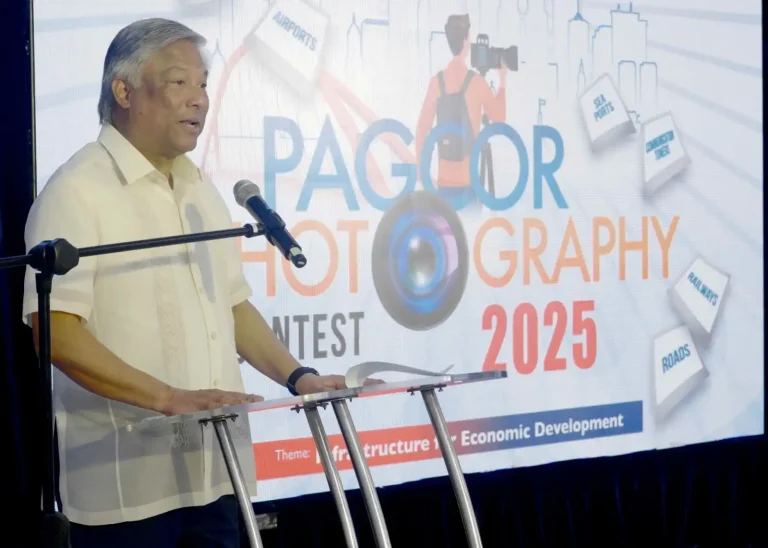
PAGCOR Chairman: online gaming transactions down by 50% since e-wallet links ban

0

The head of the Philippines’ gaming regulator says that online gaming transactions dropped by up to 50 percent since the central bank ordered e-wallets to remove links to gambling sites.

That’s according to statements from the Philippine Amusement and Gaming Corporation (PAGCOR), Alejandro H. Tengco, during a House committee hearing on Wednesday, as cited by local media the Inquirer.

Tengco highlighted that the drop in transactions has also been accompanied by a rise in illegal gaming platforms.

On August 14th, the Bangko Sentral ng Pilipinas (BSP) issued the directive to e-wallet operators. This includes banks’ payment apps and websites.

PAGCOR’s Chairman told politicians that he could “assure” that the licensed entities under its jurisdiction “followed the BSP directive”, but lamented that “it’s really hard to go after” illegal sites.

He stated that 60 percent of online gaming industry operators are illegal, noting that “they operate in countries like Russia, Dubai, Abu Dhabi, and Cambodia”.

Tengo noted the higher bonuses being offered by the illegal operators to encourage repeat behavior, noting that some 12,000 illegal gaming sites are in operation, compared to 77 licensed sites under PAGCOR.

“Everything we hear about kids who are addicted, I can assure you that (the illegal unregulated sites) are the cause of this problem now”.

He also highlighted that PAGCOR does not have the direct power to shut down illegal operators, can simply identify them and “hopefully the law enforcement agencies can move to shut them down”.

However, the official did indicate that minimum bet and deposit requirements for digital platforms are being considered, to discourage excessive gambling.

Despite the changes, Tengco is still expecting PAGCOR to generate some PHP116.65 billion ($2.04 billion) in revenue this year, with up to PHP65 billion ($1.14 billion) coming from the online gaming sector.

SkyCity pushes ahead with $140M equity raise, as results improve for fiscal 2025

Despite pushback from major shareholders, SkyCity Entertainment Group is pushing ahead with a NZ$240 million ($140 million) equity raise, even amongst improvements in EBITDA and profit.

In a Thursday release, the company’s CEO Jason Walbridge noted that “Our announcement today, to raise NZ$240m of equity, will improve our financial stability in the current market conditions and provide us with the right foundations to step prudently into the opportunities that are ahead of us. We know what we need to do and we’re leaning into it”.

SkyCity’s largest shareholder had reportedly rejected plans for the equity raise, calling it “ludicrous”.

The new scheme encompasses the issuing of 343 million new shares, amounting to approximately 45.1 percent of the existing shares on issue. The new shares ‘will rank equally in all respects with SkyCity’s existing ordinary shares’.

The equity raising is split between an NZ$81 million ($47.21 million) placement to eligible investors and a NZ$159 million ($92.67 million) entitlement offer.

Aside from the equity raising, SkyCity is also targeting asset monetization, with an expected NZ$200 million ($116.56 million) to be released ‘over the next 12-18 months’. These include the sale of an office building and potentially its Auckland carpark concession.

Financial year results

In results released on Thursday, the group noted that it saw a 5 percent drop in group revenue, to NZ$825.2 million ($480.93 million), due to ‘lower spend per visit and higher VIP customer churn in Adelaide’.

Group EBITDA rose by a significant 56.4 percent yearly to NZ$216.1 million ($125.94 million), in large part due to a NZ$139 million ($81 million) significant one-off item in fiscal 2024.

The group managed to reverse a loss of NZ$143.3 million ($83.52 million) in fiscal 2024 to a profit of NZ$29.2 million ($17 million), despite a AU$27.3 million ($15.9 million) impact due from the settlement related to SkyCity Adelaide.

Speaking of the results, Walbridge noted that “Our financial results reflect the difficult operating environment we’ve navigated in FY25. The delayed economic recovery in New Zealand has led to lower discretionary spend impacting our business and that has come through the same time as a period of elevated investment”.

This investment is expected to pay off however, with the New Zealand International Convention Center (NZICC) ‘on track to open in February 2026’, precluded by a ‘solid pre-opening pipeline of events’.

The group was also highly content to note that its suitability to continue to operate SkyCity Adelaide was confirmed via Independent Review, and that its Carded Play was live across all of its New Zealand sites.

Outlook

Looking ahead, Walbridge notes that “We expect overall market conditions will continue to be challenging in the short term. This continues to be a challenge for us as the ongoing delay in the economic recovery in New Zealand comes at the same time as elevated costs related to upgrading our regulatory systems and B3 program, pre-opening costs for NZICC in February and the expected launch of regulated online casino gaming in winter 2026”.

This places expectations for underlying EBITDA to be within the range of NZ$190-210 million ($110.7-122.4 million), with capex to be about NZ$116 million ($67.7 million) in fiscal 2026.

“Looking to FY27, we expect earnings to improve with NZICC expected to be breakeven on a stand-alone basis and the regulated online gaming business targeted to deliver breakeven in the first year of operation in FY27,” noted the CEO.

Sands China launches NBA ticket sales in major non-gaming push

0

Tickets for October’s NBA China Games in Macau, a central part of Sands China‘s largest non-gaming initiative to date, went on sale on Wednesday, highlighting a key development in the city’s bid to diversify its economy through sports-driven tourism.

According to a check by AGB, the ticket launch has sparked discussion on Chinese social media, with many users sharing tips on how to secure seats. Online travel platform Trip.com has introduced package deals that include accommodation at The Grand Londoner, priced between RMB17,999 and RMB54,999 ($2,470–$7,500) for two people, bundling tickets with sports tourism products.

The Brooklyn Nets and Phoenix Suns will face off at the Venetian Arena from October 10th to 12th, with tickets ranging from MOP488 ($60) for entry-level seating to MOP24,888 ($3,100) for VVIP floor access.

Sands will also host a high-profile “NBA Fan Day” on October 11th featuring four-time NBA champion Shaquille O’Neal, Hong Kong singer Keung To, and US rapper MC Jin, with tickets starting at MOP388 ($48).

The exhibition games form part of a multi-year partnership signed in 2024 between Sands China and the National Basketball Association, aimed at positioning Macau as a hub for global sports tourism. The deal covers not only pre-season games but also community outreach programs and initiatives to nurture young athletes. Sands has confirmed the launch of an NBA Flagship Store at The Londoner Macau to expand retail and fan engagement opportunities.

Analysts estimate that each NBA event at the Venetian Arena could generate between $9.6 million and $16 million in local spending, drawing between 30,000 and 50,000 visitors per event. This aligns with the Macau government’s 2028 target of raising non-gaming contributions to 60 percent of GDP, compared with today’s heavy reliance on gaming revenue, which accounts for about 80 percent of tax income.

The NBA’s return underscores Macau’s adoption of a “sports plus tourism” strategy, similar to models seen in Las Vegas and Singapore, where global sporting events are leveraged to attract high-spending visitors. With the government’s commitment to building the City of Sports, Sands China’s NBA initiative represents the largest private-sector investment in non-gaming activities to date.

Wynn Macau sets progressive dividend policy amid market share concerns

0

Wynn Macau announced an interim dividend of HK$0.185 ($0.024) per share for the six months ended 30th June 2025, significantly exceeding analyst expectations and establishing what Citigroup views as a progressive dividend policy that offers ‘downside risk protection’ despite ongoing market share concerns.

The Macau gaming operator’s board resolved on August 20th to declare the interim dividend, which will be paid on September 17th. The announcement surprised analysts, with Citigroup having forecast HK$0.12 ($0.015) per share, making the actual dividend 54 percent higher than expected.

The dividend matches the company’s final dividend per share for fiscal year 2024, despite the first half 2025 earnings per share of only HK$0.04 ($0.005). Citigroup analysts noted that traditional payout ratios do not apply given the low earnings figure, suggesting the board’s decision reflects confidence in the company’s free cash flow sustainability.

‘We believe the Board’s decision to keep the 1H25 DPS unchanged vs. 2H24 implies that Wynn Macau’s FCF is expected to support this level of dividends in a sustainable manner,’ Citigroup stated in its analysis.

The investment bank expects Wynn Macau to maintain the HK$0.185 ($0.024) dividend per share for the second half of 2025, regardless of earnings projections. This would result in total fiscal year 2025 dividend payments of approximately $250 million, matching the upper range of the company’s estimated project capital expenditure of $200 million to $250 million for the same period.

Citigroup’s forecast implies a sector-high dividend yield of approximately 5.6 percent for fiscal year 2025. However, the bank maintained its Neutral rating with an unchanged target price of HK$6.75 ($0.87), citing concerns about potential near-term market share losses for the casino operator.