Grand Korea Leisure Co. (GKL), a subsidiary of the Korea Tourism Organization, reported a 6.5 percent year-on-year decline in casino sales for October 2025, totaling KRW28.56 billion ($20.4 million), according to the company’s latest filing.
The operator of three foreigner-only casinos under the Seven Luck brand said its October revenue also fell 17.9 percent from the previous month, reflecting a slowdown in gaming activity across both table and machine games.
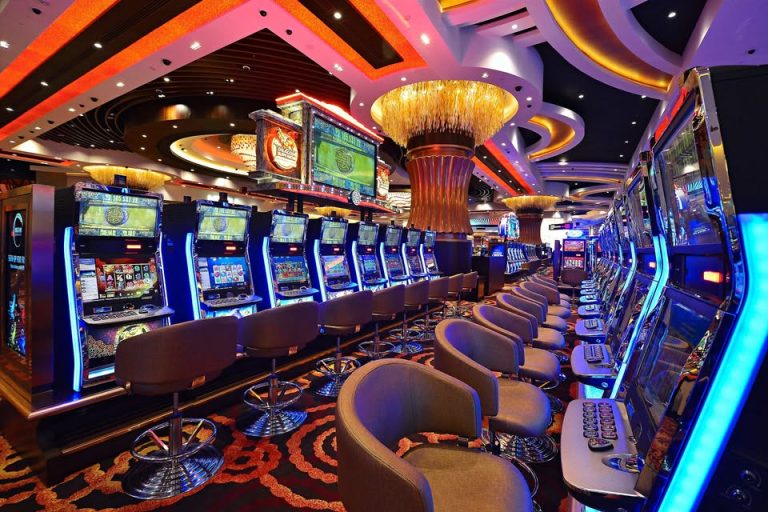
Table games contributed KRW25.15 billion ($18 million) in revenue, down 19.8 percent month-on-month and 9.5 percent lower than a year earlier. Machine game sales were nearly flat, slipping 0.3 percent from September to KRW3.41 billion ($2.4 million), but rising 24.8 percent compared with October 2024.
For the January–October period, GKL’s cumulative casino revenue reached KRW347.28 billion ($247.8 million), up 9.2 percent from the same period last year. Table games accounted for KRW314.42 billion ($224.4 million), marking an 8.7 percent year-on-year increase, while machine games brought in KRW32.83 billion ($23.4 million), up 14.9 percent.
GKL, which operates two casinos in Seoul (Gangnam Coex and Hilton) and one in Busan, caters exclusively to foreign visitors. The company’s performance is often seen as a barometer of South Korea’s inbound tourism trends, particularly among Japanese and Chinese travelers.
The results come amid broader recovery efforts in Korea’s tourism and hospitality sectors, supported by increasing flight connectivity and visa policy adjustments aimed at attracting more overseas visitors.
GKL’s weaker performance contrasts with the robust results of Jeju Dream Tower, which reported a 108.4 percent year-on-year surge in casino revenue to KRW50.44 billion ($36.6 million) in October 2025.
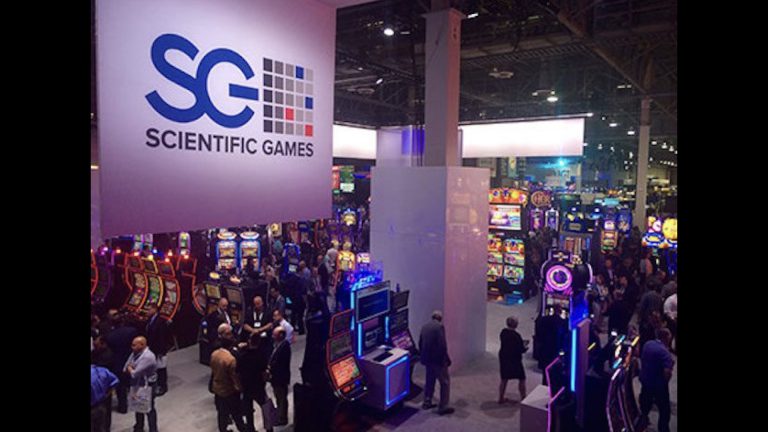
Scientific Games once again joins the National Council on Problem Gambling’s (NCPG) Gift Responsibly holiday campaign, marking its eighth consecutive year of support and reinforcing its dedication to responsible gaming worldwide.
As the world’s largest lottery games company and the first lottery games provider to ever join the Gift Responsibly campaign, Scientific Games continues to advance responsible gaming across its global operations. The company works closely with lotteries and industry partners to ensure that responsible gaming principles are integrated throughout its products, programs and services.
“Responsible gaming is a core pillar of our operations,” said Stephanie McCummings, Senior Director, Public Policy & Corporate Responsibility for Scientific Games. “Through initiatives like the Gift Responsibly campaign, we’re helping raise awareness that lottery games are meant for adults, while supporting our lottery partners in promoting healthy play.”
Scientific Games’ responsible gaming initiatives span research, education and collaboration. The company’s Annual Responsible Gaming Research Study, launched in 2021, provides independent, data-driven insights into player behaviors and attitudes. These findings help lotteries around the world make informed, forward-looking decisions that support safe, sustainable play.
Recent findings show that the vast majority of lottery participants play responsibly and remain in the low-risk category—an important indicator of the overall health of the lottery ecosystem. Initiatives like Gift Responsibly help maintain this balance by promoting awareness and reinforcing positive play behaviors.
The company also partners with regulators, researchers and advocacy organizations to align with emerging global best practices in player protection. In addition to being a Platinum Member of the NCPG, Scientific Games served as the exclusive sponsor of the NCPG National Awards, which honors innovation and advocacy in responsible gaming.
Scientific Games provides games, technologies, services and analytics to 150 lotteries in 50 countries. The company is among the first lottery providers to be globally certified by the World Lottery Association as a Responsible Gaming provider.
Macau has had a record year, with post-pandemic results coming in higher and higher (nearly) every month. But October was the main one to look to, and it did not disappoint. The results show a month that rose above expectations, despite the Golden Week not performing exactly as expected. But high-end play boosted revenue to a level that has investors swooning, and with good reason. Now, it just remains to be seen how the rest of the year will play out.
Every operator can launch, but few can lead. In Asia, leadership is won in the 90 days after go-live, when payments feel effortless, content resonates locally, and every touchpoint builds trust.
The global brand 1xBet has been named a finalist in three categories at the prestigious SiGMA Central Europe Awards: Best on Mobile, Best Sportsbook, and Best User Experience.
The awards ceremony will take place on November 4 in Rome as part of the SiGMA Central Europe international awards, one of the iGaming industry’s main events.
The expert jury noted the high level of the 1xBet’s product development: a user-friendly mobile version, and a personalized approach to displaying content and events based on players’ preferences, including in-depth localisation of the service across various markets. The 1xBet platform considers the individual interests of customers from bet types and selected tournaments to preferred payment methods and visual design, making the interaction as convenient and intuitive as possible.
For 1xBet, participation in SiGMA Central Europe was a continuation of a successful year: the company previously won the Best Sportsbook Operator award at the SiGMA Americas Awards, Mobile Sports Product of the Year at the International Gaming Awards, and Best on Mobile at the SiGMA Africa Awards. Being shortlisted in three categories once again confirms the brand’s leadership in the market.
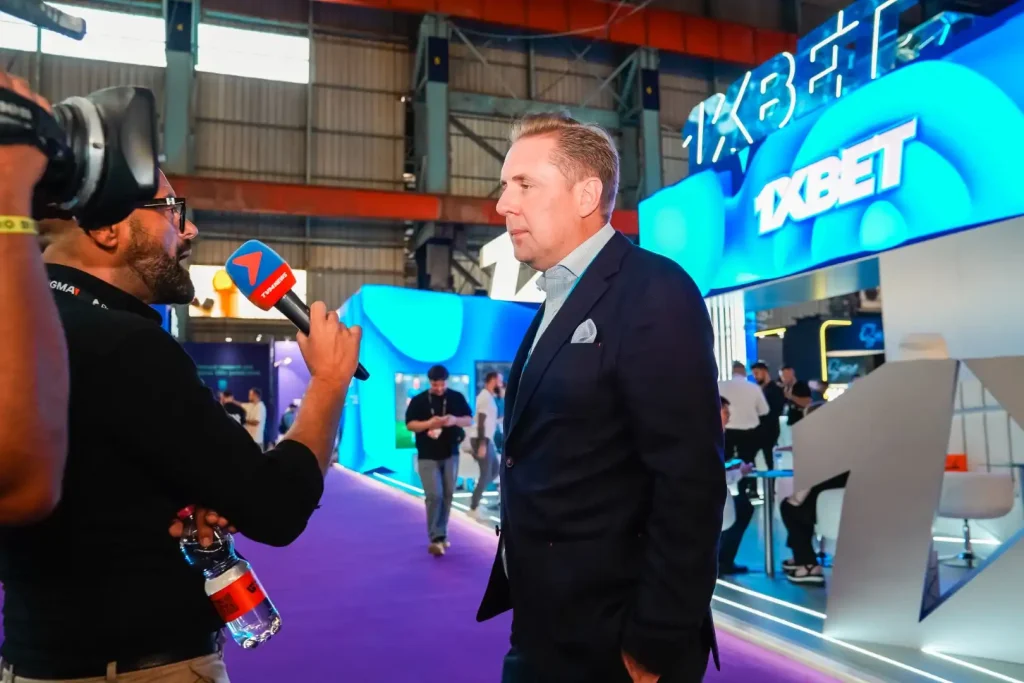
Simon Westbury, Strategic Advisor at 1xBet
“It is always an honor, to be shortlisted by our peers for awards, it shows recognition of the efforts of all our team to deliver a continuously evolving product for our customers that delivers an intuitive, secure and enjoyable experience. The competition for these prestigious awards is always fierce. We wish all nominees a successful evening,” said Simon Westbury, Strategic Advisor at 1xBet.
The company’s continued growth is driven by the 1xPartners affiliate program, which has brought together entrepreneurs, affiliates, and media buyers worldwide for over 9 years. The program covers more than 150 countries, supports over 250 payment methods, and offers lifetime commissions of up to 50% for each referred player.
Partners appreciate 1xPartners for its transparent terms of cooperation, personal support, prompt communication, and exclusive offers for affiliates. The program has repeatedly won international awards, including the SiGMA Awards, IGA, and SBC Awards.
SOFTSWISS has released its long-awaited 2026 iGaming Trends Report, developed in partnership with NEXT.io. The fourth edition of this annual study provides a data-driven roadmap for operators, suppliers, and industry stakeholders as they prepare for the next phase of industry evolution.
The report is based on a survey of over 350 iGaming professionals and the AI-driven analysis of more than 120,000 media headlines, making it one of the most comprehensive overviews of the global iGaming landscape to date. It combines qualitative and quantitative research methods, including independent analytics from Kantar, one of the leading research agencies, and internal insights from 30 SOFTSWISS experts.
Covering key global regions and industry domains, including marketing, regulation, technology, responsible gambling, cybersecurity, and AI, the 2026 iGaming Trends Report offers an in-depth look at the factors driving market transformation:
AI Goes Operational: The perceived importance of AI scored 8.41/10 in 2025, up from 8.15 the previous year, with 56% of surveyed companies listing AI integration as one of their top three business priorities.
Brand Over Bonus: Influencer marketing dominance has dropped by 10 percentage points since 2023, while brand reputation and trust now play a bigger role than bonuses in player acquisition.
Marketing Reinvented: Operators are shifting their focus from performance-only tactics to brand-led ecosystems. iGaming companies are now tracking brand equity metrics, such as Top of Mind and Purchase Intent, as strategic KPIs.
Regulation Reshaped: New markets, including Brazil, Finland, and France, are transitioning to competitive licensing models, while countries such as the UK and Lithuania are introducing tighter advertising controls.
Responsible Gambling 2.0: AI-based tools are being deployed to identify at-risk player behaviour in real-time, a step now expected by regulators in jurisdictions, including Ontario and Greece.
Cybersecurity as a Core Metric: Phishing incidents have increased by 180% since 2023, while 35% of smaller operators report inadequate cyber resilience, highlighting the growing connection between trust, compliance, and player retention.
This year’s edition introduces a new Microtrends section, exploring early-stage shifts and emerging ideas with near-term potential. This dedicated chapter highlights the smaller signals shaping tomorrow’s market opportunities.
Each microtrend is supported by real-world examples and regional case studies, illustrating how forward-looking operators and suppliers can capitalise on these developments before they reach mainstream adoption.
The report also includes a regional outlook developed by NEXT.io, covering Europe’s recalibration, North America’s measured growth, South America’s compliance-driven execution, and Asia’s controlled innovation model.
Ivan Montik, Founder of SOFTSWISS
Commenting on the 2026 iGaming study, SOFTSWISS Founder Ivan Montik said: “In recent years, the sector has moved into maturity. What now matters is disciplined profitability, operational resilience, and the ability to deliver durable player value. This fourth edition reflects that shift. We examine the macrotrends reshaping the sector, the micro-level tactics and technologies that improve performance, and a regional outlook developed in partnership with NEXT.io. Taken together, these chapters provide a structured view of what will shape 2026 and the decisions it asks of operators, suppliers, and partners.”
In support of its ebook, SOFTWISS will present the 2026 iGaming Trends Marathon at the SiGMA Central Europe Summit on 5 November 2025. A four-hour event will take place from 12:00 to 16:00 on the People, Partners & Performance Stage, featuring keynotes and panels with leading global industry experts.
Last year’s edition of the Trends Report attracted significant industry attention, with over 13,000 downloads, confirming its value as one of the sector’s most respected analytical resources.
Google has quietly reclassified sweepstakes casinos as gambling under its global advertising policies, closing a loophole that previously allowed the controversial model to promote itself under the “social casino games” category.
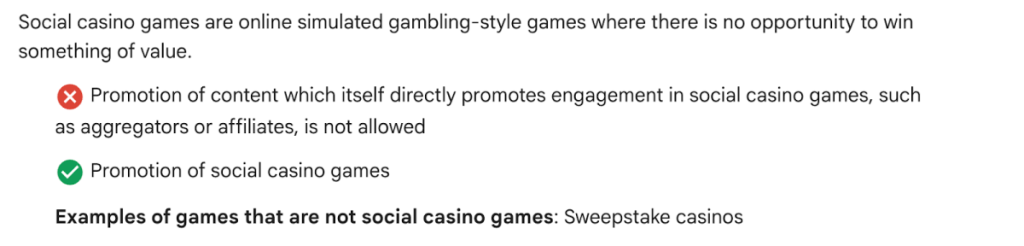
The update, published on October 28th on Google’s official Gambling and Games Advertising Policy page, consisted of just one line: “Examples of games that are not social casino games: Sweepstakes casinos.” Despite its brevity, the amendment marks a significant shift in how the company defines and regulates gaming-related advertising across its platforms.
Sweepstakes casinos have long operated in a regulatory gray zone, positioning themselves as “free-to-play” entertainment. By using dual-currency systems – one for play and one redeemable for cash prizes – operators claimed exemption from gambling laws. However, Google’s new classification effectively aligns these businesses with online gambling operators, subjecting them to the same strict advertising and licensing requirements.
According to Google, social casino games are “simulated gambling games (e.g., poker, slots, roulette, blackjack) where there is no opportunity to win real money or prizes.”
The company emphasizes responsible gambling and requires that all advertisers comply with local laws and industry standards. With the policy change, sweepstakes casinos—whose virtual currencies or prizes have real-world value – no longer qualify for social-casino advertising certification.
This reclassification means sweepstakes casinos must now meet Google’s gambling-advertiser standards, which include holding valid local licenses and displaying responsible gambling information on landing pages. Most operators in this sector do not possess gambling licenses, effectively preventing them from advertising on Google’s platforms, including Search and YouTube.
The decision arrives amid intensifying regulatory pressure on sweepstakes casinos, especially across the United States. California recently became the sixth state to ban dual-currency sweepstakes casinos this year, joining Delaware, Louisiana, and West Virginia, where regulators have issued enforcement notices against dozens of operators.
More than 80 class-action lawsuits have also been filed nationwide, with some targeting high-profile promoters such as rapper Drake, who is associated with Stake.us.
Suppliers may also be affected. Content developers that previously marketed their products under the “social casino” umbrella could lose certification if their games can be redeemed for prizes or used on sweepstakes platforms.
Pragmatic Play recently withdrew its content from US sweepstakes casinos, while Evolution CEO Martin Carlesund stated during the company’s Q3 earnings call that the firm would continue supplying sweepstakes operators only where there are “no regulatory or legal problems.”
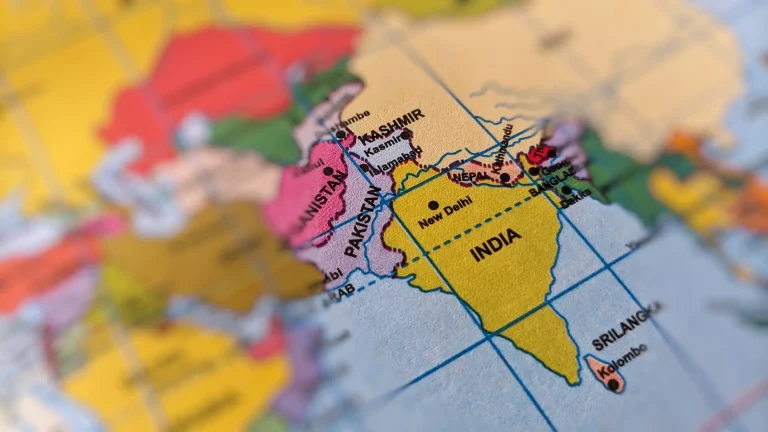
From the 1st of October 2025, a law banning real-money gambling came into effect in India. The country now faces a crossroads of economic and social interests, with experts at 1xBet weighing in on the issue.
The authorities justify this decision as necessary to protect citizens from gambling addiction, fraud, and money laundering. However, the financial consequences of this approach could be significantly larger, ranging from lost investments in the sports industry to the growth of the shadow market.
Sports economy without partners: who loses most
As noted by the company, India’s sports industry, especially cricket, has long been a magnet for private capital. However, the new law has effectively cut off access to investments from local and international gambling brands, which have traditionally sponsored clubs, leagues, and athletes.
Before the ban, India hosted around 400 real-money gaming (RMG) companies, generating nearly $2.3 billion in taxes each year and supporting over 200,000 jobs. One of them, Dream11, India’s largest fantasy sports platform, became the main sponsor of the national cricket team for three years in July 2023, with its logo even appearing on the team’s jerseys. But now, that is history. Another company, My11Circle, valued at $2.5 billion, was a partner of the Indian Premier League. Both companies have stopped operating in the nation.
At the global level, several international betting brands invest in sports development through both sponsorship deals and social programs. Among them is 1xBet, best known for its partnerships with football and cricket clubs, as well as its support for Indian para-athletes and charitable initiatives promoting inclusion in sports.
Under current conditions, betting companies are unable to collaborate with Indian clubs or sports organizations. As a result, Indian sport misses out on significant investments that could support infrastructure, youth programs, and athlete development. A clear example is 1xBet, which actively supports cricket outside India, including the Durban Super Giants and the European Cricket Network, investing in the promotion of the game and the cricket ecosystem development.
Tax losses and regulated market potential
According to the analysis by SCCG Management (“Cricket, Cards and Cash: How India’s Digital Betting Market Is Shaping Global Gaming”), legalized betting could bring billions of dollars to the government each year, creating not only a tax base but also thousands of jobs. Researchers at IJFMR estimate that full legalization could add 0.4–0.6% to India’s GDP in the first three years of a regulated sector.
In contrast, current tax policies and unclear regulations discourage investors. The 28% GST on player deposits is quite high, while most jurisdictions worldwide tax only gross gaming revenue.
These conditions push businesses underground and lead users to play through offshore sites. As a result, the government loses not only tax revenue but also control over financial flows.
Another option would be to adopt a “controlled legalization” model, with moderate tax rates and auditing. Following examples from the UK or the Philippines, such a system could balance government interests with the market’s commercial appeal.
Responsible gambling and government institutions role
As noted by the company, one of India’s main problems, that critics highlight, is the lack of government institutions that could both control the market and support social programs. Regulation is not just about taxes; crucial components are addiction prevention, support for gamblers, and educational initiatives.
In developed jurisdictions, special agencies (for example, the UK Gambling Commission) not only issue licenses but also fund support programs, research, and training initiatives for operators.
As of now, India lacks such structures. Setting up a dedicated commission could be the first step towards proper regulation. Its functions could include issuing licenses, auditing algorithms, monitoring transactions, detecting suspicious activity, and funding psychological support centers.
Ban as risk: economic impact and market consequences
Looking to the experts, consensus is that a complete ban on real-money games threatens a multi-billion-dollar industry. Even now, platforms are challenging the law in courts, and major investors are “freezing” deals, fearing capital losses due to legal uncertainty.
As the firm notes, the ban does not eliminate gambling – it just moves it offshore. Players continue to use international sites outside Indian jurisdiction, do not pay taxes, and – most importantly – do not follow safety standards. As Yahoo Finance notes, this could lead to a “brain drain,” with top game development specialists and analysts moving to more liberal jurisdictions.
In the long term, economic losses could be significant: instead of developing the tech sector, India risks the growth of an illegal market that creates no jobs, pays no taxes, and is beyond government control.
What can be done?
A complete ban on betting in India is an attempt to solve a social problem through administrative measures, but from an economic perspective, it is a strategic mistake. By losing investments in sport, technology, and startups, the government misses the chance to create a controlled, transparent, and socially responsible market.
Regulation, not an outright ban. The path followed by mature economies.
The firm instead proposed that, if India established a legal licensing system for operators and a regulated gambling market, investments from global companies such as 1xBet could flow directly into the country’s economy – into sports infrastructure, educational projects, training centers, and programs for gambling addiction prevention. The government would gain tax revenue, strengthen its position in the global digital economy, and cricket would remain not just a game but a tool for development.
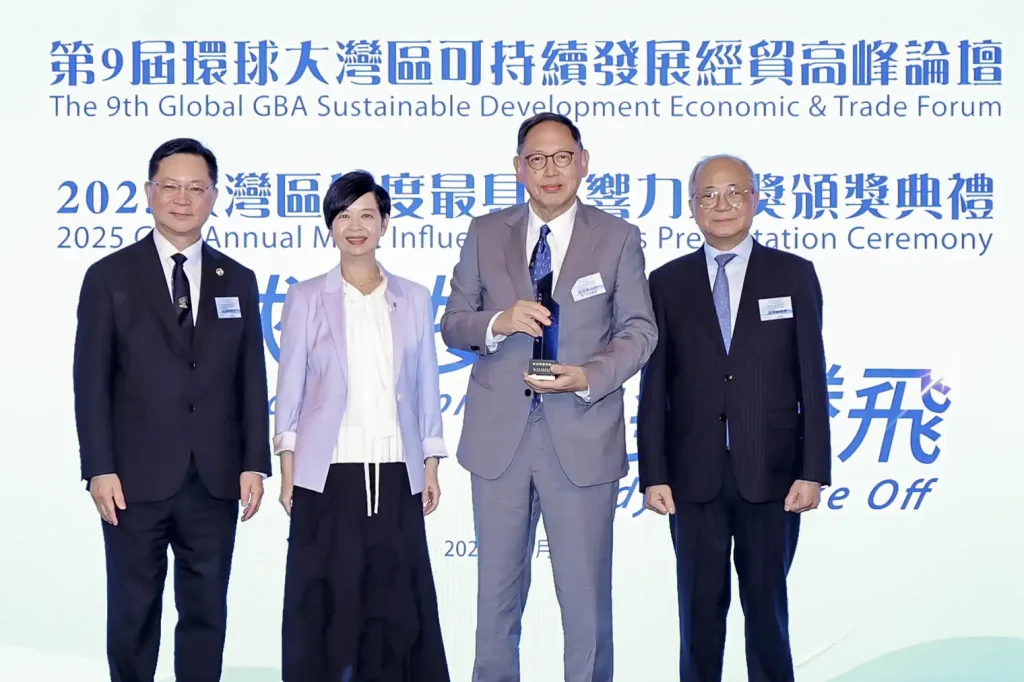
Galaxy Entertainment Group (GEG) has been honored with the “Greater Bay Area Most Influential Award” at the 9th Global GBA Sustainable Development Economic & Trade Forum and 2025 Annual Awards Ceremony in Hong Kong.
This award marks GEG as the first integrated tourism and leisure enterprise to receive the honor. Mr. Philip Cheng, Director of the Galaxy Entertainment Group (GEG), attended the ceremony and accepted the award on the company’s behalf.
Mr. Philip Cheng, Director of the Galaxy Entertainment Group (second from right), accepting the award on behalf of GEG at the ceremony.
During the ceremony, Mr. Philip Cheng stated that, “GEG has consistently upheld the philosophy of ‘World Class, Asian Heart’, striving for excellence in every endeavor. Our flagship property, Galaxy Macau integrated resort, has garnered numerous international and regional accolades. Together with the Galaxy International Convention Center (GICC) and Galaxy Arena, GEG has actively hosted a diverse array of entertainment performances, sports, cultural and artistic events in recent years, earning widespread acclaim from tourists and the public. Looking ahead, GEG remains steadfast in its pursuit of excellence and is committed to contributing to the high-quality and sustainable development of the GBA.”
As an enterprise deeply rooted in Macau, GEG has actively supported the overall development of the integrated tourism and leisure industry through concrete actions.
By continuously introducing diverse and innovative integrated tourism and leisure facilities and services, GEG has earned widespread recognition from stakeholders, and established itself as a leading force in the industry among the GBA.
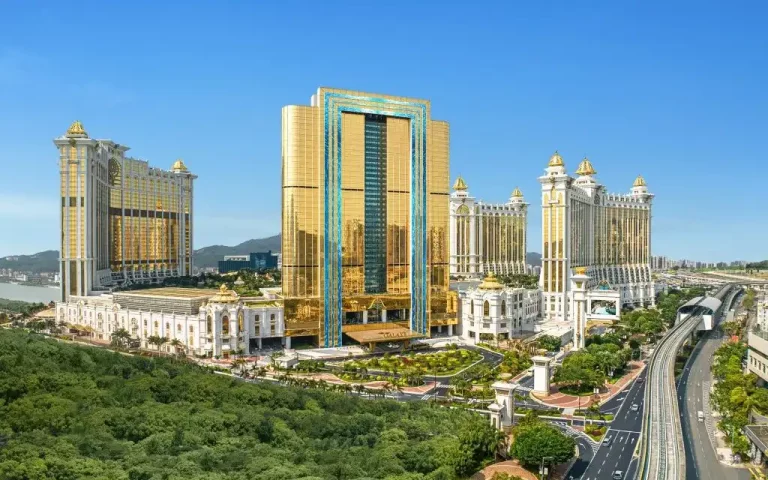
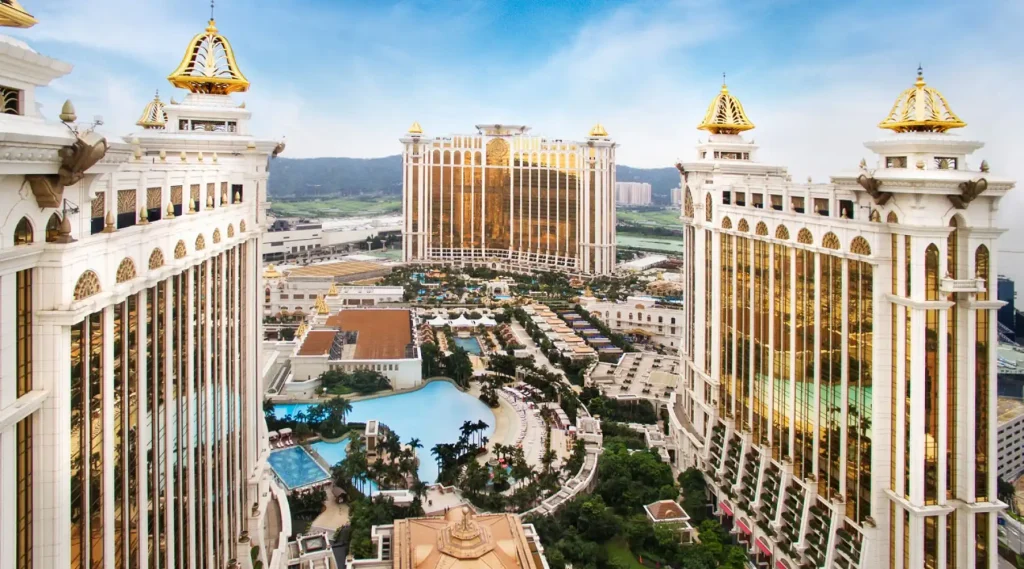
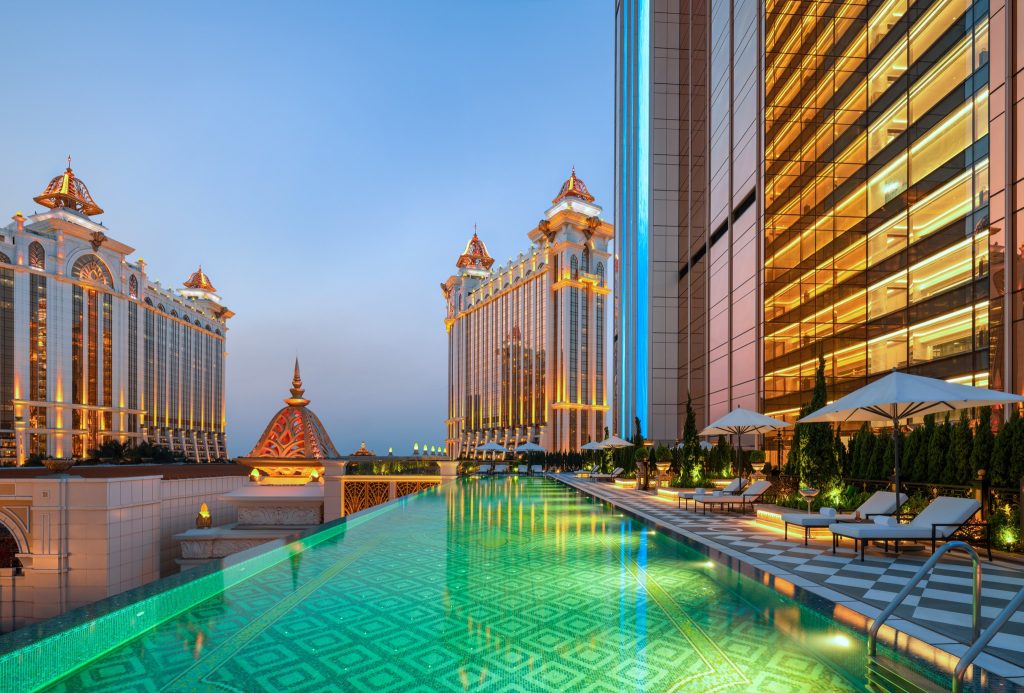
GEG’s flagship property, Galaxy Macau integrated resort, brings together nine international premier hotel brands, over 120 dining options, the world’s leading skytop water oasis – Grand Resort Deck, a Galaxy Promenade housing over 200 international luxury brands, and multiple award-winning five-star spa facilities.
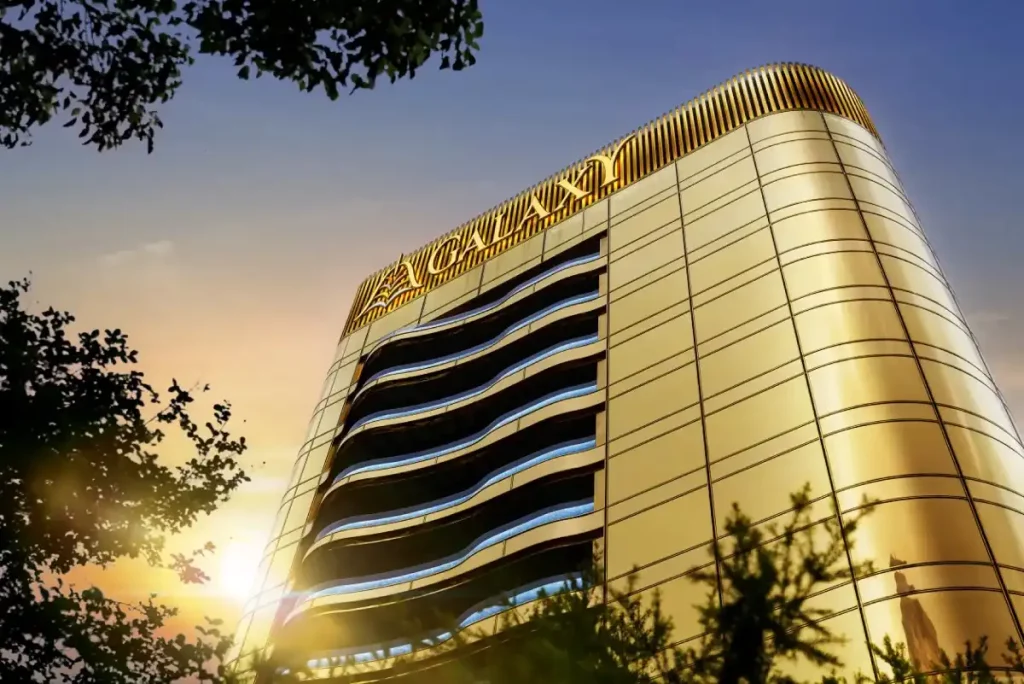
Galaxy Macau
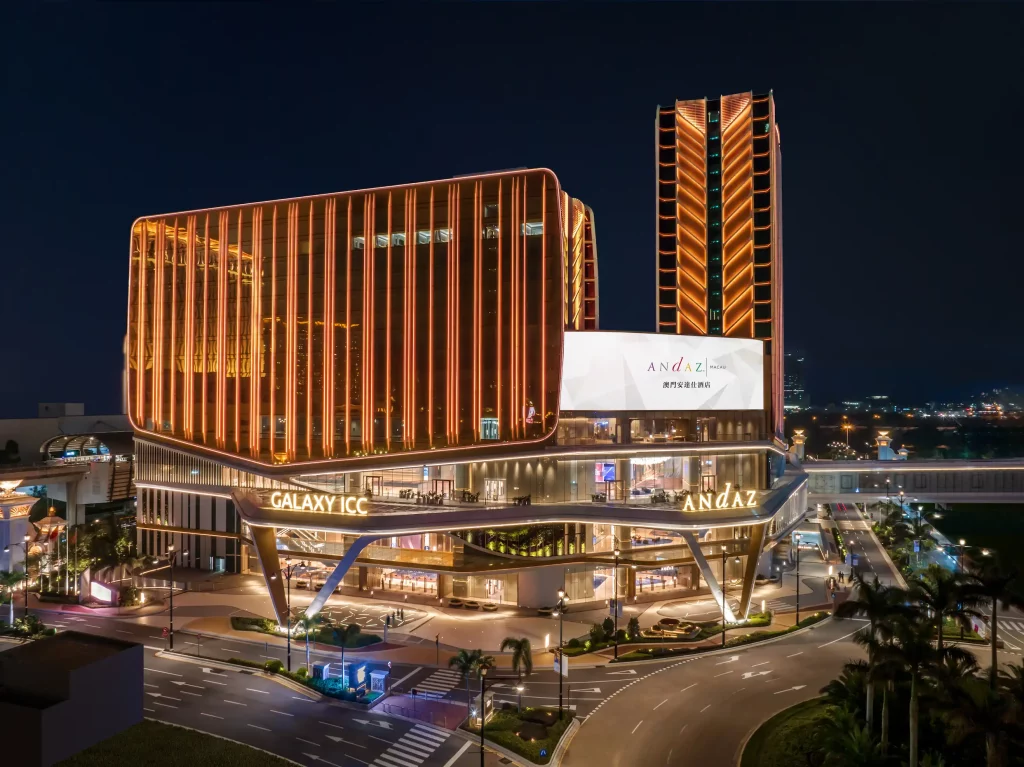
With the launch of Phase 3, which includes the GICC, Galaxy Arena, and two world-class hotel brands – Raffles at Galaxy Macau and Andaz Macau, along with the Capella at Galaxy Macau, which is currently in trial operations, GEG continues to contribute to Macau’s “1+4” appropriate diversification development strategy, enriching the city’s connotation as a “World Center of Tourism and Leisure”.
Raffles at Galaxy MacauAndaz MacauCapella at Galaxy Macau
Upholding the philosophy of “What is taken from the community is to be used for the good of the community”, GEG also actively promotes the sustainable and positive development of the community through various initiatives.
South Korea’s Jeju Dream Tower, operated by Lotte Tour Development, reported a 108.4 percent year-on-year increase in casino revenue in October 2025, supported by strong table game results, higher machine turnover, and steady visitor growth through the second half of the year.
According to the company’s disclosure filed with the Korea Exchange, casino revenue totaled KRW50.44 billion ($36.6 million) in October, up from KRW24.20 billion ($17.6 million) a year earlier, though down 4.7 percent compared with KRW52.95 billion ($38.4 million) in September 2025.
By segment, table games generated KRW48.38 billion ($35.1 million), rising 109.1 percent year-on-year from KRW23.14 billion ($16.8 million) in October 2024, but down 5.3 percent month-on-month. Machine game revenue increased 94.6 percent year-on-year to KRW2.06 billion ($1.5 million), up from KRW1.83 billion ($1.3 million) in September.
For the first 10 months of 2025, cumulative casino revenue reached KRW384.38 billion ($279 million), representing a 56.9 percent increase compared with KRW244.97 billion ($178 million) for the same period last year. Within that total, table games contributed KRW366.89 billion ($266 million), up 59.9 percent year-on-year, while machine games accounted for KRW17.49 billion ($12.7 million), up 12.8 percent.
Casino visitation totaled 58,166 in October, marking the sixth consecutive month above 50,000 visitors. In 2024, monthly visitor numbers typically ranged between 26,000 and 38,000, indicating a significant expansion in customer base this year.
Hotel revenue came in at KRW7.44 billion ($5.4 million), up 7.3 percent from September but down 3.3 percent from a year earlier. Cumulative hotel revenue from January to October stood at KRW66.59 billion ($48.3 million), a 9.4 percent decline year-on-year.
Opened in December 2020, Jeju Dream Tower is Jeju Island’s tallest building and one of South Korea’s largest integrated resorts. The property includes the Grand Hyatt Jeju hotel, casino, and a range of dining, retail, and entertainment facilities.
Kambi Group, a powerhouse of premium sports betting solutions, has announced a new Odds Feed+ partnership with Superbet Group, a leading multi-channel sports betting and gaming operator in Europe and Latin America.
The agreement provides Superbet Group with seamless access to Kambi’s full library of high-quality, traded odds, with the ability to expand its odds package on demand to meet player demand and support evolving strategic needs.
Founded in Romania in 2008, Superbet Group, ranked 11th in EGR’s latest annual Power 50 list, has since grown to become a leading global sports betting and gaming company, operating online and a network of retail betting shops in certain markets. In addition to a strong presence in Brazil, the operator’s flagship Superbet brand is a market leader in Central and Eastern Europe, while the company also operates Napoleon Sports and Casino, initially in Belgium and now also in Romania, having acquired the brand in 2021.
Werner Becher
Werner Becher, CEO, Kambi Group, said: “We are delighted to welcome Superbet Group as our latest Odds Feed+ partner, which is a testament to the quality, choice and trust of our premium odds feed solution. By combining market-leading pricing with the flexibility to expand across sports on demand, we can deliver an offering capable of meeting the needs of the industry’s leading operators. This partnership reflects the strength of our trading capability and the trust Superbet Group has placed in Kambi to support their long-term growth.”
Luke Saunders, Director of Sports Partnerships, Superbet Group, added: “At Superbet, we evaluate every partnership from a customer-centric perspective, focusing on having the strongest and most diverse product portfolio in each market. By partnering with Kambi and its Odd Feed+ product, we gain not only access to world-class pricing across a variety of sports but also the confidence that our offering gains even more quality and depth on the global stage.”
Launched in 2024, Kambi’s Odds Feed+ is the industry’s premium odds feed product designed to give operators an edge in the competitive sports betting landscape. The feed provides access to Kambi’s high-quality pre-match and in-play odds, as well as an extensive library of player props, which are sharpened on a global liquidity pool of billions of bets taken annually across the globe.