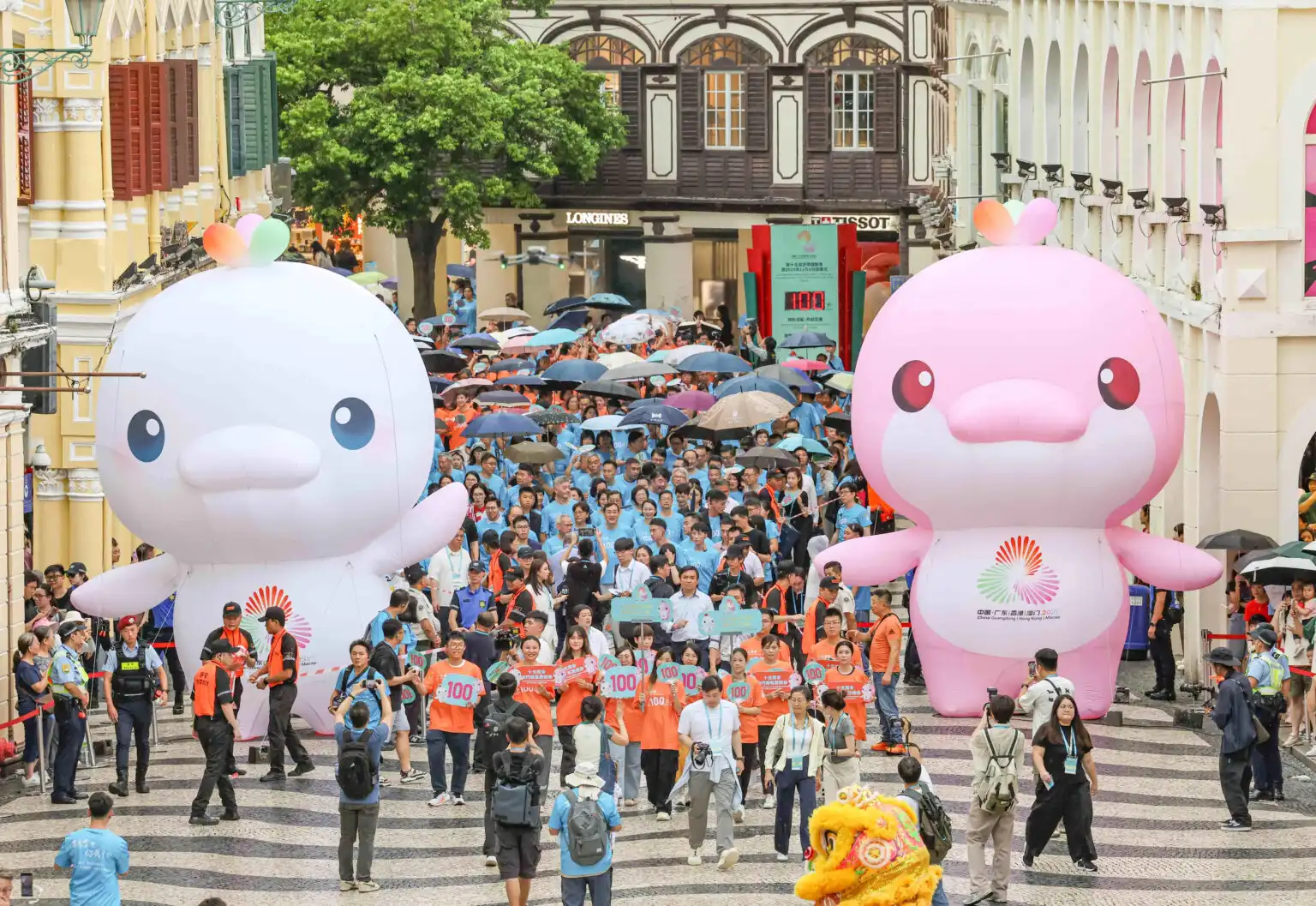
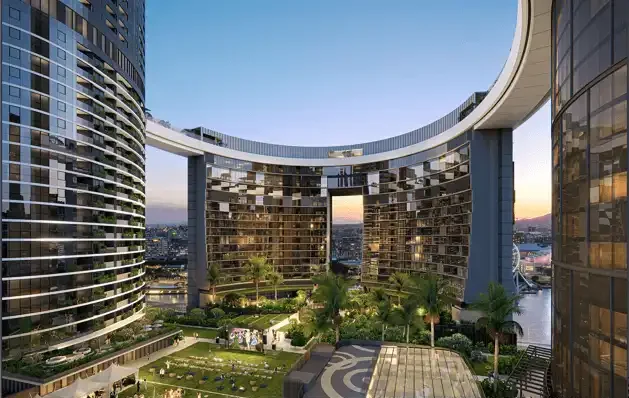
Good Morning. Macau is aiming to transform itself into an event city, even challenging its neighbor Hong Kong, which is vying for the same spot. But, while the non-gaming focus can sometimes draw visitors to the gaming floor, that tends to be less common when hotel occupants are athletes and trainers competing in the National Games. Analysts expect a softer November, compared to a stunning October, but full-year estimates remain sound. Looking to Australia, the joint venture partners in Queen’s Wharf Brisbane have laid out their financial exit strategy, estimating the project will take five years to ramp up its casino.
Macau’s November figures are unlikely to beat those of a strident October, as the impact of the National Games, which the city is co-hosting, comes into effect. Athletes, trainers, and other associated figures are all staying in the city’s hotels, filling rooms with individuals with a low propensity to gamble. On the back of the Grand Prix, both VIP and mass were down during the first two weeks of the month, but Citigroup analysts remain confident in their full-year GGR estimates.
Every operator can launch, but few can lead. In Asia, leadership is won in the 90 days after go-live, when payments feel effortless, content resonates locally, and every touchpoint builds trust.
BetConstruct has announced that Harmony Choice is set to take place on 20 November 2025 in Nairobi, Kenya, as an exclusive industry gathering designed to promote collaboration and shared progress across the global gambling sector.
Harmony Choice Kenya stands as a dedicated meeting point for collective progress, where BetConstruct and its partners come together to foster innovation and support the industry’s long-term evolution.
Each race features 20 bikes across 10 teams, with markets including outright winner, podium finishes, lap one leader, and more. Each market is available in-play as the race unfolds, with a range of side bets also increasing the opportunities to win.
Pragmatic Play’s expanding virtual sports portfolio now features an array of fan-favourite titles, including Penalty Shootout Live, Horse Racing, Steeplechase, Force 1, Darts, and more, providing operators with 24/7, realistic sports betting content that resonates with players worldwide.
Irina Cornides, Chief Operating Officer at Pragmatic Play, said: “With in-play betting, a range of side bets, and a new race every two minutes, Super Bike Racing is a thrilling addition to our virtual sports portfolio.”
BetConstruct has announced that Harmony Choice is set to take place on 20 November 2025 in Nairobi, Kenya, as an exclusive industry gathering designed to promote collaboration and shared progress across the global gambling sector.
The event offers a focused environment for partners to exchange insights, align on strategic goals, and explore future directions shaped by both regional potential and global expertise.
During the event, BetConstruct will present a comprehensive showcase of its portfolio, beginning with its Sportsbook and Casino Suite, the core pillars of its technology framework, each engineered for flexible configuration, scalability, and consistent performance across diverse markets.
A major highlight of the exhibition will be BetConstruct’s Land-Based Solutions, which bring together advanced technology and streamlined management tools to support efficient retail operations. Integrated into this offering is Loya, the company’s loyalty solution for retail betting. Loya addresses long-standing engagement challenges by introducing Anonymous Loyalty, enabling operators to drive repeat visits and strengthen customer relationships without requiring complex registration processes.
Alongside its retail technology, the showcase will also feature Affigates, the standalone affiliate brand that unites affiliate software, programme management, and an extensive global partner network to support expanded acquisition and performance. In addition, BetConstruct will highlight its AI-infused products: CRM AI, Umbrella AI, and the AI Game Recommendation System, demonstrating how intelligent data-driven tools can enhance engagement, anticipate behaviour, automate operational workflows, and support informed decision-making.
Each solution reflects BetConstruct’s ongoing mission to equip partners with the technology, insights, and operational support needed to achieve sustainable growth and deliver tailored experiences in their local markets.
Further contributions to the event will come from CreedRoomz, PopOK Gaming, Pascal Gaming, Stretch Network, and Choice Gaming, each bringing recognised expertise across crash, fast, slot, and live casino development. Their participation underscores the breadth and strength of BetConstruct’s broader partner ecosystem.
Attendees can expect discussions on regional trends, product demonstrations, and networking opportunities focused on collaboration and shared advancement within Africa’s dynamic gambling sector. The event serves as a key platform for industry professionals to exchange perspectives, reinforce partnerships, and explore emerging opportunities shaping the future of the region.
Harmony Choice Kenya stands as a dedicated meeting point for collective progress, where BetConstruct and its partners come together to foster innovation and support the industry’s long-term evolution.
QTech Games has signed its latest supplier partnership with global B2B iGaming content developer and provider Air Dice, enabling its platform customers to access the supplier’s expansive slots catalogue.
These popular titles include Alchemy Archive, Diamond Sky, Coco Cash, Coins Of The Divine, and Piggy Shifter. All these games are recognised for their player-retention features and sticky mechanics, and draw from Air Dice’s deeper well bingo, scratch, dice, slot and more traditional table-games content.
Air Dice offers a growing portfolio of games and tools, premised on three world-class slots studios (including Dice Crafter and Probability Jones), a 70+ strong team and multiple regional offices across Europe. However, this breakthrough announcement with QTech now affords the provider unprecedented international reach across more emerging markets.
Erkki Nikunen, Air Dice Partner & CBDO, said: “At Air Dice, we pride ourselves on working with some of the biggest and most commercially astute businesses, and QTech Games has ensured that we maintain that good company on both fronts. They share our passion for Innovation and flexibility, and do all they can to make things work for the client in a collaborative integration process. Their platform is a gateway to global audiences, so we can’t wait to see how our highly engaging games perform across a greenfield landscape of emerging markets.”
As the fastest-growing aggregator over the past few years, QTech offers the most expansive gaming portfolio around, localised for each region, with native mobile apps, powerful reporting and marketing tools, and 24/7 local-language support.
QTech Games CEO, Philip Doftvik, shared “We’re dedicated to constantly launching more first-class content and product innovation that drives revenue for our partners. So, this deal with air Dice extends our impressive sequential pipeline deep in 2026 – and we’ve so much more to come! In today’s marketplace, only premium games of the highest standard separate you from the crowd, so we’re thrilled to incorporate another premium supplier.”
China has advised its citizens to avoid traveling to Japan, claiming a worsened environment for personal exchanges and a ‘significant risk to the personal safety and lives of Chinese citizens’.
That’s according to state media outlet China Daily, which indicates that the warning is directly tied to comments by Japan’s Prime Minister Sanae Takaichi about Taiwan.
The publication notes that ‘Beijing is prepared for further countermeasures’, aside from those already set out.
Chinese carriers – including Air China, China Eastern Airlines and China Southern Airlines – have announced cancellations of flights to Japan, with some 491,000 tickets already cancelled since Saturday, according to the SCMP.
The carriers have announced special measures for eligible passengers traveling before December 31st to change or refund their tickets free of charge.
According to statistics, Japan welcomed some 7.5 million Chinese tourists in the first nine months of this year, with the visitors accounting for roughly 25 percent of tourism numbers.
Macau and Hong Kong have issued similar travel advisories for citizens traveling to Japan, with Macau’s tourism authority stating ‘since the middle of this year, the tendency for attacks against Chinese citizens in Japan has been increasing’.
Beijing retains a strict ‘One China’ policy, which includes Macau, Hong Kong and Taiwan as part of its national territory.
While the move to restrict Chinese visitation to Japan won’t affect any casinos in the nation, as the first – MGM Osaka – is only set to open in 2027, it represents the strong control that China has over its citizens’ travel. This was also reflected in the recent talks between Thailand’s PM and China’s leader Xi Jinping, in which an assurance that casino legislation would not be pursued resulted in a guarantee that more Chinese tourists would visit the Southeast Asian nation.
The United States and China are taking parallel steps to combat large-scale online scam operations in Southeast Asia, creating an unusual point of alignment between the two powers despite broader geopolitical tensions.
That is according to analysts cited by the South China Morning Post.
The renewed focus follows Washington’s launch last week of the “Scam Center Strike Force,” a coordinated crackdown on cryptocurrency fraud schemes that US officials say defraud Americans of nearly $10 billion annually.
The initiative targets sophisticated criminal groups operating from compounds in Myanmar, Cambodia and Laos, where thousands of trafficked workers are allegedly forced to run so-called “pig butchering” scams. The US Justice Department has described these sites as hubs where victims of human trafficking are held against their will and instructed to target foreign nationals, with proceeds laundered through US-based platforms before being moved offshore.
The United Nations Office on Drugs and Crime (UNODC) estimates that at least 100,000 people have been trafficked into scam compounds across the region, many of which expanded rapidly after the pandemic. These operations are often co-located with legal businesses, including online gambling, and have evolved into “industrial-scale cybercrime” driven by transnational criminal groups.
Recent international enforcement actions have intensified scrutiny. US investigators have seized roughly $15 billion in alleged criminal proceeds linked to Bitcoin transactions, while authorities in the United Kingdom, Taiwan, Singapore and Hong Kong have frozen millions of dollars’ worth of assets. Cambodian conglomerate Prince Holding Group was the latest to draw attention, following asset seizures and allegations that its founder’s wealth was tied to internet-based fraud.
While Washington’s strike force could serve as a framework for broader coordination, analysts quoted by the publication warned against framing the issue as a confrontation with China. The US Justice Department has attributed many operations to “Chinese transnational criminal organizations,” yet both Washington and Beijing have urged Southeast Asian governments to crack down on scam networks. China has also stepped up its own enforcement, including receiving the extradited Chinese-Cambodian gambling figure She Zhijiang from Thailand last week.
Experts say this convergence of interests could open the door to more structured cooperation. Analysts note that Southeast Asian countries endorsed the ASEAN Declaration on Combating Cybercrime and Online Scams in September, committing to stronger law-enforcement coordination and information-sharing mechanisms. They highlight that the US initiative could reinforce these efforts, provided the issue is not politicized.
However, meaningful progress will require addressing governance vulnerabilities in the region. Observers caution that scam operations flourish in places with weak oversight and systems that can be easily manipulated. Without tackling these conditions, they say, Southeast Asia will remain vulnerable to criminal networks that exploit human trafficking and cross-border financial flows.
Hong Kong’s Far East Consortium (FEC) has released further details on its series of transactions with Australia’s The Star Group, outlining funding arrangements, asset transfers and loan structures linked to their Queensland casino and property joint ventures.
According to a supplemental filing on Monday, Far East Consortium said it had completed the transfer of its stake in Destination Gold Coast Consortium (DGCC) to Star, leaving the Australian operator with full ownership of the project and ending FEC’s equity participation.
The Hong Kong-listed developer added that its shareholding in the Charlotte Street joint venture would remain unchanged at 50 percent following the related asset transfers.
The filing also disclosed that the joint venture partners — FEC, Chow Tai Fook Enterprises and Star — had earlier provided AU$53 million ($35.3 million) to support Star’s liquidity amid what FEC described as ‘depressed trading conditions.’
Of that amount, AU$35 million ($23.3 million) was structured as an interest-free loan to a DGCC trust vehicle, which immediately prepaid the funds to Star as a forward distribution from apartment sales at Tower 2 of the Queen’s Wharf Brisbane (Andaz) project.
Repayment of the AU$35 million ($23.3 million) loan will hinge on the completion of apartment sales and the drawdown of a hotel operating loan, with the proceeds of Tower 2 sales expected to fully cover the amount, the company said.
The remaining AU$18 million ($12 million) of the AU$53 million ($35.3 million) package forms the cash consideration payable by the joint venture partners under an implementation deed.
The Far East Consortium group stated that AU$10 million ($6.7 million) has been paid, with the balance due to be offset against an equivalent reimbursement owed by Star.
The group also reiterated the structure of an earn-out mechanism tied to the future financial performance of Destination Brisbane Consortium (DBC), operator of the Queen’s Wharf casino, which opened in August 2024. The earn-out will be calculated for FY2030 based on DBC’s EBITDA and net debt, subject to a cap negotiated between the partners.
At the same time, Far East warned that it may require ‘at least five years’ for the operations of the casino to ramp up and ‘demonstrate their full value’.
In the filing, the group noted that ‘as the Casino only commenced operations on 29th August 2024, and The Star will continue to operate it until a new operator is engaged, the parties recognize that the true value of the DBC- related assets may not yet be fully reflected at this stage’.
The group furthered that ‘the Joint Venture Partners have agreed to pay an earn-out to The Star, the amount of which will be contingent upon the future financial performance of DBC’.
Star is additionally required to reimburse AU$20 million ($13.3 million) in relation to a bank guarantee for the construction of a pedestrian footbridge at the Gold Coast site, to be paid in two tranches — AU$8 million ($5.3 million) on the Final Payment Date set for November 28th and AU$12 million ($8 million) a year later.
The company argued the overall consideration was ‘fair and reasonable’, citing Star’s financial distress, market conditions and the long-term strategic benefits for FEC, which is seeking to expand its presence in Australia’s integrated resort sector.
Regulatory risks warning
The statement also set out regulatory risks tied to casino operations at Queen’s Wharf Brisbane, including compliance with the Casino Control Act, licensing requirements, anti-money laundering rules, and the potential impact of economic downturns and competition from other gaming venues.
FEC warned that any breach of casino agreements or local gaming laws could trigger regulatory actions, including possible suspension of its Hong Kong listing should the operations be deemed unsuitable under local exchange rules.
The supplemental announcement follows earlier disclosures made in August concerning the restructuring of the partnership with Star Group.
In August, The Star secured another financial lifeline after agreeing to offload one of its businesses to East Asian partners. The company signed deals with Hong Kong-based FEC and its subsidiaries, along with Chow Tai Fook Enterprises (CTFE) — collectively the JV Partners — which will purchase one of its four resorts.
Once conditions are met, these agreements will allow The Star to exit its 50 percent ownership and management role in the Queen’s Wharf Brisbane integrated resort, a AU$3.6 billion ($2.4 billion) multipurpose residential and entertainment precinct that began redevelopment in 2015 and only started opening in stages in 2024.
The August deal also included the JV Partners acquiring The Star’s 100 percent stakes in the Treasury Hotel and Treasury Car Park, plus its 50 percent interest in the Charlotte Street Car Park — assets described as ‘strategically critical’ for guest experience.
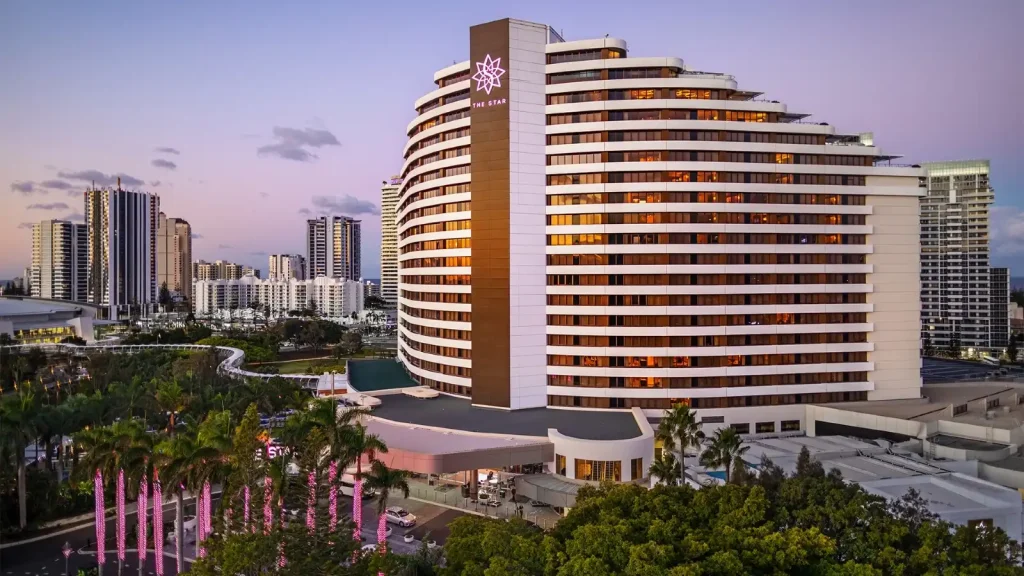
In return, The Star took over the JV Partners’ combined 66.67 percent interest in the Destination Gold Coast Consortium (DGCC), comprising the Dorsett and Andaz towers in Broadbeach.
Negotiations had been turbulent, with an earlier agreement collapsing in August due to disputes over control of the Brisbane casino. That failed deal cost The Star AU$10 million ($6.7 million) in fees, with a further AU$31 million ($20.7 million) payment in September.
Meanwhile, FEC and CTFE retained the option to participate in any new tower at The Star’s Gold Coast premises, though they must pay AU$20 million ($13.3 million) if they decline.
The JV Partners also struck an in-principle deal to refinance Queen’s Wharf’s AU$1.4 billion ($933.3 million) debt due in December 2025, with Bally’s Corporation and the Mathieson family’s Investment Holdings giving unconditional consent.
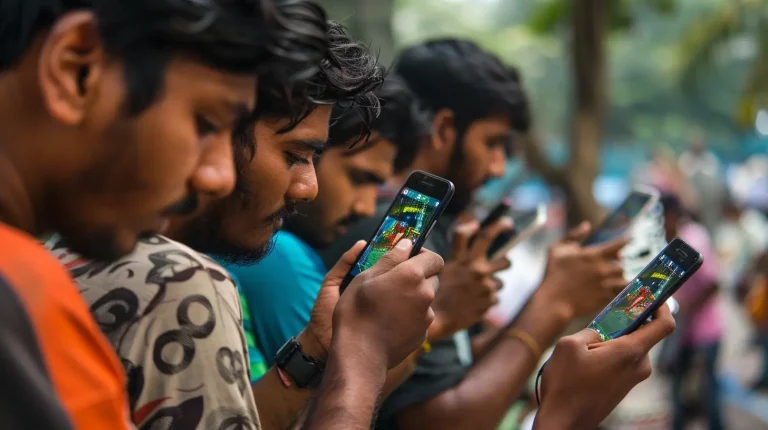
India’s real-money gaming (RMG) industry has suffered one of its most severe disruptions in years, with more than Rs70 billion ($840 million) written off and over 7,000 jobs eliminated as the Promotion and Regulation of Online Gaming Act (PROGA) remains unnotified nearly 90 days after passage.
According to local media outlet Storyboard18, total revenue losses have exceeded Rs100 billion ($1.2 billion), while the government faces an estimated shortfall of Rs56 billion ($670 million) in GST, TDS and income-tax collections.
The collapse has unfolded even before the law has been brought into force. Executives told Storyboard18 that the downturn is being driven almost entirely by uncertainty and expectations of enforcement, rather than actual regulation. Listed companies alone have written off more than Rs70 billion ($840 million), while nearly 7,000 workers have been laid off across technology, operations and customer support functions.
A GST levy of 40 percent on online money gaming—implemented on September 22nd—has intensified the financial strain. Industry estimates point to Rs100 billion ($1.2 billion) in lost revenue, a Rs36 billion ($430 million) GST shortfall, and a further Rs20 billion ($240 million) decline in TDS and income-tax contributions.
Technology and gaming lawyer Jay Sayta criticized the government’s prolonged delay in notifying the Act. “It is surprising that the government, which passed the legislation with alacrity—completing the entire process from cabinet approval to presidential assent in less than 96 hours—is now unable to issue a notification appointing a date to bring the law formally into force for the last three months,” he said.
Sayta added that until PROGA is notified, its penalties cannot legally be imposed and banks are not barred from serving gaming businesses. “Once the notification is issued, they would immediately have to cease all operations,” he said.
Heavy financial impact on global and domestic companies
The financial hit is now visible across quarterly disclosures by both Indian and international firms.
Flutter Entertainment booked a $556 million impairment after its India business, Junglee Games, halted all cash-based rummy operations. The write-down contributed to a $789 million net loss for the September quarter, compared with $114 million a year earlier. CEO Peter Jackson described the regulatory shock as “sudden and unexpected.”
Nazara Technologies recorded a Rs9.15 billion ($110 million) write-down on its investment in Moonshine Technologies, parent company of PokerBaazi, reducing the unit’s carrying value to Rs965 million ($11.6 million) after revenue ceased abruptly.
Canadian investor Clairvest reported an unrealized loss of Rs7.6 billion ($92 million) on its stake in Head Digital Works.
Delta Corp wrote down Rs3.8 billion ($46 million) across its holdings in Deltatech, Head Digital Works and OpenPlay Technologies.
Fintech and payment partners also experience strain
The impact has spilled over to the financial-technology ecosystem. Paytm’s net profit fell 98 percent after recording an impairment of Rs1.9 billion ($23 million) tied to First Games Technology.
Mobikwik saw an eightfold rise in losses, reaching Rs286 million ($3.4 million), while operating revenue declined 7 percent year-on-year.
According to NPCI data, UPI transactions linked to gaming plunged from 351 million in July to 270 million in August.
Within days of the bill’s passage major RMG platforms including Dream11, MPL, Zupee, WinZO and Gameskraft suspended all cash-gaming formats. Messaging platform Hike shut down its RMG app Rush entirely.
Thailand’s economy contracted 0.6 percent quarter-on-quarter in the third quarter, with annual growth slowing to 1.2 percent from 2.8 percent in 2Q25, the National Economic and Social Development Council (NESDC) said, according to The Nation.
NESDC secretary-general Onfa Vejjajiva said the economy grew 2.4 percent in the first nine months of the year. Unemployment eased to 0.76 percent, while headline inflation stayed negative for a second quarter at –0.7 percent.
Thailand recorded a $2.7-billion current account surplus, foreign reserves of $262.4 billion and public debt at 64.8 percent of GDP, The Nation reported.
Despite the weaker Q3 performance, the agency kept its 2025 GDP growth forecast at 2 percent, with average inflation seen at –0.2 percent and a current account surplus equal to 2.8 percent of GDP.
Onfa said global growth assumptions were revised higher but warned world trade could slow next year due to US tariff increases.
Thailand has seen a drop in visitation from China recently, amongst safety concerns and the debate over the possible legalization of casinos in the country. Tourism from China – one of Thailand’s main source markets in previous years – is expected to increase, after the nation’s Prime Minister met with Chinese Prime Minister Xi Jinping and assured the leader that Thailand would not pursue its casino aspirations.