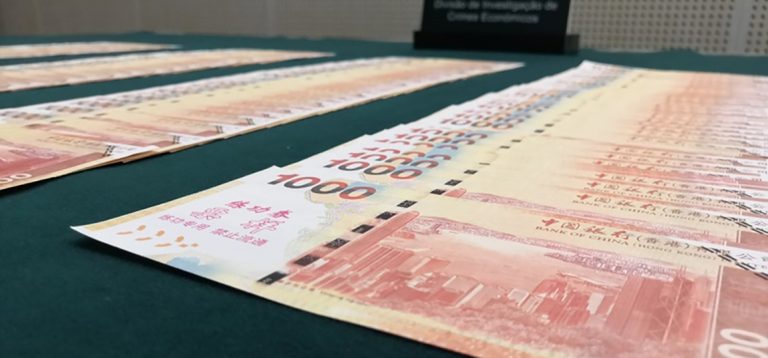
Macau’s Judiciary Police have dismantled an illegal money exchange operation linked to gambling at a watch and jewellery shop inside a Cotai casino, arresting two female employees in a case involving about HK$60 million ($7.7 million) in unauthorised transactions.
Police said the shop had been operating since 2019 and continued to conduct illicit money-exchange activities even after Macau criminalised gambling-related unauthorised exchanges in 2024. Investigators estimate the operation handled roughly HK$60 million ($7.7 million) in illegal transactions, generating about HK$1 million ($128,000) in illicit profits.
According to the Judiciary Police, officers received intelligence suggesting the shop was involved in unlawful exchange activities and placed it under surveillance on December 29th.
During the operation, police observed a gambler from mainland China scan a QR code provided by a shop employee before receiving HK$5,000 ($640) in cash. The money was subsequently used to purchase gaming chips and gamble at the casino, prompting officers to intervene and intercept the individuals involved.
A search of the shop led to the seizure of about HK$500,000 ($64,000) in suspected criminal proceeds, along with a mobile phone believed to have been used to facilitate the operation.
Police said the two arrested employees—one a Macau resident and the other from mainland China—admitted to conducting illegal money exchange under the shop owner’s instructions. They reportedly received additional “overtime” payments ranging from about HK$2,000 to HK$5,000 ($260 to $640) per month for their involvement.
Both suspects have been transferred to the Public Prosecutions Office on suspicion of operating illegal money exchange for gambling purposes. Investigations are continuing to locate the shop owner and identify other individuals linked to the case.
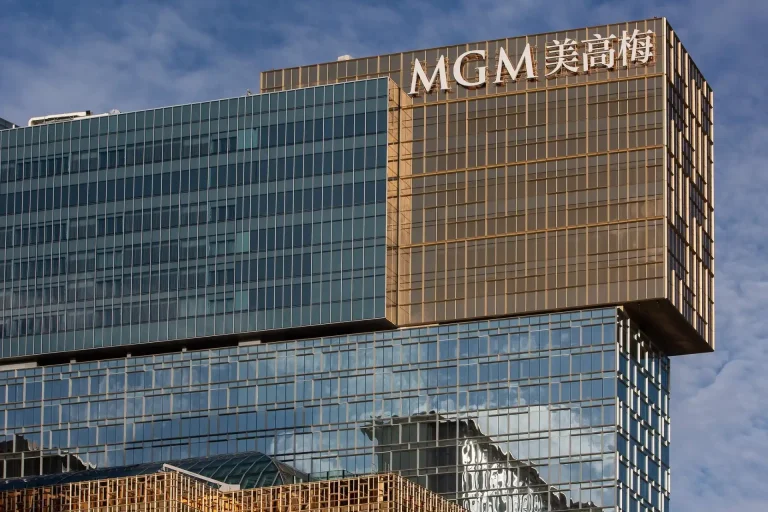
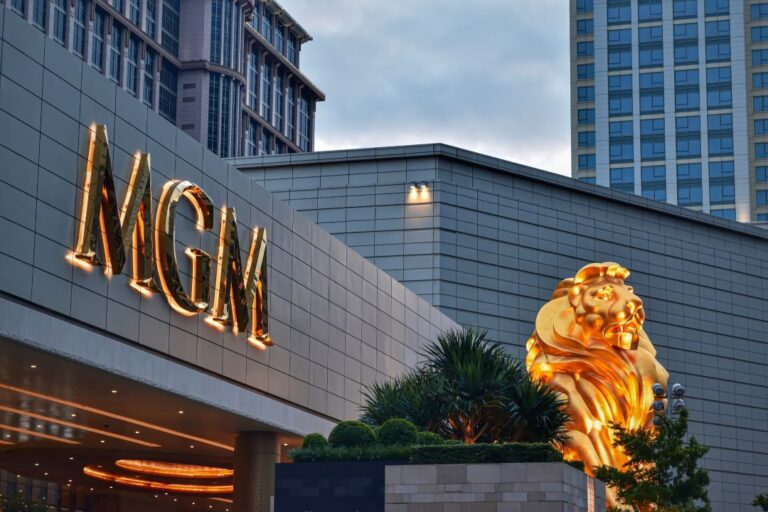
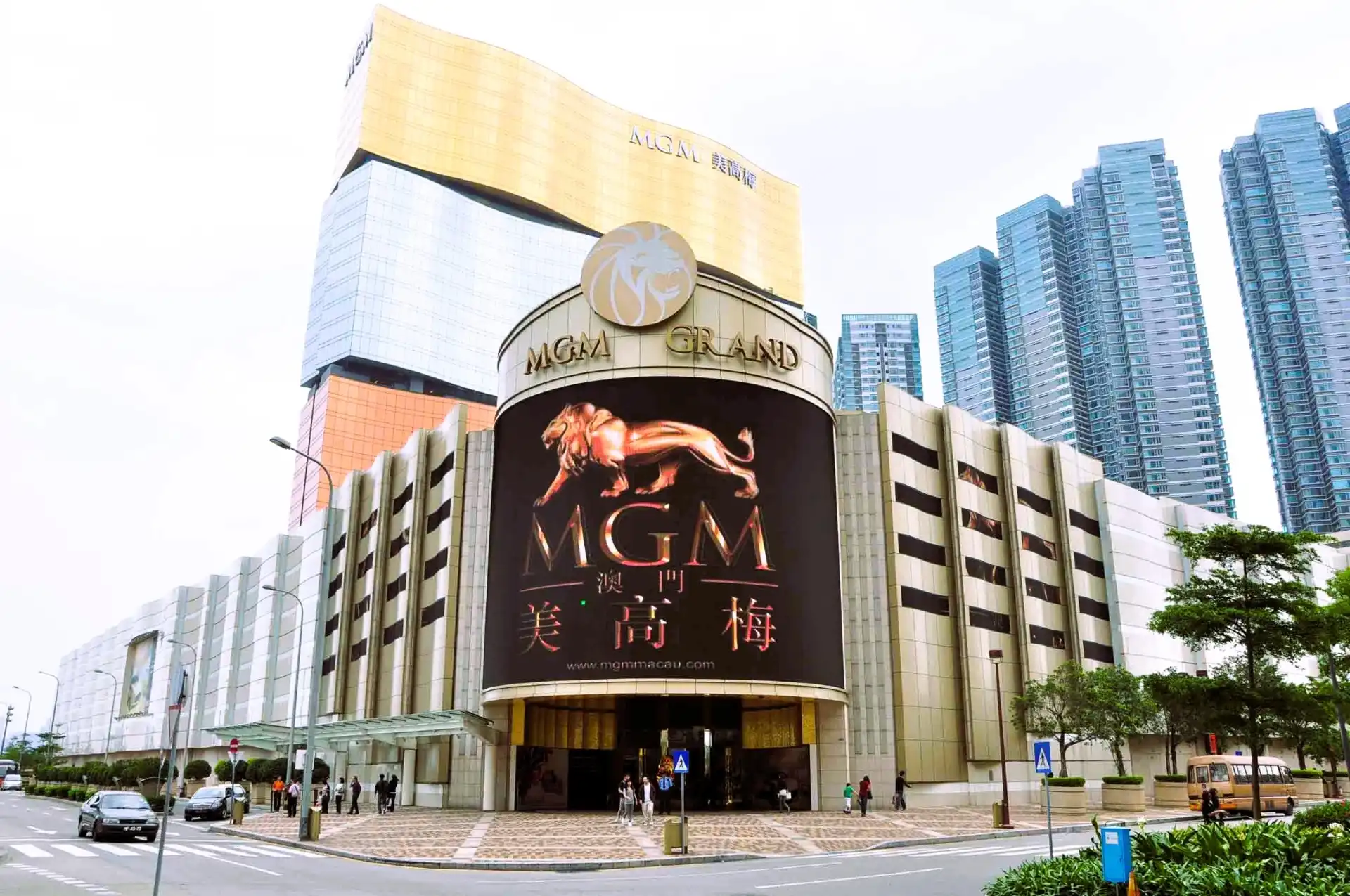
The investment bank CLSA has lowered its earnings forecasts for MGM China by more than 6 percent for both 2026 and 2027, citing the impact of higher license fees payable to its US parent, even as the brokerage maintained its Outperform rating on the Hong Kong-listed casino operator.
In a research note dated December 29th, CLSA said it had reduced its adjusted EBITDA and net profit projections for MGM China by between 6.3 percent and 6.7 percent for 2026 and 2027, following the company’s announcement of a sharp increase in license fees payable to MGM Resorts from 2026 onwards. Under the revised arrangement, the license fee will rise from 1.75 to 3.5 percent of monthly net revenues, capped at $188.3 million for 2026.
‘Following MGM China’s recently announced higher license fees payable to MGM Resorts, investors’ interests have centred on the impact on earnings as well as dividends,’ CLSA noted in the report. While the higher fees will not affect property-level EBITDA, the brokerage said the increase would weigh on corporate adjusted earnings and dividend capacity over the medium term.
Reflecting the earnings downgrade, CLSA cut its target price for MGM China to HK$20.9 ($2.68) from HK$22.6 ($2.90), while reiterating its Outperform rating. The brokerage said MGM China continues to pay the highest license fee to its parent among Macau concessionaires ‘in percentage terms versus revenue’, following the hike.
The downgrade triggered a sharp sell-off in MGM China shares. The stock plunged more than 17 percent on Monday, closing at HK$12.91 ($1.65), its lowest level in nearly six months. The decline extended into trading on Tuesday, with shares falling a further 2.09 percent to HK$12.64 ($1.62), underscoring persistent investor concerns over rising cost pressures and the company’s medium-term earnings outlook.
CLSA’s stance contrasts with a more cautious tone from other brokers. Morgan Stanley analysts downgraded MGM China to Equal Weight (EW) in a note issued on Monday, citing the earnings drag from higher license fees and limited near-term catalysts following the recent share price volatility.
In its analysis, CLSA compared MGM China’s revised license fee structure with those of its peers. Wynn Macau pays a 3 percent license fee to Wynn Resorts, subject to a monthly minimum, while Sands China will pay 1.5 percent of annual gross revenue to Las Vegas Sands, with caps set through 2028. Post-hike, CLSA said MGM China’s license fee as a percentage of revenue will exceed that of both Wynn Macau and Sands China.
Despite the downgrade, CLSA said it continues to assume a 50 percent dividend payout ratio for MGM China, projecting dividend per share of HK$0.71 ($0.09) in 2026 and HK$0.81 ($0.10) in 2027, adding that ‘risks on dividend forecast remain on the upside’ as concessionaires gradually raise payout ratios at their discretion.
The Myanmar government has intensified its crackdown on illegal online gambling and scam operations in the Shwe Kokko and KK Park areas, demolishing additional unauthorised buildings and bringing the total number of structures destroyed in KK Park to 519 out of 635, according to the state-owned Global New Light of Myanmar.
Authorities have been carrying out systematic operations to enter and clear illegal buildings in the two areas, which have been identified as major hubs for online scams and gambling. The latest action took place yesterday in Section 3 of the Myawaddy–Maethawtalay area, also known as KK Park, where four illegal buildings were demolished. These included one four-storey structure and three two-storey buildings used for online scam and gambling activities.
With the latest demolitions, the number of illegal buildings systematically destroyed in KK Park has risen to 519, out of a total of 635 identified structures. The operations have been conducted by joint teams comprising security personnel, administrative authorities and local officials.
Demolition work using heavy machinery has been completed in KK Park, while fire cylinders have been used since December 14th to ensure complete destruction. Five additional two-storey buildings were destroyed using this method on Monday, bringing the total number of fully demolished buildings to 71.
Materials used for online scams and gambling in both the KK Park and Shwe Kokko areas were also systematically burned to prevent further misuse. The government reiterated that combating online scams and illegal gambling is a national responsibility and said the operations would continue in coordination with domestic forces and neighbouring countries to prevent such activities from re-establishing themselves in Myanmar.
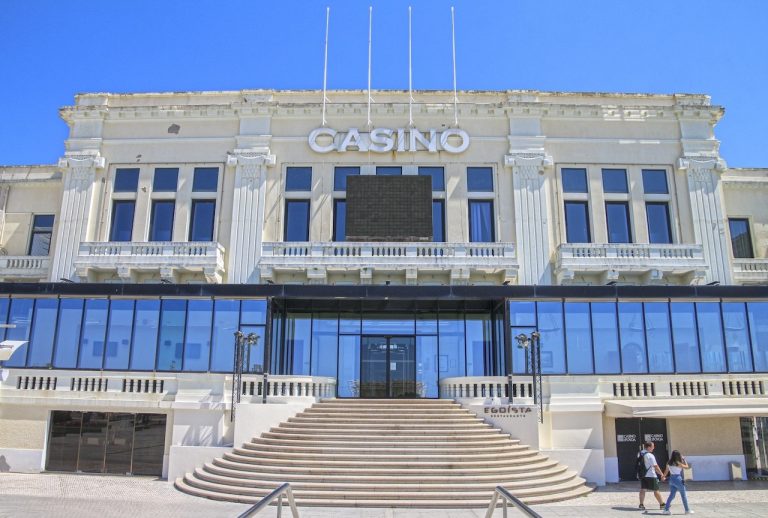
The Portuguese government has extended the operating concessions for casinos in three key regions by three months, as the process to award new long-term licenses remains underway.
The decision grants a temporary reprieve to current operators, including a subsidiary of Pansy Ho’s Estoril Sol, which is expected to bid to retain its Póvoa de Varzim license.
The extensions apply to the gaming zones of the Algarve, Espinho, and Póvoa de Varzim. In a statement, the government cited the need “to comply with all required formalities” in the complex tender process, which missed the original December 31st, 2025, deadline for awarding new contracts.
The incumbent holders, Solverde and Estoril Sol, will continue operations under the prolonged terms.
The current extensions follow a series of delays in a lucrative and closely watched licensing round. The government launched public tenders last year for five casino licenses across the three zones: three in the Algarve and one each in Espinho and Póvoa de Varzim. The new concessions are set for a 15-year term.
The existing contracts, originally expiring in 2023, had already been extended to the end of 2025 to compensate operators for pandemic-era closures. The latest three-month prolongation ensures continuity while the final stages of the tender are completed.
Estoril Sol, chaired by Macau gaming magnate Pansy Ho, currently operates the casino in Póvoa de Varzim, a city in northern Portugal’s Greater Porto region.
The preliminary qualification phase concluded on December 29th, identifying a competitive field of bidders. Besides the incumbents, qualified contenders include the Spanish groups Cirsa (backed by US fund Blackstone) and Comar, the French Lucien Barrière group, and the Canadian group Mercan.
While the final proposal deadline has passed for Póvoa de Varzim and Espinho, the submission window for the Algarve licenses remains open until January 4th, 2026.
A government-appointed jury will now analyze all final proposals before issuing a recommendation, moving the process toward a conclusive award later this year.
Good Morning. Higher costs, worse outlook. MGM China’s higher, market-based licensing fees covering MGM-branded operations across Greater China prompted Morgan Stanley to downgrade the stock on expected earnings and margin pressure, while the investment bank remained positive on Macau’s gaming outlook and favoured Galaxy and Sands China over MGM and Wynn. Meanwhile, Hong Kong-listed Palasino Holdings has opened its latest property, Palasino Mikulov, in the Czech Republic, marking a significant milestone in its Central European expansion, with a soft launch on December 18 and a grand opening planned for early 2026.
MGM China’s higher, market-aligned license fees — of which about two-thirds will go to MGM Resorts and which apply across Greater China — led Morgan Stanley to downgrade the stock on expected margin pressure, while the bank favoured Galaxy and Sands China despite remaining broadly positive on Macau’s double-digit gaming growth outlook. MGM China plans to adjust annual license fee caps after 2026 based on anticipated business growth, justifying the increase by aligning it with market standards and claiming fairness for shareholders, while 66.6% of the fees will benefit MGM Resorts.
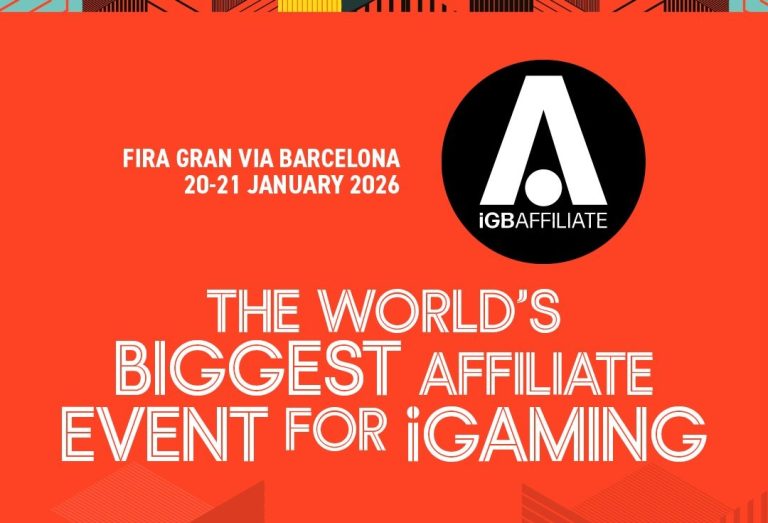
iGB Affiliate Barcelona 2026 brings together the brightest minds, boldest brands, and the most passionate community in iGaming.
iGB Affiliate goal is to connect affiliates with top iGaming operators and innovative technology providers in an engaging and dynamic environment.
With over 11,000+ industry professionals, 200+ exhibitors, and insightful sessions, we offer unparalleled opportunities for networking, learning, and growth.
Experience the perfect blend of business and pleasure in Barcelona, where cutting-edge technology meets a city renowned for its energy and charm.
Affigates, the market’s first comprehensive affiliate ecosystem, will participate in iGB Affiliate Barcelona 2026. Held January 20–21 at Fira Barcelona Gran Via, the event marks the company’s inaugural presentation of its complete end‑to‑end offering at a major global showcase.
Affigates is set to demonstrate the full power of its integrated ecosystem, designed to bridge the gap between operators and affiliates. The company’s unique value proposition centers on three core pillars:
Affiliate Management Software: A high-performance, proprietary platform engineered for precision tracking and seamless management.
Affiliate Programme Management: A partner-first service led by expert managers who prioritize sustainable growth and relationship building.
Vetted Affiliate Network: A global powerhouse of over 4,500 pre-vetted affiliates, maintained through rigorous continuous evaluation and advanced fraud prevention protocols.
The uniqueness of Affigates lies in its ability to merge technology, service, and a high-quality network into a single, cohesive ecosystem. By combining these three pillars, it offers a level of synergy that provides unparalleled value to both operators and affiliates alike.
Visitors to the Affigates exhibit can expect a first look at the company’s latest technological innovations and strategic solutions. Beyond the product demonstrations, the team has teased several surprises for attendees who visit the stand.
Affigates invites all operators and affiliates to visit Stand 81 – M80 to explore the future of affiliate marketing and gain exclusive insights into the company’s 2026 development roadmap.
Hong Kong-listed Palasino Holdings Limited announced it has opened its newest property, Palasino Mikulov, in the Czech Republic, marking a key step in the group’s expansion across Central Europe.
The soft launch took place on December 18, officiated by chief executive Pavel Maršík and senior management. A grand opening with local dignitaries and partners is scheduled for early 2026, following the Christmas and New Year peak season.
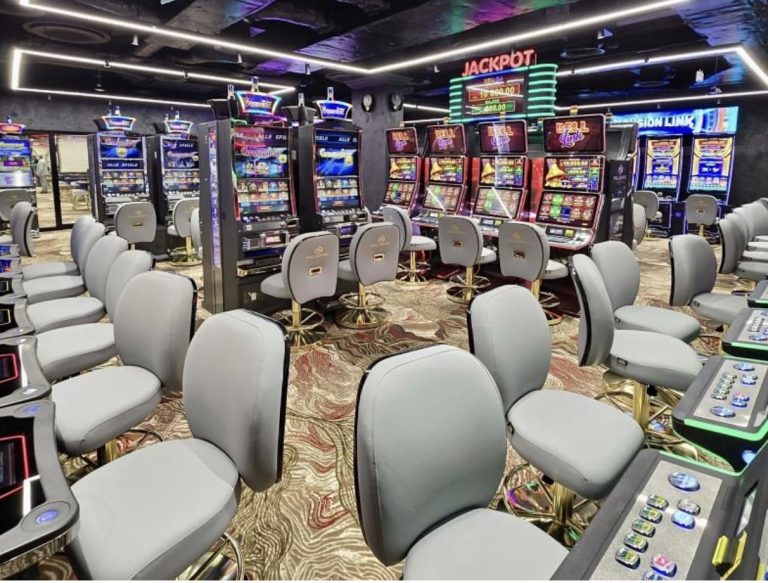
Located on the Czech–Austrian border, the venue features 106 slot machines and 10 gaming tables, supported by a loyalty programme. The property also includes a buffet restaurant and bar, monthly player promotions and festive events aimed at attracting both local and international visitors.
“The launch of Palasino Mikulov is a significant step in our growth strategy,” said chief operating officer Colin Chapman Stewart, adding the project would tap new customer segments and contribute to the local economy.
Maršík said the opening reflects Palasino’s commitment to delivering high‑quality entertainment in Central Europe. “We are confident this vibrant and strategically located property will bring fresh energy and exceptional service to our community and international guests alike,” he said.
The group also owns and operates three hotels in Germany and one in Austria, providing accommodation, catering, and conference services.
TxODDS has released its 2025 Year in Bets, showcasing a worldwide operation that processed 31.1 billion odds updates across 193 countries and all global time zones.
Tracking 601 core betting markets worldwide, TxODDS’ data illustrates a truly global betting calendar, with continuous pricing demand spanning every major sporting region.
The Year in numbers also highlights the most watched sporting moments of 2025, with analysis revealing the top 6:
NBA Finals – Game 7
Super Bowl
UEFA Champions League Final
MLB World Series – Game 7
Wimbledon Final
PDC World Championship Final (Darts)
For every fixture, TxODDS analyzed:
Total odds updates processed;
Number of sportsbooks covering the event;
Number of selections and outcomes offered;
Markets with the largest average price swings;
Markets with the highest update frequency.
These global showpiece events generated intense bursts of pricing activity, combining massive audience attention with rapid in-play volatility — placing extreme demands on sportsbook infrastructure.
The analysis also reinforces TxODDS’ role in supporting bookmakers during the world’s most high-stakes sporting events, delivering low-latency, trusted pricing at moments when accuracy matters most.
As betting markets continue to globalise, TxODDS’ 2025 Year in Bets underscores the importance of scale, speed, and reliability in serving a truly worldwide sportsbook industry.
Football emerged as the clear leader in activity, generating over 17.6 billion odds updates, reinforcing its position as the most traded and most reactive sport in the global betting ecosystem.
While football led by volume, the NBA was the most active individual tournament, surpassing one billion updates in 2025, underlining the growing importance of basketball alongside football in global sportsbook operations.
Two of the biggest comebacks occurred within days of each other in November:
Charlotte Hornets vs Toronto Raptors (Nov 29)
An NBA game where the raptors were up for the entire match until the last 10s where the Hornets tied and then won the match in OT.
Sacramento Kings vs Minnesota Timberwolves (Nov 25)
Similar to the above where the Kings were down until 30s to go, levelled the game and won it in OT.
The NFL also delivered some of the year’s most memorable price swings, including one of 2025’s biggest comebacks:
Dallas Cowboys vs Philadelphia Eagles (November 23) — a late touchdown flipped the market after Dallas had trailed since the first quarter.
TxODDS’ 2025 analysis highlights the top five countries by fixture volume, alongside the most fixture-dense sport within each market:
Poland led all countries by fixture volume, with 90,816 fixtures, driven overwhelmingly by table tennis, which accounted for 94% of all activity in the country.
The United States followed with 29,197 fixtures, where basketball was the most fixture-dense sport, representing 37% of total activity.
In Spain, 14,175 fixtures were processed during the year, with soccer dominating betting activity at 76% of the total share.
Germany recorded 12,326 fixtures, with soccer again leading the market, accounting for 51% of activity.
Australia completed the top five with 11,559 fixtures, where soccer was the most active sport, representing 70% of total betting activity.
Einar Knobel, CEO of TxOdds, commented: “These moments are where data quality is tested to the limit. Global finals don’t just attract viewers, they create the highest-pressure betting environments of the year and show why in-play pricing is everything. Some of the most dramatic momentum shifts in sport happen late and pricing needs to react instantly and without delay.”
“Looking ahead to 2026, all eyes will be on the World Cup in Canada, the United States and Mexico. From a football and betting perspective, it will be the largest and most demanding event the industry has ever seen, and we are in pole position to support bookmakers through unprecedented volumes of pricing and in-play activity.”
Macau gaming operator Sands China continued to expand its responsible gaming efforts in 2025, hosting more than 150 promotional activities that engaged over 150,000 participants and delivering more than 30,000 hours of training throughout the year.
These efforts reflect the company’s steadfast commitment to corporate social responsibility and to cultivating a culture of responsible gaming. This year, Sands China officially launched the Sands Responsible Gaming Academy and was once again recognised as a Responsible Gaming Implementation Model Unit, highlighting its benchmark role in system development, education and training, and community outreach.
Dr. Wilfred Wong, executive vice chairman of Sands China Ltd., said: “Promoting responsible gaming is a vital part of Sands China’s corporate social responsibility and a cornerstone of sustainable industry development. This year, in addition to continuing diverse activities and professional training, we launched the Sands Responsible Gaming Academy, marking a new stage in education, research, and talent cultivation.
The academy will work closely with academic institutions to establish more comprehensive professional training and an advanced institutional framework for responsible gaming. As one of Macao’s largest integrated resort operators, Sands China will continue to actively promote a culture of responsible gaming and contribute to the healthy development of society.”
Launch of Sands Responsible Gaming Academy
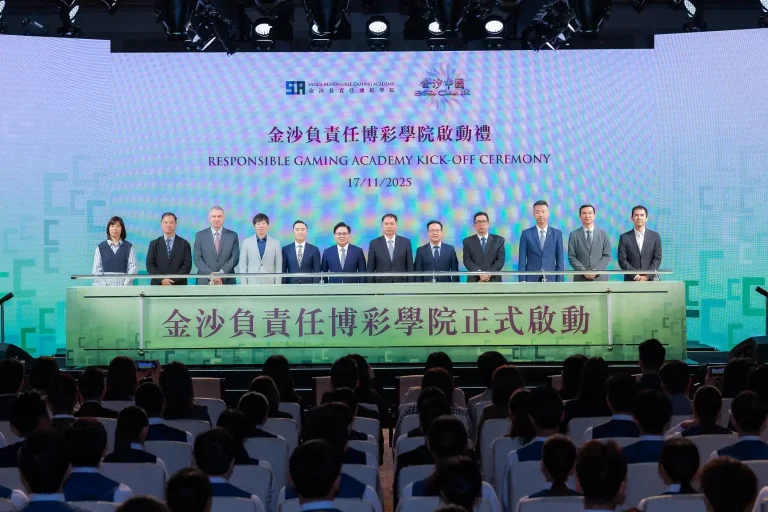
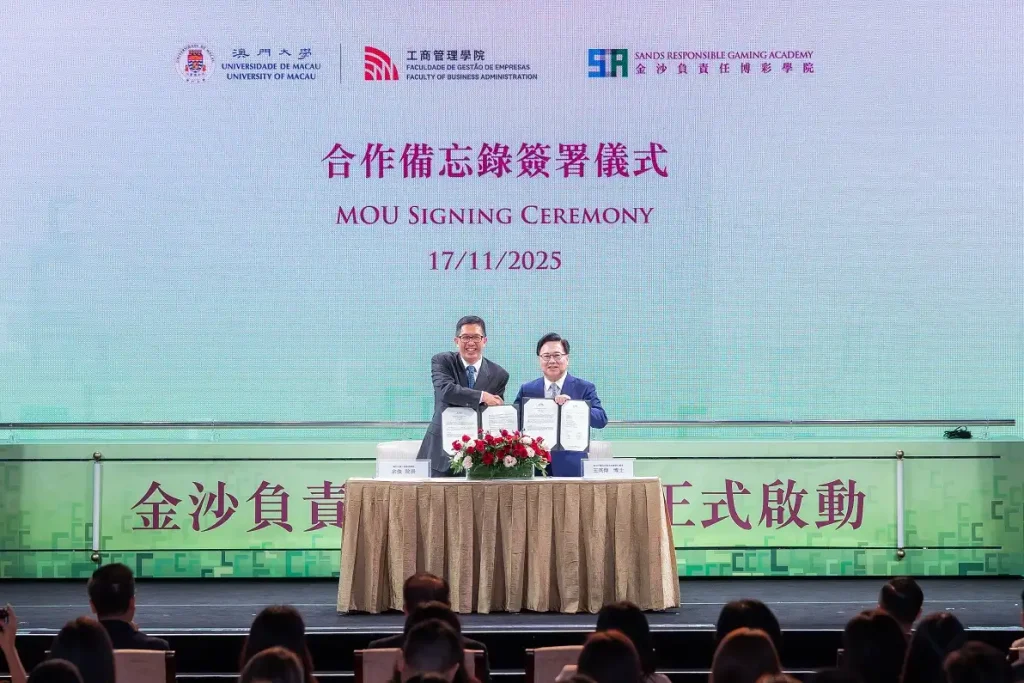
In November, Sands China officially launched the Sands Responsible Gaming Academy, one of eight sub-academies under the Sands China Academy. The new academy collaborates with local and international higher education institutions to provide a diversity of responsible gaming training for team members, in support of professional talent development in Macao.
Sands China also signed a memorandum of understanding with the University of Macau to continue jointly running the RG360 Macau Responsible Gaming Specialist Ambassador Course, nurturing more professionals with expertise in responsible gaming. The Sands Responsible Gaming Academy actively promotes an environment and culture of responsible gaming in the community while advancing physical and mental wellness education for team members and guests.
Recognition as the Responsible Gaming Implementation Model Unit
In 2025, the gaming areas at The Venetian Macao and The Londoner Macao once again passed the Macao government’s Responsible Gambling Indicators programme. They were additionally awarded the qualification of Responsible Gaming Implementation Model Unit, further reaffirming the company’s achievements in system development, team member training, and guest support.
Strengthening Team Member Training
Throughout the year, Sands China delivered over 30,000 hours of responsible gaming training to frontline, supervisory, and management staff. Through tiered courses and specialised workshops, the company enhances team members’ practical skills in risk identification, case handling, and referral for assistance.
Sands China hosted multiple themed activities in back-of-house areas across its properties in 2025, including nearly 50 responsible gaming roadshows that attracted over 45,000 participants. Through interactive games and Q&A sessions, these events deepened team members’ understanding of policies and practices, embedding responsible gaming concepts into daily operations.
Community Outreach
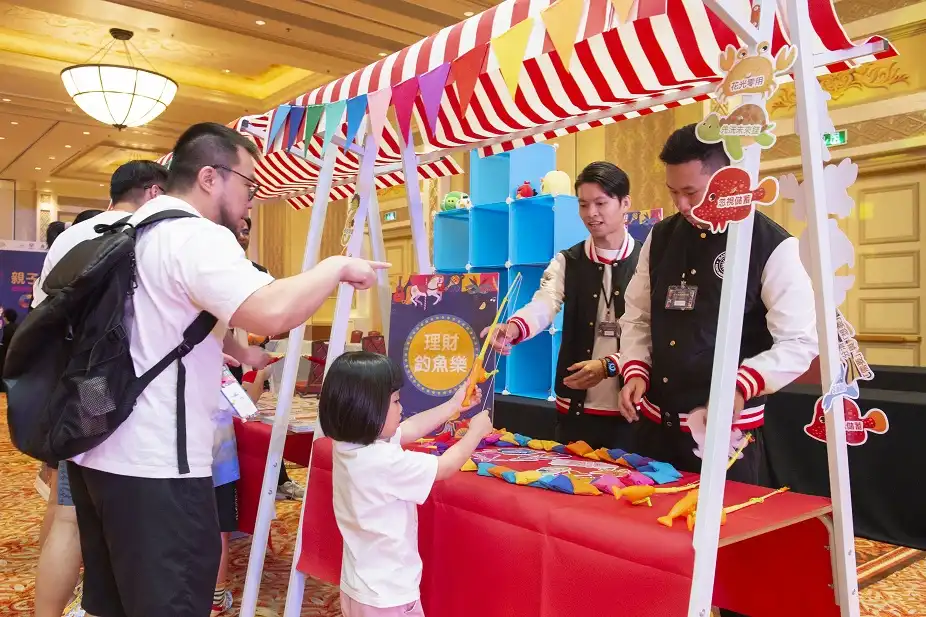
In August, Sands China hosted the third annual Sands China Responsible Gaming Parent-Child Happy Carnival under the theme “Seeking Help for Winning the Future: Building a Prosperous Future Through Parent-Child Financial Education.” Featuring 12 interactive booths, the carnival introduced concepts of saving, budgeting, and spending choices to parents and children, fostering family communication and financial education. The company also held various family-centred activities, including the “RG Quit Gambling, SUP Board Experience,” the “Sands China Responsible Gaming Parent-child Bonding Challenge,” the “‘Life is About Choices’ Responsible Gaming Promotion Day,” and financial literacy camps.
These activities provided a relaxed environment for families to learn financial concepts and understand the importance of responsible gaming. For tourists and the public, Sands China organised events such as the “Travelling in Diversity of Macau – Responsible Gaming Carnival” and the “VR Gaming Myths Breaker – Responsible Gaming Fun Day,” delivering information on preventing gambling disorders and promoting responsible gaming at popular tourist sites.
Campus Outreach
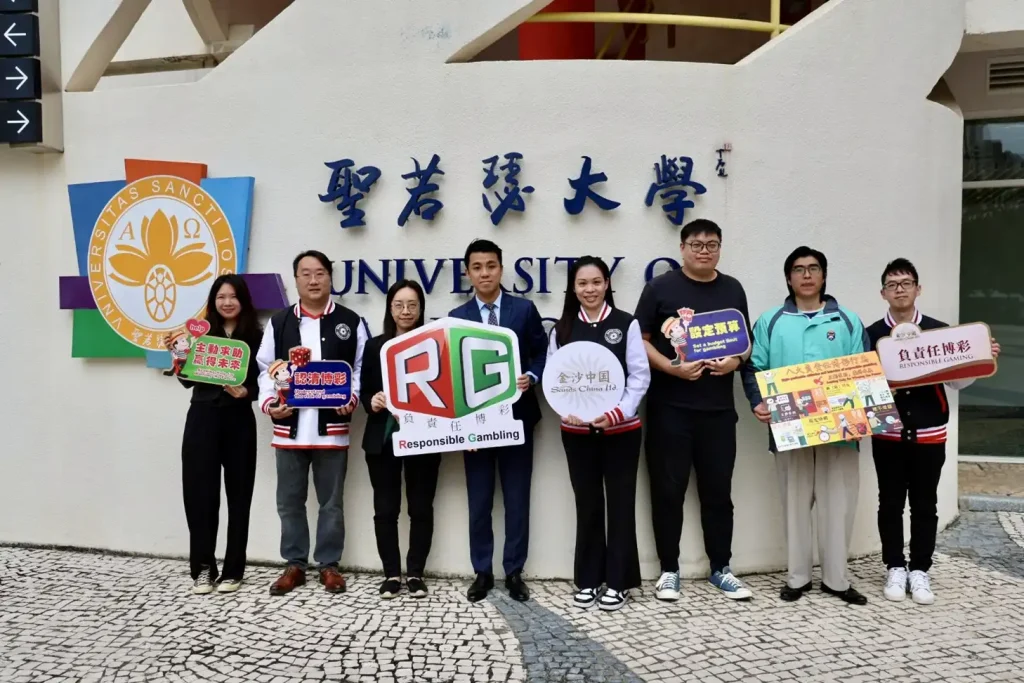
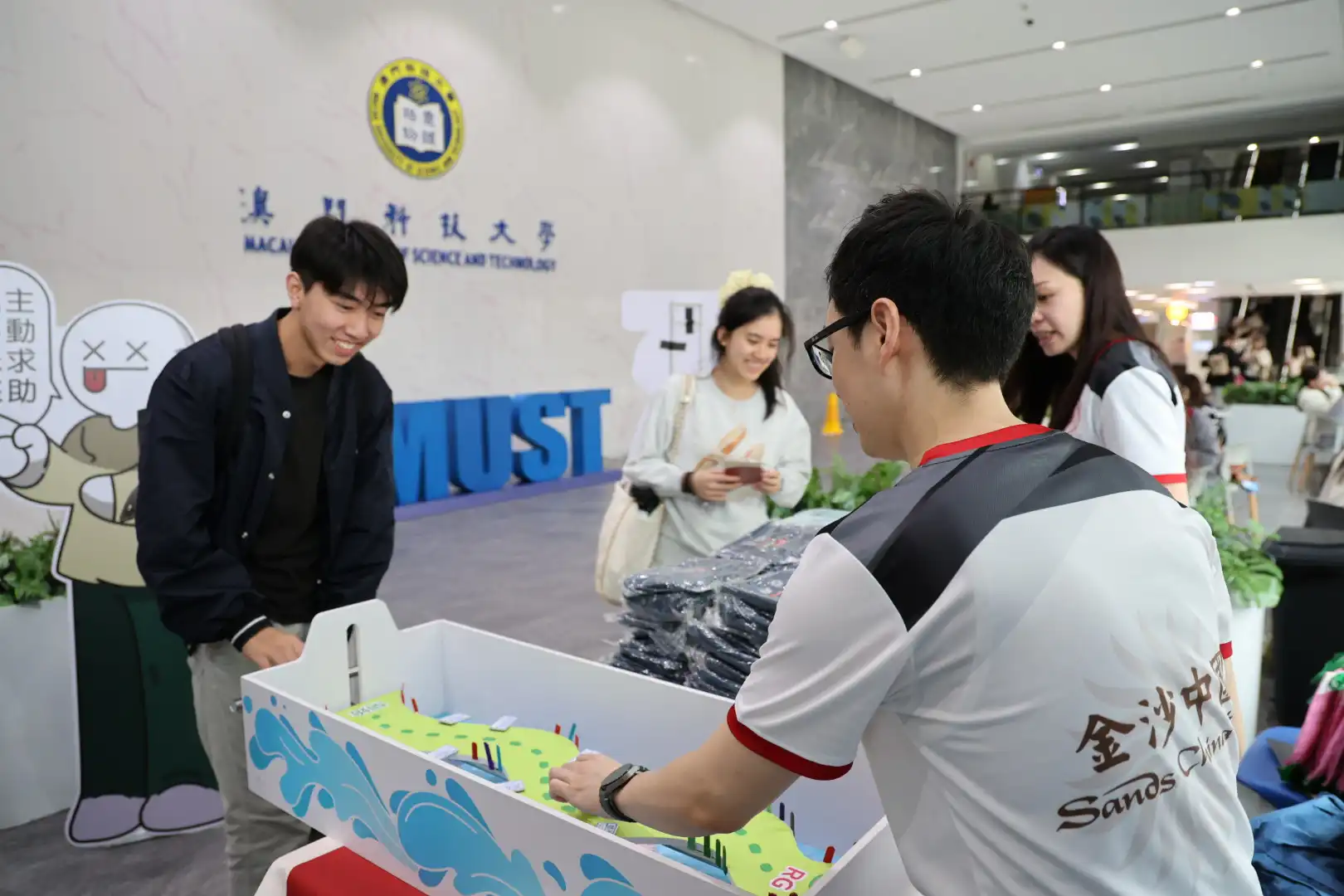
Together with the Sheng Kung Hui Macau Social Services Coordination Office, Sands China launched the Responsible Gaming Campus Promotion, supported by five local higher education institutions. Through campus roadshows, lectures, and site visits, the initiative educated students and faculty on responsible gaming knowledge, common misconceptions, and the risks of gambling disorder, while introducing local support services and assistance channels. The activities enabled students and faculty to gain a more comprehensive understanding of the development of responsible gaming initiatives in Macao.
Supporting Local Social Service Organisations
At the beginning of the year, Sands China donated MOP 1 million to five local service organisations to support responsible gaming education and counselling services. Since 2006, the company has donated more than MOP 8.9 million, consistently supporting community services and the sustainable development of the industry.
As a pioneer in launching responsible gaming programmes in Macao, Sands China implemented a self-exclusion programme in 2004 and incorporated responsible gaming training into team member orientation in 2007. Looking ahead, the company will continue to align with the SAR government’s responsible gaming policy direction, deepening awareness among team members, guests, and the public through education, training, research, and community collaboration.
Sands China remains committed to promoting a culture of responsible gaming and contributing to the long-term and healthy development of Macao’s integrated tourism and leisure industry.