Home Blog Page 186

Macau records 1.14M visitor arrivals during SAR anniversary and Christmas holiday

0

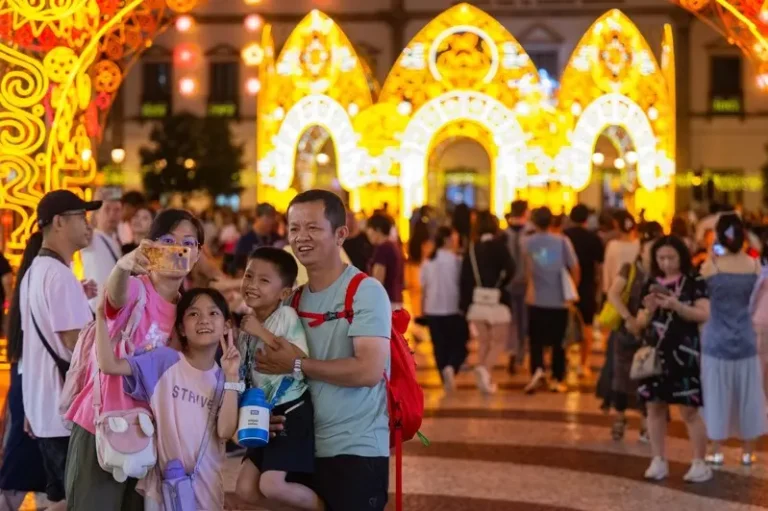
Macau recorded 1.14 million inbound visitor arrivals during the combined Macau SAR Establishment Day and Christmas holiday period from December 20th to 28th, according to figures released by the Public Security Police. 

Total cross-border movements during the nine-day period reached 6.25 million, highlighting strong holiday travel demand.

Of the total, inbound passenger movements accounted for nearly 1.14 million trips, while outbound movements topped 1.13 million. Authorities said most travelers entered and exited the city through the Border Gate checkpoint, the Hong Kong–Zhuhai–Macau Bridge (HZMB) port, and the Hengqin port on the Macau side.

Among inbound travelers, the Border Gate remained the busiest checkpoint, handling more than 482,000 arrivals during the period. This was followed by the HZMB port with over 261,000 arrivals, and the Hengqin Macau port area with about 166,000. The airport recorded nearly 79,000 inbound passenger movements, while ferry terminals and other ports accounted for smaller shares.

The holiday travel surge comes as Macau’s tourism recovery continues to gain momentum. Police data show that as of 11am on December 27th, cumulative visitor arrivals for the year had reached 39.41 million, surpassing the city’s full-year total of around 39.4 million recorded in 2019, marking a new post-pandemic milestone.

Mainland Chinese visitors remained the dominant source market, accounting for 72.4 percent of total arrivals, followed by visitors from Hong Kong at 18.3 percent, Taiwan at 2.5 percent, and other regions at 6.8 percent.

Authorities said visitor numbers are expected to rise further ahead of New Year’s Eve, with additional police deployments already in place to ensure orderly border crossings and the safe operation of countdown events across the city.

Suntrust reshuffles board with two new director appointments

0

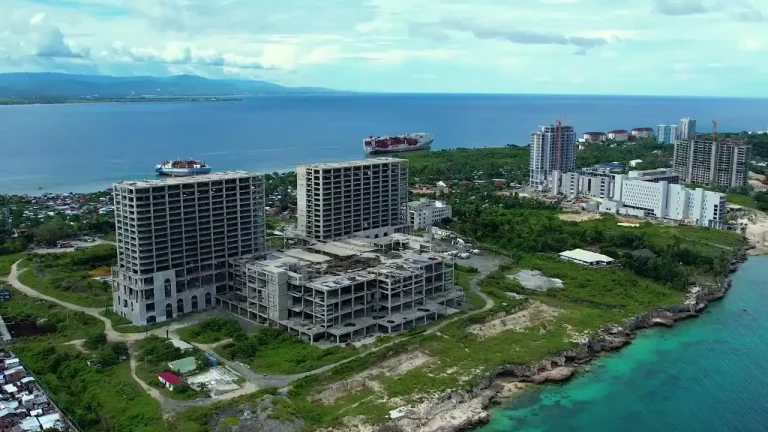
Philippines-listed Suntrust Resort Holdings Inc. has announced changes to its board of directors, appointing two new members effective December 26th, 2025, as it continues to advance the long-delayed Westside City integrated resort project in Parañaque’s Entertainment City.

In a disclosure, the company said its board approved the appointment of Yip Ho Chi and Lam Hung Tuan as new directors, following the resignation of Jose Alvaro D. Rubio and Neoli Mae L. Kho for personal reasons. The resignations also took effect on December 26th, with both outgoing directors relinquishing all duties and responsibilities on the same date.

Yip, aged 56, currently serves as the company’s Chief Financial Officer and brings more than 20 years of experience as CFO of companies listed on the Hong Kong Stock Exchange. His previous roles include senior finance positions at SA Holdings, MelcoLot Limited—now known as Crypto FlowTechnology Limited—and Sandmartin International Holdings Limited. He also spent eight years with Deloitte Touche Tohmatsu and has experience in initial public offerings. Yip is a fellow of both the Hong Kong Institute of Certified Public Accountants and the Association of Chartered Certified Accountants in the United Kingdom.

Lam, 48, an Australian national, currently serves as an executive director of LET Group Holding Ltd. He previously held a senior technology role at Hoi An South Development Ltd. and has more than two decades of experience in the information technology sector, with a particular focus on gaming operations.

The board changes come as Suntrust continues work on the Westside City integrated resort, a $1.25 billion casino, hotel and entertainment complex that has faced repeated delays. The project is now targeting an opening in the third quarter of 2026.

In September, as reported by AGB, Philippines Travellers International Hotel Group Inc., part of Alliance Global Group Inc., and its partner Suntrust were set to inject up to $450 million to complete the development.

Melco to operate three Mocha slot clubs via management company starting January 1st

0

Melco Resorts has received authorization from the Macau SAR Government to continue operating three of its slot clubs—Mocha Golden Dragon, Mocha Porto Interior, and Mocha Hotel Sintra—through the appointment of a management company, effective January 1st, 2026. 

This decision follows a comprehensive government evaluation as the three-year transitional period for satellite casinos concludes at the end of this year.

Under the new arrangement, Melco will maintain its existing labor relationships with the employees of these three venues. The Gaming Inspection and Coordination Bureau (DICJ) confirmed that the concessionaire’s request was approved to ensure the continued operation of these sites under the managed service model.

mocha

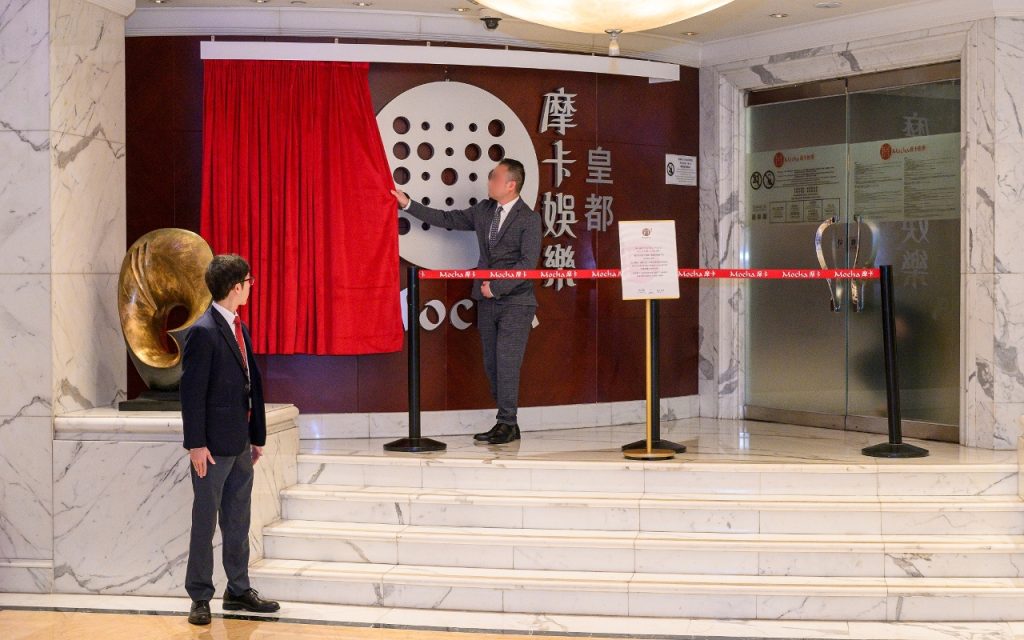
Simultaneously, the Mocha slot club at Hotel Royal officially ceased operations on December 29th. The closure followed the suspension of all gaming machine activities at 11:59pm on December 28th. The DICJ coordinated the shutdown in collaboration with several government departments to ensure the process remained orderly and compliant with legal frameworks.

During the closure of the Hotel Royal site, representatives from the Labor Affairs Bureau were present to provide on-site assistance and information to affected staff, including the establishment of a dedicated consultation hotline. Officers from the Public Security Police Force and the Judiciary Police were also deployed to maintain public order during the equipment removal and venue vacation process.

The DICJ stated that it will continue to work closely with gaming concessionaires and relevant departments to promote the healthy and orderly development of Macau’s gaming sector.

MS analysts question MGM China’s significant increase in royalty payments, biting into EBITDA

0

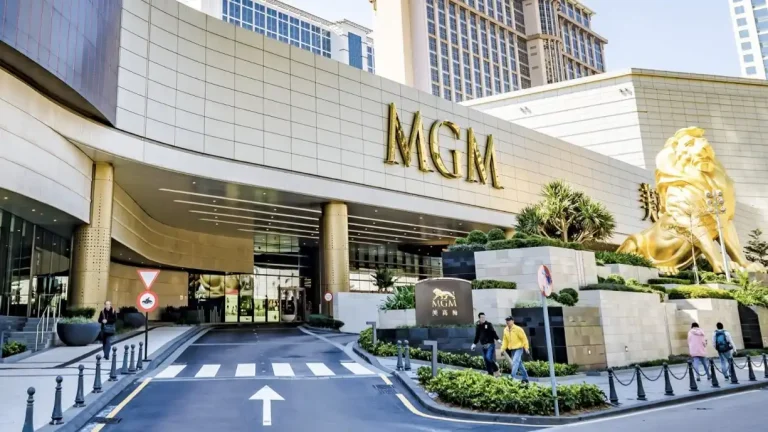
Analysts at Morgan Stanley say that MGM China’s recent royalty payment deal with its parent company MGM Resorts could reduce the Macau operator’s EBITDA by up to 7 percent compared to its previous estimates.

On December 23rd, MGM China agreed to a third renewed branding agreement that increased its monthly license fee from 1.75 percent of adjusted consolidated net monthly revenues to 3.5 percent, as well as prolonging the period of agreement from the previous three years to 20 years (contingent on receiving an extension or new gaming license when its current one expires in 2032).

In a research update, Morgan Stanley analysts Praveen Choudhary, Anson Lee and Stephen W Grambling highlighted that the shift means that ‘MGM China could see EBITDA decline 5 percent year-on-year’ as well as a margin compress of 250 basis points yearly.

The report, entitled ‘Royalty Leakage: A Concern’, also highlights how, since listing MGM China has paid 1.75 percent of net revenue, with Wynn Macau paying 3 percent of gross revenue and Sands China paying 1.5 percent of net revenue to their respective parent companies.

We do not see a reason for any company to raise payouts’, opine the analysts.

Looking to 2026, the analysts warn that MGM China, Wynn Macau and Melco ‘could see much lower corporate EBITDA margins’ if they were to pay a 3 percent or higher levy on net revenue for the licenses, ‘or roughly 12-15 percent of property EBITDA’. They highlight that ‘this leakage is much less’ for Galaxy and SJM – which both aren’t required licensing fees given that they don’t need to pay homage to parent companies, and Sands China – which pays out 5 percent of EBITDA. Melco started paying a fee of roughly 0.8 percent of revenue (2 percent of EBITDA) to parent Melco International in 4Q24.

The analysts estimate that corporate EBITDA for MGM China would equate to nearly $8.74 billion in 2025, falling to $8.31 billion in 2026. Given that the royalty payment increase comes into effect on January 1st, the royalty’s percentage of corporate EBITDA for MGM China rises from 6.9 percent in 2025 to 15.2 percent in 2026, up by 119.1 percent yearly.

The effect on Wynn Macau is significantly lower, with the 14.3 percent royalty percentage dropping to 14.1 percent, a reduction of 1.1 percent – based on corporate EBITDA of $7.17 billion in 2025 and $7.67 billion in 2026.

For Sands China, the comparison is even more apparent, with a 7.7 percent yearly reduction in the royalty’s percentage of corporate EBITDA between FY25 and FY26 – at 5.5 percent and 5 percent, respectively – based on corporate EBITDA of $2.16 billion in 2025 and and $2.37 billion in 2026.

Comparative disadvantage

While MGM China has placed an annual cap on the royalty payment, the 2026 figure has been set at $188.3 million, a stark increase from the $70.39 million paid for FY24 and the $56.46 paid in the first three quarters of 2025. And the annual caps are set to be adjusted yearly after 2026 based upon the ‘anticipated increase of the business volume of the Company’.

When justifying the increase, and the 20-year period of the agreement, MGM China noted that ‘the proposed increase in license fees is in line with market comparables’ and that it is ‘in the ordinary and usual course of business of the MGM China Group and on normal commercial terms, and that the terms are fair and reasonable and in the interests of the Company and the Shareholders as a whole’.

MGM Resorts itself is set to receive some 66.6 percent of the license fee directly.

But aside from MGM China’s current two properties in Macau, the agreement also covers ‘the marketing and operation of the MGM China Group’s casino, resort, and hospitality businesses at any legally permissible location within the Territory’. According to the December 23rd filing, the ‘Territory’ encompasses all of mainland China, Macau, Hong Kong and Taiwan, meaning that any MGM-branded property, regardless of whether it has a gaming aspect, would be covered by the new agreement.

The royalty payment change has caused the Morgan Stanley analysts to downgrade MGM China to Equal Weight (EW), due to estimated declines in EBITDA and margin, noting that ‘relative to this, other players should see EBITDA growth in 2026’. They further that ‘MGM China has gained market share consistently in the past three years, but may have peaked’.

Comparatively, Galaxy was upgraded to Over Weight (OW), given zero royalty payments required, it being ‘the only company in Macau with a net cash position’, and ‘significant upcoming capacity additions’- namely Phase 4 which adds 1,500 suites.

Overall, the analysts indicate that they ‘remain constructive on Macau, driven by double-digit GGR growth’. But they warn that ‘stocks are driven by market share trends, and we may be different from consensus on some’.

Preferences are for Galaxy and Sands China ‘over MGM and Wynn’, while SJM remains Under Weight (UW).


PH Resorts to be reclassified as Hotel & Leisure on Philippine Stock Exchange

0

Philippine Stock Exchange (PSE)-listed PH Resorts Group Holdings (PHR) is going to be officially reclassified on the bourse, effective January 5th, after the group lost its provisional casino license earlier in December.

In a recent circular, the bourse indicated that PH Resorts was one of 13 companies undergoing a reclassification, shifting from the Casinos & Gaming subsector to the Hotel & Leisure sector. Both classifications still fall under the Services sector.

The shift reflects the revocation of the group’s provisional casino license issued by the Philippine Amusement and Gaming Corporation (PAGCOR).

The license was intended for the Emerald Bay integrated resort project in Lapu-Lapu City, Cebu, a project that hit numerous roadblocks and failed attempts at securing further financing to complete.

The cancellation of the provisional license also reportedly halted partnership discussions with construction firm EEI Corp, which had been tapped as a potential investor to finance, construct and complete the stalled project.

Emerald Bay faced initially began development in 2017 but the project entered its final spiral this year, with PH Resorts writing off its investments in the endeavor after a sale-and-leaseback arrangement with China Banking Corp. expired on March 31st, 2025. As a result, the company de-recognized properties and improvements amounting to PHP13.65 billion ($240 million), along with financial liabilities of PHP8.75 billion ($154 million), from its books.

In November, PH Resorts warned that a material uncertainty exists regarding its ability to continue as a going concern, citing challenges in realizing assets and discharging liabilities in the normal course of business.

In a December 19th filing, the group indicated that it was still ‘carefully assessing possible business plans, strategic directions, and potential opportunities that may be pursued by PHR’.

The group indicated that it would either reconfigure or repurpose existing assets, pursue alternative business opportunities including ‘joint venture projects with other entities’, or pursue ‘other strategic initiatives’. The last point included ‘possible mergers and acquisitions of other entities or assets’.

Despite the attempt at reassurance, the company noted that ‘no definitive plans or decisions have been determined or approved […] as the company is still carefully considering its options’.

In the same filing, the group noted that ‘all proceeds previously earmarked for the Emerald Bay Project’ from capital-raising activities ‘have been fully utilized’ and that ‘there are no remaining unutilized proceeds […] allocated for the Emerald Bay Project’.

Daily Asia Gaming eBrief: Star Entertainment CFO and COO resign

0
Good Morning. New year, new beginnings. Star Entertainment Group announced the resignations of CFO Frank Krile and COO Jeannie Mok, while confirming Bruce Mathieson Jnr as CEO and Managing Director. The changes come as Bally’s Corporation and its affiliates have become substantial shareholders in the group. In Vietnam, the country’s Ministry of Justice has proposed stricter personal identification requirements for individuals placing legal bets on sports, while the Ministry of Finance has maintained a daily betting limit of $380 per person at licensed operators. In Macau, the city surpassed its pre-pandemic tourism record, with cumulative visitor arrivals reaching 39.41 million.

What you need to know


On the radar


AGB Intelligence

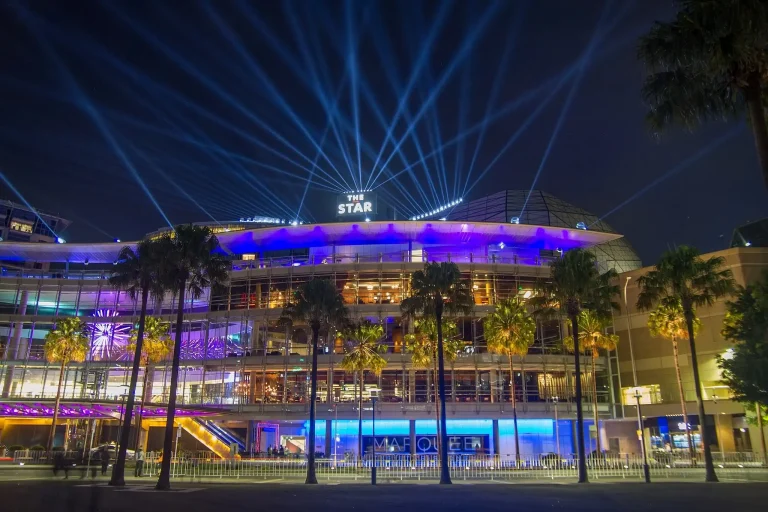
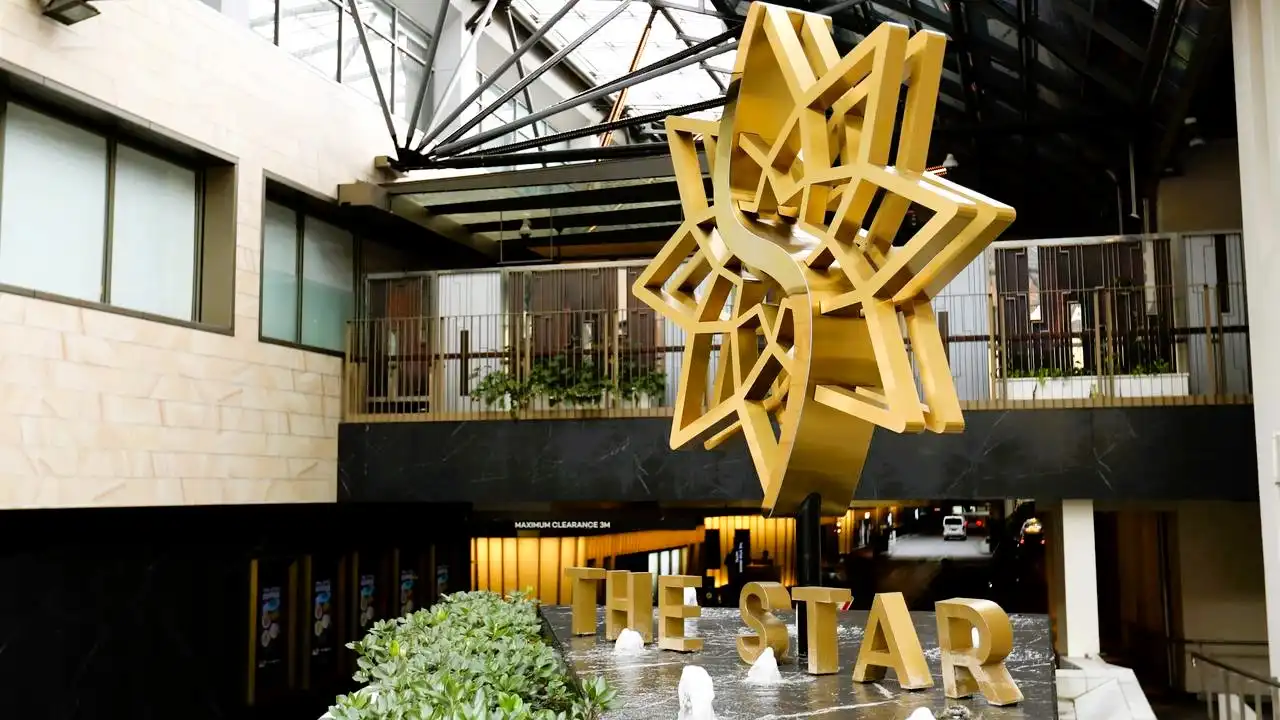
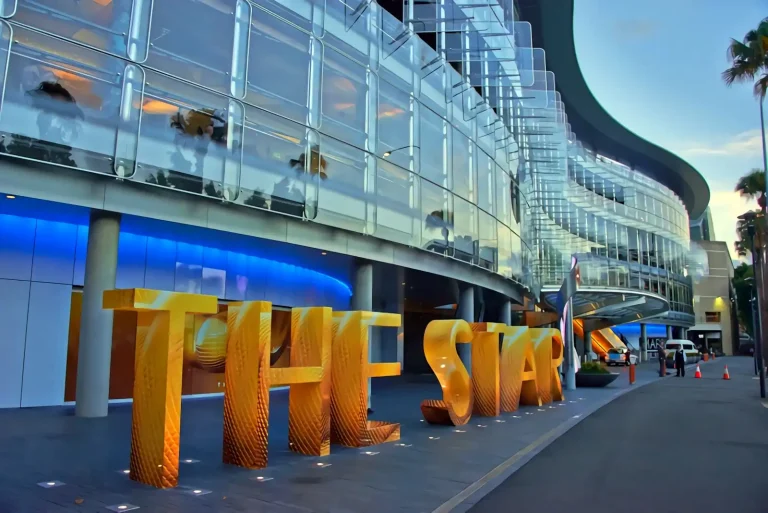
The Star Entertainment, Sydney, Australia

Star Entertainment faces executive exits, confirms new CEO

Australia’s Star Entertainment Group has announced a leadership shake-up, with Chief Financial Officer Frank Krile resigning effective December 29th, 2025, and Chief Operating Officer Jeannie Mok leaving at the end of January 2026, while the board confirmed Bruce Mathieson Jnr as Group CEO and Managing Director subject to regulatory approvals in New South Wales and Queensland.

Industry Updates


INTELLIGENCEASEAN | CAREERS | EVENTS

Australia’s Star Entertainment faces executive exits, confirms new CEO

0

Australia’s embattled casino operator Star Entertainment Group has announced major changes in its leadership team, with two senior executives stepping down and the board confirming Bruce Mathieson Jnr as its new chief executive officer and managing director.

Group Chief Financial Officer Frank Krile will leave the company on December 29th, while Chief Operating Officer Jeannie Mok will depart at the end of January 2026. Both had played key roles in advancing Star’s remediation plan following regulatory scrutiny of its operations.

“I would like to thank Frank and Jeannie for their significant contribution to the business and particularly their assistance in progressing our remediation plan. I wish them both well in their future endeavours,” Mathieson said in a statement.

The departures come as Star seeks to rebuild investor confidence after a turbulent period marked by compliance failures, fines and management turnover. The company said it will begin the search for a new CFO and update the market in due course.

The board has now formally confirmed Mathieson’s appointment as CEO and managing director, subject to regulatory and ministerial approvals in New South Wales and Queensland.

His contract includes an annual package of A$800,000 ($537,020), with performance-linked short-term incentives worth up to 150 percent of target and long-term incentives capped at 60 percent of base pay, vesting over three years to 2028.

Mathieson’s agreement also includes a 12-month non-compete clause and termination provisions requiring 12 months’ notice.

The leadership changes highlight the continuing transformation of Star Entertainment, which operates casinos in Sydney, Brisbane and the Gold Coast. The group has faced intense regulatory pressure in recent years, with authorities demanding stronger governance and compliance frameworks.

Recently, Bally’s Corporation and its affiliates have become substantial shareholders in the group, with the company appointing Bally’s Chairman Soo Kim and President George Papanier as directors.

Sands China renews trademark license deal with LVS until 2028

Sands China said it has renewed its international trademark license agreement with parent Las Vegas Sands (LVS), ensuring continued use of the group’s brands in Macau and across Greater China until the end of 2028.

The renewal, signed on December 24th, extends the existing agreement for three years from January 1st, 2026.

Under the deal, Sands China subsidiaries Venetian Macau Ltd, Venetian Cotai Ltd, Venetian Orient Ltd and Cotai Strip Lot 2 Apart Hotel Ltd will continue to use LVS-owned marks and intellectual property in their integrated resorts.

Sands China will pay LVS an annual royalty of 1.5 percent of gross gaming and non-gaming revenue, calculated under US GAAP. The company set annual caps of $138.5 million, $152.4 million and $167.6 million for 2026, 2027 and 2028 respectively, referencing past fees and projected revenue growth.

Directors said the renewal was “fair and reasonable” and vital to maintaining the group’s corporate identity. LVS directors serving on Sands China’s board abstained from voting.

Sands China operates major resorts in Macau including The Venetian, The Parisian, The Londoner and Sands Macao. LVS, listed in New York, is one of the world’s largest developers of integrated resorts.

Gaming employs over a quarter of Macau’s workforce

0

Nearly 69,100 people were employed in Macau’s gaming industry between September and November, accounting for about 25.8 percent of the city’s employed residents, official figures showed.

The sector remains the backbone of the labour market as overall unemployment held steady at historic lows.

Data published by the Statistics and Census Bureau (DSEC) shows the general unemployment rate was unchanged at 1.7 percent, while the rate among local residents stood at 2.3 percent. The underemployment rate edged up to 1.5 percent overall and 2.0 percent for residents.

Employment in gaming was broadly stable compared with the previous period, while wholesale and retail trade slipped to 43,600 workers, or 13 percent of employed residents. Hotels, construction and restaurants recorded little change.

The employed population reached 378,900, with the total labour force rising to 494,900 after including around 109,300 residents and non-resident workers who commute from outside Macau.

Among the 6,700 unemployed residents, most had previously worked in retail or gaming. First-time jobseekers accounted for 14.4 percent of the unemployed, up 0.5 percentage points.

DSEC noted that underemployed residents, numbering 5,900, were concentrated in real estate, transport and retail.

ReferOn secures nomination for “Best Software Supplier of the Year 2026”

0

ReferOn, the next‑gen affiliate management platform, has secured another major nomination at the European iGaming Awards for “Best Software Supplier of the Year 2026.”

The nomination reflects ReferOn’s continued growth in becoming a leader in the space, pushing boundaries with innovative products, user-centric experiences, and impactful solutions.

Off the Back of Positive Momentum

ReferOn has made waves in 2025, with the latter half of the year seeing significant developments and growth for the platform. ReferOn has seen increased industry recognition, with the company taking first place as “Best Affiliate Software 2025” at the SiGMA Central Europe B2B Awards in Rome. Additionally, several key product innovations, such as Refie, the system’s human layer that brings warmth and a sense of real connection to the platform.

The Roadmap to Sustainable Growth

Much has changed at ReferOn over the past year, but the team remains committed to building the foundations of the best affiliate software market with user needs in mind. The platform’s modular architecture, flexible reward engine, and advanced tracking capabilities are the beginning of building a reliable foundation upon which automation and AI can be integrated.

Alex Bukin, ReferOn
Alex Bukin, GM at ReferOn

Refie will continue to be integral to ReferOn’s plans. Gamification, increased engagement loops, and eventually, intelligent assistance, will arrive, changing how operators and affiliate managers conduct their day-to-day operations. 

Alex Bukin, General Manager, commented on the nomination, “Receiving this nomination truly shows that hard work pays off. Our mission is to create a platform that addresses the everyday pain points and challenges real affiliate managers face — something that’s future-proof, scalable, and reliable. Being recognised among Europe’s best software suppliers shows us that, although we’re only getting started, we’re on the right track to achieve the excellence we seek.”

Built for Excellence

The platform is dedicated to delivering transparent, clear, and easy-to-understand affiliate management solutions that actually work. Whether for operators or affiliates, ReferOn aims to set a new standard for what user-centric software can and should be.

Discover how ReferOn can transform your affiliate operations at iGB Affiliate 2026 in Barcelona from 20-21 January, Stand L-58