Home Blog Page 1795

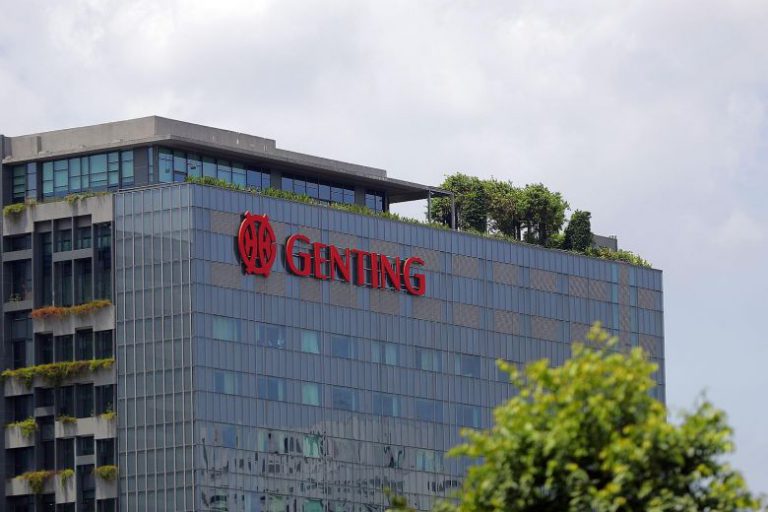
Little upside seen for Genting group stock

0

There’s little current upside seen for the stock price of the sprawling Genting Group empire, with both the parent company and its Genting Malaysia unit at risk of losing their place on the benchmark FBM KLCI index.

According to Maybank Research, the market capitalization of the two companies has fallen significantly due to the impact of Covid-19. Genting Malaysia is now ranked in #35 position, while Genting is at #33. They’re likely to be replaced on the index by glovemakers Supermax and Kossan, which have risen to #20 and #24 respectively.

The index is scheduled for review in Nov./Dec. and any changes are likely to become effective from Dec. 21st.

Maybank has a Hold rating on Genting and is ascribing a wider discount to its sum of the parts share price valuation of 55 percent, compared with 50 percent previously.

Explaining its rationale, the firm said at present, it’s assigning zero valuation to the company’s $4.3 billion Resorts World Las Vegas property, which is scheduled to open next summer, due to the pandemic situation in the U.S.

“If the Covid-19 pandemic does not stabilize by the time RWLV opens in the summer of 2021, we fear it will generate losses,” it says.

The research group also points to other unfavourable factors that have caused the share price to sum of the parts discount to widen in recent years. These include a 10 percentage point hike in casino duties that came into effect in January 2019 for Genting Malaysia, coupled with a 50 percent increase in casino entry fees in Singapore, which has eroded Resorts World Sentosa’s local visitor base at a time while its business has been hit by the decelerating Chinese economy.

A long history of related party transactions has also made investors wary of the group’s equity and could potentially weigh on earnings.

The latest was the acquisition of a 49 percent stake in loss-making Empire Resorts in the fourth quarter of last year from Genting’s controlling shareholder, the Lim family. Maybank reckons this will add more than MYR100 million in losses per annum.

Genting gets between 80 to 90 percent of its revenue from its casino operations through Genting Malaysia and Genting Singapore. As a result of plunging visitation, group wide EBITDA is likely to be down 70 percent this year, before seeing a 154 percent rebound next year. 

Maybank has an MYR3.26 share price target on the group and sees less than 10 percent upside potential. 

SA Gaming – Screen rotation now supported in SA APP

Mobile gaming is a huge market where technologies are ever-changing. To stand out from such competition, suppliers have to combine technology, innovation and design into products and features that can win the favour of the market. As one of the leading platforms in Asia, SA Gaming has recently made portrait mode available to its native app, SA APP.

Most of the apps available in the market can only run in landscape mode. SA APP offers its users both landscape and portrait modes. Most important of all, users can rotate their screens any time in the app to achieve seamless orientation change. Gaming has become even more convenient.

SA APP is a one-stop mobile gaming portal developed by SA Gaming. Apart from supporting in-game screen rotation, it comes with several features that provide the best user experience for players. Containing all the functions of H5 Mobile, SA APP has its UI re-designed and re-engineered to cater for human needs and to fit across all screen sizes. SA APP is compatible with both iOS and Android devices. The app is capable of fitting in various screen sizes – both landscape and portrait orientations.

SA APP also places great emphasis on ease of use. The provider has spent enormous resources to add features that facilitate the use of the app. There are various modes of log-in to suit users’ needs. Other than conventional password log-in, there is pattern log-in, where users can draw unique patterns to access the lobby effortlessly.

SA APP is the hard work of SA Gaming’s programmers and designers, who spend their every effort to ensure everyone can enjoy a great and smooth gaming experience. It is the gaming app that all players need on their devices.


Zitro says long-term vision intact

Zitro continues its plans for expansion in the Asian region. While the world has been hit by the most severe crisis in recent history, the company has not stopped working on new products, planning the next steps to bring Asia its incredible video slot games, as well as further expanding its already important presence in the video bingo market.

As Nadège Teyssedre, Director for EMEA of Zitro commented, “The global situation has forced all of us to change our short-term goals, however, our long-term vision hasn’t changed at all. Thus, our complete Zitro team, including the team based in the Philippines, is working hard in getting everything ready to execute our ambitious plans and focusing full steam ahead to extend our brand all over the Asian region.”

Sebastian Salat, CEO of Zitro adds: “Experience taught us that whenever an obstacle arises, an opportunity usually goes along with it. As the effects of COVID are being felt in land-based venues we understand PAGCOR may be considering regulated Online and Mobile gaming in the Philippines. Zitro has outstanding offerings in this area and we are already preparing the groundwork with local partners. Whether for land-based or online operators, at Zitro we have a diverse, robust and performance proven game library that is a sure investment for any gaming establishment”.

To find out more about Zitro’s product visit www.zitrogames.com or contact its commercial office in the Philippines lead by Rodney Hall via [email protected] .


Filling international visitor gaps

0

Jurisdictions around Asia are noting a strong surge in domestic tourism as a result of the pandemic, but border reopenings remain some way off and local traffic is unlikely to do enough to offset lost revenue in the IR industry.

Speaking at the recent Destination Mekong Summit, leading officials from the region outlined the impact the Covid-19 crisis has had on their respective tourism industries and the measures they have implemented to mitigate the effects. They also spoke about how their respective countries are approaching opening up their borders again to international visitors.

Dr. Han Van Sieu, Vietnam’s vice chairman of the National Administration of Tourism, said the country had seen a 62.4 percent drop in the number of tourists visiting, which has hit the country’s small and medium-sized tourism businesses the hardest.

The government has implemented a package of measures to alleviate the pain, including a five-month suspension of tax and land rental fees, the provision of low interest loans and a 20 percent discount on electricity tariffs. It has also cut takeoff and landing fees by half.

Vietnam was quick to bring the pandemic under control and began opening up to domestic tourism in April, with a major marketing push to get people moving again. He said the campaign had been a success before a second wave hit in early August, forcing a step backwards.

In June and July, domestic tourism numbers were close to their normal levels, with destinations in Danang and Phu Quoc running at about 20 percent above their 2019 levels.

Phu Quoc island hosts the Corona Resort & Casino, which is the only one in Vietnam currently permitted to allow locals to gamble. Recently the Ministry of Finance said 45 percent, or 47,000, visitors to the resort last year were locals.

Danang is also home to several casinos, though only Vietnamese holding foreign passports would be permitted to enter. 

The major focus for the government at present is on reactivating domestic tourism again, although Dr. Sieu said that talks are beginning on how to establish travel bubbles with destinations considered as “safe,” or which had had similar infection levels to Vietnam.

These include Japan, China, Taiwan, New Zealand, Australia and South Korea, he said, but gave no timetable for a potential reopening.

According to figures from ForwardKeys analysing flight searches, domestic travel interest across Asia has surged during the pandemic.

In Thailand 67 percent of travel searches in June for the second half were related to domestic destinations, compared with just 21 percent last year, while in Vietnam it was 61 percent compared with 15 percent.

Cambodia, which has also had a low infection rate, is also gradually opening its tourism facilities and casinos. NagaCorp in Phnom Penh opened on July 8th and has said it has seen positive numbers, whilst resorts in Sihanoukville have also been able to open their doors.

NagaCorp said for August, its gambling revenue was close to pre-lockdown levels due to pent up demand from Chinese expats living in Cambodia. VIP rollings were running at 98 percent of their prior levels, while main-floor buy-ins stood at 90 percent. 

Like Vietnam, however, locals are not permitted to gamble in the casinos and the doors remain closed for foreign tourists.

Minister of Tourism Dr Thong Khon said that Cambodia is working on plans to create travel bubbles, but that is not expected to happen until 2021. 

Overall in Cambodia, domestic tourism is down about 10 to 15 percent, but he did see signs that on major holidays demand is picking up. The five-day Khmer New Year holiday was held in August this year, having been pushed back from its usual date in April. During the festivities 1.4 million Cambodians travelled to domestic destinations, generating $100 million in revenue.

“ We will look at opening up certain areas and if it goes well, we will open other areas in due course.”

Thai senator Weerasak Kowsurat struck an upbeat note for tourism in the Southeast Asian region, predicting that “there will still be carriers and there will be people sitting in them.”

In the meantime, Thai resorts are also getting support from local tourists, with hotels in Hua Hin and Pattaya completely full. 

He said resorts that were close to major cities were benefiting from locals taking long weekend breaks.

When it comes to reopening international borders, Thailand is considering a slightly different approach and is looking at opening up two of its islands — Koh Samui and Phuket — to tourists. The plan had been to begin Oct. 1st, however, fresh cases look to have delayed the process.

“We will look at opening up certain areas and if it goes well, we will open other areas in due course,” he said. 

Panel moderator Steven Schipani of the Southeast Asian division of the Asian Development Bank praised the efforts taken by the various governments to support their tourism industries through the crisis and to retain jobs.

However, he noted that domestic tourism will not be able to fill the vacuum created by a lack of international visitors. 

“Until we can reestablish international visitation we are going to have a hard time,” he said. “Last year the talk was about over tourism and now it’s the opposite. We now have the opportunity to do things differently.”


HKJC to play key role in China plan to promote horse racing

0

The Jockey Club’s HK$3.7 million facility in Conghua – and its expertise in betting – could become key planks in China’s bold new plan to establish a standardized national horse racing industry.

HKJC to play key role in China plan to promote horse racing (SCMP)


Fourth illegal gambling raid on IPL in Goa

0

Following three earlier raids in the State, the Calangute police on Saturday conducted a fourth and arrested five persons allegedly involved in betting during the Indian Premier League (IPL) match between Chennai Super Kings and Royal Challengers Bangalore.

Fourth illegal gambling raid on IPL in Goa (The Herald)

IPL betting racket busted in Jaipur (Zee News)

Crown ready to open in Sydney

0

Crown Resorts director Andrew Demetriou has claimed the company is ready to open and run its Sydney casino in defiance of the governance and probity questions raised at the NSW inquiry into the casino giant.

Crown ready to open in Sydney (Australian Financial Review)


Macau government taxes from junkets fall in 2019

0

The Macau government has received MOP299 million (US$48.8 million) in taxes on commissions paid by casinos to junket operators in 2019, a 24 per cent year-on-year drop, according to the last year’s budget execution report.

Government taxes on junkets falls in 2019 (Macau Business)

When James Packer turned toxic

0

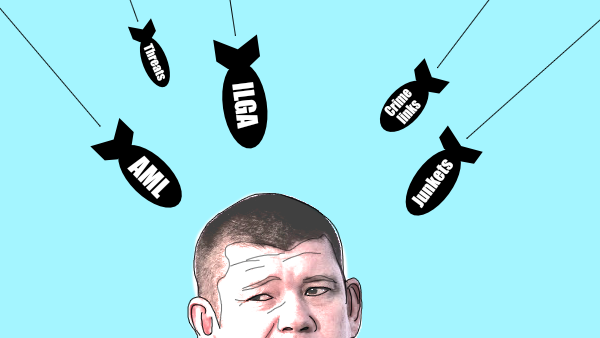
To say that the Crown Sydney probity hearings haven’t gone well would be an immense understatement: A better description would be “unmitigated disaster.” Governance at Crown Resorts has been made to look ridiculous, and billionaire James Packer last week made an unenviable transition from being merely a controversial figure to becoming a toxic presence threatening to drag the entire Crown Resorts empire into ruin.

The New South Wales Independent Liquor and Gaming Authority (ILGA) inquiry was called to investigate revelations by various Australian media outlets last year about Crown’s partnerships with the junkets tasked with bringing Chinese high rollers to its casinos. At stake is the A$2.2 billion (US$1.6 billion) Crown Sydney complex, the city’s tallest building, approved in 2013 and scheduled to open this December.

But if a probity hearing is all about determining whether or not a business possesses the moral fitness and the culture of compliance necessary to operate a gambling enterprise, there is probably no one who can argue that Crown Resorts’ performance before the ILGA inquiry came anywhere near meeting the test.

Even Packer himself clearly realized that his appearance had been a calamity, acknowledging that it would no longer be possible for him to play an active role at the firm, saying, “I think caps on shareholdings may be something that you will think about. I think this has been a terribly painful and terribly shocking experience for the board, as it has been for me. I won’t be going on the board again. I think the board will be more independent than it was in the past.” That, too, may be an understatement.

One of the core revelations that have emerged from the hearings was that Packer, by virtue of his 36 percent shareholding, contacts, and forceful personality, had been driving many aspects of company policy even after he left the board, and when he theoretically shouldn’t have been receiving the privileged information and decision-making role that he was.

It was also Packer, we learned, who was the “driving force” behind the controversial partnerships with junket operators, though he blamed his company executives, by name, for failing to manage the operations properly.

Packer also declined to take responsibility for his own personal threats against an unidentified businessman. While he described his own actions as “shameful” and “disgraceful,“ he ultimately felt that it wasn’t a reflection upon his personal character. “My medical state is what it reflected most on,” Packer asserted.

He did, however, acknowledge that he should have made a public announcement about his mental problems, revealed last week to be bipolar disorder, when he resigned as chairman in August 2015, but still remained on the board.

Commentary in the Australian media has rightfully been acid, and the calls for a major shakeup at Crown Resorts have become nearly universal.

As the Sydney Morning Herald put it, “The evidence… from billionaire businessman James Packer about his behaviour as director and principal shareholder at Crown Resorts leaves no doubt that fundamental change is needed if the company is to continue to operate casinos in Melbourne, Perth, and soon Sydney.”

The Australian Financial Review added, “At the very least, if Crown wants to keep its licence, its existing management must be replaced and it must accept much more rigorous and intrusive regulation.”

As the new week dawns, the ball is very much in Crown Resort’s court. To what degree can they separate themselves from the now-toxic James Packer? What actions will they take to salvage their license to open Crown Sydney… or perhaps even to keep their operations in Melbourne and Perth, where sleeping regulators are also beginning to awaken? We intend to watch closely.