

Home Blog Page 132

UAE gaming regulator focusing on operational discipline and sustainable growth: CFO

0

The UAE’s General Commercial Gaming Regulatory Authority is focusing on stewardship that that enables “confident decision-making operational discipline and sustainable growth”.

In statements published by the GCGRA on social media, Chief Financial Officer Leina El-Barasi indicated that “As a newly established regulator it is essential that financial and procurement frameworks are designed to scale from the outset.”

Leina El-Barasi, CFO, GCGRA

The official furthered “building a financially strong and digitally enabled Authority that operates with discipline confidence and integrity”.

The CFO highlighted that the regulator’s success “means contributing to an institution that upholds the highest standards of governance and supports the UAE’s vision for a trusted and sustainable regulatory ecosystem.”

El-Barasi joined the GCGRA in June of 2023, having previously served with the Abu Dhabi Media Company and with Ernst & Young. The GCGRA notes that she plays a ‘key role in the GCGRA’s strategic decision-making processes through effective financial forecasting and communication with various government and private stakeholders’.

Wynn Al Marjan Island, UAE, Wynn Resorts

The UAE is set to see the opening of its first integrated resort with a casino in 2027: Wynn Al Marjan Island, overseen by the GCGRA. In preparation for casino gaming, the regulator has been filling its ranks with seasoned gaming professionals with international experience.

In November, the GCGRA Board appointed former CEO of MGM Resorts International Jim Murren as its interim CEO, after Kevin Mullally stepped down from the role. Mullally has since been appointed as the CEO of the International Association of Gaming Regulators (IAGR).

Over 1.7M tourists visited Macau over extended CNY holiday: PSP

0

Macau welcomed 1.7 million visitors during the Chinese New Year holiday, with a daily average of 189,000 tourists, according to data from the Public Security Police.

Public broadcaster TDM noted that data corresponds to February 14th to 23rd.

According to the Macau Government Tourism Office (MGTO), the nine official days of the holiday, which started on the 15th, saw a total of 1.55 million visitors – exceeding even its own estimates of between 1.4 and 1.5 million.

The peak visitation day was February 19th, the fifth day of the holiday, when a record 227,905 visitors entered Macau – a 4 percent yearly increase, the majority (93,266) arriving via the Border Gate.

Visitation topped 200,000 between the 19th and 21st, falling to 147,249 by the 23rd – the last day of the official holiday.

While the Border Gate handled some 603,529 visitors over CNY (with a daily average of 67,059), the Hong Kong-Zhuhai-Macau bridge border saw a significant uptick in traffic, with 330,758 visitors entering – an average of 36,751 per day.

The Hengqin Port was the third most frequented border by tourists during the period, with 295,779 visitors.

The daily average over the nine days amounted to 172,699, a 5.5 percent yearly uptick.

Visitors from mainland China made up the majority of arrivals, at over 1.2 million, averaging 133,990 over the nine-day period – a yearly increase of 7.2 percent.

Visitors from Hong Kong totaled 250,898, with a daily average of 27,878 – down by 3.5 percent yearly.

Philippines needs “like-minded president in 2028” says Ferdinand Marcos Jr.

0

Philippine President Ferdinand Marcos Jr. says that the nation needs a “like-minded president in 2028”, in order to continue the economic reforms introduced in his administration.

In statements at the ASEAN Editors and Economic Opinion Leaders Forum in Manila, the official noted that without such continuity “all of these will just go by the wayside”.

The nation’s leader furthered that investors are way about reversals in policy that have previously occurred with administrative changes.

While Marcos noted that some reforms have been “enshrined in law”, he noted that any future top official would need to understand economics, including “how to create jobs” and “how to keep the inflation rate down”.

During his time in office, the president took a strong stance against Philippine Offshore Gaming Operators (POGOs), outlawing them by presidential order and shutting down the once-profitable industry in response to public outcry over crimes – including human trafficking, money laundering and fraud – linked to such operations.

Despite the mandate against offshore gaming operations, Marcos Jr. did not follow calls for a complete shut-down of the online gaming sector, maintaining the legality of Philippine Inland Gaming Operators (PIGOs), while pressuring government agencies such as the Philippine Amusement and Gaming Corporation (PAGCOR) to ensure strict oversight.

Marcos’ POGO ban directly reflects the shifting political spectrum, as POGOs were authorized to operate by PAGCOR during the presidency of Rodrigo Duterte in 2016.

The daughter of the former president, sitting Vice President Sara Duterte, has already declared her intention to run in the 2028 elections.

Marcos indicated that he has not yet decided if he will endorse a successor, noting that it is till “too soon. Timing is everything,” cites the Philippine News Agency.

The official furthered that potential candidates would likely already have a political background as it was “quite difficult” otherwise due to the nation’s “highly political atmosphere”.

ACMA clears Tabcorp’s Tap in-play service under Interactive Gambling Laws

0

Australia’s media regulator has concluded that Tabcorp’s Tap in-play betting service does not breach federal interactive gambling laws, ruling that the product falls within a permitted exemption under the Interactive Gambling Act 2001.

The Australian Communications and Media Authority (ACMA) said in its final investigation report that ‘the Tabcorp Tap in-play service is not a prohibited interactive gambling service’ under subsection 15(2A) of the Act.

The investigation examined whether the service, which allows customers at licensed Tabcorp venues to place in-play bets using their smartphones and dedicated in-venue stations, contravened restrictions on online wagering. Under the system, users build live bets through the TAB app and complete the transaction by tapping their device against a Tap in-play station located inside the venue.

The oversight body determined that the service meets the definition of a ‘place-based betting service’ under section 8BA of the Act, an exemption introduced in 2017 to permit in-venue in-play betting using electronic terminals. The regulator found that the Tap in-play platform, although using newer technology, operates within the scope of this exception.

In its report, the ACMA noted that ‘the preferable construction is that the Tap in-play service is not a prohibited interactive gambling service,’ describing the case as ‘finely balanced’ in light of harm minimization objectives.

The regulator also acknowledged that in-play betting presents heightened risks for people vulnerable to gambling harm. It said the Interactive Gambling Act restricts such betting to physical venues where behavior can be monitored.

The ACMA highlighted that Tabcorp’s Real Time Intervention (RTI) system provides stronger consumer protections than those currently applied to traditional electronic betting terminals. The RTI system operates continuously and identifies customers who may be at risk of gambling harm in real time.

The authority emphasized that its decision applies specifically to the current operation of the Tap in-play service within Tabcorp venues. Any wider rollout remains subject to approval by state and territory regulators.

If approvals are granted, the ACMA said it will closely monitor the service’s implementation. Tabcorp is also required to report regularly on the operation of its RTI system and any incidents involving Tap in-play users.

Scam networks in Southeast Asia operating at industrial scale: FBI

Transnational scam networks in Southeast Asia are operating on an industrial scale and targeting Americans daily, a senior US law enforcement official said during a virtual press briefing conducted on February 24th.

Scott Schelble, Deputy Assistant Director of the International Operations Division of the Federal Bureau of Investigation (FBI), made the statement after returning from Thailand, Cambodia, and Vietnam, where he met senior law enforcement officials and observed scam compounds firsthand.

“What became clear is that Chinese organized crime syndicates running large-scale scam operations in the region are targeting Americans every day,” Schelble said. “These are not small or isolated crimes; they are sophisticated, well-resourced criminal enterprises.”

After viewing several scam compounds, he described their scale as unprecedented. “There are entire facilities dedicated to fraud on an industrial scale,” he said. “It fundamentally changes your understanding of the threat.”

Schelble emphasized that the problem is regional rather than confined to any single country. “When we look at Southeast Asia, this is not a Cambodian problem, this is not a Vietnamese problem or a Thai problem,” he said. “This is regional and it will require a partnered aspect and a coordinated aspect if we’re going to properly take care of it.”

He warned that enforcement pressure in one jurisdiction often results in relocation. “These compounds can go anywhere next,” Schelble said. “When law enforcement places pressure in one location, the perpetrators can simply continue to another area and invest the time and money to set up a new compound.”

In Cambodia, Schelble said he discussed combating scam operations with senior leaders and expressed hope of leveraging past joint task force investigations with the Cambodian National Police to address scam compounds. He also described productive discussions with Vietnam’s Ministry of Public Security and highlighted ongoing operational cooperation with the Royal Thai Police.

“This is not a symbolic relationship; it is an operational partnership built on trust, information sharing, and results,” he said of cooperation in Thailand.

According to Schelble, the FBI’s Internet Crime Complaint Center recorded more than 80,000 complaints in 2025, with losses exceeding $2.9 billion. “These are staggering figures impacting all of us,” he said. “This is truly a global enterprise.”

He characterized the networks as part of broader organized crime. “This is no longer just cybercrime,” Schelble said. “It involves human trafficking, money laundering, and corruption all wrapped into one.”

“The geographical borders will not protect criminals who target Americans,” he added. “If these syndicates exploit borders, then we must be in a position to address that with a global and coordinated response.”

Century Entertainment, WPT launch ‘scalable’ mobile gaming push in Asia-Pacific

Century Entertainment has partnered with WPT to roll out a portfolio of mobile gaming applications across Asia-Pacific, according to a filing with the Hong Kong Stock Exchange, describing the initiative as a move toward ‘scalable and compliant’ digital expansion in regulated markets.

Under an operating agreement signed on February 13th, 2026, the company’s joint venture was granted access to WPT’s licensed gaming platform, together with related content and technology, to develop, operate, and monetize mobile applications in the region, excluding the Philippines. The arrangement is designed to ensure that all activities comply with applicable laws and regulatory requirements.

Pursuant to the agreement, WPT, a licensed Electronic Gaming System Service Provider accredited by the Philippine Amusement and Gaming Corporation (PAGCOR), will provide its proprietary platform and regulatory infrastructure to support the project. The joint venture will focus on application development, customization, and commercialization, while WPT remains responsible for regulated gaming operations, compliance, and reporting.

The company said the partnership allows it to pursue ‘cost-efficient market entry’ in the fast-growing Asia-Pacific digital gaming sector. By leveraging WPT’s PAGCOR-accredited platform, proprietary content, and established regulatory framework, the joint venture can deploy products without obtaining independent gaming licenses or developing core platform technology.

Management noted that this structure is intended to accelerate product deployment while limiting upfront investment and operational complexity. The agreement enables the development of up to ten mobile gaming applications across approved jurisdictions.

The operating agreement has an initial term of three years, with automatic annual renewals unless terminated with prior notice. WPT will receive 15 percent of net winnings generated from the apps, with settlements conducted on a monthly basis. Net winnings are derived from gross gaming revenue after deduction of mandatory gaming taxes, regulatory levies, and the runner’s fee. The joint venture will also be granted secure access to operational data, including player activity and performance metrics, to support commercial and analytical functions.

The partnership marks Century Entertainment’s shift toward a ‘performance-linked’ platform-based business model, aligning revenue with application results while maintaining regulatory separation between technology services and licensed gaming operations.

Separately, the company said it continues to work with its auditor to resolve issues related to a prior disclaimer of opinion and to meet the requirements for resuming share trading, which has been suspended since June 2025.

Daily Asia Gaming eBrief: Positive Chinese consumer sentiment a “lasting trend”: economist

0
Good Morning. Macau has always been cyclical. But the good times could be here for some time to stay, as the positive Chinese consumer sentiment is a “lasting trend”, according to a top economist. This is good news for operators aiming to capitalize on the post-CNY period and extend it for as long as possible. That will be necessary for continued growth, as Macau’s diversification efforts are slow to take off, partially due to its sheltered nature, given how shielded it is from external volatility. Coming back to the Year of the Horse, premium mass play lived up to expectations during the holiday, with a new record in average wagers, say analysts at Citigroup.

What you need to know

On the radar


AGB Intelligence

Macau gaming, satellite casinos regulatory update, Macau GGR

Positive Chinese consumer sentiment is a “lasting trend”: top economist

The good times will continue to roll in Macau, as the positive Chinese consumer sentiment is a “lasting trend”, says the former Executive Director of the Monetary Authority of Macau. The SAR’s unique positioning shields it from external financial risks but operators still need to capitalize on cyclical upswings. US-facing operators do face more volatility, and the government should pay heed as its diversification is only a “mirage” in a short-term view.


Industry Updates


INTELLIGENCEASEAN | CAREERS | EVENTS

QTech Games enhances its premier platform with Pixmove

0

QTech Games, the leading game aggregator for all emerging markets, has announced its latest provider partnership with Pixmove, allowing its platform clients access to another multifaceted instant-win games catalogue – from classic slots to modern interactive experiences.

For Pixmove, this progressive partnership opens the gateway to QTech Games’ extensive scope, increasing exposure and player engagement on a global scale and unlocking untapped jurisdictions from Asia, through Africa and Eastern Europe, and on to Latin America for diversified growth. Thanks to this rapid-fire integration, Pixmove’s instant-win portfolio is now connecting with new audiences, fostering brand loyalty and broadening the brand’s impact in the competitive iGaming landscape.

As the defining aggregator for growth markets, QTech’s platform boasts the broadest gaming portfolio around, localised for each region, with native mobile apps, powerful reporting and marketing tools, and 24/7 local-language support. Incorporating this ever-evolving production line emphasizes QTech Games’ diverse range of gaming options, providing a definitive one-stop shop, which has quickly become the “go-to” solution for international operators across developing territories.

Severin Vervald, CPO at Pixmove, said: “This partnership strikes another significant step in expanding our global footprint and strengthening our position across more emerging markets than ever before via QTech. Our progressive portfolio features a wide array of games, from classic slots to modern, interactive experiences. Each game is crafted with meticulous attention to detail. And by harnessing the latest advances in tech, we ensure our games are fair, transparent and secure, with a smooth and uninterrupted gaming experience accessible across all devices.”

Fast Track Spark Lands in São Paulo for Advanced Retention Workshop

0

Fast Track will host Fast Track Spark: São Paulo 26, a two-day advanced retention training event, on March 18-19, 2026 at the Rosewood São Paulo.

The event is the first in a new global series focused on practical CRM education for iGaming operators.

The program combines keynotes, live demonstrations, roundtables, and hands-on workshops, all delivered in Portuguese. Day one covers retention fundamentals, the player journey from registration to VIP, and bonus strategy. Day two focuses on data-driven decision making, World Cup campaign planning, gamification mechanics, and Fast Track AI. Attendees will receive official certification upon completion.

“Brazil is the world’s fastest-growing iGaming market, and operators here need practical skills they can use immediately,” said Muriel Le Senechal, Regional Commercial Manager, LatAm at Fast Track. “Fast Track Spark delivers real workflows and playbooks, not theory.”

Guest speakers include Beatriz Melges, Director Brazil at BetConstruct; Fernando Paz, CEO of Soho Sports; and Ricardo Bianco, CEO of BRMKT and Co-CEO of BandBet.

Thailand’s EEC tourism megaproject to exclude casinos, targets up to $22.6B in investment

0

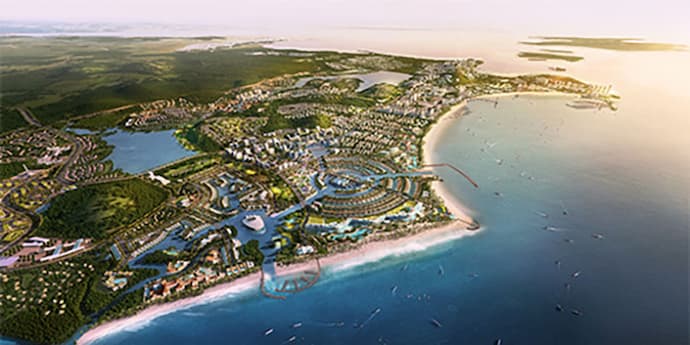
Thailand’s government is moving forward with a large-scale, casino-free tourism and entertainment complex in the Eastern Economic Corridor (EEC), with projected investment of up to THB700 billion ($22.56 billion), as part of efforts to boost economic growth and tourism.

According to a report by local media outlet The Nation, Deputy Prime Minister and Transport Minister Phiphat Ratchakitprakarn said the EEC board will review the project this week before submitting it to the Cabinet, confirming that no casino component will be included.

Phiphat said the administration led by Prime Minister Anutin Charnvirakul is targeting gross domestic product (GDP) growth of around 3 percent in 2026, with infrastructure and tourism identified as key drivers. He added that the proposed entertainment complex is designed as a man-made tourism destination capable of attracting up to 40 million visitors annually.

The development is expected to include sports facilities, a major theme park, and large-scale retail areas. Phiphat stressed that “there is absolutely no casino” in the plan, aligning the project with government policy priorities and campaign pledges, including the creation of a world-class theme park.

According to the minister, discussions have already taken place with the EEC secretary-general, the governor of the Sports Authority of Thailand, and the governor of the Tourism Authority of Thailand. The EEC has reserved about 15,000 rai (around 24 million square meters) of land, with roughly 5,000 rai (around 8 million square meters) allocated for sports and theme park facilities. The designated zone will exclude industrial factories but will include supporting infrastructure such as hospitals and medical centers, with the aim of developing a new urban area.

Phiphat said the project could stimulate related investment, particularly in the high-speed rail link connecting three airports and in developments around U-Tapao Airport. He estimated that total investment in the EEC could reach between THB600 billion and THB700 billion ($19.35 billion to $22.56 billion).

This includes about THB300 billion ($9.67 billion) linked to the three-airport high-speed rail project and U-Tapao Airport development, and approximately THB350 billion ($11.28 billion) in sports-related investment. He said the government would move quickly to advance project approvals and implementation.

In a separate briefing earlier last month, Phiphat said that a “Disneyland Thailand”-style development in the EEC is under study as a public–private partnership, supported by the region’s airports, rail networks, ports, and proximity to Bangkok, Pattaya, and Rayong. He added that earlier proposals for casino-based entertainment complexes under previous administrations failed to advance, reinforcing the current government’s casino-free approach.