India is weighing further enforcement action against prediction market platforms, even as it prepares to roll out a comprehensive regulatory framework for online gaming from May 1st.
IT Secretary S. Krishnan said platforms such as Kalshi and Polymarket have come under increased scrutiny, particularly as they are being used to facilitate betting on election outcomes, Indian Premier League matches and other real-world events. Despite being prohibited under the country’s Online Gaming Act, Krishnan acknowledged that users continue to access such services through virtual private networks, creating enforcement challenges for authorities.
“Access through VPNs is a slightly tricky issue and we are seeing how we can intervene,” Krishnan said, noting that VPN usage presents a “whack-a-mole situation” given their legitimate applications alongside illicit circumvention of restrictions. He added that the government is examining ways to distinguish between legitimate and illegitimate VPN usage, though no clear solution has yet emerged.
Krishnan also emphasized that offshore operators targeting Indian users remain within the reach of enforcement action. Under the Online Gaming Act’s extra-territorial provisions, foreign platforms offering services in India can be blocked, including through Section 69A of the Information Technology Act, 2000. The comments come as India moves to implement the Promotion and Regulation of Online Gaming (PROG) Act, 2025, alongside its accompanying rules, which were finalized following inter-ministerial consultations and legal review.
The new framework reflects a dual policy objective: protecting consumers, particularly minors and vulnerable groups, from financial and psychological harm, while positioning India as a global hub for gaming and digital innovation. Drafted by the Ministry of Electronics and Information Technology, the Promotion and Regulation of Online Gaming Rules, 2026 establish the operational structure for the law, which was passed by Parliament in August 2025.
Central to the framework is the creation of the Online Gaming Authority of India, a digital-first regulator tasked with overseeing classification, compliance, grievance redressal and enforcement across the sector. The rules also introduce a formal classification system to determine whether a product constitutes an online money game, a permissible social game or an e-sport, providing greater regulatory clarity for operators in a market that has expanded rapidly in recent years while attracting growing scrutiny over addictive and monetized gameplay mechanics.
Sands China CEO, president and executive director Grant Chum said Macau and Singapore are likely to benefit from a shift toward short-haul travel among Chinese outbound tourists, driven by geopolitical uncertainties and rising air travel costs.
Speaking during the company’s earnings call, Chum said the changing travel environment is reshaping destination choices, with closer-to-home markets gaining share.
“Destinations that are closer to home are going to gain share in general as a result of the current environment,” he said, pointing to evolving travel options compared with recent months.
Chum noted that both Macau and Singapore are positioned to capture this demand, as they are increasingly seen as more accessible and preferred destinations. “The net effect from a demand standpoint is… a positive one for both Macau and Singapore,” he said, adding that factors such as geopolitical conditions and the cost of air travel are influencing traveler behavior.
He added that these dynamics are expected to support visitation trends from mainland China, particularly as travelers opt for shorter journeys. “Short-haul destinations… are going to be more popular with the Chinese market,” Chum said.
Chum’s comments echo recent industry observations highlighting the resilience of Macau’s demand base, particularly its reliance on regional and land-based visitors. Earlier analysis, as reported by AGB, indicated that disruptions to air travel and higher costs are unlikely to materially impact Macau’s gaming sector, with some demand potentially redirected toward nearby destinations.
Industry observers have also pointed to shifting visitor patterns, including a rise in short-haul and same-day travel, as a key factor shaping recovery trends. In this context, Macau’s proximity to mainland China and integration within the Greater Bay Area continue to support stable visitation, even amid broader travel uncertainties.
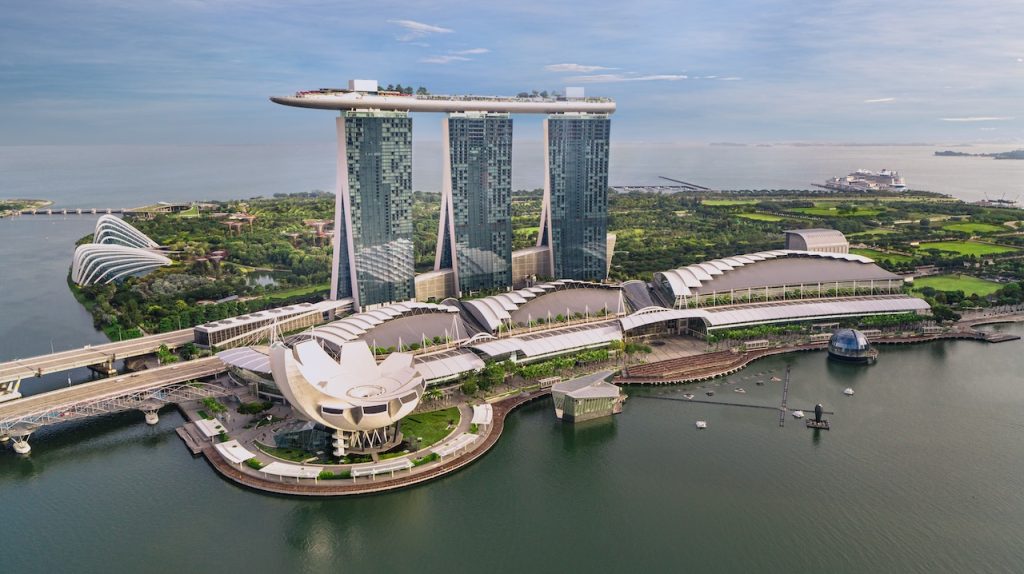
Las Vegas Sands Corp is positioning its planned IR2 expansion in Singapore as a key driver to capture growing high-end tourism demand, with executives highlighting capacity constraints and rising premium visitation at Marina Bay Sands.
Speaking during the company’s earnings call, Chairman and CEO Patrick Dumont said the project will expand luxury offerings and allow the company to better serve high-value customers, particularly in a competitive and volatile VIP segment across Asia.
“The VIP segment is very competitive… and can be concentrated at times,” Dumont said, noting that performance can fluctuate depending on customer mix. He added that IR2 will introduce “more product to address this market and scale with it,” while also supporting broader high-end tourism demand.
Despite strong VIP activity, Dumont emphasized that mass gaming and slots remain the primary drivers of profitability at Marina Bay Sands, underscoring a diversified revenue base even as the company targets premium segments.
The expansion comes as Singapore operations continue to deliver robust growth. Marina Bay Sands reported net revenues of $1.49 billion for the quarter, up 27.9 percent year-on-year, while adjusted property EBITDA rose 30.2 percent to $788 million, reflecting sustained demand for high-quality hospitality and entertainment offerings.
Dumont highlighted that capacity limitations are becoming increasingly apparent as the resort attracts more high-value visitors. The property has already expanded its suite inventory significantly, but “we need more capacity,” he said, adding that IR2 is expected to increase high-end suites and introduce additional amenities, including entertainment venues, ballrooms, and dining options.
The company expects these additions to have a “multiplier effect” across the property, enhancing its ability to attract and retain premium customers while supporting overall visitation.
As reported by AGB, Las Vegas Sands last month awarded a multi-billion-dollar construction contract for the IR2 project at Marina Bay Sands to Singapore-based builder Woh Hup. The development is scheduled for completion in 2030 and is expected to open in 2031.
Macau gaming operator Sands China reported improved overall gaming performance in the first quarter of 2026, as adjustments to its reinvestment programs helped lift gaming volumes and premium customer activity, according to Las Vegas Sands Chairman and CEO Patrick Dumont.
The update comes as parent company Las Vegas Sands Corp, parent of Sands China, reported strong first-quarter 2026 results, with Sands China’s net income rising 45.5 percent year-on-year to $294 million and net revenues increasing 23.6 percent to $2.10 billion.
Mass market revenue share reached 25.7 percent during the period, marking its strongest level since 2024.
Speaking during the earnings call, Dumont said the company has “meaningfully increased our gaming revenues, gaming volumes, and premium customer patronage” following changes to its reinvestment approach.
He added that progress is being driven by improvements across key operational pillars, noting that enhancing service levels “will be critical to realizing additional growth and securing our long-term success” in Macau.
Commenting on the same issue, Grant Chum, Sands China’s CEO, president and executive director, said the company has been refining its reinvestment approach as part of an ongoing adjustment process that began in 2025.
“We have been able to optimize some of our programs,” Chum said, describing the changes as a “natural progression” as the company evaluates what has been effective and refines its strategy.
He said the company continued to gain market share and grow revenue during the quarter, supported by stronger execution and improved use of its product base.
Chum added that reinvestment has become more efficient as Sands China leverages upgraded offerings, particularly the ramp-up of The Londoner and the Grand Suites at Four Seasons.
“That has helped us tremendously, especially in the core premium mass mid-tier segments,” he said, adding that this allows the company to be “more targeted and disciplined in reinvestment” as new products come online.
Regarding margin pressure, a factor frequently highlighted by analysts in a competitive environment, Dumont said the company’s reinvestment strategy, alongside increased spending on service improvements, is expected to weigh on margins in the near term.
“Our investments in improving service offerings will naturally increase expenses and will continue to negatively impact margins,” he said. However, he indicated that margins should improve over time as revenue expands across broader segments.
“We do expect margins to improve over time as we grow revenue in the lower end of the premium segment and in the non-premium segment,” Dumont said, adding that Sands China’s large hotel inventory provides “natural advantages” as service levels and reinvestment strategies are refined.
Retail sales hit record high as consumption remains solid
Beyond gaming, the company reported strong growth in its retail segment, pointing to resilient consumer demand.
Chum said tenant sales reached a quarterly all-time high, rising 37 percent year-on-year.
“It was an exceptional performance,” Chum said, noting that while growth was led by the jewelry and watch sector, spending was “very broad across all of our malls,” with additional strength seen in the fashion segment.
He added that performance in slots and retail indicates that “consumption is solid,” although premium gaming segments continue to drive the majority of overall gross gaming revenue growth.
This comes as overall consumer sentiment in Macau has shown a decline in visitor spending per capita, even as total spending has risen due to an increasing number of visitor arrivals.
Entertainment strategy supports visitation across segments
Non-gaming entertainment has become an effective tool for driving foot traffic in integrated resorts, particularly in the post-COVID era. Sands China’s entertainment offerings also contributed to performance during the quarter.
“The calendar was strong in the first quarter for us,” Chum said, adding that the company hosted 11 to 12 shows during the period.
While large-scale touring acts in Asia have slowed compared with the previous two years, Sands China has leveraged its range of venues to maintain a steady pipeline of events.
“We are able to bring a more diverse range of acts and content,” Chum said, citing access to both large-scale venues such as The Venetian Arena and mid-sized venues like the Londoner Arena.
He added that the ability to offer multiple venue formats provides an advantage in attracting artists and promoters, helping drive visitation across different customer segments.
Venetian renovation to roll out from 2026
Looking ahead, Sands China is advancing a renovation of The Venetian Macao as part of its broader product enhancement strategy.
Dumont said the company plans to introduce “refreshed and luxurious room and suite products” across its portfolio, starting with The Venetian.
Refurbished rooms are expected to begin coming into service in 2026, with the full upgrade targeted for completion by 2027.
Despite the scale of the project, management said disruption is expected to be limited.
“We do not expect meaningful disruption,” Chum said, noting that demand can be redistributed across the broader portfolio while new inventory is gradually brought online.
From June 11 to July 19, football stadiums in the USA, Canada, and Mexico will become the epicenter of media activity as national teams from 48 countries compete for the title of world champion.
The upcoming tournament will open a window of new opportunities not only for athletes, fans, and the media but also for affiliate marketing representatives. Each match is a global news trigger, and the surrounding hype can be converted into maximum ROI.
Ecosystem of football’s No. 1 event
Global bookmaker 1xBet is more than just a betting platform, but a comprehensive ecosystem with innovative solutions. A key part of it is the flagship affiliate program, 1xPartners, which has created a well-thought-out infrastructure for the successful monetization of global sporting events.
Its operations integrate proven marketing strategies that align with the North American football festival’s international scale. 1xPartners members will have access to top-notch analytics and the most effective marketing tools, which will serve as the foundation for a high conversion rate of registrations into deposits.
1xPartners: Technological leadership and support at critical moments
The race for the title of the world’s strongest football nation is the year’s most important social and sporting event, closely followed by billions of people worldwide. The final of the previous tournament attracted nearly 1.5 billion viewers, setting an absolute record in sports history. The 1xBet platform and its flagship affiliate program are ready for maximum loads and, thanks to a comprehensive set of technological solutions, will continue to operate smoothly even during peak periods.
1xPartners members receive real-time statistics and creative updates even at the height of excitement around top matches. The program runs stably and without delays. Despite heavy loads, 1xPartners will ensure constant connection with personal managers, who are available 24/7 throughout the tournament.
Best tools for monetization
1xPartners offers affiliates effective solutions that reflect the global scale of the battle for the title of the world’s strongest football nation:
Exclusive landing pages for specific teams and matches: these help partners tap into audience interests and increase conversion by aligning with the tournament’s biggest events;
Localized promo materials for different regions: all creatives are tailored to the specific context and characteristics of each country. With these tools, partners can build trusting communications with users;
Specialized retention programs to keep players engaged after the championship ends: these ensure converting short-term tournament traffic into loyal customers.
1xPartners has been on the market for over 10 years and has united more than 500,000 affiliates from over 150 countries worldwide. It combines global expertise with effective local solutions to deliver maximum results. Partners can choose from the most profitable collaboration models (RevShare, CPA, and Hybrid), allowing them to earn up to 50% on referred players.
LVS reports strong 1Q26 results as Macau drives growth, with Sands China profit up 45.5 percent year-on-year and group net income rising 57.1 percent.
Australia’s regulator warns AI is reshaping online gambling, boosting efficiency but raising concerns over personalization and player protection risks.
Renowned as the world’s first gaming test lab, BMM Testlabs has announced that Michael Minor has joined the company as Senior Vice President and North America Market (NAM) Leader for Business Development.
In this role, Minor will lead land-based gaming sales strategy and customer engagement across the region, helping expand BMM’s presence and strengthen relationships with manufacturers, suppliers, and operators.
Michael Minor brings more than 20 years of leadership experience in managing business development teams, client engagements, and sales strategies, and in-depth knowledge of gaming technologies and enterprise platform solutions. He previously held senior-level roles at NEXTEQ, Pavilion Payments, and IGT, where he led major initiatives and supported large-scale deployments of systems and technologies.
Kirk White, Global President, Land-Based Gaming & Inspections, said, “Michael is a respected leader with deep experience across the North American gaming market. He understands our customers, knows how to build strong teams, and has a proven track record of delivering growth. With BMM’s full NAM coverage for certification services, we are excited to welcome Michael to BMM, supporting our client-engagement experience as we expand our services across the region.”
Commenting on his new role as SVP & North America Market Leader for Business Development, Michael Minor said, “I am excited to join BMM Testlabs at such an exciting time for the company, as the industry highly values what BMM is offering for Compliance and QA services. BMM has a strong reputation and focus on quality, speed, and integrity, and I look forward to working with our customers and teams across North America to support their growth and success.”
Las Vegas Sands Corp (LVS) reported strong first-quarter 2026 results, led by robust growth in Macau, where its subsidiary Sands China recorded a 45.5 percent year-on-year increase in net income to $294 million, alongside a 23.6 percent rise in net revenues to $2.10 billion.
The performance in Macau was a key driver of the group’s overall results, with Las Vegas Sands posting total net revenue of $3.59 billion, up 25.3 percent year-on-year, and net income of $641 million, up 57.1 percent year-on-year.
Across its Macau portfolio, all five integrated resorts reported revenue growth during the quarter. The Londoner Macao led gains, with net revenues rising to $754 million, supported by continued momentum following its redevelopment. The Venetian Macao generated $710 million in net revenues, while The Plaza Macao and Four Seasons Macao posted $290 million.
Growth was primarily driven by The Londoner Macao and The Plaza Macao and Four Seasons Macao, both of which recorded outsized year-on-year increases, reflecting continued ramp-up following recent upgrades and strong demand in higher-end segments.
The Parisian Macao and Sands Macao recorded more modest increases to $229 million and $93 million, respectively, according to company data.
Adjusted property EBITDA for Macau operations rose to $633 million, reflecting improved operating performance across the portfolio. However, EBITDA margin for Macau stood at 29.9 percent, compared with 31.3 percent in the prior-year period, indicating some pressure on profitability despite revenue growth.
Singapore adds to strong quarter for LVS
In Singapore, Marina Bay Sands also delivered strong year-on-year growth, with net revenues increasing 27.9 percent to $1.49 billion and adjusted property EBITDA rising 30.2 percent to $788 million, representing a margin of 53.0 percent.
Gaming volumes in Singapore showed notable strength, with rolling chip volume and mass market play both contributing to the improved results. The property continued to operate at high occupancy levels, while average daily room rates and revenue per available room increased compared with the prior year.
Group-wide, consolidated adjusted property EBITDA reached $1.42 billion, up 24.6 percent year-on-year, highlighting continued recovery and growth across both key markets.
“We continued to execute our strategic objectives during the quarter as we delivered growth in both Singapore and Macao while continuing to increase the return of capital to shareholders,” said Patrick Dumont, chairman and chief executive officer.
“Looking ahead, we remain confident that our people, our products and our focus on delivering outstanding service, hospitality and entertainment experiences to our customers will drive growth for the company and deliver strong returns to our shareholders in the years ahead.”
During the quarter, the company repurchased $740 million of its common stock and maintained its quarterly dividend.
The Australian Communications and Media Authority (ACMA) has released a sector report examining how licensed online gambling providers are deploying artificial intelligence across their operations, and the findings reveal an industry that is moving fast, with regulators trying to keep pace.
The April 2026 report, produced by Australia’s primary communications and online content regulator, maps four broad applications of AI in licensed wagering: predictive analytics and odds setting, personalized promotions and services, content creation and new product features, and the detection of harmful or fraudulent gambling behavior. The report draws on company announcements, investor presentations, executive interviews, academic research and journalism, and notes that providers are often reluctant to disclose the full extent of their AI use given the public and regulatory scrutiny the sector faces.
Australia is not a minor market for this conversation. Australians spent an estimated AU$12.45 billion ($8.91 billion) on online gambling in 2024, with wagering accounting for AU$8.6 billion ($6.1 billion) of that figure.
A 2024 Australian National University longitudinal survey found that roughly a third of Australian adults had participated in online gambling in the past year, the first time online activity surpassed venue-based gambling in the study’s history. Sports betting, at 89 percent, has the highest proportion of gamblers who conduct their activity online.
The dominant force in Australian online wagering is Sportsbet, owned by Flutter Entertainment, which holds close to half the market. Tabcorp holds around a quarter, with Entain’s Ladbrokes and Neds, Bet365 and PointsBet accounting for much of the remainder.
The most mature AI application in the sector is predictive analytics, which licensed wagering providers have used for over a decade to set odds and manage margins. What has changed is the sophistication and speed of these systems.
Modern predictive models process live data – player injuries, weather conditions, in-play betting patterns – and can generate and distribute odds with minimal human input, almost in real time. The scope of what can be priced has also expanded significantly. AI systems can now generate odds across a growing array of micro-outcomes within a single match, creating more opportunities for users to place bets.
Betfair Australia has publicly stated that AI algorithms have improved the accuracy of its odds by 22 percent. PointsBet‘s parent company Fanatics acquired predictive technology firm Banach Technologies for $43 million, specifically for its in-play wagering and odds calculation capabilities.
Personalization is where the report raises its sharpest concerns. Gambling providers are candid about their ambitions here. Sportsbet has stated it aims to give each customer a personalized experience every time they log in, drawing on real-time data fed into recommendation engines that determine homepage content and which odds are displayed.
Bragg Gaming‘s Vice President for AI and Innovation has described the company’s machine learning models as going beyond basic segmentation, with AI-driven offers delivered with a nuanced understanding of player sentiment. Tabcorp, working with Databricks, has deployed AI tools that automatically populate in-app offers for every customer daily, based on behavior, interests and seasonality.
The ACMA report references the Australian Competition and Consumer Commission’s concept of hyper-nudging – the use of dynamically personalized, data-driven prompts to shape consumer decisions – as a practice that AI tools enable at scale.
Personalized advertising is not limited to existing customers; it is used to recruit new ones. The report cites academic literature linking the increasing prevalence of online sports betting among younger demographics in part to targeted social media marketing underpinned by AI systems.
On the content and features side, gambling providers are using generative AI to produce advertising material, design games and develop customer-facing tools including chatbots and AI assistants. Sportsbet’s AI Assistant allows members to query an AI tool for racing events, while the company also launched a chatbot modeled on an AFL commentator that was, according to reporting cited in the document, trained to subtly promote the brand. Ladbrokes Australia has introduced Form Genius, an AI analysis tool allowing users to query historical racing data. Tabcorp launched Tab Intelligence, a generative AI platform built on Llama 3, alongside Horse-o-pedia, a knowledge graph for racing insights.
The report also covers what may be AI’s most defensible application in the sector: harm detection. Studies have shown AI models can identify behavioral patterns linked to problem gambling, and several providers have deployed or partnered with dedicated tools.
Tabcorp has partnered with Mindway AI, whose GameScanner product combines AI with neuroscience to identify at-risk users, claiming it detects at least 87 percent of cases that human experts would flag. Entain states it uses machine learning to identify risks in player behaviour and intervene appropriately.
The ACMA is clear that the same capabilities powering harm detection also power engagement and revenue generation, and that commercial incentives do not automatically align with player safety outcomes.
A 2025 investigation found that major AI chatbots were directing users toward unlicensed gambling websites and providing guidance on bypassing age checks and self-exclusion schemes, a finding the report treats as illustrative of the broader regulatory challenge.
The Philippine government has formalized a coordinated enforcement framework to implement its sweeping ban on offshore gambling operators, marking a decisive step in dismantling an industry long linked to criminal activity.
Multiple state agencies on Wednesday signed the “Inter-Agency Standard Operating Procedures (SOP) on the Implementation of Executive Order 74,” a unified operational blueprint designed to enforce the country’s prohibition on so-called Philippine Offshore Gaming Operators (POGOs) — online gambling firms previously licensed to target overseas players but widely criticized for their links to fraud, trafficking and money laundering.
Executive Order 74, issued by President Ferdinand Marcos Jr. in November 2025, mandated the immediate shutdown of all POGO operations, citing national security risks. The order is reinforced by Republic Act 12312, known as the “POGO Ban Act,” signed into law a month earlier, which provides the statutory basis for the crackdown. Executive Secretary Ralph Recto described the signing of the SOP as effectively “the final nail in the coffin” for the sector.
The SOP establishes a standardized, legally aligned workflow across government agencies to address not only remaining illegal POGO operations but also unlicensed gambling entities and associated criminal activity. It covers the full enforcement lifecycle, including intelligence gathering, coordinated raids, evidence handling, prosecution strategies and asset preservation. In practice, this creates a whole-of-government approach, integrating 15 existing laws and departmental directives into a single operational framework.
A key component is the formal handling, management and safeguarding of seized assets linked to illegal operators, reflecting a shift toward targeting financial gains rather than simply shutting down physical hubs.
Under the framework, the Presidential Anti-Organized Crime Commission will act as the lead coordinating body, overseeing inter-agency efforts. The Department of Justice will embed prosecutors early in investigations to strengthen case-building and improve conviction rates. Financial intelligence will play a central role.
The Anti-Money Laundering Council and the Securities and Exchange Commission are tasked with tracing illicit financial flows and corporate structures tied to POGO-related activities, helping authorities identify and seize proceeds of crime.
The framework also incorporates victim protection measures. The Department of Social Welfare and Development will provide temporary shelter and support services, ensure that trafficked individuals are not treated as offenders, and facilitate access to witness protection programs. Officials emphasized that the SOP is informed by operational experience and international cooperation, including input from the United Nations Office on Drugs and Crime. Authorities say this reflects the increasingly transnational nature of crimes associated with offshore gambling operations, which often span multiple jurisdictions and adapt quickly to enforcement pressure.
Recto warned that illegal operators have proven highly adaptable, frequently re-emerging under new corporate structures, branding or technological setups. As such, the SOP is designed to be dynamic, enabling authorities to move beyond reactive closures toward a more comprehensive strategy focused on dismantling underlying networks.