



Thailand’s political drama continues to play out, with the latest intrigue now surrounding Thaksin Shinawatra’s sudden departure from the country. Author and gaming expert Daniel Cheng delves into the saga of the nation’s ongoing (and likely failing) attempt to secure casino legislation.

It reads like a lost chapter from Romance of the Three Kingdoms, that sprawling Chinese epic where loyalty clashes with betrayal, strategy is undone by fate, and heroism is merely a prelude to tragedy. And just as the Yellow Turban Uprising precipitated the titanic power struggle between the warlords of Wei, Shu, and Wu eighteen centuries ago, the Yellow Shirt movement served as the prologue to a modern reenactment of the great classic of Chinese literature, a dynastic drama that has been unfolding over the last twenty years in the southeastern kingdom of Thailand between Shinawatra, Chidchob, and Juangroongruangkit, the three great clans of Thai-Chinese ascendancy.
Like the defining feature of that epic period, the relationships among these three political blue-blood families shifted constantly, becoming allies at one moment and bitter enemies the next. The Shinawatra patriarch, Thaksin, was driven into exile fifteen years ago, a downfall sparked by the treachery of his once-trusted confidant, Newin Chidchob. The prodigal father of Thai politics made his triumphant return to Thailand two years ago, made possible by his political chariot, the Pheu Thai party, being back in the driver’s seat in government.
But like any good Greek, or in this case Siamese protagonist’s journey, his came fraught with a significant catch of a devil’s bargain with his sworn nemesis, Chidchob and the irony of a reluctant alliance with his Bhumjaithai party to form a coalition government. It was an affair of convenience, a political shotgun wedding that had all the warmth of a February morning in Siberia.
For a time, the two dons co-existed in an uneasy truce of expediency. Their relationship was a masterclass in passive-aggression, a constant exchange of veiled barbs and thinly-veiled insults that could only be deciphered by those fluent in the esoteric art of Thai political subtext. It was a union destined to fail, and fail it did, spectacularly, in June. The fragile coalition, held together by little more than a shared desire for a slice of the political pie, finally shattered like a dropped teacup.
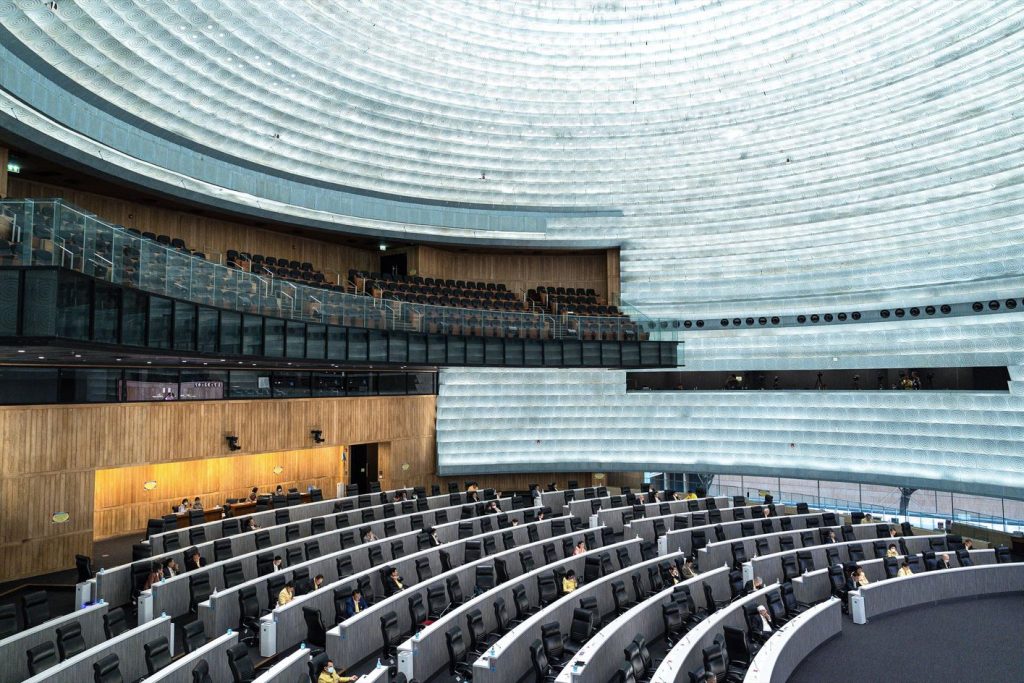
With Bhumjaithai exiting the government, the Chidchobs dropped all pretense, and from their new perch in the opposition, they began to chip away at Pheu Thai’s already-thinning majority with the relentless persistence of a woodpecker on a hardwood tree. And when the Shinawatra progeny was unceremoniously defenestrated from the prime ministerial seat last week, the Bhumjaithai party pounced.
Striking with the precision of a cobra, they engineered a series of defections that tipped the scales of parliament into a state of glorious, delicious gridlock. With neither side able to form a government, the stage was set for a denouement worthy of a Netflix blockbuster.
And who do both sides turn to for salvation? The scion of the Juangroongruangkit clan, Thanathorn. The leader of the progressive movement, a man whose political ideals are as refreshing as a cold Singha on a sweltering Bangkok afternoon, now holds the key to the kingdom. Both patriarchs, with their political dreams in tatters, are now forced to bow to the younger upstart, begging for his party’s support to break the deadlock. He held the two warring factions on tenterhooks, a political ballet where the music had stopped and no one dared to move for fear of being left out of the next dance.
The final act
For two whole days, his People’s Party leadership deliberated behind closed doors, playing out every conceivable scenario, every potential political fallout from choosing one side, the other, or neither at all. When the party finally made its decision, opting for Bhumjaithai on Wednesday as what they felt was the lesser of two evils, the caretaker Pheu Thai prime minister immediately sought to dissolve the legislature.
It was a desperate, last-ditch gambit to trigger fresh elections and thwart Bhumjaithai’s rise to power. But the Royal Privy Council, a body whose power is as veiled as it is absolute, swiftly rejected the plea paving the way for a formal vote in the House on Friday to anoint Anutin Charnvirakul from Bhumjaithai.
In a final, desultory act of political theater, Pheu Thai, with the clock ticking down, pledged to one-up the People’s Party on their conditions. They promised an immediate election once their candidate was in office, a belated conversion to the cause of a swift return to the polls.
But it was, as so many things in this saga have been, too late. The decorum, the principles, and indeed the sheer political pride of the progressive party would not allow such a blatant eleventh-hour concession.
Had Pheu Thai proposed this from the start, a different narrative might have been written. But at this stage, it was a move that lacked both grace and foresight. With that, there were no cards left to play for the Shinawatras with the House vote just twenty-four hours away.
Thaksin has left the building
The malaise in the Shinawatra camp has left Thaksin in a precarious position, his freedom hanging on a critical verdict from the criminal court next Tuesday. Without his Pheu Thai party in power, he would be stripped of his biggest Get Out of Jail Free card if found guilty.
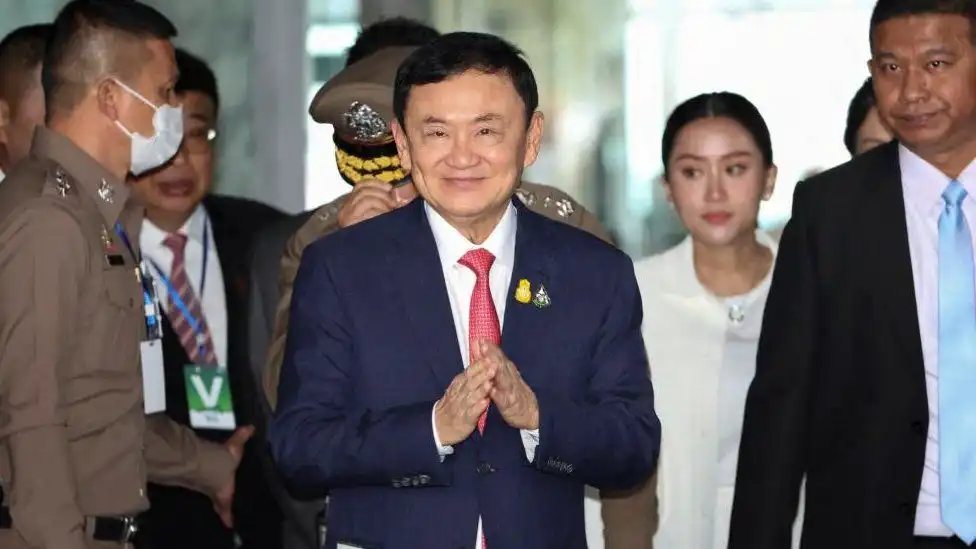
Adding to the intrigue, the script for this drama took a sudden, unexpected twist yesterday evening. Thaksin’s name, at the last possible moment, appeared on the flight manifest of his sleek Bombardier Global 7500 private jet. The initial, rather flimsy claim of a trip to a southern province was quickly exposed as a thinly-veiled ruse, as it was later sheepishly admitted to immigration officials that he was, in fact, leaving the country.
Local media, ever the purveyors of contradictory narrative, offered up a chaotic buffet of reasons for his trip. One cited a mysterious business venture in Singapore, another a sudden medical appointment. The abruptness of the trip and its timing, naturally lit a fire under the kindling of social media. The conspiracy theories, as they are wont to do, spread like wildfire, all suggesting the familiar narrative that the patriarch may be on the run once more.
His team, in a show of forced assurances, insisted that it was merely an overnight visit and that he would return the very next day.
And here lies a final, exquisitely cruel irony. His destination is Singapore—mi casa, and also home to the very integrated resorts that were central to his grand vision for legalizing casinos in Thailand, a plan that has contributed in no small measure to the present woes of both him and his party.
One is almost left to wonder if, with the already entertainingly breathtaking theater of Thai politics on full display, there’s any need for entertainment complexes at all. The circus, it seems, is already in town, and the show is proving to be far more gripping than anything a casino floor could ever offer.