Foreign businesses operating in Macau have identified a persistent shortage of skilled workers as one of the biggest obstacles to their operations and expansion, according to the 2025 Macau Investment Climate Statement released by the US Department of State.
The shortage, closely tied to the city’s heavy reliance on tourism and gaming, has raised concerns about Macau’s long-term competitiveness.
The statement noted that ‘foreign businesses cite a constant shortage of skilled workers – a result of the city’s dependence on tourism and gaming – as a top constraint on their operations and future expansion.’
Macau’s gaming sector, which generated $28.3 billion in casino gross gaming revenue in 2024, continues to dominate the economy. The government collected $11 billion in gaming tax revenue last year, accounting for 81 percent of total government revenue of $13.7 billion. This overwhelming dependence on gaming has concentrated the workforce in tourism and casino-related services.
With unemployment at just 1.7 percent as of November 2024, the issue is not a lack of jobs but a mismatch between available talent and industry needs. It is also worth noting that three of Macau’s six gaming concessionaires have American parent companies—Sands China, MGM China, and Wynn Macau.
The report states that strict local employment regulations further compound the labor shortage. By law, both local and foreign casino operators must hire only Macau residents as croupiers. Taxi and bus drivers are also required to be local residents. While these restrictions aim to protect local employment, they limit the available talent pool for critical positions.
The report notes that the government also maintains stringent foreign labor policies, mandating that Macau residents receive hiring priority. Non-residents may work in Macau only when employers cannot find suitable local candidates. As of January 1st, 2025, the monthly minimum wage in Macau, according to the report, is $884, with an hourly rate of $4.25, though this does not apply to the city’s 183,000 foreign workers.
The document further highlights government efforts to address the human capital problem through labor importation schemes for both unskilled and skilled workers who cannot be recruited locally.
In two rounds of a new talent recruitment program in 2024, Macau attracted 521 highly qualified professionals to non-gaming sectors, including 266 with doctoral degrees. A third round is scheduled for implementation by June 2025.
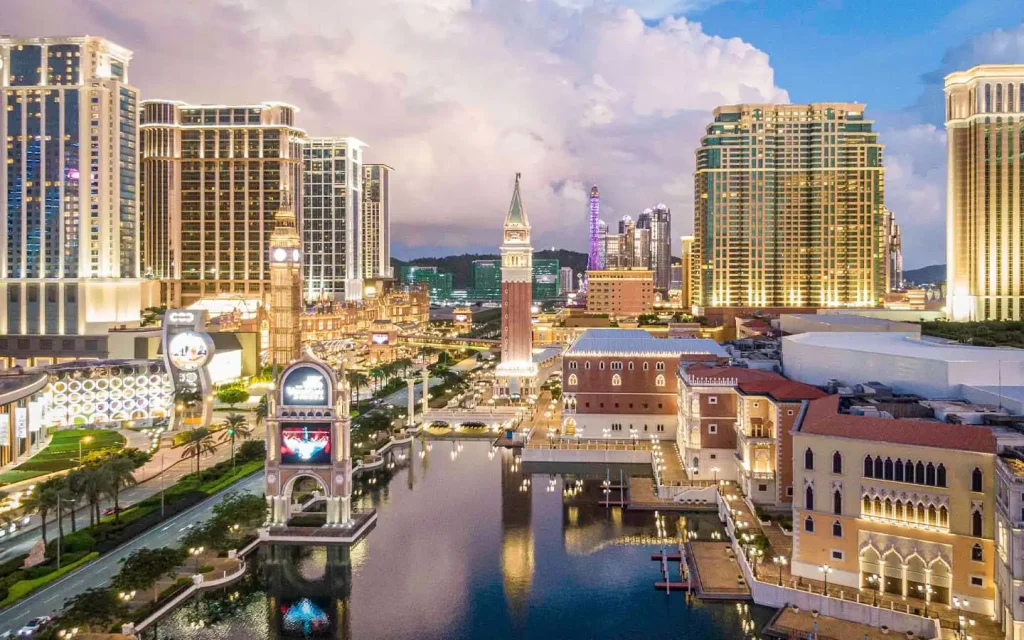
Diversification efforts yield minimal results
Despite substantial investments, Macau’s attempts to diversify beyond gaming have produced limited success. As part of the 2022 concession renewal process, the six casino operators agreed to invest at least $15 billion in the Macau economy, with 90 percent allocated to non-gaming projects. These investments focus on four key sectors: meetings, incentives, conferences, and exhibitions (MICE); traditional Chinese medicine; modern financial services; and advanced technology.
However, the statement observed that ‘to date, related efforts have yielded minimal results.’ The workforce remains primarily trained for and oriented toward gaming and tourism, creating structural barriers to economic diversification.
Beijing has also directed Macau to become a ‘commercial and trade cooperation service platform’ between mainland China and Portuguese-speaking countries. Yet direct trade between Macau and Portuguese-speaking countries remains marginal, representing just 0.9 percent of Macau’s total trade volume of $17.6 billion in 2024.
The report also noted that the Macau government maintains ‘a transparent, non-discriminatory, and free-market economy’ and remains ‘committed to maintaining an investor-friendly environment.’
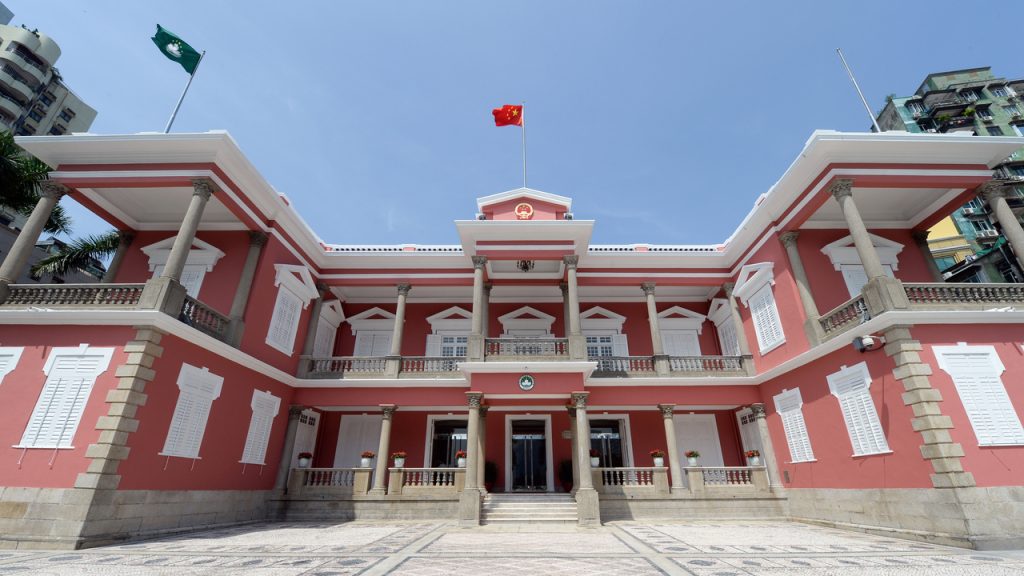
Government response
In response to the US statement, the Macau government expressed ‘strong dissatisfaction and resolute opposition‘ to what it called ‘unfounded and irresponsible comments.’ These were largely directed at political criticisms that the US report also included, rather than the gaming-related proclamations.
The government emphasized its achievements in economic development, stating it has been ‘vigorously promoting public administration reform, simplifying administrative procedures and deregulation, and reducing government intervention in market activities.’
It added: ‘The US is an important economic partner of Macau. It is sincerely hoped that the US side will not politicize economic issues, stop all political maneuvering, exert more efforts to maintain a stable relationship with Macau in trade and economic development, and bring mutual benefits to both sides.’
US investment in Macau over the past decade is estimated at a minimum of $20 billion. With expectations for continued growth, addressing the skilled worker deficit has become essential for sustaining both the gaming sector and broader economic development goals.