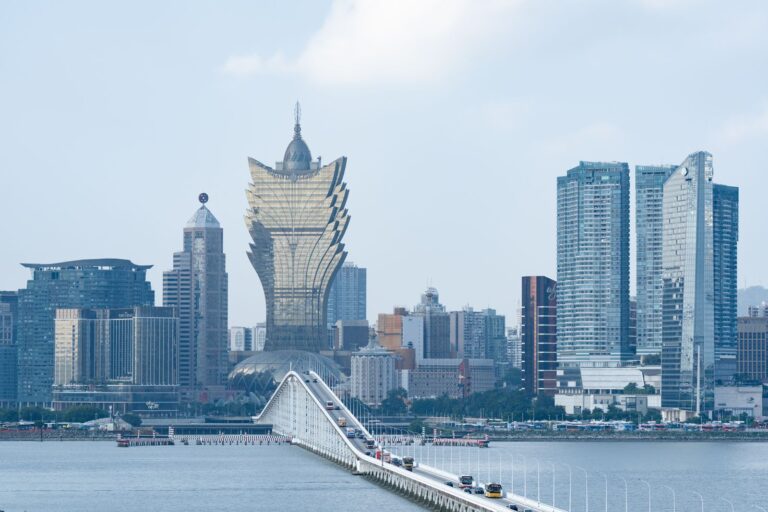
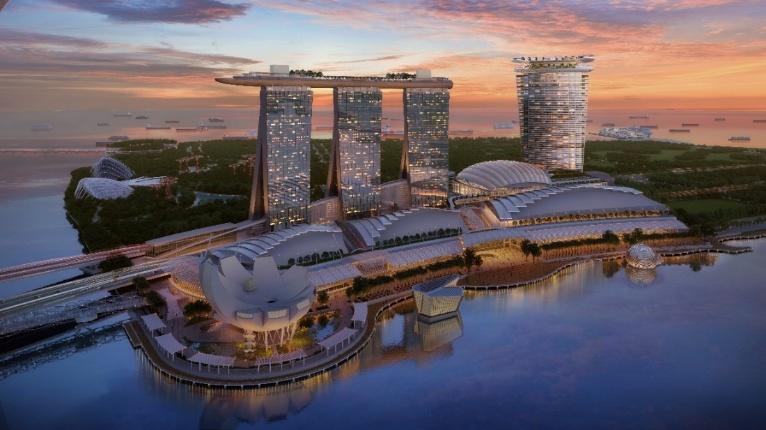
Gaming operator Las Vegas Sands (LVS) has reported a quarter of sharply contrasting fortunes, with management underscoring that its Singapore property is setting “industry records” while its Macau portfolio continues a measured, but determined, path toward recovery.
In an earnings call following the release of third-quarter 2025 results, company executives lauded the “unprecedented” performance of Marina Bay Sands (MBS) in Singapore and outlined aggressive plans to regain market share in Macau after admitting to having “underperformed for the past few years” in the Chinese special administrative region.
Regarding future opportunities, President and Chief Operating Officer Patrick Dumont confirmed that while the United Arab Emirates (UAE) is a “tremendous tourism market” with massive infrastructure investment, it is “not a market we’re looking at at this time,” though the company is “following it.”
Las Vegas Sands Chairman and CEO Rob Goldstein described the operating performance at Marina Bay Sands (MBS) as “unprecedented in the history of our industry.”
MBS delivered $743 million in Earnings Before Interest, Taxes, Depreciation, and Amortization (EBITDA) for the quarter, an extraordinary result that has led executives to dramatically revise their expectations for the property.
“We had forecast that MBS could do $2.5 billion annually. It turns out we were too conservative. We should easily exceed that figure in 2025,” Goldstein stated. He noted that MBS is already “over $2.1 billion of EBITDA this year, with a quarter still to go.”
The primary driver of this growth was the mass market, with mass gain and slot win hitting a record $905 million. This reflects 122 percent growth from the third quarter of 2019 and is 35 percent higher than the same quarter last year.
Dumont attributed the results to a “high impact of high-quality investment in market-leading product and the growth in high-value tourism.” He added: “We believe we are still in the initial stages of realizing the benefits of our investments in Marina Bay Sands.”
The company also announced a change in methodology for calculating theoretical hold on high-stakes baccarat play in Singapore, facilitated by the introduction of smart table technology more than a year ago.
Goldstein clarified that this change is driven by the evolution of the game itself, noting that baccarat now “offers a lot more opportunities to gamble different ways” through side bets, which are “a powerful driver of revenue and EBITDA flow-through.”
Macau strategy: adaptation and marketing changes
In contrast to Singapore’s explosive growth, Macau’s performance was steady but below the company’s long-term targets. The Macau portfolio delivered $601 million of EBITDA for the quarter, which Goldstein acknowledged reflected an improvement, though the figure was negatively impacted by approximately $20 million due to Typhoon Ragasa’s impact during the October National Day Golden Week.
Goldstein delivered a candid assessment of LVS’s recent performance in Macau, admitting: “We have underperformed in the Macau market for the past few years. We believed that our buildings would be enough to compete favorably. We were wrong.”
To correct course, LVS adapted its approach in the second quarter of 2025. “We’ve adapted to the market and changed our approach… to enable us to be more competitive,” Goldstein stated. This shift immediately bore fruit, with mass market revenue share rising to 25.4 percent this quarter, up from 23.6 percent in the first quarter of 2025.
Grant Chum, CEO and President of Sands China, detailed the operational changes: “We’ve obviously adjusted our reinvestment rates across the portfolio, not uniformly.” He noted that the company is outgrowing the market in mass Gross Gaming Revenue (GGR) “for the first time in a long time.” The company has also benefited from the “full deployment of The Londoner grand rooms and suites.”
Goldstein expressed confidence in reaching the company’s ambitious Macau EBITDA target of $2.7 billion to $2.8 billion, but stressed the critical need for continued market expansion. “You need market growth, which you’re experiencing, thankfully, in Macau… It’s critical to the market growth. That’s essential for all of us”, he said.
He identified specific properties needing attention, noting that the “weak links in our portfolio are in Parisian and Sands Macao, especially.” The Londoner, by contrast, is “moving towards one plus billion dollars of EBITDA.”
Dumont emphasized the company’s commitment to shareholder returns, describing LVS as a “capital allocation story.”
The Board of Directors has also approved a 20 percent increase in the quarterly dividend for the 2026 calendar year, raising it to $0.30 per share per quarter, or $1.20 per share annually.
In addition, LVS repurchased $500 million of its own stock during the quarter. The company also purchased $337 million of Sands China stock, increasing its ownership percentage of SCL to 74.76 percent. Dumont noted that LVS is nearing the 75 percent ownership limit for SCL.