

Macau lawmaker Lam U Tou has raised concerns over how gaming companies are hiring local workers through part-time employment arrangements.
He revealed that one human resources company has hired 3,030 local residents who are permanently assigned to gaming operators as part-time workers, effectively supplementing the non-resident workforce.

This practice contradicts current labor law principles, which stipulate that non-resident workers should only supplement shortages in the local labor market. The arrangement is believed to be a cost-cutting strategy, as employing local workers on a part-time basis allows companies to reduce expenses compared to hiring them full-time, while also avoiding the higher salary levels typically associated with local employees in permanent roles.
Speaking at Tuesday’s Legislative Assembly plenary session, Lam warned that the issue observed in one company may indicate a broader trend. With three major human resource firms operating in Macau, he estimated that over 10,000 workers could be affected by similar arrangements.
He also criticized the persistently high proportion of non-resident workers in senior roles within the gaming sector, expressing disbelief that, despite years of local talent development, operators continue to rely heavily on foreign personnel for top-tier positions.
Government officials did not directly address the specific allegations raised by Lam during the session. However, Secretary for Economy and Finance Tai Kin Yip reiterated the administration’s opposition to approving foreign workers for roles such as dealers, supervisors, and professional drivers.
Under Macau’s laws, only local residents are allowed to be croupiers.
Tai emphasized the government’s commitment to maintaining a high proportion of local management in mid- and senior-level roles across Macau’s six gaming concessionaires.

Balancing local talent and global competitiveness
“The government will continue to create favorable conditions to promote local residents taking up relevant positions,” the Secretary stated. At the same time, he acknowledged that having management with diverse cultural backgrounds in large enterprises could foster multicultural exchange and enhance Macau’s international competitiveness.
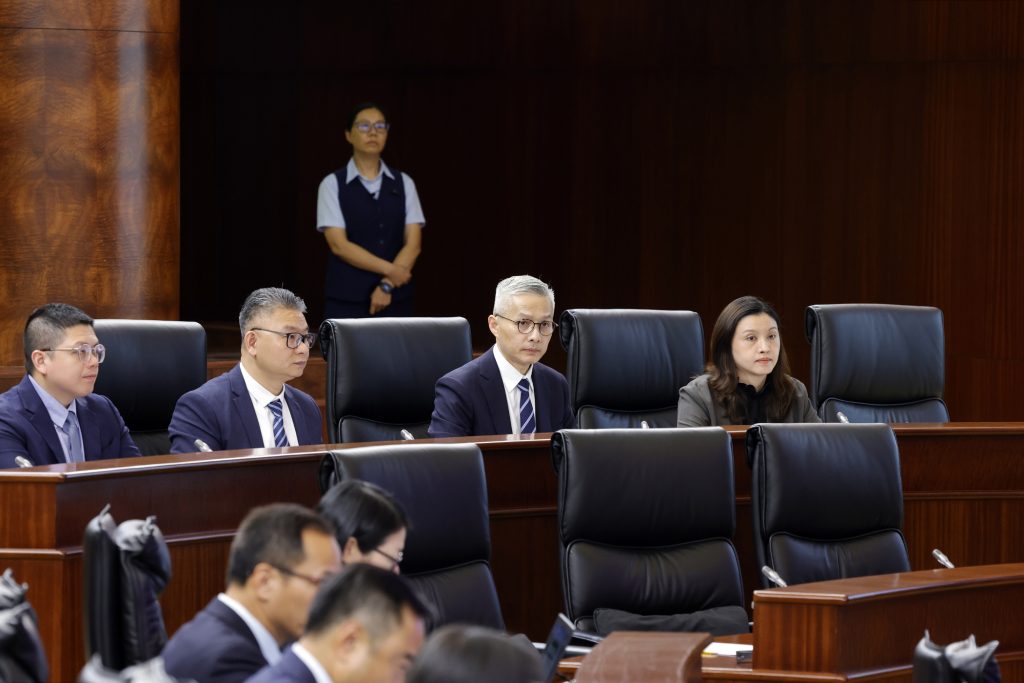
According to Tai, local employees currently occupy about 89.5 percent of middle and senior management roles in the gaming sector. Labor Affairs Bureau Director Chan Un Tong later clarified that, as of May 2025, there were 10,407 local managers compared to 1,187 non-resident employees—an 89.8 percent local share.
Tai added that the government must strike a balance between advancing capable local talent and maintaining international standards, referring to Macau’s strategic role as “one center, one platform, and one base.”
Satellite casino issues
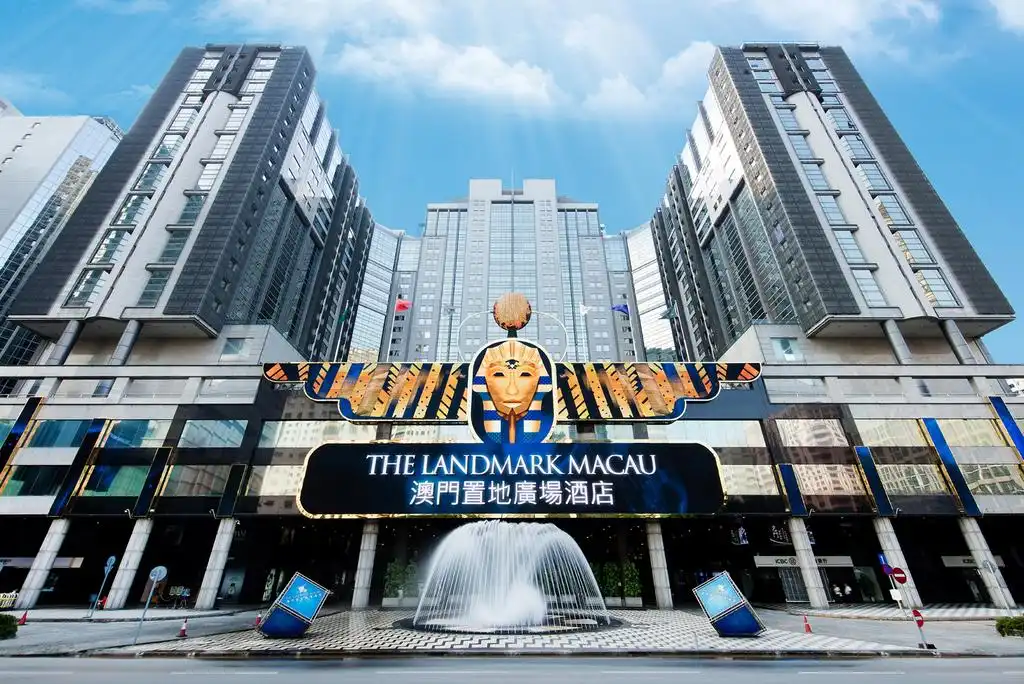
In related discussions, lawmaker Leong Sun Iok raised concerns about satellite casino employees facing job insecurity as several venues prepare to shut down by the end of the year. Labor Affairs Bureau Director Chan assured lawmakers that gaming concessionaires have pledged to absorb all dispatched workers and that venue operators are responsible for employee transition plans.
Chan reported that 4,457 of the total satellite casino workforce—representing 93 percent—are employed through gaming companies, while 355 are hired directly by venue operators. The bureau has managed to contact roughly 43 percent of directly hired staff, with limited outreach attributed to scheduling and operational challenges.