
Home Blog Page 678

Multi-billion investments to bring unique new attractions to Singapore

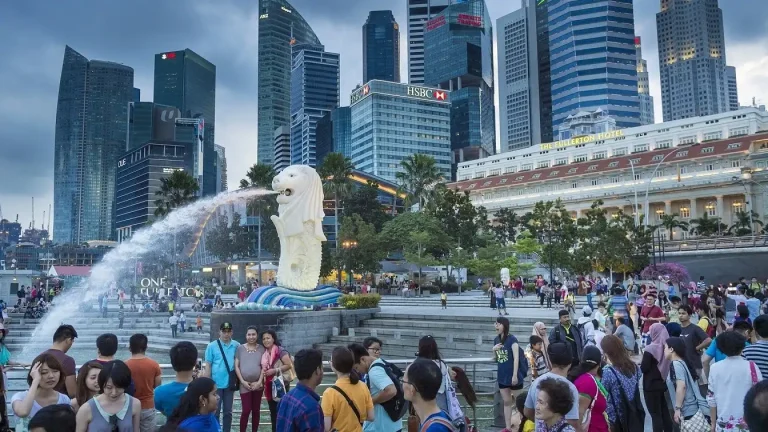
Multi-billion dollar investment commitments by gaming operators Las Vegas Sands (LVS) and Genting Singapore will bring new attractions to Singapore, which are expected to be “sufficiently different and outstanding”.

singapore
Christopher Khoo, managing director at MasterConsult Services

In an interview with AGB, Christopher Khoo, managing director at MasterConsult Services, notes that the two operators have pledged to invest an additional $6.65 billion in non-gaming and tourism facilities, extending their duopoly until 2030.

“This will allow them to explore even more exciting attractions that can be added to Singapore’s current array of attractions,” says Khoo. “While no details have been released on the nature and scope of these new attractions, we can expect them to be sufficiently different and outstanding given the expected price tag.”

“Personally, I hope that, among other things, the performing theatre scheduled to be built will be able to host celebrity performances like those in Las Vegas. I can picture a revolving series of international and Asian artists performing residential tours in Singapore, making it the Entertainment Capital of Asia.”

Marina Bay Sands (MBS) and Resorts World Sentosa (RWS) both opened in 2010 and have now entered their 15th year of operation. During this time, they have carved out a significant portion of the higher-end gaming market in Asia. At one point, it was reported that the revenue of these two casinos exceeded that of the entire Las Vegas Strip. Khoo indicated that both operators have “constantly invested in rejuvenation and product renewal to keep their businesses fresh and front of mind through these years.”

“I’m certain that the $6.65 billion new investment will further strengthen their positions in the gaming and tourism industries,” Khoo adds.

Marina Bay Sands has committed to investing SG$4.5 billion ($3.3 billion) as part of the license exclusivity extension, while Genting Singapore plans to invest SG$6.8 billion ($5 billion) in expanding its Resorts World Sentosa.

Additionally, Sands previously announced plans to potentially commence construction on the expansion by July 2025. Renderings depict a new hotel tower alongside a 15,000-seat performance venue, setting this project apart from a separate $1.75 billion refurbishment initiative for the current property.

LVS Chief Executive Officer Rob Goldstein has projected that, based on present trends, Singapore’s total gambling revenue could reach $7 billion this year, with a trajectory towards $10 billion in the foreseeable future.
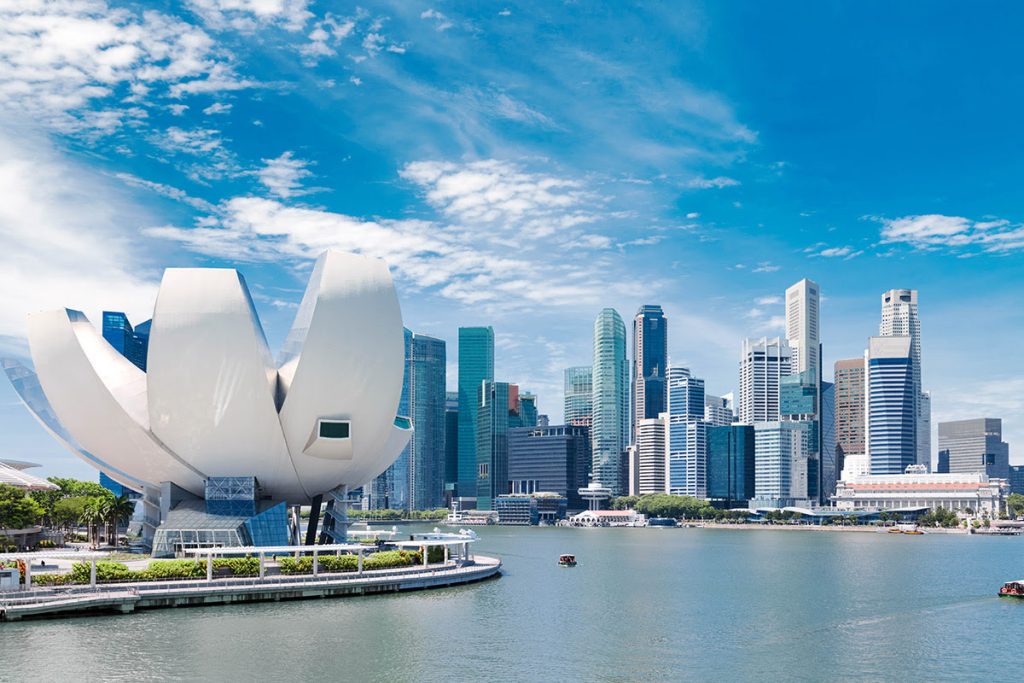
Singapore

Singapore’s changing tourism landscape

Christopher Khoo is a veteran of Singapore’s tourism industry and a former member of the Singapore Tourism Board (STB), where he headed the Competitive Analysis Department.

In the same interview, Khoo notes that Singapore as a tourism destination “has not been static since Covid-19 struck.” He observes a slew of new tourism attractions and initiatives that appeal to today’s visitors, building on traditional strengths while exploring sustainability and technology solutions.

After China and Singapore entered into a mutual visa-free policy agreement starting in February this year, Singapore has seen a surge of Chinese visitors.

“China has always been an important visitor-generating market for Singapore, often trading positions at the top spot with our regional neighbor Indonesia.”

The implementation of the China visa-free policy was a very welcome initiative for Singapore. This has led to the return of Chinese tourists in larger numbers, which is good news for Singapore due to their high average spend. However, “it is important to note that the return of the Chinese market is probably the last of the major markets since the end of Covid-19 travel restrictions. All countries have largely lifted travel restrictions, some for more than two years already.”

Khoo also expresses hope that the visa-free arrangement can be extended or even made permanent as “it would facilitate two-way tourism growth between Singapore and China.”
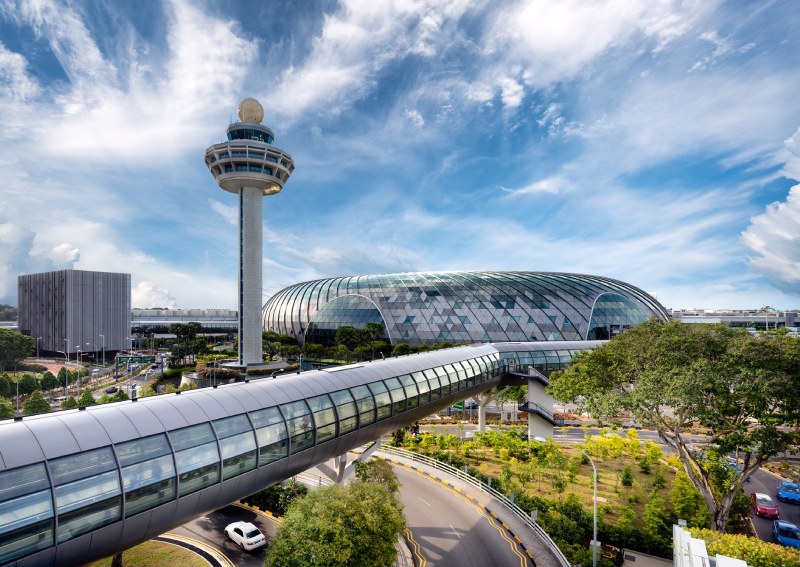
Singapore airport

Regional competition

In the context of increasing regional competition, such as the Philippines’ ambition to surpass Singapore as Asia’s second-largest gaming hub, and the casino plans in Japan and Thailand, Khoo believes that the new developments in these countries show significant potential for growth within Asia’s casino market.

“Competition will certainly keep everyone on their toes, but barring major geopolitical upheavals, the next decade will see Asian gaming blossom with rising disposable incomes and greater ease of travel.”
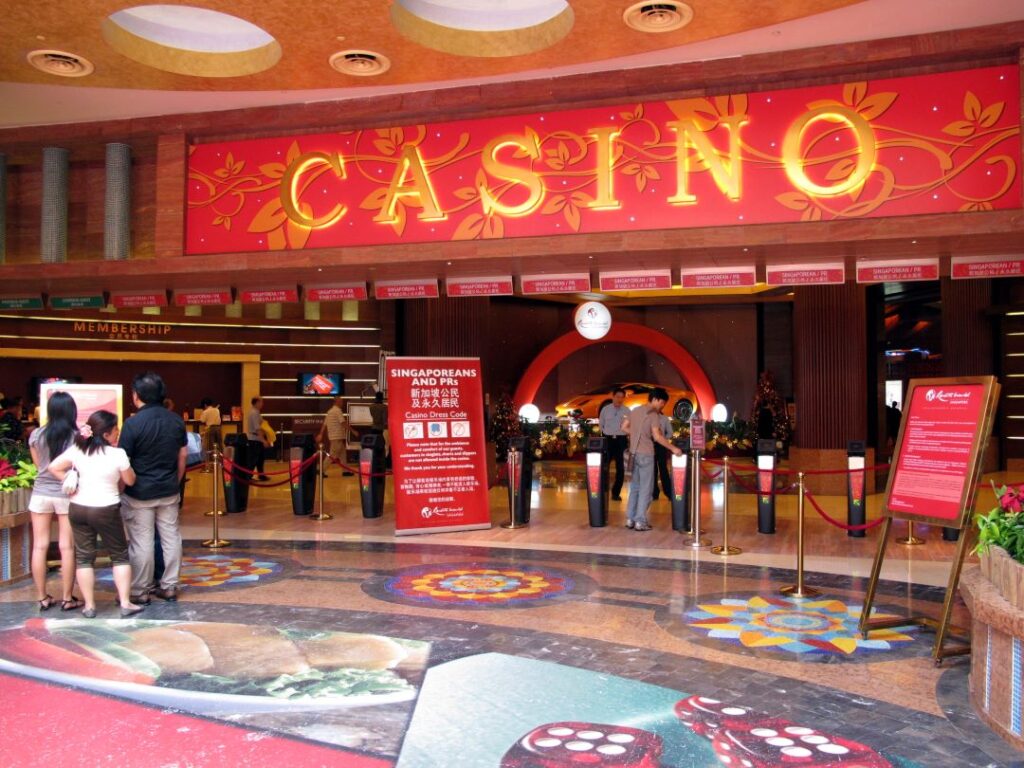
Resorts_World_Sentosa_Casino_Singapore

Regulation tightening

Singapore has tightened its regulations on anti-money laundering in gaming. The threshold for performing due diligence checks on cash deposits in Singapore casinos is being lowered, amidst tighter controls on counter-terrorism financing (CFT).

Commenting on the possible impact, Khoo believes that “this is part of the ever-present cat and mouse game between regulators and perpetrators who try to find and exploit loopholes while regulators plug weaknesses and gaps and try to anticipate their next move.”

“In the area of illicit funds flow, it’s a never-ending series of moves and counter-moves, with both sides utilizing vigilance and technology to retain the upper hand.”

“Tightening regulations is just another means of adjusting the system,” he adds.

Thai minister applauds Philippines’ economic prowess

Visiting Thai Foreign Minister Maris Sangiampongsa has heaped praise on the Philippines’ economic performance under the leadership of President Ferdinand Marcos Jr.

According to the Philippine News Agency, during a bilateral meeting with Philippine Foreign Affairs Secretary Enrique Manalo in Makati City on Thursday, Sangiampongsa stated that the Philippines has become one of the fastest-growing economies in the region.

State of the Nation Address, Philippines, Ferdinand Marcos Jr., Philippine president, Thai minister applauds Philippines' economic prowess
Ferdinand Marcos Jr., Philippines President

“I expressed my admiration for the economic performance of the Philippines under President (Ferdinand) Marcos Jr. that has made the Philippines one of the fastest-growing economies in the region,” Sangiampongsa told reporters in a press conference following the meeting.

The Thai foreign minister’s positive assessment underscores the growing economic ties between Bangkok and Manila.

Sangiampongsa conveyed the increasing interest among Thai firms in expanding their investments in the Philippines, stating that Thailand is committed to further boosting trade and investment volumes with its Southeast Asian neighbor. He sought the continued support of the Philippine government for Thai investors.

Beyond just praising the Philippines’ economic prowess, Sangiampongsa highlighted Thailand’s eagerness to deepen cooperation with the country in areas such as trade facilitation, renewable energy, and food security.

The Thai minister also floated the idea of further expanding flight routes between Thailand and the Philippines, specifically between the popular tourist destinations of Cebu and Phuket, in a bid to stimulate two-way tourism.

Regionally, Sangiampongsa said Bangkok will work closely with Manila to advance the next phase of ASEAN economic integration, with a particular focus on digital economies and sustainable development.

The two countries also agreed to collaborate more closely in combating transnational crimes, including human trafficking and cybercrime, in the Southeast Asian region.

Thailand is also gearing to advance with integrated resort projects in the country, with analysts believing the country could open its first IR as early as 2029, potentially legalizing casino gaming ahead of Japan.

In mid-May, the Ministry of Finance in Thailand requested an additional two weeks to finalize a feasibility study on the legalization of casino gaming.

It is estimated that the integrated entertainment complexes will help generate tax revenue of $328 million in the first year of their operations.

Kambi Group withdraws 2027 financial targets

B2B sports betting company Kambi Group, has announced the withdrawal of its previously communicated 2027 financial targets, due to slower-than-expected regulatory progress in certain target markets.

In a statement, the company’s Board of Directors revealed that they have decided to withdraw the 2027 financial targets, which were first announced in January 2023.

The targets included a revenue goal of 2-3 times the 2022 fiscal year levels, equating to approximately €330 million ($356.4 million) to €500 million ($540 million), and an EBIT (Earnings Before Interest and Taxes) in excess of €150 million ($162 million).

The company’s Board indicated in a dispatch that while Kambi has made progress in areas within its control, the slower-than-expected progress toward regulation in certain key markets would likely delay revenue from such markets.

Kambi is a provider of sports betting services to licensed B2C gaming operators. The company’s services encompass a broad offering, including front-end user interface, odds compiling, customer intelligence, and risk management, all built on an in-house developed software platform.

The company employs over 1,000 staff across offices in Malta (headquarters), Australia, Denmark, the Philippines, Romania, Sweden, the United Kingdom, and the United States.

As a result, the Board concluded that the previously set 2027 financial targets were no longer achievable.

Earlier this week, Kambi also announced the appointment of a new CEO, Werner Becher, with the Board highlighting that their focus will now be on providing Becher with full support in executing the company’s long-term strategy and further extending Kambi’s position as the world’s leading sports betting provider.

Kambi’s management added that it should have long-term financial targets in place, and these will be evaluated by the new CEO, with any updated targets to be communicated at the appropriate time.

China cracks down on illicit money exchanges, 1,924 changers seized in Macau

0

Macau’s Judiciary Police seized 1,924 money changers between January and May this year, who face bans from entering Macau.

Of these, 927 individuals were reported to the city’s gaming regulator, the Gaming Inspection and Coordination Bureau (DICJ), for inclusion on the casino entry ban list. Macau authorities also streamlined procedures with the Financial Services Bureau (DSF), imposing administrative penalties on 30 illegal money changers who are Macau residents.

This operation is part of a nationwide crackdown on illicit money exchanges.

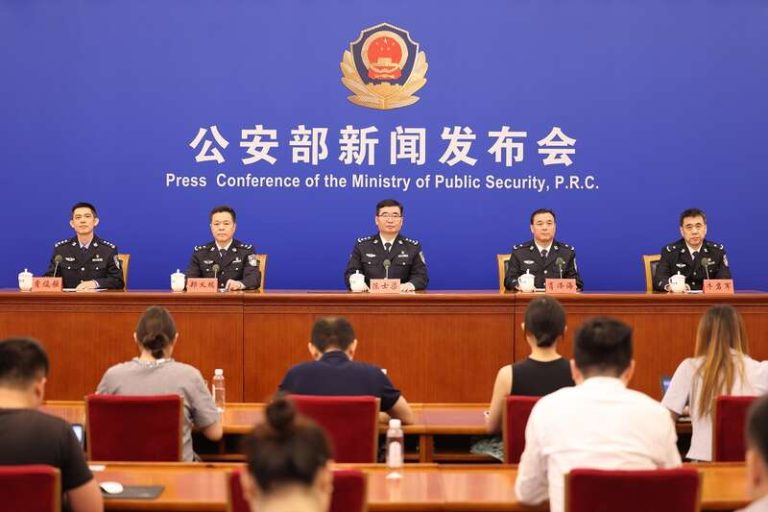
In Beijing on Friday, China’s Ministry of Public Security convened a meeting to address Macau’s illicit money exchange activities. Officials stressed the need for rigorous enforcement to combat these operations.

The conference highlighted actions taken by Guangdong police, including dismantling three fraud groups involved in counterfeit note exchanges, resolving five cases of illegal currency exchange, and raiding six underground banking operations. This resulted in the arrest of 101 suspects and the involvement of RMB1.47 billion ($202 million).

During a special press conference, the Ministry of Public Security announced that Zhuhai police had targeted underground money exchange operations. They arrested two suspects providing currency exchange services for tourists at Gongbei Port, the main checkpoint linking with Macau, involving RMB1 billion ($138 million).

In related operations, law enforcement in Zhuhai uncovered underground money exchange groups near Gongbei Port, arresting a total of 13 individuals and dismantling three underground banking operations. On-site, they seized HK$100,000 ($12,800) in cash and confiscated tools used for the crimes, including mobile phones, POS machines, ledgers, and bank cards. Authorities also froze RMB3.9 million ($536,800) in bank accounts.

Investigations revealed that some individuals used travel agencies and businesses at Gongbei as fronts for illegal foreign exchange activities.

In early June, China’s Ministry of Public Security urged security forces in Macau and mainland China to enhance cooperation in cracking down on illegal money exchange businesses in Macau.

Investment bank JP Morgan noted that these developments might have a limited impact on gaming, as illicit currency exchanges on or near casino floors target a specific niche of players. They estimate that ‘less than 10 percent of total GGR is using these services at most.

Cambodia grapples with illegal online gambling boom

Despite gambling being illegal for Cambodians, online betting sites are flourishing in the country, with users able to easily register and deposit money through these platforms, which offer a variety of sports and casino games.

According to a Korea Herald article, the Cambodian government has acknowledged the issue, with officials stating that no online gambling licenses have been granted.

The Commercial Gambling Management Commission (CGMC) has taken steps to crack down on illegal gambling operations, identifying and shutting down numerous online advertisements and promotions.

However, enforcement remains a challenge, as the sites continue to cater to the gambling preferences of Cambodian punters with little fear of legal consequences. Gambling-related crimes like fraud and human trafficking have also become a growing concern.

Experts emphasize the need for robust enforcement of Cambodia’s gambling laws to address corruption and ensure effective regulation of the industry, with the government’s ability to regulate this sector will have significant implications for the country’s international image and public order.

Daily Asia Gaming eBrief: PAGCOR to focus on regulating/new gaming academy

0

Good Morning. PAGCOR is doubling down on its efforts to transition into a purely regulatory function, with a top official noting the expected increase in attractiveness for large foreign investors such as Wynn and MGM. Meanwhile, operators in Australia face renewed difficulties amongst increased regulations, with both economic and social implications, notes an expert. In Macau, a legislator has voiced the concerns of casino supervisors that smart tables have yet to relieve the workload of frontline workers.

What you need to know


On the radar


AGB Intelligence

PHILIPPINES

PAGCOR’s shift to being just a regulator: official

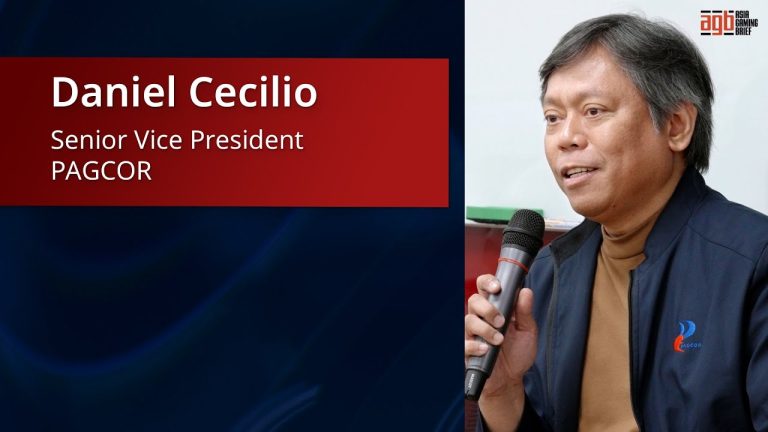
The Philippines’ gaming regulator PAGCOR is aiming to establish itself as purely a regulator, shifting out of the operating role after the sale of its Casino Filipino assets, expected in early 2026. PAGCOR Senior Vice President Daniel Cecilio lays out why the changes are necessary and what will shape the gaming workforce going forward, with the newly proposed Gaming Academy.


Corporate Spotlight

Know Your Enemy: An Interactive Guide to Online Gaming Fraud

Sumsub, Online Gaming Fraud, verification platform

Online gaming fraud is on the rise in the iGaming industry. In Q1 2022, there was an 85% increase in fake account registrations compared to Q4 2021. While players are undoubtedly affected by gaming fraud, iGaming platforms also suffer due to damaged reputations, huge financial losses, and legal consequences.

How 1xBet dominates the Asian market: conditions and approach

1xBet, Asian Market

1xBet operates in several dozen countries in Asia, and the number of partners in this region is growing steadily, which indicates the effectiveness of the 1xPartners affiliate program. The brand offers favorable conditions and a modern set of tools for making money on the Internet.


Industry Updates


MEMBERSHIP | INTELLIGENCE | ASEAN | CAREERS

PAGCOR’s shift to being just a regulator: official

The Philippines’ gaming regulator PAGCOR is aiming to establish itself as purely a regulator, shifting out of the operating role after the sale of its Casino Filipino assets, expected in early 2026.

PAGCOR Senior Vice President Daniel Cecilio lays out why the changes are necessary and what will shape the gaming workforce going forward, with the newly proposed Gaming Academy.

QTech Games wins Online Casino Provider of 2024 at SBEA+ Eventus Awards

QTech Games, the leading games distributor across all emerging markets, has won the “Online Casino Provider of the Year” award this week at the 9th Annual Sports Betting East Africa (SBEA+) 2024 Summit in Kampala, Uganda, fending off strong competition from other leading lights, such as BetConstruct, SA Gaming and DST Gaming.

These SBEA+ Eventus Awards have long recognised excellence and advancements in the East African iGaming and sports betting sector. The award is perennially given to the best overall online casino provider in the African space.

QTech Games’ CEO, Philip Doftvik, said: “It’s another welcome validation for QTech Games and our diligent team to have bagged this cornerstone award for the best digital casino provider in East Africa. I’m glad to see that our brand and its broad product portfolio are gaining traction across even more growing, and previously under-served, gaming markets.

“After a great show in Kampala, we look forward to building on our work in Africa at the SBWA+ Summit and Awards show in Accra, Ghana, in August. Africa remains one of the breakout emerging markets rich with possibilities with which to foster our international expansion!

PopOK Gaming unveils thrilling new game: “First Balloon”

PopOK Gaming is excited to announce the release of an exhilarating new addition to their Crash series: “First Balloon.”

This high-flying adventure game promises to take players on a breathtaking journey through the skies, with increasing excitement and enticing rewards as the balloon ascends.

Prepare for an adrenaline-pumping journey with “First Balloon,” the ultimate crash game that challenges players to test their limits and elevate their gaming experience. As the balloon rises, the multiplier increases, offering the potential for incredible rewards. But beware—timing is everything!

First Balloon” is a game of skill, timing, and nerve, where rewards can be as high as 10,000x the initial bet!

Australia’s wagering industry at a crossroads amid new regulations

0

Australia’s wagering industry, a significant contributor to the country’s economy and a pillar of the racing and sports sectors, faces unprecedented challenges as new regulatory measures loom, according to Responsible Wagering Australia (RWA) CEO Kai Cantwell.

In an interview with AGB, Cantwell voiced concerns over the potential impacts of recent regulatory changes, particularly those targeting advertising and inducements.

Kai Cantwell, Responsible Wagering Australia
Kai Cantwell, CEO, RWA

“RWA and our members advocate for a sustainable, safe, and enjoyable wagering industry that protects customers, supports the racing, broadcast, and sports industries, and contributes significantly to the Australian economy and broader community,” Cantwell stated.

RWA is the independent peak body for Australian‑licensed wagering service providers (WSPs). Members include Australia’s leading WSPs — bet365, Betfair, Entain, Sportsbet, Pointsbet and Unibet.

Cantwell argueed that overregulation, including bans on advertising and inducements, could have devastating consequences.

“The evidence is clear that overregulating legal providers through measures such as bans on advertising would have devastating impacts on the safety of punters and the economy,” he noted.

The RWA CEO underlined that the number one reason people turn to offshore markets is to access products that aren’t available onshore.

“Australia’s offshore market already makes up 25 percent of the entire market, and if the proposed bans were introduced, Australia would lose billions of dollars in tax revenue. Governments would lose all oversight of the industry, and Australians would be gambling in dangerous illegal markets where they aren’t offered any protections, and sports integrity and money laundering issues are rife,” he points out.

To mitigate these risks, Cantwell stresses the importance of collaboration between the government and the wagering industry. “It is crucial for governments to collaborate with the wagering industry to enact balanced reforms that achieve harm reduction outcomes while supporting the livelihoods dependent on the wagering industry,” he said.

Regulatory Landscape and Industry Response

Recent years have seen the Australian online wagering industry implement world-leading consumer protection measures. These include prohibitions on lines of credit, payday lending services, and enhanced age and identity verification procedures.

Additionally, restrictions on incentives, mandatory voluntary deposit limits, and a National Self-Exclusion Register are part of the Commonwealth Government’s National Consumer Protection Framework (NCPF).

“Online gambling is the safest form of gambling as Wagering Service Providers (WSPs) can identify unusual behavior and intervene before harm occurs.”

Kai Cantwell
Responsible Wagering Australia

A legislated review of the NCPF is set to commence shortly, with Cantwell noting that the RWA is looking forward to engaging in the evaluation process to ensure that they are “fit-for-purpose and achieving the desired harm reduction outcomes.”

In 2023, a Federal Government inquiry report recommended banning advertising and inducements alongside other harm minimization measures. While RWA supports some recommendations, such as cracking down on illegal offshore providers, it warns against blanket bans.

“If these bans were introduced, Australia would lose billions of dollars in tax revenue. Governments would lose all oversight of the industry, and Australians would be gambling in dangerous illegal markets,” Cantwell explained.

Economic and Social Implications

For Cantwell the potential economic impact of these regulatory changes is significant. “Introducing blanket bans would be extreme overreach and would strip hundreds of millions of dollars from sports and broadcasters,” Cantwell warned.

He added that this money supports regional broadcasters, local grassroots, and professional sports, sports integrity programs, and Australian content.

Australian wagering providers already pay some of the highest taxes in the country, with Point of Consumption Tax (POCT) rates recently increased in some states and territories.

“Higher POCT rates reduce capacity for direct investment in racing, investment in promotions and generosities, marketing of the codes, lead to shorter odds for customers and lower overall turnover, ultimately significantly impacting racing funding and Government revenue,” Cantwell noted.

“RWA and our members support sensible reform by reducing gambling advertising across all mediums through measures that focus on reducing the exposure of kids and vulnerable groups to advertising, such as a ban on radio ads during school pick up and drop off times and caps on the number of ads that are allowed on TV each hour.  RWA and our members have already significantly decreased levels of advertising in 2023 and 2024.”

Credit card ban and offshore market

On June 11th, 2024, a ban on using credit cards for online gambling in Australia also took effect, with RWA advocating for the implementation of this ban because “we know that Australians should only be gambling with their own money,” notes the expert.

Addressing this issue, Cantwell called for the measure to be extended to all forms of gambling, including keno and lotteries, to ensure consistent protections.

“Research indicates that the offshore market, which currently constitutes 25 percent of the entire Australian market, is expected to cost the economy more than AU$500 million ($336.24 million) in lost tax revenue from 2024 to 2028,” he highlighted.

In contrast he pointed that the UK has a wide product availability and will only lose AU$46 million ($30.9 million) to the offshore market over the same period due to more extensive product availability.

RWA also supports harmonizing regulations across federal, state, and territory jurisdictions, with Cantwell believing that consistent regulation will simplify the landscape for WSPs, governments, and punters.

“Sports integrity bodies have been clear that their outcomes are best met through a nationally consistent approach,” he said.

“The success of the NCPF has proven that states and territories and the Commonwealth can come together and adopt uniform standards to achieve greater consumer protection measures for Australian consumers of wagering”.