Under the Philippine Amusement and Gaming Corporation (PAGCOR), electronic gaming operators are allowed to offer number games, including lottery, online.
According to a memorandum from PAGCOR, cited by Philstar, minimum bets are confined to PHP5, while operators have to pay application fees of PHP200,000 for a two-year license and a PHP200,000 cash deposit per gaming venue.
The gaming regulator is then set to receive some 15 percent of the gross gaming revenue of the live-streamed games and an initial 35 percent share of RNG (random number generator)-based games from July to December of this year.
Under PAGCOR’s promise to encourage the eGaming sector, this rate will fall to 30 percent for RNG-based games starting from January of 2025.
Authorities assure that the new format will be unlike that offered by the Philippines Charity Sweepstake Office (PCSO).
PAGCOR’s role in offshore gaming is rapidly being reshaped, due to ban on POGOs under its purview by year-end, but this has also caused speculation as to how the onshore market can benefit, and see better oversight.
PIGOs can legitimately operate, catering purely to local clientele, offering a variety of eGaming options through various licensed venues, providing growing tax revenue for the authority and for the government.
The transition away from offshore could see strong increases in the space, which has already been steadily growing since the pandemic forced punters to stay at home.
Diversification of gaming and growth of play types such as online Bingo and online slot streaming has been a strong part of the transition, marking how flexible the Philippine market is to adversity.
More details are emerging about the new resort and casino in Las Piñas City, being developed by Philippine tycoon Manuel Villar Jr.
A new report in the Inquirer indicates that the first stages of the development will involve a transformation of the current Vista Mall into a casino and hotel as well as a convention center, with the first phase targeted for development by 2025.
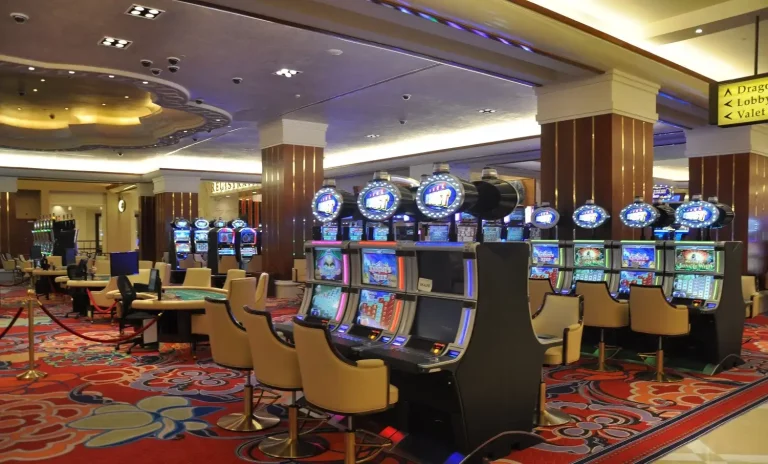
The casino itself is an 18,300 square meter venue focused on both casual players and high-rollers – leveraged by membership rewards, a weekly and quarterly raffle, live performances and ‘celebrity shows’.
The retail space will be slightly larger than the casino, at 21,000 square meters, focused on ‘highly sought luxury brands and thematic shops’.
Further amendments include entertainment and wellness venues – spanning some 5,800 square meters, with an arena for concerts, sports competitions and cultural exhibitions.
The massive property, being developed by Villa Group subsidiary Vertex Entertainment and Resorts Corp, will eventually include four hotels offering over 800 rooms, a condotel, MICE center, shops, dining and wellness.
In total, the project takes up a stunning 8.7 hectares, as part of the Global South township – part of the 3,500 hectare Villar City mega-project – encompassing 15 towns and cities in Metro Manila and Cavite.
First coming online is the casino and new hotel – offering 70 rooms, as well as the convention center.
Following come the remaining three hotels, shops and other attractions.
Good morning.Thailand published the draft casino law, signaling the speed at which the country is racing to liberalize the gaming industry. In Australia, the financial watchdog AUSTRAC has deemed Electronic Gaming Machines (EGMs) at the country’s pubs and clubs to pose a “medium and stable” money laundering vulnerability, lower than the “high and stable” vulnerability for casinos. The watchdog cites measures like mandatory cashless play and strict playtime limits as mitigating risks, though it still sees pubs and clubs as posing a medium vulnerability over the next three years. Meanwhile, the Philippines Department of Justice has put on hold the Bureau of Immigration’s 60-day deadline for foreign nationals working in Philippine Offshore Gaming Operators (POGOs) to leave the country.
Australia’s financial watchdog (AUSTRAC) has classified the nation’s pubs and clubs as ‘medium and stable’ in regards to money laundering risks, but still warn that exploitation of the venues occurs, highlighting EGMs. A top industry veteran indicates that, while oversight by the financial watchdog is likely to increase, the use of such venues for large-scale money laundering is low and oftentimes impractical.
Online gaming fraud is on the rise in the iGaming industry. In Q1 2022, there was an 85% increase in fake account registrations compared to Q4 2021. While players are undoubtedly affected by gaming fraud, iGaming platforms also suffer due to damaged reputations, huge financial losses, and legal consequences.
Thailand’s Council of State has released a detailed draft of the casino law, aimed at boosting the country’s tourism by US$12 billion. The draft states that casinos are to be part of a larger Entertainment Complex inclusive of MICE area, amusement parks, and other facilities.
The liberalization of the gaming industry is expected to boost Thailand’s tourism revenue by $12 billion, according to studies.
The draft allows for 30 year licenses with another 10 year extensions.
Potential locations to host the Entertainment Complexes include Greater Bangkok, Phuket, Chiang Mai, and Chonburi (Pataya) to be established 100 Km of major airports, and with a paid-up capital of at least $283 million. Thailand will be competing with the emerging market of the UAE and, to some extent, Japan.
Authorities in Australia aren’t playing around as they attempt to identify any operators cutting corners, and even the pubs and clubs sector hasn’t been immune. But in regards to money laundering, it appears that the risk level is much lower for the venue operators, even though authorities are stepping up oversight.
Australia’s financial watchdog recently issued its annual report on money laundering, highlighting casinos as having a ‘high and stable money laundering vulnerability’, while rating pubs and clubs as ‘medium and stable’ and corporate bookmakers as ‘medium and stable’.
According to the Australian Transaction Reports and Analysis Center (AUSTRAC), there are some 4,103 pubs and clubs enrolled with the watchdog (as of May 2024), and authorities have been working hard to eliminate gambling harm and possible exploitation of the venues.
Despite this, the authority still finds that ‘pubs and clubs are likely used by a small number of criminals to launder funds at scale […] they present a money laundering vulnerability as illicit funds can easily be transferred between various gambling formats in one venue. This can complicate tracking and tracing of fund movements’.
AUSTRAC noted that money laundering methodologies through the venues involve ‘high-volume cheque payouts, machine payouts with little or no play, collecting the machine credit in the for of a ticket, cheque payout or funds transfer, cheque-buying, collecting payouts from EGMs played by third parties’ and ‘buying and selling winning tickets’.
EGMs pose a low risk
Gaming industry veteran Geoff Wohlsen indicates his agreement with the watchdog’s evaluation that Electronic Gaming Machines (EGMS) being operated at the pubs and clubs venues “probably don’t pose a high risk for large-scale money laundering”.
Geoff Wohlsen, co-founder, Wohlsen Consulting
“First, the cash load limits make it very difficult for large-scale high volume laundering. Secondly, even large clubs in New South Wales operating large installations over say 400 machines tend to know their customers now and compliant venues are right onto potential suspicious actions. Pubs operate smaller and more intimate installations and it’s easier to patrol player activity,” indicates the co-founder of Wohlsen Consulting.
AUSTRAC indicates in its report that pubs and clubs ‘money laundering vulnerability ‘primarily stems from a high volume and value of transactions (including cash transactions) and exposure to high-risk customers’.
But Wohlsen notes this can be quite easily identified.
“The most vulnerable aspects of EGM operations in pubs and clubs were rightly identified in the report as including the secondary market for winning vouchers and anonymous card cash loading. Effectively a perpetrator might be tempted to load several cards with cash and effectively use player cards as de facto cash. But venue systems will show this pattern pretty quickly and CCTV should identify those people who are loading up”.
Despite these assurances, and AUSTRAC indicating that ‘large-scale money laundering through EGMs, while occurring, is not widespread’, it still highlights that ‘the true extent […] is an intelligence gap’.
‘However it is likely that they are used by a small number of criminals laundering large amounts of illicit funds’ and that ‘pubs and clubs will continue to pose a medium money laundering vulnerability over the next three years’.
So, is the watchdog likely to crack down further on the operators, increasing oversight?
“I think AUSTRAC will be far more active in pubs and clubs than they have been to date. We have over 4,000 registered venues offering gaming facilities, so it’s a large, diversified spread of venues. No doubt AUSTRAC might start at the large pub groups first with corporate offices and then move to the large club environment as well as focusing on high-risk areas of Australia,” indicates Wohlsen.
BETBY, a leading provider of sportsbook solutions, experienced a robust first half of 2024, with overall sportsbook turnover increasing by 192 percent compared to the same period last year.
This remarkable growth was driven by the launch of new projects and the strong performance of existing key clients.
The substantial rise in turnover has been credited to strategic initiatives implemented within BETBY’s commercial department, significantly expanding the company’s market presence over the past year. During this period, BETBY also saw a notable 136 percent increase in active players globally.
Additional accomplishments include impressive performance from BETBY’s proprietary esports feed, Betby Games, which saw a 78 percent year-on-year turnover increase and a 93 percent growth in active players. A significant achievement for the Betby Games product in the first six months of 2024 was launching the product in Estonia, following the approval as an odds feed solution by the MGA.
BETBY’s strong performance in the first half of the year sets a positive trajectory for achieving its ambitious long-term growth goals.
Leonid Pertsovskiy, CEO at Betby, commented: “Reflecting on our H1 performance, we are delighted to see our strategic initiatives delivering outstanding results. The significant increase in turnover and player activity underscores our ongoing dedication to providing top-tier sports betting experiences and solutions. We will continue to pursue success throughout 2024.”
SOFTSWISS has shared the Q2 2024 results of the SOFTSWISS Jackpot Aggregator, a jackpot management software designed to increase engagement and retain players. During this period, the Bet Sum more than doubled compared to Q2 2023.
This growth is due to the active development of Prime Network Jackpot and the expanding usage of the Jackpot Aggregator by clients of the SOFTSWISS Game Aggregator.
Over 80 brands now use the jackpot engine from SOFTSWISS driven by its versatility in launching local customised jackpots and allowing casinos to participate in the Prime Network Jackpot.
In H1 2024, 34% of all jackpot bets were placed in the Prime Network Jackpot, indicating strong client interest. This type of jackpot allows operators to join shared prize pools and pay rewards from this pool rather than from a single brand operator.
Recently, the second Prime Network Jackpot of €537,471 was won, and the next network jackpot started with a sum of €400,000. Players are attracted by the significant rewards, which keep on growing.
“Integrating the Jackpot Aggregator with our Sportsbook clients during major sports events has significantly boosted engagement. The flexibility of this solution allows our clients to maximise the potential of jackpots during high-interest periods. In Q2, we achieved substantial results with new clients, demonstrating the advantages of this engaging solution” said Anhelina Stasiuk, Head of Business Line at SOFTSWISS Jackpot Aggregator.
Philippine Charity Sweepstakes Office (PCSO) General Manager Mel Robles has filed defamation charges against YouTuber Claire Contreras, also known as “Maharlika,” in a US court.
Robles and his wife filed charges of defamation, defamation per se, and invasion of privacy in the Central District Court of California, responding to what they describe as relentless and false accusations on Contreras’s YouTube channel, “Boldyak TV.”
Robles stated that the accusations included serious claims such as embezzlement, contract killing, and aiding terrorists, spread across over 20 videos.
During a press conference in Quezon City, Robles expressed that they had remained silent despite these attacks but have now decided to take legal action to restore their reputation.
He expressed confidence that the court would vindicate them. Contreras, who has 325,000 subscribers, gained attention as a pro-Marcos content creator during the 2022 national elections, supporting now-President Ferdinand R. Marcos Jr. and Vice President Sara Duterte.
Philippines Authorities reported on Friday that approximately 1,698 foreign nationals employed by illegal Philippine Offshore Gaming Operators (POGOs) have been deported since May 4th, 2023.
Winston Casio, PAOCC
According to Presidential Anti-Organized Crime Commission (PAOCC) spokesperson Winston Casio, the most recent deportations included 27 illegal POGO workers, with six individuals temporarily withheld due to criminal charges. These deportees are now blacklisted from re-entering the Philippines.
However, Casio noted that about 30,000 expatriates from legal POGO firms might still return if they face no charges. He expressed confidence in deporting a significant number of these workers with support from relevant agencies. On Friday, a Malacañang Palace meeting focused on expediting POGO worker deportations.
Casio reiterated that the government is committed to ensuring the prompt deportation of all foreign POGO employees. Following President Ferdinand R. Marcos Jr.’s directive to halt POGO operations by year-end, the Bureau of Immigration provided POGO workers with 59 days to leave, post-company dissolution, and visa downgrades. This has since been altered to allow time for a more progressive phase-out of the operations.
BI spokesperson Dana Sandoval clarified that six Chinese nationals are awaiting appropriate clearances before their deportation can proceed. They remain in BI custody until their cases are resolved and clearances obtained, according to Immigration Commissioner Norman Tansingco.
The Department of Justice (DOJ) in the Philippines has put on hold the Bureau of Immigration’s (BI) 60 day deadline for foreign nationals working in Philippine Offshore Gaming Operators (POGOs) to leave the country.
The decision aims to synchronize the government’s plan to phase out the controversial gaming industry by the end of the year.
Justice Secretary Jesus Crispin Remulla announced the suspension of the BI’s order, which came shortly after President Marcos declared a ban on POGO operations. In his third State of the Nation Address (SONA) on July 22nd, President Marcos highlighted the nefarious activities of POGOs, including financial scams, money laundering, and other serious crimes.
Remulla emphasized that the BI cannot unilaterally impose the deadline without considering the broader government strategy. Immigration Commissioner Norman Tansingco stated that the BI would revoke visas for foreign POGO workers and halt the processing of new applications. Tansingco noted that approximately 20,000 foreign workers in the gaming industry are expected to wind down their activities in the coming months.
The DOJ’s move to delay the deadline reflects the need to manage the transition smoothly. Remulla pointed out that foreign POGO workers should ideally leave voluntarily, and the DOJ seeks to clarify the rules with the BI to align with the December 31st deadline. He stressed the importance of returning money held by sales agents after the closure of POGOs to prevent unjust enrichment.
The BI has also sought a list of foreign nationals from the Philippine Amusement and Gaming Corporation (PAGCOR) who work in POGOs with suspended or non-renewed licenses. This list will aid in tracking down individuals who might remain in the country illegally.
Senators Sherwin Gatchalian and Risa Hontiveros have been vocal critics of POGOs. Gatchalian highlighted that these companies contribute minimally to the country’s revenues and employ fewer Filipinos compared to foreign workers. Hontiveros praised the newly enacted Anti-Financial Account Scamming Act (AFASA), which allows the government to seize assets from illegal POGOs and use them for victim support.
Senator Sherwin GatchalianSenator Risa Hontiveros
The Presidential Anti-Organized Crime Commission (PAOCC) reported that 1,698 foreign nationals working in illegal Pogo firms have been deported since May 4th, 2023. PAOCC spokesperson Winston Casio confirmed these figures and noted that blacklisted individuals could no longer return to the Philippines. However, around 30,000 expatriates working in legitimate POGO firms but facing deportation might still return if they are not facing criminal charges.
Casio expressed confidence in the government’s efforts to deport a significant number of POGO workers, with continued support from various agencies and local government units. The government remains committed to ensuring the orderly departure of all foreign POGO workers, in line with the President’s directive to cease POGO operations by the end of the year.