In a powerful demonstration of community dedication, Macau gaming operator SJM Resorts, S.A. (“SJM”) has contributed MOP 700,000 to support the 41st “Walk for Millions.”
The company is mobilizing a substantial team of staff members, along with their families and friends, to participate in the walk on 8 December. This initiative embodies SJM’s commitment to teamwork and bringing in a positive and cooperative spirit through impactful actions.
The cheque presentation ceremony was held today at the Grand Lisboa Palace Resort Macau, where Ms. Daisy Ho, Managing Director of SJM, and Ms. Angela Leong, Director of SJM and Chairman of its Staff Welfare Consultative Committee, presented the donation to the Macau Daily News’ Readers Foundation, the organizer of “Walk for Millions.”
Representatives from the Foundation included Chairman Ms. Ho Teng Iat, President Mr. Vong Kok Seng, Vice-Chairmen Mr. Lok Po and Mr. Hoi Kin Chong, Supervisory Director Mr. Ung Chu Pong, and Executive Vice President Ms. Ho Hoi Leng.
Ms. Daisy Ho, Managing Director of SJM, said, “SJM stands firmly on the principle of ‘from society to society’ and fully supports ‘Walk for Millions.’ Over its 40-year history, the walk has significantly contributed to society. Funds raised have been used to support philanthropic and public welfare initiatives locally. SJM is committed to showing love and care for the community, creating a harmonious and inclusive society, and contributing to the development of Macau.”
Sands China Ltd. held its annual ceremonial cheque presentation on Nov. 5 at The Venetian Macao, donating MOP1.08 million to representatives of 7 higher education institutions.
This year marks the 18th consecutive year of Sands China providing scholarship and fellowship money to Macao tertiary institutions in support of higher education in Macao.
“Macao’s youth are the future of our community and the main driving force of the city’s development,” said Dr. Wilfred Wong, executive vice chairman of Sands China Ltd.
“It is a pleasure for Sands China to help nurture young people through talent development initiatives like this, encouraging them to pursue excellence while laying a foundation for their academic achievements and future careers. We are honored to support higher education in Macao and we hope the fruits of this initiative will continue to strengthen and increase Macao’s pool of diversified talent and contribute to the development of both the nation and Macao.”
Sands China representatives presented the ceremonial donation including:
Carol Wong, director of the Rector’s Office of the University of Macau;
Louisa Lam Pou Iok, head of registrar of the Pedagogic Affairs Department of the Macao University of Tourism;
Macao Polytechnic University vice-rector Vivian Lei Ngan Lin;
Remus Wong Ka Weng, head of the Student Affairs Office of the Macau University of Science and Technology;
University of Saint Joseph rector Professor Stephen Morgan;
City University of Macau vice rector Professor Han Wei;
Professor Samuel Tong Kai Chung, president of the Macau Institute of Management.
With this year’s donation, Sands China has now donated over MOP 15.7 million for tertiary scholarships and fellowships in Macao since 2006, benefitting more than 1,800 students to date. This year’s donation of MOP 1.08 million will be distributed among 108 students to support their studies for the current academic year. The educational institutions select beneficiary students based on their academic performance and financial status during the previous academic year.
Good morning. No loopholes, no exceptions. The ban on POGOs and IGLs applies universally, independent of the location or licensing entity, says a top legal expert. Meanwhile, in Macau, a recent survey shows positive growth in Macau’s premium mass segment this month, with more whales and new products driving growth. And in Singapore, Resorts World Sentosa faced a setback, after being handed a shortened two-year renewal on its casino license due to ‘unsatisfactory’ tourism performance.
A top legal expert says that the Executive Order issued by the Philippine President banning all offshore gaming operations was “explicit in its scope” and applies universally, regardless of location or licensing. Clarification from the Office of the President furthered that there are no exceptions or loopholes in the ban on POGOs and IGLs, noting that they are “now classified as illegal gambling”.
Asia is the most populated continent on the planet and Football is the No. 1 sport in most countries. The World Cup qualifying matches are traditionally watched by billions of fans in the region, but FIFA has decided to reward Asia with a significant representation at the tournament only now.
Altenar, a leading sportsbook provider is bringing its global expertise to Asia, looking to expand its operations. Since 2011, Altenar has powered hundreds of online sports betting sites worldwide and is a major B2B provider in Europe and Latin America licensed markets.
The Bureau of Immigration (BI) disclosed that around 100,000 workers from Philippine Offshore Gaming Operators (POGOs) are still awaiting deportation.
The information came to light during Senate plenary deliberations on the 2025 General Appropriations Bill, with Senator Grace Poe, chairperson of the Senate finance committee, presenting the figures.
According to BI data shared by Poe, 1,370 POGO workers have already been deported, while an additional 1,172 have been repatriated.
During the session, Senator Raffy Tulfo questioned the BI’s procedures for ensuring that departing POGO workers fulfill their obligations and resolve any pending legal issues before exiting the Philippines. Tulfo raised concerns about potential responsibilities these workers might leave behind, including unresolved cases or obligations to former employees.
Responding to the inquiry, Poe explained that the BI has been downgrading the working visas of POGO employees, allowing them to stay in the country temporarily while their individual cases are addressed.
“Rescued POGO workers are facing cases, and their visas are being downgraded to allow them to remain while these cases are resolved. This ensures proper handling of their deportation or repatriation,” Poe clarified.
Last September, the BI announced an expedited process for exit applications of POGO workers, setting a deadline of October 15th for voluntary downgrades. Workers failing to comply faced deportation proceedings by December 31st.
As of late September, the BI had downgraded 5,955 visas, with over half of these workers having left the country.
The government’s crackdown on POGOs follows President Ferdinand Marcos Jr.’s directive to end all POGO operations by the end of 2024. In his third State of the Nation Address, Marcos highlighted the negative societal impacts of POGOs, including links to criminal activities.
Last week, the President signed Executive Order 74, officially banning POGOs and other offshore gaming operations in the Philippines.
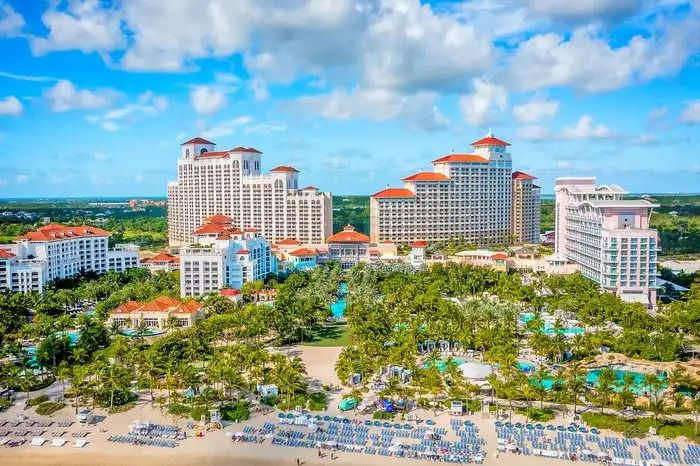
The defendants in the $1.6 billion alleged fraud case linked to the Baha Mar casino, in the Bahamas, have requested a stay of enforcement on the court’s ruling noting that the companies in question ‘will be forced into insolvency’.
According to a reply affirmation filed with the Supreme Court of the State of New York Appellate Division, CCA Construction Inc, CSCEC Bahamas Ltd and CCA Bahamas Ltd requested the stay. The plaintiff is BML Properties Ltd.
In a copy viewed by AGB, the defendants claim ‘the trial court piled error on error in awarding the real estate developer Plaintiff $1.6 billion in damages […] including one {CCA} that had no contractual relationship to or role in the construction project at issue’.
The request furthers ‘the trial court ignored swaths of unrebutted testimony and entire defense witnesses, mixed and matched contractual obligations without importing limitations on liability, and misapplied the same bedrock damages principle that this Court corrected the trial judge on in this same case at summary judgment less than a year ago’.
The defendants have agreed to secure the stay on the condition of pledging 100 percent of CCAB’s ownership interest in its subsidiaries that own two hotels in Nassau, Bahamas, valued at between $232.7 million and $355.1 million.
‘This offer of security encompasses nearly all of the total combined value of the three Defendants’.
The group further notes that ‘because Defendants are worth collectively a fraction of the judgment, they were unable to secure a bond, […] if Plaintiff is allowed to begin enforcement proceedings immediately, Defendants will be forced into insolvency […] it is effectively certain, and it will inflict irreparable harm by the time a full panel of this Court decides Defendants’ appeal’.
The defense further argues that ‘the appeal raises dispositive legal issues, and Defendants are highly likely to prevail’.
This would ‘either reduce damages drastically and/or release one or more defendants from liability altogether’.
A spokesperson for the defendants added that “BML Properties brought about its own failures through its gross mismanagement of the Baha Mar project and the trial court piled error on error in finding otherwise. The actions we have now taken are in the best interests of all our stakeholders and, importantly, will have no impact on our operations as we pursue our appeal or on the operation of the British Colonial and Margaritaville Beach Resort hotels and their guests, employees and vendors.”
BLM Properties has made claims of $845 million, with the judge ruling to also include interest on the figure dating to May of 2014.
The company is led by businessman Sarkis Izmirlian, who issued a suit against the CCA in 2017 claiming “massive fraud” which led to the collapse of the project in 2015.
The project was later sold to Hong Kong-based conglomerate Chow Tai Fook – a major investor in The Star Entertainment and particularly in Queen’s Wharf Brisbane.
Singapore’s Gambling Regulatory Authority (GRA) has renewed the casino license of Resorts World Sentosa for a shortened period of two years due to ‘unsatisfactory’ performance in meeting market demand and industry standards as a ‘compelling tourist destination’.
The GRA announced on Monday, noting that an evaluation of the group’s tourism performance between January 1st of 2021 and December 31st of 2023 found ‘a number of areas that require rectification and substantial improvement’.
The Evaluation Panel has now recommended that the next evaluation be conducted in 2026, while the new two-year extension begins on February 6th, 2025.
The GRA notes that it decided on the shortened period after taking into consideration the opinion of the Evaluation Panel, and the views of the Ministry of Trade and Industry (MTI), Singapore Tourism Board (STB), and Sentosa Development Corporation (SDC).
Looking ahead, the GRA notes that it will ‘continue to work with MTI, STB, and SDC, to ensure that RWS meets the requirement to develop, maintain and promote its IR as a compelling tourist destination’.
Singapore has been working to further strengthen its casino controls and enhance its regulatory regime, while also taking a hard line on money laundering.
Resorts World Sentosa was caught in the regulatory web in December of 2023, being fined SG$2.25 million ($1.68 million) for failure to perform customer due diligence checks required by law.
However, the fine was a result of a review mandated in 2020 of Singapore’s two casino operators. During the review and subsequent investigation by the GRA, it was found that RWS didn’t perform customer due diligence checks ‘for certain transactions where RWS’ employees collected cash of SG$5,000 ($3,700) or more from third parties for purposes of depositing into the accounts of RWS’ patrons’.
The period in question doesn’t directly correspond with the evaluation which resulted in the shortened casino license extension, and the GRA when issuing the fine noted that ‘RWS took prompt action to improve its processes’.
This includes two new luxury hotels, adding 700 rooms, a waterfront promenade, a four-story retail, entertainment, and dining podium and a mountain trail.
Philippine President Marcos’ recent POGO ban Executive Order applies universally, regardless of location or licensing, and violators could face significant penalties, including fines and imprisonment, a legal expert told AGB.
On November 5th, 2024, President Ferdinand R. Marcos Jr. signed Executive Order No. 74 (EO 74), officially terminating all Philippine Offshore Gaming Operators (POGOs) and Internet Gaming Licensees (IGLs) across the country by December 31st.
This sweeping ban has generated discussions regarding its legal implications and the potential impact on affected workers.
In an interview with AGB, Filipino corporate lawyer Russell Stanley Geronimo, founder of Geronimo Law, emphasized that the executive order is explicit in its scope.
Russell Stanley Geronimo
“While some may speculate about exceptions or loopholes, the EO clearly states that all POGO and IGL operations are banned.”
The lawyer noted that, in the absence of explicit statements, the general rule that POGOs and IGLs are banned “remains intact.” The Office of the President has clarified that the ban encompasses all forms of POGO operations, regardless of their location or licensing authority.
“This official clarification strongly reinforces the interpretation that the ban is comprehensive”, Geronimo noted.
The lawyer—who has served in all branches of government, including the Office of the President, Senate, House of Representatives, and Supreme Court—added that existing legal frameworks will support the enforcement of the ban.
“Under EO 74, POGO and IGL operations are now classified as illegal gambling,” Geronimo noted, adding that violators will face substantial penalties, including fines, imprisonment, and asset confiscation.
Law enforcement agencies, including police and anti-crime units, will lead raids, while the Philippine Amusement and Gaming Corporation (PAGCOR) will revoke licenses. “Simply put, if anyone tries to continue operating a POGO, it’s a criminal act, and they will face prosecution,” he asserted.
As the ban takes effect, concerns have arisen regarding the rights of employees who may be displaced.
Worker displacement costs not covered by authorities
An estimated 79,735 POGO workers, both Filipino and foreign, are currently facing job displacement due to the recent ban.
Geronimo pointed out the government’s legal obligations under the Labor Code of the Philippines, which mandates that employers provide separation pay for workers terminated due to authorized causes, such as business closures.
“Employers are required to provide separation pay to workers terminated due to authorized causes, including business closures”, he explained. However, he expressed doubts about government assistance for impacted employees, stating that “unfortunately, I don’t think the government is going to cover the costs associated with employee displacement.”
For those affected by the ban, Geronimo detailed potential legal avenues to challenge the Executive Order. “They can file a petition for declaratory relief in court to clarify the EO’s validity,” he explained.
Additionally, petitions for certiorari (for a higher authority to conduct a review) or prohibition can be filed with the Court of Appeals or the Supreme Court. While these cases are pending, affected parties may also seek a temporary restraining order (TRO) to pause the enforcement of the order.
Despite the strong policy stance reflected in EO 74, Geronimo underscored the necessity for legislative action to ensure the ban’s permanence.
“To make the ban permanent and prevent the resumption of offshore gaming operations, it would be necessary to repeal Republic Act No. 11590 and amend ecozone charters like CEZA‘s,” he argued. Such measures would prevent any future administration from potentially reinstating POGOs.
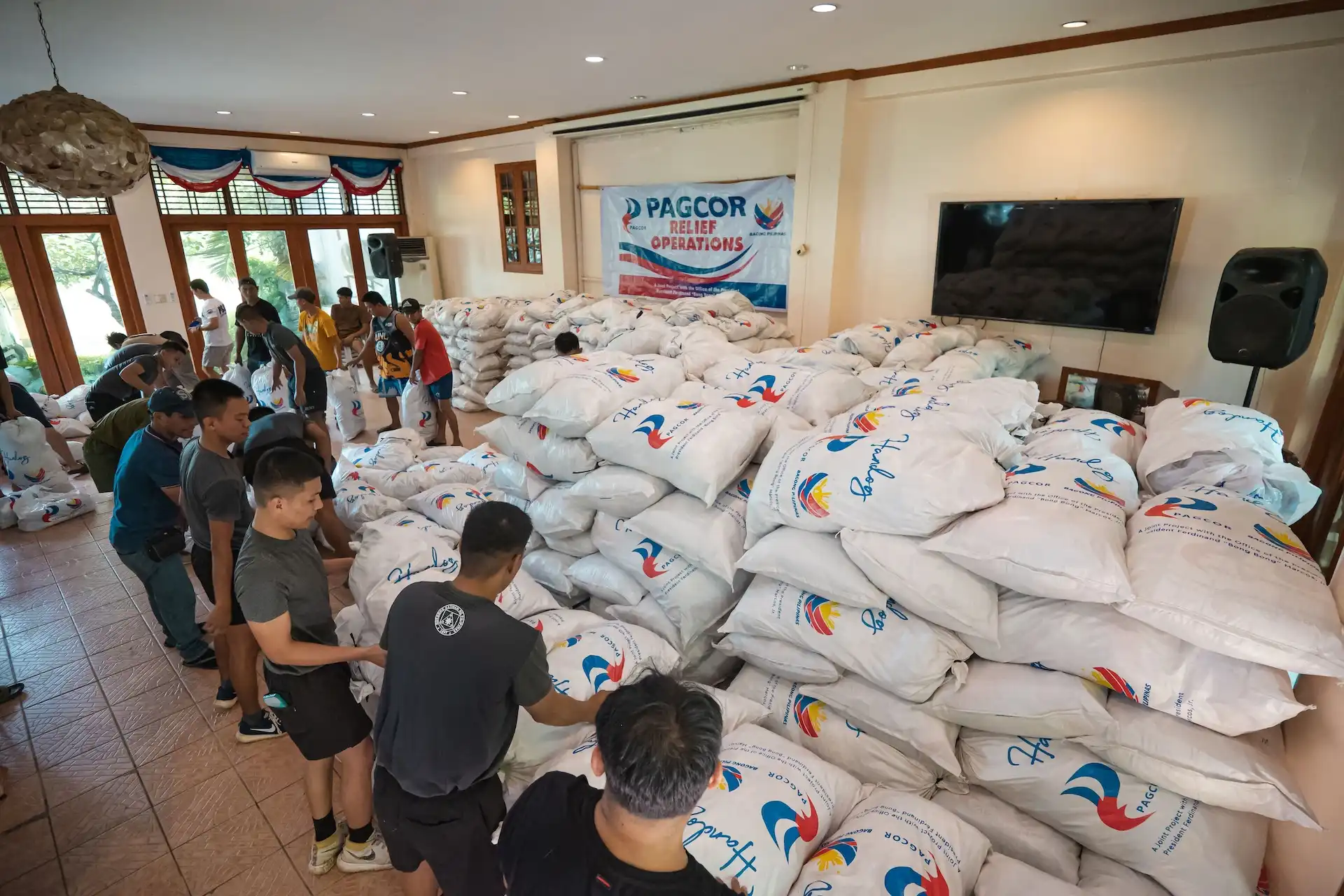
The Philippine Amusement and Gaming Corporation (PAGCOR) launched a significant relief operation in Northern Luzon on Friday, November 15, in response to Typhoon Ofel’s devastating impact on the region’s northern towns and provinces.
The agency prepared over 21,000 relief packs and immediately extended aid to displaced residents in Apayao (1,000 packs), Cagayan (2,000 packs), Isabela (5,000 packs), and Pagudpud, Ilocos Norte (2,000 packs).
A total of 11,000 food and non-food packs are also scheduled for delivery to severely affected municipalities in Cagayan including Aparri, Baggao, Ballesteros, Buguey, Calayan, Sanchez Mira, and Santa Teresita.
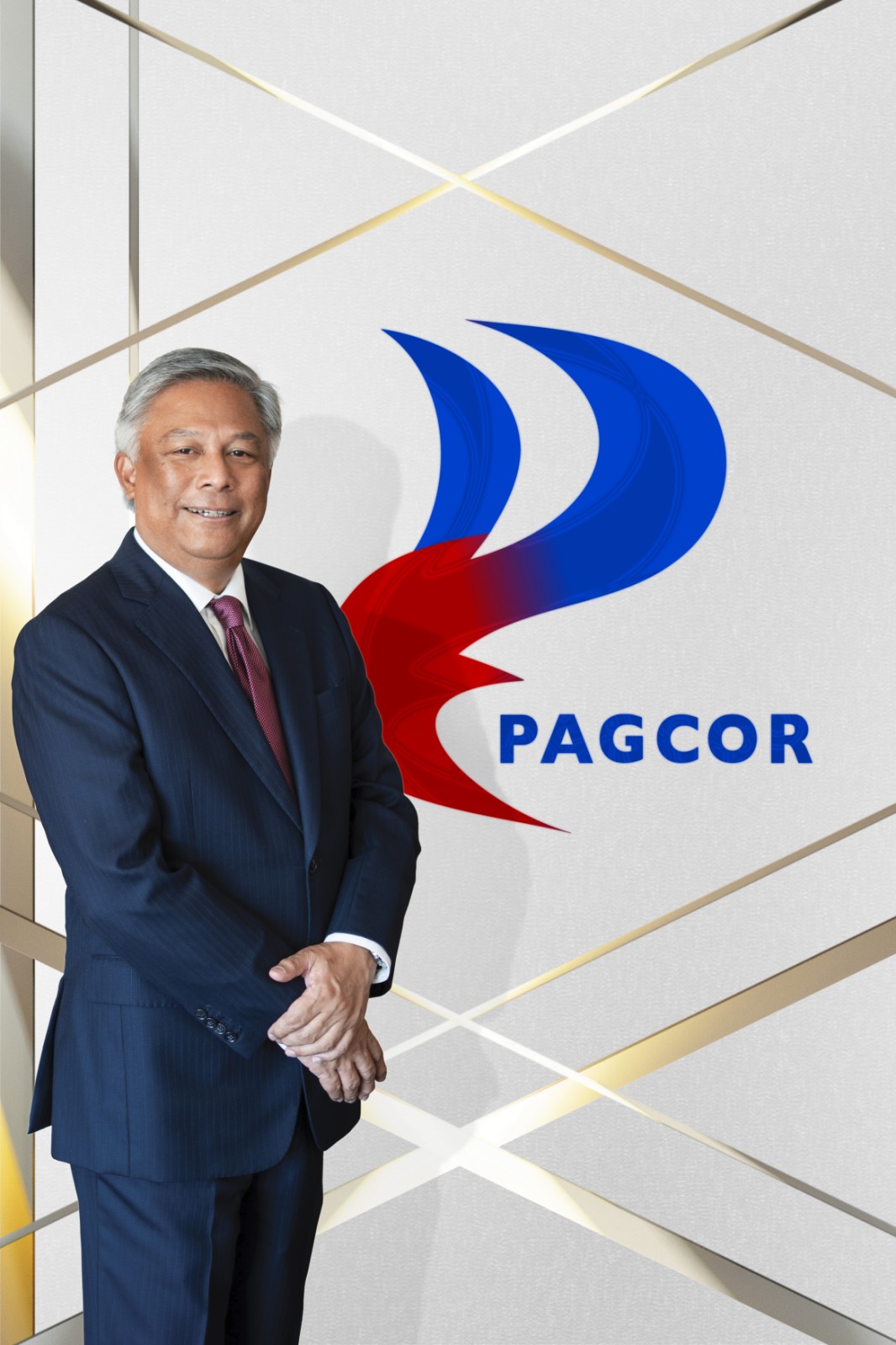
Alejandro H. Tengco, CEO of The Philippine Amusement and Gaming Corporation
“We have been in close coordination with the Office of Civil Defense to facilitate the distribution of these relief aids to severely affected communities,” said PAGCOR Chairman and CEO Alejandro H. Tengco.
“We understand the need of these local communities to receive all the help they can get and enable them to rise above their dire situation,” he said.
The PAGCOR chief added that even at the height of Typhoon Ofel, the agency was in constant coordination with local government units (LGUs) to ensure the timely distribution of relief assistance.
“We have been actively working with affected LGUs to determine the number of displaced families that needed help and to ensure that no community is left behind,” Mr. Tengco said.
Super Typhoon Ofel, the 15th tropical storm to hit the Philippines this year, left a trail of damage in Northern Luzon. The province of Cagayan alone reported Php1.4 billion in damage to agriculture from the series of typhoons in recent weeks.
DigiPlus Interactive Corp. clarified that there are ‘no definitive plans at this time’ to acquire CasinoPlus, according to a statement released to the Philippine Stock Exchange on Monday.
CasinoPlus, an online gaming provider regulated by the Philippine Amusement and Gaming Corp. (PAGCOR), holds a gaming license for its integrated resort (IR), the Hotel Stotsenberg and Casino in Clark, which is currently under renovation.
DigiPlus, formerly known as Leisure & Resorts World Corp., was previously linked to a casino resort proposal on Boracay Island until October 2023. The company has since rebranded as a holding firm with investments in the gaming and leisure sectors, such as digital bingo and a digital sportsbook platform.
In light of recent regulatory changes, licensed land-based casinos and integrated resorts are permitted to offer online gambling to registered members within the Philippines. However, these online games must be linked to physical gaming machines or tables at brick-and-mortar casinos, differentiating them from conventional server-based online gaming.
The clarification from DigiPlus came after Bilyonaryo.com reported that the company was preparing to acquire CasinoPlus. The report speculated that if the deal were to proceed, the combined monthly revenue of the two entities could reach PHP10 billion ($170.4 million). It also noted that discussions between DigiPlus and CasinoPlus had been “smooth” due to overlapping investors.
In its statement, DigiPlus emphasized: ‘Acquisitions have always been part of the company’s strategic expansion plan. However, there are no definitive plans at this time.’
Robust performance
As per its third-quarter earnings report dated November 11th, DigiPlus posted a net income of PHP8.75 billion ($149 million) for the first nine months of 2024, reflecting a surge of 314 percent year-on-year. Revenues increased 223 percent to PHP51.56 billion from PHP15.98 billion in the previous year, while EBITDA rose 271 percent to PHP9.34 billion from PHP2.52 billion.
DigiPlus also holds a majority stake in First Cagayan Leisure and Resort Corp., which oversees the licensing and regulation of interactive gaming businesses under the Cagayan Economic Zone Authority (CEZA). CEZA has been issuing interactive gaming licenses since 2001.
Pronet Gaming, the renowned platform provider of comprehensive turnkey solutions, has appointed Alexandros Karaoulis as its new Commercial & Product Strategy Lead.
With over 14 years of experience in the iGaming industry, Karaoulis brings a wealth of knowledge and expertise that will be instrumental in driving the company’s strategic initiatives forward.
Throughout his iGaming career, Karaoulis has held various senior roles with B2B sportsbook and casino providers, as well as with B2C operators. His extensive background in marketing and sales within the iGaming sector positions him as a true industry expert, ensuring that Pronet Gaming remains at the forefront of innovation in a rapidly evolving market.
“I am thrilled to join Pronet Gaming and excited to fulfill my role in developing and executing sales strategies to drive the company’s revenue growth in key markets”, shares Karaoulis.
With a track record in commercial strategies and driving product excellence, Karaoulis’ appointment is invaluable as Pronet Gaming now seeks to expand its footprint to Asia. His vision and deep understanding of the iGaming landscape equip him to navigate the unique challenges and opportunities that the dynamic region presents.
“I want Pronet Gaming to lead the iGaming revolution by providing innovative, culturally tailored solutions that cater to the diverse and rapidly growing demands of the region. Through strategic partnerships, cutting-edge technology, and a deep understanding of local markets, we aim to empower operators to offer world-class gaming experiences that engage players and drive sustainable growth.”
According to Karaoulis, Pronet Gaming is poised to make a splash in Asia by leveraging its advanced technology, flexible platform solutions, and deep market expertise while adapting to the unique characteristics of the region.
“The key differentiation point of Pronet Gaming is that we have B2C experience, which greatly aids in understanding the needs of operators and helping them to improve and execute their strategy according to the market”, said Karaoulis. “I have worked in B2C roles for more than seven years in my iGaming Career and managed campaigns across various channels, optimized conversion funnels, and learned to use data to improve player acquisition and retention.”
Karaoulis acknowledges that the marketing skills he has acquired from B2C experience are valuable in every B2B environment. As he dives into his new role at Pronet Gaming, Karaoulis aims to guide his operator clients on how to better market their own sites, including providing them with advice on effective acquisition strategies, content marketing, and campaign structures that appeal to iGaming audiences.
“I also focus heavily on engagement strategies, loyalty programs, bonuses, and personalized offers to keep players active and returning. In my new B2B role, I will advise clients on best practices for player engagement, helping them adopt effective loyalty programs, personalized marketing, and retention tactics that drive player lifetime value to improve the end-player experience for our clients’ sites,” concludes Karaoulis.