

Macau gaming operator SJM Resorts has announced that its employees will receive a “special discretionary bonus” equivalent to one month’s salary on January 20th, 2025.
This announcement marks the start of the season when gaming operators typically disclose bonuses and potential salary increases for their staff.
The announcement was made by Daisy Ho, Managing Director of SJM Resorts, via an internal memo on Tuesday.
In the memo, Ho explained that the bonus is a gesture of appreciation for the “contribution and outstanding performance” of staff over the past year.
“SJM Resorts has consistently optimized and innovated its products and services in 2024, achieving steady business growth thanks to the hard work of every team member,” the memo stated.
According to the firm, the bonus will cover nearly 98 percent of the staff.
SJM Resorts, part of the Hong Kong-listed SJM Holdings, is the first of Macau’s six gaming operators to announce a discretionary bonus for employees for 2025. However, the memo did not mention any salary increases for the coming year.
A new collaboration model between gaming concessionaires and junkets has emerged, with junkets gradually integrating into the operations of gaming rooms directly managed by operators, according to a local junket representative.
U Io Hung, president of the Macau Professional Association of Gaming Promoters, revealed this development in an interview with a Hong Kong media outlet Ming Pao. He pointed out that there has been a “progressive integration of operations” between junkets and gaming operator-managed VIP rooms.
“The past two months have seen this trend take shape, and we expect it to continue,” said U Io Hung. “Junkets are becoming increasingly involved in the operations of these directly-managed VIP rooms.”
The representative explained that this integrated approach is actually no different from the past in terms of manpower allocation, but it will result in more business for the junket.
Under Macau’s revised casino gaming regulations, each junket is now restricted to partnering with only one gaming concessionaire and is prohibited from running its own VIP rooms in casinos. Junkets now earn commissions for promotional services, shifting away from the previous practice of revenue sharing with concessionaires. They are also banned from offering credit to gamblers in Macau casinos.
As a result, gaming operators have been converting former junket-managed VIP rooms into directly managed VIP rooms for premium mass gaming or direct VIP segments in recent years.
U Io Hung noted that this new collaboration model has already been trialed at two venues operated by Galaxy Entertainment Group and Melco Resorts & Entertainment. The early results have been “very positive,” and the industry is closely monitoring the long-term impact of this evolving partnership. “This integrated operational model notably boosts business for junkets,” he added.
As of December, Macau had 23 licensed junkets, up from 18 in early 2024, but still down from 36 in 2023 and a sharp decline from 235 in 2013. The Macau government has also capped the number of junkets each of the six gaming operators can partner with at 50 in 2025, maintaining the current year’s limit.
Macau saw a strong leap in its Gross National Income (GNI) last year, rising by nearly 51 percent yearly, driven by a 71 percent increase in Gross Domestic Product (GDP).
Macau’s GDP in 2023 was approximately $47.06 billion.
According to official statistics published on Thursday, GNI in 2023 reached MOP359.81 billion ($45.05 billion), ‘amid the gradual resumption of local economic activities’.
Looking at GDP, for example, in 4Q23 real term figures saw an 86.4 percent increase, on the back of a rise of 430 percent increase in the export of gaming services and a 130 percent rise in the export of tourism services.
This reflects a total outflow of external factor income (or that earned by non-residents from investments in Macau) of MOP117.53 billion ($14.71 billion), up by 264.7 percent yearly.
Outflows exceeded total inflows during the year, leading to a negative net outflow of MOP9.51 billion ($1.19 billion).
Inflow totaled MOP108.1 billion ($13.53 billion), up by 58.3 percent yearly, due to a near-92 percent rise in other investment income earned by resident enterprises and investors from abroad.
The year 2023 was marked by a strong comeback in gaming stock prices, as the cloud of uncertainty left over from the pandemic, and the adjustment to the new 10-year gaming licenses settled and operators got back into their groove.
Gross gaming revenue (GGR) during the year amounted to nearly MOP183.06 billion ($22.92 billion), a 333.8 percent rise yearly.
This coincided with Macau dropping all pandemic-related travel and quarantine restrictions in January of 2023.
The move created yet another ‘new normal’ for the SAR, with some 28.21 million visitors – a yearly increase of nearly 395 percent, or 71.6 percent of the levels seen in 2019.
During the first 11 months of 2024, visitor arrivals already firmly beat the 2023 figures, hitting 31.88 million, up by 26.2 percent yearly.
The Philippine House Quad Committee, set up to in part investigate Philippine Offshore Gaming Operators (POGOs), has filed three bills aiming to criminalize and penalize activities linked to POGO operations.
The Quadcom panel filed a total of five new bills, with three pertaining to POGOs or linked operations.
These include House Bill No. 10987, which prohibits all forms of offshore gaming operations in the country, with ‘severe penalties’. The bill was initially approved in November, with rampant support.
But the Quadcom’s efforts go beyond just eliminating the POGOs themselves, as they aim to go after bad actors and their assets.
House Bill No. 11043 allows for the civil forfeiture of unlawfully acquired real estate properties by foreign nationals.
This goes in line with House Bill No. 11117, allowing the administrative cancellation of birth certifications fraudulently obtained by foreign nationals.
The two bills appear to reference the recent cases involving high profile figures such as former Bamban ‘POGO Mayor’ Alice Guo, who is accused of illegally obtaining a Filipino birth certificate.
Authorities are also trying to go after assets purchased by illicit POGO operations, especially after POGO complexes have shifted more underground, sometimes in gated communities.
But a fourth bill appears to target claims that Alice Guo had potentially been a spy, with House Bill No. 10998 ‘punishing conspiracy and proposal to commit espionage,’ according to the Philippine News Agency.
While the espionage claims against Guo have not been confirmed, the strong media coverage she has seen likely had an impact on the furthering of the legislation.
According to the Quadcom lead chair, Robert Ace Barbers, the bills aim to close “flaws, loopholes, and weaknesses” of currently legislation.
Barbers specifically mentioned the POGO firm Empire 999, a real estate firm linked to POGO operations, money laundering and organized crime, noting “we discovered that POGOs use Filipino and Chinese dummies as nominal owners”.
Given the discoveries over the Quadcom’s investigation, it’s likely that further legislative changes will be examined.
FIBA, the world governing body for basketball, has announced a new partnership with 1xBet, who has been appointed as the Federation’s exclusive Global Betting Partner through December 2027.
During the three-year partnership, 1xBet will leverage basketball’s global reach and growth to enhance its brand visibility worldwide by supporting all FIBA National Team Competitions, both Basketball and 3×3 Basketball.
1xBet, a leading player in the betting industry and an established sponsor for elite sports organizations globally, joins FIBA in a partnership that reflects both entities’ commitment to our sport.
The agreement covers all major senior FIBA National Team events, for both men and women, with 1xBet enjoying exclusivity in the Sports Betting and Online Betting categories. Beyond its core rights under the Global Partner package, 1xBet will also have a digital presence on FIBA’s platforms and will offer a Game Predictor, for global fan engagement.
Additionally, the objectives of both parties are to integrate digital advertising at key FIBA events, enabling 1xBet to explore extensive opportunities in dedicated markets worldwide. FIBA is testing several innovative solutions which will support 1xBet’s strategic plans and offer additional opportunities to 1xBet and its Global Partners.
Protecting the integrity of basketball is a top priority for FIBA, with strong efforts in educating basketball stakeholders and rigorously pursuing breaches to the game’s integrity. Thanks to this partnership, 1xBet’s joins FIBA’s efforts by way of financial contribution, directed to address match-manipulation and illegal betting in basketball, and aimed at safeguarding the integrity of the sport worldwide.
Additionally, as part of the partnership, 1xBet will appoint a Single Point of Contact for integrity, who will collaborate closely with FIBA, assisting in integrity-related investigations and intelligence gathering efforts.
1xBet is well-known among sports fans, already sponsoring several global entities such as FC Barcelona, Paris Saint-Germain, LOSC Lille, Italian Serie A, CAF, esports tournament operator ESL and has partnerships with other reputable sports and esports tournament organizations.
“We are on the threshold of a new stage in the history of 1xBet. Signing an agreement with FIBA is a strategic step that opens up very significant opportunities for promoting our brand. The partnership will increase fan engagement and help create exclusive content. We love this game and are ready to actively promote basketball on all continents,” said Valerii Kharitonov, 1xBet Chief Gaming Officer.
Frank Leenders, FIBA’s Director General of Media and Marketing Services, added: “We are thrilled to welcome 1xBet as our newest Global Partner and look forward to developing our collaboration over the next three years. It’s incredibly exciting to have a Partner supporting both basketball and 3×3. With both organisations sharing a passion for innovation, technology, and the global growth of our sport, we are confident that this Partnership will be game-changing.”
Good morning. It’s a new dawn, it’s a new day. Macau has officially welcomed its new leadership, with Chief Executive Sam Hou Fai sworn in by China’s president. It remains to be seen exactly how the new leadership will deal with casino operators, as China’s top brass pushes for diversification away from casinos. Meanwhile, Curacao has taken a step forward with its new LOK gambling law, but not all parties are convinced of the benefits it could hold. And in Thailand, the government has confirmed it will have the final decision on the locations of new entertainment complexes, to ensure fair competition.
Macau is turning the page to start yet another chapter in its epic as the world’s gaming hub. The swearing-in of its new Chief Executive by China’s president brought with it mixed messages for the gaming mecca, as Xi Jinping pushed for Macau to continue its efforts away from casinos. The economic diversification strategy has already hit roadbumps, however the pledged investments must go ahead. It remains to be seen how the new leadership will hold operators to their obligations.
Established over a decade ago, The MongolZ has experienced numerous roster changes. However, in 2023, The MongolZ made a triumphant return, fueled by a robust partnership with 1xBet and the emergence of a new generation of talented Mongolian players.
Altenar, a leading sportsbook provider is bringing its global expertise to Asia, looking to expand its operations. Since 2011, Altenar has powered hundreds of online sports betting sites worldwide and is a major B2B provider in Europe and Latin America licensed markets.
Macau saw strong tourism numbers during the month of November, with visitor arrivals topping 2.83 million, some 97.3 percent of the same level registered in 2019.
According to data from the Statistics and Census Service (DSEC), same-day visitation rose by 14.1 percent yearly, to 1.58 million, while overnight visitors totaled 1.28 million, up by 4.6 percent yearly.
The average length of stay, something both authorities and operators have been aiming to increase, remained stable yearly at 1.2 days. Overnight visitors, however saw a slight increase of 0.1 day, to 2.3 days.
Macau’s main source market, as expected, was mainland China, with numbers increasing by 11 percent yearly, to 1.96 million.
Those traveling under the Individual Visit Scheme (IVS) totaled 927,890, up by 6 percent yearly.
Visitation from the 10 newly-added cities to the IVS list was up by 8.5 percent yearly, to 40,440.
Visitation from Hong Kong, however, fell slightly by 0.8 percent, to 554,053. This, however still marked 97 percent of the levels recorded in November of 2019.
2024 vs 20232024 vs 2019
International visitation was up by 20.9 percent during the month, another key demographic that authorities aim to increase, topping 241,057.
Visitation from the Philippines was up by 22 percent, to 48,641, while that from Malaysia rose by 25.5 percent, to 20,716.
Visitation from South Korea increased by 61.1 percent yearly, to 48,584.
Surprisingly visitation from the United States increased by 18.3 percent yearly during the month, to 16,218.
During the first 11 months of the year, visitor arrivals totaled 31.88 million, up by 26.2 percent yearly.
The recently passed National Ordinance for Games of Chance (LOK) aims to modernize the country’s online gambling framework, bringing stricter oversight and transparency to a sector that has long been a cornerstone of the island’s economy. However, the rollout of this new regulatory structure has been overshadowed by controversy, including allegations made by opposition politician and forensic investigator Luigi Faneyte.
Faneyte recently filed a second formal complaint with Curacao’s Public Prosecutor’s Office and various international authorities, alleging corruption and misconduct within the Curacao Gaming Control Board (GCB) and other entities. Central to his complaint is a transcript of a phone conversation that he claims implicates key figures in a conspiracy to shield an online gaming operator from legal liabilities. However, the GCB, in its latest press release, has categorically denied these allegations, stating that an internal review of the recording found no evidence to support the claims. Specifically, the GCB determined that the voices in the conversation did not belong to any of its advisors or personnel.
The GCB has reiterated its commitment to transparency and accountability, noting that it takes complaints seriously and will continue to investigate any allegations that may impact its operations. Legal measures to address unsubstantiated claims are also being considered, reflecting the regulator’s firm stance against what it describes as baseless accusations.
Supporters of the GCB and the ongoing regulatory reform argue that such allegations are politically motivated, intended to undermine the significant progress made under the LOK framework.
The GCB and its leadership have faced criticism not just from Faneyte but also from advocacy groups like the Foundation for the Representation of Victims of Online Gaming (SBGOK). These organizations have highlighted instances where Curacao-licensed operators have faced bankruptcy and legal challenges over player claims.
High-profile cases, including a recent one involving BC.Game, have cast a shadow over the jurisdiction’s gaming ecosystem. However, proponents of the LOK argue that the new law directly addresses these issues by introducing rigorous standards for licensing and operations.
The LOK’s passage signals a turning point for Curacao’s online gambling sector. The legislation establishes a higher licensing fee, mandates stricter compliance measures, and transitions oversight responsibilities to the newly formed Curacao Gaming Authority (CGA).
Finance Minister Javier Silvania has championed the law, emphasizing its potential to generate significant revenue while restoring the island’s reputation as a credible regulatory hub. Despite criticism, the LOK’s supporters believe it provides the framework needed to professionalize the industry and protect stakeholders, including operators and players.
Opponents, however, remain skeptical. Faneyte and others have questioned the transparency of the reform process, alleging that it opens the door to potential misuse and chaos. Critics have also raised concerns about the GCB’s ability to manage its expanding responsibilities effectively, given the surge in license applications and ongoing legal disputes. They argue that the rushed implementation of cryptocurrency payments without a solid legal foundation further complicates the regulatory landscape.
In response to these challenges, proponents of the reform, including prominent figures in the industry, have called for a more measured evaluation of the allegations. They argue that unsubstantiated claims only serve to destabilize a jurisdiction striving to align itself with global best practices. Advocates stress that the LOK is a step in the right direction, designed to bring clarity, fairness, and accountability to Curacao’s gaming sector.
The stakes are high for Curacao as it balances the need for reform with mounting criticism. As one of the world’s largest offshore gaming jurisdictions, its success in implementing the LOK will be closely watched by the international community and rival jurisdictions across the globe. With the pre-regulated market model changing rapidly as more countries adopt their own licensing frameworks, the developments in the next few years will be crucial for Curacao and the online gambling industry as a whole.
Special Class Business Process Outsourcing (SCBPO) companies have once again been confirmed as exempt from the scope of the Philippine Offshore Gaming Operators (POGO) ban.
According to legal expert Tonet Quiogue, this clarification followed an inspection by the Presidential Anti-Organized Crime Commission (PAOCC) of special class BPO facilities on Friday, December 20th.
The inspection aimed to identify any suspected illegal POGOs operating under the guise of legitimate BPOs.
Tonet described the clarification as a “significant development that reinforces this position and provides the clarity the industry has long sought.”
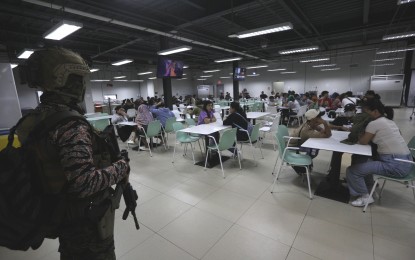
The inspection included the Philippine Amusement and Gaming Corporation (PAGCOR) Chairman Alejandro H. Tengco, accompanied by key members of the Technical Working Group (TWG) on Executive Order 74—such as DILG Secretary Jonvic Remulla, DOJ Assistant Secretary Mico Clavano, and representatives from the PAOCC, AMLA, Securities and Exchange Commission, Bureau of Immigration, DOLE, and other agencies. They visited two of the largest SCBPOs in the Philippines.
During the visit, Tonet shared, the delegation observed firsthand how SCBPOs operate as regular BPO companies, providing essential services to legitimate gaming companies abroad.
Secretary Remulla emphasized that SCBPOs represent the “good side of gaming, the one that provides good jobs to people and is not involved in scams.” He assured that SCBPOs will not be subject to raids or disruptions, stressing that enforcement agencies are focusing on facilitating the exit of POGOs and other entities explicitly covered by EO 74.
Despite the looming deadline for the ban imposed by President Ferdinand Marcos Jr., the PAOCC has identified 100 suspected guerrilla POGOs still operating across the Philippines.
PAOCC Executive Director Gilbert Cruz stated that enforcement efforts will be ramped up in January, focusing on inspecting hotels, resorts, and residential subdivisions suspected of harboring small illegal POGO hubs.