The Hong Kong Jockey Club (HKJC) has announced the appointment of a new Executive Director for Legal and Compliance – James Bidlake – effective from February 24th.
Bidlake succeeds Shella Ng, who has served in the role since March of 2020.
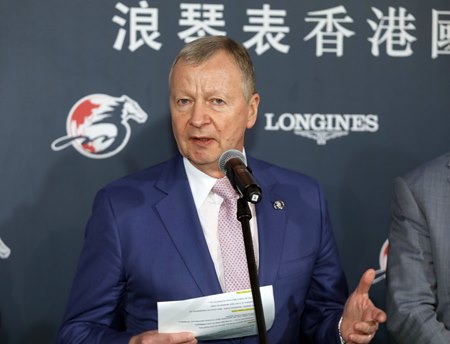
Winfried Engelbrecht-Bresges, CEO, HKJC
In a Monday press release, the HKJC indicated that Bidlake will also be a member of the Board of Management, reporting directly to CEO Winfried Engelbrecht-Bresges.
Bidlake will also act as the Company Secretary for HKJC.
Bidlake most recently served as the Group Genearl Counsel and Executive VP of DFS Group – where he spent over eight years. He also spent some 13 years with Morgan Stanley, based in Hong Kong, as Executive Director and Head of Investment Banking, Legal.
The HKJC notes that Bidlake has over 25 years of legal and regulatory compliance experience in Asia.
The HKJC has been recently reinforcing its executive team, hiring former Tabcorp executive Michael Fitzsimons as new Chief Wagering Officer.
LuckyStreak, a live casino and iGaming aggregation provider, has partnered with Betzmark to integrate its live dealer and third-party games as part of the brand’s online casino debut.
Betzmark positions itself as a New Generation Betting Site and has established a strong customer base by blending innovation with a deep focus on player needs. The operator has now taken its ambitions to the next level by expanding into online gaming and selected LuckyStreak’s live casino suite and games from providers such as Pragmatic Play, Yggdrasil, PG Soft and Ruby Play, as some of its first content.
This collaboration enables Betzmark to provide its loyal players with world-class gaming experiences and strengthen its position in the competitive online casino landscape. To ensure smooth operations, LuckyStreak’s dedicated Account Management and technical teams are working with Betzmark to offer support in establishing its iGaming business.
The agreement with Betzmark demonstrates LuckyStreak’s respected position as a trusted partner to new and established online casinos in regulated markets, with its state-of-the-art technology, expertly trained presenters and immersive mobile-first interface resonating with players worldwide.
Rory Kimber, Commercial Director at LuckyStreak: “It’s fantastic to go live with this new partnership following a stellar visit to ICE 2025. We’re delighted that Betzmark chose LuckyStreak to power its ambitions in the online casino market. With our world-class live casino games and top-notch third-party slots, crash, and table games from some of the best providers in the business, Betzmark now has everything it needs in one place. Our rich and robust API delivers seamless integration and comprehensive services, which will power Betzmark’s continued success.”
Ruslan Stravin, Partnerships Manager at Betzmark: “LuckyStreak’s steady growth and dedication to innovation make it a trusted partner for companies like ours. Their diverse gaming content and state-of-the-art platform have significantly elevated our offerings and enhanced player engagement. The seamless integration process and exceptional quality have been truly impressive, and we’re excited to build on this successful partnership together.”
The company stated that the proposals, which were confidential, indicative, and non-binding, ‘have not provided sufficient value for The Star.’
In an ASX filing on Monday, The Star Entertainment explained that its board had thoroughly assessed the offers, including external advice, before making the decision. ‘After careful consideration (which has included external advice),’ the company said, ‘none of the proposals have provided sufficient value for The Star.’
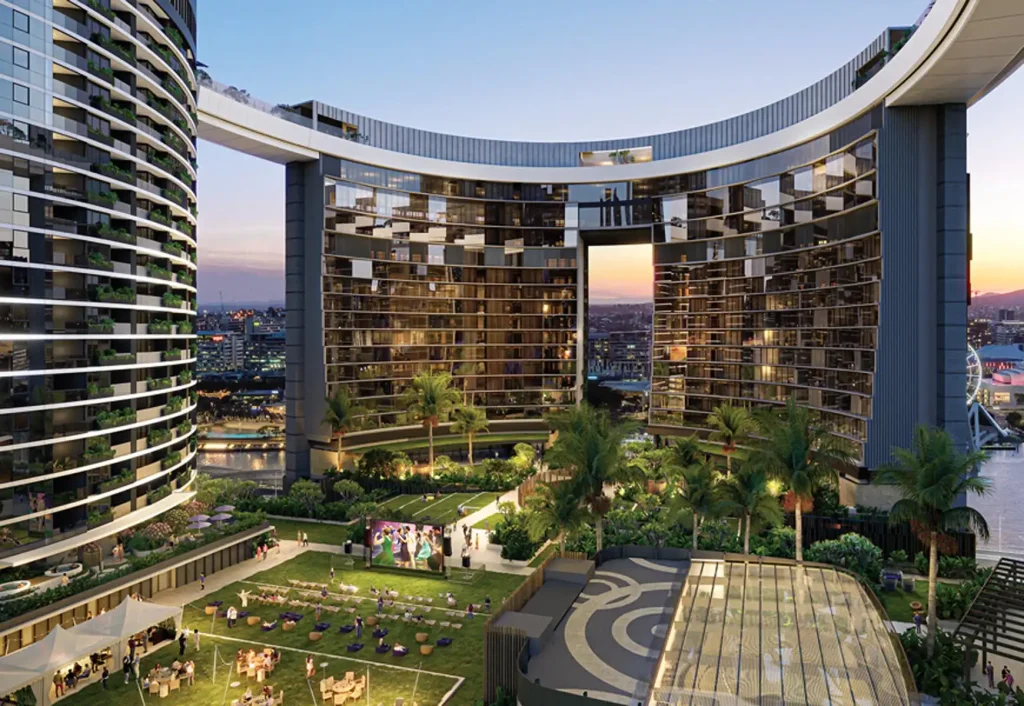
Despite rejecting these bids, The Star confirmed that discussions with CTFE and FEC are ongoing. The company continues to explore the possibility of selling its stake in the Destination Brisbane Joint Venture (DBJV), which owns The Star Brisbane.
‘The Group continues to engage with CTFE and FEC to ascertain whether a sale of The Star’s 50 percent interest in DBC can be negotiated on terms satisfactory to The Star,’ the filing noted.
The Star Brisbane, which held its soft opening in August of 2024, has placed a heavy financial burden on Star Entertainment. The resort has contributed an additional AU$1.6 billion ($1 billion) in debt, with further investments required for its completion. The company acknowledged that its financial position remains precarious. ‘The Group continues to explore possible liquidity solutions,’ The Star stated in its announcement, emphasizing that it is exploring various options to stabilize its cash flow.
However, there is no certainty that any of these discussions will lead to a definitive solution. The company cautioned, ‘There is no certainty that any transaction will be concluded,’ and added that the ongoing negotiations could impact its ability to continue as a going concern.
The Star’s financial situation has been increasingly strained, with the company revealing earlier this year that it is burning through its cash reserves. Despite selling non-core assets such as the old Treasury Casino building in Brisbane and The Star Sydney Event Center, the company has struggled to recover financially.
‘In the absence of one or more of those arrangements, there remains material uncertainty as to the Group’s ability to continue as a going concern,’ the company reiterated in its recent filing.
As negotiations continue, the future of The Star Brisbane remains uncertain, with Star Entertainment working to resolve its financial difficulties while navigating the complexities of potential asset sales.
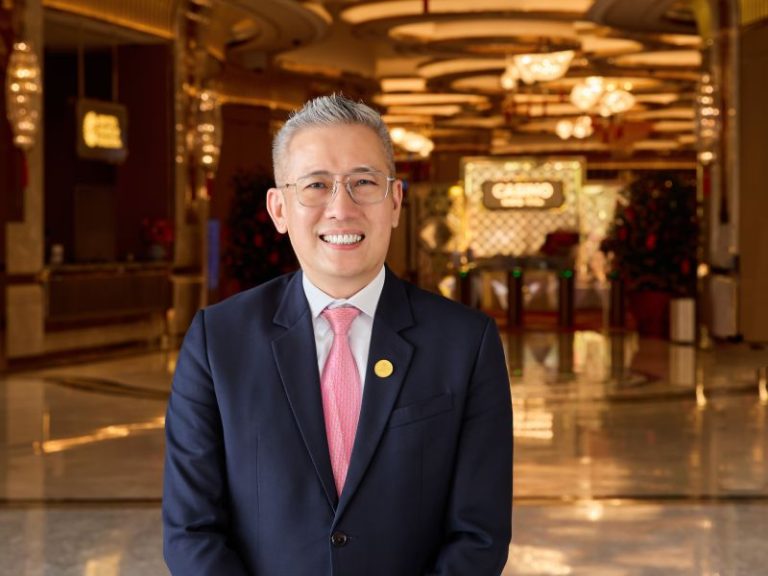
Hoiana Resort & Golf has officially welcomed its new CEO Alan Teo into the role, effective from February 3rd, but only recently shared via social media.
This comes after the announced departure of long-serving president and CEO Steve Wolstenholme.
In a post on LinkedIn, Teo noted that he is “grateful and excited to begin this new chapter with Hoi An South Development”. The executive expressed appreciation to Wolstenholme “for his leadership and contributions, which have laid a strong foundation for the future”.
The group notes that the appointment of Teo ‘is a part of Hoiana’s key development strategy’. This includes accelerating its Phase 2, encompassing a $1 billion investment, with goals to develop 209 hectares and create 2,500 direct and 5,000 indirect jobs over the next two years.
Speaking previously of his departure, Wolstenholme noted that “I take immense pride in what we’ve accomplished”.
Teo comes into the role after serving as COO of Universal Hotels and Resorts, which manages the NUSTAR Resort & Casino in Cebu. He previously served for over a decade with Resorts World Sentosa in Singapore, with over two and a half years as Chief Operating Officer.
Teo is not the only former exec to be drawn in from RWS, with CFO Melcyn Boey joining in mid-2024.
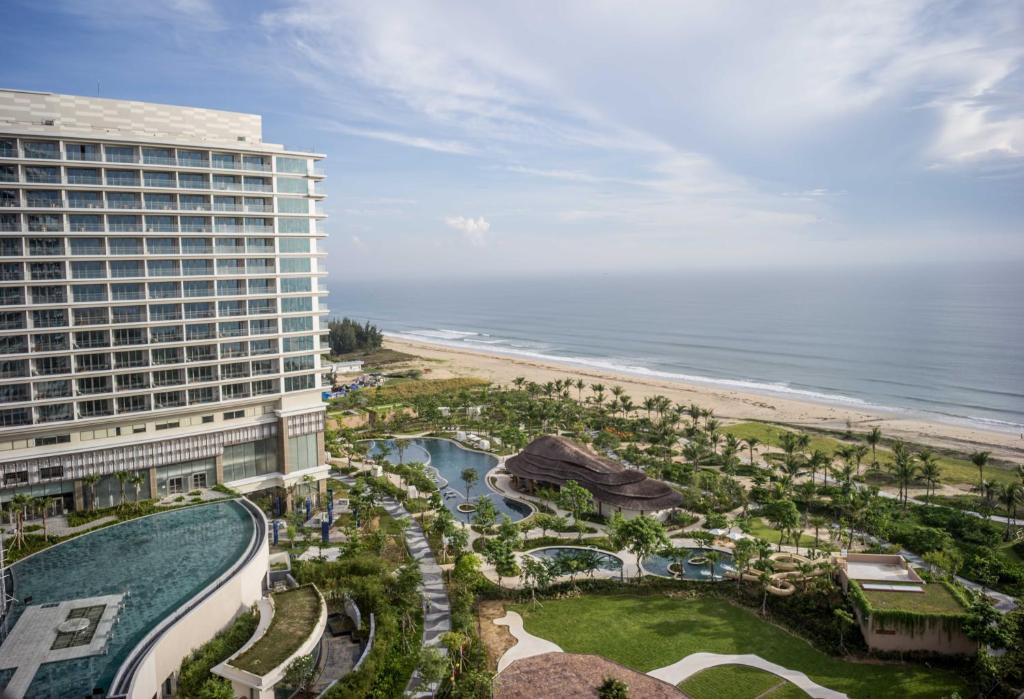
Hoiana Resort & Golf is a $4 billion development project with over 1,200 hotel rooms spread across four luxury hotels. It also features an 18-hole golf course named as one of the Top 100 in the world.
Good morning. Year of the Snake off to a bad start. Macau’s gaming performance in January and during the Chinese New Year period was lower than usual, with Citigroup believing last-minute trip cancellations and U.S. tariffs on China were a factor for the downturn. Meanwhile, a Thai opposition party is set to file a no-confidence motion against the government on February 27th vowing to target the administration’s entertainment complex policy. For the Thai Sang Thai Party, the bill is a disguised effort to legalize casinos under the guise of economic development.
What you need to know
Macau’s 2025 starts slow, but Citigroup expects a recovery by mid-year, with stronger second-half GGR from events and improved sentiment.
Thai opposition launches a no-confidence debate, accusing the government of disguising casino legalization as an entertainment complex policy.
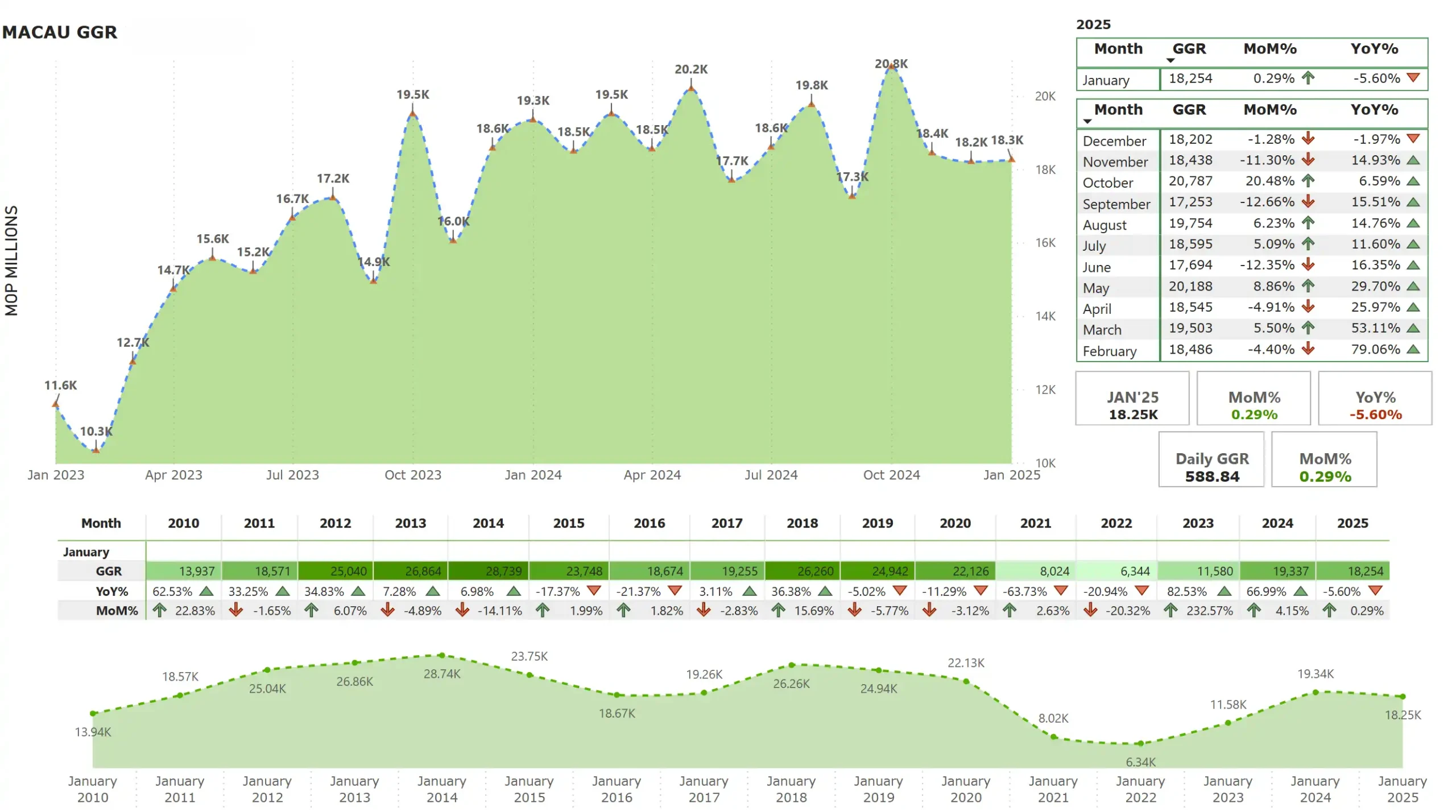
Macau’s gaming performance in January and during the Chinese New Year period has fallen short of expectations, with Citigroup’s analysts reporting an average daily gross gaming revenue (GGR) of MOP589 million ($73.4 million) in January 2025, which is lower than anticipated. Contributing factors to the weak results include last-minute trip cancellations during the Chinese New Year and U.S. tariffs on China affecting demand.
In 2024, 1xBet achieved significant breakthroughs and successes, solidifying its position in the iGaming industry. The brand secured major partnership deals, received prestigious awards, and showcased its innovations at the world’s leading forums.
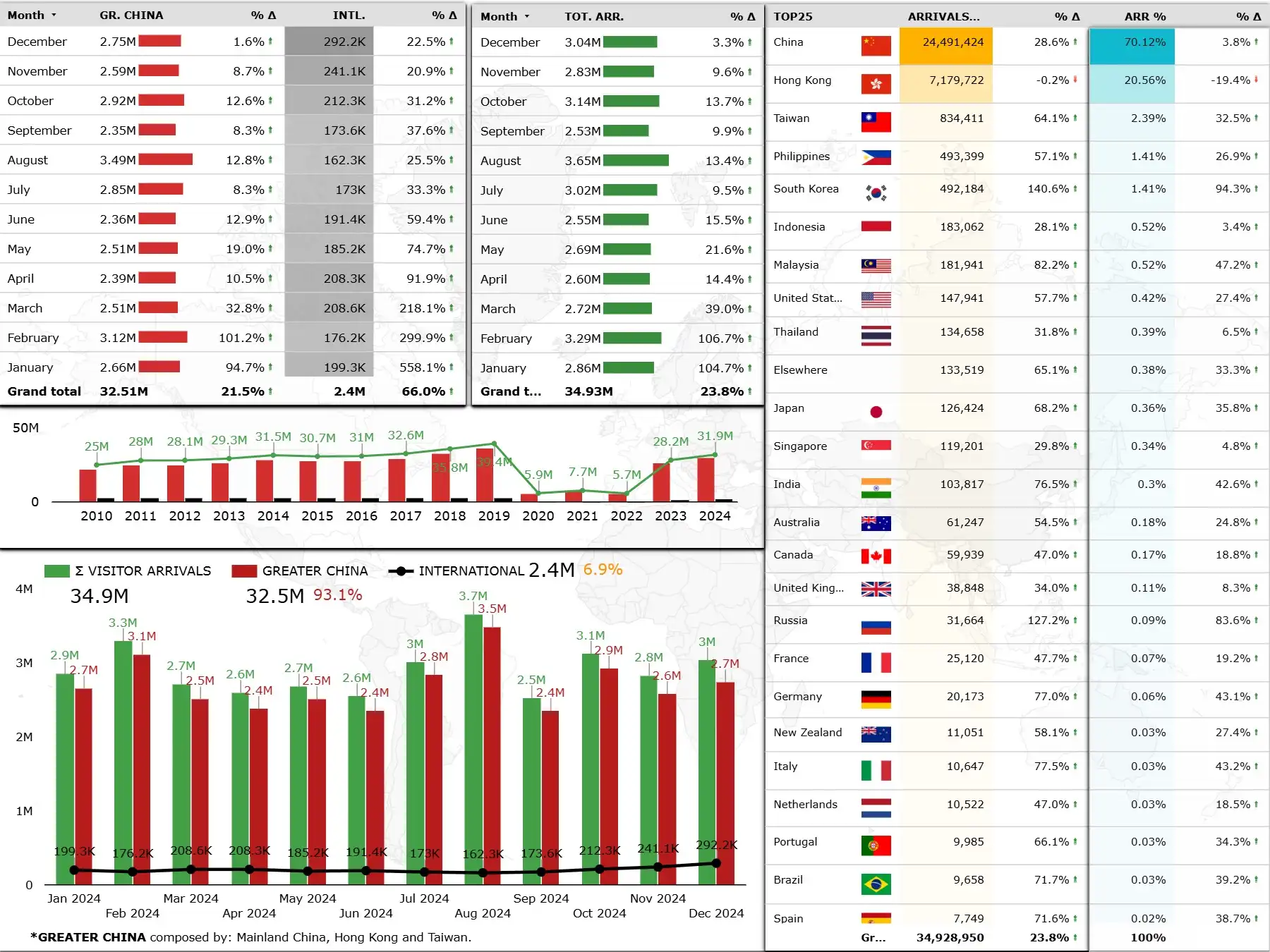
The per-capita non-gaming spending of visitors in Macau dropped by 14.6 percent year-on-year in 2024, amounting to MOP2,157 ($269), according to data from the Statistics and Census Service (DSEC).
The situation could be alarming, as both overnight and same-day visitors recorded declines in spending. Overnight visitors spent an average of MOP3,884 ($484), an 8.2 percent decrease, while same-day visitors spent MOP691 ($86), down 12.7 percent year-on-year.
Shopping remained the largest expenditure category, accounting for 45.4 percent of total visitor spending, followed by accommodation at 25.5 percent and food and beverages at 20.9 percent. Visitors who traveled to Macau for performances, competitions, or MICE events demonstrated relatively high per-capita spending, averaging MOP5,076 ($633) and MOP4,323 ($539), respectively.
Despite the drop in per-capita spending, total visitor spending—excluding gaming expenses—rose by 5.8 percent year-on-year to MOP75.36 billion in 2024. This increase was primarily driven by a 23.8 percent rise in visitor arrivals. Total spending by overnight visitors reached MOP62.31 billion ($7.77 billion), up 3.5 percent, while same-day visitors contributed MOP13.05 billion ($1.63 billion), marking a 17.9 percent increase.
According to official data released on Friday, visitor spending declined across several key source markets in 2024. Per-capita spending by visitors from mainland China, Macau’s main tourist source market, fell by 18.1 percent to MOP2,503 ($312). Spending by visitors from Hong Kong and Taiwan dropped by 13 percent and 8.8 percent, to MOP1,009 ($126) and MOP1,952 ($244), respectively.
In Northeast Asia, visitors from the South Korea recorded the largest decline in per-capita spending, down 33.8 percent to MOP2,405 ($300). Japanese visitors spent an average of MOP2,093 ($260), a 1.4 percent decrease.
Among Southeast Asian visitors, spending trends were mixed. Per-capita spending by Thai and Malaysian visitors fell by 22.7 percent and 15 percent, to MOP2,598 ($324) and MOP1,992 ($249), respectively. In contrast, Singaporean visitors were an exception, with their per-capita spending increasing by 6.6 percent to MOP2,834 ($353).
Macau’s gaming performance in January and during the Chinese New Year period falls short of expectations, and investment bank Citigroup believes the trend may only start to improve by mid-2025.
In its latest investment memo, Citigroup analyst George Choi notes that Macau’s GGR in January 2025 averages MOP589 million ($73.4 million) per day, lower than expected.
The first five days of February see an even weaker performance, averaging MOP900 million ($112.2 million) per day, with approximately MOP4.5 billion ($561 million) in total GGR.
On a like-for-like basis, this is 10 to 12 percent lower than the same period in 2024 but about 75 percent higher than January 2025’s daily average of MOP589 million ($73.4 million).
‘At the current run rate, combined January-February GGR could mark the second consecutive month of negative growth,’ Choi observes.
Based on industry sources, teh brokerage notes that VIP volumes are approximately 55 to 60 percent higher month-on-month, while mass GGR is 40 to 45 percent higher. The VIP hold rate appears to be above normal levels.
However, the implied spend per player is lower than expected, prompting Citigroup to revise its February 2025 GGR forecast downward to MOP18.75 billion ($2.34 billion)—just a 1 percent year-on-year increase and around 74 percent of February 2019 levels—down from the previous MOP20 billion ($2.49 billion) estimate. This implies that GGR will average about MOP620 million per day for the rest of the month.
GGR forecast revised downward
The Chinese New Year period, an eight-day public holiday in mainland China (January 28th – February 4th) and a crucial revenue driver, also underperforms.
‘Some last-minute trip cancellations by players toward the end of the CNY Golden Week’ contribute to the weak results, Choi explains.
Additionally, the implementation of U.S. tariffs on China on February 1st further dampens gaming demand. As a result, Citigroup revises its 2025 GGR forecast, lowering its projected year-on-year growth to 3 percent, down from the previous 7 percent estimate. The bank now expects first-half GGR to decline by 1 percent compared to 2024.
Stronger recovery expected in 2H25
However, Citigroup anticipates that gaming activity will gain momentum in the second half of 2025, driven by clearer trade policies and high-profile non-gaming entertainment offerings.
‘We expect player sentiment to start recovering in 2H25 as the impact of tariffs gets absorbed,’ Choi states.
Seasonal trends, along with major entertainment events—such as the Jacky Cheung concert at Galaxy Arena in June—are expected to boost demand, with further gains anticipated during the summer holidays and October Day Golden Week.
Citigroup now forecasts second-half GGR to reach MOP119.5 billion ($14.89 billion), translating to an average daily run rate of approximately MOP550 million ($68.6 million) and a 6 percent year-on-year increase. Additionally, Macau will benefit from a relatively low base effect in the latter half of the year, following disruptions in late 2024 caused by trip postponements linked to the Andy Lau concert and the 25th-anniversary celebrations.
The Thai opposition is set to file a no-confidence motion against the government on February 27th, with the Thai Sang Thai Party (TST) vowing to target the administration’s controversial entertainment complex policy, which it claims is a disguised effort to legalize casinos.
According to the Bangkok Post, opposition leader Natthaphong Ruengpanyawut confirmed that the motion would be filed in parliament under Section 151 of the constitution, with the opposition pushing for a five-day debate. However, the government may limit discussions to three days.
Thai Sang Thai Party (TST) leader Khunying Sudarat Keyuraphan
TST leader Khunying Sudarat Keyuraphan has strongly criticized the entertainment complex bill, recently approved by the cabinet, calling it one of the “worst pieces of legislation ever written.” She argues that the policy is a thinly veiled attempt to introduce legal casinos under the guise of economic development.
Sudarat warned that control over these complexes would be concentrated in the hands of a single board dominated by politicians, raising concerns over transparency and governance. “This policy is not about entertainment or economic growth—it’s about opening the door to legalized gambling with little oversight,” she said.
Speaking after a strategic meeting at Sudarat’s residence, Natthaphong accused the government of inefficiency, negligence, and conflicts of interest. He stated that the debate would expose the administration’s failure to address pressing social issues.
People’s Party (PP) deputy leader Sirikanya Tansakul revealed that the opposition has identified around 30 key issues for the debate, though the final list remains flexible. The opposition is determined to hold the government accountable and use the debate as an opportunity to highlight corruption and mismanagement.
Government Chief Whip Wisut Chainarun indicated that the administration would push to shorten the debate to three days. He dismissed opposition claims, stating that the government is fully prepared for the discussions and has anticipated the main points of attack.
“We’re ready for the debate and have been for some time. We’ve reviewed the opposition’s claims and will respond accordingly,” Wisut said.
Last year Chinese authorities investigated approximately 73,000 cases related to cross-border gambling, leading to the dismantling of over 4,500 online gambling platforms, according to China’s Ministry of Public Security.
The ministry announced last week that multiple networks facilitating gambling and underground banking operations tied to large overseas gambling groups were disrupted.
According to the China Daily, the ongoing campaign against cross-border gambling has seen significant efforts, including four major operations that resulted in 45 key cases and the arrest of 11,000 suspects.
One notable success mentioned was the dismantling of a gambling organization known as “DC,” based in the Philippines, which had been actively soliciting Chinese gamblers for three years.
Chinese authorities have also enhanced international cooperation to effectively combat cross-border gambling that targets Chinese citizens. In the past year, over 3,700 individuals—ringleaders, financiers, and key members of criminal networks—were either repatriated or persuaded to return to China.
The ministry highlighted collaborative efforts with various departments, including foreign affairs, tourism, immigration, and the People’s Bank of China, to implement diverse strategies against cross-border gambling. This includes targeting payment systems, investment schemes, and illegal lotteries, leading to positive outcomes.
Additionally, China has ramped up its fight against telecom fraud in recent weeks, engaging in bilateral and multilateral cooperation with neighboring countries such as Thailand and Myanmar to eliminate online gambling and telecom scams.
In January, the Ministry of Public Security committed to enhancing international law enforcement collaboration to address telecom fraud operations in Myawaddy, Myanmar, which borders Thailand.
Last week a successful operation led to the rescue of 61 victims, including 39 Chinese nationals, from telecom fraud facilities in Myawaddy, with Myanmar authorities transferring them to their Thai counterparts.
This development followed Thailand’s decision to cut off power, fuel, and internet services in border regions with Myanmar.
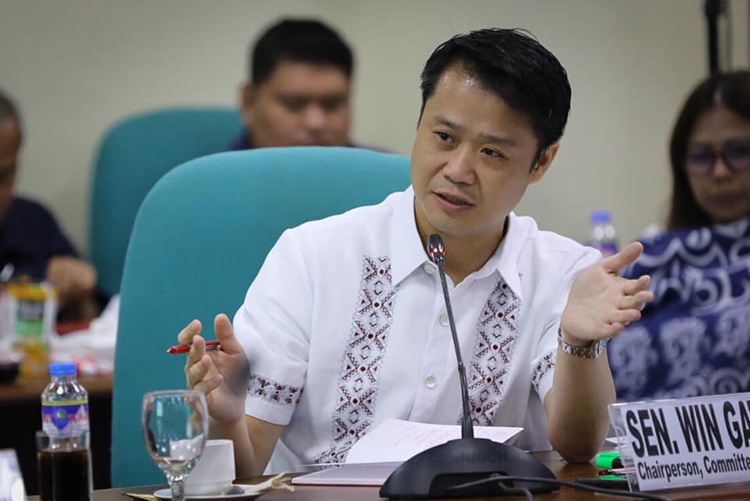
Philippines’ Senator Sherwin Gatchalian raised alarms about potential infiltration of criminal syndicates within key government agencies.
This statement follows a recent raid on a travel and consultancy firm in Manila, which allegedly facilitated the production of bogus Philippine government documents, The Philippine News Agency reported.
The raid, conducted by the Presidential Anti-Organized Crime Commission (PAOCC) on Wednesday, uncovered various fraudulent documents, including birth and marriage certificates, as well as a passport featuring a foreign national’s photo alongside a Filipino name.
Gatchalian emphasized the gravity of the situation, suggesting that agencies such as the Philippine Statistics Authority (PSA), Bureau of Immigration, Department of Foreign Affairs (DFA), and the Philippine National Police (PNP) may have been compromised. “This incident reinforces our fears regarding the infiltration of these agencies by criminal elements,” he stated.
The senator has proposed legislation aimed at enhancing the authority of the PSA and imposing stricter penalties on civil registrars involved in fraudulent activities. He also urged law enforcement to strengthen their efforts in dismantling these illegal operations.
Reports have emerged of individuals being extorted by the travel agency, with one complainant alleging she paid PHP900,000 ($15,500) to secure her fiancé’s release, while another spent PHP1.1 million ($18,945) for her husband’s freedom following a January 17 raid at a Philippine offshore gaming operators (POGO) center in Parañaque City.
During a press conference, PAOCC Executive Director Gilberto Cruz described the travel agency as a crucial element in the ongoing Senate investigation into POGOs. He revealed that the firm was instrumental in helping foreign nationals acquire government-issued documents, thereby enabling them to remain in the country amid ongoing crackdowns.
In addition to document forgery, Cruz pointed out that staff at the travel agency had impersonated PAOCC officials to extort funds, although he clarified that no actual PAOCC members were involved in these activities.