

Home Blog Page 512

Macau GGR to grow 3.4% in March, reaching $2.52B : Deutsche Bank

0

Following a weaker-than-expected February performance, Deutsche Bank forecasts that Macau’s gross gaming revenue (GGR) will grow by 3.4 percent year-on-year in March, reaching $2.52 billion.

In its latest investment memo, released after Macau’s February GGR figures were published, analyst Carlo Santarelli noted that the projection for March is based on historical patterns. Between 2013 and 2019, March typically saw an average growth of approximately 2.0 percent compared to the average win per day over the combined January and February period. Applying this trend to 2025, Deutsche Bank estimates that the year-on-year increase could reach as much as 4.4 percent for March.

February’s GGR reached $2.47 billion, marking an 8.2 percent sequential increase (+19.8 percent per day) compared to January. On a year-on-year basis, February’s GGR rose 6.8 percent.
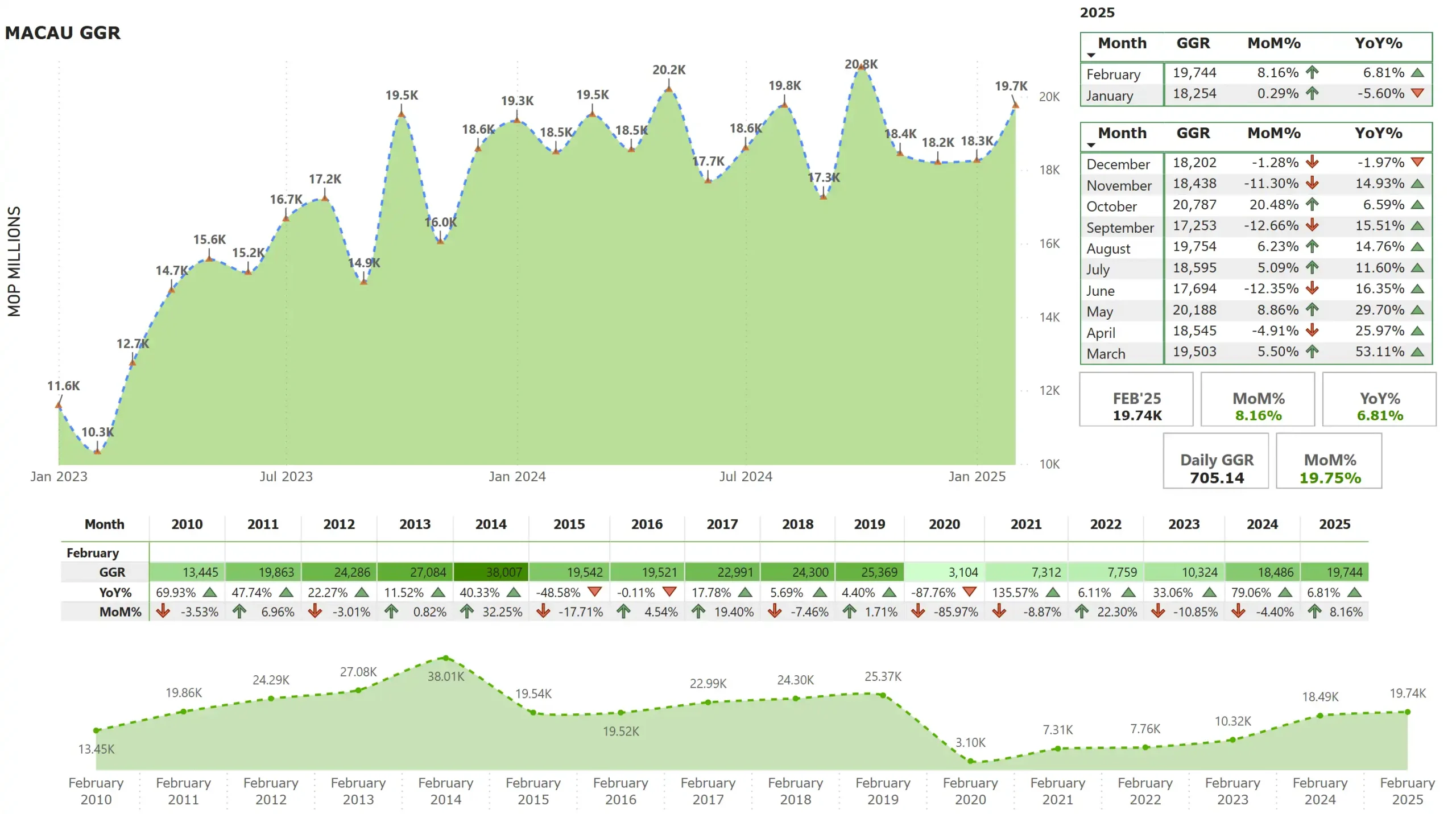
Macau February GGR 2025

Santarelli highlighted that the 19.8 percent sequential improvement per day exceeded historical trends by approximately 430 basis points, as the average February increase relative to January, from 2013 to 2019, was 15.5 percent. However, he cautioned that this figure is somewhat ‘misleading’ due to the shifting timing of Chinese New Year, which can significantly influence monthly revenue performance.
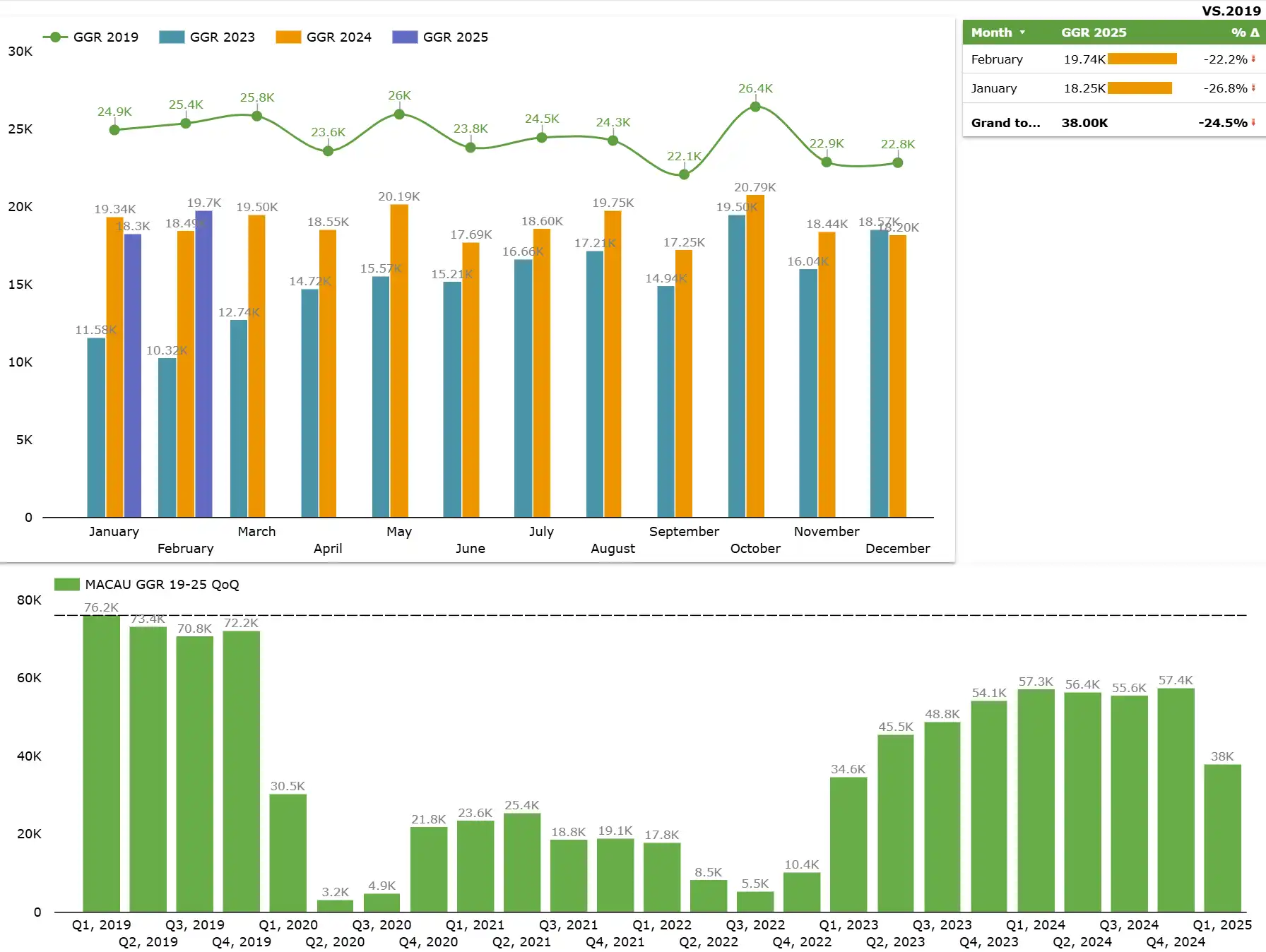
Macau GGR 2025

Despite the improvement, February’s GGR remained 22.2 percent below the same month in 2019, though this represents an improvement from January’s 26.8 percent decline compared to January 2019.

Looking ahead, Deutsche Bank estimates that Macau’s GGR for the first quarter of 2025 will reach $7.28 billion, reflecting a 1.5 percent year-on-year increase.

For the full year 2025, the bank projects total GGR to reach $29.25 billion, a 3.1 percent year-on-year increase. Growth is expected to continue into 2026, with GGR forecasted to rise by 3.5 percent to $30.27 billion.

macau

Single-digit growth expected

In a comment to local media, Macau economist Samuel Tong predicted that Macau’s GGR would see single-digit growth this year, with annual revenue likely to slightly exceed last year’s MOP226.7 billion ($28.3 billion).

Tong noted that the external environment is becoming increasingly complex and unpredictable, posing significant challenges to Macau’s economy and gaming sector. He emphasized the need for the government, businesses, and residents to enhance their ability to anticipate and adapt to changes. With support from the central government, Macau should accelerate its integration into national development and contribute more effectively to the broader economic landscape.

Meanwhile, Henry Lei, Associate Head of the Department of Finance and Business Economics at the University of Macau, pointed out that while February’s gaming revenue was higher than January’s, total revenue for the first two months of the year fell short of the MOP20 billion ($2.5 billion) monthly target.

He attributed this shortfall to rising international uncertainties, including the impact of U.S. trade policies and a decline in visitor spending power. Given these factors, Lei maintained a cautious outlook on this year’s gaming revenue, forecasting overall economic growth in the range of 5 percent to 7 percent.

Lei also stressed the importance of leveraging Beijing’s supportive policies for Macau and actively implementing more visitor-attracting initiatives. He suggested increasing promotions for outdoor performance venues and enhancing publicity for related events. Hosting activities in a carnival-style format or as a series of themed events could extend tourists’ stays and boost spending, which he believes would benefit the overall economy.


Japanese giant MIXI eyes Australian betting market with PointsBet buyout

0

MIXI has struck a deal to acquire PointsBet, but rival BlueBet isn’t backing down.

The Japanese consumer tech giant has agreed to purchase all issued shares of PointsBet Holdings Limited for A$1.06 ($0.66) per share in cash, valuing the deal at A$353 million ($220.80 million).

The transaction is still subject to shareholder and regulatory approvals, with finalization expected by mid-June 2025. The PointsBet board has unanimously endorsed the offer, urging shareholders to support it, citing the attractive premium and the opportunity to cash in at favorable trading multiples.

Chairman Brett Paton described the agreement as “a compelling opportunity for PointsBet shareholders to realize certain cash value, at a significant premium to recent trading prices.”

CEO Sam Swanell noted that PointsBet carefully evaluated the offer against its long-term strategy and determined that MIXI’s bid “appropriately reflects the value of PointsBet’s world-class technology assets and reputation for wagering excellence in both Australia and Canada.”

Mixi X Blue Lock Colab
The new Mixi and Blue Lock Anime collaboration.

MIXI, known for its mobile gaming, social networking, and sports team management businesses, has been steadily growing its sports betting footprint in Japan through its TIPSTAR platform, which recently achieved full-year profitability. The company sees Australia as a key growth market, citing the country’s strong betting culture and regulatory framework as compelling reasons for expansion. “Given Australia’s established culture of enjoying betting with family and friends, we consider it a very attractive market for expanding our social betting service,” MIXI stated.

But the deal isn’t done yet. BlueBet, a competing Australian wagering firm that merged with Betr last year, has put forward its own offer. The alternative bid consists of A$240 million ($150 million) to A$260 million ($162.6 million) in cash, plus an additional A$100 million ($62.55 million) to A$120 million ($75 million) in scrip consideration.

BlueBet argues that its proposal provides stronger strategic benefits, including an estimated A$40 million ($25 million) in synergies. In a letter to PointsBet shareholders, BlueBet’s leadership suggested that a deal with a scrip component could be more appealing than an all-cash buyout.

PointsBet shareholders will decide the fate of the MIXI acquisition in a special Scheme Meeting set for May 2025.

Hong Kong’s new 50,000-seat stadium opens as city aims for global spotlight

0

Hong Kong has officially opened its new sports complex, with the HK$30 billion ($3.86 billion) Kai Tak Sports Park taking center stage.

The 28-hectare development includes a state-of-the-art 50,000-seat stadium and aims to reestablish Hong Kong as a premier destination for global sporting and entertainment events.

Built on the former site of the city’s iconic Kai Tak Airport, the sports park has transformed the area, once known for its dramatic landings amid densely packed buildings. Now, it’s a symbol of Hong Kong’s push to regain its footing on the international stage after years of political unrest and strict pandemic measures.

Kai Tak Sports Park Hong Kong

Thousands gathered for the opening ceremony at the waterfront stadium, which features a sleek purplish exterior dubbed the “Pearl of the Orient” and a retractable roof. Hong Kong’s Chief Executive John Lee hailed the complex as a “state-of-the-art new stage for Hong Kong.”

The stadium is set to host high-profile events, including the Hong Kong Sevens rugby tournament later this month and a series of Coldplay concerts in April. Officials hope these spectacles will bolster the city’s regional influence, especially after losing out on Taylor Swift’s Eras Tour to Singapore and watching the NBA shift its focus to Macau.

Plans for an Olympic-standard stadium date back to the early 2000s, but construction didn’t begin until 2019, with delays pushing back the timeline. Alongside the main stadium, the complex includes a 10,000-seat indoor sports center, a 5,000-seat public sports ground, and three shopping malls.

The grand opening featured live performances and a unique showdown between martial arts star Donnie Yen and Olympic gold medalist fencer Vivian Kong, adding a cinematic touch to the celebrations.

Donaco International reports steady growth in first half of FY2025

0

Donaco International Limited has released its financial results for the six months ending December 31, 2024 (1H25), showing consistent growth in revenue and earnings.

The company recorded a group net revenue of AU$21.83 million ($14.19 million), up 12.2 percent from AU$19.45 million ($12.64 million) in the same period last year (1H FY24), and an EBITDA of AU$11.39 million ($7.40 million), a 17 percent increase from AU$9.73 million ($6.32 million).

Net profit after tax rose to AU$7.77 million ($5.05 million), reflecting a 36.3 percent improvement over the previous year’s AU$5.70 million ($3.71 million).

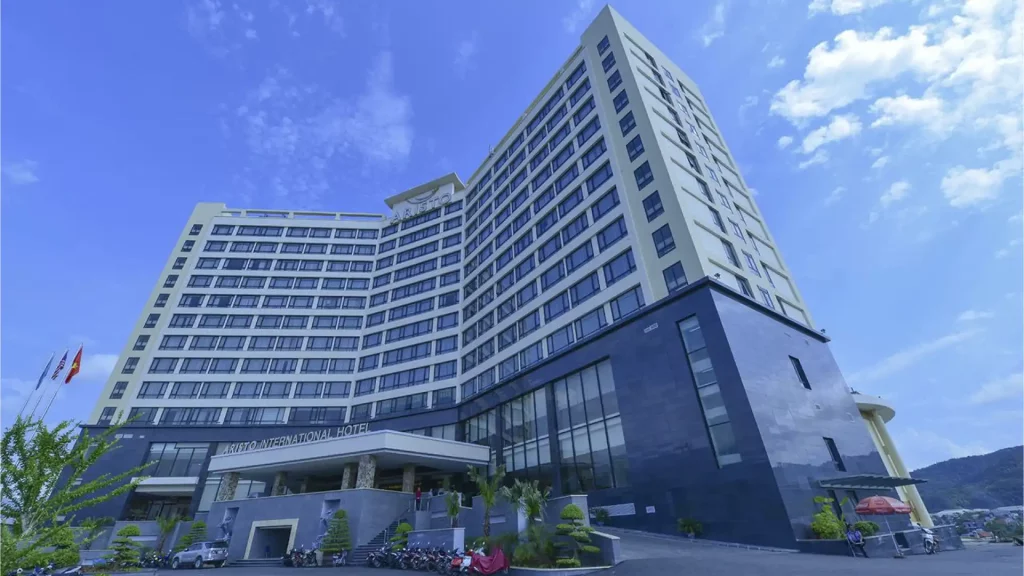
The company operates two key properties: DNA Star Vegas on the Cambodia-Thailand border and Aristo International Hotel near Vietnam’s border with China. DNA Star Vegas reported net revenue of AU$14.08 million ($9.15 million), a slight increase from AU$13.36 million ($8.68 million) in 1H FY24, with EBITDA at AU$8.10 million ($5.27 million), up from AU$7.66 million ($4.98 million).

The property saw a rise in average daily visitation by 949 players, attributed to a membership loyalty program launched in January 2024 and growing tourism activity.

Aristo International Hotel posted stronger gains, with net revenue reaching AU$7.76 million ($5.04 million), a 27.3 percent jump from AU$6.09 million ($3.96 million) in 1H FY24. Its EBITDA climbed to AU$4.85 million ($3.15 million), a 39.9 percent increase from AU$3.47 million ($2.26 million), driven by improved operational performance and increased visitor traffic.

Aristo, Cambodia

Donaco’s cash reserves stood at AU$36.26 million ($23.57 million) as of December 31, 2024, up 44.3 percent from AU$25.12 million ($16.33 million) a year earlier, bolstering its financial position.

Donaco

The company held its Annual General Meeting on November 22nd, 2024, in Sydney, where all resolutions were passed via poll. Donaco’s Non-Executive Chairman, Porntat Amatavivadhana, noted that the results reflect effective financial management and a strategic turnaround initiated over a year ago. He highlighted Aristo’s standout performance and anticipates further benefits from the upcoming Sapa airport opening near the property.

However, Donaco faces potential challenges ahead. Thailand’s proposed Draft Entertainment Complex Business Act, which could legalize casinos and is under public consultation until March 1st, 2025, may affect DNA Star Vegas’ market.

Additionally, Aristo is involved in an ongoing tax dispute with Vietnam’s General Department of Taxation over unredeemed gaming chips, with a potential liability of approximately AU$8.86 million ($5.76 million). Following dialogue meetings in January 2025, the case awaits a public trial, with an outcome still pending.

Looking forward, Donaco expects to maintain financial stability in the second half of FY25, supported by its cash reserves and operational momentum. The company plans to monitor regulatory developments in Thailand and provide updates on the Vietnam tax appeal as proceedings unfold.

Macau’s unemployment rate drops to 1.6% amid stable labor market

0

Macau’s labor market showed signs of stability in the latest employment survey covering November 2024 to January 2025.

According to the Statistics and Census Service (DSEC), the general unemployment rate declined slightly to 1.6 percent, while the unemployment rate among local residents fell to 2.1 percent, marking a decrease of 0.1 and 0.2 percentage points, respectively, from the previous period.

The total labor force residing in Macau reached 382,500, reflecting a slight decline from the prior reporting period. Employment levels also dipped, with the total employed population decreasing by 2,000 to 376,300, and the number of employed residents dropping by 1,000 to 285,000. Meanwhile, the underemployment rate saw a reduction of 0.2 percentage points, settling at 1.3 percent.

The labor force participation rate also registered a decline, with the general rate falling by 0.5 percentage points to 67.2 percent and the participation rate among local residents dropping by 0.3 percentage points to 61.8 percent. These figures indicate a marginal contraction in the workforce, possibly influenced by shifts in employment patterns across key industries.

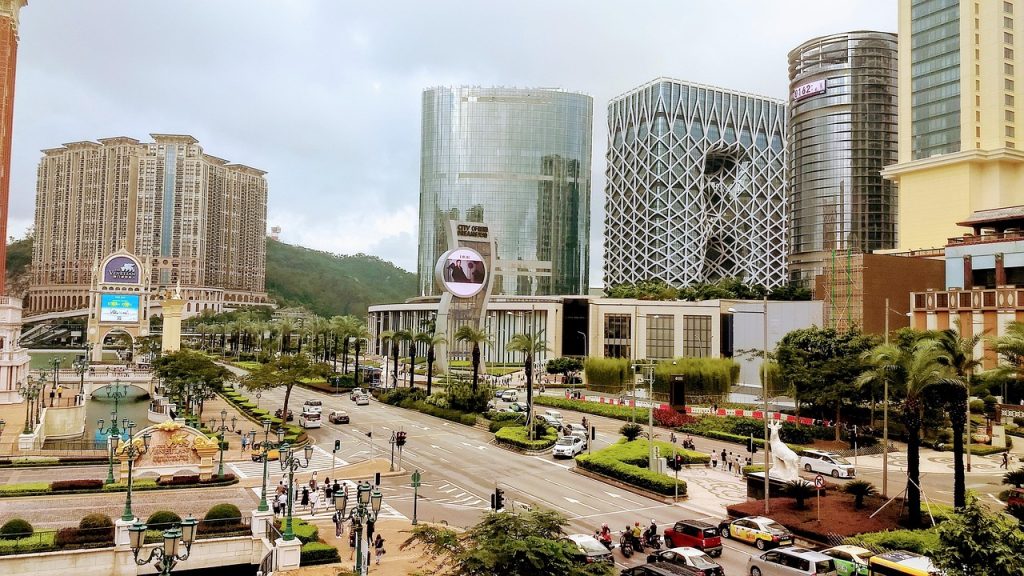
Macau Macao

Breaking down employment by sector, the gaming and recreational services industry remains the dominant employer, accounting for 22.4 percent of the workforce. The hospitality sector, encompassing hotels and restaurants, follows at 13.4 percent, while wholesale and retail trade contribute 11.0 percent. Other significant employment sectors include real estate and business activities (8.9 percent), public administration and social security (8.6 percent), and domestic work (7.4 percent). The construction industry, which has experienced fluctuations in recent years, represented 6.4 percent of total employment.

According to preliminary estimates, approximately 104,900 workers commuted daily from outside Macau for employment during the reference period. Including these individuals, the total labor force would be around 487,500, reflecting a slight decrease of 2,100 from the previous period.

The Macau government continues to monitor labor market trends closely, with economic recovery efforts and the gaming sector’s performance playing a crucial role in workforce dynamics. As the city navigates ongoing global economic shifts, maintaining employment stability remains a key focus for policymakers and industry stakeholders.

Belatra partners with Betting Software to boost content distribution

Belatra Games, a specialist in online slot development, has announced the expansion of its content reach through a partnership with gambling software provider Betting Software (BSW).

BSW has carved out a stellar reputation for a pioneering force in the betting and gambling industry, providing a comprehensive range of products and services tailored to meet the needs of the modern betting business. 

As part of the agreement, Belatra’s suite of games will be integrated into the BSW platform. Among these titles are popular hits Mummyland Treasures, Rise of Zeus, Golden øks, Make it Gold, and newly released Blast the Bass.

Misha Voinich, Business Development Manager at Belatra commented: “We look forward to providing BSW’s extensive list of partners with our content. Our classics are constantly being complemented by new releases like Blast the Bass to help deliver results for our partners.”

Bulat Fakhrutdinov, BSW Head of Partnerships: “We are very pleased to enhance the BSW offering with even more high-quality gaming content. The addition of Belatra’s diverse and captivating titles aligns perfectly with our commitment to delivering top-tier experiences for players.”

Aristocrat Gaming wins top honors for slot content at 2025 E&K Slot Awards

For the seventh consecutive year, Aristocrat Gaming has been honored as the “Best Overall Supplier of Slot Content” at the prestigious 2025 Eilers & Krejcik (EKG) Slot Awards. Additionally, the company earned accolades for its King Max™, recognized as the Top Performing NEW Premium Cabinet.

“The EKG Awards recognize top performance, and we are grateful to each of our customers who allow us the privilege of entertaining players with our leading game content, hardware, systems, and more,” said Aristocrat Gaming CEO, Craig Toner.

Aristocrat Gaming wins top honors for slot content at 2025 E&K Slot Awards

“Both in land-based and online sectors, we are committed to creating the best seat in the house for players, and these awards are a testament to our talented teams across the globe who are delivering on this commitment.”
 
The King Max cabinet by Aristocrat Gaming features a new Virtual Button Deck design, 63.5” Curved Monitor Display, LED Edge lighting, a 27” LCD Topper, and supported by both iChair 3.0 and iBench. The cabinet launched with the first NFL-themed title by Aristocrat Gaming, NFL Super Bowl Jackpots™, and has since expanded to house Buffalo Power Pay™, House of the Dragon™, and more.
 
The EKG Slot Awards are produced by Eilers & Krejcik Gaming (EKG) and recognize excellence in slot game development in the casino gaming industry.

International Entertainment Corp sees 2H24 loss despite strong gaming revenue increase

Hong Kong-listed International Entertainment Corp. delivered a loss for 2H24 that was in line with company expectations, totaling HK$94.75 million ($12.18 million), despite a strong increase in gaming revenue.

The group had previously indicated in a profit warning that it was expecting a loss of no less than HK$90 million ($11.6 million) for the period, largely driven by elevated operating costs.

International Entertainment took over the casino operations at New Coast Hotel Manila in May 2024 under a provisional gaming license granted by the Philippine Amusement and Gaming Corporation (PAGCOR) in September 2023.

In a filing late last week, the company indicated that it had seen revenue from its gaming operation reach nearly HK$240 million ($30.85 million), compared to HK$71 million ($9.13 million) in the same quarter of 2023. However, the segment’s results were still negative, at HK$48.96 million ($6.3 million).

Hotel revenue fell slightly, to HK$27.62 million ($3.55 million), from HK$34.11 million ($4.4 million) in 2H23, which the group attributes to some hotel rooms being closed for renovation. The group also highlighted that ‘competition in the hospitality industry in the Philippines was strong during the period’.

Total revenue for the group totaled HK$267.62 million ($34.4 million), a 154.55 percent yearly increase.

Despite having a segment dedicated to live poker events in Macau, no such events were held during the period, meaning no revenue was generated from the segment.

The group did not recommend the payment of an interim dividend for the period.

A company subsidiary, Marina Square Properties, Inc. (MSPI) is still involved in a tax dispute with the Philippines’ Bureau of Internal Revenue (BIR) regarding alleged deficiency taxes totaling nearly PHP5.01 billion ($86.3 million). The group notes that ‘the directors of the Company believe that MSPI has valid legal arguments to defend the […] tax disputes’. The group has not made any provisions for the tax disputes in the interim results.

Hong Kong Jockey Club hopeful basketball betting could be legalized by September: report

0

The Hong Kong Jockey Club (HKJC) is hopeful that legislation to legalize basketball betting in the SAR could be passed as early as September of this year.

This comes after Hong Kong’s Financial Secretary expressed openness to pursuing the new revenue stream, aimed at propping up the city’s financials and addressing its growing fiscal deficit.

According to sources cited by RTHK, the HKJC has already submitted a proposal framework and met with government officials last Friday.

The expected framework for basketball betting would follow that of football betting that the HKJC already runs, involving a 50 percent duty from net betting revenue.

This could bring in as much as HK$30 billion ($3.86 billion) per year, by drawing away 30-40 percent of illegal betting turnover in the SAR.

Sources cited by the publication indicate that investment of HK$1 billion-HK$2 billion ($129 million-$257 million) would be required for infrastructure – including a new computer system that could be rolled out by 2026 or 2027.

The government could also generate as much as HK$1.5 billion ($193 million) in yearly tax revenue after four years.

Shin Hwa World expects to reduce FY24 loss by up to 10%

South Korean integrated resort operator Shin Hwa World has announced that it’s expecting a reduction in loss for 2024 ‘of not more than 10 percent’.

According to a recent filing with the Hong Kong Stock Exchange, the reduction in loss is based on an increase in consolidated revenue, ‘particularly generated from the gaming business segment’. It also highlighted a decreased in amortization and depreciation and in operating expenses.

The group notes that ‘taking into account the possible impairment on intangible assets that may need to be recognized, it is anticipated that there was a reduction of not more than 10 percent in consolidated net loss for the year’.

In 2023, the group saw consolidated revenue amount to HK$1 billion ($128.8 million), up by 25 percent yearly. However, losses for the year amounted to approximately HK$522.4 million ($67.4 million), a strong increase from the approximately HK$217 million ($28 million) in losses registered in 2022.

This increase in loss was attributed to factors including intense competition, reduced residential property sales and an interest rate rise, accompanied by increased costs due to inflation and higher employee benefit expenses.

Last November, the company indicated that it was issuing some HK$200 million ($25.7 million) in a private bond offering, aimed at supporting its ongoing business development, particularly in the integrated resort sector.