Premium slots and table games provider Habanero has further boosted its European footprint after gaining its Danish license.
The market has continued to grow over the last decade, with online revenue projected to hit more than $1.35bn by 2029 as the market maintains it maturation.
It follows the awarding of a Greek license and a regulatory accreditation in Brazil in recent weeks as the provider continues to pursue certification in regions it feels it can offer tangible value to operators.
Arcangelo Lonoce, Head of Business Development at Habanero, said: “We are thrilled to gain our third license of the year, this time in Denmark. A market that has continued to progress in Europe, we are confident that our diverse portfolio of games will continue to resonate well with the ever-changing player demographic across the country.”
B2B gaming supplier Push Gaming breathes new life into timeless entertainment with the release of Power Vault, a captivating homage to the nostalgic charm of retro fruit machines.
Power Vault is the debut game from Reel Hot Games, a new sub-brandof Push Gaming, blending nostalgic slot themes with innovative mechanics for players seeking lower and medium volatility.
Blending modern mechanics with classic aesthetics, Power Vault is played across 3×3 reels and five paylines. Players must match iconic symbols like sevens, bars and bells across these pay lines to be awarded a win.
Wilds aid players in creating these wins and are joined by various instant cash prizes and Jackpots, including the highly valued Grand Jackpot. These must be landed alongside a vault collect symbol to be won, with multiple vaults able to be landed at once, increasing win potential.
With a focus on instant cash prizes and jackpots, Power Vault has a broad demographic appeal as these are awarded via contemporary mechanics, which will provide a thrill for more experienced slot enthusiasts.
Michael Engan, Game Producer at Push Gaming, said: “Power Vault differentiates itself within our catalogue of popular titles by adding a retro feel whilst boasting modern mechanics. That’s what Reel Hot Games is all about, and will see the same expert team that’s driven Push Gaming’s success now deliver a different entertainment experience through nostalgia-driven innovation.”
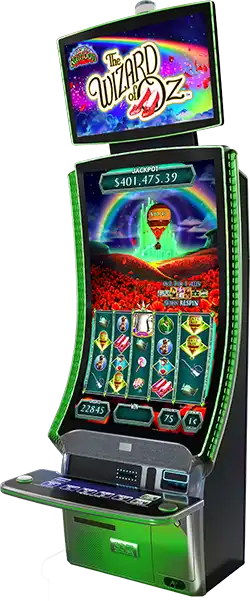
Light & Wonder in collaboration with Warner Bros. Discovery Global Experiences, has announced the introduction of the highly acclaimed The Wizard of Oz™ slots to the iGaming world.
This captivating suite of The Wizard of Oz™ branded games will be available exclusively at BetMGM Casino, inviting players to immerse themselves in the magical adventures of Oz.
These breathtaking games transport players into the magical Land of Oz; featuring beloved characters such as Dorothy, the Scarecrow, the Cowardly Lion, and the Tin Man. With stunning graphics and enchanting sounds, The Wizard of Oz Slots at BetMGM offers an exhilarating gaming experience filled with captivating bonus rounds.
The Wizard of Oz – Over the Rainbow by Light & Wonder
THE WIZARD OF OZ – OVER THE RAINBOW game is a 5×4 online slot game where a magical adventure awaits players. The journey is filled with familiar faces and exciting features such as Glinda the Good Witch, Balloon Jackpots, Respins, Free Spins and many more surprises along the way to meet the legendary Wizard of Oz.
The Glinda the Good Witch feature may trigger on any spin and randomly replaces reels with a Glinda Wild symbol, and a Tin Man, Cowardly Lion or Scarecrow feature may also be active making this one a magical spin!
The Wizard of Oz – Over the Rainbow game, which is available now at BetMGM Casino in New Jersey, Michigan, Pennsylvania and Ontario, is the first of several The Wizard of Oz slot titles to be released throughout 2025 and 2026. The Wizard of Oz slot is a proven player favorite in brick-and-mortar casinos, and now Light & Wonder brings the thrill of navigating the fantastical world of Oz online.
All games available through the Light & Wonder content marketplace are supported with a comprehensive range of responsible gambling tools, helping to deliver a safe and enjoyable gaming experience for players.
Team King Investment (CNMI), LLC has emerged as the successful bidder for the assets of Imperial Pacific International (IPI) during an auction held on February 26th with a $12.95 million bid.
This auction, conducted by Intrepid Investment Bankers, LLC, was facilitated in consultation with IPI and the committee of unsecured creditors, following IPI’s Chapter 11 bankruptcy filing on April 19th, 2024, which stated that the company owed over $165.8 million to creditors, local news outlets The Marianas Variety and The Pacific News reported.
Team King Investment’s bid of $12.95 million includes an option to acquire IPI’s casino license and the assumption of certain liabilities. The previous stalking horse bidder, Loi Lam Sit, had set a baseline price with a bid of $12.5 million, but will now serve as the backup bidder for the assets.
The assets up for auction include IPI’s primary real estate holdings, which feature a hotel building currently under construction and a leasehold interest in approximately 19,204 square meters of land leased from the CNMI Department of Public Lands. IPI also owns a stake in Imperial Pacific Properties LLC, which holds a leasehold interest in adjacent lots.
A hearing to approve the sale of these assets is scheduled for March 25th, 2025, before Bankruptcy Judge Robert J. Faris. This ruling will allow for the sale to proceed “free and clear of all liens, claims, and encumbrances,” as noted in filings with the U.S. District Court for the NMI’s Bankruptcy Division.
If Team King Investment successfully finalizes the acquisition of the Imperial Pacific Resort and decides to complete the ongoing construction, it is estimated that an additional $150 million will be needed to finish the casino resort.
The recent decision by Malaysia’s top court over a gambling debt dispute with Cambodian gaming operator NagaCorp is an important legal precedent that could reshape the legal framework surrounding gambling debts in the country, a legal expert told AGB.
According to court documents consulted by AGB, the Federal Court of Malaysia, the highest court and the final appellate court in Malaysia, recently ruled that gambling debts are not legally enforceable under Malaysian law, a ruling that favors Dato’ Ting Ching Lee, a prominent businessman from Sarawak, Malaysia.
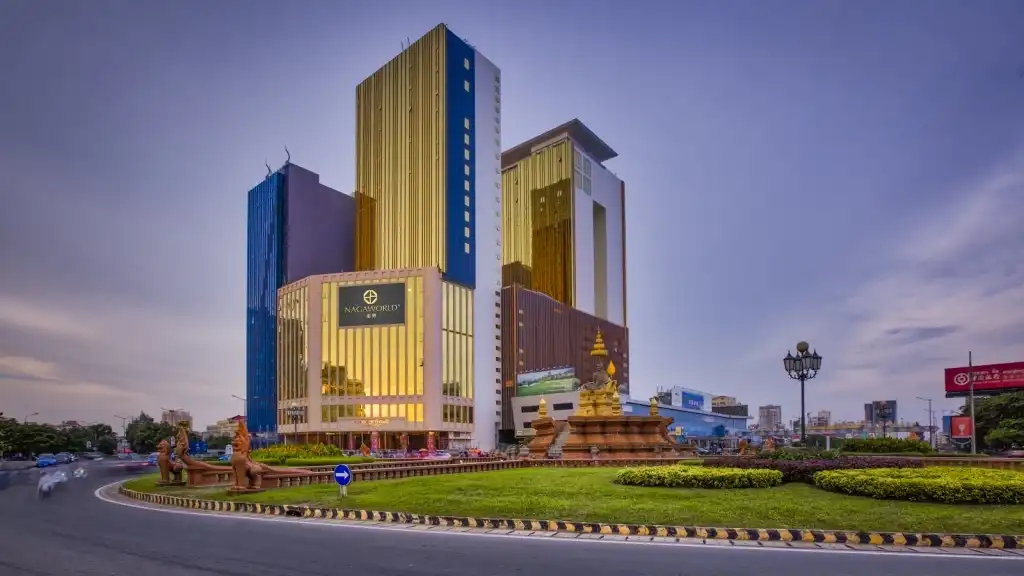
The case arose from a gambling trip to NagaWorld, a casino and resort complex in Phnom Penh, Cambodia, where Dato’ Ting and others were allegedly extended credit lines for gambling activities.
NagaWorld, Cambodia
Initially, the High Court dismissed a counterclaim from Ting, asserting that the attempt to recover these debts was unenforceable under Section 26 of the Contracts Act 1950, which voids any agreements based on gambling or wagering.
The Court of Appeal had previously overturned this decision, claiming that the credit lines and rolling rebates were not gambling debts but rather constituted loans or credit.
However, the Federal Court ultimately sided with the High Court, reaffirming that the credit facilities were granted solely for gambling purposes and could not be considered genuine loans.
The court emphasized that the legislature intended to curb gambling activities in Malaysia, and allowing the recovery of such debts would directly contradict this aim. Consequently, the respondent, Ting Siu Hua, was ordered to pay costs of MYR200,000 ($44,791) to the appellant, contingent upon the payment of the allocator fee.
This ruling reinforces Malaysia’s position on gambling debts, affirming that any agreements made in the context of gambling are void and unenforceable, thereby protecting individuals from being held liable for debts incurred through gambling activities.
Gambling debts not “legally enforceable”
Commenting on the implications of this ruling, Malaysian solicitor Ahmad Deniel Roslan, from Mohd Fadzli & Co, told AGB that Malaysian courts will now “not recognize gambling debts as legally enforceable”.
“Therefore, if a party attempts to recover a gambling debt through the courts, the claim is likely to be dismissed,” highlighting that this decision sets a significant legal precedent for future cases.
For Roslan, if the decision becomes part of Malaysian court jurisdiction, it will affect many gaming debt disputes currently in progress in the country’s courts and cause a potential impact on ongoing disputes related to gambling debts.
As gambling-related disputes continue to surface, the ruling may deter future claims and influence how such cases are approached in Malaysian courts.
The court’s decision also inferred that the negative effects of gambling have ‘resulted in government policies and laws aimed at curbing these activities, including nullifying gaming contracts and making the recovery of gambling debts unenforceable’.
Malaysia’s approach to gambling is shaped by a blend of Islamic law and its multicultural society. For Muslim citizens, gambling is strictly forbidden under Sharia law, and this prohibition significantly impacts the general legal and societal views on gambling.
However, certain forms of gambling are available for non-Muslims, including activities like those offered at licensed casinos such as Resorts World Genting, as well as lotteries and horse racing.
The Malaysian government actively regulates gambling through various agencies, primarily to control and monitor these activities while also generating revenue.
Nevertheless, there are ongoing social concerns regarding the impact of gambling, particularly worries about addiction and its effects on families, alongside consistent concerns about illegal gambling operations.
China’s lottery sales reached RMB623.5 billion ($85.8 billion) in 2024, setting a new record since the lottery system was introduced in 1984.
This figure represents an estimated 300 million lottery players, translating to an average spending of over RMB2,000 ($275) per person. The 2024 total also marks a 7.6 percent increase from the previous year.
According to a local media outlet closely observing the market, some experts suggest that China’s sluggish economy and high unemployment rate have led many to view lottery tickets as a potential financial lifeline. However, other analysts point out that the primary driver of China’s lottery revenue is the sports lottery, especially among young and middle-aged men, where football matches generate significant enthusiasm.
The appeal lies in the excitement, the sense of patriotism, and the chance to win—propelling China’s sports lottery market to the largest in the world.
Sports lottery sales accounted for a dominant 66 percent of the total, reaching RMB415.53 billion, up 7.9 percent year-on-year. Meanwhile, welfare lottery sales stood at RMB207.96 billion, reflecting a 7 percent annual increase.
Regionally, lottery sales grew across China, except for Hubei province. Zhejiang, Hunan, Guangdong (nearby Macau), and Anhui recorded the highest sales growth.
January lottery sales drop 16% due to CNY
According to the latest statistics from China’s Ministry of Finance, total lottery sales in January amounted to RMB48.52 billion ($6.7 billion), a decrease of RMB9.05 billion ($1.3 billion), or 15.7 percent, compared to the previous year.
Of this, welfare lottery sales were RMB17.24 billion ($2.4 billion), down RMB2.45 billion ($337 million), or 12.4 percent year-on-year. Meanwhile, sports lottery sales totaled RMB31.28 billion ($4.3 billion), a decrease of RMB6.6 billion ($908 million), or 17.4 percent.
This decline was mainly attributed to the impact of the Chinese New Year (CNY) holiday in January, during which the lottery market was temporarily closed.
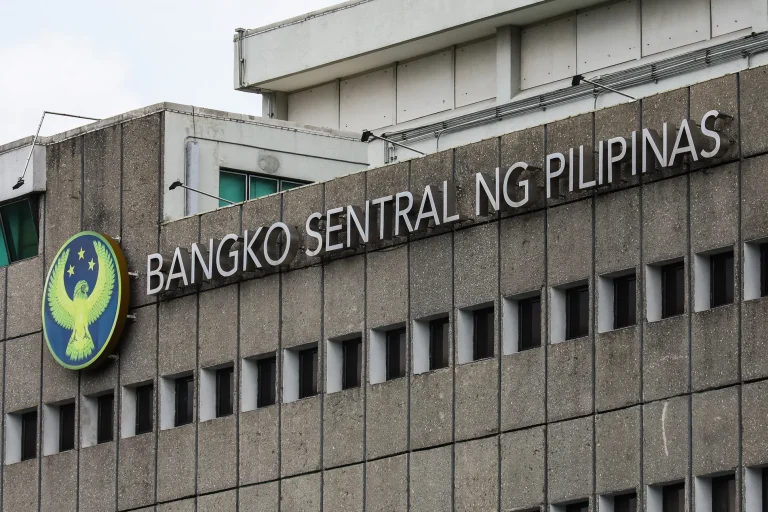
Bangko Sentral ng Pilipinas (BSP), the central bank of the Philippines, has introduced draft guidelines for digital marketplace activities, prohibiting banks and electronic money issuers (EMIs) from offering any products linked to gambling, including online casinos and online betting.
The draft guidelines, outlined in a circular posted on the BSP’s website, remain under review.
The proposed rules allow banks and EMIs to operate digital marketplaces, enabling them to offer both their own products and those of third-party providers through a single online platform. While financial and non-financial products may be included, any offerings related to gambling are explicitly banned.
According to BSP, products and services associated with gambling activities, such as online casinos, online betting, electronic gaming, or other forms of gambling, are prohibited. The restrictions also apply to any activities that could undermine the reputation of marketplace participants and the financial system.
In response, the Philippine Amusement and Gaming Corporation (PAGCOR) warned that the move could impact the country’s booming electronic gaming sector.
According to the local media outlet Business World, PAGCOR Chairman and CEO Alejandro H. Tengco expressed surprise at the proposal, stating that the BSP did not consult PAGCOR or seek its opinion before releasing the draft guidelines. He noted that the new rules could affect the online gaming industry.
In January, PAGCOR reported that the eGames and eBingo segments contributed 50.03 percent of total gaming revenue, amounting to PHP48.79 billion ($850 million).
Some digital marketplaces do not directly host online casinos or betting platforms but provide links to games that open outside their applications.
Tengco stated that he would ask PAGCOR’s legal department to review the matter and prepare a response, even in the absence of an official communication from the BSP.
According to the draft guidelines, to operate as a digital marketplace provider, a bank or EMI must secure BSP approval. Applicants must meet the BSP’s prudential requirements, maintain a net worth or combined capital of at least PHP1 billion ($17 million), and establish strong risk management systems. These systems should cover key areas such as information technology, cybersecurity, anti-money laundering, countering terrorism and proliferation financing, data privacy, consumer protection, and market conduct.
The BSP emphasized that the guidelines aim to ensure financial institutions operating digital marketplaces have robust governance and risk management frameworks. It also highlighted that these platforms are designed to foster innovation, promote financial inclusion, and enhance customer experience through strategic partnerships between financial institutions and service providers.
Good morning. The underdog will have its day. And SJM had its year, posting a strong increase in gaming revenue for FY24, as it aims to defy the odds. Their Cotai and peninsular properties both saw strong increases, but the management is upping its game on mass and non-gaming (including MICE) to try and compete with its well-developed peers. Meanwhile, in Malaysia, a recent court ruling calls into doubt how gaming operators can recover debts, with Naga getting the short end of the stick. But, more importantly, in the Philippines, the Asia Gaming Awards is set for March 18th, with nominations now open! Time to choose the best of the best!
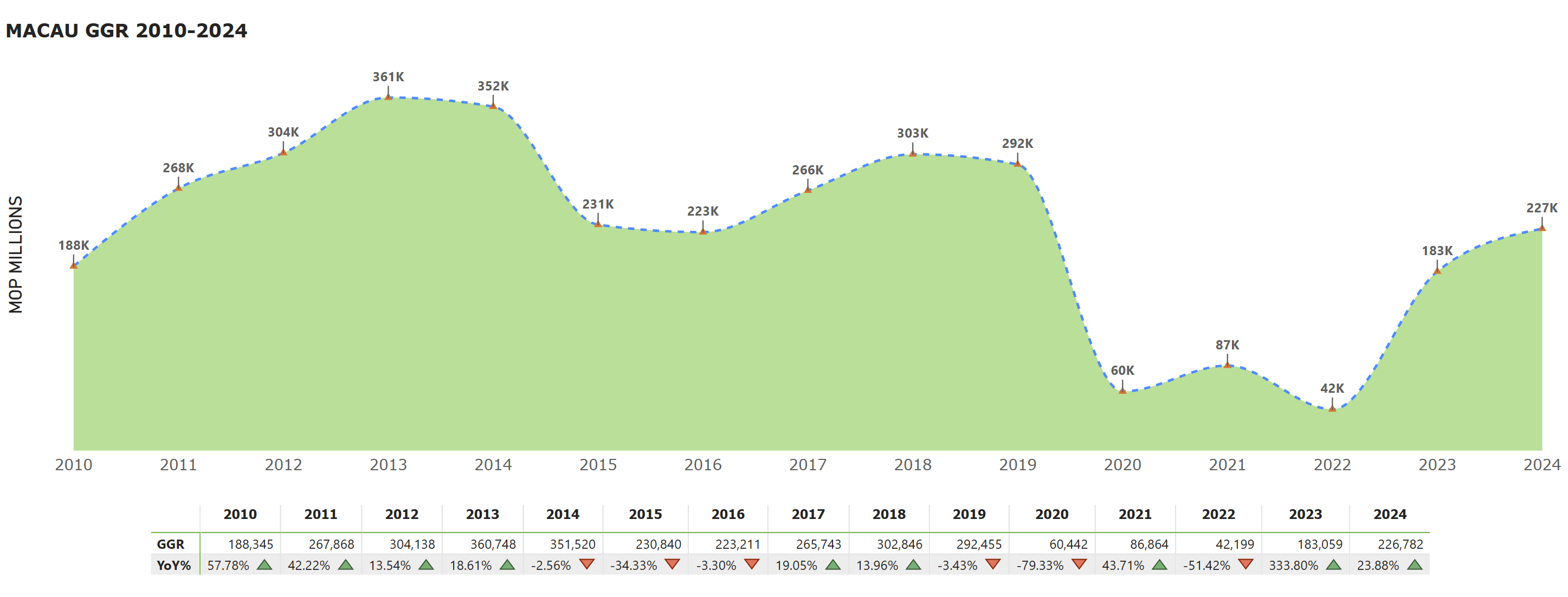
Fitch forecasts a slowing of Macau’s GDP increase to 6.9 percent in 2025, from 8.8 percent in 2024, as gross gaming revenue ‘is likely to rise more gradually to roughly 81 percent of its 2019 level after a rebound in 2024’.
The group indicates that it expects that GDP growth will be supported by ‘continued, but slower, gaming tourism recovery, along with favorable visa policies for mainland visitors, non-gaming investments and enhanced tourism infrastructure.’.
One particular point is that ‘a sharp slowdown in the Chinese economy, such as from substantial US tariff hikes, and sharp yuan depreciation pose downside risks to Macau’s prospects’.
Given Macau’s stark turn away from the VIP sector, Fitch analysts point out that they ‘expect the mass-market segment to continue to drive Macau’s GGR recovery in 2025’.
The group indicates that mass-market GGR in 2024 ‘has surpassed its 2019 level, accounting for roughly three-quarters of the total GGR in 2024’.
Total Macau GGR in 2024 amounted to MOP227 billion ($28.4 billion), surpassing targets but still not reaching all expectations.
The VIP segment levels are expected to remain at about 60 percent below pre-pandemic levels this year, due to ongoing constraints from mainland China on punters and cross-border money flows. Further drops have not been ruled out.
Diversification attempts
While Macau has long pledged non-gaming diversification for its economy, the simple reality of its setup has made such a thing more difficult. Gaming revenues continue to contribute up to 85 percent of the government’s income, but hopes are to change that.
Fitch analysts point out that increased cooperation in the neighboring zone of Hengqin could help ‘strategic non-gaming industries’ and create partnerships with mainland Chinese partners to develop the region which sits across the border from Macau’s Cotai Strip.
Analysts at Fitch affirm Macau at ‘AA’ with a ‘Stable’ outlook.
The event gathers together the top movers and shakers from across the gaming space at the Grand Ballroom of the Shangri-La the Fort, Manila to celebrate their contributions and successes across a wide range of areas.
Even more categories are being added this year, including the Regulatory Landmark, Reliability in Online Gaming, Compliance Solution, Casino Online Convergence and Industry Choice awards.
The awards are divided into four main categories: Land-based, Online, Regulatory and Industry Voice, with multiple awards for each segment, honoring operators, regulators, suppliers, service providers and other stakeholders for their innovations.
Nominations are now being accepted, so make sure to submit yours at: asiagamingawards.com
Further information about the nomination process, award categories and judging criteria is available on the above mentioned site.
The awards are hosted by Asia Gaming Brief and will be held concurrent with the ASEAN Gaming Summit, which runs from March 17th to 19th at the Shangri-La the Fort, Manila.