
Home Blog Page 39

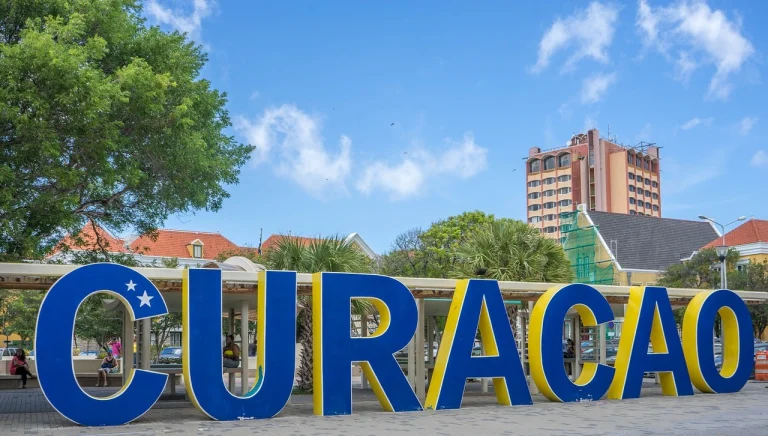
Curacao Gaming Authority issues first dedicated crypto policy for LOK license holders

0

The Curacao Gaming Authority has issued a detailed crypto policy guideline for B2C license holders, setting out controls that will govern how operators accept, hold and pay out digital assets, and giving the industry until mid-2027 to reach full compliance.

The document, published in June 2025, covers the entire cryptocurrency lifecycle within a licensed operation, from deposit screening and wallet architecture to withdrawal processing and incident reporting. It applies to all group entities supporting the licensed operator, not just the entity holding the license itself.

The CGA is explicit that crypto is not a regulatory carve-out. The use of digital assets does not reduce or modify any obligation under the authority’s existing AML/CFT framework, and operators must detail their cryptocurrency-specific controls within their submitted AML policy on the CGA portal. The regulator classifies crypto assets as high risk by default and states a preference for fiat-backed regulated stablecoins where operators have a choice.

Central to the new requirements is a mandate for blockchain analytics capability, covering deposit screening, ongoing transaction monitoring, source-of-funds verification and withdrawal screening. The CGA does not prescribe a specific provider – naming Chainalysis, Elliptic and TRM Labs as examples rather than requirements – but makes clear that whatever solution or combination of tools an operator uses must deliver the full range of functionality, including the ability to trace fund origins, risk-score wallets, identify exposure to mixers and sanctioned addresses, and generate evidence suitable for suspicious activity reporting. Risk assessment work may be delegated to third parties, but visibility and accountability for crypto transactions remain with the licensed operator.

The guidelines require operators to address specific categories of digital asset in their policies. Privacy-enhancing cryptocurrencies – including Monero, Zcash shielded transactions, and Dash where privacy features are used – must be addressed given their capacity to obstruct transaction monitoring and source-of-funds verification. The policy does not impose an outright blanket prohibition on these assets but requires operators to have a documented position on each. On meme coins and highly speculative tokens, the CGA takes a calibrated approach, acknowledging that some are liquid and transparent while others present risks around volatility, market manipulation and financial crime. Operators must categorize such assets against objective criteria including liquidity profile, governance maturity and financial crime risk features.

Curacao, BC.game case

Wrapped tokens and bridged assets represent a harder line. Operators are prohibited from accepting deposits involving these instruments where the provenance of the underlying asset cannot be independently verified. Outright prohibitions cover assets originating from sanctioned mixers or tumblers and any wallet addresses appearing on applicable sanctions lists or flagged by recognized blockchain analytics providers.

The policy imposes strict requirements on wallet ownership and architecture. All wallets connected to licensed operations must be held by the licensed entity or an approved group entity, personal wallets, UBO-linked wallets and informal arrangements are expressly prohibited. Operators must segregate wallets by purpose, separating player-flow, operational and treasury functions to prevent commingling of player and company funds. For hot, warm and cold wallet structures, the CGA requires documented risk assessment, multi-signature controls where proportionate, and full audit-ready records covering ownership, transaction history, access rights and fund movements between wallets.

On withdrawals, the default expectation is that funds should be returned to the same wallet and in the same asset as the original deposit. The authority acknowledges this is not always operationally feasible and permits alternative approaches – including withdrawal to a different whitelisted wallet or in a different asset – where equivalent controls are in place and conversions are conducted through a regulated VASP. Operators must also recognize and implement the FATF Travel Rule for transfers between regulated entities, and any third-party VASP relationships require documented due diligence. The CGA is clear that outsourcing payment infrastructure does not reduce the operator’s compliance obligations.

The transition period runs in four stages. Prohibitions on sanctioned wallets, mixers, personal wallets and operators acting as exchanges or VASPs take immediate effect. By September 2026, operators must have uploaded a compliant crypto policy to the CGA portal. By December 2026, documented crypto risk assessments, VASP due diligence, wallet controls, transaction monitoring procedures and staff training must be complete. Full implementation, including wallet segregation, blockchain analytics deployment, withdrawal whitelisting and audit-ready record-keeping — is required by June 2027, though the CGA reserves the right to demand accelerated compliance where material risks are identified.

The guidelines form part of a broader regulatory build-out under the LOK framework that took effect in December 2024, and arrive as crypto’s role in online gaming draws increasing scrutiny across multiple jurisdictions. For Curacao-licensed operators with significant crypto volumes, the document represents a substantial compliance uplift.

TxODDS and Solana introduce World Cup Hackathon to reshape sports data ecosystems

Following the launch of TxLINE, TxODDS is collaborating with Solana to introduce the platform via a global, World Cup-themed hackathon with a $50,000 prize pool.

Access to premium sports data traditionally requires navigation through enterprise procurement cycles. For this event, TxODDS is waiving data fees and removing its token payment requirement. Participants will receive free, direct access to live, high-fidelity match feeds across all 104 World Cup games.

The hackathon, hosted on Superteam Earn, is designed to serve as a proving ground for the deployment of live data on-chain. By tracking and timestamping every data packet on the Solana blockchain, TxLINE creates a tamper-evident audit trail for backtesting, compliance, and automated smart contract verification.

The competition is open to individual developers, teams, and autonomous AI agents competing across three dedicated tracks: Prediction Markets & Settlement, Trading Tools & Agents, and Consumer & Fan Experiences.

“Partnering with Solana and Superteam puts our data directly into the hands of builders who are pushing the sports betting industry toward real transparency,” said Einar Knobel, CEO at txODDS. “This World Cup hackathon is where we prove what’s possible when you break down traditional gatekeepers and give access to talented, motivated builders.”

The initiative bridges the gap between traditional sports data infrastructure and the decentralized ecosystem, inviting talent to build functional products. Alongside the global digital hackathon, there will also be a World Cup final watch party in London. Registration is open, and the submission window closes on July 19, 2026.

Teams can register and view full submission tracks at https://superteam.fun/earn/hackathon/world-cup/, and must submit a functional build or live testnet application utilizing TxLINE data as a primary input to qualify for prizes. Track winners will be announced on July 29, 2026.

GLI boosts leadership bench with three Director promotions

Gaming Laboratories International (GLI) has announced three director-level promotions, naming Mary Sim as Director of Quality Assurance and appointing Alan Drozd and Robert Lorick as Directors of Engineering.

GLI boosts leadership bench with three Director promotions
From left to right: Mary Sim, Alan Drozd, and Robert Lorick

Sim is based in GLI’s world headquarters in Lakewood, N.J, and has been with GLI since 2006, and previously served as Senior Manager of Quality Assurance.
 
“Mary’s proven leadership has strengthened global team alignment, driven meaningful process improvements, and, most importantly, cultivated a positive and collaborative work environment, said GLI’s Senior Vice President, Technical Compliance & QA, Chris Gallo. “She leads with respect, empathy, and trust, with a strong focus on delivering the highest quality outcomes. I am confident about the impact her continued commitment will have on the global QA team and our clients as she upholds and advances the GLI gold standard.”
 
Drozd and Lorick each started their careers with GLI as Test Engineers and most recently served as Senior Managers of Engineering.
 
Commenting on the promotion of the two directors, Ginnie Hollis, Vice President of Engineering, shared: “Robert is a respected leader who is instrumental in advancing our global digital growth through his expertise, forward-looking mindset, and disciplined execution. He empowers teams to elevate their impact, sets a clear standard for accountability, and fosters a culture of collaboration and continuous improvement that strengthens our business as a whole.”
 
The Vice President of Engineering at GLI, Andrea Bossard, added, “Alan has consistently demonstrated exceptional leadership, deep technical expertise, and a strong commitment to delivering value for our clients. His ability to grow key relationships, drive operational excellence, and lead high-performing global teams makes him well-positioned to take on this expanded role and help shape the future of our organization.”

This development follows the company’s recent announcement of a strategic partnership with global investment firm CVC, which has made a strategic investment in GLI through its long-duration Strategic Opportunities platform to support the company’s continued expansion, enhance its capabilities, and drive long-term growth while maintaining its commitment to world-class service across the global gaming industry.


Prediction markets have become de facto sportsbooks, but oversight has not caught up: research

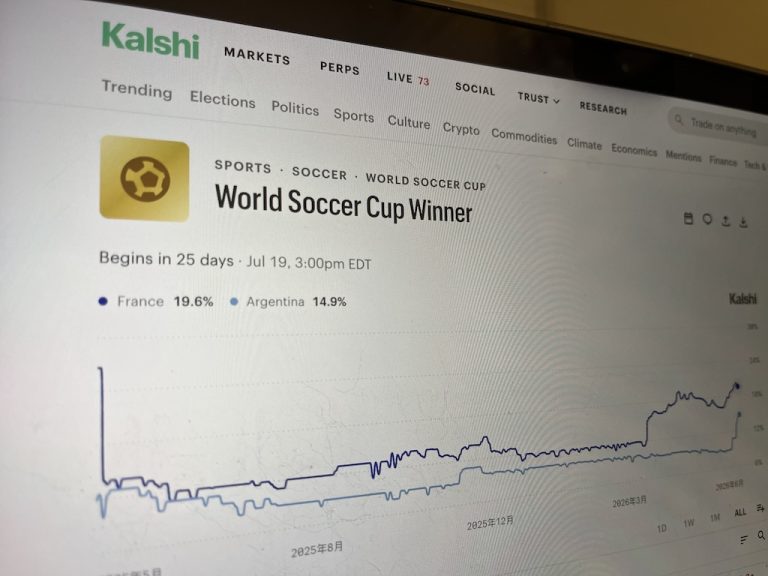
Prediction-market platforms such as Kalshi and Polymarket functioned as de facto sportsbooks during the 2026 World Cup, with sports contracts now accounting for more than 85 percent of Kalshi’s total volume, according to a June 2026 study by HTX Research.

HTX Research is the research arm of cryptocurrency exchange HTX, formerly known as Huobi. The study said the platforms have absorbed billions of dollars in wagers across the United States and offshore while operating outside the integrity-monitoring and licensing obligations applied to regulated sports-betting operators.

Ahead of the opening match on June 11th — Mexico’s 2-0 win over South Africa at Estadio Azteca — cumulative trading on World Cup contracts across Polymarket and Kalshi neared $2 billion, the largest sports stress test prediction markets have faced, the study said. Polymarket’s “World Cup Winner” market had generated about $1.6 billion in cumulative volume since launching last year across 58 distinct markets, while Kalshi’s winner market stood at roughly $87.5 million across 424 World Cup-related contracts.

Prediction

Institutional projections cited in the report vary. Research from Bookies.com and RotoWire puts total U.S. prediction-market volume for the tournament above $2.37 billion, while DeFiRate projects that Kalshi alone could contribute $1.47 billion. Under a consolidated estimate cited in the report, the tournament could drive up to $2.5 billion in volume, with the single “World Cup Winner” contract expected to reach roughly $253 million — already outpacing this year’s March Madness.

Volume overtakes traditional betting

Citing Pew data, the report said combined monthly volume on Kalshi and Polymarket rose from under $5 billion in September 2025 to about $24 billion in April 2026. Legal U.S. sports betting averaged roughly $14 billion in monthly handle last year, meaning prediction markets have overtaken regulated sportsbooks by that measure. Kalshi recorded $17.91 billion in nominal volume in May, its ninth consecutive record month, compared with Polymarket’s $7.08 billion over the same period.

A SEON survey referenced in the study found that about half of those planning to bet on the World Cup in the United States intended to use prediction markets. The report noted that such platforms allow anyone aged 18 or older to trade across all 50 states, setting a lower age and geographic threshold than most state sportsbook frameworks.

Australia’s ban on credit cards for online gambling prompts a drop in wagers

The integrity gap

Despite that scale, the platforms fall outside the integrity-monitoring requirements imposed on licensed operators. HTX Research said inside information on injury reports, starting lineups and referee assignments is “equally ripe for abuse” during the World Cup.

The report also pointed to growing scrutiny over material non-public information, including a U.S. Commodity Futures Trading Commission insider-trading alert in February 2026 involving a candidate who traded on their own election contract. It also cited an offshore Polymarket user who drew attention for accumulating large positions on the possible ousting of Nicolás Maduro between late 2025 and early 2026.

Regulators divided

The legal standing of the platforms remains contested, according to the study. Regulators in several states have issued cease-and-desist orders classifying them as “unregistered, illegal sports betting,” while Kalshi argues that it is regulated by the CFTC and therefore exempt from state gaming boards. Kalshi has sued the New York State Gaming Commission, while Minnesota, New Mexico and Nevada are reviewing the platforms’ status. Crypto.com’s head of prediction business has publicly maintained that prediction markets are not gambling or wagering.

In Asia, the regulatory divergence has already prompted action. Hong Kong halted its planned rollout of legal basketball betting, with the Home and Youth Affairs Bureau warning that launching the scheme could draw more attention to unregulated prediction-market platforms and indirectly fuel illegal gambling. Betting on sports through such platforms is illegal in the city, and the basketball betting scheme had been set to launch as early as September under the Hong Kong Jockey Club.

Analysts see subdued second half for Philippine gaming on soft casino demand

0

The Philippine gaming industry is expected to remain under pressure in the second half of 2026, analysts said. Weak demand for land-based casinos, softer tourism, and inflation continue to weigh on consumer spending. Online gaming, however, is still providing some support.

The Philippine Amusement and Gaming Corp. (PAGCOR) has projected that industry gross gaming revenue could decline by 12 percent to 19 percent year on year in fiscal year 2026, to around PHP320 billion ($5.2 billion) to PHP350 billion ($5.7 billion), according to Unicapital Securities equity research analyst Jeri R. Alfonso, as reported by BusinessWorld. She said gaming activity remained relatively soft in the first quarter of 2026, with volumes insufficient to offset the sector’s challenges despite a gradual recovery in tourism.

Physical casinos continue to face headwinds from subdued VIP play, slower tourism growth, and tighter consumer spending. BDO Securities Corp. President John Tristan D. Reyes said the segment still lacks clear growth drivers, as weaker foreign visitation weighs on high-end gaming despite an increase in Chinese arrivals. Local players provide some stability, but volumes remain muted, he added.

Alfonso said the absence of VIP players remains a key challenge for major integrated resort operators, noting that Bloomberry Resorts Corp., Okada Manila, and Travellers International all reported weaker revenues in the latest earnings season because of softer high-roller activity.

Offshore gambling operators under the gun by regulators, over concerns of player risks

Online gaming remains the brighter segment. Reyes said operators such as DigiPlus Interactive Corp. are expected to benefit from promotional activity and expansion into lower-income segments, positioning the company to outperform on the strength of its brand and growth plans.

Analysts also flagged inflation, slower economic growth, and energy-price shocks as risks. Alfonso said higher utility prices erode the disposable income of lower-middle-income bettors, pushing them to prioritize essentials over slot-machine spending. Philstocks Financial, Inc. Research Manager Japhet Louis O. Tantiangco said tourism dented by oil shocks tied to Middle East tensions poses an added challenge, warning that renewed US-Iran tensions could lift oil prices and further weigh on the sector.

A recovery would likely depend on stronger tourism and improving macroeconomic conditions, Alfonso said, as higher visitor arrivals typically lift spending across hotels, resorts, entertainment, and gaming.

SOFTSWISS introduces Games List to simplify portfolio management

The iGaming powerhouse software provider, SOFTSWISS, has announced the release of the Games List feature. This new feature within the Game Aggregator back office allows operators to have a complete view of their game catalogue in one place, reducing the manual effort required to manage game content.

As operators expand into new jurisdictions, managing game portfolios becomes more complex. Daily tasks such as enabling games, checking market availability, or reviewing content often require searching across multiple systems and data sources.

Games List by SOFTSWISS Game Aggregator removes that friction by consolidating the entire catalogue into one interface. Centralised access reduces manual operations and speeds up routine content management.

Operators can filter their catalogue by provider, category, features, Return to Player (RTP), volatility, release date, and other parameters. Each title opens in a detailed view that covers game mechanics, supported devices, licences, and mathematical characteristics.

The feature supports several common operational tasks:

  • Reviewing and comparing titles by game characteristics to make content decisions;
  • Inspecting provider and game-level details in a structured format without manual aggregation;
  • Verifying licence coverage and market availability per game before launch.

Gretta Kockonan, Head of Business Development and Partner Studios at SOFTSWISS Game Aggregator, shared: “Operators often tell us that managing a large game portfolio can be challenging and time-consuming. They need better tools to navigate available content and identify opportunities for portfolio optimisation. The Games List provides a clear and transparent overview of the catalogue, helping teams discover relevant content faster and make more informed decisions aligned with player preferences.”

SOFTSWISS plans to further expand the Games List feature with an Export function. It will allow operators to download and work with catalogue data outside the Game Aggregator back office.

Building for the long term: the 1xBet growth strategy 

Growth is defined by the quality of its presence in each market. That is how a business built for decades is created – through regulatory compliance, systematic responsibility, and long-term strategic partnerships. 

For many years, the iGaming industry developed under a relatively simple model: operators sought to enter new markets as quickly as possible, acquire customers, and establish a presence ahead of competitors. 


It began to change as more countries developed their own regulatory frameworks. Licensing requirements, player-protection standards, financial reporting obligations, and oversight mechanisms became integral to operating as a major international gaming company. For businesses, this meant additional investment, continuous improvement of internal processes, and adapting products to the requirements of each jurisdiction. 

As a result, many market participants still view licensing as a factor that slows development. However, the period after 2020 marked a turning point for the industry. As markets matured worldwide, it became clear that while licensing may complicate market entry, it also creates the conditions for long-term, sustainable operations. 

For 1xBet, this reality became the foundation of a strategic approach in which regulatory compliance is seen not as an obstacle to growth but as the basis for sustainable expansion and long-term business development. 

When regulation becomes an advantage 

Today, 1xBet holds 35 licenses across regulated jurisdictions in Latin America, Africa, and Europe. Each of them comes with its own compliance requirements, reporting standards, and player-protection obligations. 

1xBet focuses on developing its presence across regulated jurisdictions in Latin America, Africa, and Europe through market-specific licensing. For 1xBet, the value of a licence lies in the ability to build a stable, long-term operation under its specific conditions, providing a clearer basis for informed confidence among partners and industry stakeholders.

Notable examples include its SPA licensing process in Brazil, valid until 2030; Ireland’s Remote Bookmaker’s Licence; and new regulatory approvals in Guatemala and Serbia during 2025-2026. From a business perspective, regulated environments offer greater predictability, reduce operational risk, and support the transition toward more predictable operating conditions. 

From a business perspective, the value of such regulatory approvals extends far beyond legal formalities. Regulated markets offer greater predictability, reduce operational risk, and support the transition toward more predictable operating environments for building long-term relationships with partners.

Player protection as part of a growth strategy 

While player protection was previously often viewed as a separate function within compliance departments, it is now becoming part of a company’s overall operating model. It involves not only complying with regulatory requirements but also building a technologically advanced model that enables risk identification, analysis of user behaviour, and the implementation of early intervention measures. 

One example of this approach is the support of the International Player Safety Index. This research initiative, produced with SBC Media and supported by 1xBet, examines approaches to regulation and player protection in different markets; it is intended to inform industry discussion and is not a regulatory assessment or certification of 1xBet. Covering Western Europe, Latin America, and Africa, the project examines player-protection practices across a range of regulated markets.

According to the Latin American report, 69% of operators now use real-time player activity monitoring systems, while 34% employ AI-powered tools to identify potential gambling harm. By comparison, the deployment of AI tools for player tracking stands at 30% in Western Europe. These findings suggest that player protection is gradually becoming a structured operational function rather than merely a legal formality. 

These findings suggest that player protection is gradually becoming a strategic business function rather than merely a regulatory requirement.Advancing responsible gaming initiatives requires not only technology but also specialised expertise.

In April 2026, 1xBet appointed Chris Bird and Quirino Mancini as strategic advisors on compliance and player-protection matters. Both are highly respected professionals in the international sports business, and their experience is helping the company integrate global best practices into its operational framework. 

Partnerships as long-term investments  

A company’s reputation is reflected in the quality and longevity of its sponsorship agreements. International sports organisations and professional clubs consider not only a brand’s marketing capabilities but also its ability to operate successfully across multiple jurisdictions, its standing with regulators, and the level of trust among audiences. 

1xBet has built long-term partnerships with some of the most prominent organisations in global sport. Its collaboration with FC Barcelona began in 2019 and was recently extended until 2029, making it one of the longest in the company’s history. A similar pattern can be seen in its partnerships with Paris Saint-Germain, which has been extended until 2028, and the International Basketball Federation (FIBA), where the company’s status as Exclusive Betting Partner runs through 2027 and includes commitments to promote responsible gaming principles. 

This approach has also been applied to the esports sector. Partnerships with The MongolZ, MIBR, and 9z Team are structured as long-term investments in organisational development and the popularisation of gaming disciplines.

Looking to the future 

Simon Westbury Joins 1xBet to Support Global Expansion and Growth

Speaking at SBC Summit Rio 2026, one of the industry’s largest gatherings, 1xBet Strategic Advisor Simon Westbury outlined the company’s perspective during the panel discussion Building Unicorns: Behind the Scenes of Running and Scaling Betting Giants.

According to Westbury, the era when operators could achieve sustainable growth primarily through high-profile sponsorship deals has come to an end. Long-term success today depends on the combination of a strong technology product, a well-developed digital ecosystem, and a stable operational platform. 

Westbury added: “With the evolution of the gaming industry, the halcyon days of success beingeasily obtainable have come to an end. The one size fits all approach to international successhas ceased to be relevant, the present and future success of the igaming industry are based onlocalisation and personalisation. Brand sponsorships where permitted can help build trust inyour brand but without a localised and personalised product then success is far from guaranteed.” 

Simon Westbury

What does it mean to build for the long term? 

Building for the long term means consciously choosing the more challenging path today to ensure stability tomorrow. In the modern betting industry, sustainable growth is increasingly defined not by the speed of expansion but by the ability to maintain resilience after entering a market – meeting regulatory requirements, preserving partners’ trust, and earning customers’ confidence. 

The experience of 1xBet demonstrates that strong regulatory frameworks can be a powerful driver of sustainable growth, helping companies strengthen their position even in rapidly evolving markets.

Cambodian gaming regulator reviews disposal of seized scam assets

0

The General Secretariat of the Commercial Gambling Management Commission of Cambodia (CGMC) convened a meeting in Phnom Penh on June 22nd to discuss mechanisms for collecting, managing and disposing of property confiscated from online scam offenses, Khmer Times reported.

The meeting was chaired by Yeth Vinel, Secretary General of CGMC, and attended by Nom Sinith, Deputy Director General of the General Department of State Property and Non-Tax Revenue (GDSPNR) under the Ministry of Economy and Finance (MEF).

According to CGMC, the meeting brought together advisors, department directors and commission officials to review procedures and strengthen coordination over assets seized from online scam-related activities. Discussions focused on ensuring that confiscated property is handled in accordance with applicable laws and regulations, while promoting transparency, accountability and effective asset management.

The issue comes amid repeated enforcement actions against scam-linked sites in Cambodia, including operations involving casinos and suspected online fraud centers. Reported raids have involved the seizure of electronic equipment such as desktop computers, laptops, tablets, mobile phones, SIM cards and WiFi devices, as well as passports and vehicles.

In related international enforcement action, U.S. authorities have also pursued forfeiture of cryptocurrency linked to alleged Cambodia-based scam compounds, while describing proceeds used to buy luxury assets including watches, yachts, private jets, vacation homes and artwork.

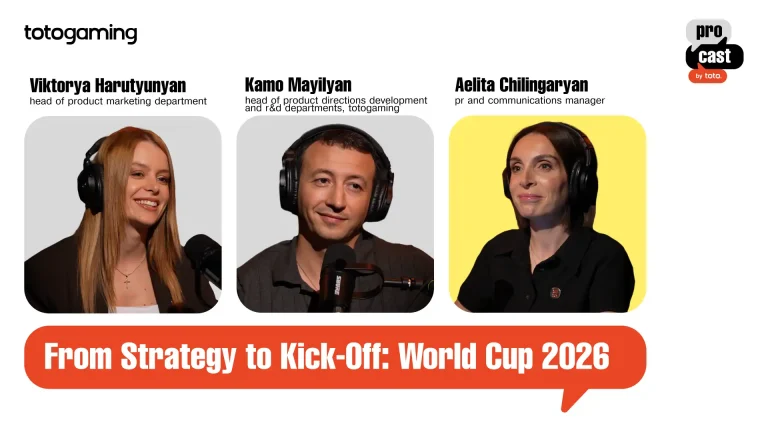
Totogaming kicks pff podcast series covering iGaming insights

The iGaming brand Totogaming is developing a podcast series that explores some of the industry’s most interesting topics, discussed by the people who know the business best.

The first episode focused on one of the hottest topics of the moment — the 2026 FIFA World Cup and the work operators do to capture users’ attention, increase engagement, and develop effective marketing strategies around major sporting events.

In its inaugural session moderated by Aelita Chilingaryan, PR & Communications Manager at Totogaming, and featured Viktorya Harutyun, Head of Product Marketing, alongside Kamo Mayilyan, Head of Product Directions Development and R&D.

Together, they discussed the intersection of sportsbook and casino products during large-scale sports campaigns; the approaches operators take to maximize user engagement during major tournaments, etc. 

Podcast by Totogaming is an ongoing project, and the brand plans to regularly address important industry topics through this format, exploring them from different perspectives and providing viewers with valuable insights and information.

US sanctions 35 Prince Group-linked targets over scam operations

The U.S. Department of the Treasury on June 23rd imposed new sanctions on 9 individuals and 26 entities linked to Cambodia’s Prince Group Transnational Criminal Organization, citing the group’s role in scam compounds, fraud and money laundering operations targeting Americans.

The action, announced by the Treasury’s Office of Foreign Assets Control, targets Prince Group leadership, investors in scam compounds, and alleged front companies. In parallel, Treasury’s Financial Crimes Enforcement Network proposed amending its October 2025 Huione Group Final Rule to include Cambodia-based H-Pay Service PLC and any successor entity, saying Huione Group was used by Prince Group to transfer and consolidate scam-derived assets.

“Scam centers in Southeast Asia steal billions of dollars from American victims each year,” Treasury Secretary Scott Bessent said. “The Trump Administration is united in its efforts to dismantle these overseas criminal enterprises.”

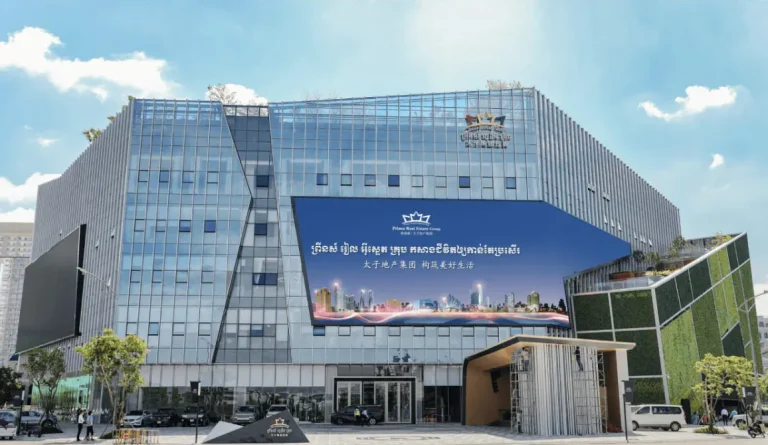
The designations build on Treasury’s October 2025 action against Prince Group, which was coordinated with the United Kingdom and designated the network as a transnational criminal organization. Treasury said Prince Group members profited from scam compounds targeting victims in the United States and globally, while investing criminal proceeds across real estate, aviation, and luxury cigars.

Prediction

The latest action also targets Hu Xiaowei, also known as Hu Shi and Wu An Ming, described by Treasury as Prince Group’s “second-in-command.” Treasury said Hu’s activities included managing entities outside Cambodia, aircraft-related operations, transnational real estate activity and illicit gambling activities.

The measures come amid wider pressure on Cambodia-linked scam and money laundering networks. FinCEN finalized a rule in October 2025, severing Huione Group from the U.S. financial system, while Reuters reported that Telegram had blocked Huione Guarantee and Xinbi Guarantee in May 2025, after the two markets allegedly facilitated more than $35 billion in transactions since 2021. Huione Guarantee later said it would cease operations.

In Cambodia, the National Bank of Cambodia previously revoked Huione Pay’s license and moved to liquidate its assets, according to the International Consortium of Investigative Journalists (ICIJ).

Treasury said Americans lost at least $10 billion in 2024 to Southeast Asia-based scam operations, up 66 percent from the previous year.