Home Blog Page 375

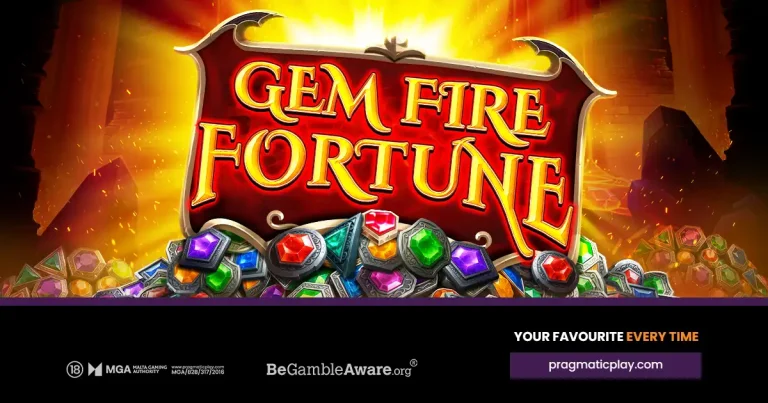
Pragmatic Play releases Gem Fire Fortune, igniting reels with random multipliers

Pragmatic Play, a top content supplier to the iGaming industry, has launched Gem Fire Fortune, a red-hot release that lights up the reels with random multipliers.

Shimmering gemstones adorn the 7×7 grid, where clusters of five or more matching symbols award wins. In the base game, each winning combination can be randomly enhanced by a multiplier of up to 100x. 

Landing three or more scatters triggers the bonus game with 10 free spins. During the feature, every winning combination is guaranteed to be boosted by a 5x, 10x, or 100x multiplier. The bonus game can be retriggered with five additional free spins. 

In select markets, players can buy entry to the standard bonus game or Super Free Spins version, which sees either a 10x or 100x multiplier applied to each winning cluster. 

Gem Fire Fortune is the latest addition to Pragmatic Play’s award-winning slots portfolio following recent hits such as Big Bass Boxing Bonus Round and Gold Party 2 – After Hours.   

Irina Cornides, Chief Operating Officer at Pragmatic Play, said: “Gem Fire Fortune offers classic cluster-pays gameplay with the chance to hit random multipliers on any winning combination and wins of up to 15,000x.” 

Aviator Studio sponsors Best FTN Game Soundtrack at Ortak x B.F.T.H. Arena Awards 2025

0

The organisers of the Ortak x B.F.T.H. Arena Awards 2025 have announced Aviator Studio as the official sponsor of the Best FTN Game Soundtrack category.

This prestigious award, accompanied by a 10,000 FTN prize pool, recognises the FTN-integrated game whose soundtrack most significantly enhances the player experience through outstanding composition, atmosphere, and emotional impact.

Highlighting Excellence in Game Audio

The Best FTN Game Soundtrack award is dedicated to honouring exceptional musical achievements within the FTN gaming ecosystem. Music plays a fundamental role in player immersion and emotional engagement, and this category acknowledges those soundtracks that elevate the gameplay experience beyond visuals and mechanics. From cinematic themes to high-energy beats, the award celebrates audio artistry that resonates long after the game ends.

Aviator Studio

Aviator Studio, the developer behind the original and fully licensed Aviator crash game, is recognised for its commitment to fair, secure, and high-adrenaline gameplay. Built on a simple yet compelling concept, Aviator has become a flagship of innovation and integrity in online gaming.

As a brand devoted to expanding its reach through innovative experiences, Aviator Studio supports the creative community driving the future of Web3 gaming. Their sponsorship of this award underscores the company’s dedication to fostering excellence and pushing the boundaries of interactive entertainment, particularly in the realm of sound design.

Ortak x B.F.T.H. Arena Awards 2025 in Yerevan

The Ortak x B.F.T.H. Arena Awards 2025 will take place during Harmony Meetup 7 feat. Fasttoken, hosted in Yerevan from 8 to 11 July 2025. This four-day event will bring together industry leaders, developers, and innovators to celebrate breakthroughs in iGaming, Web3, and digital creativity. With the support of Fasttoken, the event aims to spotlight those shaping the next era of iGaming. One innovation at a time!

Aviator Studio’s sponsorship ensures that outstanding achievements in game audio receive the recognition they deserve. The stage is set for a celebration of sound, creativity, and forward-thinking development.

Play’n GO expands portfolio reach with the Goldrush Group in South Africa  

Play’n GO, the world’s leading casino entertainment provider, has announced that its market-leading portfolio of games is now available with the Goldrush group brands in South Africa.

The news underlines the strength of Play’n GO’s position in the burgeoning African iGaming market and will see Goldrush’s players enjoy such global hits as Book of DeadFire Joker and Rise of Olympus 100.

Rise of Olympus 100, Play'n GO

Already known for its acclaimed content across the world, the new partnership that covers both the Goldrush and Gbets brand signals Play’n GO intent on being a major force on the African continent.  

The Goldrush Group is one of the more storied names in gaming in South Africa, with more than 20 years of heritage in the brand that now includes iGaming and a large retail presence.

James Baxandall, Head of Regional Sales Africa for Play’n GO, said: “The Goldrush Group have been a first-class operator for many years and I’m really excited to bring our game portfolio to their players. I have no doubt that globally recognised classics such as Book of Dead will perform exceptionally well with their player base. This is a partnership that I expect to grow for many years to come.”

Peter Amblianities, Head of Marketing at Goldrush Group, added: “Goldrush is excited to partner with yet another world-class gaming provider in Play’n GO to bring our valued customers even more slots to enjoy on Goldrush.co.za. Epic new slots titles to Feel the Rush on include Honey Rush, Rise of Olympus, Perfect Gems, and much, much more! We look forward to exceptional growth with Play’n GO.”  

New South Wales and Queensland state budgets have a risky dependence on gambling: Expert

0

Recent budget reports from New South Wales (NSW) and Queensland highlight a troubling trend of increasing reliance on gambling taxation, with little indication of meaningful reform, Sally Gainsbury, Director at the Gambling Treatment & Research Clinic and Professor of Psychology at the University of Sydney warned.

In a publication on LinkedIn, Gainsbury emphasizes the serious implications of this dependency for both individuals and communities.

In Queensland, 8.5 percent of total taxation revenue is projected to come from gambling in the 2025–26 financial year, according to the state budget papers. 

This equates to AU$3.72 billion ($2.42 billion), with the largest share driven by electronic gaming machines in pubs and clubs, according to data cited by Gainsbury. Club gaming devices are expected to generate AU$1.06 billion ($689 million) in the same period, while hotel gaming devices contribute AU$1.55 billion ($1.01 billion). 

Other notable sources include the point of consumption tax (AU$283 million/$184.3 million), lotteries and lotto (AU$577 million/$376.6 million), casino taxes (AU$165 million/$107.6 million), and wagering (AU$65 million/$42 million).

Although total gambling tax revenue is projected to grow at an average of 4.5 percent annually through 2028–29, some categories—such as “other gambling and betting”—are forecast to decline.

In New South Wales, the reliance on gambling taxes is also significant, with 7.3 percent of the state’s total revenue—around AU$3.7 billion ($2.41 billion)—coming from gambling-related sources.

Gainsbury notes that much of this revenue is expected to stem from ongoing growth in electronic gaming machine (EGM) losses in pubs and clubs.

“This reliance is regressive—gambling losses are disproportionately borne by individuals and communities who can least afford it,” she noted.

This disproportionate impact raises concerns about the fairness and sustainability of such revenue models.

The social costs associated with this dependence are strident, according to Gainsbury. She highlights issues such as reduced financial wellbeing, increased psychological distress, family disruption, lost productivity, and heightened demands on welfare and health systems.

“How can state governments meaningfully invest in gambling harm reduction when their budgets are built on its proceeds?” she questions, pointing to the inherent conflict in funding public health initiatives through a source that contributes to widespread social harm.

Gainsbury calls this fiscal strategy shortsighted, arguing that if there is a genuine commitment to fostering a healthy and equitable society, it must become a political priority.

“I encourage voters, community advocates, researchers, business leaders, and all who care about long-term wellbeing to keep this issue on the agenda—and demand change”, she urges.

PAGCOR donates 10 Patient Transport Vehicles to LGUs and state university

The Philippine Amusement and Gaming Corporation (PAGCOR) on Thursday, June 26, turned over ten Patient Transport Vehicles (PTVs) worth PHP20 million to several local government units and a state university to enhance their emergency medical services.

During the turnover ceremony at the PAGCOR Corporate Office in Pasay City, six PTVs were awarded to the municipalities of Palanan, Quezon, San Isidro, Cabagan, San Mariano, and San Pablo, all in Isabela province. 

PAGCOR donates 10 Patient Transport Vehicles to LGUs and state university

The City of Parañaque, the municipalities of Tanauan in Batangas and Balabac in Palawan as well as the Mariano Marcos State University (MMSU) in Ilocos Norte also received one PTV unit each.

Each vehicle is fitted with a GPS navigation system and essential medical equipment such as an ambulance stretcher, oxygen tank, wheelchair, and first aid kit.

PAGCOR donates 10 Patient Transport Vehicles to LGUs and state university

PAGCOR Chairman and CEO Alejandro H. Tengco said the PTV distribution is part of the agency’s efforts to improve healthcare delivery and to enhance access to medical services especially in geographically isolated communities.

“We want to ensure that even remote areas have the means to respond to medical emergencies. This is part of PAGCOR’s commitment to reach communities that need government support the most,” Mr. Tengco said.

“‘Yan po ang hangad ng PAGCOR; salamat sa pagkakataong makatulong at makapaglingkod sa inyo,” Mr. Tengco told the PTV recipients during the turnover event.

Mayor Christopher A. Mamauag of Cabagan, Isabela – a town where travel to tertiary hospitals takes several hours – expressed gratitude for the assistance and said the vehicle will significantly boost the town’s emergency response capabilities.

PAGCOR donates 10 Patient Transport Vehicles to LGUs and state university

“Kami po ay nagpapasalamat kay President Ferdinand Marcos Jr., at sa PAGCOR, sa pamumuno ni Chairman Alejandro Tengco, sa pagpapaunlak sa aming kahilingan na magkaroon ng Patient Transport Vehicle para sa aming mga kababayan sa bayan ng Cabagan.

“Malaking tulong po ito at gagamitin namin ito ng wasto,” he said.

This initiative follows a series of donations that PAGCOR has been making across the country. Just last week, PAGCOR donated Php6.75 million to the Quirino Memorial Medical Center (QMMC) for the purchase of five state-of-the-art neonatal incubators, further strengthening its neonatal care services.

Ex-dealer and gambler arrested in $226K Macau casino fraud case

0

Macau police have arrested two men in connection with a large-scale casino fraud case, in which a former baccarat dealer and a mainland Chinese gambler allegedly conspired to swindle HK$1.76 million ($226,000) from a local casino over a 14-day period.

The suspects, identified as a 25-year-old Macau resident and a 38-year-old mainland resident, are both unemployed. The former was previously employed as a dealer at a baccarat table in the casino where the alleged fraud occurred. However, authorities did not identify the name of the casino.

According to the Judiciary Police (PJ), the two men conspired to exploit a high-payout game situation between May 25th and June 7th. Taking advantage of times when no other players were present at the table, the dealer allegedly allowed the gambler to place delayed bets—after the outcome of the game was known. In instances where the “banker wins with 6 points” result occurred—offering a payout of 22 times the bet—the gambler placed late bets of between HK$5,000 ($642) and HK$15,000 ($1,927), and the dealer reportedly issued winnings between HK$110,000 ($14,129) and HK$330,000 ($42,387) per instance.

The scheme went undetected for two weeks until the casino discovered irregularities during a routine review of surveillance footage on June 25th and subsequently reported the matter to the PJ. Both suspects were apprehended the following day.

Interrogations revealed that the suspects had split the illicit gains equally but had already lost all of the funds through gambling. The dealer had joined the casino in 2023 and resigned on June 7th, citing personal reasons.

Both men have been transferred to the Public Prosecutions Office on charges of “fraud involving a considerable amount.” The investigation remains ongoing.

Think tank calls for Sri Lanka to withdraw and redraft Gambling Regulatory Authority Bill

0

A top think tank in Sri Lanka is calling for the government to completely withdraw and redraft the current version of the Gambling Regulatory Authority bill, published in May of this year.

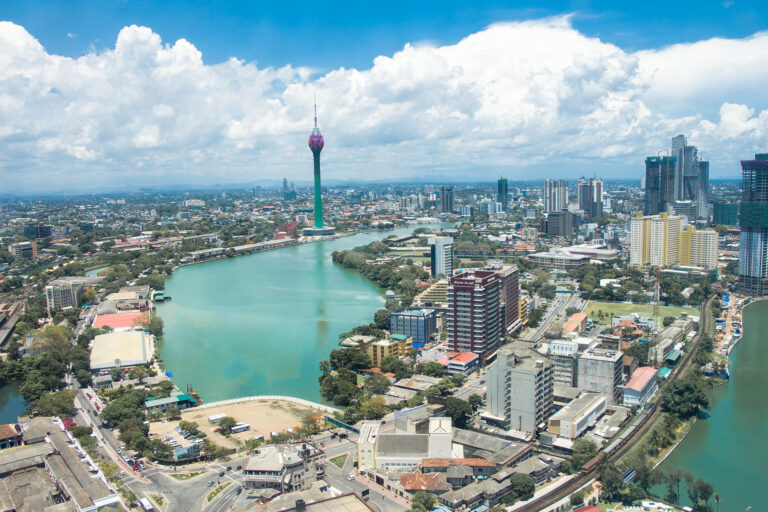
Expert Sudaraka Ariyaratne, at the Advocata Institute, based in Colombo, notes that the redrafting of the proposed legislation, and establishment of a gaming regulator in the nation is ‘of paramount importance, particularly with the impending opening of the casino at the City of Dreams integrated resort’. CoD Colombo’s casino has been slated to open in early August.

But while haste is needed in setting up the regulatory body, this ‘should not be an excuse to pass a proxy law that gives the Ministry of Finance unchecked power in the regulation of the gaming industry’.

The group furthers that ‘not only would such a regulatory body be ineffective at oversight, but it would be vulnerable to influence, corruption, and malpractice’.

Gambling regulator seen as not having enough power

As mentioned above, the think tank opines that the Gambling Regulatory Authority would not be given enough rule-making powers and that it should be ‘free from binding directives and any other forms of influence by the Minister of Finance or any other government authority in its daily operations’.

This starts with the nomination process for the members of the regulatory body, but also includes key elements such as where the Gambling Regulatory Authority (GRA) gets its funding from.

Advocata notes that the draft bill only allows the GRA ‘to levy service fees on the operators, and the licensing fees that it would collect are to be forwarded to the Treasury’, meaning ‘its financial fortunes are mostly tied to how much the government prioritizes gaming regulation in its budgetary allocations’.

Online

‘The bill does not go far enough in addressing major concerns related to online gambling in Sri Lanka’. While the bill does require that ‘all developers, distributors, and operators of gambling software, operators of offshore gambling activities, as well as junket operators obtain separate licenses to conduct their gambling-related business activities’.

Major concerns tied to the online segment are the potential losses in tax revenues to overseas operated online gambling platforms, and an increase in possible addiction.

Revenue collection

Sri Lanka has historically suffered from being unable to properly collect gambling tax. The analyst at Advocata highlights that ‘the Inland Revenue Department of Sri Lanka is not adequately equipped to collect revenues from the gaming industry’.

The group notes that ‘even the taxes that are due on the self-reported revenues of casinos are not settled in a timely manner by the existing gaming operators’, furthering that the draft bill ‘fails to outline the specific powers held by the Gambling Regulatory Authority to effectively aid in the collection of revenues from the industry’ by the body.

One interesting issue the analyst highlights is how the Inland Revenue Department would collect revenues from the operation of ‘two separate casinos at the same building by the same operator, to cater to international and local patrons separately’- questioning whether this would fall under a single license for two separate casinos.

Particularly interesting shortcomings

The GRA, under the proposed bill, doesn’t have the power to ‘impose limits on the number of operators’, and therefore ‘regulate competition and market size’.

Similarly, there is a ‘lack of provisions in the bill for tying capacity limits to the licenses issued, on the number of tables and machines that each gaming establishment is authorized to have’, an issue that could particularly become prominent in the event of mergers.

Given the highly public collapse of Macau’s junket industry, experts are also concerned about exactly how these operations are managed.

They note in particular how the bill specifies that any gambling-related transaction is to be made at a ‘main cash desk set up by the gambling operator in currency, debit or credit’. But ‘the bill is not clear as to whether payments made to junket operators also fall under this provision, and if not, what the provisions for tracing such revenues are’.

Recommendations

Starting with junkets, Advocata recommends that all junket operators be required to hold a bank account registered in Sri Lanka, ‘which is used for all transactions related to the junket operator’s activities related to gambling operations’ in the country.

It also suggests that the GRA be authorized to levy entry fees on patrons and be allowed to determine the ‘optimal number of operators to be awarded licenses in the casino, betting, and lottery categories’.

The GRA should also devise a regulatory framework for the ‘tracing of revenues earned by gaming operators’ and that ‘all gaming operators should be taxed based on their gross gaming revenues, and not on their profits’.

The bill should entrust the GRA to design a ‘separate set of rules aimed uniquely at countering the negative externalities of online gambling, including the potential regulation of online gambling platforms operated from overseas’.

Furthermore, all employees hired by a licensed gaming operator ‘should be required to hold a license’ issued by the GRA.

‘All operators holding a gaming license should be required to abide by the disclosure and governance guidelines of the Colombo Stock Exchange,’ opines the analyst.

The overall recommendations include many more points but do highlight numerous potential pitfalls which could have a lasting impact if not defined from the get-go.


Casino bill debate delayed until August as Thailand seeks broader consensus

0

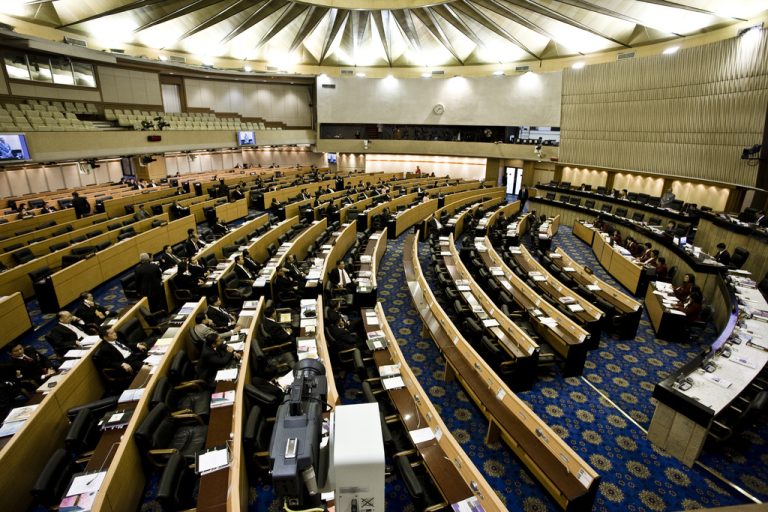
Thailand has delayed parliamentary debate on its controversial casino-entertainment complex bill by approximately one month, moving the discussion from the originally scheduled July 3rd House session to allow for a more thorough review and consultation.

According to the Bangkok Post, Pheu Thai Party MP and spokesman Danuporn Punnakanta announced the delay, emphasizing that it is not related to political tensions within the coalition government. The ruling party remains committed to advancing the legislation, which is part of its broader plan to improve Thailand’s tourism infrastructure and compete in Asia’s lucrative casino tourism market.

Despite Danuporn’s assurances, the bill has been mired in political controversy. Earlier, Bhumjaithai Party leader Anutin Charnvirakul cited the casino policy as a key reason for his party’s withdrawal from the coalition government. The resulting political rift is widely seen as a major obstacle to the bill’s passage. Meanwhile, a Senate committee has also urged the government to withdraw the proposal, citing potential constitutional violations and concerns over its economic viability.

According to the latest update, the extended review period will focus on gathering feedback from a broad range of stakeholders, particularly on two critical issues: gambling access for Thai citizens and potential risks of money laundering. Danuporn confirmed that Pheu Thai is working closely with the Anti-Money Laundering Office to craft robust safeguards, drawing on international best practices from established gaming jurisdictions such as Macau and Singapore.

The delay has sparked speculation about its connection to recent coalition instability and growing public opposition to the casino initiative. However, Danuporn downplayed these concerns, noting that he has held private discussions with several Bhumjaithai MPs who support the bill despite the party’s official position.

Queen’s Wharf Brisbane JV partners aim to terminate deal to buy out The Star from the project

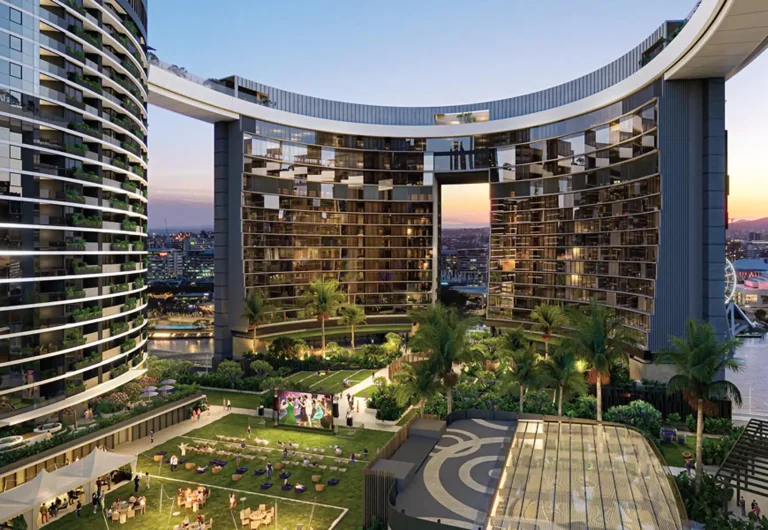
Embattled Australian gaming operator The Star is facing yet another hurdle as it tries to stay out of bankruptcy, with its joint venture partners in the Queen’s Wharf Brisbane integrated resort indicating they would like to pull out of a deal to purchase its equity stake in the project.

In early March, The Star (in the midst of dire financial straits) negotiated with Chow Tai Fook Enterprises (CTFE) and Far East Consortium International (FEC) for the sale of its equity interest in Destination Brisbane Consortium (DBC).

The deal allowed for The Star to release itself from debt obligations linked to the DBC – totaling round 50 percent of AU$1.4 billion ($880.7 million), plus an expected AU$212 million ($133.36 million) in expected further equity contributions.

The deal also would allow The Star a fixed monthly fee under a casino management agreement and a possible consideration from an earn-out mechanism for The Star Brisbane.

But in Monday filings to both the Hong Kong Stock Exchange and the Australian Securities Exchange, The Star and Far East Consortium indicated that the Hong Kong-based joint venture partners issued ‘a notice to terminate’ the binding heads of agreement (HoA) for the deal.

This termination of the HoA would take effect on Monday, July 7th.

FEC, in its filing noted that, upon termination of the HoA ‘the parties are required […] to be restored to the position they were in immediately prior to entry into the HoA’.

This would involve The Star repaying the JV partners AU$10 million ($6.54 million) each ‘by no later than 30 days of the date of termination’.

If the amount is not repaid during the period, ‘The Star will be required to instead transfer The Star’s 33.3 percent interest in Tower 1 [….] to the JV partners.

Additionally, the JV would no longer be required to make a third tranche payment to The Star of AU$8 million ($5.24 million).

The announcement comes at a crucial period for The Star, after shareholders – including CTFE and FEC approved an AU$300 million ($196 million) rescue package from US gaming giant Bally’s Corporation and pokie baron Bruce Mathieson’s Investment Holdings’.

The Star has already received some AU$133 million ($87.04 million) in funding from Bally’s Corporation and Investment Holdings since the vote was held.

In regards to the possible termination of the Queen’s Wharf Brisbane agreement, The Star notes that it ‘remains willing to continue negotiations’ with the JV partners.

Daily Asia Gaming eBrief: Paradise Entertainment faces revenue hit

0

Good Morning. Paradise no more. Paradise Entertainment will shift its business strategy to focus on gaming equipment operations following the mandated closure of Macau’s satellite casinos by year-end. Chairman Jay Chun tells AGB he anticipates a significant revenue impact, with casino operations contributing over half of its total income. Meanwhile, in the UBS’ Global Wealth Report 2025 Asia, numerous gaming jurisdictions made it into the Top 25 list, including the likes of Hong Kong, Australia, and Singapore. In Vietnam, Deputy Prime Minister Tran Hong Ha has approved the Van Don integrated resort and casino project in Quang Ninh province, a significant advancement in the country’s gaming sector.

What you need to know


On the radar


AGB Intelligence

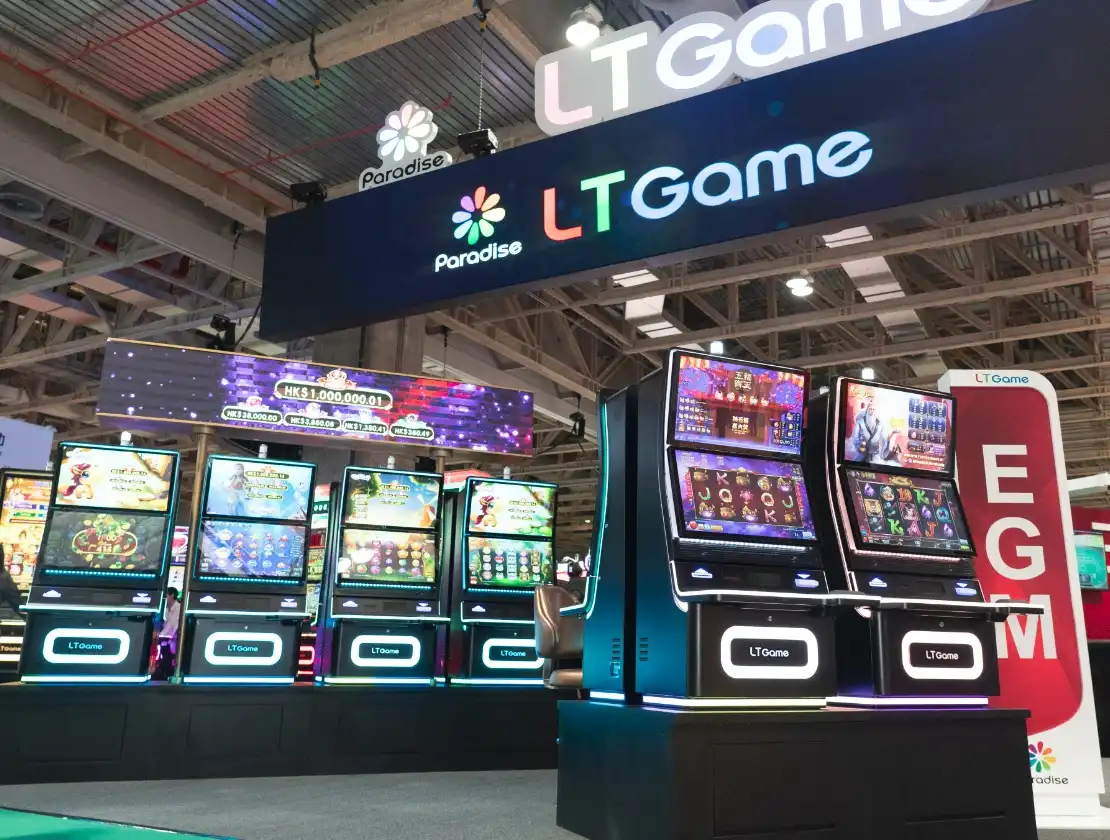
Paradise Entertainment, LTGame

Satellite casino shutdown forces strategic pivot for Paradise Entertainment

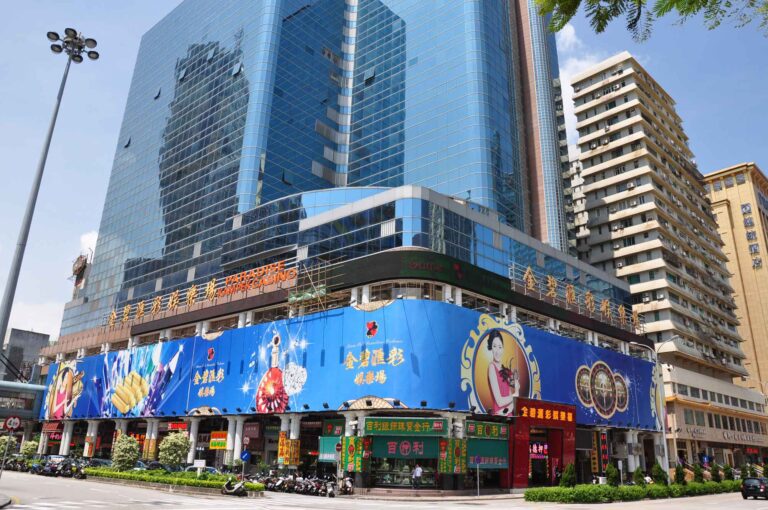
Paradise Entertainment will shift its business strategy to focus on gaming equipment operations following the mandated closure of Macau’s satellite casinos by year-end, as stated by chairman Jay Chun. The Hong Kong-listed company, which operates Casino Kam Pek Paradise under SJM Holdings’ gaming license, anticipates a significant revenue impact, with casino operations contributing over half of its total income. The satellite casino’s closure is expected to cut adjusted EBITDA from these operations by 68.5%, impacting about 700 employees—around 400 will transfer to SJM, while 300 face uncertainty.


Corporate Spotlight

Bettorify bridges European operators to Asia’s gaming markets

Beyond Ordinary Platforms: Bettorify bridges European operators to Asia's gaming markets

With over 30% of global gaming revenue projected to come from Asia soon, the window of opportunity is wide open. Bettorify’s white-label and turnkey solutions deliver what most platforms miss: sharp execution backed by real local expertise.


Industry Updates


INTELLIGENCE | ASEAN | CAREERS