Macau’s Studio City integrated resort is going to be adding a private hospital to its non-gaming offerings, which is expected to open on October 1st.
According to a stock exchange filing, Melco’s subsidiary SCRS entered into an agreement with iRad – a company indirectly held under a family trust which includes Melco founder Lawrence Ho – in January.
The current agreement for the operation goes from 1st October, 2025 until 30th November, 2034, with an option to renew for two further five year periods.
The private hospital is ‘focused on imaging and diagnostic medical services’ and will cover a total area of 12,618 square feet, as well as providing a pharmacy.
Melco indicates that the new venture ‘shall support the health care industry of Macau’- with ‘discounted imaging and diagnostic medical body check-up packages’ for clients and employees ‘available for purchase or on a complimentary basis’ for Studio City, Altira and City of Dreams.
Melco Resorts Finance Limited, a wholly owned subsidiary of Melco Resorts & Entertainment, has priced an international offering of $500 million in senior notes due 2033, carrying a coupon of 6.5 percent.
Proceeds will primarily fund a conditional cash tender offer, launched on September 15th, for any and all validly tendered 5.25 percent senior notes maturing in 2026. Remaining funds may be used to redeem outstanding 2026 notes, cover fees and expenses tied to the transactions, or for general corporate purposes.
The company stated that the new notes will rank equally with Melco Resorts Finance’s existing and future senior indebtedness. Melco Resorts & Entertainment itself will not guarantee the obligations.
Analysts view the issuance as part of the group’s ongoing debt management. According to CBRE Credit Research, Melco is offering $500 million of unsecured notes to refinance the 2026 bonds. The firm noted the new maturity extends beyond the expiration of Macau’s current gaming concessions in December 2032, though the market has previously tested this risk successfully.
CBRE expects the deal to be leverage-neutral but slightly dilutive to free cash flow, given the lower coupon being refinanced. The broker highlighted that Melco maintains a well-staggered maturity profile, with its next major maturity not until 2027 after this transaction.
As of now, $1.56 billion remains outstanding under Melco’s revolving credit facility, following repayment of a $1 billion bond earlier this year. Any upsize in the new issuance would likely go toward reducing revolver debt and enhancing liquidity.
Macau’s debt market has performed strongly in recent months, supported by better-than-expected gross gaming revenue (GGR). However, CBRE has shifted Melco and Studio City bonds to “Market Perform” from “Outperform,” citing relative value after a strong year-to-date rally.
DigiPlus Interactive Corp., the Philippines’ leading online gambling platform, will officially launch operations in Brazil on September 22nd with its GamePlus brand, marking the company’s first international expansion.
The move comes after DigiPlus secured a federal license earlier this year through its wholly owned subsidiary, DigiPlus Brazil Interactive Ltda. The license authorizes the company to operate land-based and online sports betting, electronic games, live game studios, and other fixed-odds betting activities in Brazil.
Brazil legalized fixed-odds betting on sports and online games in 2023, creating one of the fastest-growing iGaming markets globally.
DigiPlus Chairman Eusebio H. Tanco
GamePlus to debut with over 150 local titles
DigiPlus Chairman Eusebio H. Tanco described the Brazilian launch as a key step in the company’s global strategy. “Our entry into this dynamic market is the culmination of a global-first mindset, strong collaboration between our teams, and an unwavering commitment to responsible gaming operations,” Tanco said. “We are not just bringing a platform to Brazil; we are bringing a new standard of safe digital entertainment.”
GamePlus, the group’s first international brand, will debut with more than 150 of Brazil’s top games in both free-to-play and real-money versions. DigiPlus Brazil Country Manager Graham Tidey noted that exclusive content tailored to the local market will follow, including titles inspired by Brazilian folklore, casual games, and sports-themed offerings.
“GamePlus is designed to deliver simple, fun entertainment to the Brazilian market, filling a key strategic vertical for DigiPlus,” Tidey said.
The company also highlighted Brazil’s regulatory framework as an opportunity to differentiate its services by prioritizing transparency, player protection, and responsible gaming measures. DigiPlus said it will invest in building a strong local talent base to ensure cultural relevance and operational sustainability.
DigiPlus diversifies amid regulatory uncertainty at home
According to the company, Brazil’s regulated betting market generated $3.2 billion in gross gaming revenue in the first half of 2025, underscoring its appeal to international operators. DigiPlus also revealed plans to introduce BingoPlus, its flagship Philippine platform, in Brazil in 2026.
The expansion follows a period of strong financial performance at home. In the first half of 2025, DigiPlus reported net income of PHP8.4 billion ($147 million), up 61 percent year-on-year, supported by PHP47.8 billion ($838 million) in revenues and robust growth in its retail gaming segment. EBITDA rose 65 percent to PHP9.1 billion ($160 million).
Amid uncertainty in the Philippine online gambling market, DigiPlus has sought to diversify its portfolio. Beyond online gaming, the company has considered acquisitions in the land-based casino sector to mitigate regulatory risks. While no deals have been finalized, the Brazil launch underscores DigiPlus’ intention to establish a foothold in new, regulated markets.
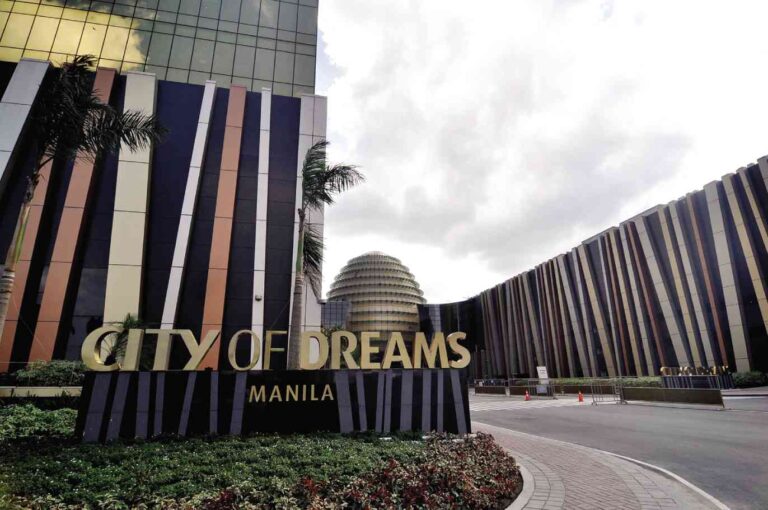
The Philippines Court of Appeals (CA) has directed Melco Resorts Leisure Corp. to pay PHP30,000 ($510) each in nominal damages to 26 former employees of City of Dreams Manila who were terminated under a redundancy program in 2020 at the height of the COVID-19 pandemic, Inquirer.net reported.
In a 38-page decision dated September 12th, the CA’s Third Division upheld the validity of the redundancy scheme but ruled that Melco failed to observe due process. The court noted that some affected workers were not given the mandatory written notice at least 30 days before their dismissal.
For this violation, the court ordered Melco to compensate the workers, while clarifying that reinstatement, back wages, or other money claims could not be granted since the redundancy was lawful and no bad faith was found on the company’s part.
Melco Resorts Leisure Corp. operates City of Dreams Manila, one of the country’s largest integrated casino resorts. The company, along with other gaming operators, implemented mass layoffs in 2020 when government lockdowns forced casinos and tourism establishments to shut down. The Philippine gaming industry recorded steep revenue declines during that period, prompting operators to scale down operations and cut staff.
Habanero, the premium slots and table games provider, has expanded its diverse portfolio with its latest release, Indiana Wolf, offering up to 589,824 ways to win.
Set on a dynamic 5 reel, variable layout, Indiana Wolf introduces symbol-splitting mechanics that can significantly expand the amount of paylines available on any spin. The Free Games round brings additional intensity, with the top three centre symbols guaranteed to split on every round.
Matching symbols that land within the 3×3 block beneath them can increase an active multiplier, while up to 50 Free Games can be activated for extended gameplay as players look to land a huge maximum win of 17,627 in the extremely volatile game.
By integrating Habanero’s Jackpot Race™ mechanic with the Buy Feature, the new title offers operators a versatile game that enhances both prolonged playtime and player retention.
The launch of Indiana Wolf follows the success of Daruma Impact and MX Mania, reinforcing Habanero’s commitment to delivering varied and engaging titles to regulated markets worldwide.
Toni Karapetrov, Head of Corporate Communications at Habanero, said: “Indiana Wolf combines beautifully crafted bold designs with innovative mechanics, giving operators a title that stands out with ample ways to win. The striking features and significant win potential reflect our focus on producing slots that offer both excitement and strong commercial value.”
Sightline Payments and Rush Street Interactive (RSI) have announced the launch of the gaming industry’s first integrated debit payments solution, debuting on RSI’s BetRivers platform.
Rush Street Interactive (RSI) partnered with Sightline to design and launch a groundbreaking program that enhances the way BetRivers customers interact with its proprietary online gaming platform. The collaboration with Sightline underscores RSI’s commitment to putting players first by introducing a first-of-its-kind functionality that delivers secure, seamless, and convenient access to player account balances, setting a new standard for user experience in the gaming industry.
Branded as BetRivers Debit, this white-labeled version of Sightline Debit transforms how customers access and use their funds. With this frictionless and customer-centric solution, BetRivers customers gain instant access to their available wagering balance anytime, anywhere and anyway, eliminating the need to withdraw and redeposit repeatedly. RSI anticipates the innovation will help reduce churn and the high payment costs that accompany it.
Omer Sattar, Co-Founder & CEO of Sightline Payments
“Rush Street Interactive is an industry leader that strives to be first-to-market with innovations. That’s why it makes so much sense for us to launch our revolutionary integrated payments solution, Sightline Debit, with BetRivers,” said Omer Sattar, Co-Founder & CEO of Sightline Payments. “Backed by our partnerships with Cross River Bank, this solution gives customers freedom and flexibility to use their funds when they want, where they want, all while dramatically reducing the cost of payments.”
Richard Schwartz, CEO of RSI
Beyond convenience, BetRivers Debit includes enhanced protections for patrons: FDIC insurance coverage, advanced fraud security features, and tools that support responsible gaming by promoting financial transparency and sustainable play.
“We remain deeply committed to putting our players first, and the launch of the online gaming industry’s first integrated debit payments solution marks a major step forward in enhancing the BetRivers experience,” said Richard Schwartz, CEO of RSI. “We’re proud that our team helped shape this innovative payment solution in close collaboration with Sightline, further underscoring RSI’s leadership in delivering cutting-edge technologies that elevate the player experience. Our collaboration with Sightline Debit demonstrates our commitment to integrity, innovation, and delivering exceptional player experiences. Being first-to-market with revolutionary new technologies benefits the entire RSI operation – from our team to our players to our investors.”
BetRiver’s initial rollout in New York marks the first step in a broader expansion. Sightline and RSI look forward to bringing this innovative solution to additional jurisdictions across the U.S. in the coming months.
Good Morning. Everything that goes up must come down. PAGCOR experienced a 40 to 50 percent income decline following the disconnection of payment links to online gambling by major e-wallet providers, prompting debates in the Senate over the future of the sector in the Philippines. In Macau, the casino industry is experiencing softer momentum in early September, leading Citigroup to lower its gross gaming revenue forecast for the month to $2.4 billion.
The Philippine Amusement and Gaming Corporation (PAGCOR) reported a significant income decline of 40 to 50 percent after major e-wallet providers, such as GCash and Maya, cut payment links to online gambling platforms per a directive from the Bangko Sentral ng Pilipinas. This decline was noted within two weeks of the disconnection, with online gambling transactions dropping by the same percentage. The Senate hearing revealed ongoing debates about the future of online gambling in the Philippines, with some lawmakers advocating for a complete ban while others favor tighter regulation.
Every operator can launch, but few can lead. In Asia, leadership is won in the 90 days after go-live, when payments feel effortless, content resonates locally, and every touchpoint builds trust.
Winning Trust, Stopping Fraud. Asia Pacific’s iGaming market is expanding extremely fast, and a new wave of digital-savvy players is pushing demand through the roof. But the rise in adoption has outpaced regulation in many markets, and fraudsters have taken notice.
The Philippine Amusement and Gaming Corporation (PAGCOR) reported a 40 to 50 percent decline in income after major e-wallet providers removed payment links to online gambling platforms, following a directive from the country’s central bank, the Bangko Sentral ng Pilipinas (BSP).
Assistant Vice President Jessa Mariz Fernandez disclosed the figures during a Senate Committee on Games and Amusement hearing on Tuesday, September 16th. She noted that the sharp drop was observed within the first two weeks of the delinking. “This is based on the data from our Accounting and Electronic Gaming Licensing Department,” Fernandez said, emphasizing the immediate impact of the measure.
The BSP had earlier instructed GCash and Maya, the country’s largest e-wallets, to cut connections to online gambling. Deputy Governor Mamerto Tangonan ordered that all icons and in-app links be removed within 48 hours, with full disconnection finalized by August 17th.
During the August hearing, PAGCOR also mentioned that online gambling transactions had already fallen by up to 50 percent since the e-wallets’ disconnection from gambling sites.
However, based on current disclosures, it remains unclear whether PAGCOR’s income decline persisted beyond the initial two-week period or how the measure has affected overall industry-wide transaction volumes.
In the same session, the Cybercrime Investigation and Coordinating Center (CICC) welcomed the move, calling it a crucial step in addressing gambling addiction among Filipinos. Senator Risa Hontiveros also questioned e-wallet executives on whether high-value transactions — reportedly reaching PHP500,000 per user — posed significant social risks.
Tangonan confirmed that while gambling-related payment icons were delinked, licensed operators remain recognized as merchants. This allows users to cash in and cash out through regulated channels. GCash and Maya executives assured senators they would comply with future directives, including possible caps on gambling-related top-ups and tighter monitoring of lending features.
Policy debate intensifies
At the Senate hearing, lawmakers revisited the broader debate on the future of online gambling in the Philippines. Several pending bills propose an outright ban, including measures filed by Senators Pia Cayetano, Alan Cayetano, Joel Villanueva, Juan Miguel Zubiri, Loren Legarda, Christopher Go, and Raffy Tulfo.
Other legislators favor tighter regulation instead of prohibition. Senators Sherwin Gatchalian and Risa Hontiveros have suggested harm-reduction measures and levies to mitigate gambling’s social costs, while Senator JV Ejercito filed a resolution urging stricter oversight to curb the spread of online gaming and lending.
When asked about its stance, PAGCOR reiterated its support for strict regulation rather than a complete ban. “Our position is for strict regulation of the industry,” Fernandez told lawmakers. The BSP, meanwhile, said it would defer to Congress on whether to pursue prohibition or reinforced regulation. Tangonan added that the central bank would submit a position paper outlining the pros and cons of both approaches.
Committee chair Senator Erwin Tulfo concluded that the panel would continue assessing the social and economic implications of online gambling as part of its review of pending legislation.
PAGCOR introduces AI monitoring tool
In response to the changing landscape, PAGCOR announced plans to launch an artificial intelligence-powered tool to detect illegal gambling sites in real time. Fernandez said the system would operate in coordination with the CICC, the National Telecommunications Commission (NTC), and the Department of Information and Communications Technology (DICT) to expedite the blocking of unlicensed operators.
Until now, PAGCOR has largely relied on manual monitoring through licensees, complaints, and internal tracking. Officials said the new AI system would enable more proactive enforcement against the estimated 11,985 illegal gambling sites identified in earlier hearings, including online casinos and cockfighting platforms.
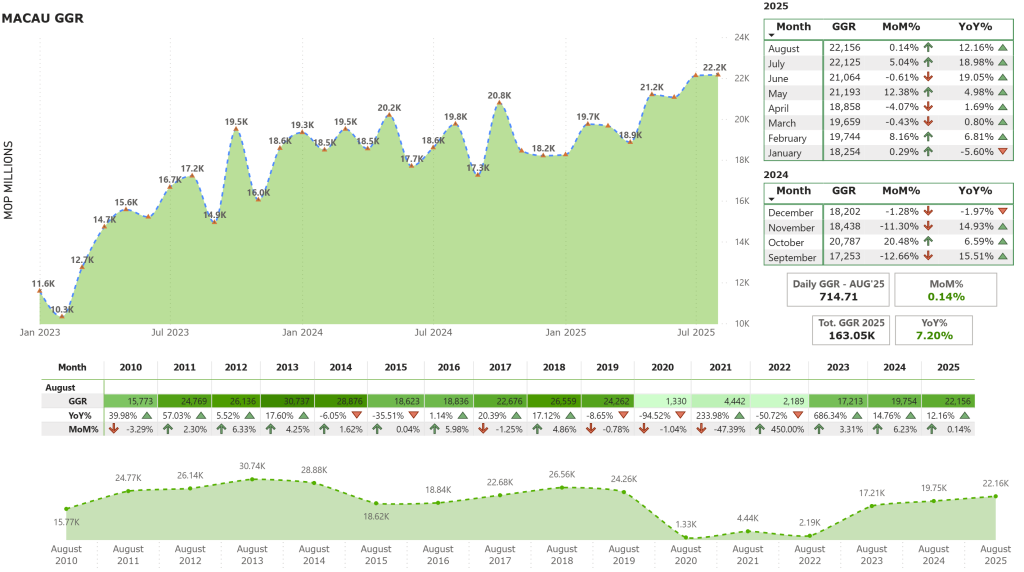
Macau’s casino industry showed softer momentum in early September, prompting Citigroup to revise down its gross gaming revenue (GGR) forecast for the month to MOP19.5 billion ($2.4 billion). The adjustment reflects weaker daily run rates during the first two weeks, despite year-on-year growth.
According to Citigroup, GGR for the first 14 days of September likely reached about MOP8.8 billion ($1.1 billion). This translates into an average daily run rate of MOP621 million ($77 million) between September 8th and 14th, around 2 percent lower than the first week of the month (MOP636 million per day, or $79 million), though still 8 percent above the September 2024 average (MOP575 million per day, or $72 million).
The bank noted that VIP volumes dropped between 10 and 14 percent month-on-month, while mass-market revenue fell 10 to 12 percent. VIP hold rates were broadly in line with the start of September but remained below August levels.
Citing these trends, Citigroup trimmed its September GGR estimate from MOP20.0 billion ($2.48 billion) to MOP19.5 billion, equivalent to about 88 percent of September 2019 levels but still a 13 percent year-on-year increase. To reach this projection, GGR would need to average roughly MOP669 million ($83 million) per day for the remainder of the month.
Run rate dipped on seasonality and luck
In a separate note, HSBC presented a similar assessment, estimating the daily run rate at MOP628 million ($78 million) for the first half of September. The figure marked a 12 percent decline from August, reflecting both seasonality and a lower VIP win rate, which ranged from 3.0 to 3.3 percent compared with 3.1 to 3.6 percent the previous month. HSBC said September typically posts a 3 to 15 percent sequential drop from August, making the current slowdown broadly consistent with historical patterns.
HSBC projected full-month September GGR between MOP18.4 billion ($2.28 billion) and MOP19.4 billion ($2.4 billion), representing 7 to 12 percent year-on-year growth, compared with 12 percent in August. The bank maintained its ‘Buy’ ratings on MGM China and Galaxy Entertainment, noting that non-gaming events should continue to support demand.
Golden Week bookings point to strong demand
HSBC also pointed to early signs of strong demand for the upcoming October Golden Week. As of September 11th, Macau ranked among the top 10 outbound destinations for Chinese travelers in terms of flight bookings, according to travel platform Tongcheng. Hotels under major operators including MGM, Galaxy, and Sands were already showing full bookings for the October 1st–8th holiday period.
The view from HSBC aligns with projections reported by AGB, which indicated that Macau could see record tourist arrivals during the Golden Week, supported by eased visa policies and rising travel appetite.
Former junket investor Rich Goldman Holdings said Tuesday it expects to post a net loss of up to HK$105 million ($13.5 million) for the year ended June 30th, 2025, more than double the HK$49 million ($6.3 million) loss recorded a year earlier.
The casino services and property investment group said the widened deficit was mainly due to higher impairment losses on its properties, which rose about HK$45 million ($5.8 million) year-on-year, as well as a HK$10 million ($1.3 million) increase in fair value losses on investment properties.
The company also booked an additional HK$3 million ($385,000) in provisions for impaired or written-off loans and interest receivables. These were partly offset by a HK$2 million ($257,000) gain from the disposal of a subsidiary.
All of the impairments and valuation losses were non-cash items with no impact on operating cash flow, the firm said in a stock exchange filing.
Rich Goldman noted that the figures were based on unaudited management accounts and the final results, due in late September, may differ.
The company urged shareholders and potential investors to exercise caution when dealing in its shares.