Continent 8 Technologies has strengthened its leadership team with the appointment of Julia Weygandt as Head of Client Growth & New Business, driving expansion across the iGaming and sports betting industries.
Based in Malta, Julia will spearhead strategic initiatives to drive customer growth and capture new market opportunities globally, working closely with the existing Sales team and Practice Leads.
Julia brings over 20 years of experience in gaming, entertainment, and technology, with a proven track record in commercial strategy, international market expansion, and strategic partnerships. Her career includes senior roles such as COO at G Games and Tornado Games, and Head of International Partnerships at GAMOMAT, where she successfully scaled operations and delivered significant revenue growth.
Julia is an active advocate for diversity and leadership in gaming, serving as a Board member for Global Gaming Women and leading partnerships for the Behind the Gloves initiative, which combines boxing and corporate engagement to support charitable causes.
Nick Nally, Chief Revenue Officer at Continent 8 Technologies, commented: “Julia’s appointment reflects our commitment to delivering exceptional value and growth opportunities for our customers. Her deep industry knowledge, commercial acumen, and passion for building strong partnerships make her an outstanding addition to our team. We are excited to see the impact she will have as we continue to expand globally.”
Julia Weygandt, Head of Client Growth & New Business, commented on her new role: “I’ve known the Continent 8 team for a long time; they are a trusted and respected partner to the world’s leading iGaming operators and suppliers, and I am thrilled to join at such an exciting time. My focus will be on driving client success through innovative solutions and strategic growth initiatives, ensuring we continue to lead in this fast-evolving industry.”
Innovative crash game Aviatrix has struck a deal with next-generation casino aggregator PlugNPlay to broaden its reach among operators worldwide.
The agreement means that brands that use PlugNPlay’s popular casino aggregator solution will gain instant access to Aviatrix without the requirement for additional integrations.
The partnership will significantly boost Aviatrix’s distribution, especially in fast-growing markets across Latin America, starting with Brazil.
Anastasia Rimskaya, Chief Account Officer at Aviatrix, said: “We’re always looking for new ways to make Aviatrix more accessible to operators and players, and partnering with PlugNPlay is a big step forward. Their seamless aggregation platform and strong operator network mean this partnership will help us reach an even larger audience.”
Marcus Oliveira, CCO at PlugNPlay, added: “Aviatrix is one of the most talked-about crash games in the industry right now, and we’re thrilled to bring it to our partners. The game’s engagement mechanics offer something genuinely different, and we’re confident it will be a hit with players across the board.”
Since launching a little over two years ago, Aviatrix has become one of the industry’s biggest smash hit crash games. The team behind the title constantly roll out new improvements, keeping it fresh for an ever-growing pool of players.
Macau gaming operator SJM Resorts continues its longstanding commitment to public welfare by actively supporting charitable initiatives in Macau.
This year, SJM donated MOP700,000 to the Tung Sin Tong annual fundraising campaign, joining hands with the organisation to demonstrate support and promote care and positivity within the community.
The cheque presentation ceremony was held at Grand Lisboa Palace Resort Macau. Ms. Daisy Ho, Managing Director of SJM, and Ms. Angela Leong, Director of SJM and Chairman of the Staff Welfare Consultative Committee, presented the donation to Tung Sin Tong, represented by Mr. José Chui Sai Peng, President; Mr. Jeffrey Vong, Vice President; Mr. Charles M. Choy and Mr. Celso Sou, Directors.
Ms Daisy Ho, Managing Director of SJM, stated, “SJM collaborates with various social service organisations in Macau to assist those in need in the community. As a long-term partner of Tung Sin Tong, we consistently support its programmes, bringing warmth and care throughout the city and working together to build a more blessed Macau.”
Vietnam’s Ministry of Finance has released an impact assessment report for a new draft decree that would replace Decree 03/2017 on casino operations, aiming to remove regulatory obstacles and align the legal framework with current laws, according to local outlet VietnamNet.
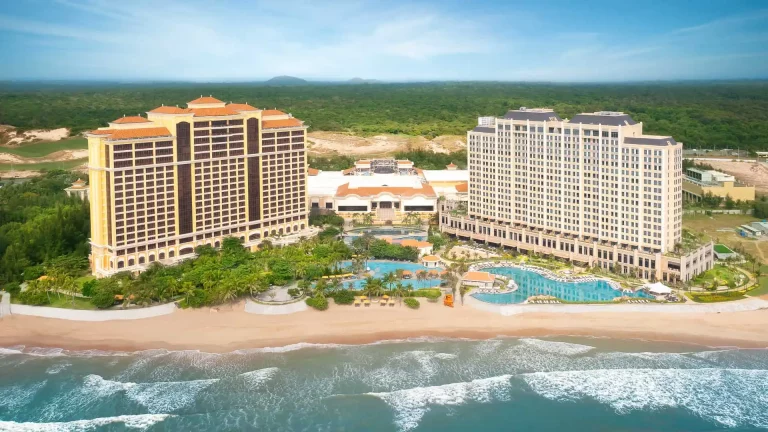
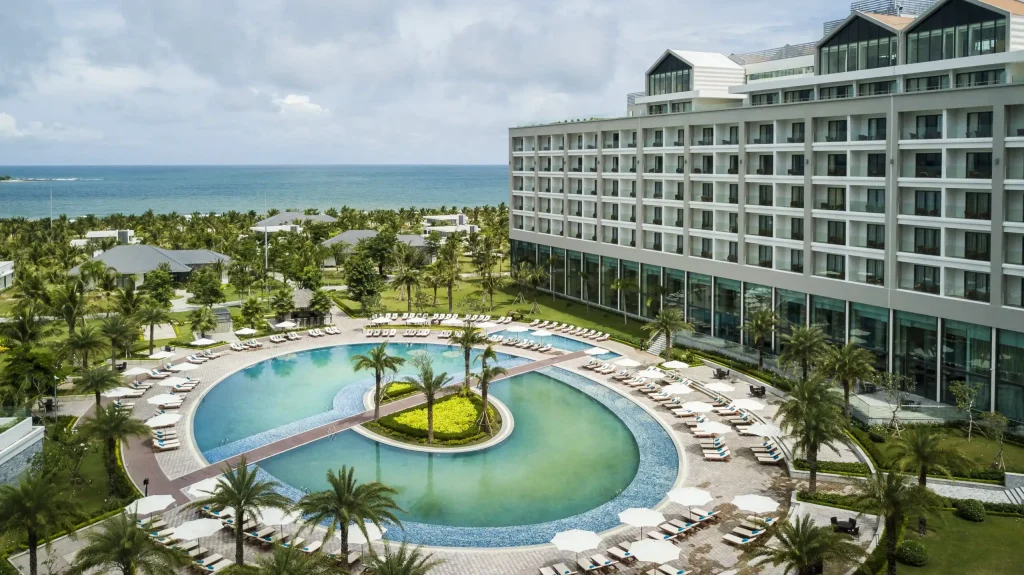
The move comes just weeks after the government approved permanent locals gaming at Phu Quoc’s Corona Resort & Casino and authorised The Grand Ho Tram to admit Vietnamese citizens under a new five-year pilot scheme.
The draft decree outlines revised rules for permitting Vietnamese citizens aged 21 and older to enter and play at casinos, while streamlining administrative processes. Existing eligibility requirements would remain: players must have full civil act capacity, demonstrate financial capability, purchase an entry ticket, and not appear on a family-requested or self-exclusion list. They would also be required to use Vietnamese Dong (VND) for chip purchases, with refunds available for unused chips.
According to the ministry, these conditions have proven effective in regulating local participation without major enforcement issues. However, the financial-proof requirement has become a practical challenge, often obliging players to submit multiple documents and creating administrative burdens for both customers and operators.
In its evaluation of the current decree, the ministry said Vietnam’s casino regulatory system remains comprehensive: covering licensing, importation of gaming equipment, public security oversight, and foreign exchange controls. Even so, officials argue that several provisions need updating or expansion to reflect new policy directions and improve regulatory efficiency.
The ministry noted that the proposed decree is intended to address practical needs and enhance policy coherence as the market continues to develop.
The report also stated that Vietnam currently has nine operational casinos—six small-scale properties and three large integrated resorts—with two additional projects under construction. Major venues are located in Ho Tram, Hoi An, and Phu Quoc.
From 2017 to 2022, the casino sector generated VND22.89 trillion ($950 million) in revenue and contributed VND11.81 trillion ($490 million) to the state budget. The industry recorded a downturn between 2019 and 2021 due to the COVID-19 pandemic.
Phu Quoc’s casino operated a pilot locals-gaming program from 2019 to 2024. During this period, Vietnamese players accounted for 52 percent of total visitation but generated 88 percent of revenue, with most customers being men aged 30 to 49.
The new five-year pilot scheme also covers the future $2 billion Van Don Integrated Casino & Tourism Complex, planned for development in a special economic zone (SEZ) in Quang Ninh Province on Vietnam’s northeastern coast. According to the developer’s latest update, the resort is slated to be fully operational by 2032.
The Sports Authority of Thailand (SAT) announced it will probe whether Cambodian athletes breached Thai law by displaying the NagaWorld casino logo on their jackets, The Strait Times reported.
SAT governor Kongsak Yodmanee stated the authority will collaborate with the Department of Provincial Administration to assess potential violations of laws that ban illegal gambling advertising.
The investigation was prompted by concerns raised on Thai social media about the logo’s appearance, which was prominently placed beneath the Cambodian national flag on the athletes’ jackets during a flag-raising ceremony at the Indoor Stadium Hua Mark on December 8th.
NagaWorld is an integrated casino resort operated by NagaCorp in Cambodia, and the Cambodian team had just arrived in Thailand for the 33rd SEA Games on the same day of the event. Further action will depend on the investigation’s outcome.
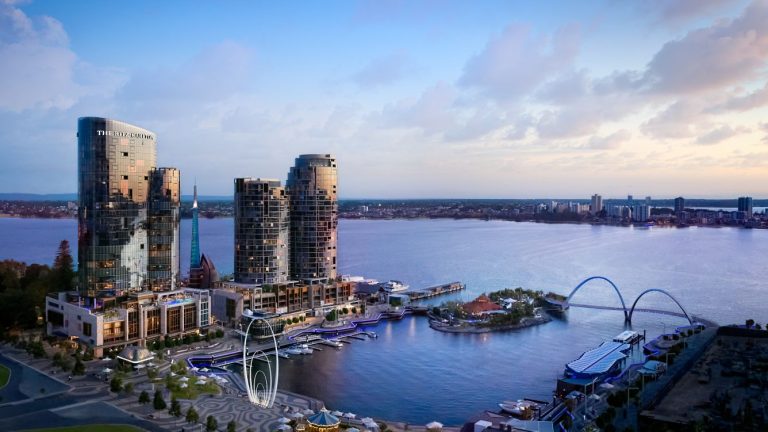
Far East Consortium International (FEC) has entered into a sale and purchase agreement to divest half of its ownership in The Ritz-Carlton Perth for AU$100 million ($66 million), according to a December 8th filing to the Hong Kong Stock Exchange.
The transaction will transfer 50 percent of the hotel’s holding entities and corresponding shareholder loans to The Generation Essentials Group (TGE), a New York–listed company that forms part of the AMTD Group’s broader media, entertainment, and hospitality ecosystem.
Under the agreement, TGE will pay AU$100 million ($66 million) through staged installments. FEC has already received the initial AU$20 million ($13.2 million), with a second AU$40 million ($26.4 million) due no later than December 29th. The remaining AU$40 million ($26.4 million) will be settled through deferred payments scheduled across 2026 and 2027. Completion remains subject to several conditions, including regulatory approvals under Australia’s Foreign Acquisitions and Takeovers Act and the fulfillment of internal restructuring steps outlined in the agreement.
The deal follows FEC’s disclosure in early November that it was exploring a potential partial sale of the Ritz-Carlton Perth to the AMTD Group under a non-binding term sheet. That preliminary discussion contemplated a joint ownership arrangement between FEC and AMTD, though no definitive agreement was reached at the time. The new transaction formalizes AMTD’s involvement through TGE as the acquiring entity.
FEC said the valuation reflects the hotel’s prime location in Perth’s Elizabeth Quay precinct and aligns with the group’s strategy of unlocking value from its hotel portfolio, recycling capital, and reducing gearing.
Upon completion, the Target Group entities linked to the hotel will no longer be consolidated into FEC’s financial statements. The company expects to record a gain of approximately AU$32.5 million ($21.5 million) from the sale, with net proceeds designated for general working capital.
Opened in 2019, The Ritz-Carlton Perth is among FEC’s flagship luxury assets in Australia. The FEC group also maintains major tourism and hospitality investments in the region, including its stake in the Queen’s Wharf Brisbane integrated resort development.
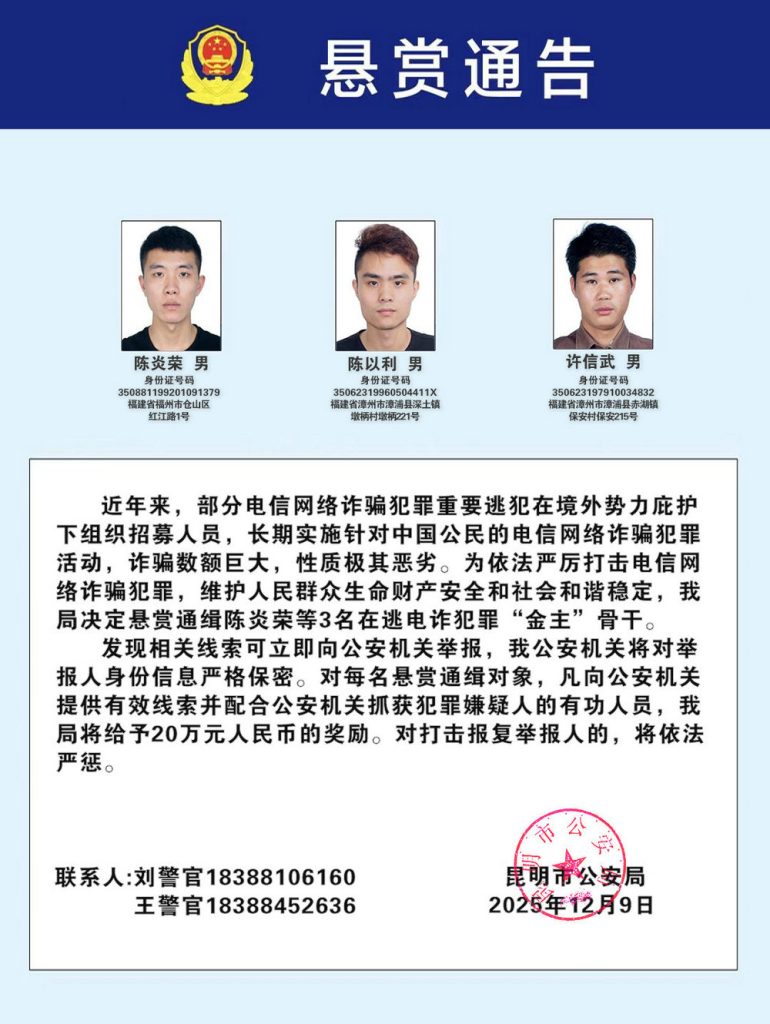
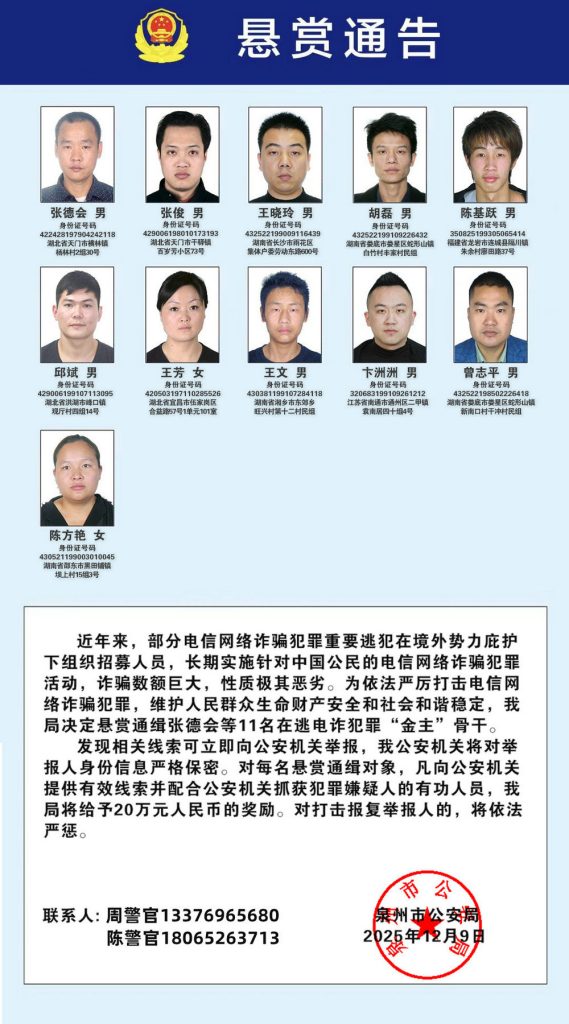
China has launched a nationwide manhunt for 100 wanted fugitives linked to major telecom and online fraud operations, while confirming that 1,178 Chinese nationals suspected of involvement in large-scale scam networks in Myanmar’s Myawaddy region have been escorted back to China.
China’s public security authorities said the latest returns bring the total number of suspects repatriated from the area to more than 6,600 since February.
The Ministry of Public Security announced on December 9th that police across multiple provinces have issued public notices seeking the arrest of key “financiers” and core members of cross-border fraud syndicates. The list includes Wu Qiping, Wu Qingzheng, Fu Xiaobin, and Ou Changhua — figures described as significant fugitives associated with the so-called “four major families” operating in northern Myanmar.
According to the ministry, these individuals allegedly recruited and organized personnel abroad to target Chinese citizens, conducting long-running telecom fraud activities involving large sums of money and causing severe social harm. Despite an intensified crackdown launched by Chinese authorities in recent years, the suspects continued to direct criminal operations from overseas under the protection of local armed groups.
Police departments in Hangzhou and Wenzhou in Zhejiang province, Quanzhou and Longyan in Fujian, Pingdingshan in Henan, Shenzhen in Guangdong, Kunming in Yunnan, and Chongqing have jointly issued bounty notices for the wanted suspects. Authorities urged all fugitives to surrender as soon as possible and called on the public to provide information that could assist in their capture. Those offering valuable leads will be protected and rewarded in accordance with the law.
The nationwide manhunt coincides with strengthened international cooperation targeting entrenched fraud hubs in Southeast Asia. According to China Central Television, coordinated enforcement involving China, Myanmar, and Thailand has led to the transfer of 1,178 additional suspects from Myawaddy — a known center of telecom scam compounds — into Chinese custody.
The repatriations follow a ministerial-level meeting held on November 14th among China, Cambodia, Laos, Myanmar, Thailand, and Vietnam, during which officials agreed to deepen joint enforcement efforts and conduct targeted operations against cross-border crime. Myanmar authorities have since carried out large-scale sweeps of scam compounds in Myawaddy, detaining groups of individuals implicated in offenses affecting Chinese victims.
Beginning December 1st, China’s Ministry of Public Security deployed police officers from Jiangxi province to Mae Sot, Thailand, to conduct charter-flight transfers of suspects handed over by Myanmar. The Jiangxi police have launched parallel investigations into the returned individuals.
Authorities said the ongoing multinational crackdown has delivered a strong deterrent effect against criminal organizations operating outside China. A senior official from the Ministry of Public Security stated that joint operations will continue, emphasizing that China remains committed to dismantling fraud networks, arresting those responsible, and protecting the safety and property of the public.
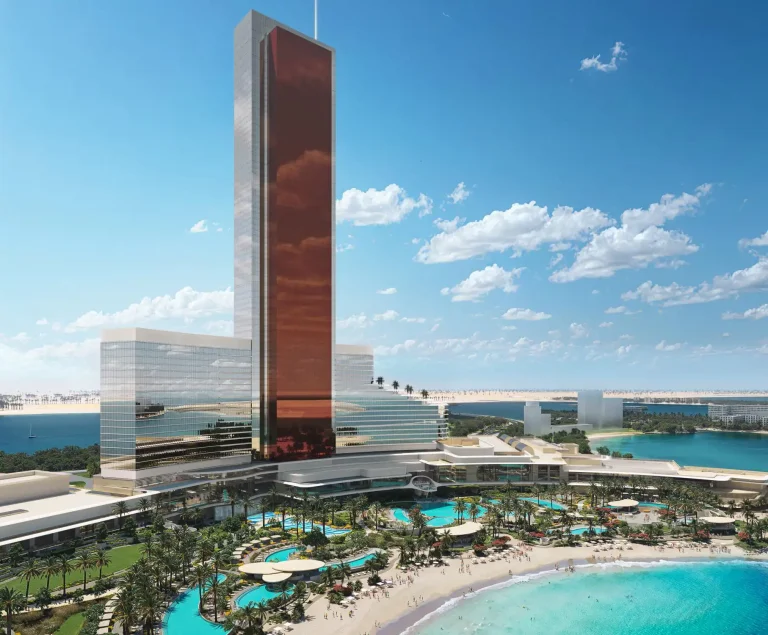
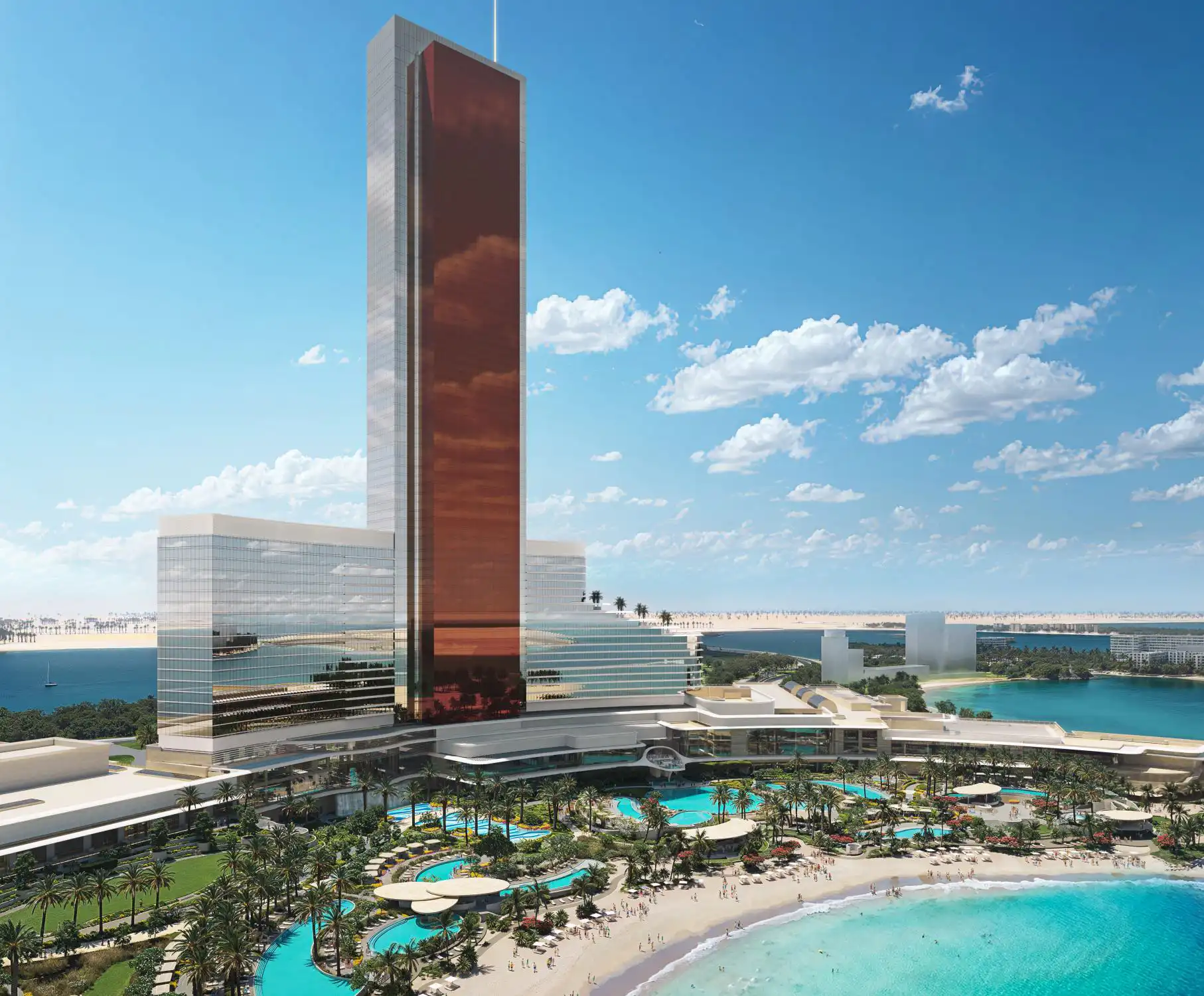
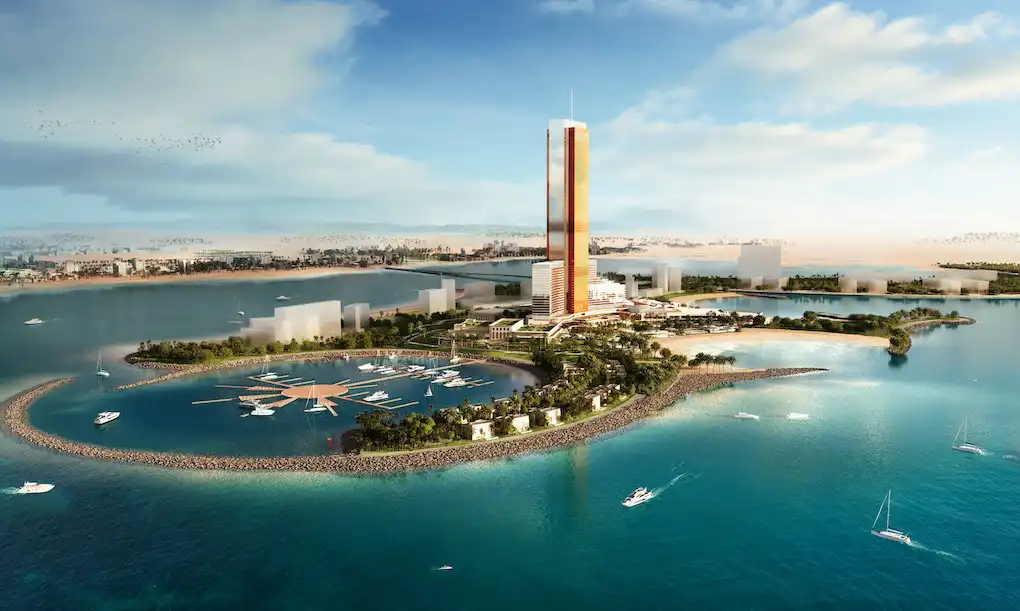
Wynn Resorts’ massive integrated resort rising on Al Marjan Island in Ras Al Khaimah is gaining traction with investors after a week-long series of site visits and presentations in the United Arab Emirates, according to Deutsche Bank analyst Steven Pizzella.
In a note following the company’s Investor Day events, Pizzella said the tour offered “a comprehensive review of the largest Wynn Resorts development project since the opening of Wynn Cotai,” adding that the visit “added value, and with it, incremental credibility, to the framing of the opportunity for Wynn longer term.”
Hotel arrival at Wynn Al Marjan IslandView from the pool at Wynn Al Marjan IslandWynn Al Marjan Island TowerSource: Wynn Resorts
He said the program — which included market briefings, real estate updates, tours of luxury retail hubs and a walk-through of the emerging property — succeeded in its primary aim.
“If Wynn’s goal was to further educate the investment community on the current market conditions and outlook […] we believe the event was a success and exceeded our expectations”, he wrote.
Pizzella came away “incrementally more positive” about the long-term potential of the $5.1 billion development, citing limited competition and what he described as four “secular tailwinds.”
The first major driver stems from a rapid expansion of high-end hotel supply in Ras Al Khaimah. The emirate’s 7,472 hotel keys are forecast to more than double to 16,229 by 2030, with roughly 91 percent in the four- or five-star categories. Wynn is expected to open into a market of around 10,000 to 11,000 rooms.
Pizzella said the build-out of luxury rooms is “pivotal” because greater capacity should bring more visitors and help lift gross gaming revenue, particularly with Wynn’s project holding the only casino license currently permitted in the UAE.
The second growth engine is the sharp increase in the UAE’s high-net-worth population. The country is projected to receive about 9,800 net new millionaires this year, up from 7,200 in 2024 and 4,700 in 2023. This surge, driven by visa reforms and zero income tax, positions the UAE as “the top global destination for millionaire migration,” Pizzella noted.
He said changes to the Golden Visa scheme — including lifetime residency, broader eligibility and a more streamlined process — will “unlock significant wealth and talent inflow,” bolstering long-term spending power.
Infrastructure build-out to lift visitation
Improving transport links form the third pillar. Pizzella highlighted ongoing upgrades that will make the resort more accessible to both UAE residents and international tourists. These include a $200 million expansion of Emirates Road – expected to cut driving times from Dubai by nearly half, an airport terminal expansion in Ras Al Khaimah – boosting annual passenger capacity to 3 million by 2028, and the planned 2026 launch of Etihad Rail – which is forecast to serve 36.5 million passengers annually by 2030.
He also pointed to plans for electric air-taxi services between Dubai Airport and Al Marjan Island starting in the first half of 2027, with a total journey time of about 15 minutes.
Pizzella said the UAE’s business environment — ranked 11th globally by the Economist Intelligence Unit — and rising livability are continuing to attract investment and new residents. The country’s non-oil economy is becoming increasingly diversified, with non-oil GDP expected to rise from 60 percent of output in 2010 to about 80 percent by 2030.
The analyst also cited safety, healthcare improvements and education as pillars underpinning population growth. Ras Al Khaimah’s economy is forecast to expand at a 5.5 percent CAGR through 2030, with the population rising from 400,000 to 620,000 and annual visitors surging from 1.3 million to 5.3 million over the same period.
Wynn outlines project economics
During the Investor Day, Wynn reiterated its EBITDA forecast of $500 million to $800 million for the property. “We believe this was prudent,” Pizzella said, noting that assumptions have not materially changed since last year.
Wynn will own 40 percent of the joint venture, with total project costs of $5.1 billion, including $550 million for land, capitalized interest and fees. About $3.4 billion has already been spent or committed, and Wynn has contributed $835 million in equity so far. Remaining equity needs are estimated at $525 million to $625 million.
Based on company assumptions, Pizzella estimates annual cash flows to Wynn — via management fees and joint-venture distributions — could reach $180 million to $370 million. When capitalized and discounted, this implies “a present equity value of $13–26 per share,” he wrote, adding that the downside case still yields “a ~16.5 percent return on equity,” while the best-case scenario delivers “~34 percent.”
Bally’s Corporation has moved to ease several long-standing financial pressures with a new $1.1 billion term-loan package that analysts at CBRE say ‘solves several lingering overhangs’ and allows management to pivot toward its flagship New York development.
In a dispatch this week, CBRE said the refinancing — built around an initial $600 million draw — will retire Bally’s outstanding $1.48 billion legacy term loan B, addressing what analysts described as a major concern.
‘The transaction cleans up the Lincoln amendment overhang,’ the note said, adding that the structure ‘uses 100 percent of proceeds to pay down debt — a legacy sticking point between Bally’s and lenders.’
The deal also includes a $500 million delayed-draw tranche that CBRE said ‘can fund the expected $500 million NYC casino license fee,’ with the entire package expected to close in the first quarter of 2026.
According to CBRE, sources of funds include the $600 million initial draw, the $500 million delayed draw, roughly $735 million in proceeds from the Lincoln sale-leaseback and an estimated $143 million draw on the company’s revolver. The analysts said Bally’s will direct the money to paying off the legacy facility and securing the New York license.
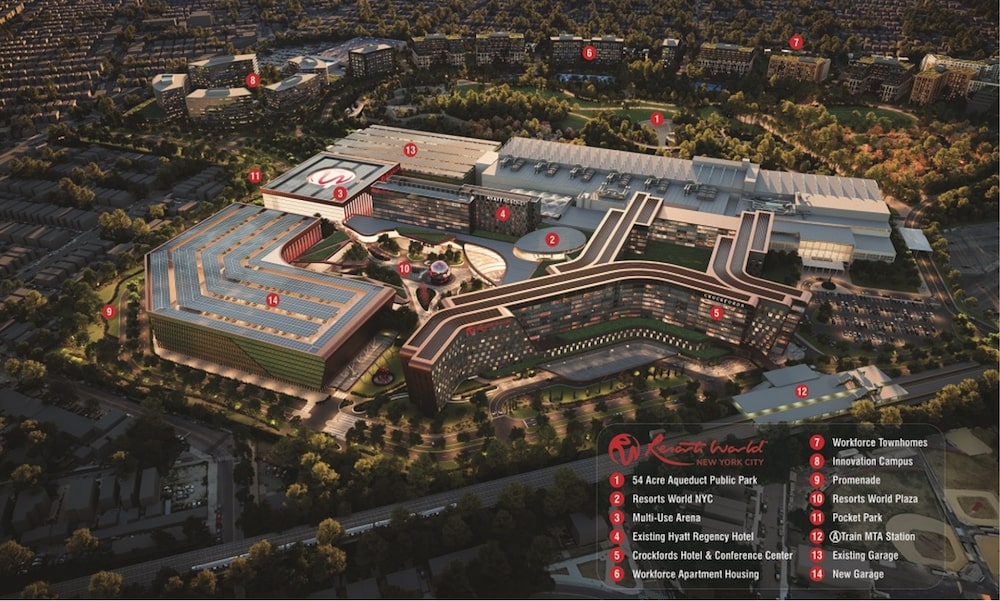
Resorts World New York City (under Genting), Bally’s Corporation, and a partnership of billionaire Steve Cohen (owner of NY Mets NBL team) with Hard Rock International are currently bidding for a New York City gaming license, with the New York State Gaming Facility Location Board having already recommended their bids to the NYS Gaming Commission for final approval.
New York bid gathers momentum
Bally’s New York $4 billion proposal is now expected to be approved by year-end (as well as the other two licenses), with the company planning a $2.3 billion integrated resort with 3,500 slots, 250 table games, a 507-room hotel and an event center, alongside park, transport and community upgrades.
While the delayed-draw loan would cover the license fee, CBRE warned that Bally’s still faces a substantial funding gap.
As part of its bid, Gaming & Leisure Properties Inc (GLPI) offered a non-binding commitment to finance ‘100 percent of the real estate assets of the project,’ including $1.95 billion of construction costs and $500 million for land acquisition. But CBRE noted the commitment ‘was contingent on further due diligence and complete analysis.’
Even with GLPI’s support, Bally’s must still finance soft costs, fees and community obligations. ‘Bally’s has liquidity on hand but is currently FCF (free cash flow) negative,’ CBRE said, adding that the company will need revolver capacity to complete its planned Chicago IR project.
Despite the heavy debt load, CBRE said the scale of the New York opportunity may draw additional investors. But analysts cautioned that the development ‘will carry a high LTV (loan-to-value ratio) which could further pressure an already levered balance sheet.’
Good Morning. You have to take risks to get rewards. Genting Berhad is showing that it is doing just that, with its takeover of Genting Malaysia and its push to secure a downstate New York casino license. But this has weakened its overall financial position, causing Moody’s to downgrade its ratings of the company and two subsidiaries, despite seeing a positive future ahead. Looking at Macau, this year’s GGR outlook has been revised up, boosted by premium play. And in further expectations for this year, Ainsworth warns of a possible dip in revenue and profit in 2H25, despite APAC remaining consistent.
Genting Berhad’s ambitious move to take over Genting Malaysia, as well as a significant investment required to secure a commercial casino license in New York, have caused Moody’s to downgrade the ratings of Genting Berhad and two subsidiaries. The group is expected to benefit from a heady first-mover advantage in New York. However, Moody’s notes that GENB has an ‘already weak position’, strained by increased debt from the takeover and further spending needed for New York.