Las Vegas Sands expects its planned $8 billion expansion of Marina Bay Sands to exceed the company’s return thresholds, with chairman and chief executive officer Patrick Dumont saying the project should be assessed against the Singapore property’s broader investment base and long-term asset productivity.
Speaking on Thursday at the Bernstein 42nd Annual Strategic Decisions Conference, Dumont said that about $2 billion of the expansion costs relates to a land premium payable to the Singapore government. He said the overall investment case should include Marina Bay Sands’ original development cost, recent renovation spending, historical capital expenditure and the new expansion.

“When you look at all that spending in aggregate and you look at the productivity of the asset in aggregate, we would exceed our return thresholds that we expect,” he said.
The expansion forms part of Las Vegas Sands’ broader premium tourism strategy in Singapore, where Marina Bay Sands has benefited from sustained investment in luxury accommodation, service, dining and entertainment, as well as structural demand from high-value regional travelers.
“If you look at our company’s history, we’ve always created success through investment,” Dumont said, adding that Las Vegas Sands has been investing behind its Singapore thesis for more than 15 years.
Marina Bay Sands’ profitability was also highlighted during the discussion, with Bernstein’s Richard Clarke referring to a 52 percent EBITDA margin. Dumont said the property’s margin structure has historically been among the strongest in the industry at scale, supported by the quality of investment and the type of patrons available in Singapore.
“It’s a very high-end market, it is rarefied air, these are best patrons in the world, and they’re there at scale,” he said.
Dumont also contrasted Singapore’s customer base with that of Macau. He said Singapore draws inbound tourists from across Southeast Asia, including Indonesia, Malaysia, Cambodia, Vietnam and Thailand, as well as some visitors from South Korea and Japan. Macau, by comparison, is primarily fed by China, Hong Kong and a smaller number of other markets.
The executive said Singapore’s appeal is supported by wealth creation in Southeast Asia and demand for distinctive travel experiences. He described Marina Bay Sands as a property that has consistently exceeded industry expectations since opening, helping support tourism growth and foreign direct investment in Singapore.

The planned expansion, referred to during the discussion as IR2, is expected to add a higher level of luxury hospitality, food and beverage, gaming and entertainment. Dumont said the project will use knowledge gained from Marina Bay Sands’ existing operations and recent upgrades to create a more elevated product.
“We’re looking at IR2 as a way to take all of that knowledge and experience and create a higher level of luxury, a higher level of unique hospitality experiences, a higher level of food and beverage, a higher level of gaming, and most importantly, a higher level of entertainment,” he said.
The project follows a $1.75 billion reinvestment program at Marina Bay Sands, which Dumont said improved the experience for high-end patrons and guests. The program focused on room design, material quality, service, food and beverage offerings and the creation of a new suite product.
Dumont said those upgrades helped support recent growth in Singapore. He also pointed to government investment in sectors that support high-value tourism, describing the market’s structural tailwinds as “extraordinary.”
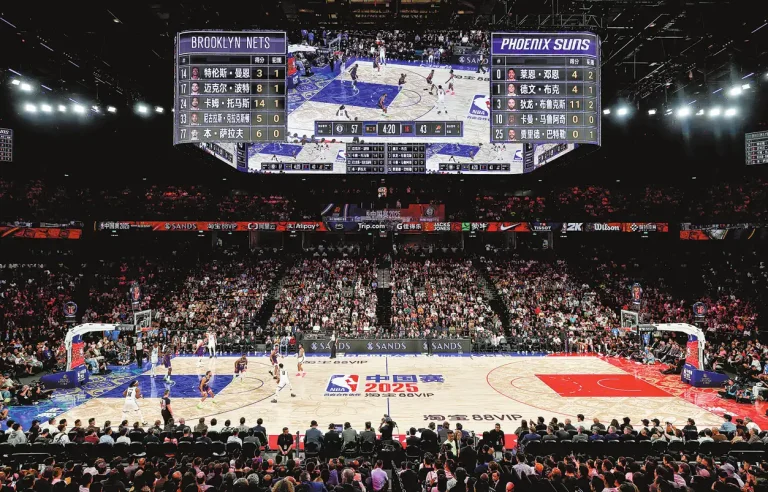
The expansion will also add MICE capacity, including another large-scale column-free ballroom, and a 15,000-seat live performance venue. Dumont said the additional facilities would allow Marina Bay Sands to host events it cannot currently accommodate, while noting that major events such as Taylor Swift, Lady Gaga and Formula 1 have helped drive visitation to Singapore.