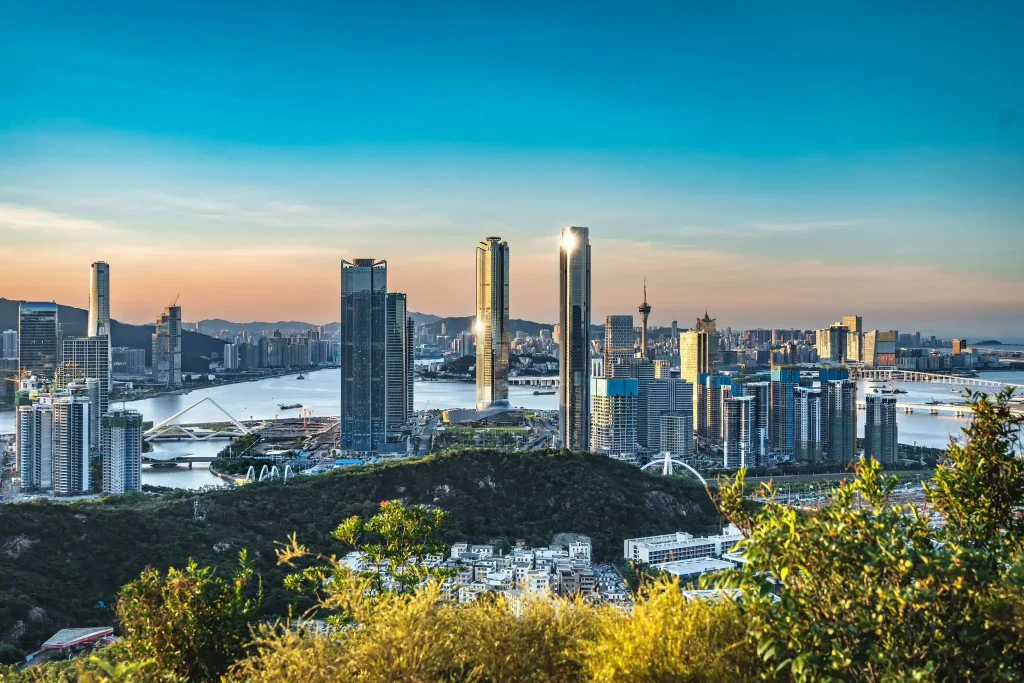
Casino operators in Macau are likely to take advantage of the proposed four new cross-border corridors linking Hengqin with Taipa and Coloane to broaden their income streams and investment reach, said Jennifer Song, senior equity analyst at Morningstar, in an interview with AGB.

Song stressed that while the Guangdong–Macau In-Depth Cooperation Zone’s new spatial plan remains “at the planning stage,” its long-term implications are significant. “If implemented, casinos will definitely leverage this convenience to expand their revenue sources,” she said. “Over time, we may also see operators increase their investments in Hengqin — on one hand to deepen customer acquisition, and on the other to boost non-gaming spending. Macau is simply too small.”
She noted that non-gaming revenue currently accounts for only around 15 percent of total gaming-sector income, far below Singapore’s 40 to 50 percent share. “The government will likely encourage operators to invest in Hengqin as part of its long-term diversification strategy,” she added.
Connectivity to enhance visitation and support growth
The draft spatial plan, now open for public consultation, proposes four new land crossings and connecting corridors — via Shizimen Avenue, Huitong Fifth Road, Lian’ao Road, and Jinjiang Avenue — linking Hengqin with key areas of Taipa and Coloane.
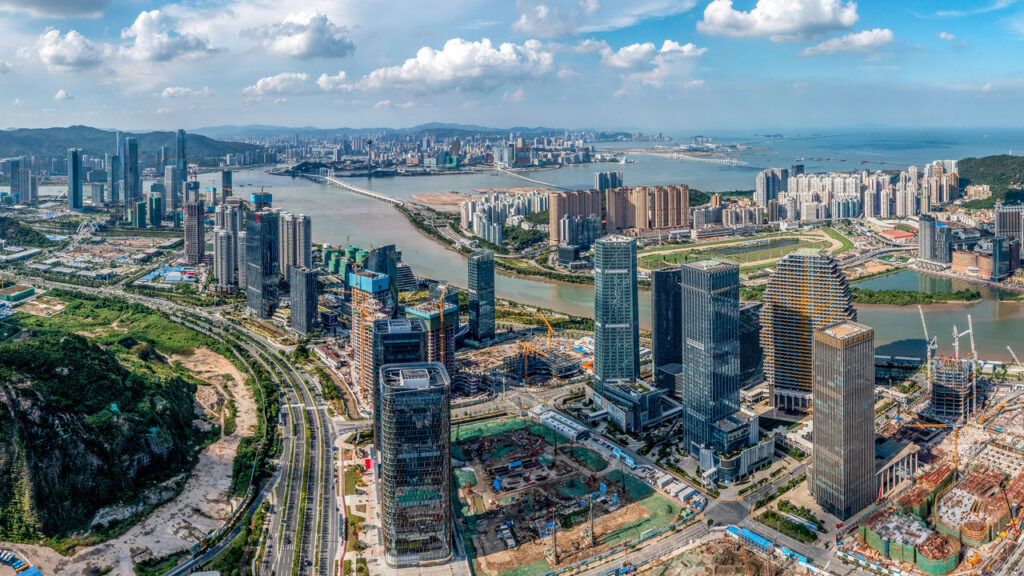
According to Song, the new infrastructure “will strengthen the integration of Hengqin and Macau” and help unlock the island’s tourism potential. “This will definitely bring more visitors into the Hengqin–Macau area, which will ultimately benefit Macau’s casinos,” she told AGB.
However, she cautioned that the impact will likely be concentrated in the “base-mass” segment rather than among premium players. “Compared to Macau, hotel rates in Hengqin are cheaper, especially during peak seasons,” she said. “So we may see more base-mass tourists staying there, while premium-mass players, who prioritize products and services, will still prefer Macau.”
Song also pointed out that the current mainland visa policy remains a key variable. “If travel permits continue to allow only one entry every one to three months, customers who wish to extend their stay will still need to book accommodation in Macau. The impact of the new crossings will depend on how visa rules evolve once the border facilities become operational,” she said.

Infrastructure and tourism synergy
The Guangdong–Macau Cooperation Zone’s draft blueprint aims to build an integrated “cross-axis belt and three major zones” layout, emphasizing coordinated rail, road, and port development between Macau, Zhuhai, and Hengqin. It also includes plans for a Guangzhou–Zhuhai–Macau high-speed rail link and multiple transit hubs to improve visitor flow.
Analysts believe enhanced cross-border mobility could serve as a long-term catalyst for Macau’s visitor growth and diversification goals. Official forecasts expect total arrivals to reach 46.43 million by 2030 — around 33 percent higher than 2024’s 34.93 million — as the territory seeks to regain its pre-pandemic level of 39 million visitors in 2025.
Golden Week drives Macau’s GGR to post-pandemic high
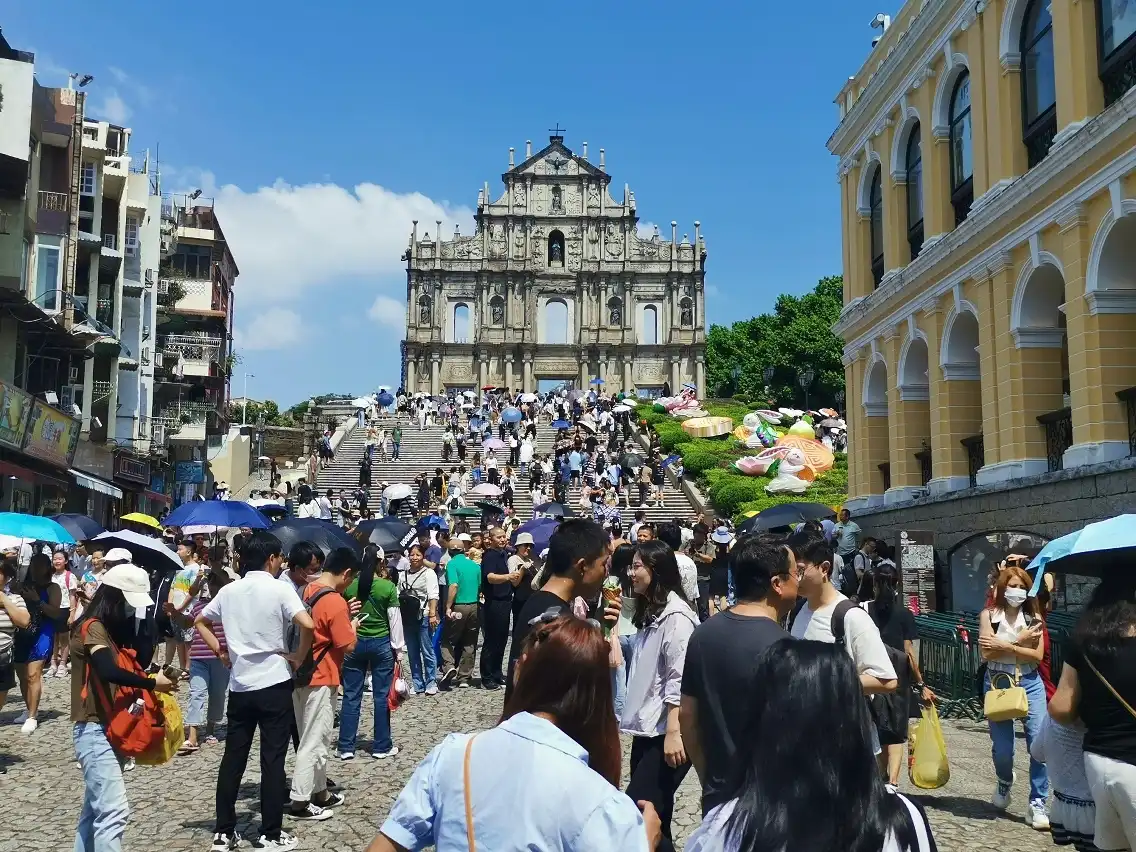
Despite typhoon disruptions during the 2025 Golden Week, Macau recorded 1.14 million tourist arrivals during the eight-day holiday, according to the Macao Government Tourism Office (MGTO).
Morningstar forecasts October gross gaming revenue to rise 11 percent year-on-year to MOP23 billion ($2.85 billion), marking a post-pandemic high.
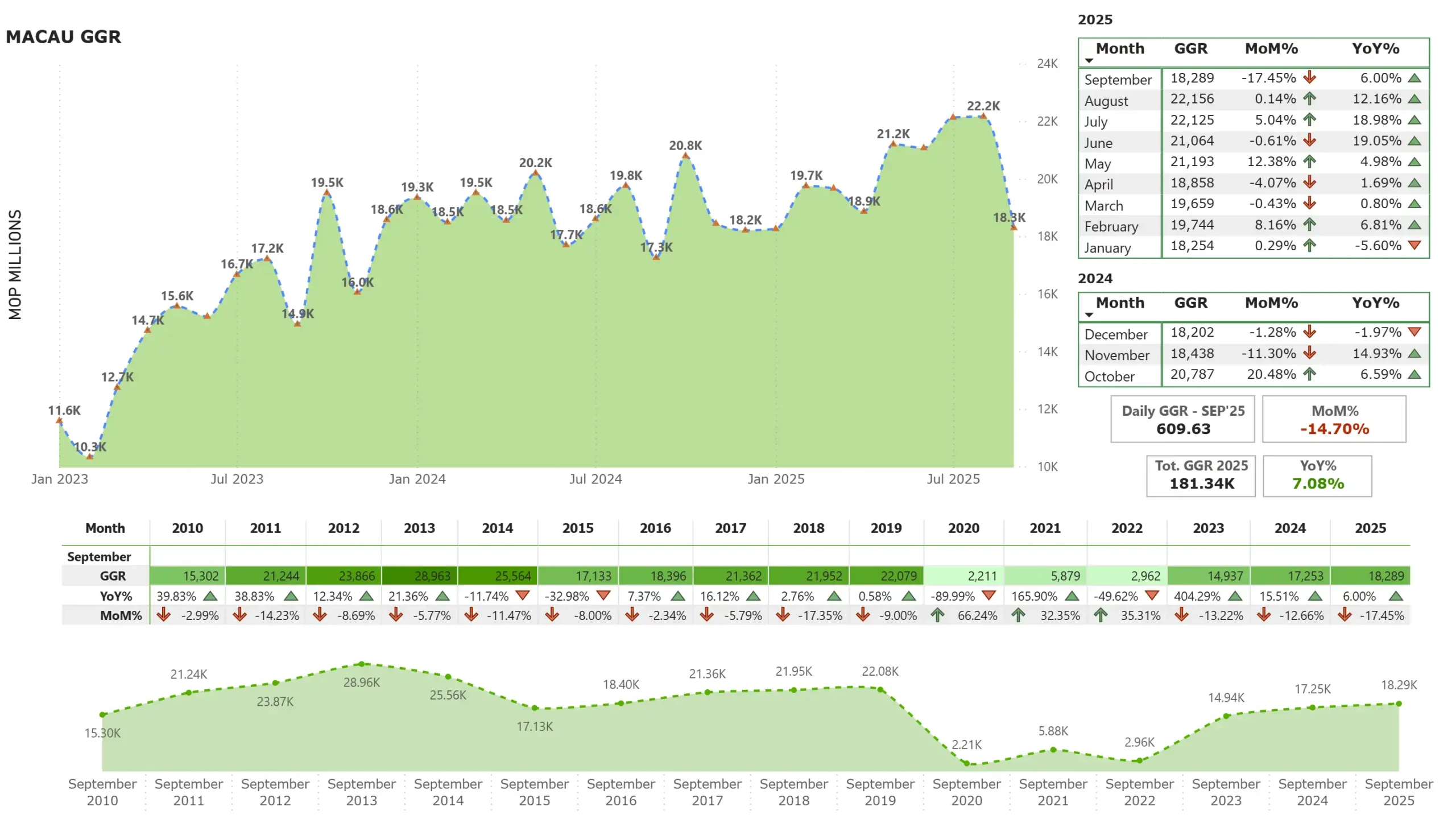
“We continue to see steady recovery momentum, driven by new hotel openings and stronger promotional activity,” Song wrote in Morningstar’s October 8th analyst note. She added that Sands China and Galaxy Entertainment remain Morningstar’s top picks in the Macau sector, supported by favorable market share trends and dividend prospects.
Morningstar estimates Macau’s gaming sector EBITDA to rise 11 percent year-on-year in the third quarter of 2025 to $2.1 billion, reflecting a steady recovery trajectory and continued investor confidence in the market.