



Macau’s gaming sector is taking a larger share of visitor spending despite the city’s broader non-gaming push, with casino play rising as both a travel motive and budget priority among mainland Chinese consumers, according to a CLSA survey of 800 Chinese nationals with past Macau gaming experience.
CLSA analysts Jeffrey Kiang, Lance Noble and Alex Zheng said the survey points to steady Macau demand ahead, with 79 percent of respondents planning to visit the city over the next 12 months. The report described the sector’s outlook as ‘momentum intact but needs boost’.
The survey found that gaming accounted for 41 percent of respondents’ reasons for visiting Macau, the highest level in CLSA’s three-year survey series, compared with 37 percent in 2024 and 32 percent in 2025.
Gaming also took a larger share of planned travel budgets, rising to 24 percent in 2026 from 19 percent in 2025. That increase came as entertainment, including concerts, and shopping lost share as travel motivations, falling to 22 percent and 20 percent, respectively, from 26 percent and 24 percent last year.

Gaming share rises as non-gaming softens
The findings contrast with Macau’s long-term policy direction of expanding non-gaming tourism and with the recent focus on entertainment-led visitation.
CLSA said gaming and non-gaming still represent a ‘healthy mix’ of travel purposes, with non-gaming accounting for 59 percent of respondents’ reasons for visiting Macau. However, the report noted that the higher weight on gaming had ‘taken a toll on entertainment and shopping’.
The broker said visitation remains supported by Macau’s proximity to mainland China, language convenience for Chinese tourists and positive safety perceptions. It also noted that Macau recorded 18.1 million visitor arrivals in the first 5 months of 2026, 5.5 percent above the same period in 2019.
Travel demand is also shifting toward major holiday periods. Some 44 percent of responses pointed to October Golden Week as a planned travel period, while 16 percent selected Chinese New Year. Interest in second-quarter public holidays declined, while 11 percent of respondents still planned to travel during ‘off-peak’ periods, a level CLSA said could support a smoother gaming revenue trajectory around Golden Weeks.
Premium customers remain the mainstay
The report also points to a widening gap between premium and non-premium visitors.
Same-day visitors accounted for 8 percent of respondents’ planned Macau trips, up from 4 percent in 2024. CLSA said these day trippers were mainly concentrated among respondents with a monthly income of RMB10,000 ($1,473) or below, indicating that ‘spending power of non-premium segments remains muted’.
By contrast, higher-income groups showed the strongest willingness to raise travel and gaming budgets. Among respondents with monthly income of RMB60,000 to RMB69,999 ($8,837 to $10,309), 57 percent planned to increase travel budgets, while the figure was 61 percent for those earning RMB70,000 ($10,309) or above.
Gaming budgets showed a similar split. Some 52 percent of respondents in the RMB60,000 to RMB69,999 ($8,837 to $10,309) monthly income group and 47 percent of those earning RMB70,000 ($10,309) or above said they had allocated more money for gaming activities on their next Macau trips.
CLSA also found that higher-income visitors plan to spend more time in casinos, with respondents earning RMB50,000 ($7,364) or above per month allocating 26 percent to 32 percent of their Macau travel time to gaming.
The survey’s player segmentation also pointed to a more resilient mid-tier base. Grind mass players, defined by CLSA as those with gaming budgets of RMB25,000 ($3,681) or less per person, accounted for 63 percent of respondents, while base mass players, with budgets of RMB25,001 to RMB200,000 ($3,682 to $29,455), rose to 31 percent. Premium mass players, defined as those with budgets above RMB200,000 ($29,455), represented 7 percent.
Visa access and regional competition
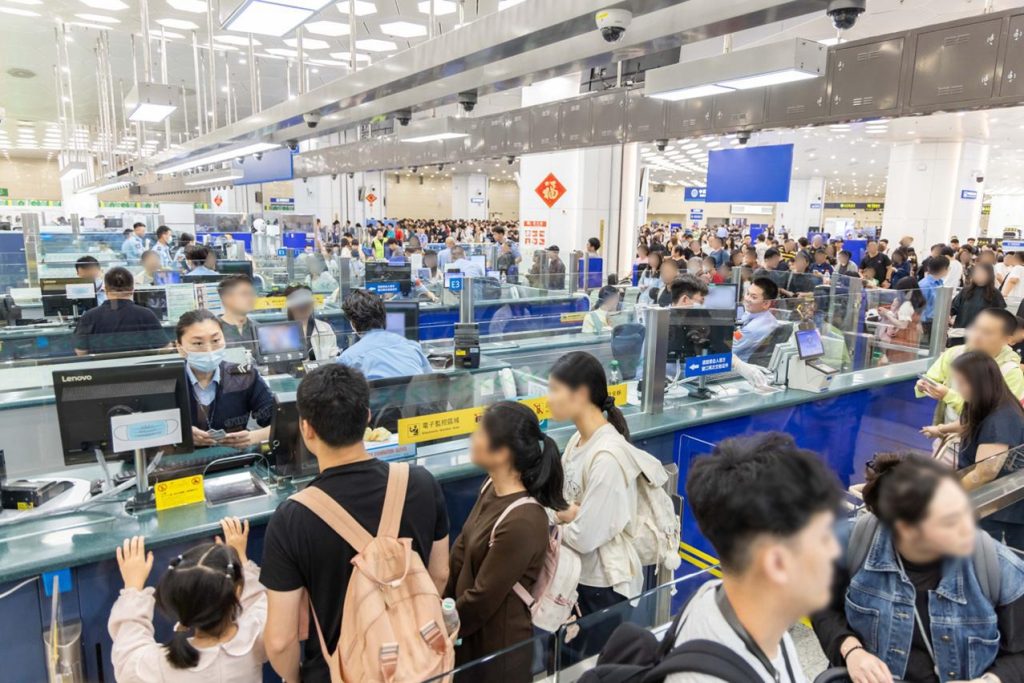
Simpler visa logistics were the single most important factor that could encourage more Macau trips, cited by 26 percent of respondents. This ranked ahead of more discounts and promotions, concerts and other entertainment events, a stronger renminbi and new integrated resorts.
The survey also showed potential regional competition for Macau. While 54 percent of respondents said they did not plan to visit gaming jurisdictions outside Macau over the next 12 months, the remaining 46 percent indicated interest in other markets. Singapore and Korea ranked as the most popular overseas gaming destinations, with 32 percent and 23 percent of responses, respectively.
Casino choices driven by quality
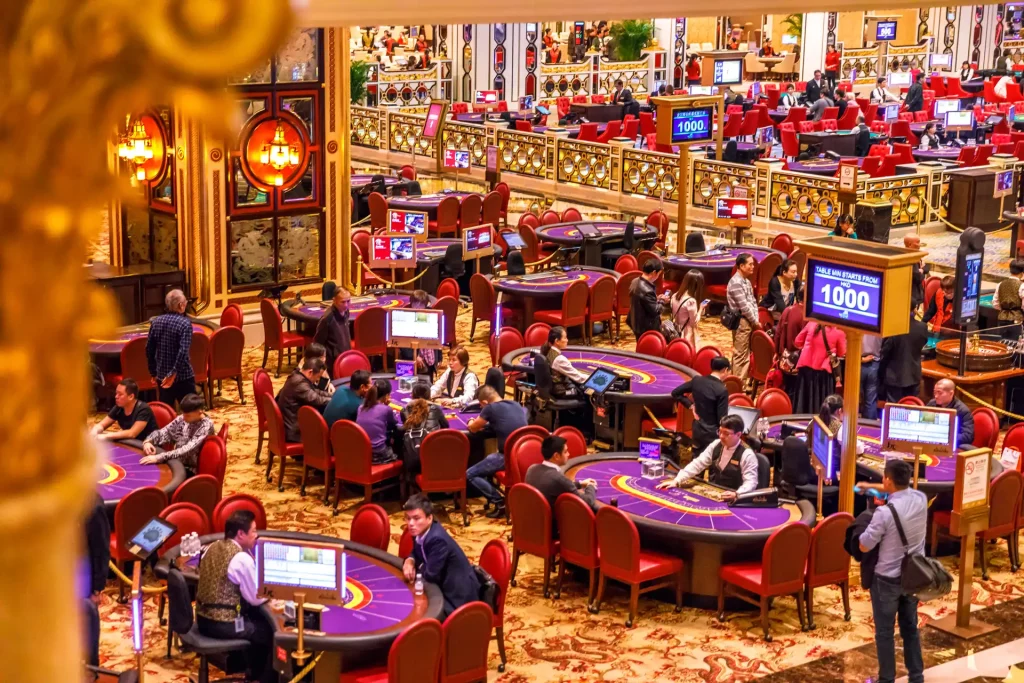
Sands China and SJM remained the most preferred operators among respondents, with Venetian Macao and Grand Lisboa receiving the highest number of votes as planned casino destinations, at 24 percent and 23 percent.
Galaxy maintained what CLSA called a ‘solid and steady’ position as both a gaming and hotel destination, despite rising competition from non-concessionaire hotels.
The report also noted a contrast between consumer preference and investment ratings, with SJM ranking strongly among surveyed visitors while being the only Macau concessionaire in the report rated ‘Underperform’ by CLSA.
Casino choice was driven mainly by word of mouth, casino product quality, staff service and positive past experiences. Loyalty programs ranked as the least-considered factor in both 2025 and 2026, while rebates and promotions were the second-least considered factor.
CLSA said this aligned with concessionaires’ view that the market competes on ‘quality and services’.
The broker added that Macau’s shopping appeal was broadly stable but no longer improving significantly, attributing the shift to a lack of new resort openings or major property refreshes after the completion of Londoner Phase 2 in April 2025 and before Galaxy Macau Phase 4, slated for the second half of 2027.