

Legalization, regulation and AI. These three foundations are shaping up to make Asia the most interesting region for sports betting in the near future. More countries are setting up frameworks to drive punters to the regulated market, while technology boosts regulatory oversight as well as creating newer and better betting offers.
Sportradar’s Managing Director (APAC) Oscar Brodkin explores this confluence and how its tech offerings are recalibrating the odds.

Live betting dominates
While not exclusive to Asia, live betting has become the most sought-after and exciting wagering style recently and the region has a “massive consumer demand for dynamic, in-play wagering,” notes Brodkin.

Currently, live betting “can account for over 90 percent of the volume in some sports such as cricket,” he notes, highlighting how a previous “traditional, manual approach” is obsolete for punters now and Sportaradar’s clients are moving away from “generic, “static” liability limits and ‘vanilla’ odds”.
In the world of live betting, data is key, and traditional methods “simply cannot handle that velocity and breadth”, he indicates – referring to the different sport preferences in each APAC region – “cricket in the subcontinent, basketball in the Philippines, baseball in East Asia and football everywhere”.
To accompany the fact that “the playbook for Asian operators is being completely rewritten,” Brodkin highlights how Sportradar’s Managed Trading Services (MTS) is utilizing both AI and Business Intelligence (BI) to “process billions of tickets”, boosting operators’ efficiency, protecting margins and keeping their “trading as sharp as possible’.
In 2025 alone, Sportradar processed “over 10 billion tickets globally”, with a “fair amount” from APAC.
One key regional partner already using MTS is the Taiwan Sports Lottery, which has a 10-year contract with Sportradar signed in 2023, with the service spread across both online and retail channels.
Brodkin notes that this type of partnership is what Sportradar is looking for, given that it can “showcase our technology with operators who can utilize our full-tech stack”.
Odds calculation
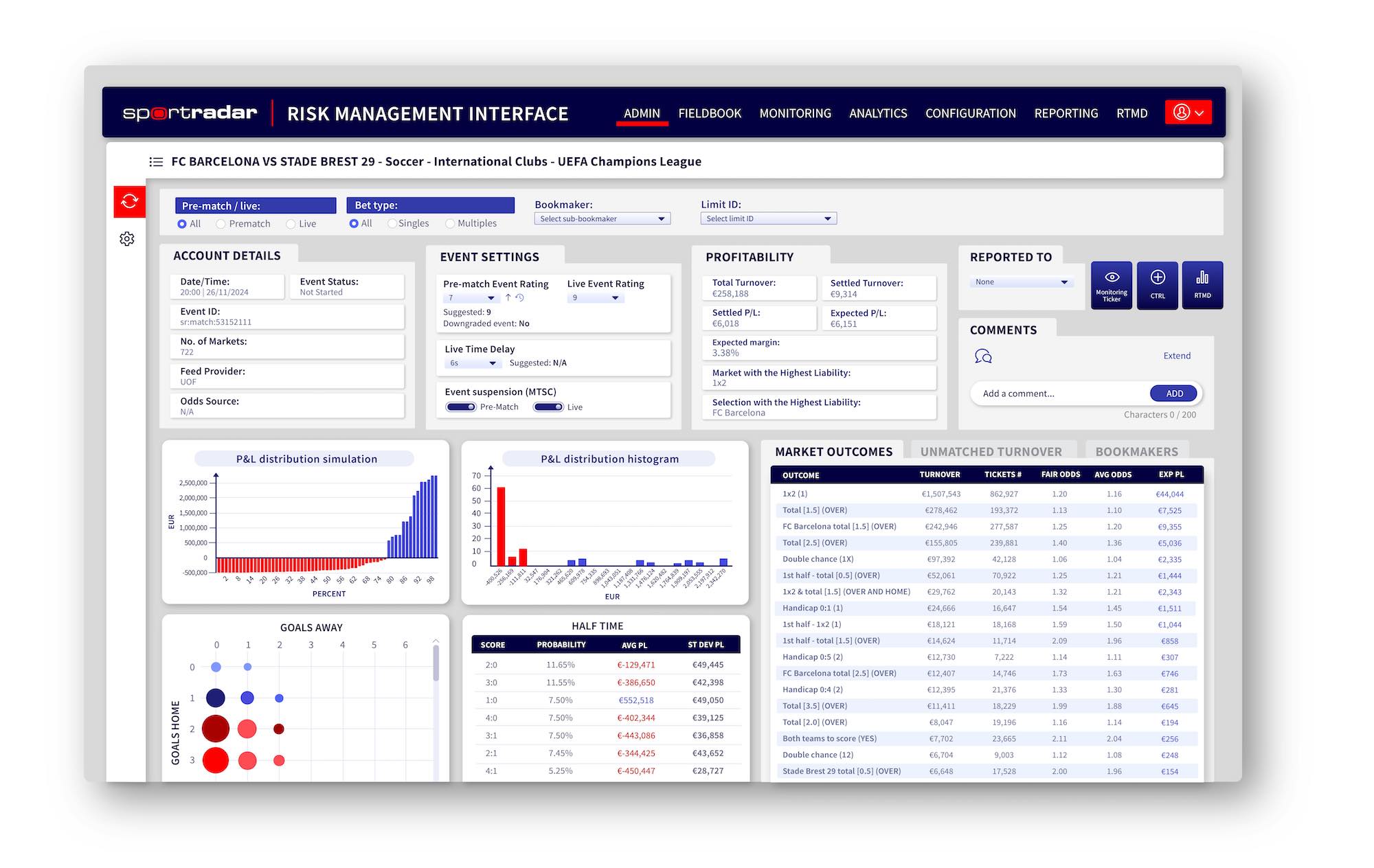
While punters may seek to defy the odds, operators keen on staying in business need to make sure that odds calculation is firmly based on reliable data. But as technology further evolves, so do the ways that operators can have personalized offers.
Sportradar has again integrated AI into this process via Alpha Odds. Brodkin notes that this product “moved us from providing a general live odds price to a unique, personalized price for each bookmaker based on their specific customer base and risk profile”.
The pitch is that the service increases profitability and competitiveness for operators, with Brodkin citing an 8 percent average monthly profit uplift, 9 percent increase in trading efficiency (being closer to expected outcomes), as well as “enhanced mitigated risk using Liability Driven Calculations and a Customer Confidence Factor”.
Risk management
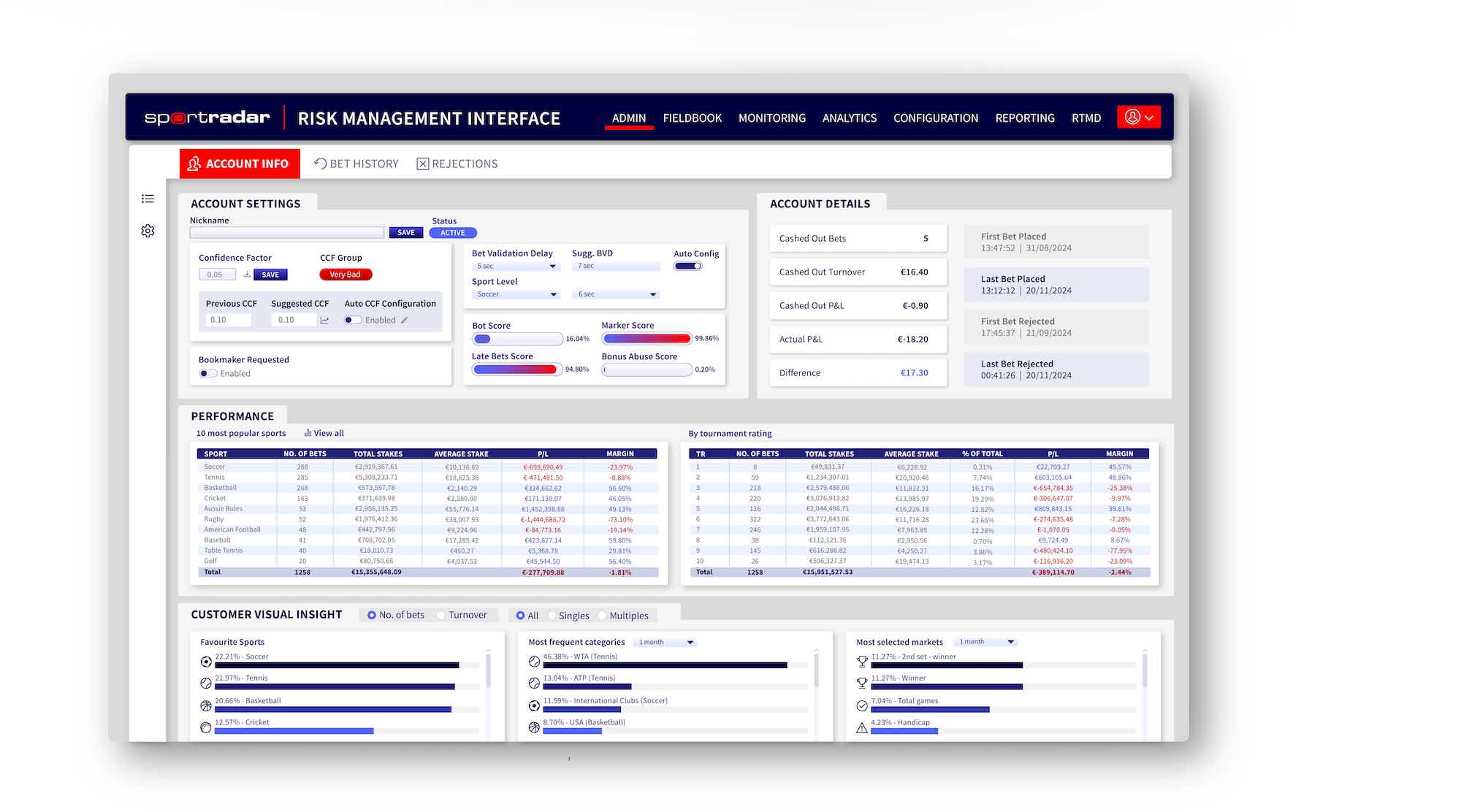
But even with the best data available, match-fixing “remains a constant threat”, even though it “occurs in less than half a percent of all matches”. But the threat looms, meaning that “trust is fundamental. If punters cannot trust the integrity of the content, they will not engage”.
To ensure trust and accurate odds calculations, Sportradar also uses its AI-powered Universal Fraud Detection System. The team behind it “continuously monitors global betting markets” using UFDS AI, as well as “direct intelligence from global betting operators via the Sportradar Integrity Exchange (SIE).
Suspicious matches are flagged, MTS is automatically notified and “appropriate actions are immediately taken”- events or markets are suspended or liability limits are reduced.
Furthermore, information on suspicious matches is shared with the sports tech company’s partners, “enabling investigations that often result in sporting sanctions and, in some cases, criminal penalties”.
What’s exciting and fresh?
Punters are always looking for new and diverse ways to place their bets, and operators now are empowered to suggest how play can be channeled.
Custom Bet allows personalized bet building for over 200 markets across six sports, supporting odds “from any provider” and giving players “tailored bet recommendations”.
“We are able to push a certain market to a customer as soon as they log in because we know they like that particular market. This combination of engaging content and personalized betting options is how we maximize player value and boost wagering activity throughout the customer lifecycle.”
These can be coupled with match visualization tools – like the NBA Virtualized 3D Live Match Tracker, a “game changer”, and live streaming of matches – a “key retention tool” which “increases live stakes as punters want to see the content”.
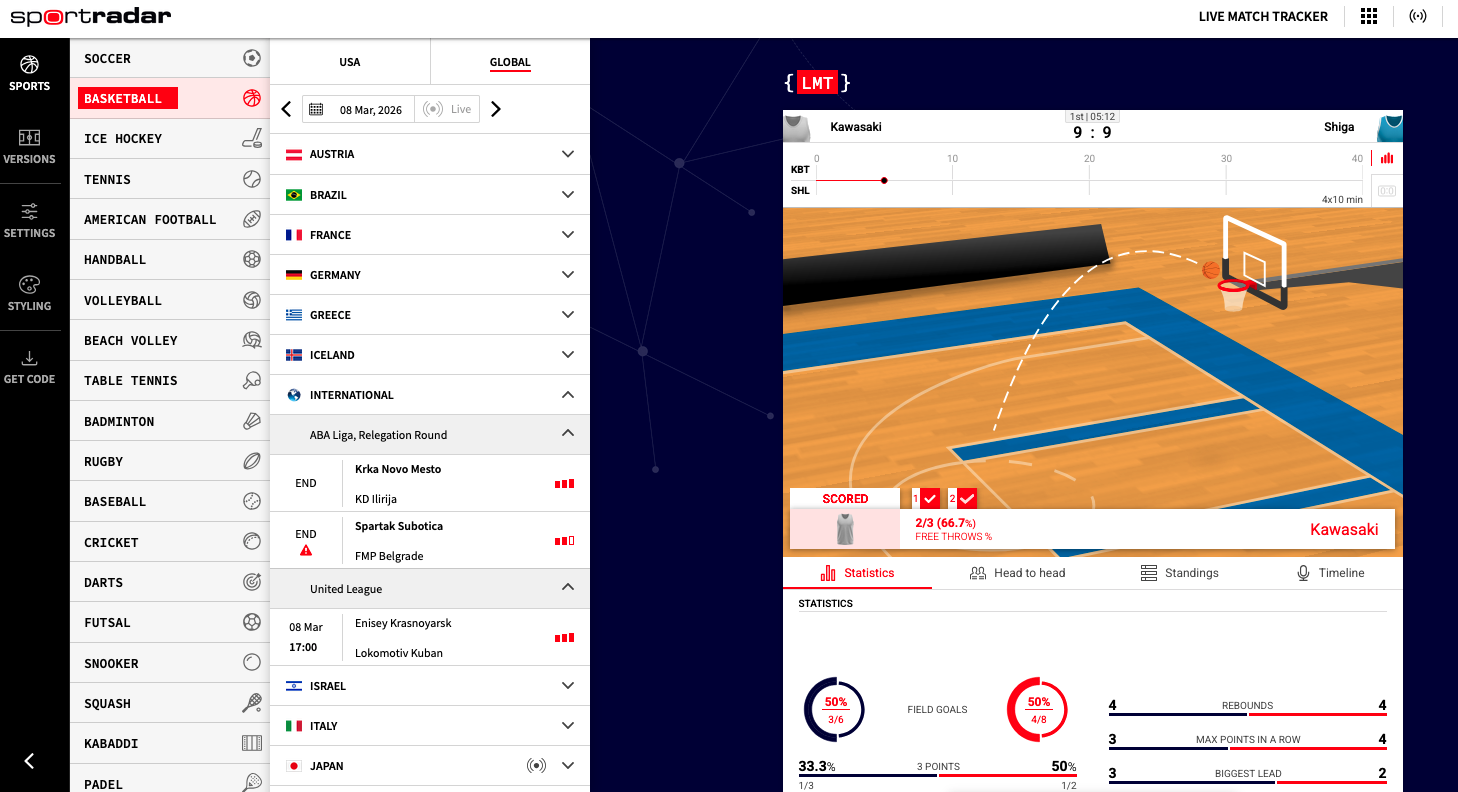
For now, Sportradar sees “a large faction of Asian operators using pirated streams,” but notes that rightsholders are also on the case given that their “properties’ values diminish over time” from the piracy.
Aiming to keep its content fresh, Sportradar is constantly fighting to remain at the forefront, seeing exciting opportunities in Asia in markets like Sri Lanka. But long-standing relationships with “global entities like the NBA, ATP, and CONMEBOL (governing body of football in South America) are critical. They guarantee the accurate, sub-second data that is the lifeblood of our MTS, especially in a live-betting-dominant region like Asia,” notes Brodkin.
And the tech company is not one to rest on its laurels, acquiring IMG Arena in 2025, adding “key properties such as Wimbledon, Roland-Garros, US Open, Major League Soccer, Football Australia, UFC and PGA TOUR, all relevant to – and demanded by – punters in Asia,” notes Brodkin.
But more is definitely in store, with Sportradar aiming for the top by making sure that it can provide the whole sports betting package.
“The ability to offer a seamless, personalized experience across all sports is where the true long-term value lies.”
Eye on the ball

Sportradar booked record yearly revenue in 2025, reaching almost €1.29 billion ($1.5 billion), a 17 percent yearly increase, with a 30 percent rise in adjusted EBITDA to €290 million ($336.73 million).
Looking to this year, the company is aiming for €1.55-1.58 billion ($1.8-1.83 billion) in revenue, with adjusted EBITDA to rise to €390-400 million ($452.86-464.47 million) for the full year.
The group held cash and cash equivalents totaling €365 million ($423.83 million) at the end of 2025, up by €21 million ($24.38 million) yearly, and had total liquidity (including an undrawn credit facility) of €585 million ($679.28 million), with no outstanding debt.