Illegal streaming websites broadcasting 2026 FIFA World Cup matches continue to thrive in Vietnam despite intensified enforcement efforts, with many of the platforms using major sporting events to drive traffic toward illegal gambling operators.
While Vietnamese authorities have successfully dismantled several major piracy networks in recent years, new copycat platforms continue to emerge almost immediately, offering unauthorized access to premium sports content. During Sunday morning’s World Cup match between Scotland and Haiti, which was being legally broadcast in Vietnam by national broadcaster VTV, numerous illegal websites were simultaneously streaming the fixture without permission.
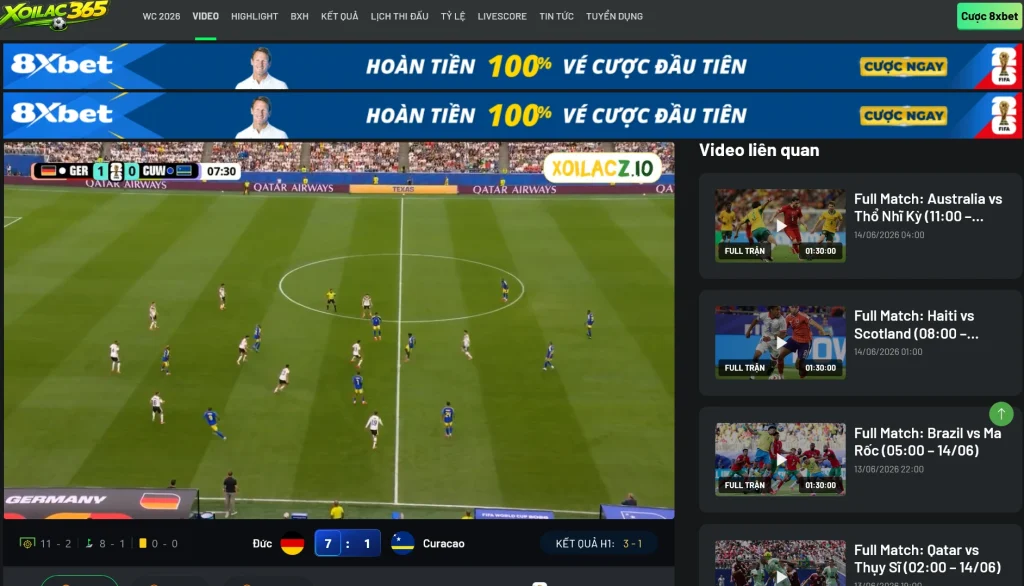
Many of the platforms operated under different domain names using prefixes such as “ukiss,” “yess,” “fitma,” and “fundition,” while incorporating the name “XoilacTV” – a brand long associated with illegal sports streaming services in Vietnam. The websites replicated the interface and user experience of the original XoilacTV platform, allowing visitors to access live football streams with minimal effort.
However, authorities and industry observers have noted that many of these websites are heavily monetized through advertisements for illegal betting platforms, with banners promoting offshore gambling services displayed prominently alongside match broadcasts. Although enforcement campaigns have previously taken down large-scale piracy operations, including the original XoilacTV network, similar platforms continue to resurface using new domains and technical infrastructure.
Industry experts have pointed to the huge demand for live sports content in Vietnam, particularly during global tournaments such as the World Cup, as a key driver behind the persistence of illegal streaming services. The enormous online audiences generated by these events create valuable advertising space, with operators frequently using pirated broadcasts as a gateway to promote betting websites and gambling-related services.
The financial incentives involved allow these networks to rapidly rebuild after enforcement actions, with hundreds or even thousands of XoilacTV-style clone sites reportedly available to replace domains that are blocked or removed. Operators are also increasingly migrating beyond traditional websites, using social media platforms and encrypted channels to distribute unauthorized streams. Illegal broadcasts have been detected through private Facebook groups, TikTok accounts, and Telegram channels, where operators attempt to avoid copyright enforcement systems.
Common techniques include mirroring video feeds, modifying audio frequencies, and adding animated overlays or frames designed to bypass artificial intelligence-based copyright detection tools throughout the duration of matches. Vietnam has stepped up its wider campaign against intellectual property violations, including digital piracy. By the end of last month, authorities had identified 2,036 suspected intellectual property infringement cases, with 1,616 resulting in administrative penalties totaling VND17.9 billion ($679,700).
The value of goods and services linked to infringement cases exceeded VND115.5 billion ($4.4 million), while more than 1,600 organizations and individuals were subject to sanctions. Authorities also blocked access to 1,073 infringing websites, including 263 illegal movie platforms, 177 pirated comic websites, 612 unauthorized television streaming sites, and 21 e-commerce platforms suspected of industrial property violations.
In addition to administrative enforcement, investigators launched 44 criminal cases connected to intellectual property violations. These included seven cases involving copyright and related-rights violations, alongside 37 cases related to industrial property infringement. The continued emergence of illegal World Cup streaming platforms highlights the challenge facing authorities as piracy networks combine high-demand sporting content with online gambling promotion and increasingly decentralized distribution methods.