
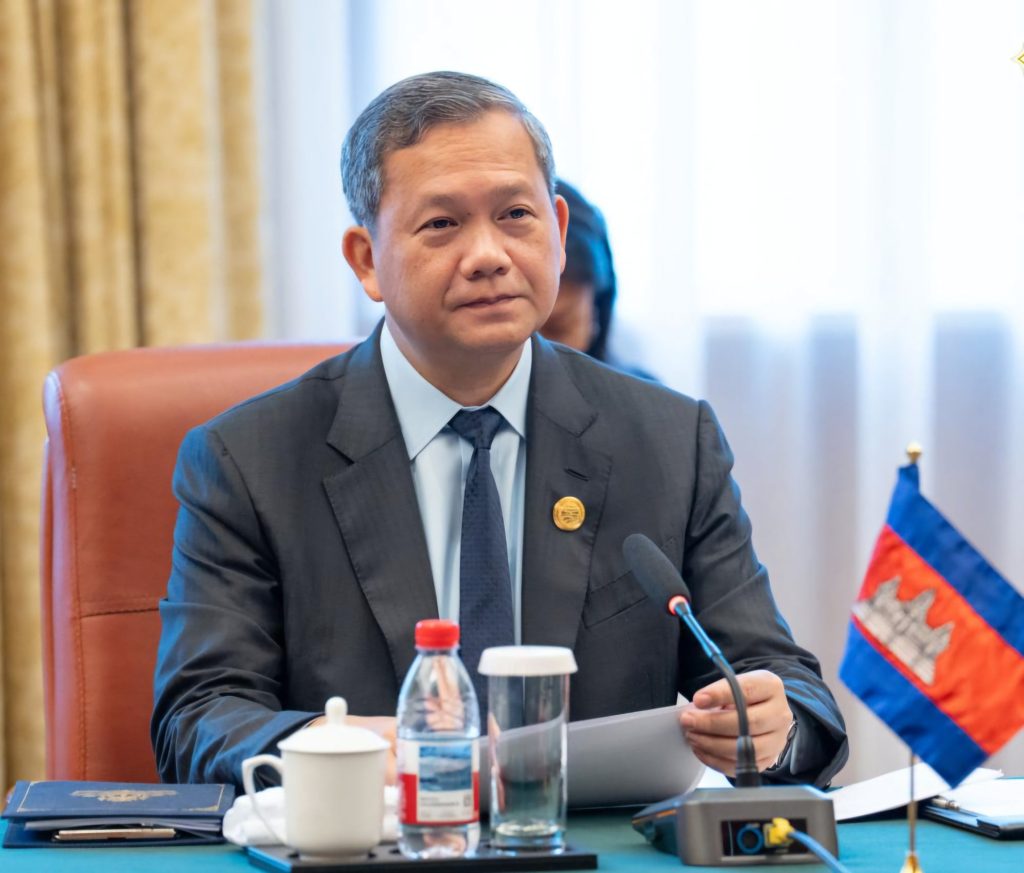
Cambodian Prime Minister Hun Manet said his government was unaware of alleged scam activities linked to Chinese-born businessman Chen Zhi before his arrest and extradition, rejecting claims of official complicity as authorities intensify a crackdown on online fraud networks.
In a rare interview with AFP in Brussels, Hun Manet said Chen — a former adviser to both himself and his father, former prime minister Hun Sen — was regarded as a legitimate investor until allegations surfaced. “We did not know that he was the kingpin,” Hun Manet said, referring to accusations by US prosecutors that Chen led a sprawling cyber-fraud empire operating under the guise of his Prince Group conglomerate.
Chen was arrested in January and extradited to China. Hun Manet said Cambodian authorities acted after learning of the alleged wrongdoing. A prior background check “did not raise red flags”, he said, noting that Prince Group operated in more than 30 countries, including Britain, in sectors such as real estate and financial services.
US prosecutors have alleged that Chen directed forced labor compounds in Cambodia, where trafficked workers were held in heavily guarded facilities and forced to carry out online scams targeting victims worldwide. Prince Group has denied the allegations.
Hun Manet said Chen was extradited to China, rather than the United States, because he held only Chinese nationality after being stripped of Cambodian citizenship for using a fake document to obtain it.
Cambodia has emerged in recent years as a hub for online scam centers accused of generating billions of dollars annually through romance, investment and cryptocurrency fraud schemes. The prime minister described the scam industry as a “black economy” that is “destroying our honest economy” and damaging Cambodia’s reputation, particularly in tourism and foreign investment.
He denied that the government had profited from the activity, though he acknowledged that scam operations had indirectly boosted some business sectors, including real estate and construction.
Separately, Cambodian authorities said a nationwide crackdown has reduced online scam activity by half since the start of 2026. Senior Minister Chhay Sinarith told Bloomberg News on February 25th that “the problem of online scams has fallen to just 50 percent”, describing the figure as a preliminary estimate without detailing the methodology.
Officials say thousands of arrests, dozens of raids, and the deportation of foreign nationals have taken place amid mounting pressure from China, the United States and human rights groups to dismantle the networks.