

The US Department of the Treasury has imposed sanctions on criminal networks in Myanmar and Cambodia accused of running large-scale cyber scam operations that defrauded Americans of more than $10 billion in 2024, a 66 percent increase over the previous year.
The action, announced on September 8th by the Treasury’s Office of Foreign Assets Control (OFAC), targets entities linked to forced labor, human trafficking, and transnational organized crime.
Under Secretary of the Treasury for Terrorism and Financial Intelligence John K. Hurley said Southeast Asia’s cyber scam industry “not only threatens the well-being and financial security of Americans, but also subjects thousands of people to modern slavery.” He stressed that under President Trump and Secretary Bessent’s leadership, Treasury will use “the full weight of its tools” to combat the networks and protect US citizens.

Scam centers in Myanmar and Cambodia
The sanctions include nine targets operating in Shwe Kokko, Myanmar, under the protection of the Karen National Army (KNA), previously designated as a transnational criminal organization. Shwe Kokko has become a notorious hub for virtual currency investment scams, often involving trafficked workers coerced into defrauding Americans through online schemes.
In Cambodia, OFAC designated 10 entities linked to cyber scams operating from casinos-turned-criminal compounds in Sihanoukville. These facilities, originally developed by Chinese investors as gaming venues, were repurposed into centers for virtual currency scams once those activities proved more profitable.
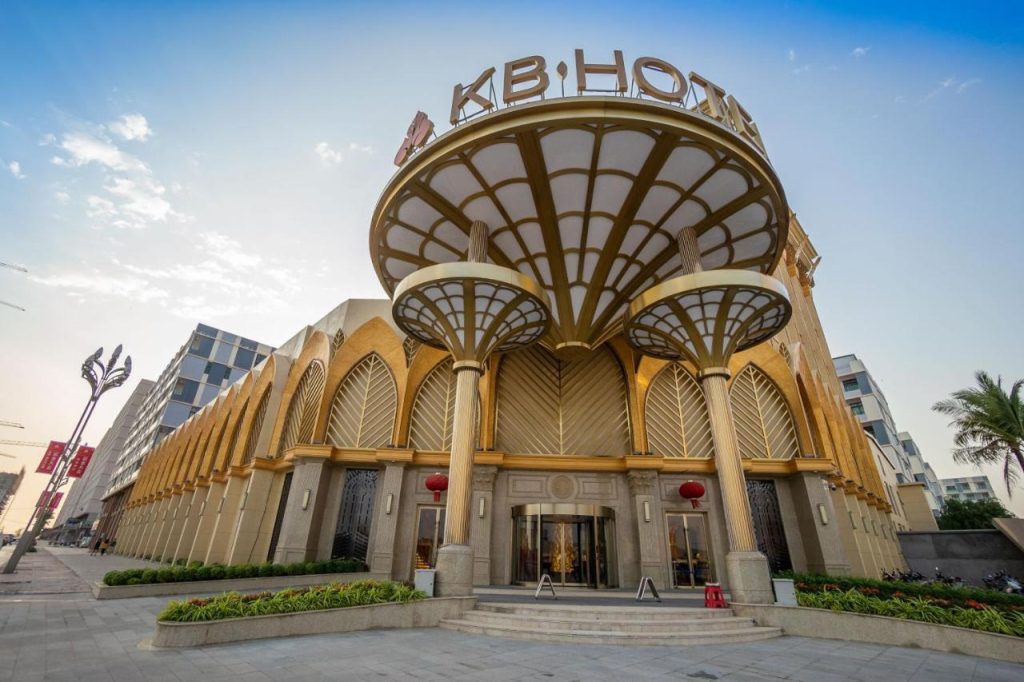
Companies such as T C Capital Co. Ltd. and K B Hotel Co. Ltd. are accused of using casino and hotel complexes to launder illicit proceeds, while victims of human trafficking were forced to carry out cyber scams from within the compounds. Several of the operators have prior convictions in China for money laundering and illegal gambling.
Sanctions framework and implications
The designations were made under multiple authorities, targeting transnational crime, malicious cyber activities, and serious human rights abuses.
As a result, all property and interests in property of the designated individuals and entities in the United States or under US jurisdiction are blocked and must be reported to OFAC. Entities owned 50 percent or more by sanctioned individuals are also automatically blocked.
Unless specifically licensed by OFAC, US persons are generally prohibited from engaging in transactions with sanctioned parties. This extends to financial institutions and other businesses worldwide that might otherwise provide funds, goods, or services to the blocked entities. Violations may result in civil or criminal penalties.
The Treasury emphasized that the sanctions aim not only to disrupt illicit financial flows but also to address the human rights abuses underpinning the scam networks. “The ultimate goal of sanctions is not to punish, but to bring about a positive change in behavior,” the department noted.
The designations build on prior actions against entities such as Huione Group, identified as a primary money laundering concern, and Funnull, which sold bulk internet protocol addresses to cybercriminals. The crackdown highlights Washington’s broader effort to dismantle Southeast Asian cybercrime infrastructure that increasingly targets Americans with so-called “pig butchering” investment scams.