Philippine Senator Joel Villanueva has introduced a bill aimed at repealing the tax law on Philippine Offshore Gaming Operators (POGOs).
This move follows President Ferdinand R. Marcos Jr.’s decision to ban all POGOs in his recent State of the Nation address.
The proposed Senate Bill seeks to revoke POGO licenses permanently and grants a 30-day period for these operators to cease their activities.
In line with President Marcos’s directive, it is essential to ensure the complete removal of POGOs from the Philippines. The bill stipulates that failure to comply could result in imprisonment for 12 to 20 years, a fine of PHP100 million ($1.7 million), or both, with foreign offenders facing deportation after serving their sentences.
The bill also mandates that the Bureau of Internal Revenue continue collecting unpaid taxes from POGOs despite the repeal. Additionally, a Workers’ Transition Program will be implemented to assist Filipino workers affected by the closure.
Villanueva emphasized that the negative impacts of POGOs far outweigh any benefits from their tax payments, advocating for their expulsion from the country. If passed, the bill will repeal the law taxing POGOs enacted in 2021.
The Philippine Amusement and Gaming Corporation (PAGCOR) has reported a 26 percent year-on-year rise in its expenses for the first half of 2024, according to its latest financial statement.
For the six months ending June 30, 2024, PAGCOR’s total expenses reached PHP15.64 billion ($266.60 million), a 26 percent increase from the same period last year when expenses were PHP12.3 billion ($220.88 million).
The actual spending also surpassed the gaming regulator/operator’s target expenses by 20 percent, a recent financial dispatch shows.
Personnel services expenses significantly contributed to the overall expense increase, rising 28 percent to some PHP7 billion ($119.3 million). Maintenance and other operating expenses also experienced a substantial 52.5 percent rise to PHP5.3 billion ($90.4 million), reflecting various operational costs that escalated over the year.
Despite the rise in expenses, PAGCOR’s total income significantly increased. For the first half of 2024, PAGCOR reported total income of PHP51.76 billion ($882.31 million), up 42.92 percent from the PHP36.22 billion ($617.36 million) reported in the same period last year.
This increase in income helped to offset the rising expenses, resulting in a net income of PHP6.57 billion ($111.94 million), a sizeable 192.23 percent increase from the net income of PHP2.25 billion ($38.34 million) in 1H23.
Gaming operations remain the primary revenue driver for PAGCOR, accounting for PHP22.29 billion ($386.7 million) in 1Q24 revenues.
Within this segment, the E-Games sector contributed PHP9.69 billion ($168.1 million), while licensed casinos brought in PHP8.04 billion ($139.4 million).
The first half of 2024 has been marked by significant financial activity for PAGCOR, with substantial increases in both income and expenses.
The corporation’s ability to boost its income while managing rising operational costs will be crucial as it navigates the challenges and opportunities in the gaming sector for the remainder of the year.
President Ferdinand Romualdez Marcos Jr. ordered a ban on all POGOs during his third State of the Nation Address on the 22nd of July.
PAGCOR’s Chairman Alejandro H. Tengco recently highlighted that the government stood to lose PHP40 billion ($686.55 million) in taxes and fees if the ban were to come into effect.
Tengco furthered that PAGCOR brought in some PHP56 billion ($961.2 million) in gross gaming revenue from the online sector last year.
In the first half of this year, some PHP17.5 billion ($300.38 million) was brought in by PAGCOR from online operators, estimated to swell to PHP42 billion ($720.92 million) for the full year due to license fee collections.
Authorities in New Zealand are doing an about-face on their regulations, choosing to authorize regulated online casinos under a strict licensing, taxation, and consumer protection regime, expected by early 2026.
As announced by the Minister of Internal Affairs on Tuesday, the new regulatory system should “be in place from early 2026”.
Minister Brooke van Velden clarified that “There will be a licensing system for online casinos, where operators will need to comply with a set of criteria before they will be able to offer services to New Zealanders. It will be illegal for unlicensed operators to offer services to New Zealanders”.
Under New Zealand legislation, the only way to gamble online was via the lotto and the New Zealand Racing Board (TAB). No New Zealand-based companies are currently allowed to offer online casino games.
Authorities indicate that there will be a limited number of licenses available, distributed by auction. Licenses are valid for three years and are conditional on regulatory requirements.
The minimum age for gambling will be set at 18, with operators only able to offer online casino games, ‘not sports betting or lottery products’.
The changes also mean that ‘licensed gambling operators will be allowed to advertise, which is currently prohibited, but with strict limits’.
Authorities further that ‘sponsorship by online casinos will remain illegal’.
Oversight will be conducted by the Department of Internal Affairs.
The Minister clarified that “This is not intended to increase the amount of gambling New Zealanders do but to ensure operators meet requirements for consumer protection and harm minimisation, as well as paying tax”.
Gaming operator SkyCity has already weighed in on the issue, noting that it ‘remains supporting of the regulation of online casino gaming in New Zealand with an emphasis on strong host responsibility and delivering community benefits in New Zealand’.
Good morning. Cut off one head and another will grow to take its place. Such is the scenario with a major Chinese-targeted operation which has been illegally promoting gambling through operations as blatant as sponsorship of European football club sponsorships. An in depth report explores how the group continues to operate in the shadows, and just how nefarious its activities are. Meanwhile, Thailand is seen as Macau’s ‘frenemy’, according to analysts at CLSA, which predict its gaming market could be worth as much as $15.1 billion.
A top Chinese cybercrime group linked to European football club sponsorships continues to operate, illegally promoting gambling websites in Asia. A report by cybersecurity firm Infoblox delves into how the Vigorish Viper technology suite manages to target residents of Greater China and other victims worldwide, through a complex operation likely underpinned by forced labor.
Online gaming fraud is on the rise in the iGaming industry. In Q1 2022, there was an 85% increase in fake account registrations compared to Q4 2021. While players are undoubtedly affected by gaming fraud, iGaming platforms also suffer due to damaged reputations, huge financial losses, and legal consequences.
The total number of hotel rooms in Macau has risen to 47,000 in June, a yearly increase of 9.1 percent.
According to the most recent data from the SAR’s Statistics and Census Service (DSEC), some 143 hotel establishments were operating in the city in June, up by 12 yearly.
The average occupancy rate of the guest rooms also rose by 6.1 percentage points yearly to 84 percent during the first half of the year, with five-star hotel registering occupancy of 85.8 percent, while those of four-star hotels reached 80.4 percent.
During the first six months of the year, some 7.27 million guests stayed in Macau’s hotels, up by 20.4 percent yearly and a rise of 5.3 percent compared to the first half of 2019.
International hotel guests increased by 136.6 percent yearly, with those from South Korea rising by 270.6 percent, to 149,000.
Package tour visitors to Macau during the first half of 2024 totaled 968,000, up by 166 percent yearly, with those from mainland China increasing by 143 percent, to 851,000.
International tour visitation rose by 843.6 percent, to 102,000 – with noticeable increases from South Korea (42,000, up by 14,31 percent) and India (13,000, up by 2,045 percent).
A comprehensive report from cybersecurity firm Infoblox has revealed the workings of an extensive Chinese cybercrime network, previously linked to European football club sponsorships, which continues to illegally advertise gambling websites in Asia.
The Infoblox report outlines how Vigorish Viper, a sophisticated technology suite that underpins a vast illegal gambling operation, uses a broad range of technologies, including software, DNS configurations, website hosting, payment systems, and mobile apps.
This technology facilitates a comprehensive cybercrime supply chain, supporting numerous gambling brands that sponsor European sports teams. These brands exploit the $1.7 trillion illegal gambling market by targeting residents of Greater China and victims worldwide.
The technology suite was developed by the Yabo Group (also known as Yabo Sports or Yabo) a known organization responsible for running possibly the largest illegal gambling operation targeting Greater China, prior to its reported dissolution in 2022.
The Yabo Group has been linked to controversy in Europe surrounding the use of certain football club sponsorships, including several in the English Premier League, such as Manchester United, to illegally advertise unregulated gambling sites in Asia.
The Asian Racing Federation (ARF) Council on Anti-Illegal Betting and Related Financial Crime identified Yabo as “possibly the biggest illegal gambling operation targeting Greater China” and directly tied it to practices of modern slavery in which victims are forced to support gambling services.
Linked companies continue to operate
Researchers from Infoblox – a privately held IT automation and security company based in California’s Silicon Valley – found that the former company spawned an assortment of offshoots ‘laundered into a series of new entities, including Kaiyun Sports, KM Gaming, Ponymuah, and SKG’.
While Yabo Sports has rebranded and reorganized, adopting new identities like Kaiyun Sports and Ponymuah Ltd., the underlying technology and operations remain the same, controlled by the original crime syndicate. These brands continue to mask their true operations behind layers of shell companies and false credentials.
The report highlights the global reach and sophistication of Vigorish Viper’s operations, which leverage advanced technologies such as data mining, blockchain, and artificial intelligence to enhance their criminal activities. This technological prowess underscores the challenge of dismantling such well-organized and adaptable networks.
“Vigorish Viper represents one of the most sophisticated and important threats to digital security that we have discovered to date”
Dr. Renée Burton, Vice President of Infoblox Threat Intel
“Infoblox Threat Intel used cutting-edge DNS research to discover the technologies underpinning the syndicate. Vigorish Viper created a complex infrastructure with multiple layers of traffic distribution systems (TDSs) using DNS CNAME records and JavaScript, which makes it incredibly difficult to detect.”
European Sports Betting Scandal
Vigorish Viper is said to be intricately connected to the controversy over European football club sponsorships that illegally promote gambling sites in Asia. Chinese organized crime groups use these sponsorships to advertise gambling websites, enticing Chinese viewers to place bets.
These sponsorships were established with English Football League clubs, but most notably with teams in the English Premier League, the most-watched football league in the world, with an estimated 4.7 billion viewers, many in Asia.
Despite sanctions from the UK Gambling Commission, which targeted several brands linked to Vigorish Viper, the operation persists, with new sponsorship deals secured with teams across Europe.
The report noted how Chinese criminal syndicates have drawn sports teams into their illicit activities and leveraged the teams’ popularity as a force multiplier.
Despite gambling being almost completely illegal in Greater China, it is estimated that citizens in the region bet nearly $850 billion annually.
‘Through a series of shell companies using fake identities and credentials, the Chinese organized crime groups establish brand presence, typically represented by a so-called white label intermediary who provides local representation and bona fides’, the report points out.
Chinese domain kb[.]com displayed on a deal between KB Sports and the French football club Girondins in October 2023
‘Players wear the sponsor’s logo on their shirt during games, or the logo is advertised on pitchside boards of the stadium, or both. The games are broadcast in China, often illegally, where viewers are enticed to visit the website and bet on their favorite club.’
KB Sports, for example, signed a three-year sponsorship deal that year with the French football club FC Girondins, allowing it to advertise pitchside. According to Infoblox, the gambling operator’s website isn’t available in Europe, but it is accessible in Hong Kong, Macau and mainland China, where gambling is a massive industry despite being illegal.
The website, as accessed from a residential Chinese IP address, initially loads but incorporates numerous security mechanisms to ensure the user is a legitimate gambler. If the server detects suspicious activity, it will disconnect the user. Constant monitoring of the user’s actions and connection is in place.
The website content is entirely in Mandarin with no available translation, featuring images of various sports figures and scantily clad young women. Betting categories include football, NBA, soccer, lotteries, casino games, online games, and VIP tables. QR codes for downloading iOS and Android apps are also available.
The site includes a support page with instant chat options through a web app, as well as links to Skype and QQ, a popular Chinese instant messaging service. Based on site interactions, the customer support appears to be live rather than AI-based, with the website also containing fake links to official companies at the bottom of the pages.
If a user remains idle but their activity is deemed authentic by the server’s fingerprinting routines, a random ad is displayed. These ads often promote financial bonuses under conditions requiring regular betting. For instance, one ad offers up to RMB10,000 ($1,500) if the user deposits at least RMB500,000 ($70,000) within a week.
Sample kb[.]com page images as seen from China
These systems are complemented by their own encrypted communications and custom-developed applications, making their activities not only elusive but also remarkably resilient.
Vigorish Viper is linked to kb[.]com and other sanctioned entities, forming a complex web of criminal activities. Tens of seemingly unrelated gambling brands that advertise by way of sponsorship deals with certain European sports teams use Vigorish Viper technology.
While these brands appear distinct, they operate more like the branches of a franchise, further highlighting the importance of a holistic view on such threats that only DNS brings to the table.
“DNS analytics led to the discovery of Vigorish Viper and constitutes the best mechanism for tracking the actor’s infrastructure. Stopping Vigorish Viper is also most effective via DNS because the actor changes rapidly”, added Burton.
By examining the DNS data, Infoblox was able to trace this vast criminal enterprise back to the Yabo Sports/Yabo Group organization, which uses a sprawling network of domain names, websites, and applications to facilitate an extensive illegal gambling operation targeting users across Southeast Asia and beyond.
The firm warned that despite the network’s massive scale and overt public presence through sponsorships of high-profile European football clubs, Vigorish Viper has managed to operate with impunity in China.
It then recommends blocking DNS resolution of all domains associated with Vigorish Viper to protect users from the dangers of this illegal gambling network, which is linked to organized crime, scams, and human trafficking.
The report also highlights how trafficked distribution systems enable cybercriminals to evade detection for years, suggesting the need for greater industry and government collaboration to identify and shut down these hidden operators.
‘Vigorish Viper’s network is just one more example. Our hope is that industry, academia, and government institutions will look at new avenues to detect and control these hidden operators, and thereby combat the current economic trend of cybercrime’, the company underlined.
Foreign POGO workers have been given a deadline of September 24th to voluntarily leave the Philippines or face deportation.
The Bureau of Immigration (BI) announced on Monday that its order for foreign Philippine Offshore Gaming Operators (POGOs) workers to depart the country offers no exemptions, even for those who have families and children in the Philippines.
According to BI spokesperson Dana Sandoval, there is no room for adjustments in the procedure; foreign workers must leave the country. Sandoval explained that foreign workers cannot alter their stay status to remain in the Philippines.
She stated that the limitation on their stay is due to the downgraded operations of their companies. They cannot extend their stay or convert it to any other type of visa.
Sandoval also mentioned that Commissioner Norman Tansingco has requested a meeting with other visa-issuing agencies to standardize actions in handling foreign workers. This move aims to ensure a consistent approach across relevant departments.
The BI has instructed approximately 20,000 foreign workers, the majority of whom are Chinese nationals, to leave the Philippines following President Ferdinand R. Marcos Jr.’s announcement of a total ban on POGO and internet gaming licensee operations during his third State of the Nation Address.
The President also directed the Philippine Amusement and Gaming Corporation (PAGCOR) to end POGO operations by the end of the year.
The SOFTSWISS Casino Platform, an award-winning software for online casinos, shares the results of its Referral System. In Q2 2024, the number of referred users increased by 219% compared to Q1 2024.
With the implementation of the Referral System, operators have full control over referral bonus rules and the sum of the welcome reward, creating appealing conditions for new players. This added flexibility has driven substantial growth in key metrics. Deposits from referred players increased by 251% in Q2 2024, while the Gross Gaming Revenue (GGR) rose by 452% compared to the previous quarter.
Beyond the financial success, the Referral System has received several important updates. One major enhancement is Duplicate Protection, which aims to reduce the risk of bonus abuse.
Another notable update enhanced the management of referred players in the back office. It allows operators to manage them with advanced grouping and filtering capabilities. With the update, operators can process bulk activities on players, such as sending emails, issuing different bonuses, managing payment systems, and more.
Daria Avtukhovich, Head of SOFTSWISS Casino Platform, comments: “With the high average cost of acquiring a new casino player, the Referral System has saved our partners hundreds of thousands of euro. Additionally, referral audiences usually show higher trust and similar behavior patterns to existing players. We encourage our partners to promote the Referral System to attract a more qualified audience for free.”
The United Arab Emirates (UAE) General Commercial Gaming Regulatory Authority (GCGRA) launched its official website and issued its first federal lottery license, in a move hailed as a significant step towards legitimizing the Emirates’ commercial gaming sector.
This landmark decision positioned the UAE as the first Gulf state to legalize gaming.
The GCGRA has provided comprehensive details on commercial licensing procedures, types of licenses, and the definition of commercial gaming, with its website also profiling key regulatory personnel and announcing the recipient of the UAE’s first federal lottery license.
The initial lottery license has been awarded to The Game LLC, a subsidiary of Abu Dhabi-based Momentum. Operating under the brand “UAE Lottery,” The Game LLC is the first entity to be licensed by the GCGRA.
Jim Murren, the Chairman of the GCGRA, commented in a dispatch by the operator that the launch of the UAE Lottery is a “pivotal event” that not only marks the establishment of a disciplined world-class regulatory framework for lottery activities but also underscores a commitment to nurturing a “secure and enriched commercial gaming environment in the UAE”.
According to CBRE analysts, the launch of the official GCGRA website and the publication of licensing procedures represent a ‘significant step forward in legitimizing and adding transparency’ to the UAE’s commercial gaming industry’.
‘This development is expected to alleviate skepticism within the investment community regarding the legalization of commercial gaming in the UAE,’ a CBRE dispatch comments.
Headquartered in the city of Abu Dhabi, the GCGRA holds exclusive jurisdiction to regulate, license, and supervise all commercial gaming activities and facilities in the UAE.
The licensing procedures outlined on the website include references to land-based gaming facilities, indicating potential plans for integrated resorts (IRs) in the UAE. Commercial gaming is broadly defined to include slots, table games (such as blackjack, roulette, baccarat, craps, poker), lottery, internet gaming, and sports wagering.
Lottery regulation and market potential
CBRE analysts also posited that regulation of lotteries was anticipated, given the UAE’s history of grey market operations and existing customer acceptance.
‘Despite the first license being granted to a local company, opportunities for larger international lottery operators to establish partnerships in the UAE remain viable. This approach is consistent with practices in other global lottery jurisdictions,’ the dispatch added.
The Game LLC’s lack of direct public investment opportunities means that the initial news serves more as a confirmation of the UAE’s evolving commercial gaming market rather than an immediate investment opportunity.
While key economic details such as Gross Gaming Revenue (GGR) tax and royalty rates remain undisclosed, the licensing framework was said to provided useful insights, notably, gaming licenses may be perpetual, provided operators remain compliant.
‘Although there appears to be an initial term with a set expiration date, the renewal process seems administrative, making the UAE licensing environment more stable and predictable compared to other regions like Macau and Singapore. This predictability could lead to higher valuation multiples for UAE commercial gaming operations’, the dispatch stated.
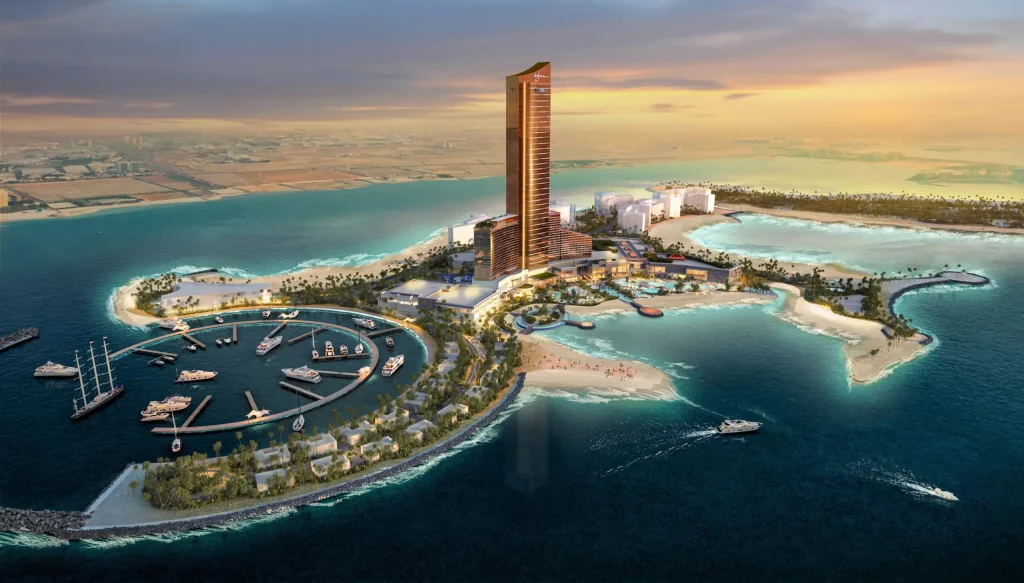
The brokerage also considered that the weekend’s regulatory progress could expedite debt financing solutions for Wynn’s IR project in the region, the Al Marjan Island.
Wynn Al Marjan Island, Ras Al-Khaimah
Overall, CBRE analysts considered that the UAE remains a ‘highly attractive global gaming opportunity’.
‘The GCGRA, staffed by experienced gaming veterans, has been diligently developing industry-leading regulations, now coming to light. The detailed and thorough licensing process should be well-received by investors seeking transparency in this expanding market’, the dispatch comments.
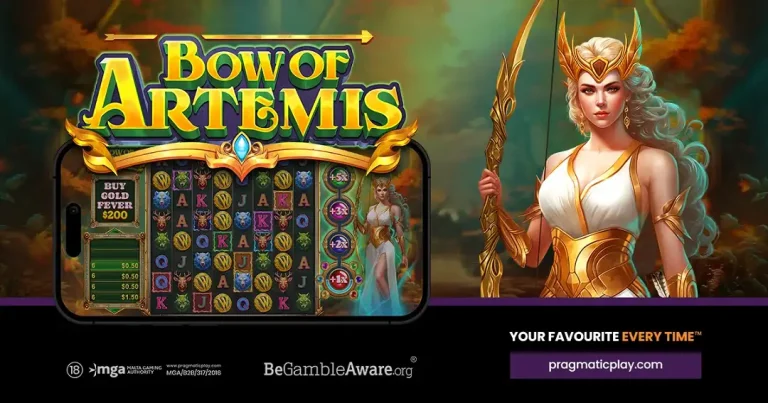
Pragmatic Play, a leading content supplier to the iGaming industry, has launched Bow of Artemis, the latest epic addition to its popular Greek Gods series.
The fabled Goddess of the Hunt takes aim at wins when 5-25+ symbols connect horizontally or vertically on the 8×8 grid. In the base game, coloured markings can appear randomly behind normal symbols on every winning spin. When a win occurs on a marked spot, it triggers one of six special spin features after tumbles.
The special spin features confer a range of benefits on players, each designed to increase winning opportunities. These include refreshing the grid with new symbols, transforming all instances of a random symbol into wilds, adding colossal symbols to the reels, and populating the grid with up to 30 instances of a random paying symbol.
Artemis also has The Hunt feature in her sights. On every spin, the number of winning symbols that exploded during tumbles is counted in a meter. When the meter fills, The Hunt feature activates at level one with a total multiplier of 1x, 2x, 3x or 5x depending on how many winning symbols were collected.
Irina Cornides, Chief Operating Officer at Pragmatic Play, said: “Expanding Pragmatic Play’s award-winning Greek Gods series, Bow of Artemis introduces a range of special spin modifiers and a thrilling multi-level bonus game, all of which can help players in their hunt for wins of up to 10,000x.”