

Home Blog Page 648

Light & Wonder sees 13 consecutive quarters of consolidated revenue growth

Light & Wonder has delivered yet another strong quarter, marking its 13th consecutive period of yearly revenue growth and its eighth consecutive quarter of double digit revenue growth.

During the second quarter, gaming revenue topped $530 million – a 14 percent yearly increase, while overall revenue reached $818 million – up 12 percent yearly, and net income hit $130 million – up 40 percent.

Gaming machine sales increased by 32 percent, to $228 million, while gaming systems operations were up 15 percent, to $82 million. Table products revenue fell by 8 percent yearly, to $54 million. Gaming operations revenue was up 5 percent yearly, to $175 million.

The group notes that it ‘achieved robust growth in International Gaming Machine Sales, notably in Asia as well as Australia where we maintained the #1 ship share’.

The group also saw its Gaming segment’s AEBITDA rise by 17 percent yearly due to the revenue growth, reaching $272 million.

International unit shipments rose by some 33 percent yearly, to over 5,500 units, ‘driven by sustained strength in Australia and replacement sales in Macau’.

The group notes that North American replacement units rose by 16 percent yearly, to roughly over 5,800 units, ‘primarily driven by ongoing expansion in adjacencies, including Canada and Oregon VLTs (video lottery terminals), HHR (historical horse racing), and Georgia COAM (coin operated amusement machines’.

SciPlay, Light & Wonder

The group’s SciPlay arm also saw revenue rise by some 8 percent, driven by four primary titles, hitting $205 million and achieving a 19 percent yearly rise in AEBITDA, to $70 million, due to ‘continued monetization and engagement across key metrics delivering solid performance’.

In iGaming, the 6 percent yearly increase in revenue, to $74 million, was ‘primarily driven by continued momentum in the US’, with US and Canada OGS (OPENGAMING System) GGR up by 25 percent due to ‘market growth and increased volume of land-based content’. This marked a record quarter in the US.

The segment’s AEBITDA was flat, at $24 million.

Light & Wonder, Matt Wilson
Matt Wilson, CEO, Light & Wonder

Commenting on the results on Thursday, Matt Wilson, President and CEO of Light & Wonder, noted “These great results not only reflect the strength of our business but are a testament to the strength of our people at Light & Wonder. When you focus on building the best teams, those teams build the best games.”


Interesting changes proposed in Amendments to Singapore’s Casino Control Bill

Singapore has introduced an amendment to its Casino Control Bill, which underwent its first reading in the country’s Parliament on Tuesday. The bill introduces some interesting measures aimed at tightening regulations and improving effectiveness, while also aiming to protect vulnerable groups.

One of the main elements aimed at improving casino operator (CO) conduct is the move to allow operators to share patron data with each other without requiring consent from the patron.

The authorities note that this is in line with its efforts to tackle money laundering, terrorism financing and the proliferation of financing. It also fits with Singapore’s recent moves to best align with the guidelines of the Financial Action Task Force.

This was evidenced by another recent move to lower the reporting threshold for cash deposits in Singapore’s casinos to SG$4,000 ($2,950) – a separate bill expected to come into effect sometime this year.

Another interesting addition is making it an offense to withdraw bets after the result of a game is known. Previously it was only an offense to place a bet after the result is known. This could also potentially apply to past posting (or late betting) – where players change their bet by switching out the gaming chips after the results are known. A famous example of this is the Savannah Move, where bets were only altered after a negative outcome was found, allowing for legitimate wins and decreased losses for the player.

The bill further introduces an offense for recording non-card games with a device. While recording of card games is an offense, the legislation does not currently cover gaming machines, with authorities noting there had ‘encountered cases of patrons who attempt to cheat the casinos by recording play patterns of non-card games’.

The bill also aims to further strengthen oversight of casino operators by evaluating their suitability to hold a casino license based upon ‘whether the CO conducts business in a manner which is unethical or will bring discredit to casino gambling in Singapore’.

It also covers ‘whether the CO has poor corporate governance practices or weak internal controls (eg disregarding whistleblower reports alleging misconduct of employees)’.

The changes allow for the Gambling Regulatory Authority (GRA) to take disciplinary action against the casino operators.

GRA, Singapore

Two other interesting changes were also highlighted in the bill amendment proposal – expanding the scope of the GRA to regulate betting and lotteries in casinos and approve gaming software developed on mobile devices.

Regarding the former, the authorities note that ‘there are currently no plans to allow casinos to carry out betting and lotteries’, however it’s included ‘to pre-empt any future changes in the gambling landscape’.

For the second, the GRA would be allowed to approve gaming software developed for mobile devices. Currently, the GRA only approves gaming machines – comprising the hardware and software components.

A further change would allow the gaming regulator to assess which instruments can be regarded as chips. ‘This will allow for new wagering instruments (eg virtual credits) to be used in the future, should GRA assess them to be suitable’.

This begs the question of whether virtual assets, such as cryptocurrency, could later be deemed a type of betting instrument.

Another alteration aims to streamline to approval process for gaming machines, meaning that all gaming machine manufacturers or suppliers will only need to seek approval from the GRA if they ‘have control over how gaming machines are designed and manufactured’. Those with no control over this process will no longer be subject to approval.

The proposed amendments include allowing the GRA’s Evaluation Panel to include ‘future industry standards and market demand’ when assessing integrated resort operator’s tourism performance.

One funny alteration is in regards to the casino entry levies, which had increased during a five-year period to SG$150 per day and SG$3,000 per year (for Singapore citizens and permanent residents). The five-year period ended in April but authorities forgot to extend it, meaning the levies automatically reverted to the lower rates on April 4th of this year. Authorities have now moved to regularize the higher entry levies and ‘have tightened our processes to avoid a repeat of such an incident’.

While the amendments are extensive, they do not appear to be due to any increase in crime or misconduct by casino operators, with authorities noting that only 0.2 percent of all reported crime cases in 2023 ‘were at the casinos’.

Additionally, ‘probable pathological and problem gaming rates among Singapore residents have been low and stable at about 1 percent’.

Speaking of the new changes, Singapore’s Minister of State, Sun Xueling, noted that “These amendments will ensure that our laws remain effective and relevant in governing the changing gambling landscape.”

UAE represents “most exciting new market for our industry” in decades: Wynn CEO

0

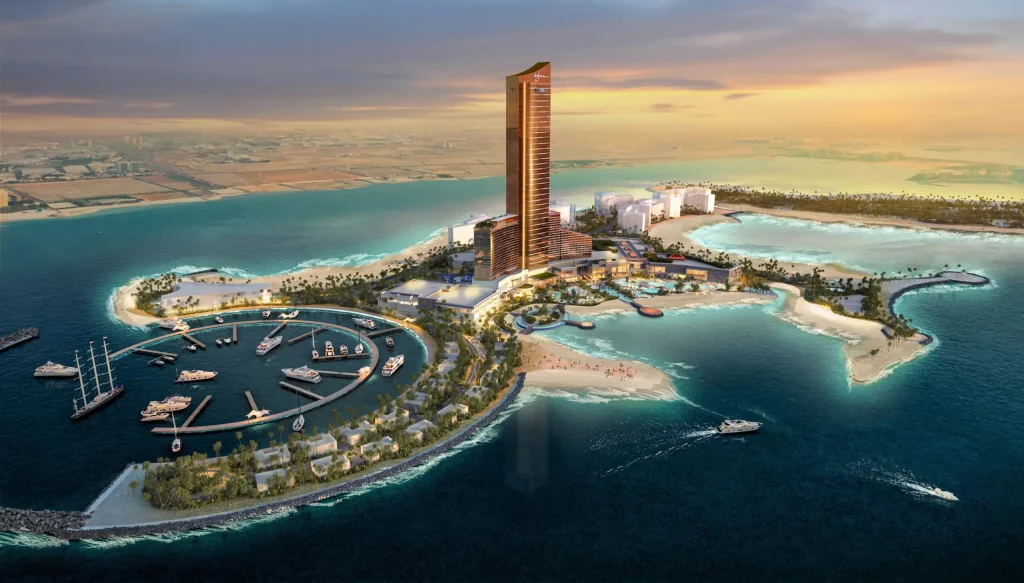
The UAE’s strategic location and robust population within an 8-hour flight radius gives confidence in the success of the future Wynn Al Marjan Island project, says Wynn Resorts CEO Craig Billings.

Speaking in the group’s most recent earnings conference call, Billings provided an update on the project’s progress and spoke of the immense growth potential the group considers it holds.

“Construction is rapidly progressing on the project with work now approaching the 15th floor of the hotel,” Billings stated. “The building now stands just over 90 meters, which is already the tallest building in the Emirate.”

Wynn Al Marjan, UAE, Wynn Resorts
Wynn Al Marjan Island construction as of May 1, 2024

Billings also highlighted the strategic acquisition of the company’s 40 percent pro rata share of all 155 acres of Island Three, the island on which Wynn Al Marjan is situated.

“This transaction included the purchase of our 40 percent pro rata share of all 155 acres of Island Three, the island on which Wynn Al Marjan sits. As a result, our joint venture now owns not only the land under Wynn Al Marjan, but also 70-plus acres of land for potential future development on the Island.”

The CEO expressed his belief that the UAE represents the “most exciting new market for our industry in decades” and that the company’s “confidence in the demand and EBITDAR potential of Wynn Al Marjan continues to grow.”

Billings also mentioned the progress made on the debt financing for the project, stating, “We also made meaningful progress during the quarter on the debt financing for the project and expect that we will finalize that financing later in 2024.”

Wynn Al Marjan Island
Wynn Al Marjan project

Billings also praised the issuing by the Global Center for Gaming Regulation and Administration (GCGRA) of its first lottery license, noting the establishment of the gaming regulator has provided “clarity” and “comfort” for investors.

The GCGRA recently launched its official website and issued its first federal lottery license, positioning the UAE as the first Gulf state to legalize gaming. 

The GCGRA has provided comprehensive details on commercial licensing procedures, types of licenses, and the definition of commercial gaming, with its website also profiling key regulatory personnel and announcing the recipient of the UAE’s first federal lottery license.

In the group’s most recent conference call, Billings noted that the establishment of the GCGRA will provide clarity and incremental comfort for investors and financing sources.

“The members of that body are some of the luminaries of the industry and very, very experienced regulators. The establishment of the GCGRA hopefully creates incremental clarity for investors and financing sources”, he noted.

“It certainly has on the financing — on the bank financing side. And then, you’ll also note that they recently awarded a lottery license for the UAE, and I think that that hopefully again, gives folks comfort,” indicated the executive.

Although not knowing the specific time line for licensing, Billings commented there was “momentum” for the region’s gaming industry.

Ras Al Khaimah, Al Marjan, UAE

The Wynn Al Marjan Island development is poised to capitalize on the UAE’s strategic location and robust population within an eight-hour flight radius. Billings noted, “There is not a proper integrated resort on really that half of the planet, OK? So the closest is gonna be in Asia, right, Singapore or Macau.”

Billings underlined travelers in the region are accustomed to flying longer distances in order to holiday and to visit.

“You have 86 million airlifts coming into the Dubai Airport, we’re about 55 minutes via one of three six-lane highways from the Dubai airport”, he pointed out.

“In fact, because of traffic, it’s shorter to get to us than it is to get to the major areas within Dubai. And then, you have 10 million people locally, 9 million of whom are not Emarati and therefore, are able to play […] India, for example, was highlighted and that’s gonna be an important market. And there are other parts of Asia that are big markets for the UAE as well, so it’s an exciting project.”

Daily Asia Gaming eBrief: Blockchain driving success and innovation in iGaming

0
Good morning. Blockchain, the keyword that took the industry by storm, has faded slightly from the public view but continues strongly behind the scenes, being an underlying framework facilitating speed, access and user experience for iGaming. A top expert lays out exactly why the ledger system is effective and praised. Meanwhile, in reporting news, Wynn Macau saw strong performance from mass play at both its peninsula and Cotai properties in 2Q24, with revenue hitting $885 million.

What you need to know

  • Blockchain technology is playing a crucial role in driving innovation and improving the player experience, Yolo Entertainment CEO tells AGB.
  • Wynn Macau sees strong performance from its mass segment, contributing to positive gains for both its peninsula and Cotai properties.

On the radar


AGB Intelligence

IGAMING

BlockChain Technology, Igaming

Blockchain facilitating innovation and player experience

Blockchain is a key component underpinning the success of iGaming companies, helping to improve the player experience and drive innovation in the sector. According to the CEO of Yolo Entertainment, the shared ledger means that player win payouts can be handled far faster than any fiat experience, making playing and winning quicker and more effective. Payments are easily tracked, ensuring strong AML compliance, while loyalty programs can be ideally tailored for each player.


Corporate Spotlight

Know Your Enemy: An Interactive Guide to Online Gaming Fraud

Sumsub, Online Gaming Fraud, verification platform

Online gaming fraud is on the rise in the iGaming industry. In Q1 2022, there was an 85% increase in fake account registrations compared to Q4 2021. While players are undoubtedly affected by gaming fraud, iGaming platforms also suffer due to damaged reputations, huge financial losses, and legal consequences.

How 1xBet dominates the Asian market: conditions and approach

1xBet, Asian Market

1xBet operates in several dozen countries in Asia, and the number of partners in this region is growing steadily, which indicates the effectiveness of the 1xPartners affiliate program. The brand offers favorable conditions and a modern set of tools for making money on the Internet.


Industry Updates


MEMBERSHIP | INTELLIGENCE | ASEAN | CAREERS

PAGCOR looking for an “upgraded version” of POGOs, despite ban

The Philippines’ gaming regulator (PAGCOR) is looking to have “sort of an upgraded version” of offshore gaming, despite the mandate by the nation’s president to shutter POGO operations under its purview.

According to the Inquirer, the head of the Philippine Amusement and Gaming Corporation, Alejandro H. Tengco, made the comments to the House of Representatives’ committee on appropriations on Tuesday.

“While the mandate today, the instruction of the President today is to wind down the operations of all till the end of the year, but who knows, maybe later on we can study and see if it’s possible to have a sort of an upgraded version,” indicated the executive.

Questioned on whether there could be a “better version of POGO […] that would help the economy”, Tengco noted that PAGCOR had been making improvements before the president issued the offshore gaming ban – citing the drop in IGLs (formerly known as POGOs), to 43, from nearly 300 before.

Tengco also noted that all 43 licensed IGLs were performing in accordance with the law.

“It is of my belief, and up to the time that the President made an announcement, that the 43 legal operators were doing legitimate business and it was giving the government coffers revenue and providing employment to hundreds of thousands of people, directly or indirectly,” the executive noted, as cited by the publication.

Tengco also indicated that PAGCOR has been working to spare special business process outsourcing companies (SBPOs) from the ban, as they do not directly handle bets. The official says this could save up to 10,000 jobs.

Australian TV networks to demand fee relief amid $20M wagering advertising hole

In a move to offset the significant financial impact of upcoming gambling advertising reforms, Australia‘s two largest television networks are set to demand that their spectrum fees be slashed.

According to a report by the Australian Financial Review, the reforms, proposed by Communications Minister Michelle Rowland, aim to curb the prevalence of gambling-related advertising across the country.

Key elements of the reforms include banning gambling ads on TV for an hour before and after live sports broadcasts; capping the number of gambling ads on free-to-air TV at 2 per hour until 10 pm; and implementing a blanket ban on gambling ads on social media and other digital platforms

These sweeping changes are expected to lead to a substantial drop in advertising spending from wagering firms, creating a AU$40 million ($20 million) revenue hole for TV networks.

To mitigate the financial impact, the television networks will push for concessions from the government, specifically seeking a reduction in their spectrum fees.

“The reforms will have a significant effect on our bottom line,” said a senior executive at one of the major TV networks, who spoke on the condition of anonymity. “We have no choice but to seek relief from the government to offset this anticipated drop in revenue.”

The proposed crackdown on gambling advertising comes as part of a broader effort by the government to address concerns over the societal impacts of excessive gambling. However, the move is set to have far-reaching consequences for the television industry, prompting the networks to advocate for measures to protect their financial interests.

As the government prepares to implement the new regulations, the battle lines have been drawn, with the TV networks preparing to make their case for spectrum fee relief in the face of the looming AU$40 million ($20 million) wagering advertising hole.

Former Presidential Spokesperson among 12 named in DOJ immigration lookout order amid POGO probe

The Philippines Department of Justice (DOJ) has issued an Immigration Lookout Bulletin Order (ILBO) against former Presidential Spokesperson Harry Roque and 11 other individuals.

According to a report by the Inquirer, this action is in connection with the ongoing cases surrounding the Lucky South 99 Corp, a Philippine Offshore Gaming Operator (POGO) hub that was recently raided in Pampanga.

Harry Roque is a former Cabinet official under then-President Rodrigo Duterte, who facilitated the issuance of licenses to POGO hubs.

The ILBO does not constitute a prohibition on their departure, as it merely allows for the monitoring of the individuals’ travel itineraries and whereabouts. A separate Precautionary Hold Departure Order would need to be filed with the courts to prevent them from leaving the country.

In justifying the ILBO, the DOJ cited the “gravity of the possible charges” as well as the “wide media coverage and public attention this has gained.” The department believes there is a strong possibility that the individuals may attempt to leave the country to evade the legal processes.

Reacting to the DOJ’s move, Roque has described the ILBO as “plain harassment” and a “political witch hunt intended to silence” him. He claims the only evidence against him is that he accompanied one of the individuals to reschedule an arrears payment, and an uncorroborated organizational chart that he did not participate in preparing.

Previously, PAGCOR chief Alejandro H. Tengco disclosed that Roque appeared before his office in July 2023 to provide legal support for Cassandra Lee Ong, who sought assistance from PAGCOR regarding financial issues at Lucky South 99.

A company organizational chart including the documents submitted by Lucky South 99 for their initial license application, also identified Harry Roque as the “legal head.”

Ong – one of the people named in the ILBO – serves as the authorized representative of the sprawling POGO compound in Porac, Pampanga.

NagaCorp with brighter financial outlook, pre-pandemic level recovery unlikely: S&P Global Ratings

0

Despite improving its financial outlook, Cambodian gaming operator NagaCorp is not expected to return to pre-COVID levels of gaming operations, rating agency S&P Global Ratings indicates in a recent dispatch.

According to the agency, the leading gaming operator in Cambodia has notably improved its liquidity position thanks to a significant reduction in refinancing risk following a repayment of outstanding senior unsecured notes in July of this year.

NagaCorp also managed its cash flows prudently since 2022, prioritizing debt repayment and limiting cash dividends and capital expenditures (capex).

‘Over the past four years, NagaCorp has scaled back its annual capex to less than $165 million and has not issued cash dividends since 2021. A recent $70 million shareholder loan further bolstered its liquidity, leaving the company with an estimated $80 million in cash post-repayment’, S&P Global Ratings analysts say

However, despite the improved outlook, NagaCorp’s gaming operations are not expected to return to pre-COVID levels, mainly due to the absence of Chinese junket operators, who once contributed significantly to the company’s gross gaming revenue.

In 2019, NagaCorp’s reported revenue and EBITDA were $1.8 billion and $667 million, respectively.

However, S&P Global Ratings noted that by 2023, these figures had dropped to $533 million in revenue and $292 million in EBITDA, representing 30 and 44 percent of 2019 levels.

Meanwhile, projections for 2025 estimate revenue and EBITDA to reach only 38-42 percent and 53-57 percent of pre-COVID levels, respectively.

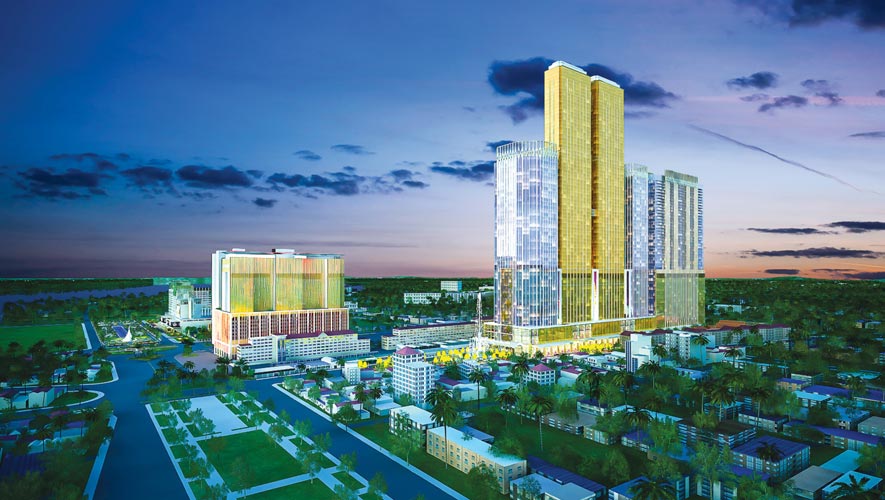
The brokerage acknowledged NagaCorp’s strategic focus on strengthening its balance sheet and managing funding requirements appropriately, after the company’s decision to extend the completion date for its significant Naga3 expansion project by four years to September 2029.

‘Originally announced in 2019 with a budget of $3.5 billion, the project was initially supported by the lucrative Chinese junket business, which has since been eliminated’, the agency added.

S&P Global Ratings expressed confidence that NagaCorp would continue to manage its capital structure conservatively, potentially reducing investment in Naga 3 if necessary and maintaining a cautious approach to dividends. This strategy aims to ensure that NagaCorp’s credit profile remains aligned with a ‘B’ rating.

NAGA 3, NagaCorp, Cambodia
Naga 3 project render

The stable outlook reflects S&P Global Ratings’ expectation that NagaCorp will continue to demonstrate improving operational performance and maintain its strong position in the Cambodia gaming market.

However, the rating could be lowered if the company’s operations weaken, if it pursues aggressive debt-funded growth, or if shareholder returns result in a rapid increase in debt levels.

Blockchain technology boosting iGaming player experience and security: CEO

The iGaming industry is undergoing a major transformation, with blockchain technology playing a crucial role in driving innovation and improving the player experience, according to Matthew D’Emanuele, Chief Executive Officer at Yolo Entertainment.

In an interview with Asia Gaming Brief, D’Emanuele, who oversees operations at Bitcasino, one of the pioneering blockchain-based online casinos, highlighted several ways in which the technology is reshaping the industry.

BitCasino

A bitcoin gambling website, Bitcasino allows users to play casino games, lottery, and to bet on sports, with no fiat currency options provided, but with users able to purchase crypto using fiat and use them as payment.

“When Bitcasino launched a decade ago, the primary benefit of blockchain technology was payments,” D’Emanuele said. “Cryptocurrencies enable fast and low-cost transactions compared to traditional banking systems, and that means we can deliver a better deposit and withdrawal experience to our players. We’ve had players win multi-million dollar jackpots have their winnings in their wallet within a minute. That’s just not possible with the fiat system.”

But the potential of blockchain extends far beyond payments, according to D’Emanuele. “Now we’re increasingly seeing new areas where blockchain technology can improve the user experience,” he said. “A lot of this stuff wasn’t possible a few years ago, but there’s been huge leaps forward in terms of layer-2 and high-throughput/low-latency chains that mean we can do much more on-chain without waiting around or paying high fees.”

Blockchain technology boosting iGaming player experience and security
Matthew D’Emanuele, Chief Executive Officer at Yolo Entertainment

One area that D’Emanuele finds particularly exciting is the integration of blockchain-based loyalty programs into the gaming experience. “Executed well, this can be a game-changer for engaging and retaining players.”

Additionally, D’Emanuele highlighted blockchain’s potential to enhance transparency and security in the industry. “We’re thinking a lot about how blockchain technology can create a better and safer experience for players,” he points out.

“There’s a great myth with cryptocurrency that everything is anonymous. In most cases, this is simply false. We’re actually able to track the source of a player’s funds with far greater granularity than we can when that same deposit comes from a bank. Everything is there on a public ledger, and this is a fantastic resource, particularly around improving AML standards.”

Blockchain was described as increasingly important in building trust and security with customers.

BlockChain Technology

“Smart contracts are a really interesting tool, where we can automate key procedures in a permissionless way”, he explained, predicting a significant shift in this regard in the coming months.

As the iGaming industry continues to evolve, D’Emanuele believes that embracing new technologies like blockchain will be crucial for companies looking to stay ahead of the competition.

“We’ll see more of this over the coming years and the operators that succeed will be the ones that adapt fastest,” he said. “Look at something like memecoins. Millions of people are trading these every day and the experience is very similar to a casino. We don’t consider it part of an iGaming offering right now, but embracing the new ways people want to gamble and play is going to mean expanding beyond slots and table games.”

When asked about differentiating offerings, D’Emanuele emphasized listening to players and adapting quickly to changing preferences.

“Preferences change quickly. Crash games, once a niche genre, are now among the most popular titles on many online casinos,” he noted. He also suggested embracing new forms of gambling and play, such as memecoins, to stay ahead.

Web3 and AI: Keeping up with times

The Chief Executive Officer at Yolo Entertainment, shared his insights on the key factors driving success in this dynamic market, emphasizing the importance of delivering campaigns that resonate with users and leveraging unique selling propositions (USPs).

“iGaming is a competitive space where users have countless options; we have to deliver campaigns that resonate and leverage our USPs. Ultimately, we need to give the user a good reason to pick us.”


Matthew D’Emanuele

“I can’t stress enough the importance of identifying the metrics that will measure your success. These aren’t always the obvious ones, and thinking outside of traditional KPIs like LTV and CPA can often bring outsized rewards”.

D’Emanuele argued that while true that iGaming poses some unique challenges, the core principles remain the same. AI provides an opportunity to “fully decentralize the casino experience for users”, and “even allow them to own a slice of the piece”.

AI is helping us deliver a more intuitive and personalized gaming experience,” he said, highlighting the dynamic odds generation for sportsbook markets as a promising area of expansion.

UltraPlay announces new partnership with Pateplay

0

UltraPlay, a leading provider of innovative iGaming solutions, has announced a strategic partnership with Pateplay, a renowned developer of engaging casino games. This collaboration will see UltraPlay integrating Pateplay’s impressive game portfolio into its platform, further enhancing its offerings for clients and players alike.

“UltraPlay is constantly striving to grow and expand our portfolio of services, as this is what keeps us at the forefront of the iGaming industry,” said Mario Ovcharov, Chief Executive Officer at UltraPlay. “We are excited about this partnership, it will undoubtedly elevate our value proposition to clients.”

Pateplay’s games are known for their captivating gameplay, stunning visuals, and innovative features. Players can expect to enjoy a wide range of engagement tools, among which are Free spins bonuses, Distinctive Bonus games, Special symbols and Collectors, Jackpots, Leaderboards, and Mystery Extra cash rewards. This combination of entertainment and incentives is designed to keep players hooked and coming back for more.

“We’re excited to embark on this journey with UltraPlay,” stated Ivaylo Yonovski, Chief Commercial Officer at Pateplay. “We believe that it will be a profitable and meaningful step for both companies, and I’m looking forward to seeing how our partnership will grow in the future.”