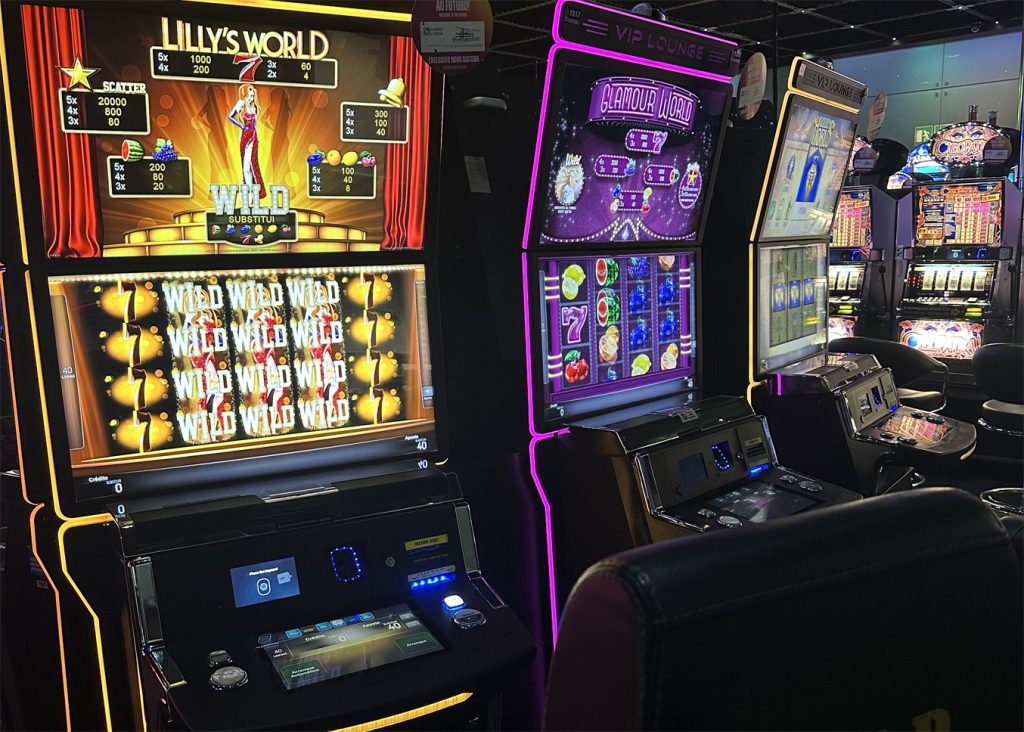

Gaming equipment and services group Light & Wonder is positioning itself to capture market share in emerging gaming regions, focusing on the UAE, Japan, and Thailand.
Matt Wilson, CEO of Light & Wonder
According to The Australian Financial Review, Matt Wilson, CEO of Light & Wonder, emphasized that the legal challenges surrounding Dragon Train had no significant impact on the company’s third-quarter performance. He also highlighted expanding opportunities in several key markets.
Wilson noted that the UAE is set to launch its first casino, with Wynn Resorts having received approval for a casino license expected to go live in late 2026. Additionally, Thailand is exploring the possibility of legalizing gaming, while Japan is preparing to open its market in the coming years.
However, the company is currently navigating legal hurdles. On September 23rd, 2024, US District Judge Gloria M. Navarro granted Aristocrat Technologies a preliminary injunction, prohibiting Light & Wonder from selling or leasing its Dragon Train game. The court sided with Aristocrat’s allegations of trade secret misappropriation, accusing Light & Wonder of copying elements from Aristocrat’s popular Dragon Link game.
Despite this setback, Wilson downplayed concerns about the potential financial impact of the injunction. He emphasized that Light & Wonder’s extensive portfolio, which includes over 130 new games annually, would help the company maintain its leadership position in North America. The company is already developing a revised version of Dragon Train to comply with the court’s ruling, ensuring it can continue delivering new products to its customers.
Wilson reassured investors that the legal issue had no material impact on third-quarter results. He described it as an isolated incident and reiterated Light & Wonder’s commitment to advancing its diverse game portfolio.
According to the latest financial results, the company reported a 12 percent year-on-year increase in third-quarter revenue, reaching $817 million.
The Philippines Department of Labor and Employment (DOLE) announced a special job fair for workers affected by the ban on Philippine Offshore Gaming Operators (POGOs).
According to the DOLE-National Capital Region (NCR), approximately 3,000 job vacancies will be available during the two-day event set to take place on November 19th-20th, 2024, at the SM Mall of Asia-Music Hall in Pasay City, with participation from 16 local employers.
The positions on offer will include roles such as sales consultants, cashiers, receptionists, encoders, drivers, delivery helpers, service crews, and more.
The upcoming job fair follows previous successful events held last October in Parañaque City and Makati City, where 340 POGO workers registered, resulting in 33 individuals being hired on the spot. A total of 108 employers participated in those events, offering 13,744 job opportunities.
The special job fairs are part of the DOLE’s initiative to find employment for the estimated 79,735 POGO workers, both Filipino and foreign, who are facing job displacement due to the recent ban.
President Ferdinand R. Marcos Jr., recently signed an Executive Order (EO) banning the operation of POGOs in the country, with all operations to be wound up by December 31st.
Goa is set to introduce a fully online lottery on November 18th, becoming one of the first Indian states to do so.
According to The Times of India, this initiative, a collaboration between Rhiti Sports and Dusane Infotech, aims to enhance transparency and accessibility in the lottery system, promising a bumper prize exceeding Rs50 crore ($5.9 million), with the inaugural draw set to take place on November 24th.
The online lottery, named “Great Goa Games,” is designed to be entirely paperless, moving away from the traditional paper-based lottery prevalent in over 12 states. The platform aims to engage a wide audience, including those from various socioeconomic backgrounds.
Rhiti Sports stated that over 50 percent of the funds collected will be returned as prizes, with the lottery also providing educational resources on responsible gambling to inform participants about the risks and rewards.
With the Grand Prix approaching, hotel occupancy in Macau is meeting expectations, with over 90 percent of rooms already booked, according to Cheng Wai Tong, Deputy Director of the Macao Government Tourism Office (MGTO).
The Sports Bureau has reported strong ticket sales, and it is expected that this year’s event will generate a vibrant atmosphere, leading to a high number of visitors. The MGTO has predicted that the four-day Macau Grand Prix will attract over 400,000 people.
Cheng further noted that, while the Macau Grand Prix has traditionally attracted many visitors from Hong Kong and abroad, the audience base from mainland China has been steadily growing in recent years. As a result, authorities are focusing on balancing their promotional efforts across multiple regions.
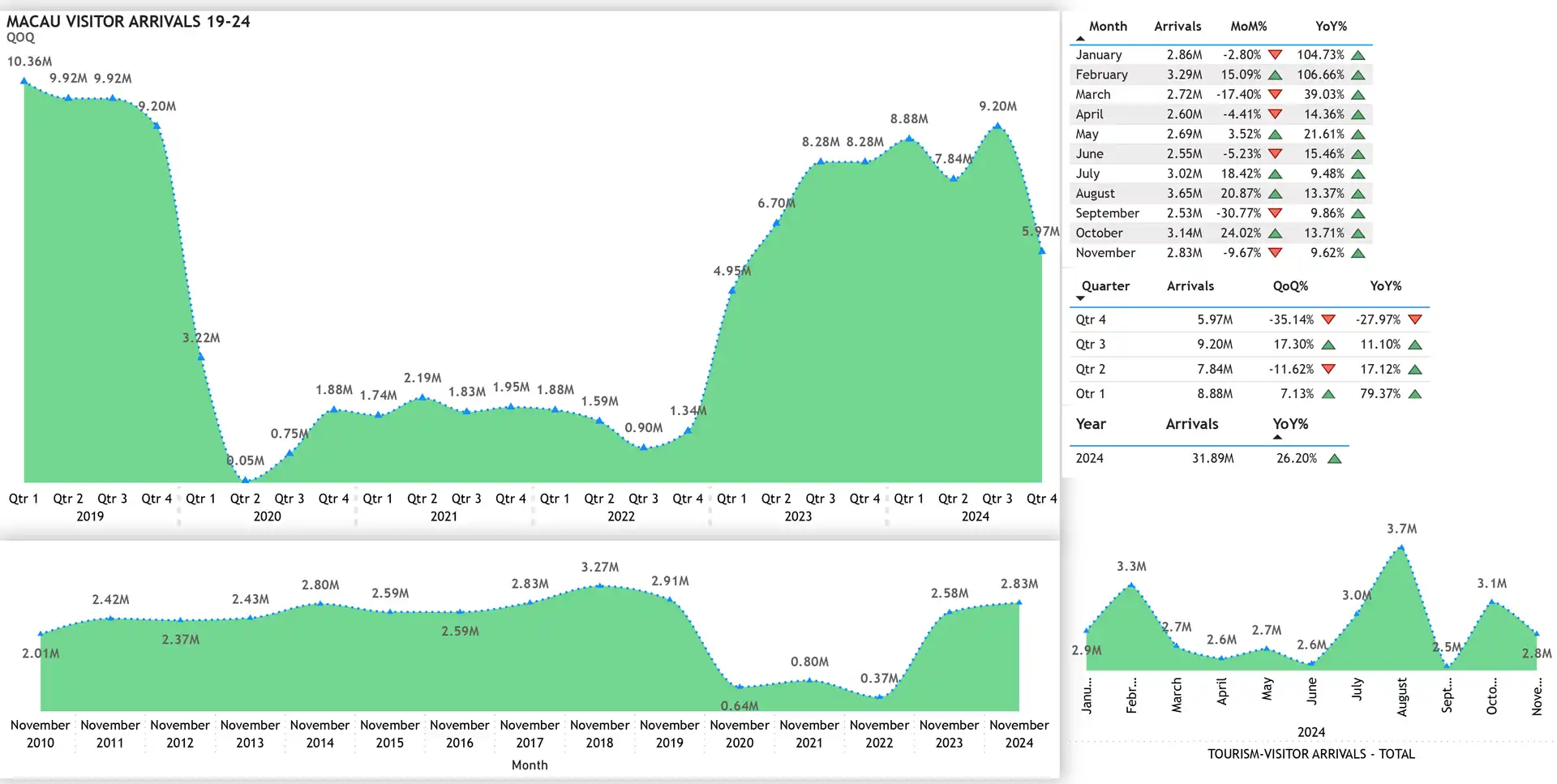
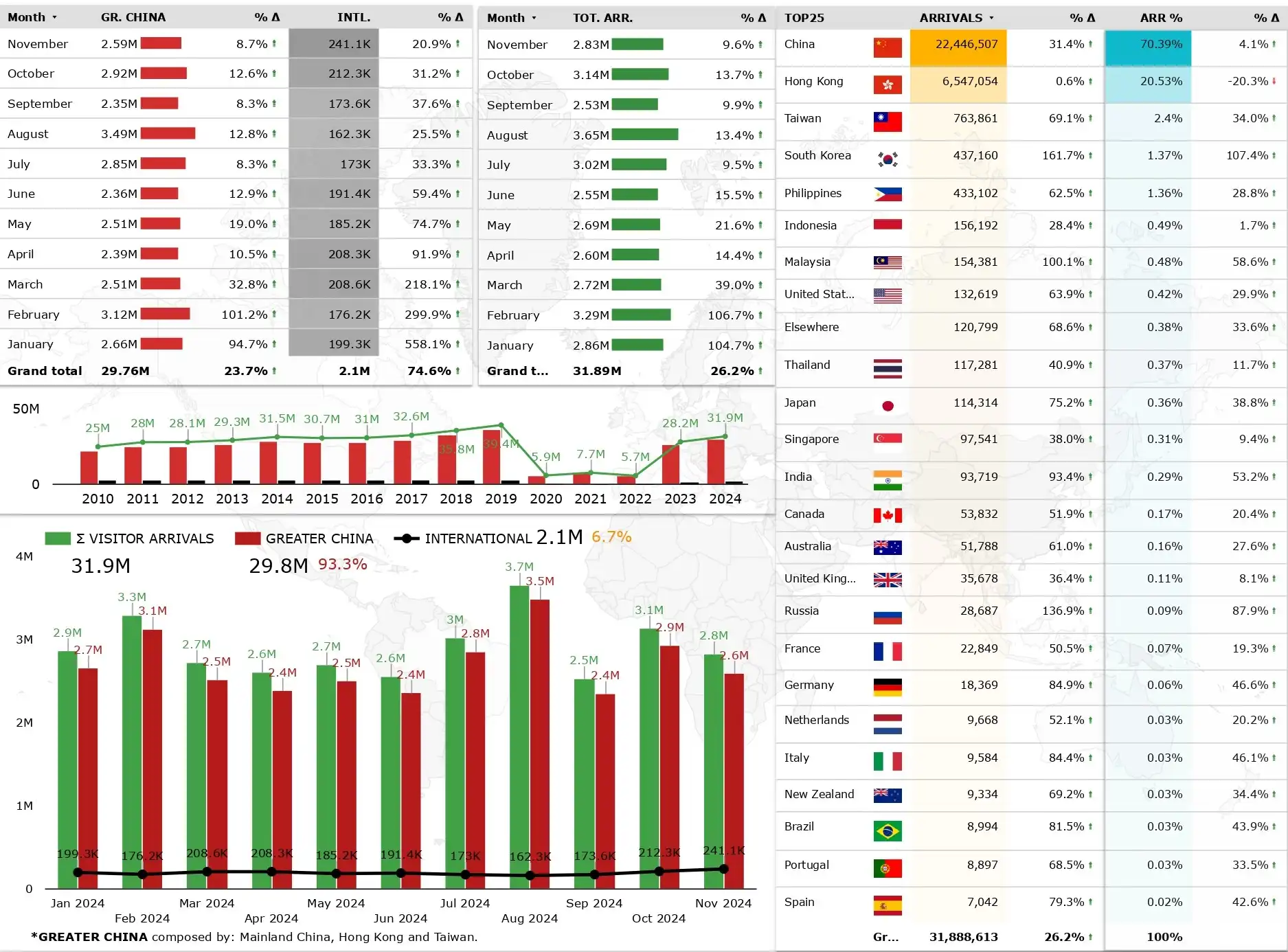
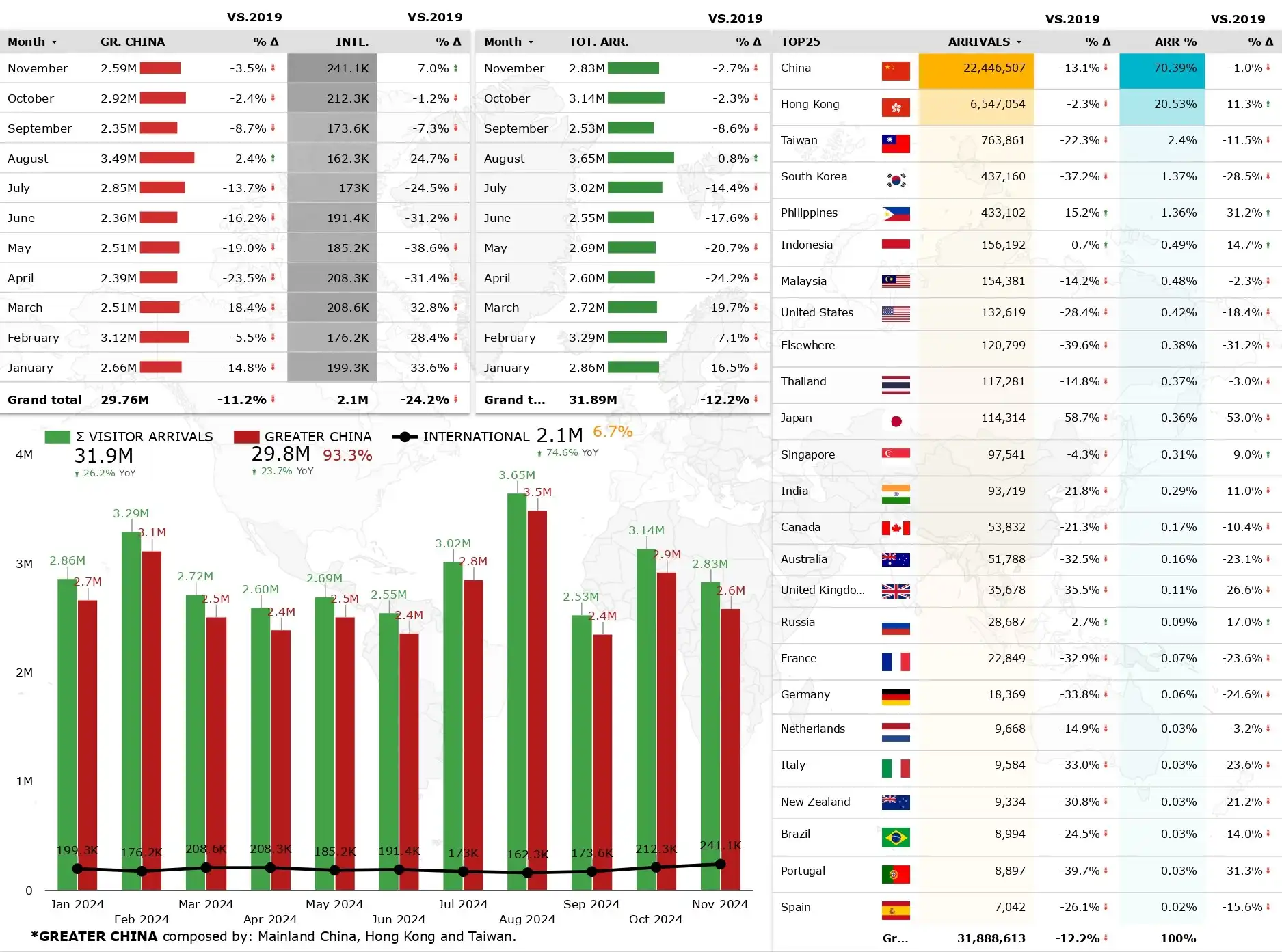
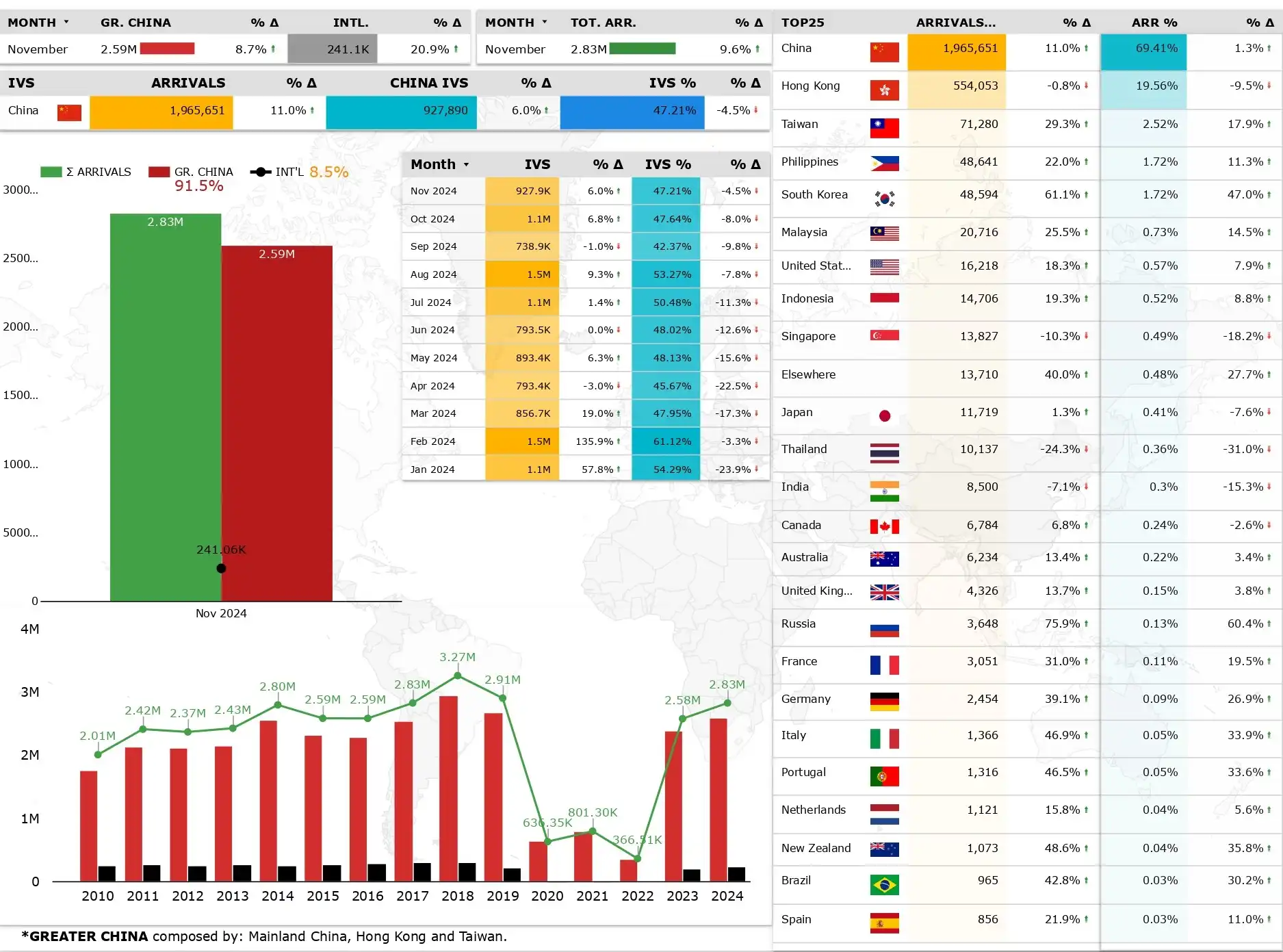
Macau visitor arrivals in November from 2010 to 2023
Additionally, discussions have been held with the tourism and hotel sectors, the Sports Bureau, and event organizers to create more Grand Prix-related travel packages to enhance the visitor experience. These newly launched packages have been well received, and a review of their effectiveness will be conducted after the event, with feedback collected for future improvements.
While tropical cyclones may impact weather conditions during the Grand Prix, Cheng assured that authorities are closely monitoring the situation and will provide timely updates on various platforms, allowing visitors to adjust their plans accordingly.
The Macau Grand Prix runs from Thursday, November 14th, to Sunday, November 17th.
Macau gaming operator MGM, in collaboration with the Education and Youth Development Bureau (DSEDJ) of the Macau SAR Government, has hosted the ‘MGM Learning Festival,’ celebrating the 75th anniversary of the Founding of the People’s Republic of China and the 25th anniversary of the Establishment of the Macau SAR.
Featuring a series of events lasting over a month, the festival aims to enhance MGM team members’ job skills, service mindset, and commitment to continuing education and professional certifications. MGM also hopes to create a workplace that supports its team members in becoming well-rounded people.
The MGM Learning Festival, which runs from late October to early December, offers a variety of back-of-house roadshows hosted by MGM Academy and several renowned universities in the Greater Bay Area, promoting tourism and hospitality certificate degree courses and training programs. Government departments from the Guangdong-Macau In-Depth Cooperation Zone in Hengqin and Macao, local associations, and learning centers also actively promote their courses on future and professional skills during the roadshows. In addition, the festival offers culture and art workshops to team members to promote creativity and work-life balance among employees.
“MGM Learning Festival Launch Ceremony and Keynote Seminar on Highlights of 25 Years of Macau’s Developmental Achievements” was held on November 12 in the Ballroom of MGM MACAU.
Distinguished guests included:
Kenneth Feng, President and Executive Director of MGM China Holdings Limited;
Choi Man Chi, Head of the Department of Non-Tertiary Education of DSEDJ;
Cen Jiayi, Director of the Higher Education Division of the Education and Youth Work Department of the Liaison Office of the Central People’s Government in the Macao SAR;
Feng Fangdan, Deputy Director of the Livelihood Affairs Bureau of the Guangdong-Macau In-Depth Cooperation Zone in Hengqin;
Wendy Yu, Executive Vice President of Human Resources of MGM;
Tong Kai Chung, President of the Macau Institute of Management (MIM);
Davis Fong, Professor of the Department of Integrated Resort and Tourism Management and Director of the Institute for the Study of Commercial Gaming of the University of Macau (UM);
Johnny Siu, Deputy Director of the Centre for Gaming and Tourism Studies of Macao Polytechnic University (MPU);
Zhang Yang, Assistant Dean of the Faculty of Hospitality and Tourism Management of the Macau University of Science and Technology (MUST);
Sarah Wu, Lecturer of the Institute of Executive and Professional Development of the Macao University of Tourism (UTM);
Helena Lei, Chief Senior Manager of the Macau Productivity and Technology Transfer Centre (CPTTM);
Chong Leng Leng, Vice President of the Women’s General Association of Macau;
Che Mei Leng, Vice President of the General Union of Neighbourhood Associations of Macau;
Pui Seng In, President of Centro Amador de Estudos Permanentes de Macau and Macau Craftsmanship Academy.
Davis Fong,Professor of the Department of Integrated Resort and Tourism Management and Director of the Institute for the Study of Commercial Gaming of the University of Macau
MGM has invited Professor Davis Fong as the keynote speaker to aptly share the key milestones of Macau’s phenomenal growth and achievements since the city’s return to China and discuss future trends in the tourism industry during the seminar on “Highlights of 25 Years of Macau’s Developmental Achievements”. This event drew 200 participants, including MGM team members and students from local universities.
Kenneth Feng, President and Executive Director of MGM China
Kenneth Feng, President and Executive Director of MGM China Holdings Limited, said, “MGM was the first integrated resort to introduce such a learning initiative in 2018. Over the years, we have seen significant growth and progress among our team members. The MGM Learning Festival goes beyond being an event — it serves as a platform to empower our employees and help them grow. We hope that this festival will inspire our team members to continue to discover the joy of learning and help them stay competitive in an ever-changing marketplace.”
The supporting units of the MGM Learning Festival are the Livelihood Affairs Bureau of the Guangdong-Macau In-Depth Cooperation Zone in Hengqin, UM, UTM, MPU, MUST, MIM, Hong Kong Polytechnic University, CPTTM, Macau Federation of Trade Unions, General Union of Neighbourhood Associations of Macau, and Women’s General Association of Macau (The supporting units’ names are arranged in no particular order).
The improvement reported in SJM’s third-quarter financial results was driven by robust performance in the VIP segment at Grand Lisboa Palace (GLP) and Grand Lisboa, according to a dispatch by brokerage Seaport.
Vitaly Umansky, Analyst at Seaport Research
Analyst Vitaly Umansky noted that the company’s EBITDA was significantly bolstered by high VIP hold rates of 4.7 percent at GLP and 5.2 percent at Grand Lisboa, which helped the company achieve a net profit of HK$101 million ($13.1 million).
This marks SJM’s first profit since Q4 2019, a stark contrast to the HK$88 million ($11.4 million) loss reported in Q2.
SJM’s market share in the Macau SAR increased to 13.9 percent, up from 12.6 percent in Q2, with operated casinos contributing 8.8 percent to this share, also an improvement from 7.8 percent in the prior quarter.
Adjusted for normal hold, the market share from operated casinos would be approximately 8.4 percent, Seaport points out, with SJM’s overall increase in market share primarily driven by satellites and self-owned properties. However, October figures indicate a slight decline, with market share around 13.8 percent.
Despite the positive financial performance, concerns remain regarding the slow ramp-up at Grand Lisboa Palace. Umansky cautioned that while the property is expected to continue its growth trajectory, the return on investment is currently low, raising doubts about achieving significant value creation in the foreseeable future.
Grand Lisboa Palace, SJM Resorts
SJM is actively refining its strategy for GLP, having recently hired additional sales and marketing staff and implemented an expanded premium play program targeting both VIP and premium mass markets.
Operating expenses at SJM rose by over 9 percent quarter-on-quarter, a trend expected to continue, particularly at GLP. Meanwhile, profitability from the satellite business is gradually improving, though it accounted for less than 4 percent of the company’s EBITDA in 3Q24.
The future of satellite operations beyond 2025 remains uncertain due to current Macau gaming laws, which mandate that satellite venues must transition to a management company within three years, with the deadline set for the end of 2025.
SJM is also focused on debt reduction, with the net debt to EBITDA ratio decreasing to 6.8x from 13.8x earlier this year. The company projects this ratio will further decline to 6.1x by year-end and below 5x by the end of 2025 as it continues to pay down debt and improve free cash flow.
Hungrybear, in collaboration with Yggdrasil‘s YGG Masters program, has unveiled its latest slot game, Merlin’s Beard, featuring a captivating bonus round where players can select their preferred mix of free spins and modifiers.
The customizable feature adds a layer of strategy to the game, offering the option to select five different permutations for increased engagement.
The options are five Free Spins + Colossal Wild, 10 Free Spins + Random Wilds, 15 Free Spins + Colossal Symbol, or 20 Free Spins + Multiplier. Alternatively, players can select the Mystery Choice, which will randomly assign any combination of free spins and a modifier.
Merlin’s Beard is Hungrybear’s fifth release as a YGG Masters partner and follows popular games such as Riches of Olympus, Mystic Magic and Mayan Temple Riches.
The title is powered by GATI, Yggdrasil’s state-of-the-art technology that enables partners to consistently employ the preconfigured, regulation-ready, standardized development toolkit to produce cutting-edge content followed by rapid distribution.
Zoe Bird, Head of Masters at Yggdrasil, said: “Merlin’s Beard offers players a captivating slot experience, with enchanting bonus features and thrilling base game modifiers, making sure every spin is brimming with magical potential. The game is another fantastic example of Hungrybear’s capabilities as a slot studio and we are sure it will be a hit with a wide demographic of players due to its theme, high win potential and easy-to-understand mechanics.”
Joe Chamberlain, Product Lead at Hungrybear, said: “Merlin’s Beard transports players to a mystical world filled with charm, brought to life with high-quality artwork, an epic soundtrack and a 12,000x max payout. We are especially pleased with the engaging and customisable free spins bonus and the variety of dynamic base game modifiers which keep players engaged throughout this spellbinding slot experience.”
Thailand is on the brink of becoming a major player in the global gaming industry, with projections suggesting it could surpass Singapore to become the third-largest market in terms of gross gaming revenue (GGR), according to a new “Super Sector” report from Citigroup.
The report, authored by analysts George Choi and Preenapa Detchsri, estimates that Thailand’s GGR could reach a staggering $9.1 billion once the market is fully developed. This would place Thailand behind only Macau and Las Vegas in the global rankings.
The projections are based on the assumption that the government will award two casino licenses in Bangkok and one each in Pattaya, Phuket, and Chiang Mai.
In terms of profitability, Thailand appears to have a competitive edge. ‘With a lower gaming tax rate of 17 percent and reduced operational expenses (mainly in wages and utilities) compared to Singapore, we believe EBITDA margins could reach 40 to 50 percent,’ the report highlights. This indicates that the industry could generate EBITDA of approximately $4.1 billion in Thailand once the sector is fully ramped up.
A study released earlier this year and submitted to the Thai parliament suggests that once integrated resorts (IRs) with casinos are established, average tourist spending could increase significantly, potentially rising by 52 percent to THB65,050 ($1,790) per trip.
The study also indicates that legalizing casinos within entertainment complexes in Thailand has the potential to boost tourism revenue by approximately $12 billion while addressing the persistent issue of illicit gambling. Additionally, the extra income generated could enhance the country’s gross domestic product (GDP) growth by 1.16 percentage points.
Swift progress on legalization
The Thai government’s proactive approach toward legalizing gaming is seen as a crucial driver for this rapid market expansion. According to Citigroup, ‘the Thai government has shown its determination in creating a major booster to the tourism industry via gaming legalization, and the speedy legalization progress thus far is a testament to that.’
Citigroup expects the remaining legalization procedures and subsequent request-for-proposals (RFP) process to be managed efficiently at the national level. The timeline for this process is expected to be as fast as Singapore’s two decades ago, with completion likely by mid-2025.
Julapun Amornvivat, Thailand’s Deputy Finance Minister
Deputy Finance Minister Julapun Amornvivat has reiterated the government’s intention to present a revised draft law on Entertainment Complexes to the Cabinet by the end of 2024.
Following Cabinet approval, the administration will forward the draft law for parliamentary deliberation. The House of Representatives is scheduled to reconvene from mid-December until April next year.
According to a previous projection by Maybank Investment Bank, given the accelerating move towards casino legalization, Thailand could see its first Entertainment Complexes by 2029. In this context, Thailand might open its first casino beforeMGM Osaka, which is scheduled to open in autumn 2030.
Partnerships between domestic corporations and global casino operators
To increase their chances of securing licenses, both local corporations and global casino giants are expected to form partnerships. The report estimates that global casino operators could see their EBITDAs increase by 15 to 30 percent if they secure investments in Bangkok, particularly through joint ventures with local partners on a 50:50 basis.
Additionally, the development of Entertainment Complexes is expected to provide significant benefits to Thailand’s tourism and construction sectors. Companies such as Airports of Thailand, Minor International, and Central Plaza Hotel are identified as potential beneficiaries due to their strong presence in the hospitality sector. Notably, the U-Tapao consortium has expressed interest in integrating a gaming complex within its Airport City development in the Eastern Economic Corridor.
Potential game-changer for global gaming
The report underscores the long-term impact of Thailand’s gaming legalization on the global industry. While it may take at least six years for these entertainment complexes to become fully operational, the potential shift in revenue distribution within the industry is substantial.
The report recommends investors to ‘buy into this thesis while it is in the dream phase,’ highlighting Las Vegas Sands (LVS), MGM Resorts, and Galaxy Entertainment as top global picks poised to benefit. All the aforementioned gaming operators have publicly demonstrated interest in Thailand.
Nazara Technologies Limited, a top gaming and sports media platform, and Open Network for Digital Commerce (ONDC) have announced their collaboration to launch ‘gCommerce’ – a groundbreaking in-game monetization platform that seamlessly incorporates e-commerce into gaming.”
The integration aims to address a persistent challenge for Indian game developers: low in-app purchase (IAP) conversion rates and poor yields from advertising. Through gCommerce, Nazara and ONDC Network are reimagining game monetization by leveraging India’s thriving e-commerce landscape and providing developers with new, scalable revenue streams.
This strategic integration will allow game developers to monetize through an affiliate revenue-sharing model, earning a commission on every successful transaction initiated by players through the gCommerce platform.
Creating Value for Developers and Gamers
ONDC Network’s expertise in creating an open, interoperable network for digital commerce will enable Nazara’s gCommerce platform to connect with a wide range of sellers across more than 10 categories, ensuring a rich diversity of product offering for gamers. This integration enhances the user experience by allowing them to make informed purchases while they continue their gaming journey.
Nitish Mittersain, Jt. MD & CEO, Nazara Technologies
“We are excited to announce the upcoming launch of gCommerce by Nazara via integration with the ONDC Network, as it represents a significant step forward in our mission to empower game developers with effective and innovative monetization solutions,” said Nitish Mittersain, CEO of Nazara Technologies. “We are not only creating new revenue opportunities for developers but also enriching the overall experience for our gamers.”
T Koshy, CEO of ONDC
T Koshy, CEO of ONDC, added, “Nazara coming on ONDC Network to launch gCommerce is a testament to the versatility of the Network in supporting various industries and use cases. By bringing e-commerce into the gaming ecosystem, we are paving the way for a seamless blend of entertainment and shopping that adds value for players, developers, and the broader digital commerce network.”
The gCommerce platform is currently in soft launch and will be rolled out to game developers starting Q1, FY26.
Online casino operators in New Zealand may face fines of up to NZD5 million ($3 million) if they launch an unlicensed website, according to new regulations being proposed by the government.
According to Radio New Zealand, the forthcoming framework will limit the number of licenses to just 15, with a public register to keep track of approved operators. Those who violate the rules will receive take-down notices and may be reported to international regulators, potentially jeopardizing their licenses in other jurisdictions.
To ensure player safety, licensed operators will need to implement harm prevention measures and robust age verification systems. Additionally, advertising to children will be strictly prohibited.
Brooke van Velden, Internal Affairs Minister
Currently, online casino gambling operates without regulation in New Zealand, leaving consumers unprotected. Internal Affairs Minister Brooke van Velden emphasized that the aim is not to increase online gambling but to provide a safer environment for those who choose to engage in it.
“My goal is to ensure that New Zealanders can play casino games online more safely than they can today”, van Velden stated. “At present, many New Zealanders are gambling on numerous offshore sites. By establishing a regulatory system, I intend to guide customers towards 15 licensed operators.”
Legislation to implement these changes is expected to move forward next year, with the new regulatory system anticipated to be operational by early 2026.