

Home Blog Page 416

Light & Wonder marks 16th consecutive quarterly rise in consolidated revenue

Gaming equipment and services group Light & Wonder marked its 16th consecutive quarter of yearly consolidated revenue growth in 1Q25, as it saw 30 percent growth in North American unit shipments and maintained its top ship share spot in Australia.

According to its results released on May 7th, the group registered a 2 percent yearly increase in consolidated revenue, to $774 million, despite net income remaining flat yearly, at $82 million.

The group notes that ‘higher revenue and strong margins were offset by higher restructuring and other costs and income tax expense’.

Gaming revenue during the quarter was up by 4 percent year-on-year, hitting $495 million, ‘with contributions from all lines of business’.

An increase of 9 percent in revenue from its Table products bolstered its gaming segment, with 9 percent yearly growth in its North American installed base to 34,501 units.

The group’s iGaming revenue also saw a healthy uptick of 4 percent, to $77 million, however its SciPlay division saw revenue fall by 2 percent yearly, to $202 million.


SciPlay, Light & Wonder
Light & Wonder, Matt Wilson
Matt Wilson, CEO, Light & Wonder

Speaking of the results, Matt Wilson, President and CEO of L&W, noted that “Our R&D investment, vast array of product offerings and comprehensive content strategy continue to deliver success in game deployment and franchise expansions […] We remain confident in the various avenues of growth that we see for 2025 with continued execution on our robust product roadmap driving performance across the business”.

Looking ahead, the group has high expectations for its acquisition of Grover Gaming’s charitable gaming business, announced in mid-February for $850 million. The group indicates that ‘the transaction is expected to close during the second quarter of 2025, subject to required regulatory and other approvals and customary closing conditions’.

In regards to the ongoing tariff debacle, L&W notes that it has not escaped its clutches, noting that ‘we currently source a portion of the raw materials and components for our Gaming Business from China and across Asia’.

The group notes it has ‘evaluated various mitigation strategies’, including ‘supplier diversification, adjusting supply chain operations, supplier pricing negotiations and cost control initiatives, among other measures’.

‘While we expect recent tariffs and trade policies to create incremental cost pressures in the near term, our realized and ongoing operational efficiency initiatives coupled with other measures are expected to mitigate these effects,’ it indicates.

The group expects it can maintain its consolidated AEBITDA target of $1.4 billion (pre-Grover transaction) in 2025.

Furthermore, regarding the litigation over Dragon Train, L&W indicates that it has ‘now completed a review of all hold and spin games released from 2015 to the present to determine whether any of these games present issues with respect to Aristocrat math values similar to those identified with Dragon Train and Jewel of the Dragon’.

As a result, the group notes that ‘Our experts found no evidence that Aristocrat math values were used in any of these games’.


Macau Golden Week GGR up by 10%, beating out expectations: Vitaly Umansky

0

Macau’s May Golden Week surprised operators and analysts alike, with gross gaming revenue (GGR) up by approximately 10 percent yearly, as visitation topped 40 percent, pushing up estimates for May.

Seaport Research Partners Senior Analyst Vitaly Umansky told AGB that the significant uptick “is encouraging” but questioned “how much of that upside was just brought-forward demand”.

Vitaly Umansky, Seaport
Vitaly Umansky, Senior Analyst, Seaport Research Partners

The analyst opined that the coming weeks will be “critical” in seeing “how much of a drop off there is”, but if results continue to average at around MOP620-225 million ($77.56-78.2 million) per day in GGR for the rest of May, his predictions for May GGR are revised up to 5.3 percent yearly growth.

In a note on Wednesday, Umansky furthered that ‘if May comes in around our revised estimate, and there is continued relative strength into June (usually one of the weakest months of the year), we are likely to see upward revisions of estimates for 2025’.

Seaport currently estimates yearly GGR growth for FY25 at about 3.4 percent, before the upward revision in May, with likely revisions of Macau-related stocks if the GGR growth trend continues.

One particularly interesting fact pointed out by Umansky is that the holiday periods, which previously used to cause a drop in high rollers, are now attracting many premium players – with longer stay periods that can take advantage of the long weekends.

However, the mass market now compared to pre-pandemic is “much more top heavy than it used to be, so the volatility that you’re seeing is going to be greater, especially if you start looking at very short term periods”.

Another highlight is the amount of overall visitation – up nearly 41 percent, versus actual GGR uptick.

“What I think is clearly evident is that visitation itself is irrelevant (in regards to GGR),” notes Umansky. “I think the Macau government needs to think long and hard about what it is they’re trying to achieve,” he notes, highlighting how Macau has become much more accessible to lower spending day-trip visitors.

“That’s not the type of visitor you necessarily want, that creates congestion and doesn’t spend money”.

Umansky instead urges for the return of the “destination, overnight, bass mass customer”, hailing from locations such as Shanghai, or second- or third-tier cities in mainland China, particularly from the upper and middle class.

But multiple factors weigh on this uptick – increased flight and hotel costs, a weaker RMB and weakened consumer sentiment – which Umansky identified as “still abysmal in China”.

Looking at the operators themselves, Umansky notes its covered Macau-linked gaming operators are ‘largely undervalued’, in regards to stock price, with top picks of Las Vegas Sands and HK-listed subsidiary Sands China, and Galaxy ‘as both should of catalysts’ in the second half of the year ‘with share gains in Macau (and continued Singapore strength for LVS)’.

The group’s sole negative view is on SJM, which it attributes a ‘Sell’ rating to, due to its ‘high leverage, uncertainty surrounding the satellite business, and the lack of ability to materially take market share in Macau’.

Galaxy Chairman addresses Macau’s needs to adjust to non-gaming focus

0

Galaxy Entertainment Group’s Chairman Francis Lui says that Macau needs to address its growing pains as it doubles down on a mass market model, in order to not lose its competitive edge.

During his keynote address at the opening of G2E Asia in Macau, the executive noted that the company’s focus on the mass market was dialed in “in the early 2000s […] driven by the emergent middle class of Asia”.

Macau’s overall shift to the mass market model “influenced” the company to invest more in non-gaming elements, “achieving remarkable results”.

But this shift has also exposed some of Macau’s major weaknesses.
“If we fail to properly address the question of accommodation supply, Macau’s competitiveness as a non-gaming destination, not only regionally but globally, could diminish,” stated Lui.

“Given demand for accommodation will continue to outstrip supply in the years ahead, we must also come together as an industry to protect Macau’s premium positioning,” he warned.

Overall, Lui does not opine that Macau has reached a saturation point, even indicating that more could be done to facilitate international travel via the Hong Kong-Zhuhai-Macau bridge (HKZM), and with immigration improvements to allow travel to multiple cities within the Greater Bay Area (GBA).

But he did caution that “our society faces several challenges, such as labor shortages, a lack of skilled professionals, and an ageing population, limited land resources, rising costs and regional competition.”

If Macau hopes to make good on its non-gaming push, all of the above (and more) will need to be addressed.

Ben Toh steps down as SJM Resorts Chief Operating Officer

0

SJM Resorts’ Chief Operating Officer, Ben Toh, will retire from his full-time position on May 12th, 2025 to focus on personal priorities and new endeavors, according to an internal announcement seen by AGB.

sjm
Ben Toh, outgoing SJM COO

Toh joined SJM in 2020 and has held several senior roles, including Chief Operating Officer (Finance and Development), Chief Financial Officer, and, most recently, Chief Operating Officer since December 2023.

During his tenure, the executive contributed to several key developments within the company, including navigating the COVID-19 pandemic, participating in the gaming concession renewal process, and supporting diversification efforts.

SJM Managing Director Daisy Ho noted that Toh also played a role in the launch of the Grand Lisboa Palace Resort Macau, which has become a cornerstone of the company’s integrated resort portfolio. While stepping down from his executive duties, Toh will continue to support SJM in a consulting capacity during the transition period.

As part of its next phase of development, SJM will implement a revised leadership model and will not directly replace the COO position. Instead, the company will introduce a more specialized structure to reflect its evolving organizational needs.

A new Chief Hospitality Officer will be appointed in July and will work alongside the Chief Gaming Officer. Both roles will report directly to the CEO.

Macau’s grip on Asia’s gaming crown continues, but new challengers rise

Macau’s dominance in the Asian gaming industry is assured going forward, with no jurisdiction able to match its advantages. However, new contenders are aiming to take their piece of the pie, and disrupt the current state of affairs, according to executives and analysts at G2E Asia.

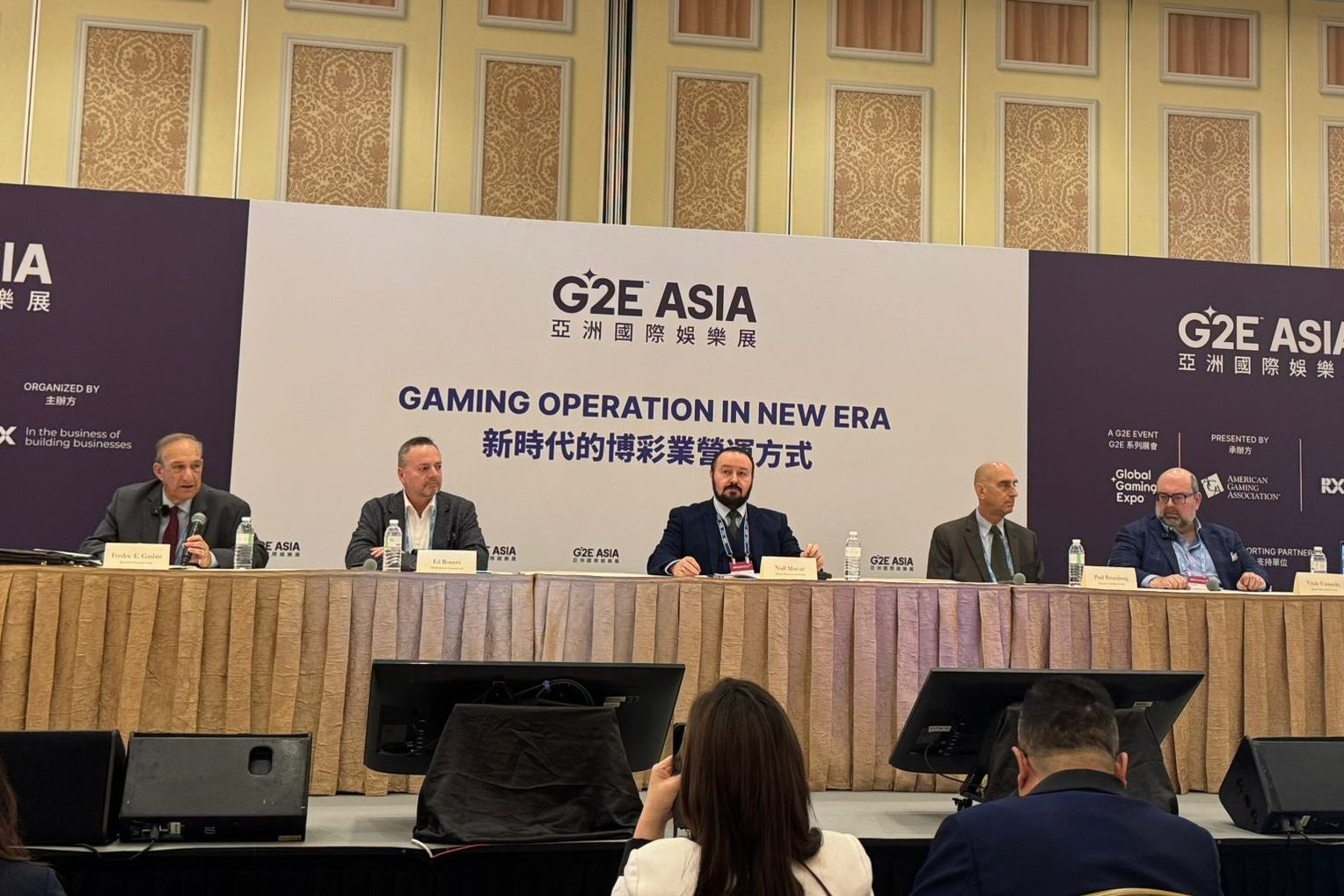
At the “Trends in Asia Gaming Markets” panel, held at The Venetian Macau, top industry representatives debated the trajectory of gaming revenue in Macau and the broader reconfiguration of Asia’s gaming hierarchy.

sjm

Ed Bowers, President of Global Development at MGM Resorts International, expressed concern over Macau’s recent performance, noting the region’s post-pandemic struggles to pivot away from high-rolling VIP clientele toward broader tourism appeal.

“We can see that the Macau gaming revenue is decreasing,” Bowers said. “The government and the six concessionaires are trying their best to bring in concerts and non-gaming events. But the tourist base isn’t expanding as much as expected. So we have to ask — is it the audience we’re targeting? Or is it the quality of entertainment that’s falling short?”

Niall Murray, Chairman of Murray International Group, described the current period as a “necessary adjustment” away from junket-led VIP play to a more sustainable, mass-market model. But the transition isn’t without growing pains.

“If we’re doing premium mass or broad mass, it’s going to come from international money,” Murray said. “But we don’t have the infrastructure to handle 60 million visitors a year. The Ferry Terminal and airport were built for that, yes, but on the ground, congestion is becoming a real problem.”

He also criticized what he sees as a lack of ambition in non-gaming developments. “You can’t just pour concrete next to a ballroom and call it a world-class entertainment venue,” he said, referring to the new Cotai large-scale concert venue. “We need real attractions that are competitive with what’s available across the border.”

Murray warned of rising unregulated accommodations in Hengqin, with an estimated 25,000 illegal or semi-legal hotel rooms. “That’s dangerous,” he added. “And unless we improve hotel capacity in Macau itself, day trips will keep increasing while overnight stays drop.”

Regional rivals eye the top spot

As the session concluded, panelists were asked to rank Asia’s top gaming markets 10 years into the future.

Bowers named Macau as number one, but gave a bullish nod to Japan and Thailand: “If Japan ends up with more than one casino, it could take second. Thailand is right behind. I’m optimistic about it.”

Meanwhile Murray agreed Macau would retain its lead but flagged Thailand as a potential disruptor if legislation is passed.

“They’ll move faster than Japan. If they greenlight multiple casinos, they’ll be a serious competitor,” he said. He was less enthusiastic about Japan’s sluggish regulatory progress: “I’m afraid we’ll be stuck with just one operator for a while.”

Dhruv Garg, a policy expert from the Indian Governance & Policy Project, also championed Thailand. “It’s more affordable and attractive for Indian travelers than even domestic destinations,” he said. “And if a few Indian states open multi-casino resorts, they could challenge Singapore on domestic volume alone.”

Paul Bromberg, of Spectrum Gaming Group, meanwhile kept his forecast more conservative: “Macau. Singapore. Philippines. Japan will stay in fourth as long as there’s just one casino,” indicated the veteran.

But perhaps the most provocative prediction came from Vitaly Umansky, Senior Analyst at Seaport Research Partners, who suggested that the Philippines could overtake Singapore, driven by its burgeoning online gaming sector.

“If that growth continues,” Umansky questioned, “and if regulatory trends hold, the Philippines has the potential to be Asia’s number two gaming jurisdiction within a decade.”

Macau government appoints Ng Wai Han as new gaming watchdog head

0

Ng Wai Han, former Deputy Director of Macau’s Labor Affairs Bureau and Director of the Public Administration and Civil Service Bureau, has been appointed as Director of the Gaming Inspection and Coordination Bureau (DICJ).

The official’s one-year term begins on May 7th.

The appointment was made public via an executive order signed by Secretary for Economy and Finance Tai Kin Yip and published in Macau’s official gazette on Tuesday.

Ng has been in public service since 1999 and has held several senior roles.

This appointment fills a key leadership vacancy that had remained open since December last year. The former director, Adriano Ho, stepped down to become Director-General of the Customs Service following the inauguration of the new Macau administration. Since then, Deputy Director Lio Chi Chong had been serving as acting head.

AGB learned that Ng Wai Han had been appointed as DICJ’s director a few months ago, but the news had not been made public for “unknown reasons.”

What has drawn public attention is that, prior to her new appointment, Ng Wai Han was serving as Director of the Public Administration and Civil Service Bureau and was also a member of the Legislative Assembly Electoral Affairs Commission, currently responsible for overseeing preparations for this year’s Legislative Assembly election. The personnel change has raised concerns over whether it might affect the arrangements for the upcoming election.

Study finds 63% of satisfied guests don’t rebook at Asia’s IRs

Despite rising guest satisfaction across Asia’s integrated resorts, a surprising statistic is challenging the industry’s understanding of loyalty: 63 percent of guests who report a highly satisfactory stay do not rebook.

The finding, revealed in Agilysys’ 2024 APAC Hospitality Impact Study, raises questions about what’s missing in current retention strategies, and whether technology holds the key to turning satisfaction into lasting loyalty.

Kathy Mak, Regional Manager for North Asia at Agilysys—a global provider of next-generation hospitality software solutions and services—told AGB that integrated platforms are one of the solutions helping resort operators transform guest satisfaction into repeat visitation.

“A real transformation is happening across Asia’s integrated resorts,” said Mak. “These properties are shifting from simply filling hotel rooms to enriching the entire guest journey—from booking and check-in to curated dining and entertainment experiences.”

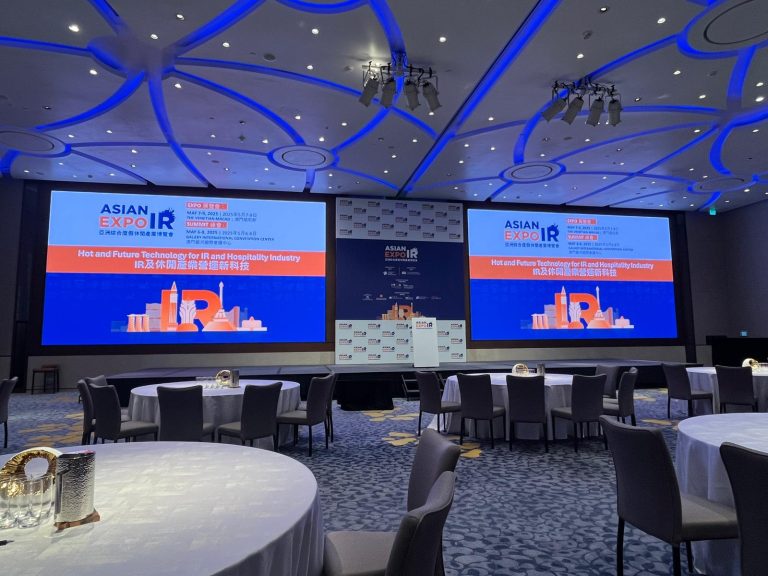
Speaking at the Asian IR Summit during a session titled “Leverage Innovative Technologies to Co-Create Personalized Packages for an Expanded Audience”—held in Macau, Mak explained that at the heart of this shift is a new generation of smart platforms that consolidate guest data across multiple touchpoints – accommodation preferences, dining habits, shopping interests, and entertainment choices—into unified guest profiles. These profiles allow resorts to make personalized recommendations that resonate with each visitor, such as suggesting a family-friendly activity, an exclusive spa treatment, or a chef’s table experience for culinary enthusiasts.

This approach is particularly relevant in Asia, where multi-generational travel is common. According to Mak, technology helps ensure that experiences appeal across age groups, boosting both guest satisfaction and overall spend.

Casino resorts are also embracing these innovations. “Gaming remains central, but it’s now fully embedded into broader lifestyle experiences,” Mak explained. Integrated property management systems (PMS) now unify data from customer relationship management platforms, loyalty programs, and booking engines. The result is a seamless guest experience that anticipates needs—from preferred room types to favorite blackjack tables.

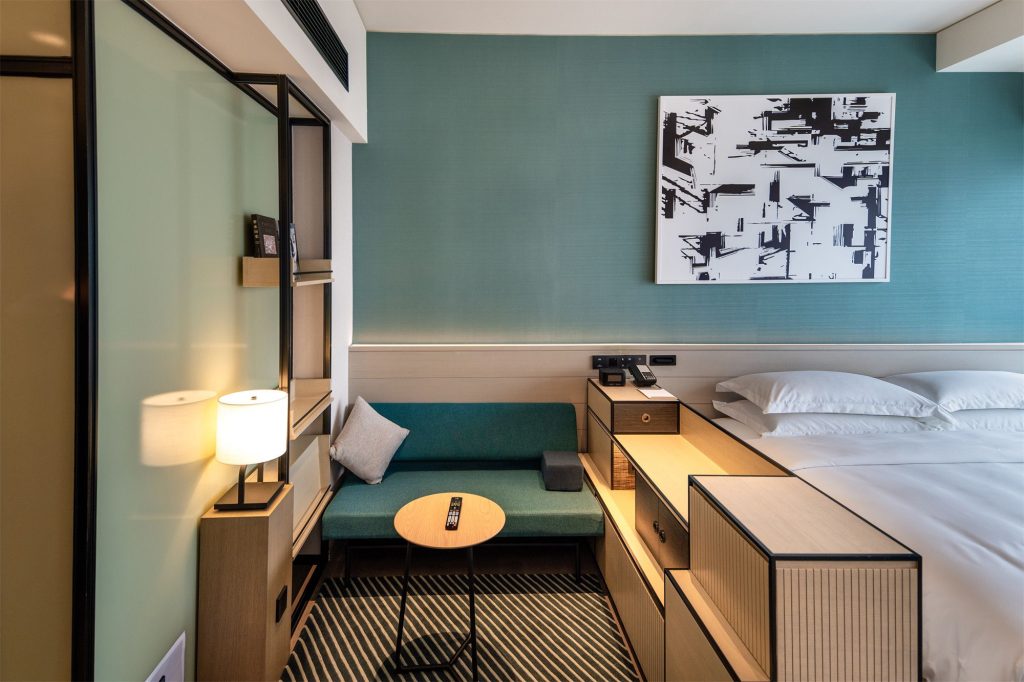
230-room Artyzen Habitat opens today in Hengqin, Asia, IR

With a single interface, guests can book rooms, spa treatments, dining, entertainment, and even golf tee times—eliminating the need to navigate multiple systems. This convenience is paired with real-time personalization. For example, high-value players may receive in-app offers for massages or dining specials timed around their gameplay. Mak noted that “with PMS at the core, casino resorts can scale personalization across all guest segments—deepening engagement and increasing revenue.”

One standout case is INSPIRE Entertainment Resort, which uses the Versa PMS, IG POS, and an integrated loyalty and promotion system to enhance the guest experience. Their technology enables contactless check-in/out via mobile apps, digital keys, QR code ordering, and personalized upselling based on loyalty tier—streamlining operations while improving convenience.

But convenience is only part of the equation. The deeper value lies in emotional connection. “Guests feel known, valued, and better served,” said Mak. “This personal touch is key to long-term loyalty, especially in a competitive market.”

Agilysys’ study revealed another insight: 68 percent of APAC travelers are willing to pay more for tailored stays. In fact, guests may spend up to 30 percent more on room upgrades when offered after booking. Personalization, it turns out, is not a luxury—it’s a differentiator.

“This isn’t just about luxury—it’s about feeling understood,” said Mak. “Small gestures, like remembering a guest’s name or preferred drink, create memorable moments that make guests want to return.”

Despite high satisfaction scores, the study shows that satisfaction alone no longer guarantees loyalty. Mak argues that resorts must go beyond checklists of amenities and focus on curating experiences that reflect the unique identities and expectations of their guests.

Looking ahead, the hospitality industry in Asia is increasingly embracing a more holistic, lifestyle-oriented approach. “The conversation is clearly moving beyond gaming,” Mak added. “Personalization is no longer just about names on a reservation—it’s about knowing who your guest is and crafting seamless journeys that feel relevant at every touchpoint.”

As the region sees continued growth in wellness tourism, digital-first behaviors, and multi-generational travel, integrated resorts that prioritize technology and guestcentric design are likely to lead the next wave of innovation.

E-gaming takes lead as Philippines gaming revenue hits $1.88B in 1Q25

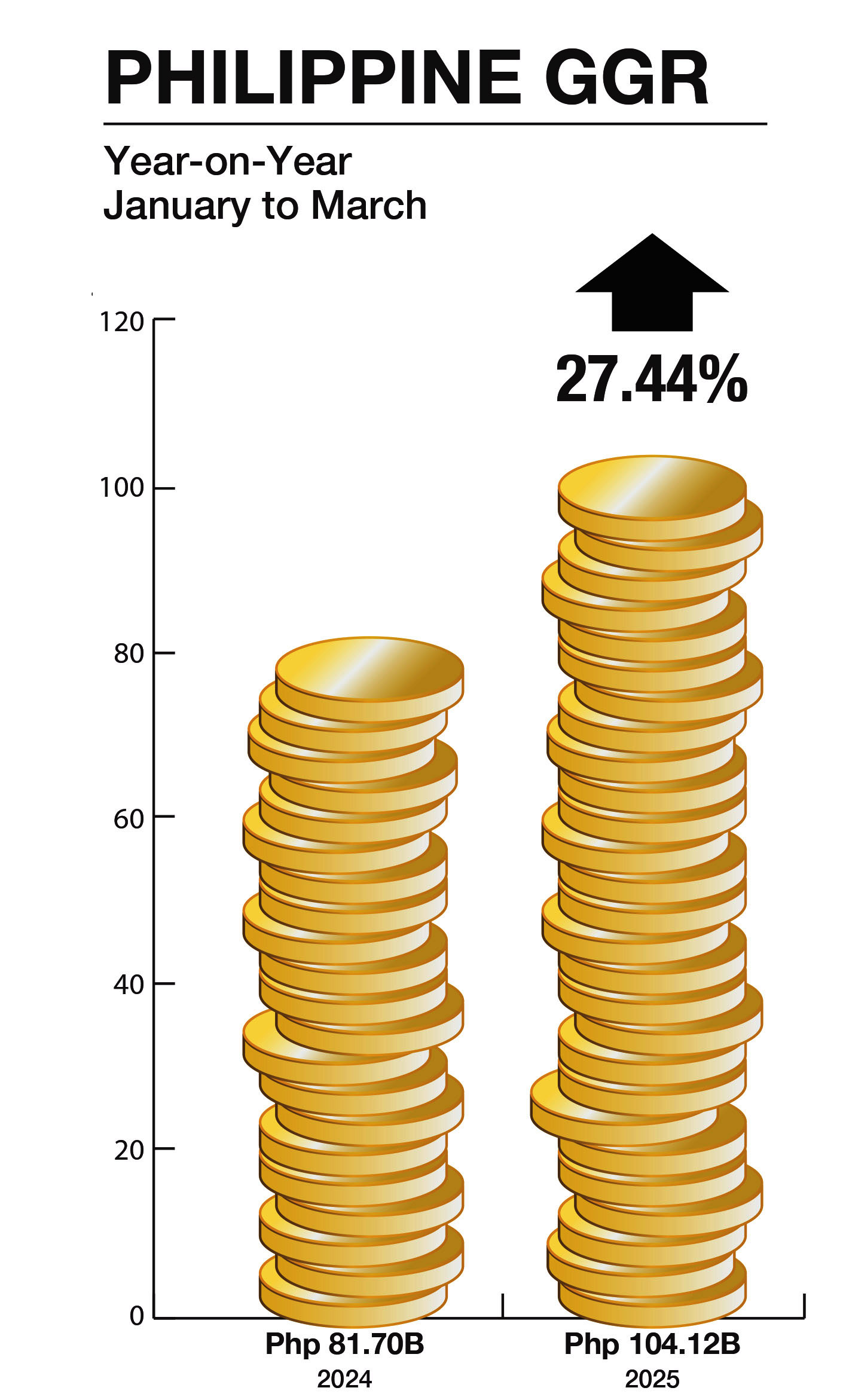
The Philippine gaming industry recorded a strong start to 2025, with gross gaming revenues (GGR) reaching PHP104.12 billion ($1.88 billion) in the first quarter, a 27.44 percent increase compared to the same period last year.

E-gaming takes lead as Philippines gaming revenue hits $1.88B in 1Q25

This surge marks a critical turning point in the sector, with electronic gaming now leading revenue generation, indicated Philippine Amusement and Gaming Corporation (PAGCOR) Chairman and CEO Alejandro H. Tengco.

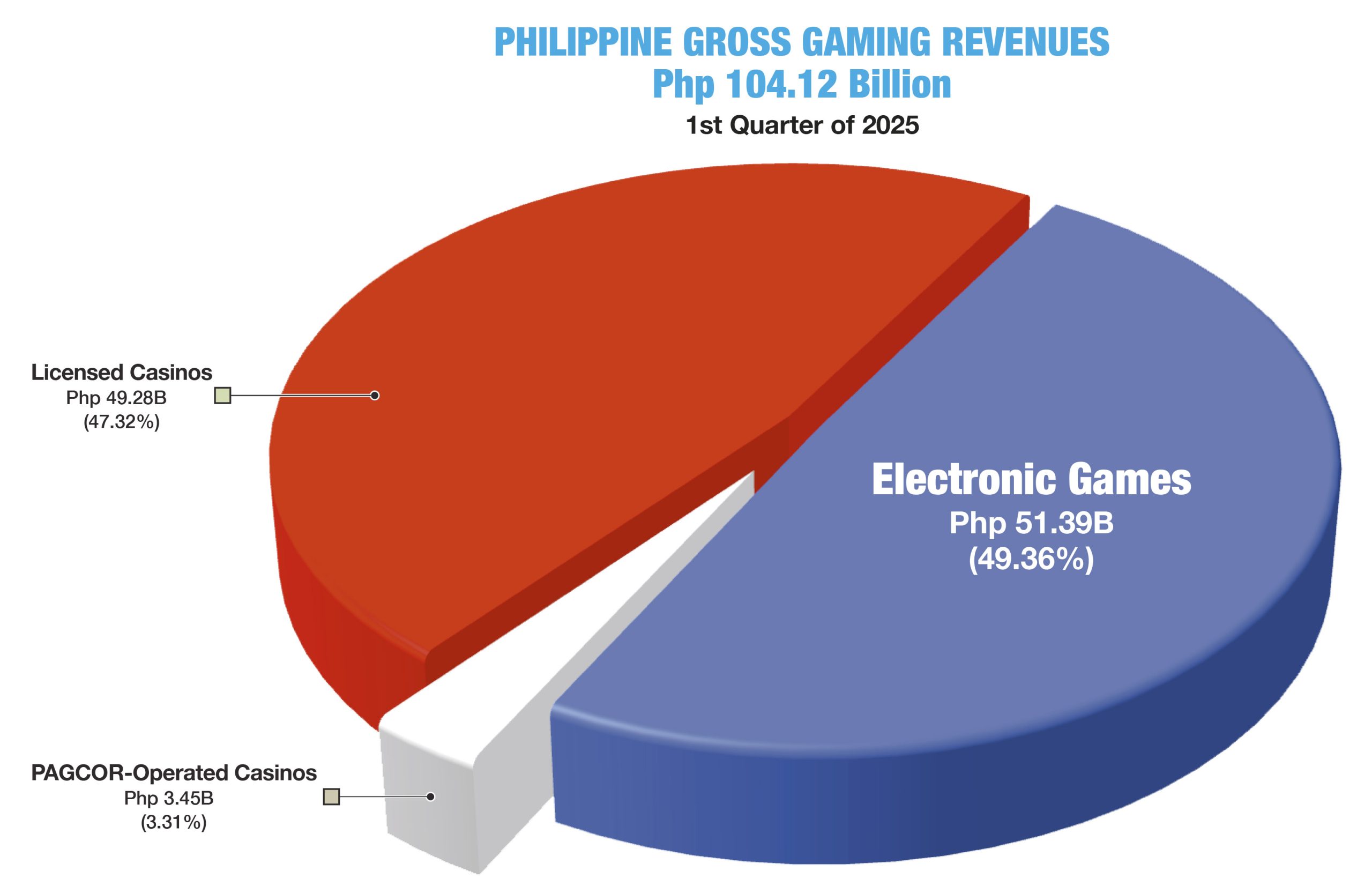
“The E-Games and E-Bingo segment made history by becoming the industry’s top revenue driver for the first time, contributing PHP51.39 billion ($927 million) or 49.36 percent of the total first quarter GGR,” stated Tengco.

“This represents not just revenue growth but how consumer behavior continues to shift towards digital, on-demand gaming experiences, accelerated by greater access to mobile technology,” he added.

The PAGCOR chief also noted that the rise of the E-Games industry has drastically reshaped the Philippine gaming landscape.

“As digital platforms take center stage, the Philippine gaming industry is likewise undergoing a paradigm shift. Hence, our goal as a regulator is to strike the right balance between innovation, player protection and long-term industry sustainability,” he said.

E-gaming takes lead as Philippines gaming revenue hits $1.88B in 1Q25

Licensed casinos, which have historically dominated the GGR landscape, generated PHP49.28 billion ($889 million), accounting for 47.32 percent of the industry’s total.

“While there was a minimal dip in revenues from licensed casinos compared to last year’s figures due to growing digital competition, this segment shows sustained strength and relevance,” Chairman Tengco said.

“The performance of brick-and-mortar casinos remains critical to industry stability, particularly in tourism-driven hubs such as Entertainment City and Clark.”

Meanwhile, PAGCOR-operated casinos generated PHP3.45 billion ($62 million) in revenues, making up 3.31 percent of the GGR.

Cash Express Legend by Aristocrat Gaming debuts at Cache Creek Casino

Gaming giant Aristocrat Gaming has announced that Cash Express Legend is now live on casino floors across North America. Cache Creek Casino Resort in Northern California hosted its world premiere, introducing the first premium lease game on The Baron™ Upright.

“We could not be more pleased with the positive response our customers and players have had to The Baron Upright and its bespoke game portfolio,” said Kurt Gissane, chief revenue officer of Aristocrat Gaming. “Now with the addition of Cash Express Legend, the first premium lease game on the cabinet, we can’t wait for players to experience the latest evolution of our legacy Cash Express game family in a completely new way. We were thrilled to partner with Cache Creek Casino Resort to premiere Cash Express Legend with the flair, excitement, and celebration the game deserves.”

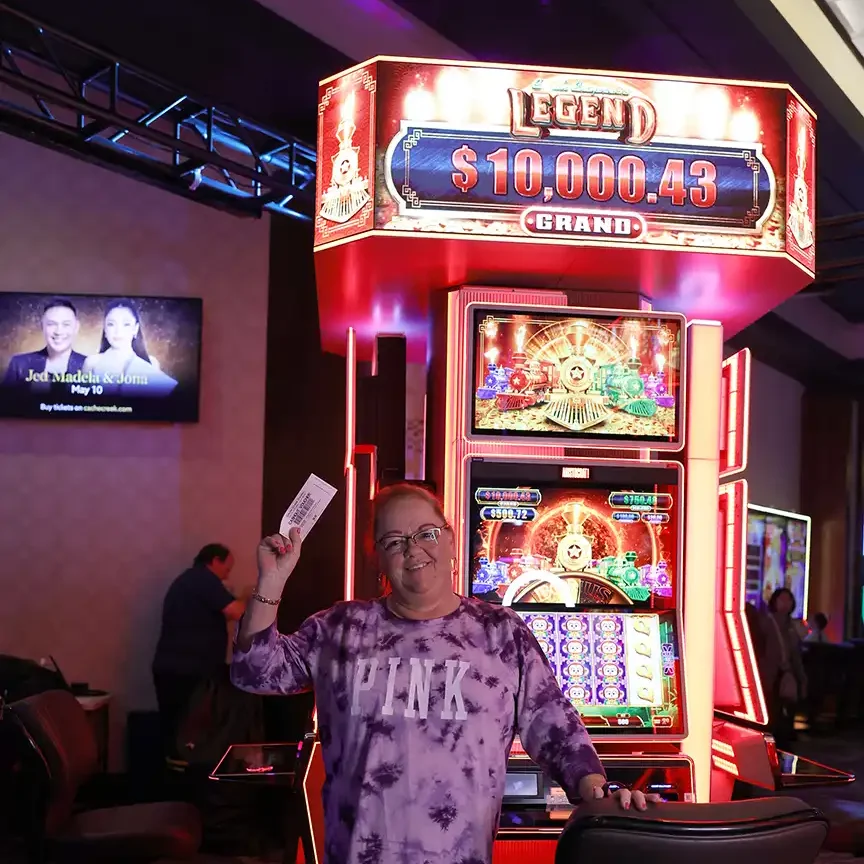
Francine McMahon, had the honor of taking the inaugural spin on Cash Express Legend by Aristocrat Gaming
Francine McMahon

Cache Creek Casino Resort’s renowned guest, Francine McMahon, had the honor of taking the inaugural spin on Cash Express Legend. No stranger to Aristocrat Gaming player-favorite games, McMahon won over $1 million on its popular Dragon Link™ game just last month, bringing her notable personality to the highly anticipated premiere event.
 
The latest extension of the Cash Express™ brand, Cash Express Legend, brings together player-favorite features from the popular Cash Express Luxury Line™ and other hit Aristocrat Gaming games. The train-themed gameplay and rich graphics are set to light up casino floors like never before, powered by the advanced technology and integrated dynamic lighting of The Baron Upright.

Cash Express Legend by Aristocrat Gaming debuts at Cache Creek Casino Resort
Cash Express Legend by Aristocrat Gaming


As part of the Cash Express family, trains are a central component of the game, each representing different jackpots and bonuses. Cash Express Legend features two new carriages, the gold carriage and the Legend carriage.
 
The highly sought-after gold train carriage repeats trigger amounts or prizes won on the other trains, increasing prize possibilities. The Legend carriage takes players into a 3×3 Hold & Spin feature, offering the chance to trigger the “Legend Progressive.” Another differentiator of Cash Express Legend is the Bonus Meter. Once filled, the Bonus Meter will award players one or multiple trains, increasing their prize amount.
 
Cash Express Legend is a multi-game family featuring three game themes: Buffalo™, Choy Sun Doa™, and Joyful Panda™.
 
The premium Cash Express Legend joins the star-studded game portfolio on The Baron Upright, including Buffalo Gold Cash Collection™Ju Cai Jin Gui™ Dragon and Ingot, and Bao Zhu Zhao Fu Ignite™ Blue Prosperity and Red Prosperity, which are now available For Sale.

Blask extends Market Overview dashboard coverage to 10 new countries

Blask, the AI-powered analytics ecosystem for the iGaming industry, has added nine new countries to its Market Overview dashboard — bringing total coverage to 55 global jurisdictions.

The latest update significantly strengthens the platform’s insights across Tier 1 and established markets.

Newly added countries include the United Kingdom, Italy, Germany, Sweden, Czech Republic, Portugal, Denmark, Austria, Switzerland, and France. These markets are now fully available inside Blask’s Market Overview dashboard, with access to key performance indicators:

  • Blask Index – a general signal of overall brand activity in the market;
  • BAP (Brand Accumulated Power) – reflects audience interest based on search trends and engagement;
  • APS (Acquisition Power Score) – measures how effective a brand is at acquiring new users;
  • CEB (Competitive Earning Baseline) – estimates a brand’s potential earnings within its competitive environment.
Max-Tesla-CEO-of-Blask
Max Tesla, CEO and co-founder of Blask at ASEAN Gaming Summit 2025

“This expansion sharpens our coverage where it matters most,” said Max Tesla, CEO and co-founder of Blask. “Tier 1 markets are where competition is toughest — and decisions need to be backed by data. With these additions, Blask gives operators a clearer edge in navigating regulated, high-value regions.”

The Market Overview dashboard is designed to help operators, suppliers, and affiliates benchmark brand performance at the country level, track market dynamics, and spot early trends.

This release follows previous expansions into Asia, Latin America, and Africa, as Blask continues to respond to user demand for reliable, granular insights across the global iGaming landscape.