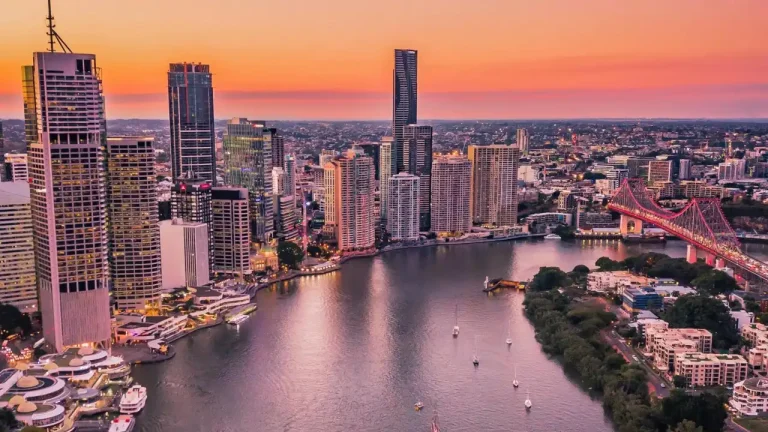
The Queensland Government has re-appointed Bruce Barbour – a former member of the NSW Casino Control Authority – as Chairperson, and Jen O’Farrell as CEO of the state’s Crime and Corruption Commission (CCC).
Authorities from the Australian state underscored that the decision underscores the government’s commitment to bolstering the CCC’s reporting powers following recent landmark legislation aimed at restoring integrity within the state.
Bruce Barbour’s re-appointment extends his tenure until July 1st, 2028, after a three-year term as Chair. Before this role, he served as an Ordinary Commissioner from May 2021 to January 2022 and acted as Chair in early 2022. Notably, Barbour also held the position of NSW Ombudsman for 15 years and was a member of the NSW Casino Control Authority.
Jen O’Farrell has also been re-appointed for another three years as CEO of the CCC, a position she has held since August 2018 in a new term that will last until August 23rd, 2028.
O’Farrell’s background includes roles as Executive Director of the Queensland Greyhound Racing Industry Commission of Inquiry, General Manager and Director of Legal Services at the Department of Transport and Main Roads, and experience as a solicitor.
“I am pleased to provide this key integrity agency with continued stability through these reappointments,” Attorney-General and Minister for Justice and Integrity, Deb Frecklington stated. “Mr. Barbour has served with distinction, demonstrating an independent and apolitical approach in his invaluable role.”
The Attorney-General emphasized the importance of the CCC as Queensland’s peak anti-corruption agency, highlighting the necessity for thorough investigations into allegations of corruption.
Queensland has been actively reviewing and taking action against casino operators in recent years.
One of the most significant investigations involved The Star Entertainment Group, which faced scrutiny over its governance and operational practices, with the Queensland Government deeming The Star unsuitable to hold a casino license and initiating disciplinary measures in response to findings from the Gotterson Review.
The state’s government has granted an additional six-month extension for The Star Gold Coast’s casino license suspension, deferring the decision until September 30th, 2025.
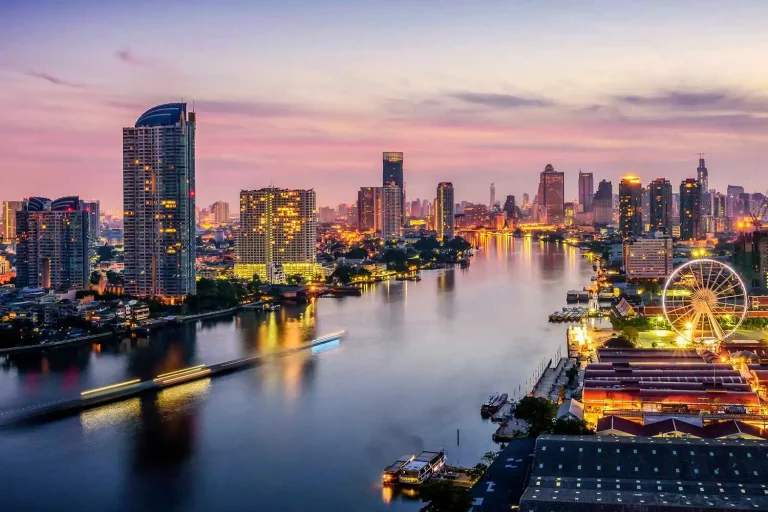
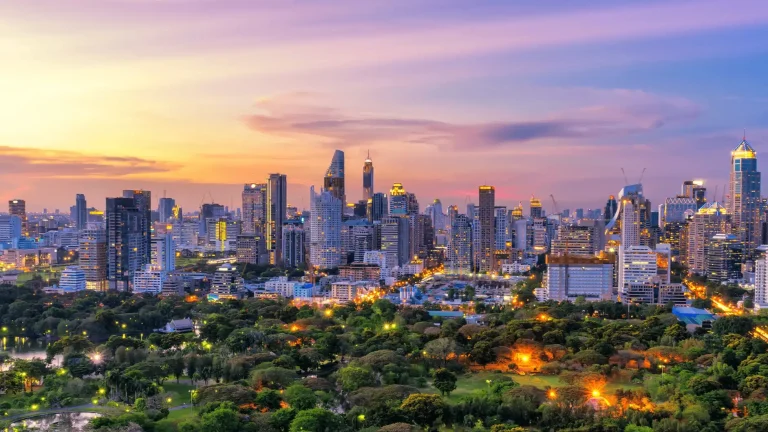
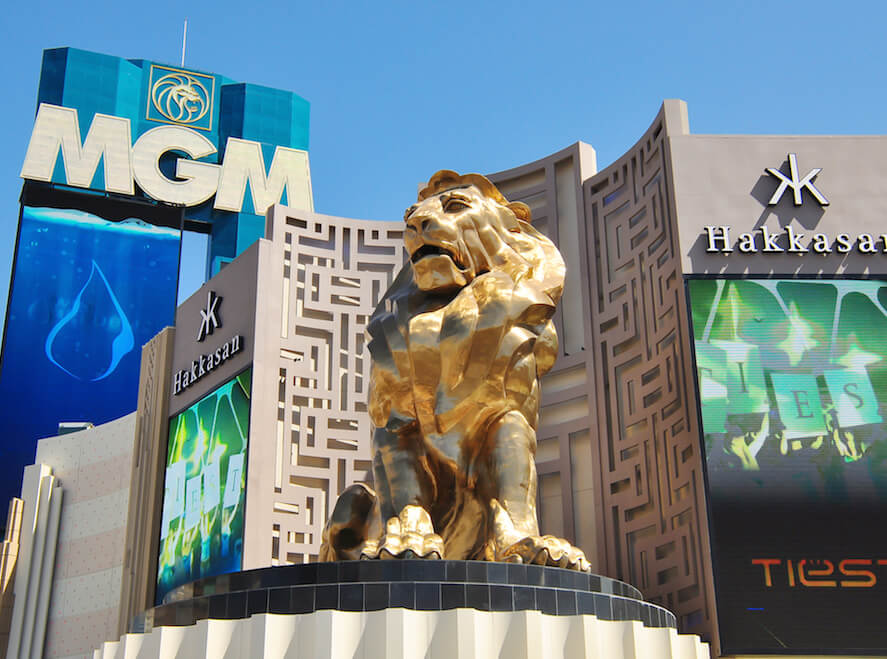
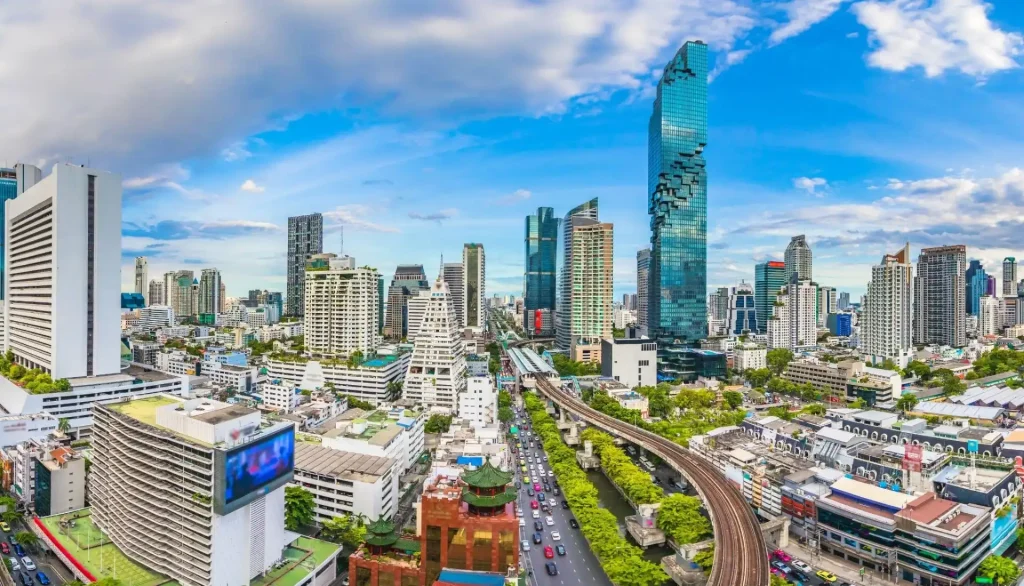
MGM makes money moves. And this latest intrigue from Thailand has executives hot and bothered to get into the environment, if it can prove lucrative. The company is looking to invest up to $5 billion if they can get a prime location in Bangkok – their preferred venue given infrastructure, transportation and tourism attractions. They’re not the only ones focusing on the potential however, and competition will be strong – if legislation goes ahead.
With over 30% of global gaming revenue projected to come from Asia soon, the window of opportunity is wide open. Bettorify’s white-label and turnkey solutions deliver what most platforms miss: sharp execution backed by real local expertise.
The proposal is aimed at bringing in hundreds of millions in tax revenue per year, while avoiding any type of association with a casino.
The jurisdiction previously handled the collapse of a (basically) junket operator that attempted to turn Imperial Pacific International (IPI) into an integrated resort. However, the company ultimately failed, leaving the region with millions in allegedly unpaid taxes.
The new effort is also part of a push to allow online gambling, with certain key top officials in strong opposition to the idea.
However, the legislature overrode the opposition, meaning the region could be paving the way to new, stable, gaming options aside from land-based.
The Australian Communications and Media Authority (ACMA) has emphasized the responsibility of broadcasters and streaming services to protect Australian audiences from exposure to offshore gambling advertisements during international live sports events.
In a statement, the ACMA highlights growing concerns about the prevalence of gambling ads, particularly those that are inserted virtually or are physically present at venue sites.
According to the ACMA, ‘the existing rules around when gambling ads can be shown during live sport apply to the coverage of international live sporting events that are broadcast or streamed in Australia.’ This includes ads for online gambling services, which may be presented both virtually and physically.
The ACMA acknowledges that various exceptions exist regarding these regulations. For instance, gambling advertisements may be permissible if they are deemed ‘accidental or incidental to other content,’ provided that no benefit was received for airing them. Additionally, ads that broadcasters did not add to the feed and cannot reasonably remove may also fall under these exceptions.
However, advancements in advertising technology have introduced new techniques, such as the insertion of virtual gambling ads alongside traditional physical ads. The ACMA notes that these innovations ‘were not contemplated when the exceptions were developed.’
This has led to an increase in the prominence of such ads during recent international sporting events, raising concerns about whether they exceed what was originally expected as an ‘incidental accompaniment to other matter.’
The ACMA stressed the importance of these issues, especially concerning offshore gambling services: ‘This type of advertising is cause for community concern.’
In light of these developments, the ACMA has outlined specific expectations for broadcasters and online content service providers. They are urged to take proactive measures to secure alternative feeds that do not include any gambling advertisements, particularly those related to offshore services.
If a clean feed is unavailable, broadcasters should work towards implementing solutions—whether through contractual negotiations with feed suppliers or technical methods to remove or overlay ads.
Furthermore, the ACMA requires that broadcasters maintain documentation of these actions for review. ‘We will assess each matter on a case-by-case basis,’ the authority stated, reiterating its commitment to monitoring the situation closely. A key message from the ACMA is clear: ‘If a gambling service cannot be provided to Australians, it should not be advertised here.’
As the landscape of sports broadcasting evolves, the ACMA noted that its guidance aims to safeguard Australian viewers from the potential harms of gambling advertising, ensuring that responsible practices are upheld in the industry.
Suntrust Resort Holdings has released its financial results for the first quarter of this year, showcasing an improvement in revenue but with increasing operational costs.
Suntrust, a subsidiary of LET Group, is a Philippine gaming operator currently developing the $1.1 billion Westside City project in Metro Manila.
In terms of revenue, Suntrust reported gross revenue of PHP2.97 billion ($53 million) for the 1Q25, consistent with the previous year. However, gross expenses surged by 51.65 percent to PHP205.31 million ($3.7 million), reflecting increased operational costs.
The company also recorded non-operating income of PHP125.45 million ($2.25 million), a notable entry considering there was no such income reported in the previous year.
Conversely, non-operating expenses were reduced by 98.99 percent to PHP1.10 million ($19,500), down from PHP108.57 million ($1.95 million) a year prior, indicating improved management of costs outside of core operations.
Despite these gains, Suntrust reported a net loss of PHP84.33 million ($1.5 million), an improvement from a loss of PHP256.10 million ($4.6 million) in the same quarter last year, a 67 percent reduction in losses. The loss attributable to parent equity holders was similarly reported at PHP84.21 million ($1.5 million).
Current assets decrease
For the period, the company reported total assets of PHP54.94 billion ($987 million), reflecting a modest increase of 1.34 percent from PHP54.21 billion ($$974 million) at the end of 2024.
Current assets, however, decreased significantly by 36.84 percent, dropping to PHP4.04 billion ($73 million) from PHP6.39 billion ($115 million), indicating a tightening of liquidity.
On the liabilities side, total liabilities rose to PHP46.49 billion ($836 million), marking an increase of 1.84 percent from PHP45.65 billion ($825 million). Current liabilities also experienced an uptick of 20.31 percent, reaching PHP2.25 billion ($40 million).
This rise in liabilities has contributed to a retained deficit of PHP4.71 billion ($84 million), widening slightly from PHP4.63 billion ($83 million).
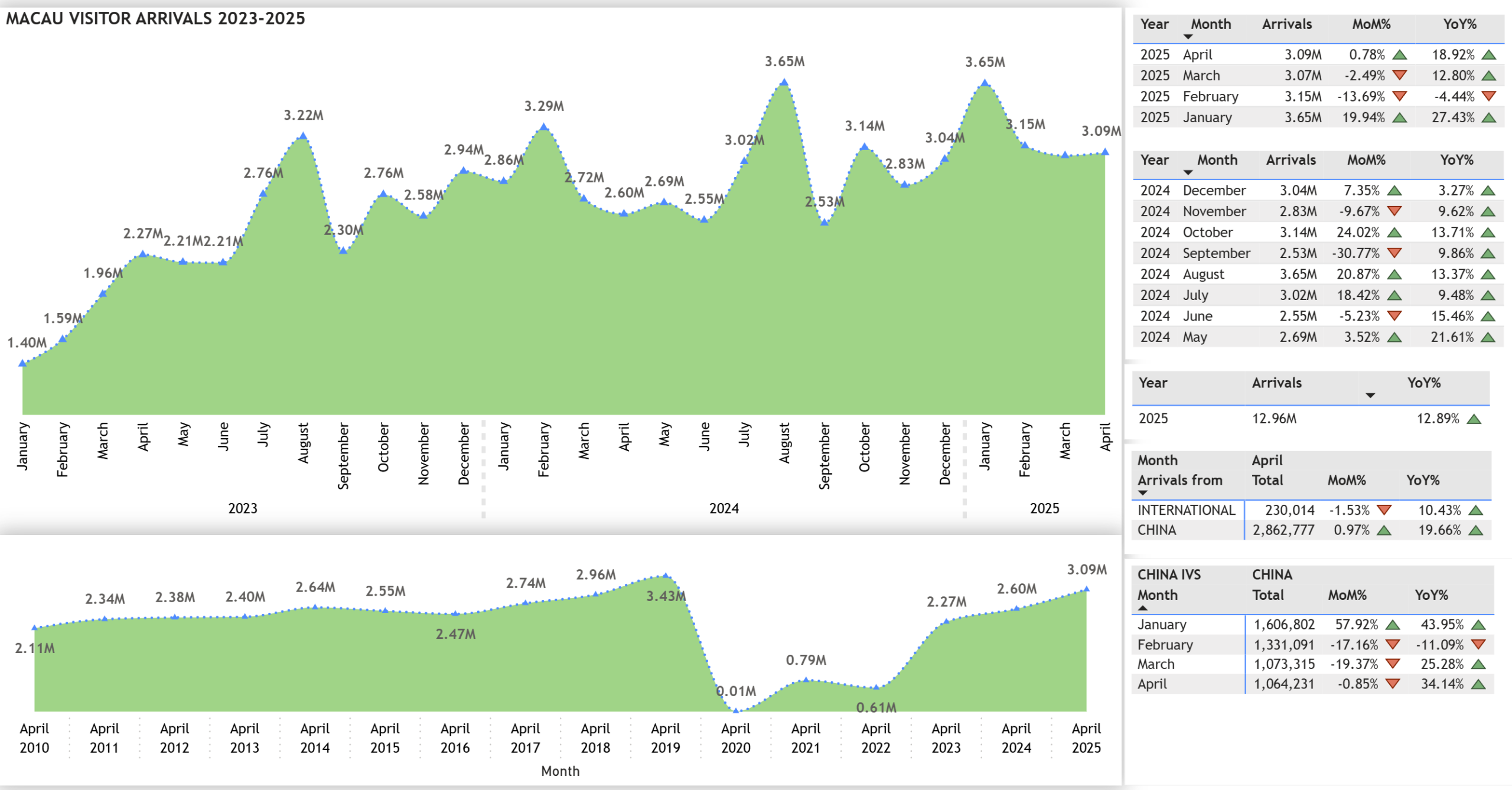
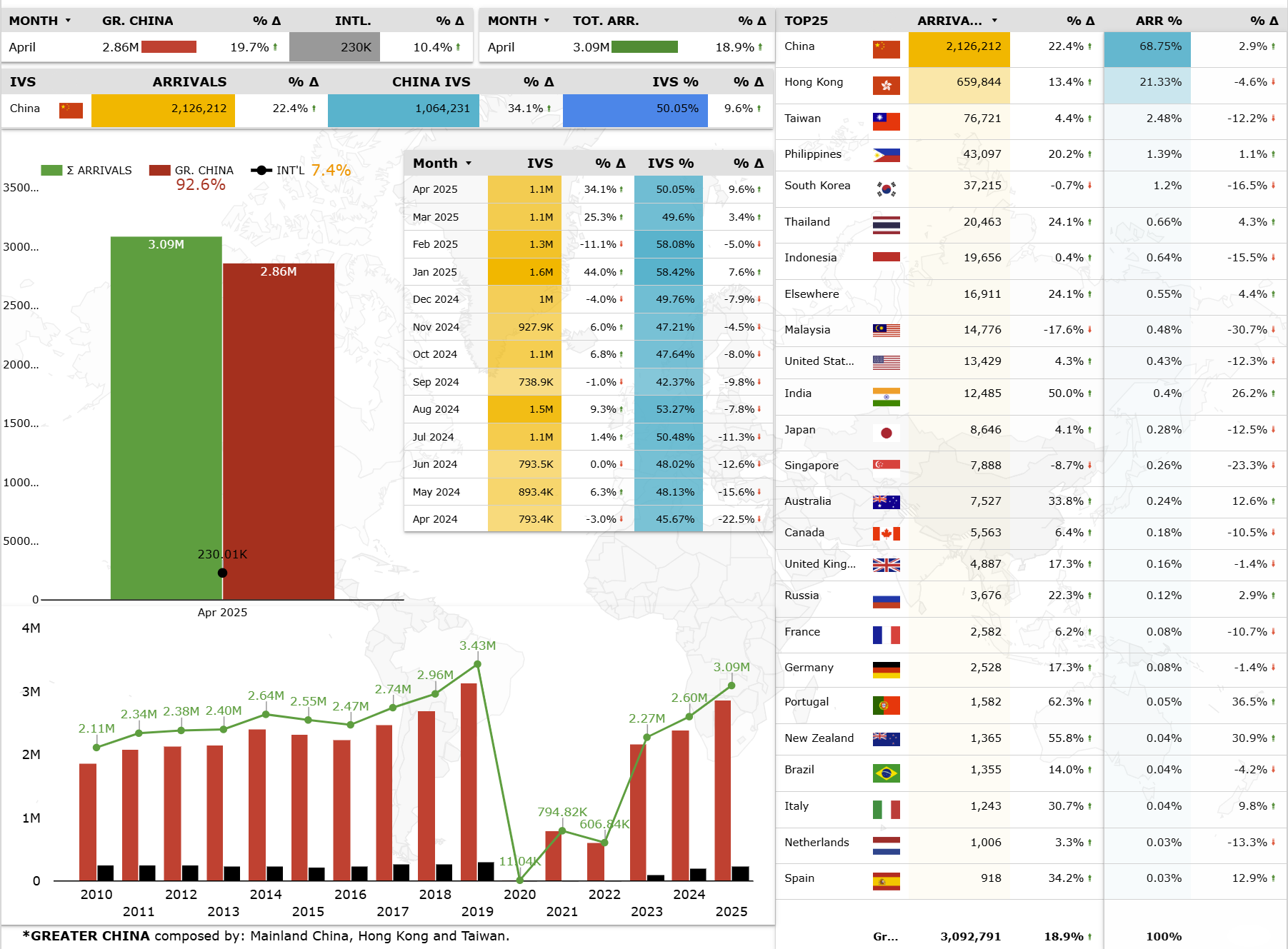
Visitor arrivals to Macau rose by 18.9 percent year-on-year to 3,092,791 in April 2025, according to the Statistics and Census Service (DSEC).
In the first four months of 2025, the city welcomed a total of 12,955,456 visitors, marking a 12.9 percent increase compared to the same period last year.
Mainland China remained Macau’s largest source market. Visitor arrivals from the mainland rose by 22.4 percent year-on-year to 2,126,212 in April. Among them, 1,064,231 arrived under the Individual Visit Scheme, up by 34.1 percent. Additionally, 149,359 traveled under the “one trip per week” measure, 43,278 under the “multiple-entry” measure, and 18,015 under the “tourist group multi-entry” measure.
Macau Visitor Arrivals April 2025
The Greater Bay Area continued to drive growth, with visitor arrivals from the nine Pearl River Delta cities climbing by 34.5 percent year-on-year to 1,066,367. Zhuhai led the surge with an impressive 63 percent increase in visitor numbers.
Visitors from Hong Kong reached 659,844, an increase of 13.4 percent, while arrivals from Taiwan grew by 4.4 percent to 76,721.
International markets show mixed results
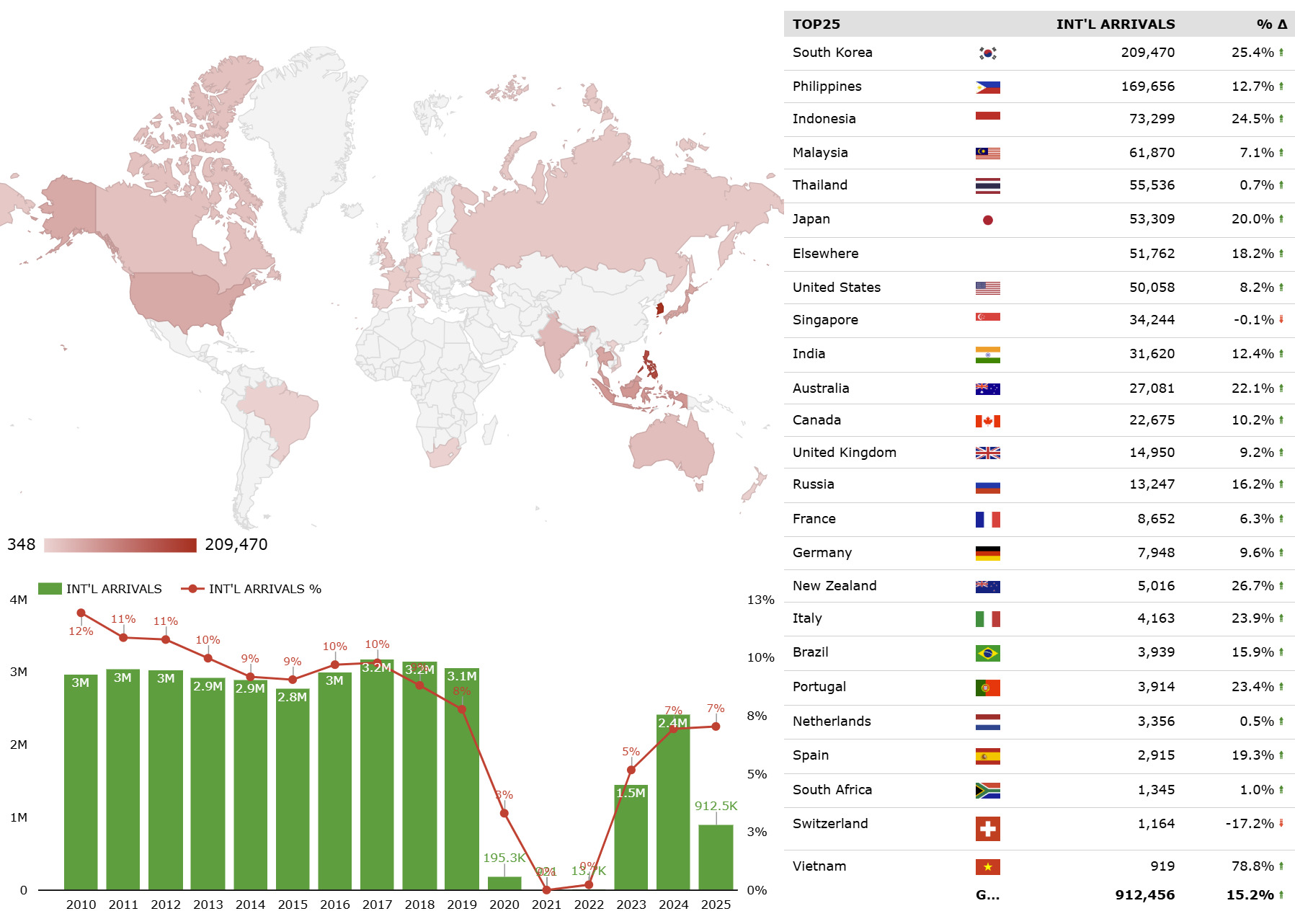
International visitor arrivals totaled 230,014 in April, up 10.4 percent year-on-year. Southeast Asian markets posted varied results: the Philippines recorded 43,097 visitors, up by 20.2 percent; Thailand had 20,463 visitors, up 24.1 percent; and Indonesia received 19,656 visitors, a slight increase of 0.4 percent. In contrast, Malaysia and Singapore saw declines, with 14,776 and 7,888 visitors respectively, down by 17.6 percent and 8.7 percent.
Macau International Arrivals 2025
India stood out in the South Asian market, with arrivals rising 50 percent year-on-year to 12,485.
Among Northeast Asian markets, Japan recorded 8,646 visitors, a 4.1 percent increase, while South Korea registered a slight drop of 0.7 percent to 37,215.
Visitor numbers from the United States showed modest growth, rising 4.3 percent year-on-year to 13,429.
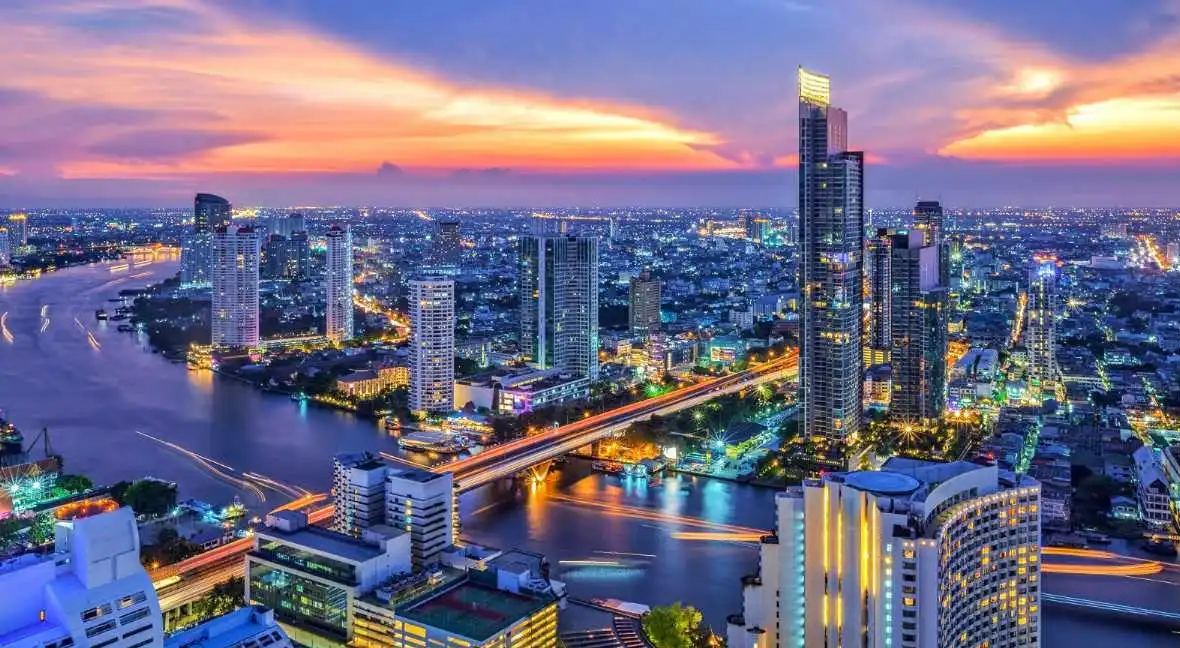
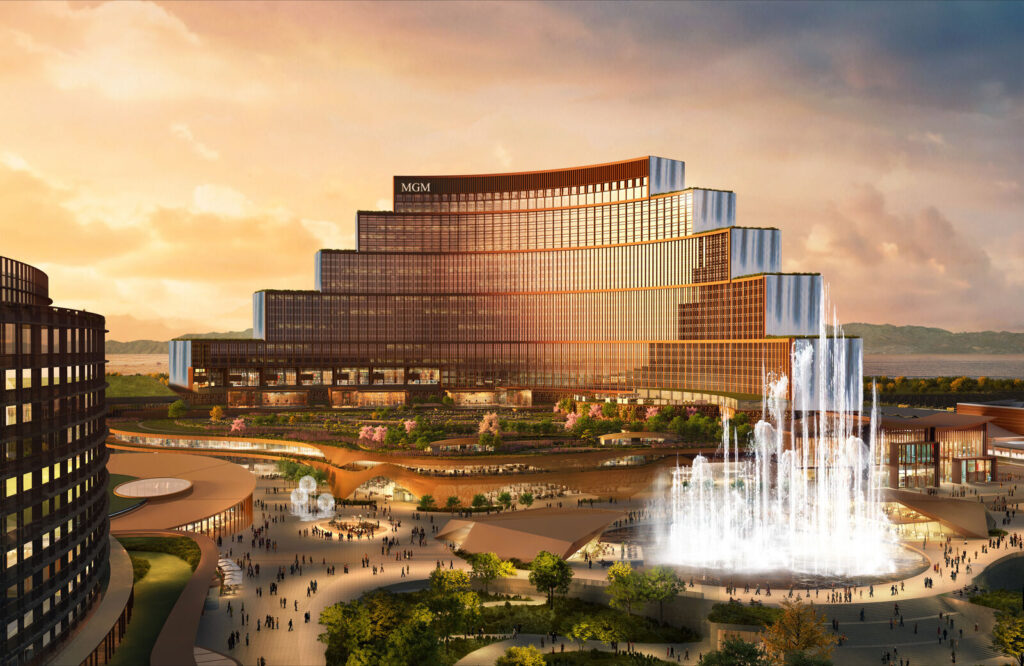
US-based gaming operator MGM Resorts International has signaled its interest in investing $3 to $5 billion in a casino resort project in Bangkok, but emphasizes Thailand will need to establish “competitive” tax rates and reasonable local access policies to create a sustainable integrated resort (IR) model.
This is the first time international gaming operators have disclosed the potential investment amount, even though it is still at a very early stage of preliminary estimation.
Ed Bowers, president of global development at MGM Resorts, told the Bangkok Post that new countries embracing integrated resort investments need to remain competitive with regional players, particularly regarding casino taxation structures. Singapore, which MGM views as a successful model, maintains an average tax rate of 17 percent on gross gaming revenue, while Macau and Japan impose significantly higher rates at 40 percent and 30 percent respectively.
“Integrated resorts not only have a significant impact on economies and tourism, but they also help to eliminate existing problems related to gambling,” Bowers stated, emphasizing the potential economic benefits of regulated gaming.
In March last year, a draft bill by a parliamentary committee set 17 percent gaming tax in Thailand, but so far there is no definitive number confirmed from a legislative perspective.
Local access policies present challenges
The MGM executive highlighted the critical importance of allowing reasonable local access to casino facilities, pointing to South Korea as a cautionary example.
In South Korea, all but one casino property are prohibited from receiving locals, which has made the gaming industry more vulnerable as it can only rely on foreign visitors. The executive referenced INSPIRE Entertainment Resort, without mentioning it by name, noting that such policy has caused financial struggles for the casino resort, which eventually resulted in it being put up for sale due to insufficient revenue generation.
“It is essential governments understand the fundamentals of how the casino business works,” Bowers noted, advocating for evidence-based policy development. He suggested Thailand’s entry fees for locals should not exceed Japan’s rate, which plans to collect approximately JPY6,000 ($41.7) per local visitor at its developing casino properties.
MGM’s interest specifically targets Bangkok due to the capital city’s ability to attract foreign tourists. The company believes a major metropolitan area like Bangkok could potentially support up to two casino resorts, though Bowers suggested one large integrated resort would likely be sufficient.
The company’s location preferences center on areas with substantial population density, convenient airport access, robust public infrastructure for tourists, and iconic settings that naturally draw visitors.
In March this year, the special committee overseeing Thailand’s entertainment complex project announced Bangkok, Chon Buri, Chiang Mai, and Phuket as the first four locations for development. Thailand plans to issue between five to eight entertainment resort licenses in the country.
Casino floor space and development plans
Regarding Thailand’s draft entertainment complex legislation, which limits casino floor space to 10 percent of total development area, Bowers indicated this appears reasonable. He noted that MGM typically prefers a 5-10 percent allocation, though added that proportions should be calculated based on each government’s policies and market demand.
For comparison, Singapore’s two integrated resorts maintain casino spaces under 5 percent of their total available area, while Japan caps casino areas at 3 percent.
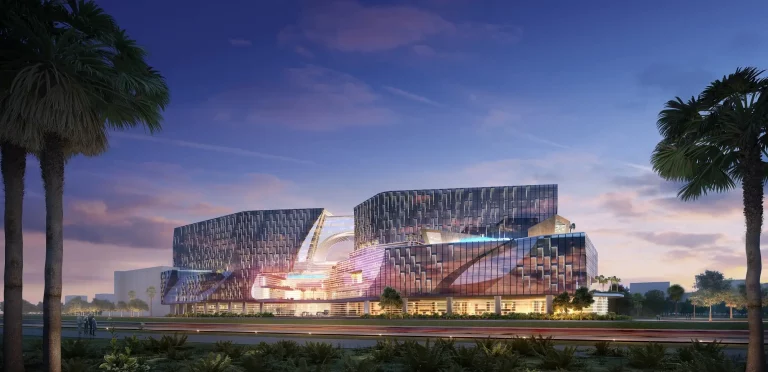
MGM Osaka
Addressing social concerns
In addressing concerns about gambling-related social issues and money laundering, Bowers emphasized that many operators, including MGM Resorts, have established responsible gambling measures. He argued that legalized, regulated casino environments can actually help maintain or reduce gambling problems through responsible gaming programs funded by casino tax revenue.
Beyond gaming revenue, Bowers highlighted how MGM’s developments create significant employment opportunities for local communities, a practice the company maintains when investing in new jurisdictions.
Thailand’s potential entry into the regulated gaming market comes as several Asian countries continue developing their integrated resort strategies, with Singapore’s model allowing its two casino properties to generate gaming revenue six to eight times higher than their Las Vegas counterparts, according to MGM’s assessment.
According to reports, four internationally renowned casino operators, including Wynn Resorts and MGM Resorts, have held or scheduled discussions with the Thai government over the possible development of the country’s first entertainment complexes, with more in line to follow, the country’s Deputy Finance Minister Julapun Amornvivat has revealed. Two operators’ names have not been identified so far.
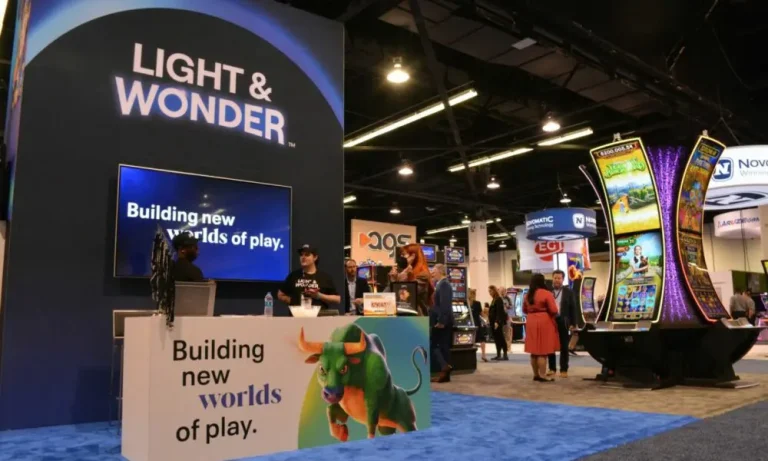
Gaming equipment and services group Light & Wonder has outlined ambitious growth strategies aimed at achieving $2 billion in adjusted EBITDA by 2028, representing a 13 percent three-year compound annual growth rate from its 2025 target of $1.4 billion.
The gaming technology company presented these plans during its recent Investor Day event, where executives detailed a multi-faceted approach to expansion across its gaming, social casino, and iGaming segments.
Despite Light & Wonder’s stock being classified as having a ‘premium to peer valuation,’ analysts Carlo Santarelli and Steven Pizzella from Deutsche Bank maintain a Hold rating.
They noted that the company’s 2028 target exceeds the current Bloomberg Consensus estimate of approximately $1.74 billion. However, this discrepancy may be partially explained by the recent acquisition of Grover Gaming, which is expected to contribute approximately $111 million in adjusted EBITDA.
A central component of Light & Wonder’s growth strategy involves significantly increasing its North American premium install base and global game sales market share by approximately 400 basis points from 2024 to 2028. This initiative falls under the gaming segment, which accounted for about 65 percent of the company’s 2024 gaming revenue.
The company also reaffirmed its 2025 adjusted EBITDA target of $1.4 billion, though Deutsche Bank analysts highlighted that achieving this goal would require approximately 13 percent growth in adjusted EBITDA for the remainder of 2025. This comes after Light & Wonder reported two consecutive quarters with net revenue growth below 4 percent.
From a valuation perspective, based on current market capitalization, first quarter 2025 period-end net debt, plus the recently announced $800 million term loan to finance the Grover acquisition, leaves shares trading at approximately 5.9 times the target 2028 adjusted EBITDA.
Beyond its core gaming business, Light & Wonder outlined growth strategies for its SciPlay division, which represents approximately 26 percent of 2024 gaming revenue. These plans include growing current games above market rates, increasing direct-to-consumer business to approximately 30 percent of revenue by 2028 (up from 11 percent in 2024), and enhancing user acquisition efficiency.
For its iGaming segment, which accounts for roughly 9 percent of 2024 gaming revenue, Light & Wonder aims to increase first-party content share by approximately 300 basis points to over 10 percent by 2028, while also expanding into new markets and increasing omni-channel opportunities.
The Grover Gaming acquisition is expected to contribute to growth through increased device deployment, expanded revenue per device, entry into new jurisdictions including Maryland, Minnesota, and Indiana, and by combining Light & Wonder’s gaming content with Grover’s operating model.
Light & Wonder expects to scale adjusted EBITDA faster than revenue while targeting approximately 17 percent of revenue for R&D and capital expenditure investments.
SOFTSWISS, a global tech company specializing in iGaming software, has announced its win at the Eventex Awards 2025, receiving recognition in the Corporate Event category for its Kids Camp initiative.
The camp was designed to support employees by engaging their children in a unique, cross-border experience. The recognition places SOFTSWISS alongside Disney, Nike, and Netflix, which also won this awards.
In August 2024, SOFTSWISS brought together 65 children of its employees in the Masurian Lake District in Poland, known for its compelling nature. The week-long family camp welcomed participants from SOFTSWISS partners’ development centres in Poland, as well as team members from Georgia, Cyprus, Germany, and beyond.
Kids Camp was not just a summer event but a thoughtfully crafted initiative reflecting the company’s people-first values. What set it apart was a mix of custom-developed educational modules, immersive activities, and an inclusive approach to help participants from different cultural backgrounds connect. The children enjoyed a hackathon where they tackled real-world issues, such as flooding problems in Brazil, and created thoughtful gifts for children affected by these disasters.
“One of my favourite aspects of this project was that the activities at the camp were not just about fun and play, but also had an impact, where the children got to experience supporting others,” added Shannon Jones, a jury member of the Eventex Award 2025.
Organising an eco-friendly, cross-border, multicultural event for children and families within a company that operates a hybrid work model was logistically demanding – yet SOFTSWISS was proud to deliver a memorable experience that celebrated diversity, trust, and care.
“Kids Camp is a powerful example of how we care for our team beyond the workplace. It reflects our belief that a supportive culture embraces the whole person, not just the employee. At SOFTSWISS, we truly stand for the value of family, recognising it as an integral part of our people’s lives. This award reaffirms that meaningful, people-first initiatives rooted in care and connection can build stronger teams, lasting trust, and a genuine sense of belonging,” mentioned Liudmila Glasunova, Co-Chief HR Officer at SOFTSWISS.
The Kids Camp reflects a broader mindset at SOFTSWISS – one that values connection, wellbeing, and the everyday experiences that shape a resilient workplace culture. Throughout the year, the company supports its global team through initiatives like Movember and Pink October, mental health programmes, professional development support, as well as corporate events and team fests that bring people together across borders. It’s all part of a lasting commitment to fostering a workplace where people feel empowered, connected, and cared for – both on and off the job.
The Eventex Awards is one of the most well-known celebrationsin the world of events and experience marketing. In 2025, the 15th edition of the Eventex Awards took place. The winners were chosen from 1,239 entries from 59 countries and six continents.
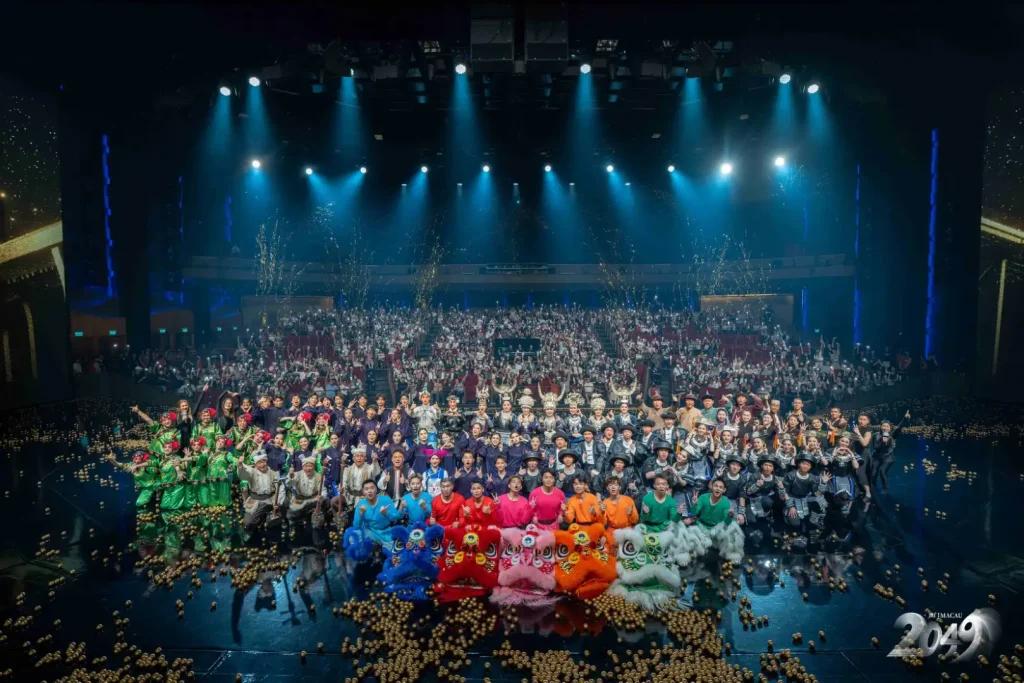
The groundbreaking residency show Macau 2049 jointly created by MGM and the internationally acclaimed Chinese filmmaker Zhang Yimou, has been recognized with the 6th China Cultural Tourism Pioneer Award 2025 presented by the China Association of Amusement Parks and Attractions (CAAPA).
The China Cultural Tourism Pioneer Award 2025 not only affirms MGM‘s Macau 2049 Residency Show as a leading example of innovation in cultural tourism content but also highlights its excellence in reimagining intangible cultural heritage, pioneering technological performance, promoting Chinese culture globally, and achieving high artistic and international standards.
Set against a backdrop of futurism, Macau 2049 integrates dynamic stage architecture, massive LED screens, air fountain, artificial intelligence and biomimetic dirigibles, weaving Chinese intangible cultural heritage into contemporary performing arts.
The award ceremony was recently held in Qingdao, Shandong. Following two rounds of meticulous evaluation by more than 20 leading experts from across China’s cultural and tourism sectors, Macau 2049 distinguished itself with its visionary approach—seamlessly blending traditional aesthetics with cutting-edge technology to transcend conventional boundaries. Representatives of Macau 2049 were invited to attend the ceremony and proudly accepted the award on behalf of the team.
This immersive audiovisual spectacle not only reinforces Macau’s positioning as a “City of Performing Arts,” but also offers international visitors a compelling window into Chinese culture. The show sets a new benchmark for innovation in China’s cultural tourism sector. Looking ahead, Macau 2049 will continue to develop new content, explore more cross-disciplinary collaborations and continue to expand its influence on the global stage.
The award ceremony was held alongside the 2nd China Theme Park Strategic Marketing Summit, which brought together top cultural tourism projects, theme park leaders, immersive experience venues and creative content agencies from across the country. The summit covered a wide range of sectors including cultural performances, integrated tourism complexes and interactive immersive spaces.
Macau 2049 celebrated its 100th performance on May 14. Since its debut on December 15, 2024, this audiovisual spectacle—seamlessly blending tradition with technology and culture with innovation—has reached a remarkable milestone in just six months. This achievement not only marks the show’s transition into a maturing phase, continually injecting vitality into Macau’s cultural tourism industry, but also highlights the futuristic reinterpretation of China’s intangible cultural heritage and the humanized application of cutting-edge technology to global audiences.