With a generous contribution of a 10,000 FTN prize pool, this sponsorship underscores Lava Gaming’s commitment to recognising excellence, encouraging innovation, and shaping the future of the iGaming industry.
Lava Gaming is a leading provider of next-generation live casino solutions, renowned for delivering immersive gameplay, seamless platform integration, and visually striking content. Designed to enhance player engagement and support operator success, Lava Gaming offers tailored experiences that meet the evolving demands of the digital gaming landscape.
Backed by a team of industry professionals, the company champions responsible gambling and strives to set new standards in online casino entertainment. Its vision is to become a global leader through innovation, reliability, and a player-centric approach.
Lava Gaming and BetConstruct: A Partnership for Next-Level iGaming
Lava Gaming partnership with BetConstruct delivers cutting-edge live casino experiences. Combining Lava Gaming’s immersive solutions with BetConstruct’s global platform, this collaboration enhances player engagement and operator success.
Together, they are shaping the future of iGaming with innovation, quality, and a shared commitment to responsible gaming.
From 8 to 11 July 2025, Yerevan, Armenia, will serve as the epicentre of iGaming innovation as Harmony Meetup 7 featuring Fasttoken and the Ortak x B.F.T.H. Arena Awards unfold. This prestigious event will convene leading figures from across the industry for four dynamic days of celebration, collaboration, and technological advancement.
For sponsors, the event presents an unparalleled opportunity for international visibility and meaningful engagement with key stakeholders. It offers both a front-row seat to the latest industry developments and exclusive access to decision-makers who are shaping the future of iGaming.
PAGCOR Chairman Alejandro H. Tengco reaffirmed the state gaming firm’s commitment to supporting infrastructure projects for the Armed Forces of the Philippines, aiding the military in addressing emerging challenges.
Mr. Tengco made the promise over the weekend when he graced the traditional Rites of Passage Ceremony of the Philippine Army Officer Candidate School (OCS) at Camp O’Donnell here.
In his keynote address, Chairman Tengco commended the Officer Candidate Corps for its dedication and sacrifice, and noted that, “when we invest in the Armed Forces, we invest in peace, democracy, and national resilience”.
Addressing the graduating “Nagdilaab” Class 62-2025 and the incoming seniors of “Bumannawag” Class 63-2025, Mr. Tengco noted the similarities between PAGCOR’s mandate and the mission of the AFP to serve the Filipino people.
“PAGCOR and the Officer Candidate Corps are kindred in mission,” he said. “Though we operate in different spheres, we are united by a shared duty to serve the Filipinos with integrity, courage, and dedication.”
He also underscored the state gaming agency’s support for uniformed personnel – from funding classrooms to building hospitals and other life-changing programs that benefit soldiers and their loved ones.
Mr. Tengco also noted that the Rites of Passage ceremony marks not only a symbolic transfer of leadership in the Army OCS but also a renewed sense of responsibility and purpose in serving the country.
“Today is not just about the passing of the torch; it is also handing over purpose and trust along with the sacred oath to serve our nation with honor, courage and integrity,” he said.
OCS Commandant Col. Harold Cabunoc for his part thanked the PAGCOR chief for attending the Rites of Passage and for Mr. Tengco’s commitment to support their priority projects.
While details of PAGCOR’s support has yet to be finalized, Cabunoc said they need more facilities because the implementation of the Army’s One Training Factory concept means officer candidates from all over the country are flocking to Camp O’Donnell.
“OCS now produces 650 to 700 officer candidates per year, surpassing even the graduates of the Philippine Military Academy,” he said.
“However, the school’s infrastructure has yet to keep pace. Our barracks were built for 400 students but are now housing 600, and some rooms meant for four are occupied by six.”
“The influx of trainees highlights our urgent need for more facilities to keep up with the requirements of the Philippine Army,” he said. “But through bayanihan spirit and collaboration with agencies like PAGCOR, we believe we can address these needs.”
Among the projects proposed by OCS for PAGCOR’s support are the construction of an auditorium, a fitness gym and two new barracks that can accommodate an additional 400 cadets.
Playson, a leading iGaming supplier, has partnered with Cactus Gaming to strengthen its footprint in Brazil and expand across the broader LatAm market.
Playson’s range of immersive games are already live with brands under the Cactus Gaming operator network, including popular titles 3 Pots Riches: Hold and Win, Burning Fortunator and Luxor Gold: Hold and Win. The studio showcased its flexibility during the onboarding process, integrating within Cactus’ API protocol and making it easier for operators to go live with its content.
The deal ensures more players within Brazil will gain access to Playson’s range of immersive games, with Cactus Gaming holding a commanding position within the country’s iGaming market.
Cactus Gaming has been a leading provider of award-winning sports betting and gaming platform technology since 2018. The company’s mission is to continuously provide innovative, flexible and customer-centric solutions to partners, delivering them the competitive edge.
Cactus Gaming has been standing out in the iGaming, bettech and sports betting sectors being recognised as “Best Whitelabel” at the Sigma America Awards 2024 and as “Best Platform of the Year” at the BIS Awards this year, a great achievement that reinforces the importance to always offer the best services to its clients.
Cristhian Zito, Head of LatAm Squad at Playson, said: “To partner with Cactus Gaming, a recognized leader in the iGaming space, is thrilling. This collaboration not only expands our presence in Brazil and the wider LatAm region but also brings our diverse portfolio of engaging games to a broader audience. Our integration with Cactus Gaming’s platform has been seamless, and we are confident that their extensive operator network will benefit more from our high-quality and immersive gaming experiences.”
Tiago Carneiro, CRA at Cactus Gaming, added: “Adding Playson’s globally renowned games portfolio onto our gaming platform technology is a major boost to our overall offering. We’ve been impressed with the high-quality graphics and immersive nature of their games, which will no doubt capture the attention of our extensive operator network and their players.”
Good Morning. Comeback kid. Macau’s gaming sector is anticipating another year of muted growth, but CLSA equity analyst Jeffrey Kiang suggests that improving consumer confidence and changing industry dynamics could lead to a rebound as early as 2026. Chinese consumer sentiment will be vital for future gross gaming revenue (GGR), with indicators such as the Hang Seng Index historically aligning with gaming activity. Meanwhile, Thai Deputy Finance Minister Julapun Amornvivat believes investments in Thailand’s planned integrated resort could soar to THB200–300 billion ($6.2–9.2 billion) per site, significantly exceeding the initial estimate of THB100 billion ($3.1 billion).
What you need to know
Macau’s gaming sector is bracing for another year of subdued growth, but signs are emerging that shifting industry trends could lay the foundation for a rebound as early as 2026.
Macau’s gaming sector is preparing for another year of moderate growth. Still, CLSA equity analyst Jeffrey Kiang indicates that rising consumer confidence and shifting industry trends could pave the way for a rebound as early as 2026. While markets like Thailand and the Philippines are gaining momentum, they are not considered direct threats due to differing visitor profiles. Ultimately, CLSA believes Macau’s growth will depend on evolving consumer trends and strategic operator decisions, with the potential for recovery by 2026 if economic conditions improve.
With over 30% of global gaming revenue projected to come from Asia soon, the window of opportunity is wide open. Bettorify’s white-label and turnkey solutions deliver what most platforms miss: sharp execution backed by real local expertise.
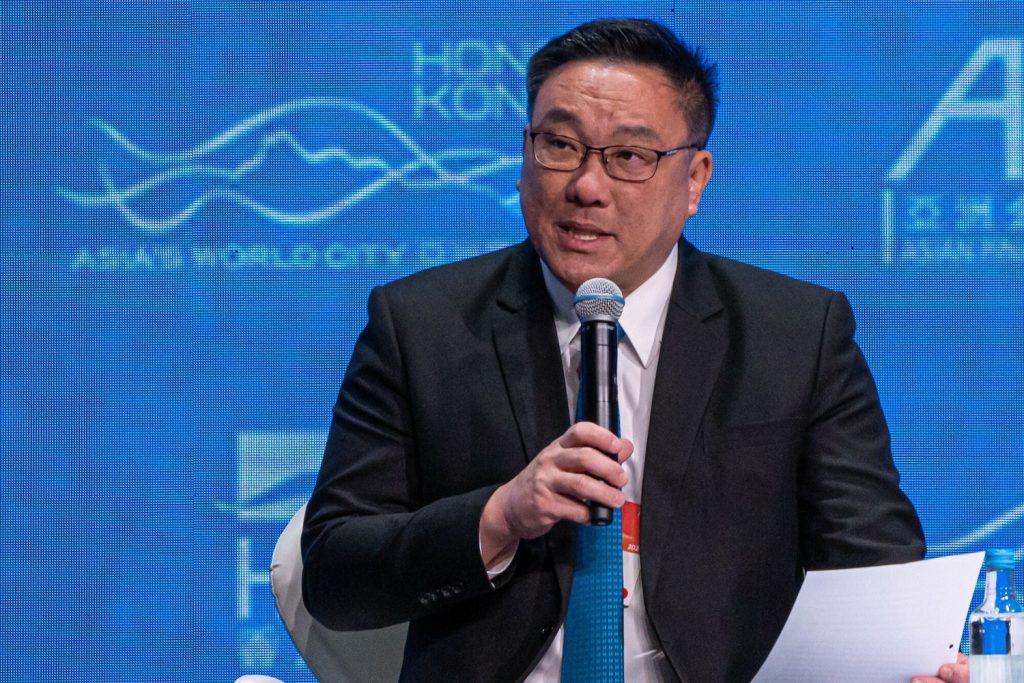
Macau’s gaming sector is bracing for another year of subdued growth, but signs are emerging that consumer confidence and shifting industry trends could lay the foundation for a rebound as early as 2026, according to CLSA equity analyst Jeffrey Kiang.
While regional gaming markets such as Thailand and the Philippines are gaining momentum, CLSA does not view them as direct threats to Macau’s core customer base. “Thailand looks to be a different gaming market from Macau,” Kiang said, highlighting the distinct visitor profiles and trip lengths.
“Length of stay is over seven days in Thailand versus less than two nights in Macau. Visitor mix is also different—about 25 percent from Mainland China and Hong Kong for Thailand, compared to around 90 percent for Macau.”
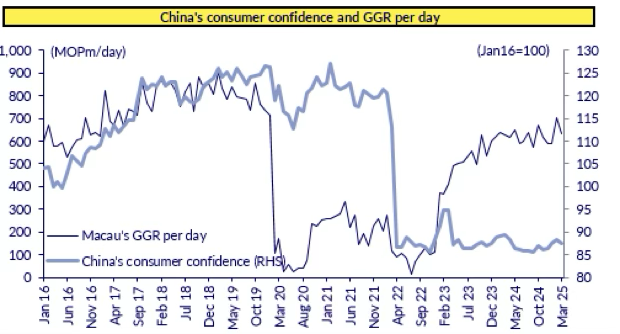
At the heart of CLSA’s outlook is the belief that Chinese consumer sentiment will be a decisive driver of gross gaming revenue (GGR) over the coming years. “Anything that drives consumers’ discretionary spending will work,” Kiang said.
Among the indicators he watches closely is the Hang Seng Index, which has historically tracked closely with gaming activity. “We have looked at the year-on-year change between Hang Seng Index and GGR per visitation. They moved together from January 2016 to December 2019,” he said. “If the stock market can keep its momentum, we believe that trend will converge again soon.”
CLSA’s broader vision for the sector over the next five years includes both continuity and transformation. “The integrated resort model and mass-focused gaming business should continue for land-based gaming,” Kiang said, adding that emerging themes could redefine Macau’s appeal.
One such area is wellness tourism, which was a hot topic during this year’s Asian Integrated Resort Summit. “There are growing focuses on well-being, and we’re seeing some of that already within Macau’s IRs,” Kiang noted.
He also pointed to IP collaborations and Gen Z-focused experiences as potential growth avenues. “Anything that drives mind share and consumer experience would help. These hopefully would mean higher spending for operators, but offerings will decide how the pie is divided.”
GGR outlook revised down, but rebound expected in 2026
Despite these longer-term opportunities, CLSA recently downgraded its 2025 GGR forecast to MOP230.8 billion ($28.8 million), following a tepid start to the year. “1Q25 Macau’s GGR marginally grew 0.6 percent year-on-year, which was weaker than we expected,” Kiang said. “Until May Golden Week, the news flow hasn’t been favorable.”
Yet day-to-day performance has shown resilience, with GGR averaging MOP624 million ($77.5 million) per day since January 2024. “The sector’s GGR should be quite steady. The key question is when the breakthrough will come,” Kiang noted.
CLSA sees that inflection point aligning with a recovery in China’s property market, likely in the second half of 2025. “Our property research team’s base case is the market should bottom in 2H25,” Kiang said. “That’s where our 2026 GGR growth case is predicated.”
Visitor mix and spending trends
Kiang believes that declining spending per visitor is tied to a normalization in the type of tourists returning to Macau. “It’s always those who gamble in casinos that return first during a reopening,” he said. “So GGR per visitor started from a high base in 2023.” With more leisure travelers now arriving and non-gaming attractions expanding, average spending has tapered off, especially among the grind/base mass segment.
China’s sluggish consumer confidence, still hovering near historic lows, remains a major constraint. “It ticked up from the trough level of 85.7 in September 2024 to 87.5 in March 2025, but that’s still very low,” Kiang said. “This impacts the grind mass more than the premium mass.”
CLSA also expects sector EBITDA to fall 6 percent year-on-year in Q1 2025. In this environment, cost discipline and customer engagement are critical. “The key is ensuring every penny spent translates into incremental revenue,” Kiang said. “Operators must focus on maximizing mind share—this will ultimately translate into higher revenue and EBITDA market share.”
Non-gaming and hotel constraints
Non-gaming activities now make up 15 percent of sector EBITDA, serving as strategic tools to drive traffic. “Non-gaming can drive foot traffic into properties and casinos,” said Kiang. “Targeting consumers with deep wallets can also be accretive to GGR.”
Hotel capacity continues to be a bottleneck. With only 47,000 rooms in Macau and roughly 90 percent occupancy, the sector faces limits on accommodating overnight visitors. “Room occupancy represents whether players—especially premium mass—are showing up in Macau,” Kiang said. “With 15 to 18 million overnight visitors a year, supply remains tight.”
As CLSA sees it, Macau’s future lies not only in gaming but in evolving consumer sentiment, smarter operator strategies, and broader appeal beyond gambling. If China’s economic pulse revives and visitor engagement deepens, the territory may yet find its next growth cycle—potentially by 2026.
Macau’s Public Works Bureau has announced that construction of the Light Rapid Transit (LRT) East Line began in the third quarter of 2023 and is scheduled to open to the public in the second half of 2029.
According to the statement, construction is expected to be completed by the first quarter of 2028. Once the civil works are finished, installation and testing of the operating system will begin. The overall project is progressing according to plan, with the goal of commencing operations in the second half of 2029.
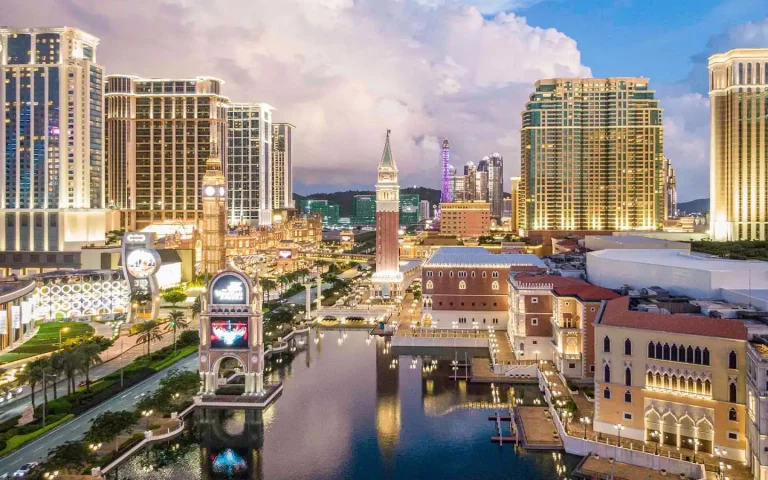
Once operational, the East Line will provide a direct link between Macau’s main land border at the Border Gate and the Cotai area, home to the city’s major integrated resorts. According to official statistics, approximately 13.5 million visitors entered Macau via the Border Gate in 2024. The new line is expected to significantly ease pressure on other public transportation services used by these visitors.
Additionally, it will offer new transportation options for travelers, as the city currently relies heavily on free shuttle buses provided by major gaming operators to transport visitors to casinos.
The LRT East Line is planned to feature six stations along a route approximately 7.7 kilometers in length. The northern section will start near the Border Gate area, following the coastline along Avenida Norte do Hipódromo and Avenida da Ponte da Amizade, before reaching New Urban Zone A. From there, the line will extend south along the central green corridor of Zone A and cross the sea to connect with New Urban Zone E in Taipa. The Zone E station will link to the existing Taipa Ferry Terminal Station on the LRT Taipa Line.
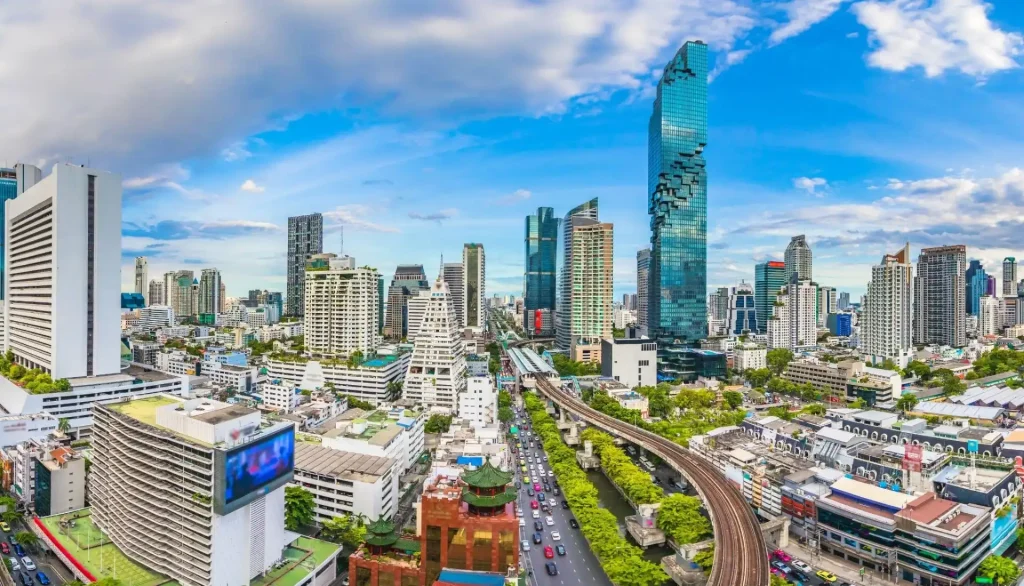
Investments in Thailand’s planned integrated resort could reach THB200–300 billion ($6.2–9.2 billion) per site—significantly higher than the initial estimate of THB100 billion ($3.1 billion)—as major global operators engage in discussions with government officials, according to the Bangkok Post, citing Deputy Finance Minister Julapun Amornvivat.
Julapun Amornvivat, Thailand’s Deputy
Finance Minister
Julapun announced that the casino-entertainment complex bill will top the parliamentary agenda when it convenes in July, signaling the government’s commitment to fast-track the legislation.
A previous report indicated that a draft bill on so-called “entertainment complexes” will likely be read in the National Assembly on July 9th.
Currently, Bangkok is identified as a particularly suitable location to support multiple entertainment complexes. The number of approved sites is expected to be capped at three to seven nationwide, according to Julapun.
Over the past two weeks, global integrated resort giants Wynn Resorts and MGM Resorts have met with Julapun to discuss potential investments in Thailand. The minister revealed that more than four major international investors have scheduled meetings to explore opportunities related to the entertainment complex initiative.
“There are only about five to seven top-tier global operators in this sector, and they all view Thailand as a promising investment destination,” Julapun said. “Bangkok, in particular, is seen as highly suitable, with the potential to support more than one entertainment complex.”
Julapun attributed the growing investor interest to Thailand’s well-developed infrastructure, including mass transit systems and a robust tourism industry that welcomes nearly 40 million international visitors annually.
Comprehensive entertainment ecosystem
Beyond casino operations, the government is collaborating with investors in related sectors, including theme park developers, international sporting event organizers, global entertainment producers, and companies offering immersive virtual and augmented reality experiences.
“We are now signaling clearly that we are open to discussions with investors, especially as we move forward with drafting legislation and seek to attract over THB100 billion ($3.1 billion) in investment,” Julapun stated.
He emphasized that the government is not targeting small or unprepared investors, citing concerns over regulatory enforcement, gambling addiction, and money laundering risks.
To address these issues, Julapun outlined strict oversight measures planned for the facilities. All visitors will be required to register, and casino areas will be monitored with comprehensive surveillance systems.
“The level of control in entertainment complex casinos is actually stricter than in the banking sector,” he noted, adding that the facilities will comply with international standards and will not resemble illegal gambling operations.
To mitigate problem gambling, third-party intervention mechanisms will be implemented, potentially involving family members in structured support programs. A proposed requirement for Thai nationals to hold at least THB50 million ($1.5 million) in bank accounts to access casinos is still under consideration.
Transparent bidding process ahead
While discussions are currently in the consultation phase, Julapun confirmed that final project selections will be made through a fair and transparent bidding process. The government aims to align its regulatory framework with international standards while also meeting investor expectations.
Both Wynn Resorts and MGM Resorts have expressed confidence in Thailand’s legal framework, particularly with regard to anti-money laundering and gambling regulation, according to the minister.
Macau police have arrested six mainland Chinese men in connection with a violent robbery at a Cotai hotel, where two individuals involved in illicit currency exchange were targeted.
The victims, a mainland couple, were assaulted and robbed of more than HK$160,000 ($20,430) in cash and RMB30,000 ($3,830) worth of gold jewelry.
The incident occurred on the evening of May 21st when one suspect lured the victims to a hotel room under the pretense of currency exchange and gambling discussions. Five other accomplices were waiting inside. Upon entry, the victims were punched, kicked, and threatened with a dinner knife before being robbed.
Macau Judiciary Police (PJ) launched an investigation after receiving a referral from the Public Security Police Force. They identified three suspects who had immediately fled to mainland China. The PJ activated its cross-border liaison mechanism, leading to the prompt arrest of these three individuals by mainland public security authorities. The remaining three suspects were intercepted in the hotel lobby by security and handed over to police.
Initial investigations reveal that the male victim owed HK$800,000 ($102,150) to one of the arrested suspects from a previous business venture. The debt, which had grown to HK$900,000 ($114,910), stemmed from the victim’s losses in illegal currency exchange in Macau. The principal suspect, frustrated by the lack of repayment, conspired with the others to ambush and rob the couple.
The two victims will be investigated separately for their involvement in illicit currency exchange. Macau authorities consider money exchange businesses to be among the main drivers of many gaming-related crimes. In October last year, money exchange for gaming purposes was criminalized, with violators facing up to five years in jail.
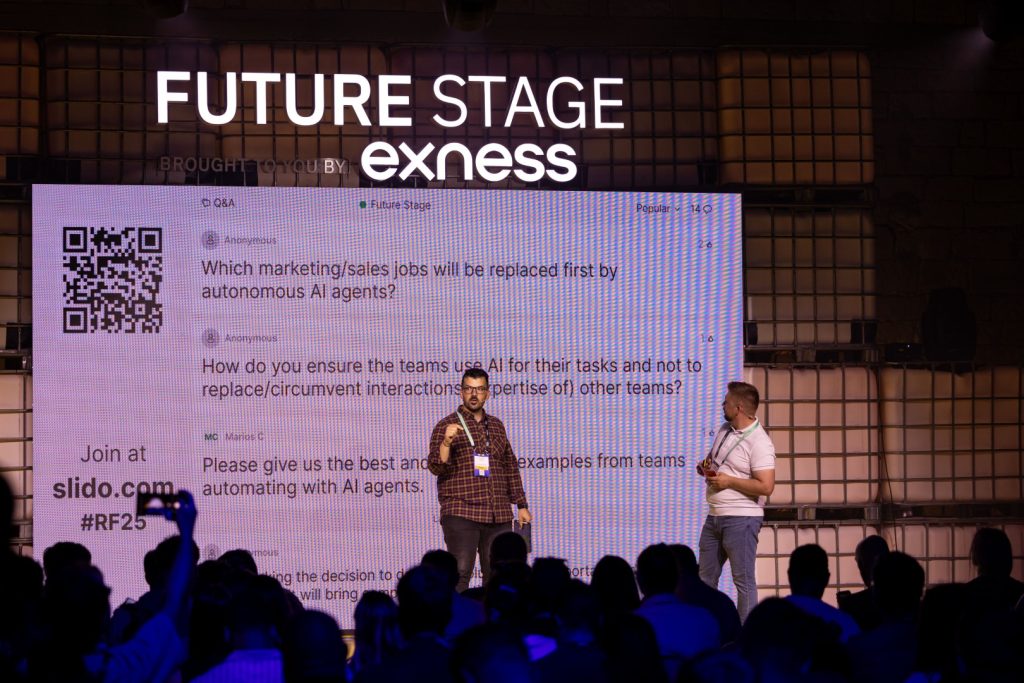
SOFTSWISS, a leading global provider of iGaming software solutions, presented the outcomes of its AI transformation at the Reflect Festival in Limassol. A key highlight of its participation was a keynote speech by Deputy CTO Sergey Kastukevich, titled “AI and AI Agents in Tech: Lessons on Scaling Innovation for Any Business.”
The keynote highlighted how AI has evolved from a strategic advantage to an operational necessity, demonstrating its wide-ranging applications across both technical and administrative functions at SOFTSWISS.
“Today, almost every company talks about using AI, but very few have actually implemented it. That’s because this is not just about adding another office tool; it’s about changing people’s mindsets and, as a result, your core business processes. The good news is that once you make this shift, your company will run far more efficiently.”
Sergey Kastukevich, Deputy CTO at SOFTSWISS
SOFTSWISS showcased real-world applications of artificial intelligence that are already streamlining workflows and enhancing product quality.
One of the innovations is AI-powered interaction with the case database. When a technical issue is reported, the system scans historical data to find similar cases and automatically suggests solutions. This significantly reduces response time and allows engineers to focus on more complex tasks.
Also, SOFTSWISS is enhancing its products with AI-driven features. Recent innovations include intelligent fraud detection, player segmentation with tailored offers, and an AI assistant to streamline operator tasks.
Recently, Sergey Kastukevich was recognised as CTO of the Year for Europe, the Middle East, and Africa at the Oracle Excellence Awards 2025.
Altenar, a leading sportsbook provider, has launched its latest platform enhancement with Market Bundles, a front-end feature designed to streamline the display and navigation of betting markets.
Market Bundles introduce a more engaging and intuitive way for users to explore betting content by grouping markets under a single, translatable title. Each bundle utilises tabbed navigation, allowing for seamless transitions between related markets and improved sportsbook structure.
The new feature also gives operators more control over content presentation, enabling them to strategically organise and display markets for maximum user impact. Once created, bundles can be effortlessly dragged and dropped into existing market groups, allowing for dynamic and flexible layout options.
This smart tool is another clear example of how Altenar is evolving its platform with innovation and operator feedback at the heart of its roadmap, following a string of enhancements since the beginning of the year.
Dinos Doxiadis, Sportsbook Product Development Manager at Altenar, said: “Market Bundles represent a major step forward in how our operator partners can deliver content – offering a more easy-to-use and engaging sportsbook experience. This launch reflects our continued focus on enhancing front-end flexibility, reducing friction and giving operators powerful tools to shape the user journey.”