Fast Track, an innovative technology company recognized as the CRM leader in the iGaming industry, has announced the launch of the cutting-edge AI-powered Player Churn Prediction Model, now available to all partners through its CRM platform.
The model enables operators to identify players at risk of churning as early as the first day of inactivity, supporting more proactive and efficient retention strategies.
Built on Fast Track’s proprietary machine learning platform, FTML, the Player Churn Prediction Model uses seven sub-models to analyse player behaviour and make accurate predictions tailored to each operator’s player base. The system continuously trains itself on live data, ensuring predictions remain relevant and effective over time.
The Churn Model is already in use by several Fast Track partners and is fully integrated into the platform’s core workflows. Once activated, operators receive clear, actionable insights into which players are likely to churn, along with data-informed recommendations on timing and incentive levels for re-engagement.
Simon Lidzén, CEO, Fast Track
“Churn is one of the most impactful use cases for AI in player engagement,” said Simon Lidzén, Co-Founder and CEO of Fast Track. “With this model, operators can focus their efforts where it matters most; targeting players who are truly at risk with the right offer at the right time. It’s a smarter, more cost-effective approach to retention.”
The Churn Model addresses a common challenge in the industry – overuse of reactivation bonuses – by helping teams deliver more relevant and timely incentives based on predictive insights, not guesswork.
To support the launch, Fast Track will host a live webinar on Thursday, 10 July 2025 at 16:00 CEST, offering a walkthrough of the new Churn Model and its practical applications. Register here.
The acquisition and merger of IGT’s Gaming & Digital Business and Everi Holdings, valued at approximately $6.3 billion, has been completed.
The all-cash transaction merges the two entities under a holding company owned by funds managed by Apollo Global Management.
According to a release by Apollo, the combines will be ‘integrated into a combined enterprise in the coming months,’ to be based in Las Vegas.
The combined enterprise ‘will operate under the IGT name, while retaining the Everi brand in select markets and product lines’.
IGT will now be organized into three different units: Gaming, Digital and FinTech.
Currently the transition will be led by IGT’s Interim CEO Nick Khin who noted of the merger that “This is a defining moment for our industry”.
“With Apollo’s support, we are very well-positioned to deliver exceptional content across land-based and digital experiences, along with integrated financial solutions and casino management that enhance the player journey and drive value for our customers,” furthered the executive.
In the fourth quarter of this year, Khin will be replaced by former Aristocrat Gaming CEO Hector Fernandez as the permanent CEO. Khin will then transition to the role of CEO of IGT’s Gaming business unit.
As of July 1st, Everi common stock has been delisted from the New York Stock Exchange. Ever stockholders are receiving $14.25 per share in cash due to the deal, with International Game Technology PLC receiving $4.05 billion of gross cash proceeds.
Following the completion of the deal, IGT – now doing business as Brightstar Lottery – indicated that it will remain listed on the New York Stock Exchange, trading under its new ticker symbol BRSL.
The group notes that the deal generated some $1.1. billion in capital return to shareholders, at $3 per share in special cash dividend and a $500 million share repurchase authorization, in addition to $2 billion in debt reduction concentrated in near-term maturities.
Speaking of the change, Vince Sadusky, CEO of Brightstar noted “Today marks an exciting new chapter for the Company, one that builds on a long legacy of delivering responsible, sustainable solutions through our products, services, technology, and insights”.
Evolution has announced the signing of a multi-year agreement with Hasbro to be their exclusive licensing partner for online live casino and slot games for MONOPOLY and other Hasbro Games titles.
The worldwide deal, which includes the USA, covers online content from all Evolution brands, including Evolution, Ezugi, NetEnt, Red Tiger, Big Time Gaming (BTG), Nolimit City, and Livespins.
The new exclusive partnership for MONOPOLY and other Hasbro Games titles builds on a highly successful working relationship between the two companies. Evolution has already developed MONOPOLY Live and MONOPOLY Big Baller, two innovative online live casino game shows based on Hasbro’s world-famous board game. Both are at the top of Evolution’s game line-up and are two of the best-performing games in all of online gaming.
As a result of the new partnership, Evolution will be the exclusive licensing partner for online casino games based on much-loved Hasbro Games properties. New games will launch from January 2026 onwards and will be showcased at ICE Barcelona 2026. Among the new Hasbro-based titles from Evolution brands will be Game Night, MONOPOLY Filthy Rich, MONOPOLY Roulette (all live online games with live presenters), and several online slot titles.
At Hasbro, we’re all about play—whether it’s classic board games or casino experiences. After a thorough RFP process, we’ve chosen Evolution as our exclusive partner for online live casino and online slots for Hasbro Games titles,” said Claire Hunter Gregson, Director of Gaming Relationships. “We trust them to bring our brands to life in fresh, exciting ways for our adult fans and look forward to our partnership.
Todd Haushalter, Evolution’s Chief Product Officer, commented: “The combining of Hasbro and Evolution just feels right — we will make magic together! The bidding process was extremely competitive, but showing our commitment to innovation and excellence with MONOPOLY Live and MONOPOLY Big Baller really helped! The team and I are incredibly excited to bring the Hasbro Games brands to all our various brands. I think MONOPOLY is the world’s best casino game brand, and we can do so many great things with it, and, of course, with many other Hasbro Games brands. It is hard to believe, but these are still the early days of online gaming, and with Hasbro, we will forge a new chapter in our industry.”
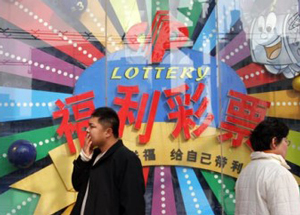
Over the past several years, China’s lottery industry has undergone a dramatic transformation, shaped by the sweeping effects of the COVID-19 pandemic, according to a study by Dr. Chen Haiping, an associate professor at the Faculty of Psychology at Beijing Normal University.
The research, published in this year’s first Global Gaming & Tourism Research book from the Macau Polytechnic University (MPU), presents a detailed analysis of the post-pandemic evolution of the country’s lottery market.
Drawing from official national sales data and demographic research, the study traces the structural, behavioral, and psychological changes that have redefined lottery consumption across the country.
Downturn and recovery
The pandemic’s initial outbreak in early 2020 delivered a sudden and severe blow to the industry. Government-imposed lockdowns and strict public health controls, including the closure of sales outlets and suspension of major sporting events, triggered a precipitous drop in sales.
In February 2020 alone, national lottery sales fell by over 80 percent year-on-year. The impact was the most significant decline recorded since 2008. As the public focused on essentials and avoided public venues, lottery spending—which is typically categorized as leisure or discretionary consumption—plummeted.
However, this decline was short-lived. As China gradually emerged from the height of the pandemic and resumed economic activities, the lottery market experienced a strong and rapid rebound. By mid-2020, sales had not only recovered but were on an accelerated growth trajectory.
By 2024, national lottery revenues had surged to a record RMB709.7 billion ($99 billion), nearly doubling the levels seen prior to the pandemic. This remarkable turnaround, according to Chen, reflects both strategic adaptations by the industry and evolving consumer behavior.
One of the most notable developments has been the reconfiguration of the market’s product structure. The once-prominent video lottery completely disappeared from circulation after authorities approved its termination.
Meanwhile, sports betting products gained unprecedented momentum, with their share of total sales expanding rapidly to rival the combined share of other categories. Instant-win scratch tickets continued their steady rise, although growth appeared to be approaching a plateau.
Traditional lotto-style number games, long the backbone of the market, saw their relative share shrink each year, and Keno-type products, while gaining marginally, ultimately stagnated.
Consumer base changes
The composition of the consumer base also shifted dramatically during this period. Young people have emerged as the dominant demographic, replacing the older and middle-aged buyers who once made up the bulk of lottery players. Data from multiple studies and internal reports indicates that individuals between 18 and 35 years of age now constitute the largest group of lottery consumers.
This shift coincides with the widespread adoption of smartphones, mobile payment systems, and digital lifestyles, which have made it easier for younger generations to access lottery services—even in the absence of formal online ticket sales. The appeal to youth is bolstered by the gamification and entertainment value embedded in many newer lottery formats.
Another striking development is the growing participation of women in the lottery market. Historically, men have accounted for the majority of ticket buyers, but recent research shows that women now represent up to 40 percent of players, and in some regions or product categories—such as instant scratch cards—the figure is even higher. The increase in female participation is closely linked to broader social trends, including greater economic independence and evolving attitudes toward leisure and spending.
In tandem with these trends is the rise of white-collar and higher-income consumers as a significant player segment. Once associated primarily with low- to middle-income earners, lottery buyers now include a large share of office workers, professionals, and highly educated individuals. Surveys show that over 60 percent of purchasers have received higher education, and many earn more than RMB10,000 ($1,395) per month.
For these consumers, the lottery is often seen not just as a chance to win money but as a low-stakes form of entertainment and emotional release amid daily stresses.
Social media platforms have also played a key role in promoting lottery participation as a communal experience. Young people post photos of their tickets, organize group purchases, and even exchange lottery tickets as gifts for birthdays, holidays, or weddings. In certain cities, local lottery offices have embraced this trend, providing scratch-card bouquets for wedding ceremonies and partnering with convenience stores and shopping centers to create immersive, themed sales environments.
The shift in consumer mindset and behavior is also reflected in the retail ecosystem. During the pandemic, when physical access to stores was limited, many consumers turned to indirect online channels—such as chat groups, digital kiosks, or appointment systems—to obtain tickets.
Although online lottery sales remain tightly restricted by law, the industry has made significant strides in enhancing digital engagement through mobile apps, QR code payments, and smart vending machines.
Retail stores, in turn, have undergone rapid transformation. No longer just places to buy tickets, these outlets are becoming hybrid social spaces that combine ticket sales with café-style relaxation areas, themed decor, and interactive experiences. This repositioning has helped attract new customers and revive foot traffic in an increasingly digital world.
Underlying the post-pandemic lottery boom, the study argues, is a broader psychological phenomenon known as the “lipstick effect”. Originally coined in consumer psychology to describe the tendency for people to indulge in small luxuries during economic downturns, this theory holds that when faced with financial uncertainty, individuals may forgo major expenses but continue to spend on inexpensive items that offer momentary pleasure or escapism.
In China, lottery tickets—particularly those with low entry costs and instant outcomes—have served precisely this function. The economic slowdown, coupled with prolonged public health measures, created a fertile ground for this type of compensatory consumption. The lottery, in essence, became a “small hope” investment amid larger uncertainties.
Lottery operators change tactics
In addition to responding to changing consumer behavior, lottery authorities actively encouraged this rebound. The study notes that institutions introduced new ticket formats, expanded point-of-sale locations to high-traffic areas such as shopping malls and transit stations, and launched thematic campaigns tied to health, holidays, and popular culture.
The traditional 2-yuan ($0.14) ticket, a staple for decades, was phased out in favor of higher-priced options, subtly boosting average spending per transaction. Simultaneously, industry stakeholders adopted advanced technologies for monitoring sales behavior, improving customer experience, and providing support services—such as addiction counseling or gamification features that enhance consumer retention.
Looking ahead, Chen emphasizes the importance of aligning regulation, innovation, and consumer protection. While new demographics bring vitality to the market, they also present challenges. The surge in sports betting, for example, raises concerns about potential addiction risks among young users.
Marketing campaigns need to be carefully calibrated to avoid encouraging excessive spending or exploiting vulnerable groups.
At the same time, regulators must strengthen oversight mechanisms, upgrade digital monitoring tools, and promote responsible gambling practices, especially in an era where digital engagement is redefining the boundaries between leisure and risk.
Thailand’s Constitutional Court on Tuesday suspended Prime Minister Paetongtarn Shinawatra from duty, intensifying pressure on a government already grappling with political instability.
The move comes as the court deliberates a petition seeking her dismissal, Reuters reported.
The suspension follows the court’s unanimous acceptance of a case filed by 36 senators, who accused Paetongtarn of dishonesty and violating constitutional ethics. The allegations center on a leaked phone conversation with Cambodia’s former Prime Minister Hun Sen, which critics say crossed diplomatic and military red lines.
Deputy Prime Minister Suriya Juangroongruangkit has been appointed caretaker prime minister during the proceedings. Paetongtarn, who was recently reassigned as Minister of Culture in a cabinet reshuffle, has 15 days to respond to the charges.
The suspension poses a critical challenge for Thailand’s gaming sector, as Paetongtarn and the ruling Pheu Thai Party had been driving forces behind legislative efforts to legalize and regulate the industry. With her suspension from duty, progress on the gaming framework is expected to stall further, with discussions now tentatively delayed until August—deepening uncertainty over regulatory reforms.
The scandal stems from a June 15th phone call during which Paetongtarn sought to ease rising border tensions with Cambodia. During the exchange, she was heard offering deference to Hun Sen and criticizing a senior Thai military commander—comments seen as politically reckless in a country where the military retains strong influence. She later apologized, framing her remarks as a diplomatic tactic.
Meanwhile, exiled Cambodian opposition leader Sam Rainsy claimed the former Cambodian leader Hun Sen orchestrated the leak to distract from a Thai crackdown on criminal networks operating along the Cambodia-Thailand border. Rainsy has accused Hun Sen of stoking the cross-border controversy to protect illicit revenue streams allegedly supporting his rule.
According to Rainsy’s statement published on Facebook, these syndicates—some reportedly controlled by Chinese mafia groups—play a key role in propping up Hun Sen’s regime. Many are allegedly linked to border casinos that cater to Thai nationals and generate an estimated $12 billion in illicit annual revenue. Rainsy cited a report from Thailand’s Center for Gambling Problem Studies, alleging close ties between Cambodia’s casino operators and political elites, facilitated through nominee shareholders and profit-sharing agreements with officials.
The exiled politician accused Hun Sen of using anti-Thai rhetoric as a nationalist smokescreen, aimed at diverting public attention from corruption and the regime’s reliance on underground income streams, particularly as legitimate revenue sources continue to erode.
The dispute currently shows no signs of abating. If Paetongtarn is dismissed, she will be the third political figure from the Shinawatra family, who have dominated Thai politics for the past 20 years, to lose power before completing their term.
The ruling coalition she leads is currently teetering on the brink, after the Bhumjaithai Party withdrew two weeks ago, leaving the alliance with only a slim majority.
The organizing committee of the Ortak x B.F.T.H. Arena Awards 2025 has introduced the Highest Impact in Poker Network category, sponsored by Stretch Network, a leading name behind some of the most scalable and innovative poker ecosystems in the iGaming industry.
This award recognises the poker network that has delivered a significant and measurable impact on the industry. From enhancing player engagement and liquidity to launching standout tournament formats and platform innovations, this category honours networks that go beyond the conventional by reshaping the future of poker.
StretchNetwork: Where Skill Meets Scalability
Stretch Network is widely recognised for its commitment to quality and innovation, offering flexible and customisable poker solutions that support rapid growth and operational excellence. As the official sponsor of this award, Stretch Network supports those driving meaningful change in the global poker landscape.
Stretch Network is a B2B poker software provider delivering Turnkey, White Label, and API-based solutions suited to operators of all sizes. With access to a large, active player pool and high-value tournament series, the platform offers a fully transparent admin panel, customisable room management tools, and 24/7 operational support. From wallet integration to licensing, StretchNetwork handles the full technical framework, allowing partners to focus on strategic growth and player satisfaction.
StretchNetwork x BetConstruct: Powering the Future of Poker
The collaboration between Stretch Network and BetConstruct brings together technical expertise and a globally recognised iGaming infrastructure. This partnership delivers a seamless poker experience backed by robust scalability, enhanced liquidity, and powerful backend tools, that is equipping operators to thrive in a competitive market.
Yerevan: 8–11 July 2025
The Ortak x B.F.T.H. Arena Awards will take place during Harmony Meetup 7 featuring Fasttoken, in Yerevan. This four-day event will unite Web3 visionaries, iGaming innovators, and creative pioneers for a celebration of progress, inspiration, and future-defining ideas.
iGP, a top iGaming platform and aggregator provider, has announced the integration of Popiplay into its expanding content aggregator, iGaming Deck. This partnership reflects iGP’s commitment to providing operators with scalable, player-focused content that drives performance.
Popiplay is a Scandinavian casino gaming brand dedicated to creating top-level slot entertainment. With a team of experienced industry professionals, Popiplay delivers premium slot games designed to offer players a unique and highly rewarding online gambling experience. The studio takes a player-first, streamer-focused, and mobile-friendly approach, ensuring its titles meet the demands of modern online casino players.
The integration brings Popiplay’s distinctive offering to the iGP iGaming Deck expanding library, which now includes over 10,000 games from 100+ providers, all accessible via a single API. Designed to crash the traditional aggregator offers, iGaming Deck supports multi-brand operations, promotional and player engagement tools, real-time data visibility, and a four-week time-to-market launch.
Jovana Popovic Canaki, CEO at iGP, said: “iGaming Deck is built to be a next-level aggregator that empowers operators with speed, scale, and control. Popiplay brings the kind of punchy, mobile-ready slots that today’s players love, and we’re thrilled to have them onboard. With every new provider, we’re making iGaming Deck stronger, sharper, and more valuable for the operators who count on us to succeed.”
Almir Kudic, CCO at Popiplay, added: “Joining iGaming Deck is a big step forward for Popiplay. It puts our games in front of a wider, high-quality operator network and does it through a platform that shares our obsession with speed and performance. iGP’s approach to aggregation is fast, flexible, and future-focused. This is what we look for in a partner.”
The International Gaming Standards Association (IGSA) has announced Worldpay as its newest payments committee member.
Worldpay is a leading global provider of payment technology and solutions, uniquely equipped to power omni-commerce across the world. Its processing capabilities enable businesses of all sizes to accept, send, and manage payments both in-person and online—supporting over 50 billion transactions annually across 146 countries and 135 currencies.
IGSA President Mark Pace said, “IGSA would like to welcome Worldpay, who has joined as a Payments committee member. Worldpay is a global payments leader and their input into the work the Payments committee is undertaking will have significant impact. We look forward to welcoming more companies in the Payments space as we continue down the path of producing Payments Standards and Best Practices for the industry and with the industry.”
Joe Watkins, President, Worldpay Gaming Solutions, added, “Worldpay is thrilled to join the International Gaming Standards Association, continuing our commitment to championing innovation in gaming, promoting the highest compliance standards, and ensuring the best outcomes for both players and operators.”
Altenar, a leading sports betting and iGaming software provider, has signed an agreement to provide its sportsbook to Gamblr Gaming Ltd.
Gamblr is a crypto-first sportsbook operator, officially licensed and regulated by Gaming Control Anjouan, and aims to redefine the iGaming experience by offering a premium, luxury-focused platform tailored for VIP clients.
The new deal will see Gamblr use Altenar’s fully-managed sportsbook solution including innovative features, such as Bet Mentor and Bet Insights, to enhance the user experience.
The partnership demonstrates Altenar’s reputation for consistently delivering value for operators of all sizes, supporting fast-growing brands in their journey to become well-established industry names.
Jason Ryan, Director of Sportsbook at Gamblr, said: “Choosing a sportsbook provider is a decision which can make or break a new-to-market brand, which is why we are delighted to have partnered with Altenar. The level of control and customisation that Altenar allows its operators to have is refreshing and sets them apart from other B2B providers in the industry.”
Matthew Ferrara, Sales Manager at Altenar, added: “Working with Gamblr and Jason personally is a project we are very excited for. Jason has great industry experience and is very hands on, which will help him get the most out of the Altenar sportsbook. Utilising our extensive risk management tools, being proactive with customer segmentation and also creating custom campaigns both for the marketing and localisation purposes, he and his team will truly get the most out of the Altenar sportsbook and I’m excited to watch the growth of Gamblr over the next few years.”
The Philippine Amusement and Gaming Corporation (PAGCOR) has approved a PHP50 million ($877,000) grant to the Bureau of Immigration (BI) to fund the deportation of foreign workers employed by illegal offshore gaming operators (POGOs).
The funding was formalized through a Memorandum of Agreement signed on Monday, June 30th, at the PAGCOR Executive Office in Pasay City. The amount will be released in two tranches of PHP25 million ($438,500) each, with the first tranche disbursed during the ceremonial signing.
The government’s decision to ban POGOs has been cited as a significant factor in the Philippines’ successful exit from the Financial Action Task Force (FATF) “grey list” in February 2025. This delisting indicates the country’s improved measures against money laundering and terrorism financing, a key benefit for its financial standing and international reputation.
While the statement did not specify the number of POGO workers requiring deportation, Presidential Anti-Organized Crime Commission (PAOCC) Executive Director Gilberto Cruz reported in mid-June that approximately 4,000 POGO workers had been deported this year, with more deportations planned.
PAGCOR Chairman and CEO Alejandro H. Tengco said the grant will help cover repatriation expenses for illegal POGO workers currently held at the BI Warden Facility and Protection Unit.
“These individuals are unable to return to their home countries because they cannot afford a plane ticket,” Tengco stated. “This grant will ensure they receive assistance in accordance with international laws and humanitarian considerations.”
“PAGCOR has been continuously collaborating with the BI in enforcing the government’s ban on offshore gaming operations,” he said. “This inter-agency effort is not just about sending people home; it also ensures that only legitimate gaming operations are allowed in our country.”
Immigration Commissioner Joel Anthony Viado highlighted the complexity of the current security environment, stating that fast-tracking deportation cases of illegal POGO workers will help ensure safer communities for Filipinos. “The BI’s partnership with PAGCOR is proof that our national government has the interest of the Filipinos at heart,” he said.