Macau’s fiscal reserves saw a notable increase of 7.6 percent in the first 11 months of last year, climbing to MOP663.2 billion ($82.9 billion) by the end of November.
This reflects an increase of MOP47 billion ($5.8 billion) compared to the end of 2024, as reported by the Monetary Authority of Macau (AMCM).
The current total is just MOP400 million ($49.7 million) shy of the historic peak reached in February 2021. A recent balance sheet published in the Official Gazette reveals that this rise outpaces the growth experienced in 2024, which saw a yearly increase of MOP35.7 billion ($4.4 billion).
Macau authorities estimate 2026 will end with a total of MOP92.7 billion ($11.6 billion) in taxes collected from public concessions, the majority of which comes from gaming taxes.
Notably, 2019 remains the strongest year on record for Macau’s fiscal reserves, with assets surging by MOP70.6 billion ($8.8 billion) before the pandemic struck.
The figure for end-November stands as the second-highest ever, trailing only the February 2021 record of MOP663.6 billion ($83.0 billion), despite the challenges posed by the pandemic at that time.
However, growth momentum slowed in November, with the reserve gaining just MOP2.15 billion ($267.1 million), MOP198.3 million ($24.6 million) less than the jump observed in October.
As of the end of November, the extraordinary reserve was reported at MOP456.5 billion ($57.4 billion), while the basic reserve, which is 150 percent of Macau’s public budget, totaled MOP167.3 billion ($20.9 billion).
Looking ahead, the initial budget for 2025 anticipates a 7 percent increase in total expenditure, bringing the figure to MOP109.4 billion ($13.7 billion). In July, the SAR’s Legislative Assembly approved a proposal that added another MOP2.86 billion ($355.2 million) in spending.
Additionally, in November, the Assembly unanimously endorsed the 2026 budget, projecting public spending of MOP113.5 billion ($14.1 billion).
The majority of Macau’s fiscal reserve, amounting to MOP283.2 billion ($35.3 billion), stems from outsourced investments. The reserve portfolio also includes MOP272 billion ($34 billion) in deposits and current accounts, alongside MOP104.4 billion ($13 billion) in debt securities.
In 2024, investments contributed nearly MOP31 billion ($3.9 billion) to the fiscal reserve, yielding a return of 5.3 percent, as reported by the AMCM at the end of February 2025.
China on Thursday executed 11 criminals linked to telecom fraud gangs based in northern Myanmar, state media reported, marking the first executions of major scam bosses repatriated from the region.
The executions were carried out by a court in Wenzhou, in eastern China’s Zhejiang Province, after receiving approval from the Supreme People’s Court, according to Xinhua News Agency.
The 11 individuals were sentenced to death in September 2025 for crimes connected to large-scale telecom fraud operations. State media said the group included key figures from criminal networks operating across the China–Myanmar border, which have been blamed for extensive financial losses and serious human rights abuses.
The executed individuals were members of the Ming family, a powerful mafia clan that once controlled Laukkaing, a border town in northern Myanmar. The family ran scam centers, gambling dens, and other illicit businesses, transforming the town into a hub for casinos and online fraud before their operations collapsed in 2023.
According to China’s top court, the Ming family’s activities generated more than CNY10 billion ($1.4 billion) between 2015 and 2023. Their crimes were linked to the deaths of 14 Chinese citizens and injuries to many others. More than 20 additional family members received prison sentences ranging from five years to life, while the clan’s patriarch, Ming Xuechang, died by suicide in 2023 while evading arrest.
Chinese authorities have framed the executions as a deterrent against cross-border telecom fraud. The United Nations estimates that hundreds of thousands of people have been trafficked across Southeast Asia to run online scams, many of them targeting Chinese victims.
Las Vegas Sands’ management said the group expects improved operating performance in 2026, driven by further optimization in Macau, continued strength at Marina Bay Sands in Singapore, and disciplined capital allocation.
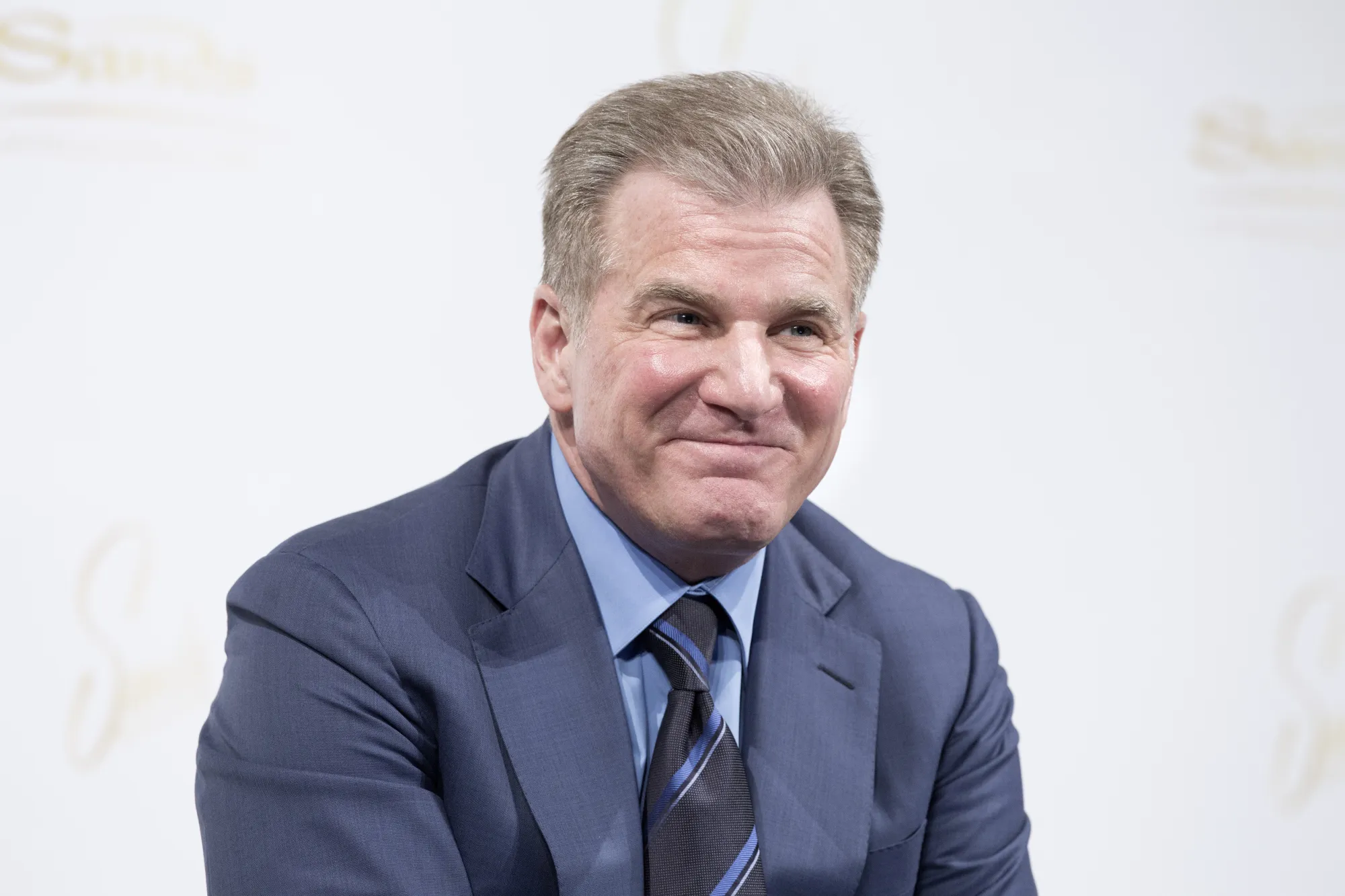
In a conference call following the announcement of the group’s 2025 fourth quarter results, Chairman and CEO Robert Goldstein said management remains confident in the company’s ability to lift Macau results despite a competitive, premium-led market environment.
LVS recorded a net income of $448 million for Q4 2025, a 14.3 percent expansion from $392 million in the same period, with net revenue increasing 26 percent to $3.7 billion.
For the group’s Macau operations, net revenue rose 16.2 percent to $2.1 billion, up from $1.8 billion previously, with adjusted property EBITDA reaching $608 million, an increase of 6.5 percent year on year.
“The team is in the right place, and we will deliver better results in 2026,” Goldstein said, adding that the company continues to focus on “our ability to make the assets work harder to achieve $700 million per quarter” in Macau EBITDA.
Management acknowledged that current Macau performance is being shaped by mix, with growth concentrated in premium mass and rolling segments.
Sands China CEO Grant Chum said the company expects 2026 to mark a transition from stabilization to improved profitability. “2026, I think, is going to be a year where we sustain our revenue growth against the market and then hopefully convert more of that into EBITDA,” he said.
Sands China CEO Grant Chum
Chum noted that promotional intensity in Macau has begun to stabilize following several quarters of elevated reinvestment. “At this point in time, I think we are stabilizing at the current levels […] and actually, we’re hoping to find some headroom to optimize on the reinvestment front into 2026,” he said.
President and COO Patrick Dumont said Sands continues to view Macau as a “low-30 percent margin business” under the current mix, while emphasizing longer-term upside should base mass demand recover. “If the base mass comes back in some way, like it existed pre-pandemic, that’s a very high-margin business, and our margin structure can change positively,” Dumont said.
In Singapore, management expressed confidence that Marina Bay Sands’ performance remains durable into 2026, supported by ongoing reinvestment and high-value tourism trends.
Dumont said the property’s record results reflect “high-quality investment in market-leading product, world-class service and the growth in high-value tourism,” adding that Sands will continue to invest in amenities and service enhancements.
Goldstein said management sees no clear ceiling on Marina Bay Sands’ earnings potential. “We’ve now passed the point of disbelief. This is a real building that has real potential to keep growing if the economy stays strong and we continue to deliver a great quality of product,” he said.
On capital allocation, Dumont reaffirmed Sands’ commitment to shareholder returns alongside reinvestment in core assets. “We do think the dividend is fundamental to a return of capital story,” he said, while noting that share repurchases remain an attractive and flexible use of cash flow.
Overall, management emphasized that 2026 will center on converting revenue gains into stronger EBITDA, particularly in Macau, while maintaining momentum in Singapore and continuing disciplined reinvestment across the portfolio.
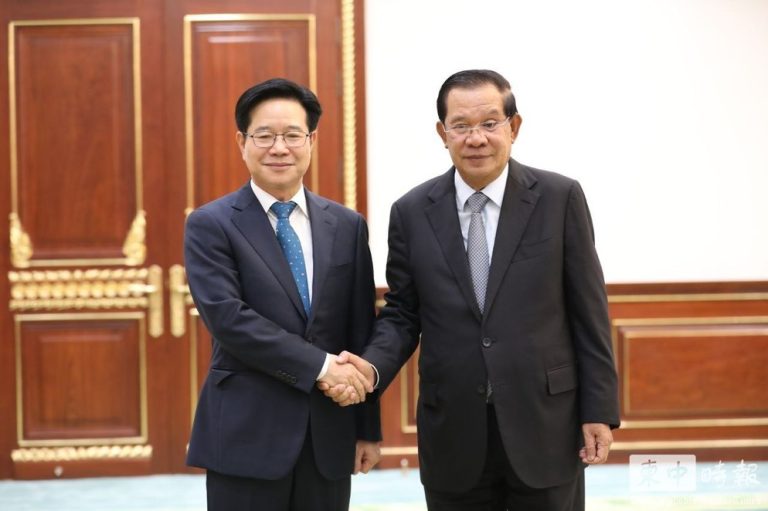
Cambodia will not tolerate telecommunications fraud or allow criminal groups to use the country as a safe haven, says Senate President Hun Sen, as authorities intensify a nationwide crackdown on cross-border scam networks.
The official made the remarks during a meeting in Phnom Penh with South Korea’s newly appointed ambassador to Cambodia, Kim Changyong.
According to The Cambodia China Times, Hun Sen said the recent high-intensity enforcement actions against telecom and online fraud are intended to send a clear message to criminal groups that Cambodia is “not a refuge for criminals, but their hell.”
He said the ongoing operations reflect the Cambodian government’s firm and uncompromising stance against transnational crime. Cambodia, Hun Sen stressed, will not permit any criminal organization to use its territory as a hiding place or as a base for illegal activities, particularly those linked to telecommunications fraud.
During the meeting, Hun Sen and the South Korean ambassador discussed cooperation on combating telecom fraud and other forms of cross-border crime. His comments come amid stepped-up law enforcement efforts targeting online scam syndicates operating within Cambodia.
Hun Sen, who served as Cambodia’s prime minister for nearly four decades, is widely regarded as the country’s most influential political figure. He emphasized that the government is determined to dismantle criminal networks and prevent Cambodia from being associated with illicit activities that undermine regional security and international confidence.
The issue of scam operations targeting South Korean nationals has drawn particular attention in South Korea, where authorities have raised concerns about citizens being lured or exploited overseas.
In recent years, South Koreans have been drawn into online scam hubs, particularly in Cambodia’s large fraud compounds, where false job offers have lured some into forced work involving romance, investment, and so-called “pig-butchering” scams.
In response, South Korea has issued travel advisories, carried out repatriations, and expanded law enforcement cooperation with Cambodia. Dozens of South Korean nationals suspected of involvement in online fraud have been returned home for investigation, while the two countries have intensified joint efforts to dismantle cross-border scam networks.
Good Morning. It’s not something you hear everyday, especially from someone as weathered in the gaming industry as Rob Goldstein. The executive stating that Marina Bay Sands saw “the greatest quarter in the history of casino hotels” exemplifies how proud Las Vegas Sands is of its 4Q25 results, with Singapore the jewel in its crown. Meanwhile, Macau continued to deliver, also boosted by VIP play, but with concern that base mass can’t reach previous highs. Also in Macau, operators are scaling back their salary adjustments as the post-pandemic economy stabilizes, with increases now hovering around 2 percent.
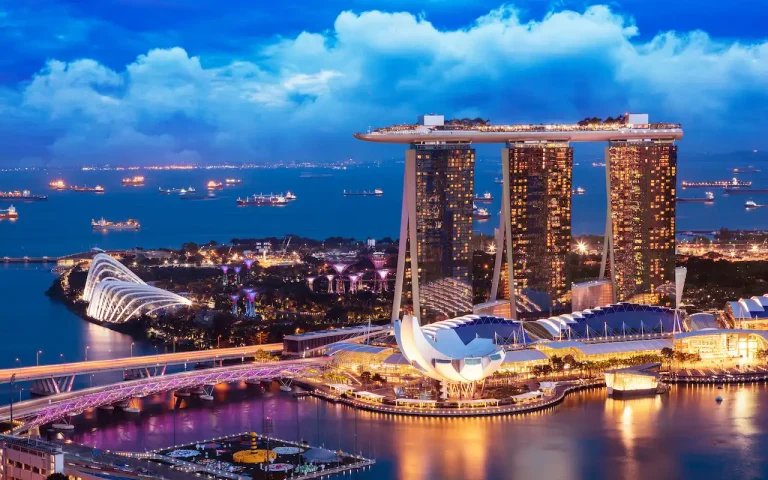
Las Vegas Sands has much to boast about, particularly in regards to Singapore, as adjusted property EBITDA for the fourth quarter at Marina Bay Sands rose by over 50 percent to a record $806 million. The group’s Chairman lauded the result as “the greatest quarter in the history of casino hotels”. While VIP contributed heavily to both Singapore and Macau, the SAR continues its grind, with execs noting that Sands China results didn’t disappoint, but that its properties will excel when base mass recovers.
Las Vegas Sands saw standout results out of Marina Bay Sands during the fourth quarter, delivering adjusted property EBITDA of $806 million, which LVS Chairman and CEO Rob Goldstein called “simply the greatest quarter in the history of casino hotels”. Meanwhile, Macau garnered $608 million in EBITDA, a figure which failed to excite the executive, who noted “we aren’t disappointed”.
In results announced on Wednesday, followed by an earnings call, the positive focus was on Singapore, with MBS’ EBITDA figure representing a 50.1 percent yearly increase, and helping boost LVS’ total adjusted property EBITDA by 27.6 percent, to $1.41 billion.
Meanwhile, Macau EBITDA rose by just 6.5 percent, to $608 million – despite seeing a $26 million positive impact from 4Q25 hold on rolling play. This positive contribution from hold rose to $45 million for MBS’ EBITDA.
Singapore dominance continues
Rolling volume at MBS amounted to $13.4 billion in 4Q25, up by 66 percent yearly, while mass non-rolling table and slots win hit $951 million, a new property record. From mass, some $656 million came from non-rolling tables, with $295 million coming from slots. This compares to $500 million and $246 million in 4Q24, respectively.
Patrick Dumont, President & COO at Las Vegas Sands
Speaking of the results in the earnings call, Patrick Dumont, President and COO of LVS noted that “The record financial results at MBS reflect the impact of high-quality investment in market-leading products, world-class service, and the growth in high-value tourism.”
In order to keep up the momentum, Dumont furthered that “There’s really nothing that we have to do from an OpEx side, except to continue to improve our service models and our programs there,” noting the property is “where we need to be, but we’ll continue to look to improve as we can”.
LVS’ CEO furthered indicated that Singapore was less driven by seasonality, noting that “I think [if] it’s December, July, it doesn’t matter as much as it used to in places like Macau or Las Vegas. It’s less seasonally driven, I think, and more driven by the building itself and a strong market.”
Robert Goldstein, Chairman & CEO at Las Vegas Sands
During the quarter, MBS saw net revenues of $1.6 billion, up by 41.6 percent yearly.
Goldstein set an optimistic tone on the upcoming future, noting “The question is: how much further can we go in the next two years? There has never been a building, to my knowledge, that delivered these types of results.”
Macau operations hope for more mass
“Macau market is driven by the premium segment with and this is a highly competitive market. There may be a day when base mass recovers, and we will excel when that day comes. But until then, we will continue to focus on our ability to make the assets work harder to achieve $700 million per quarter,” indicated Goldstein.
The Venetian Macao
Total net revenues for Sands China Limited (SCL) increased by 16.4 percent yearly to $2.05 billion in 4Q25, with net income falling slightly from $237 million in 4Q24 to $213 million in the final quarter of 2025.
Gaming revenue from the Venetian led the pack, at $584 million, up by $50 million yearly, pushing net revenues up by $70 million to $752 million. Despite this, adjusted property EBITDA was down by $7 million yearly, to $243 million.
Gaming revenue from the Londoner increased by $137 million yearly, to $524 million, pushing up net revenue by $181 million, to $699 million, with adjusted property EBITDA increasing $57 million to $201 million. The group’s Parisian property saw just a $7 million increase in gaming revenue yearly, to $178 million, with net revenue rising by $5 million to $233 million and adjusted property EBITDA falling by 14 million, to $55 million.
Meanwhile, The Plaza saw a $41 million increase in casino revenue, to $183 million, with net revenue up by $41 million to $264 million and adjusted property EBITDA rising by $16 million to $99 million. Sands Macao saw a $10 million drop in casino revenue in 4Q25, to $68 million, with net revenue also falling by $10 million to $76 million and EBITDA down by $16 million to $4 million.
LVS’ CEO indicated that mass market revenue in the quarter “exceeded 25 percent”.
Grant Chum, CEO & President at Sands China
Grant Chum, CEO and President of Sands China noted that “Macau right now is driven by the premium segments, both in rolling and non-rolling, and that’s where we are getting most of our growth. So in terms of the sequential decline in operating margin, firstly, we have higher reinvestment, but on a sequential basis, that’s mostly driven by the segment mix change. So we have more rolling business as a proportion of our total gaming, and within non-rolling, it’s dominated by the super high end of the premium mass”.
Regarding side wagers, Chum noted that “we have been continuously rolling out additional wager options on the baccarat layouts, and we’ve been having progressively more success in attracting volume against those side wagers. The level of participation in the side wagers is not as high as Singapore, but it is on an increasing trend.”
Chum furthered that “at this point in time, I think we are stabilizing at the current levels at least for our portfolio. And actually, we’re hoping to find some headroom to optimize on the reinvestment front into 2026.”
Las Vegas Sands saw overall revenue for the fourth quarter of 2025 increase by $753 million to nearly $3.65 billion, with net income up by $71 million to $395 million and adjusted property EBITDA increasing by $306 million to $1.41 billion.
Solidifying its Latin American footprint, Zitro has completed a major installation of more than 70 machines across Grupo Aladdin casinos, boosting entertainment offerings in key hubs like Bogotá, Cali, Barranquilla, and Pereira.
This rollout strengthens Zitro’s position in the Colombian market and its partnership with one of the country’s leading casino operators.
The lineup includes proven performers such as Fu Frog, Fu Pots, and King Fu Frog—titles that have delivered strong results in gaming floors nationwide.
“We are also introducing a Wide Area Progressive (WAP) as part of the gaming experience on our Altius Glare cabinets. Given its track record, we are confident this will be a significant success for the group,” said Iván Gómez, Sales Manager at Zitro Colombia.
Jorge E. Vélez, Director of Gaming Technology and IT at Grupo Aladdin, commented: “Expanding our portfolio alongside a leading supplier like Zitro is a significant achievement for us. The performance of these titles has exceeded our expectations, further reinforcing the long-standing trust we place in their products.”
Alejandra Burato, Zitro’s Regional Director for Latin America, shared: “We are very pleased to see our games featured across Grupo Aladdin’s venues. This partnership is a reflection of the success of our expansion strategy in Colombia and our commitment to delivering high-performing products to the market.”
Global iGaming technology provider SOFTSWISS has named Sergey Kastukevich as its new Chief Technology Officer (CTO), stepping up from Deputy “CTO of the Year” to lead the company’s strategic tech and product roadmap for 2026.
The move highlights SOFTSWISS’ focus on building long‑term tech resilience, scalable systems, and strong engineering execution to support its upcoming growth stage.
Kastukevich has served as Deputy Chief Technology Officer at SOFTSWISS for over five years, playing a central role in shaping the company’s technology foundations. In 2025, Sergey was named CTO of the Year in EMEA at the 2025 Oracle Excellence Awards, recognising his contribution to technology leadership and engineering excellence. Under his leadership, SOFTSWISS developed highly reliable, scalable solutions for complex, high-load, and highly regulated environments.
As CTO, Kastukevich will be responsible for defining and executing SOFTSWISS’ technology roadmap, overseeing software architecture, infrastructure strategy, security and reliability standards, and engineering productivity across teams. A key priority of his role will be ensuring technical excellence in how SOFTSWISS builds and scales its products.
SOFTSWISS places strong emphasis on engineering culture and continuous knowledge exchange. In 2025, under Kastukevich’s technical leadership, the company hosted several internal and external technology initiatives, including an internal technology conference that brought together more than 100 engineers and developers working on SOFTSWISS products, as well as industry-facing events designed to foster collaboration and innovation within the wider tech community.
Commenting on Sergey’s new role, Ivan Montik, Founder of SOFTSWISS, shared: “Sergey has consistently demonstrated the kind of leadership that is critical for a technology-driven business – strong engineering judgement, long-term thinking, and the ability to build systems that perform under pressure. His promotion to CTO aligns with our strategy for 2026, where platform stability, scalability, and technological discipline are key pillars of sustainable growth.”
SOFTSWISS’ newly appointed CTO, Sergey Kastukevich, added: “Going forward, my focus will remain on strengthening the technical foundations that enable rapid, secure, and high-quality delivery while also driving innovation across everything we do. At SOFTSWISS, technology leadership means not only ensuring reliability and scalability, but also shaping a culture where engineers can create forward-looking solutions and continuously evolve our products. I am committed to further strengthening SOFTSWISS as a trusted technology company that sets new standards for the iGaming industry.”
As part of its new technology and product strategy, SOFTSWISS recently announced the creation of a Chief Artificial Intelligence Officer role to formalise AI as an integral part of business infrastructure. Together, these leadership appointments underline the company’s commitment to strengthening both software engineering and enterprise AI capabilities as part of its long-term strategy.
Slotegrator wrapped up its ICE Barcelona 2026 showcase, marking a key milestone in its ongoing technological and brand evolution.
Across three busy days at ICE Barcelona 2026, Slotegrator hosted hundreds of industry professionals at its stand, showcasing its upgraded platform, new product features, and refreshed brand identity. The exhibition became a key opportunity to demonstrate Slotegrator’s evolution into a technology-driven partner focused on automation, scalability, and long-term infrastructure development.
One of the central highlights of ICE 2026 was the live presentation of Casino Builder 2.0, the next-generation website construction solution enabling operators to launch fully functional gambling platforms in minutes. The product received strong interest from operators seeking faster market entry and simplified platform management.
Another major point of attention was Moneygrator AI Bot, the industry’s first AI-powered digital assistant for payment integration. The solution attracted significant interest from both technical and operational teams, offering instant 24/7 access to payment-related insights and introducing a new approach to managing complex payment infrastructures.
ICE 2026 also marked the official presentation of Slotegrator’s refreshed brand identity. The new visual language and messaging were met with positive feedback from partners and visitors, reinforcing the company’s strategic direction toward product-centric development and technological leadership.
“ICE 2026 became a powerful confirmation of our new direction as a trusted technology and strategic partner for the iGaming industry,” said Olga Ivanchik, COO at Slotegrator. “The level of engagement, the quality of conversations, and the interest in our modernized platform and AI-driven tools showed us that the market is ready for deeper automation and smarter infrastructure solutions. We return from Barcelona with valuable insights, new partnerships, and a clear vision for the next stage of Slotegrator’s growth.”
In addition to business meetings and product presentations, Slotegrator created a vibrant and welcoming atmosphere at its stand with networking activities and an exclusive prize lottery for visitors, featuring premium prizes such as an iPhone 17 Pro, PlayStation, and Nintendo.
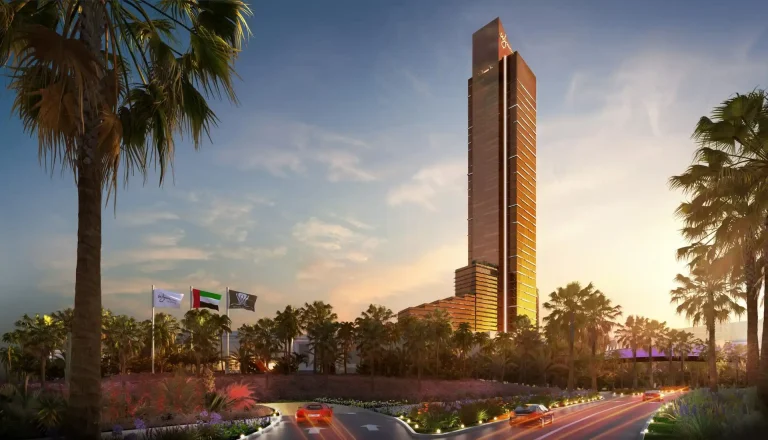
Ras Al Khaimah International Airport has announced plans to develop a dedicated “VVIP” terminal in partnership with Falcon Executive Aviation, aimed at serving high-end travelers heading to Wynn Al Marjan Island when the resort opens in 2027, according to local media outlet Arabian Gulf Business Insight (AGBI).
The facility, located about 15 minutes from Wynn Al Marjan Island, is intended to support rising premium traffic linked to the UAE’s first casino resort and forms part of a broader expansion strategy at the airport.
The plan was first reported in November last year, when Ras Al Khaimah International Airport and Falcon Executive Aviation issued a joint statement during the Dubai Airshow.
In a report published on Tuesday, airport chief executive Manish Seth said the VVIP terminal will feature a royal lounge, four VVIP lounges, and premium hospitality areas designed for discreet, high-profile passengers. The development will include a 1,500-square-meter terminal, an 8,000-square-meter multi-purpose hangar, and 9,000 square meters of apron and aircraft parking, with the terminal due to open in 2027.
The announcement comes as Ras Al Khaimah International Airport reported strong passenger traffic growth. The airport surpassed 1 million passengers in 2025 for the first time, marking a 51 percent year-on-year increase, and has grown passenger numbers by around half over the past two years. Seth said the airport aims to repeat that performance, targeting 1.5 million passengers by the end of 2027.
Aviation growth is tracking a broader tourism push in Ras Al Khaimah. Overnight visitors rose 6 percent year-on-year to more than 1.4 million in 2025, as the emirate works toward a target of attracting 3.5 million tourists annually by 2030. Authorities expect total visitor numbers to reach about 4.6 million in 2027, including an estimated 1.5 million tourists from other UAE emirates. Wynn Al Marjan Island alone is expected to attract up to 1 million visitors a year, with many making multiple trips.
To accommodate rising demand, the airport is refurbishing its existing terminal to increase capacity to 1.2 million passengers and plans to build a new 30,000 square meter terminal capable of handling up to 4.5 million passengers. Construction of the new terminal is expected to begin this year. Despite the expansion, the airport does not plan to add a second runway.