

Home Blog Page 149

Wynn Resorts earns 18th straight spot on FORTUNE’s Most Admired list

For another year, Wynn Resorts tops FORTUNE’s Hotels, Casinos & Resorts rankings on the World’s Most Admired list, continuing to lead the category as the highest-ranked casino resort company.

This year, the Company moved up to third overall and ranked first for Quality of Products/Services and People Management. The Company also received among the highest marks in the areas of Innovation and Quality of Management.

“This acknowledgement, and the top ranking in quality, reflects the diligence, passion, and dedication of our team members across the globe,” said Craig S. Billings, CEO of Wynn Resorts. “It is an honor to again be included on this prestigious list, and I am proud of our team’s commitment to providing the outstanding service that sets us apart and defines the Wynn experience.” 

Wynn Resorts is recognized globally for its commitment to excellence. From thoughtfully curated events to world-class hospitality, the Company continues to deliver exceptional experiences for its guests.

In partnership with Korn Ferry, FORTUNE compiles the World’s Most Admired Companies list by surveying top industry executives, directors, and analysts. Companies are evaluated across nine criteria, including investment value, quality of management and products, social responsibility, and ability to attract talent. Only companies ranking in the top half of their industry are included in the list. 

Just this week, Wynn announced that the construction of the 548-meter Wynn Bridge, a key infrastructure link to Wynn Al Marjan Island, has reached nearly half completion. The bridge will connect the resort via Wynn Boulevard to the E311 and E611 highways, creating a direct route from major UAE hubs to Ras Al Khaimah.

Wynn Resorts

Wynn Resorts estimates the UAE could generate $3–5 billion in annual gaming revenue once three integrated resorts are operating. Based on its modelling, Wynn Al Marjan Island is expected to produce between $1 billion and $1.7 billion in gross gaming revenue at steady state.


PAGCOR accelerates healthcare access with new PTVs for 5 more LGUs

0

The Philippine Amusement and Gaming Corporation (PAGCOR) on Wednesday, February 4, completed its latest round of patient transport vehicle (PTV) donations to five local government units and a national health institution, further enhancing healthcare delivery and emergency response nationwide.

The new PTV beneficiaries were the City of Imus in Cavite; the Province of Bataan; the Municipality of Libertad in Antique; the municipalities of Ibaan and San Jose in Batangas; and the Lung Center of the Philippines.

PAGCOR Chairman and Chief Executive Officer Alejandro H. Tengco said the donation is part of the agency’s corporate social responsibility initiatives to improve access to essential health services particularly in communities with limited resources.

Alejandro H. Tengco

Chief Medical Social Worker Donnabelle Gonzaga-Arcillo of the Lung Center of the Philippines said the PTV donation will address transport constraints faced by the institution in its daily operations.

“Sobrang laking tulong nitong PTV lalo na sa mga pasyenteng hinahatid at sinusundo natin, pati na rin sa aming home visitations at community activities,” Gonzaga-Arcillo said.

Each PTV is equipped with basic medical and safety features including a stretcher, oxygen tank, wheelchair, first aid kit, and navigation system to ensure safe and efficient patient transport.

PAGCOR accelerates healthcare access with new PTVs for 5 more LGUs

In 2025, PAGCOR donated a total of 162 patient transport vehicles to LGUs, partner agencies, and institutions nationwide, including 70 units given to the Philippine Charity Sweepstakes Office.

Slotegrator introduces Moneygrator AI Bot to streamline iGaming payment integration

0

Slotegrator, a leading provider of software and business solutions for online casino and sportsbook operators, unveils Moneygrator AI Bot, the industry’s first AI‑powered assistant for payment integration.

The tool sets a new benchmark for how online businesses interact with payment infrastructure. Moneygrator AI Bot was officially presented at ICE 2026 in Barcelona, where it generated strong interest from operators, technical teams, and industry experts as a first-of-its-kind solution.

Moneygrator, a part of the Slotegrator ecosystem of solutions, provides a unified infrastructure for connecting, managing, and optimizing multiple payment providers across different GEOs. With the launch of Moneygrator AI Bot, the solution takes a new step toward automation by offering instant, 24/7 access to key payment-related information directly within the product environment.

Payment integration remains one of the most technically complex and resource-intensive stages for iGaming and online projects. Differences in local payment methods, regulatory requirements, commission models, and integration logic often slow down launches and create bottlenecks between technical teams and support managers. Moneygrator AI Bot is designed to remove these friction points by handling up to 80% of standard payment-related queries that previously required direct communication with an account manager.

Moneygrator AI Bot is positioned not as a replacement for human expertise, but as a digital assistant that enhances it. By taking over routine queries, the bot allows Moneygrator managers and technical specialists to focus on complex cases, custom solutions, and strategic support, improving the overall quality of service.

“Moneygrator AI Bot was created to solve a very practical problem — the lack of speed in accessing critical payment information,” says Maxim Petrov, vendor partnership specialist (payments) at Moneygrator. “Teams need answers immediately, especially during integration and launch phases. The bot we created gives them this speed, while our experts remain fully involved where deep expertise and custom logic are required.”

The launch of Moneygrator AI Bot reflects a broader shift toward intelligent automation in payment infrastructure. With the introduction of the AI bot, Moneygrator strengthens its position as a solution focused on efficiency, scalability, and real operational value for fast-growing online businesses.

RG24seven rolls out RG‑ONE, elevating responsible gaming training

RG24seven Virtual Training, the BMM Innovation Group’s video‑based training platform for global gaming and casino employees, announced the official launch of RG‑ONE.

Intending to reduce regulatory and reputational risk, RG-ONE is a compliance-grade, one-hour, once-a-year virtual training program designed to educate all gaming employees on the industry’s most critical topics, including Responsible Gaming, Anti-Money Laundering (AML), Human Trafficking Awareness, Compliance, Tribal Gaming, and more.

Wendy Anderson, CEO of RG24seven, said, “RG-ONE has been created in partnership with some of the world’s leading subject matter experts, and the content is certified by BMM Testlabs for regulatory confidence. Gaming companies, both land-based and online, can use this free-of-charge, compliance-grade training tool to reduce regulatory and reputational risk through employee training.”

RG-ONE presenter, Garrett Farnes, Executive Director of Responsible Gaming for MGM Resorts International, commented, “RG-ONE reflects the shared values that continue to move our industry forward. Its modules address key compliance topics while reinforcing responsible gaming as a top priority. By supporting greater awareness, consistency, and alignment across the landscape, the program helps strengthen sustainable practices for all those involved in gaming.”

Travis Foley, Chief Government & Regulatory Officer at BMM Testlabs, shared, “RG-ONE is helping to ensure that employees are properly educated on the ins and outs of compliance expectations, responsible gambling, and day-to-day best practices for anyone working in gaming. RG-ONE is a powerful compliance tool for the industry, delivering trusted, certified training that sets it apart from every other platform.”

Macau authorizes 29 gaming promoters this year

0

Some 29 licensed gaming promoters, commonly known as junkets, have been authorized to operate within the Macau SAR in 2026, the latest data released by the Gaming Inspection and Coordination Bureau (DICJ) show.

This figure represents a 21 percent increase from the 24 professionals active at the start of the previous year, signaling a modest but steady recovery in the sector.

However, the industry remains significantly leaner than in previous decades, currently utilizing only 58 percent of the maximum cap of 50 licenses established by the Secretary for Economy and Finance.

Sands China and SJM Resorts lead the market, with each authorized to collaborate with up to 12 junkets. 

They are followed by MGM China and Melco Resorts, which host eight promoters each, while Galaxy Casino and Wynn Resorts maintain the smallest junket footprints with only five partners apiece.

This structure is underpinned by a strict regulatory requirement that mandates each promoter sign an exclusive contract with a single concessionaire, a move designed to increase transparency and accountability.

Beyond the number of licenses, the operational scope of these entities has been fundamentally reshaped by the 2023 Gaming Law.

The era of independent VIP room management and revenue-sharing agreements has ended; junkets are now strictly prohibited from sharing in casino profits or operating exclusive areas through private contracts. 

Furthermore, their financial influence has been curtailed by a ban on issuing credit directly to players—a power that now resides exclusively with the gaming concessionaires. This shift is reflected in the staffing levels as well, with only 12 licensed junket collaborators currently active in the territory, a mere fraction of the 250 permitted by the DICJ.

Financially, the VIP segment is showing surprising resilience despite these restrictive hurdles. In 2025, VIP baccarat revenues surged by nearly 25 percent year-on-year, reaching approximately MOP67.99 billion ($8.46 billion).

This growth outpaced the general casino average, increasing the VIP sector’s weight in the total revenue structure to 27.48 percent.

While this remains well below the 46.24 percent share seen in 2019, the rate of recovery is accelerating. Overall gaming revenue for 2025 totaled MOP247.40 billion ($30.78 billion), approximately 84.6 percent of pre-pandemic levels.

Looking forward to 2026, the government’s budget proposal anticipates continued growth, forecasting total gross gaming revenues to reach MOP236 billion ($29.4 billion) as the tourism sector continues its upward trajectory.

Macau airport forecasts passenger rebound after 1.6% decline in 2025

0

The Macau International Airport handled about 7.52 million passengers in 2025, down 1.6 percent year-on-year, but is forecasting an 8 percent increase in traffic in 2026 as new routes and additional flights come online, according to the airport’s operator.

At a Media New Year Gathering on Wednesday, the Macau International Airport Company (CAM) said the airport recorded nearly 58,000 aircraft movements last year, a decline of 2.9 percent. Total revenue for 2025 is estimated at around MOP1.35 billion ($168 million), representing an 8.5 percent decrease from the previous year.

CAM attributed last year’s weaker performance partly to economic uncertainty and geopolitical instability. In April 2025, the company warned it might miss passenger and cargo targets due to global volatility.

Despite the decline, CAM expects passenger numbers to reach around 8.14 million in 2026, with approximately 63,000 flight movements. The forecast reflects plans to expand route networks and increase flight frequencies, particularly to destinations in mainland China and Southeast Asia.

CAM Chairman Ma Iao Hang said airport operations remained stable in 2025 despite global economic uncertainty, geopolitical tensions, and natural disasters. He highlighted progress on major infrastructure projects, including expansion and reclamation works and the Hengqin upstream cargo terminal, which is expected to begin operations in 2027.

Executive Committee Chairman Simon Chan said international passenger volume grew 8 percent year-on-year in 2025, and more airlines are expected to enter the Macau market this year. New routes to Kunming, Chongqing, and Manila are planned, while connections to Vietnam’s Phu Quoc Island are set to begin in March.

Since January, new services have also been launched to Taiyuan, Shanghai, Bangkok, and Jeju, alongside increased frequency for Manila. During the Chinese New Year travel peak from February 17th to 23rd, about 80 additional flights are scheduled, mainly to Southeast Asian destinations.

The airport, which serves 29 airlines flying to 47 destinations, said it will continue focusing on safety, efficiency, and service upgrades to support tourism and logistics development in Macau.

Macau recorded over 2,300 gaming-related crimes in 2025, up 62.6%

0

Macau’s Judiciary Police recorded 2,314 gaming-related criminal investigations and reported cases in 2025, representing a year-on-year increase of 62.6 percent.

The significant increase was mainly driven by the inclusion of illegal money exchange linked to gambling as a criminal offense and improvements in statistical reporting methods.

The figures were released on Thursday during the Judiciary Police’s annual briefing, where officials outlined law enforcement performance over the past year.

According to official data, cases involving illegal gambling loans totaled 192 in 2025, down 23.8 percent from the previous year, while gambling-related detention and confinement cases fell 40.4 percent to 28. Serious and organized crimes linked to gaming activities continued to show a downward trend in incidence.

Judiciary Police Director Sit Chong Meng said the implementation of the Anti-Illegal Gambling Crime Law in late October 2024 provided new enforcement tools for authorities. He added that the bureau has strengthened cooperation and information sharing with mainland Chinese law enforcement agencies to improve intelligence gathering and target criminal networks more precisely.

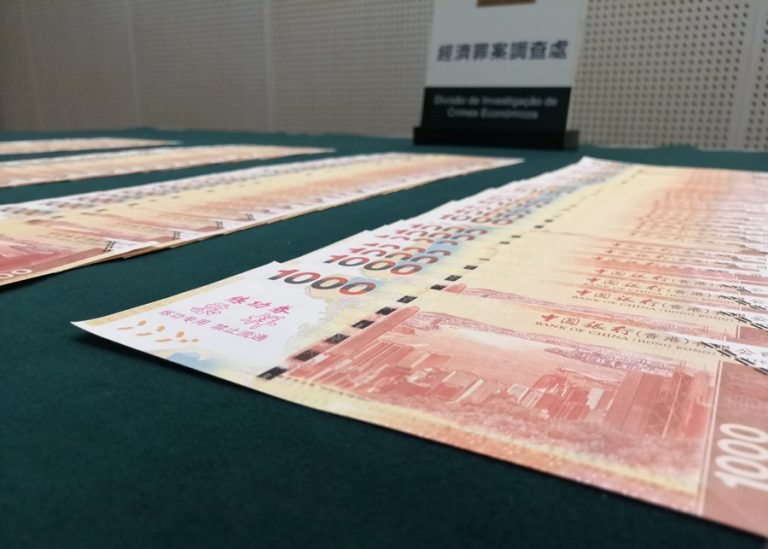
From the law’s implementation through December 2025, police cracked 567 cases involving illegal money exchange for gambling, including 492 direct exchange cases and 75 related offenses. A total of 867 suspects were arrested, and more than HK$94 million ($12.04 million) in cash and casino chips were seized. Authorities also dismantled several underground banking and currency exchange syndicates in cooperation with mainland Chinese counterparts.

Officials noted that intensified enforcement has pushed “money exchangers” to adopt more covert and sophisticated methods. Police said they are closely monitoring emerging trends, including illegal exchange activities disguised as legitimate retail operations. The bureau has also continued to work with gaming concessionaires to conduct legal awareness campaigns targeting visitors.

Beyond gaming-related crimes, the Judiciary Police reported handling 14,308 cases of various types in 2025, up 1.8 percent year on year. A total of 6,916 investigations were opened, down 10.9 percent, while completed cases rose 22.3 percent to 15,718. Nearly 4,000 suspects were referred to judicial authorities.

Meanwhile, telecom and online fraud cases continued to decline, although total financial losses rose to MOP300 million ($37.45 million), nearing peak levels recorded in 2023.

Macau gaming regulator says foreign-player revenue subject to daily checks

0

The Macau Gaming Inspection and Coordination Bureau (DICJ) applies strict oversight to the assessment of gross gaming revenue generated by overseas players, including daily verification procedures, according to its director, Ng Wai Han.

In a written reply to a question from lawmaker José Pereira Coutinho, Ng said the regulator has put in place “strict standards” covering both the identification of foreign customers and the gaming revenue attributed to them.

The official explained that gaming concessionaires are required to implement standard operating procedures alongside regular internal audit mechanisms.

“These measures are intended to ensure that all gaming transactions and activities attributed to customers from foreign countries are in fact carried out by foreign visitors, in line with the established definitions,” Ng said, adding that the process also aims to ensure the timeliness, accuracy and completeness of gross gaming revenue records.

Ng further noted that both the operating procedures and audit mechanisms must receive prior approval from the DICJ. Even after approval, the regulator continues to carry out daily reviews and checks of revenue generated by foreign customers.

When concessionaires apply for reductions or exemptions in gaming-related contributions, the DICJ carries out additional scrutiny, Ng said.

This includes examining supporting documents and information submitted by operators, as well as audits and random checks of player identification data and gaming records to confirm that the revenue in question genuinely originates from foreign visitors.

Despite these measures, revenue from Macau’s foreigner-only gaming zones continues to represent only a marginal share of overall casino takings.

An analyst and industry observer recently told AGB that, while there are signs of early progress, the segment remains small in scale.

Foreign-player gaming generated around HK$3 billion ($385 million) in gross gaming revenue in 2024, triggering approximately HK$150 million ($19.2 million) in levy relief for operators.

According to a government budget execution review, gaming by foreign players accounted for roughly 0.17 percent of Macau’s total casino revenue for the year.

Under the Gaming Law, concessionaires may benefit from a tax exemption of up to 5 per cent on gaming revenue generated by international players.

In 2024, the six casino operators were exempted from paying around HK$150 million ($19.2 million). According to the Chair of the Legislative Assembly’s Second Standing Committee, operators also increased non-gaming investment by MOP170 million ($21.1 million) over the same period.

Legislator Coutinho had asked how many applications for contribution reductions or exemptions have been reviewed and approved since 2023, but the government did not provide figures in its response.

The lawmaker also questioned what specific documentary evidence operators must submit to prove that foreign players were attracted through their own promotional or business initiatives, rather than as a result of broader factors such as the reopening of borders.

In response, Ng said that during the public tender process for casino gaming concessions, operators clearly set out their commitments and plans to expand overseas customer markets, which were later incorporated into concession contracts. She added that the Macau SAR government continues to monitor compliance with these contractual obligations.

Separately, and in response to another question from the same lawmaker, Ng said the DICJ is reviewing whether gaming operators are meeting their social responsibilities, as well as their role in promoting appropriate economic diversification and sustainable development.

MGM China 4Q25 results surpass projections: Jefferies

0

MGM China reported better-than-expected financial results for the fourth quarter of 2025, with both revenue and earnings exceeding analyst forecasts, according to a research note from Jefferies. 

The investment bank said adjusted EBITDA before corporate expenses was 5 percent above its estimates, while sales were 3 percent higher than expected.

In results ‘inadvertently posted’ after market close on Tuesday, MGM Resorts International reported that its Macau unit delivered stronger-than-anticipated performance. MGM China posted net revenue of $1.23 billion in the fourth quarter, representing a year-on-year increase of 21.4 percent. Adjusted EBITDA before corporate expenses reached $332.29 million, up 30 percent from a year earlier.

Analysts Anne Ling and Jingjue Pei noted that net revenue and adjusted EBITDA were 3 percent and 5 percent higher compared with Jefferies’ forecasts, respectively, reflecting solid operating momentum toward the end of the year.

MGM China’s trading was suspended on Wednesday at 9am, as the results were released earlier than the previously scheduled February 12th announcement. In a note, MGM China indicated trading resumed at 1pm on February 5th (HK time).

The full operational data and details on payouts are expected to be released on February 6th, Hong Kong time, ahead of MGM Resorts’ earnings call scheduled for 6am.

The bank added that investor attention is likely to focus on expectations for the Chinese New Year period, developments in the competitive landscape, and the company’s dividend policy.

Interblock begins search for new CEO after John Connelly resigns from role

0

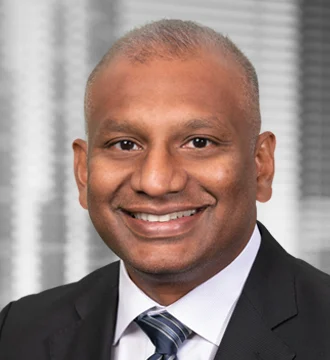
Gaming solutions group Interblock has announced the resignation of its CEO John Connelly and appointment of interim CEO Bala Ganesan while it searches for its next permanent Chief Executive.

In a press release on Wednesday, the group did not give a reason for the resignation, with board member David Quick noting that the company is entering “its next phase of growth and innovation” and “ensuring Interblock is led by the right executive to capitalize on emerging opportunities and sustain its strong growth trajectory”.

Connelly’s interim replacement has served as Interblock’s interim Chief Operating Officer and was previously a Managing Director at Oaktree Capital Management. Oaktree-advised investment funds own a majority of Interblock’s equity interests.

Speaking of the appointment, Ganesan reassured investors, noting “Interblock is exceptionally well positioned for continued growth, underpinned by a talented team, industry-leading innovation, and strong customer partnerships”.

The group has indicated it ‘has engaged an executive search firm to identify Interblock’s next permanent CEO’, and that during the procurement it ‘remains fully committed to advancing its strategic priorities and delivering the high-quality products and services that define the Interblock brand’.

John Connelly was appointed as Interblock’s global CEO in January of 2015, having previously served as a member of Bally Technologies Inc.’s executive committee.