



The violent death of Taiwanese fugitive Lin Bingwen in Cambodia has brought a dramatic end to one of the region’s more colorful and controversial figures in the underground gambling and money laundering ecosystem, underscoring the blurred lines between illicit finance, organized crime and parts of Asia’s gaming sector.
Lin, variously reported as 54 or 55 years old, was shot dead on the night of March 23rd on a secluded road in Sihanoukville’s District 1. Cambodian police have described the shooting as premeditated, with three to four assailants arriving at the scene, opening fire, and fleeing immediately after. A manhunt is ongoing, though authorities have released few further details and no official motive has been confirmed.
Taiwan’s Criminal Investigation Bureau has since verified Lin’s death, bringing closure to a manhunt that had spanned multiple jurisdictions and attracted significant media attention in Taiwan.
Wanted list
Known by several nicknames including “The Eel” and the “Billion-Dollar Gambling King,” Lin had been on Taiwan’s wanted list for his alleged role in one of the island’s largest underground banking and gambling cases, commonly referred to as the “88 Club” scandal. The case centered on a sophisticated network accused of facilitating approximately NT$21.7 billion ($680 million) in illicit financial transfers linked to illegal online gambling operations.
Prosecutors allege that Lin operated PGTalk, a third-party payment platform used to move funds within the network, which was tied to 88 Club figurehead Guo Zhemin. Guo was extradited to Taiwan in 2023 and sentenced in May 2025 to nearly 12 years in prison on underground banking charges, with authorities seizing significant assets including cryptocurrency holdings and billions in New Taiwan dollars.
The scandal extended well beyond financial crime, triggering one of Taiwan’s most significant police corruption cases in recent years. More than two dozen law enforcement officials were disciplined after being linked to the club, which functioned as a high-end private venue catering to influential figures across business, politics and law enforcement.

Career in organized crime
Lin’s own trajectory into the upper tiers of Asia’s grey and black-market gambling economy was unconventional but illustrative of broader regional patterns. He reportedly began his career in organized crime circles in New Taipei City before moving into sports manipulation, most notably through the 2007 “Black Rice Incident,” a match-fixing scandal that rocked Taiwan’s professional baseball league. Lin and associates were accused of bribing players to throw games while betting against their own team, an episode that led to criminal convictions and the dissolution of the franchise involved.
Following this period, Lin relocated to Macau, where he became involved in the VIP junket sector during its peak years. There, he is believed to have worked alongside prominent industry figures, handling high-roller operations with reported turnover in the billions of New Taiwan dollars. This phase of his career cemented his reputation within gambling circles and contributed to the moniker that would follow him for years.
However, as regulatory pressure intensified across the region and Macau’s junket model came under scrutiny, culminating in high-profile prosecutions and the dismantling of major operators, figures like Lin increasingly shifted toward more opaque structures, including underground banking networks and third-party payment platforms.
Lin’s legal troubles escalated in 2023 when he appeared in court in Taiwan in connection with the 88 Club case. After initially cooperating, he began to miss hearings, citing health and scheduling issues. It later emerged that he had already left Taiwan, with his lawyer confirming his absence only in late 2024. Authorities subsequently revoked his NT$3 million ($93,600) bail and issued a warrant for his arrest.
A story ending in Sihanoukville
His movements during this period were the subject of speculation. Investigators initially believed he had relocated to the United States, while other reports placed him in Japan. He eventually resurfaced in Cambodia’s Sihanoukville, a location that has, over the past decade, developed into a hub for both licensed and unlicensed gaming activity, as well as associated financial flows.
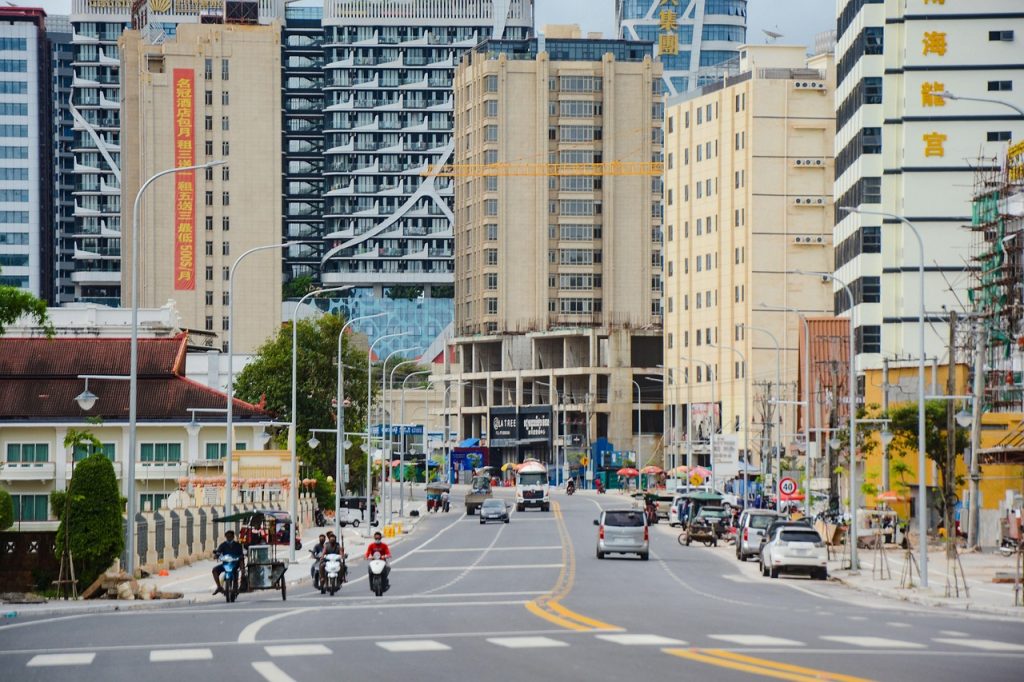
Reports suggested Lin had become involved in hotel and casino operations in the city, working with Chinese partners. Sihanoukville has been repeatedly flagged by regional authorities and international bodies as a focal point for illicit gambling operations, online scam centers and underground financial networks, making it a logical, if high-risk, refuge for individuals operating outside formal regulatory frameworks.
Despite being a fugitive, Lin maintained a visible online presence, using social media to deny that he was fleeing justice and, at times, taunting political figures in Taiwan. In one instance, he suggested he would return on his own terms while also threatening to expose sensitive information involving public officials.
His death raises fresh questions about the risks faced by individuals operating in the intersection of gambling, informal finance and organized crime, particularly in jurisdictions where enforcement remains uneven.
While no motive has been officially established, the circumstances of the killing – targeted, coordinated and executed in a relatively isolated location – are consistent with patterns seen in disputes involving financial networks or criminal organizations. The investigation into Lin’s killing remains ongoing. Cambodian authorities have yet to announce any arrests.