The Spain-based gaming supplier, Zitro, has announced the successful renewal of its ISO 27001 certification for the Information Security Management System (ISMS) at its Barcelona Technology Campus.
This achievement, framed within the company’s ESG (Environmental, Social and Governance) commitments, reinforces its ongoing commitment to cybersecurity and ensuring the confidentiality, integrity, and availability of sensitive customer and employee data.
ISO 27001 is part of the ISO 27000 family of international standards for information security. This framework enables organizations to identify risks, implement effective controls, and ensure information protection in line with global best practices, while also ensuring compliance with applicable legal and regulatory requirements.
For Zitro, this recertification confirms the rigorous and continuous work the company carries out in the field of information security. The Barcelona Technology Campus—dedicated to the development of software and hardware for the gaming industry—maintains the highest standards, and this recognition reflects the level of commitment embedded across all its processes.
As Zitro continues its global presence across key industry events, the company is preparing for a major showcase at G2E Asia 2026 in Macau, where its FANTASY and CONCEPT cabinets will take center stage alongside a lineup tailored for Asian players.
Spectrum Gaming Group announced on Thursday that Dennis Andreaci has joined the company as Senior Advisor, adding more than 45 years of gaming industry experience to the firm’s advisory operations.
According to the company, Andreaci will support clients in areas including casino development, operational assessments, regulatory compliance, international marketing and strategic planning for integrated resorts.
Andreaci began his career in January 1980 at Resorts International in Atlantic City. He has since spent 33 years working in Asia, with experience in casino development, operations, anti-money laundering services, VIP program design and gaming management.
His previous roles include senior executive positions at Las Vegas Sands, where he was involved in the opening of Sands Macao and The Venetian Macao, and contributed to the planning and development of Marina Bay Sands Singapore. Spectrum Gaming said Andreaci oversaw gaming development, project planning, design and casino operations across several properties during his seven years with the company.
Andreaci later served as Senior Vice President of Gaming and Executive Vice President at Solaire Resort and Casino in Manila, where he established gaming-related departments and oversaw casino design and development.
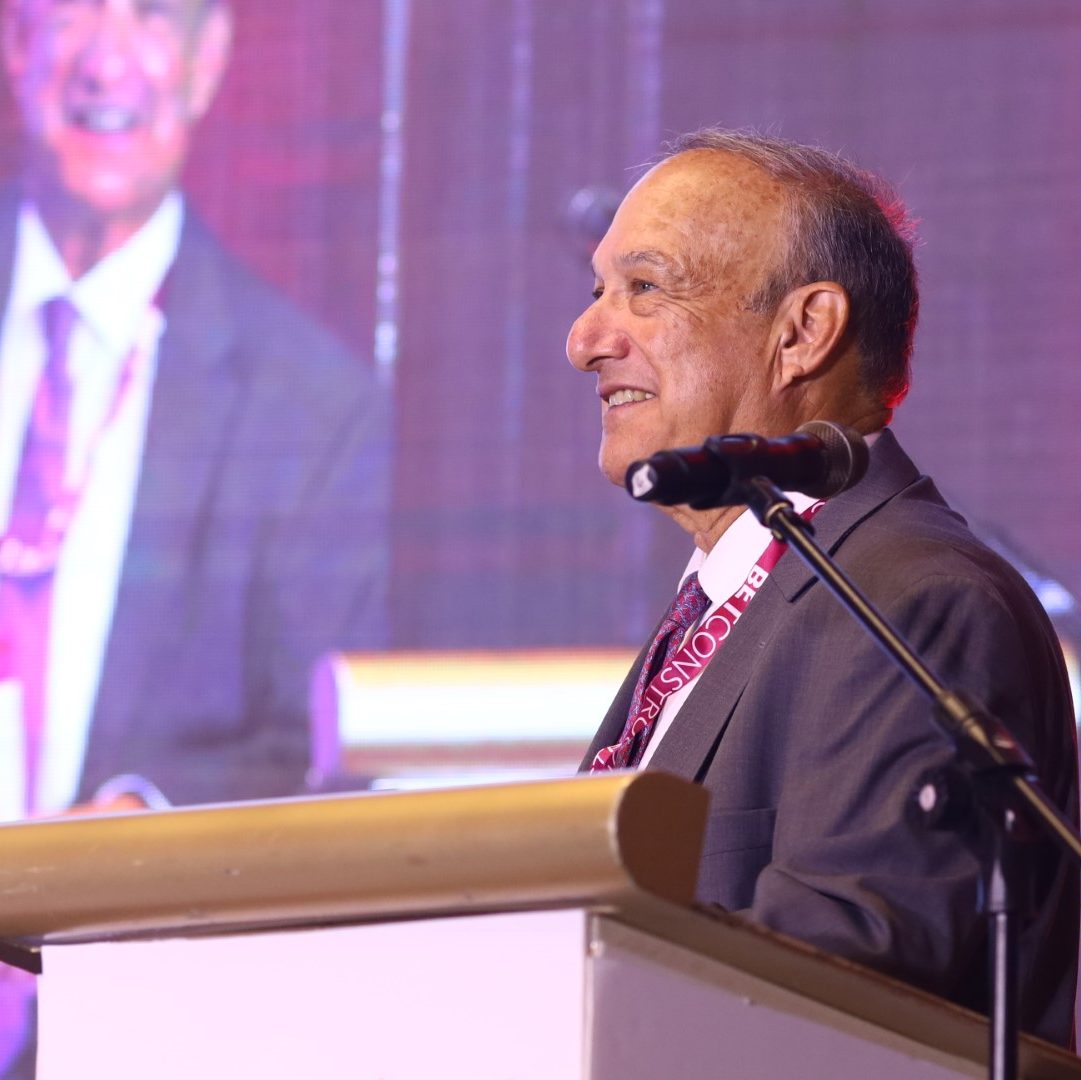
Fredric Gushin, CEO, Spectrum Gaming
He also held a leadership role at Galaxy Entertainment Group, overseeing areas including strategic planning, recruitment, training and gaming operations.
Serving as Senior Vice President of Casino Operations from 2023 to 2025, Dennis Andreacci helped Hann Casino Resort strengthen its operational performance and deliver an elevated guest experience.
Moody’s Ratings said on Thursday it expects Studio City’s adjusted debt-to-EBITDA ratio to improve over the next two years, supported by continued growth in Macau’s gaming market, stable market share and ongoing debt reduction efforts.
The ratings agency assigned a Ba3 rating to proposed senior secured US dollar bonds to be issued by Studio City Company Limited through Studio City Investments Limited. The rating outlook is stable.
‘The stable rating outlook reflects our expectation that the company’s financial leverage will improve further over the next 12-18 months, driven by continued earnings growth and a reduction in debt,’ Moody’s said.
According to the ratings agency, Studio City’s adjusted debt-to-EBITDA is expected to decline to around 6.3x in 2026 from 7.2x in 2025, before improving further to 5.7x in 2027. Moody’s said the projected leverage levels for 2026 and 2027 support the company’s B1 corporate family rating (CFR).
The agency added that the improvement would be driven by continued growth in Macau’s gaming market, stable market share and debt reduction efforts.
Moody’s said Studio City’s standalone credit profile reflects its established market position in Macau and focus on the mass market gaming segment. However, these strengths are offset by the company’s geographic concentration in Macau, where gross gaming revenue remains exposed to policy and regulatory changes in both Macau and mainland China, alongside relatively high financial leverage.
The agency also noted that Studio City’s B1 CFR reflects both the company’s standalone credit quality and the likelihood of extraordinary support from parent company Melco Resorts & Entertainment.
The proceeds from the proposed bond issuance will be used to refinance outstanding secured notes due in 2027, alongside potential drawdowns from revolving credit facilities and available cash if needed.
Australia’s The Star Entertainment Group said on Thursday it had signed a binding credit facility agreement with funds associated with WhiteHawk Capital Partners, formally completing the refinancing arrangement first announced in March and securing approximately AU$130 million ($84 million) in additional liquidity.
According to an update to the Australian Stock Exchange, the casino operator said the refinancing will replace its previous AU$400 million ($259 million) syndicated facility agreement and is expected to be completed on May 7th, 2026.
Under the agreement, WhiteHawk will provide a three-year $390 million facility, equivalent to around AU$540 million ($350 million) based on prevailing exchange rates as of May 6th.
The Star said the facility includes an annual interest rate based on Term SOFR plus a margin, with the resulting rate ‘materially consistent’ with the company’s previous credit facility agreements. Quarterly amortization payments will commence from March 31st, 2027.
The agreement also includes a minimum liquidity covenant of AU$50 million ($32 million) for the first 12 months after financial close, increasing to AU$75 million ($49 million) between 12 and 18 months, and AU$100 million ($65 million) thereafter. In addition, the facility contains a minimum asset coverage ratio of 1.40x and a minimum EBITDA covenant commencing from March 31st, 2027.
Following completion of the refinancing and after funding the required interest reserve account, The Star said it expects to retain approximately AU$130 million ($84 million) in additional liquidity to support ‘ongoing operational needs’ and the execution of its cost-out and strategic initiatives.
The company added that completion of the refinancing would satisfy the conditions of the waiver granted by its previous senior lenders on February 27th, 2026, which had been disclosed alongside its first-half FY26 results.
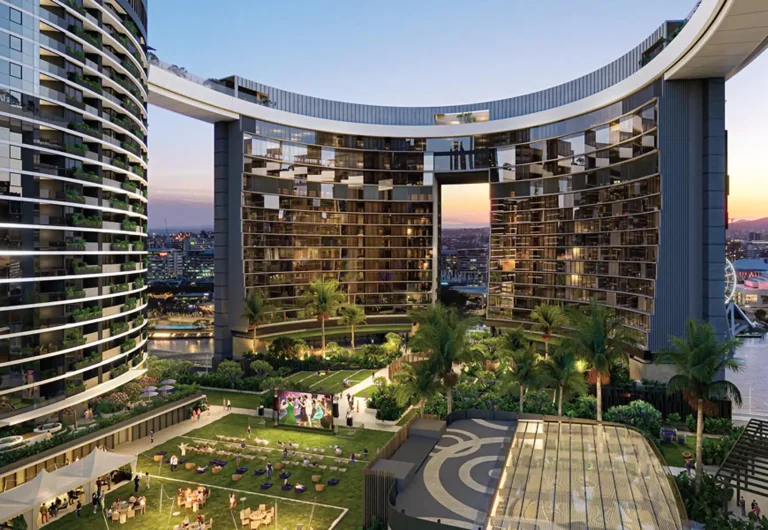
Destination Brisbane Consortium (DBC) has appointed veteran gaming and hospitality executive Justin Casey as Chief Operating Officer to oversee strategy and operations across the AU$3.6 billion ($2.35 billion) Queen’s Wharf Brisbane precinct, following the consortium’s recent consolidation of ownership of the development.
Justin Casey
According to a media release issued on Thursday, Casey officially stepped into the role in February and will help lead DBC’s transition from a development-focused organisation into a fully integrated owner-operator.
The appointment comes after DBC completed a refinancing and equity transaction in March that enabled its shareholders — Hong Kong-listed Far East Consortium International and Chow Tai Fook Enterprises — to consolidate full ownership of the Queen’s Wharf Brisbane development following the exit of former partner The Star Entertainment Group.
DBC Chair and Executive Director Wendy Chiu said the appointment strengthens the consortium’s operational leadership at a “pivotal time” for the precinct.
“Queen’s Wharf Brisbane is one of Australia’s most significant tourism, leisure and entertainment destinations,” Chiu said.
“The appointment of Justin as COO ensures we have strong leadership capability, supporting me to drive this vision and deliver a world-class integrated resort experience, alongside strong governance and regulatory alignment.”
Casey brings more than 35 years of experience across the gaming, hospitality and tourism industries, including senior roles at Crown Resorts Australia, Wynn Resorts Macau and Galaxy Entertainment Group Macau.
“It’s an incredible privilege to join DBC at such an important juncture in its journey,” Casey said.
Spanning more than 12 hectares along Brisbane’s riverfront, Queen’s Wharf Brisbane includes hotels, gaming facilities, retail, dining and public spaces, and is considered one of Australia’s largest tourism and entertainment developments.
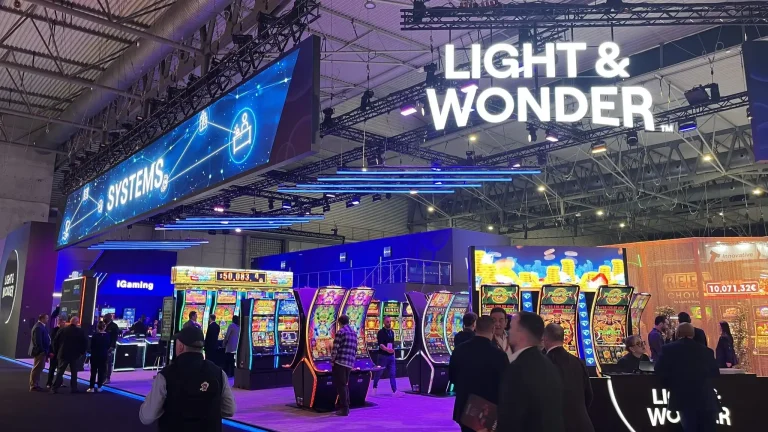
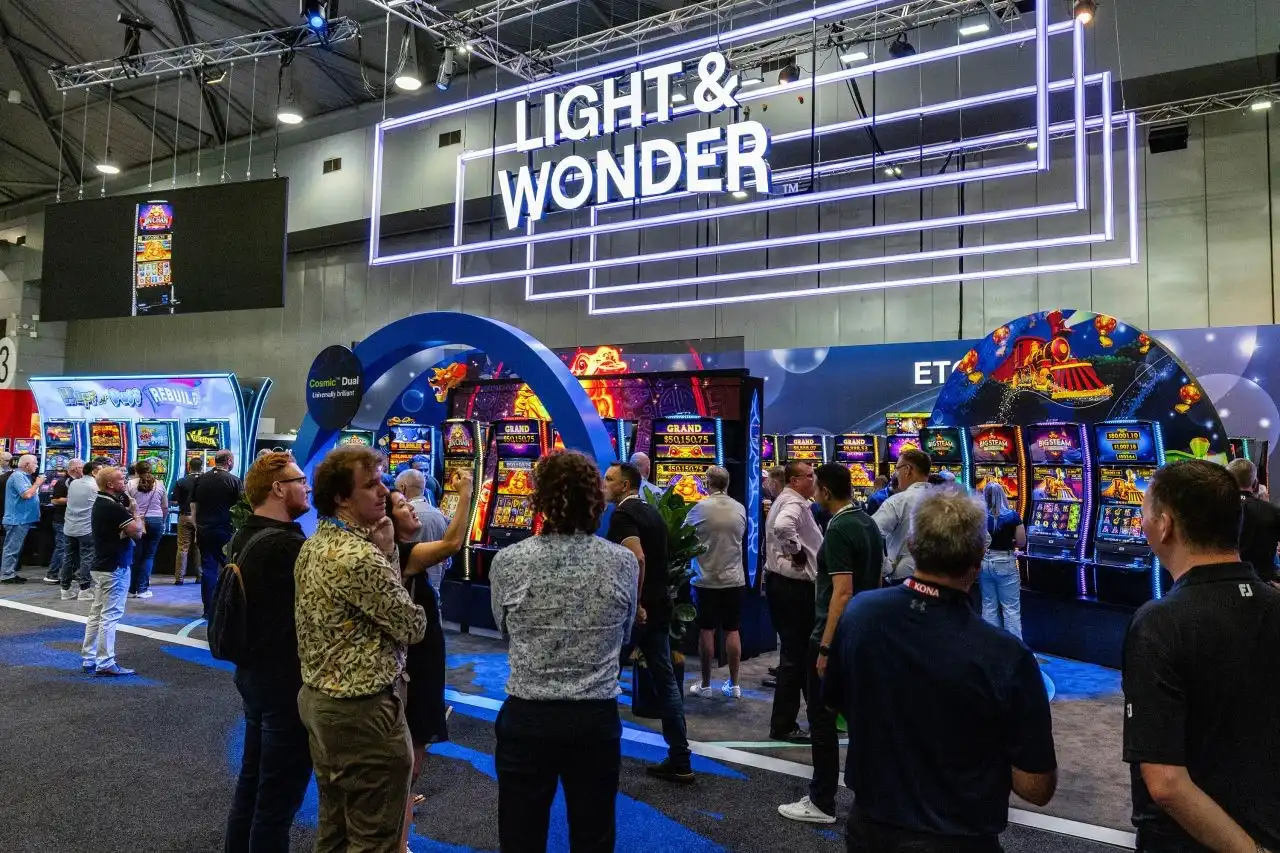
Light & Wonder reported first-quarter 2026 revenue of $790 million, up 2 percent year-over-year, as strong growth in gaming operations and iGaming offset weaker gaming machine sales and continued softness in social casino operations. Adjusted EBITDA rose 5 percent to $327 million with margin expansion across all segments, while net income fell 37 percent to $52 million due mainly to legal reserve contingencies linked to legacy matters involving compensation to Aristocrat.
Light & Wonder reported first-quarter consolidated revenue of $790 million for the three months ended March 31st, 2026, up 2 percent year-over-year, as double-digit growth in gaming operations and iGaming helped offset softer gaming machine sales and continued weakness in the social casino market.
The gaming technology supplier said net income fell 37 percent year-over-year to $52 million, primarily reflecting $50 million in legal reserve contingencies linked to certain legacy legal matters related to compensation to Aristocrat. Diluted earnings per share declined 30 percent to $0.66.
Despite the decline in net income, consolidated Adjusted EBITDA (AEBITDA) increased 5 percent to $327 million, with margin expansion recorded across all three business segments. Consolidated AEBITDA margin improved to 41 percent from 40 percent a year earlier.
The company said results reflected “continued disciplined execution” and resilience despite macroeconomic and geopolitical uncertainty, including tariff-related pressures.
Gaming operations continue to drive growth
Gaming revenue rose 3 percent year-over-year to $512 million, supported by a 38 percent increase in gaming operations revenue to $239 million and a 24 percent rise in table products revenue to $63 million.
Gaming machine sales revenue, however, declined 25 percent to $156 million, which the company attributed primarily to the timing of international and North American video lottery terminal shipments in the prior-year period. Gaming systems revenue also fell 14 percent to $54 million due to lower hardware sales.
Light & Wonder said its North American premium installed base expanded for the 23rd consecutive quarter, adding more than 2,550 units year-over-year and 650 units sequentially. The Grover charitable gaming business added 660 units sequentially and contributed $43 million in gaming operations revenue during the quarter.
iGaming posts strongest segment growth
iGaming continued to deliver the strongest growth among the company’s operating segments, with revenue increasing 18 percent to $91 million and AEBITDA rising 22 percent to $33 million. iGaming AEBITDA margin improved to 36 percent from 35 percent a year earlier. Wagers processed through the company’s Open Gaming System reached a quarterly record of $29.9 billion.
SciPlay revenue declined 7 percent year-over-year to $187 million due to lower JACKPOT PARTY Casino payer activity, although AEBITDA for the segment increased 3 percent to $66 million as direct-to-consumer revenue expanded.
Matt Wilson
President and CEO Matt Wilson said the quarter marked “the beginning of the next phase of the Company’s growth trajectory,” driven by its content-focused operating model and recurring revenue strategy.
Chief Financial Officer Oliver Chow said the company continued to see margin expansion and stronger cash conversion while maintaining its targeted leverage range.
Light & Wonder ended the quarter with total debt of $5.14 billion and a net debt leverage ratio of 3.5x. The company said it expects full-year 2026 consolidated AEBITDA growth in the mid- to high-single-digit range.
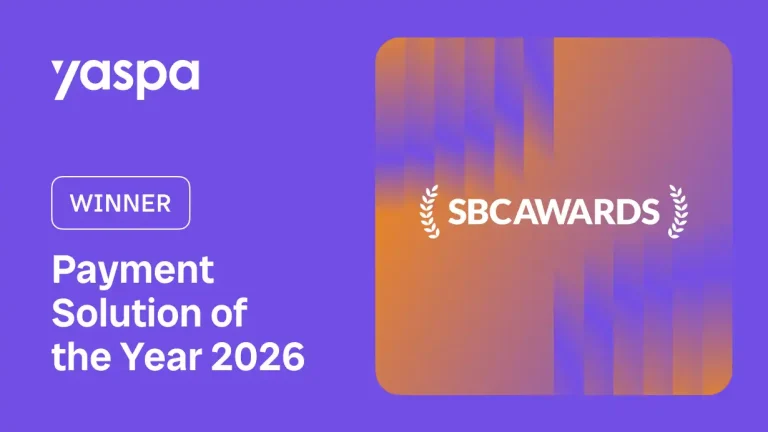
Yaspa, a fast-growing fintech specializing in payments and identity solutions, has been named Best Payment Solution at the SBC Awards Europe 2026, held at Xara Lodge in Malta.
The SBC Awards Europe recognize the best suppliers, operators and innovators across the European betting and gaming industry, with Yaspa standing out for its Intelligent Payments offering, combining real-time Pay by Bank transactions with AI-powered customer insights and verification.
The win marks another milestone in Yaspa’s journey, underlining the company’s rapid growth and increasing influence across regulated markets.
Built on open banking infrastructure, Intelligent Payments combines instant Pay by Bank transactions with consented access to real-time player financial data. This enables operators to assess affordability, AML risk and financial vulnerability in under 10 seconds – before funds enter play – while maintaining a seamless, document-free experience for the majority of users.
Yaspa CEO James Neville said: “We’re delighted to be recognized as Best Payment Solution at the SBC Awards Europe. This award is particularly meaningful because it reflects the shift we’re seeing across the industry – where payments are no longer just transactional, but a critical point for compliance, insight and player protection. By embedding real-time intelligence directly into the deposit flow, we’re helping operators meet evolving regulatory expectations while also delivering a faster, smoother experience for players.”
A Broader Perspective for iGaming Operators
A key differentiator of Yaspa’s approach is its ability to replace traditional “stop-and-check” verification processes with a single, consent-driven journey. Through one secure bank connection, partners gain a dynamic pan-operator view of a player’s financial profile – including income patterns, cash flow volatility and behavioural risk markers such as overdraft usage or binge deposit activity.
This model has demonstrated significant performance gains in testing and live environments. Structured user testing has shown conversion rates of 74% compared with about 15% for traditional document-based KYC flows.
The platform’s risk intelligence is underpinned by independent research conducted with the Behavioural Insights Team, analysing 733 consented open banking datasets. The findings identified objective markers of gambling harm – including multi-operator activity and clustering of deposits – which are now embedded into Yaspa’s real-time decisioning engine.
Now live with UKGC-licensed operators and expanding across Europe, Yaspa has been recognized as Best Payment Solutions Provider at the 2026 European iGaming Awards, and won the Real-Time Payments Innovation award at the 2025 Payments Awards. The company was also named in the CB Insights Fintech 100, highlighting its role as one of the most promising companies shaping the future of financial services.
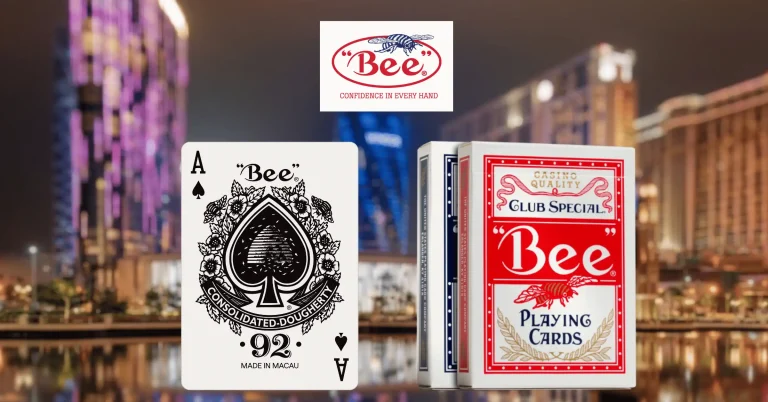
Bee Macau has entered full-scale production of a casino-grade playing card manufacturing facility, adding local supply capacity to a market that has long relied on imported cards.
The factory is a joint venture between Belgium-based card manufacturer Cartamundi Group and Hong Kong-listed Macau gaming supplier Asia Pioneer Entertainment Holdings Ltd (APE). Backed by an investment of around HK$500 million ($64.1 million), the facility produces Bee casino-grade playing cards locally for Macau’s six gaming operators and overseas markets.
According to the company, the facility has already completed test runs and early exports to regional Asian gaming operators before entering full-scale production.
Herman Ng, Executive Director and CEO of APE, said the launch introduces a local manufacturing option for the gaming industry.
“With Bee Macau, the market finally gains a local choice in playing card manufacturing, opening the door to true greater diversity,” Ng said. “As a Macau-based company, we are proud that Cartamundi has entrusted us with world-class technology and training, bringing global expertise to Macau.”
The Bee brand dates back to 1892 and was acquired by Cartamundi in 2019. Cartamundi said the Macau venture combines the company’s more than 200 years of card-making expertise with local market knowledge.
The facility is equipped with automation, artificial intelligence technology and robotic systems operated by a local workforce. Jason Pearce, Managing Director of Cartamundi Asia Pacific, said the factory would help reduce supply chain risks associated with imported playing cards in Macau.
Bee Macau will showcase its products, including its “Made in Macau” casino-grade playing cards and BEE TEK smart shoe, at G2E Asia from May 12th to 14th at The Venetian Macao, booth A922.
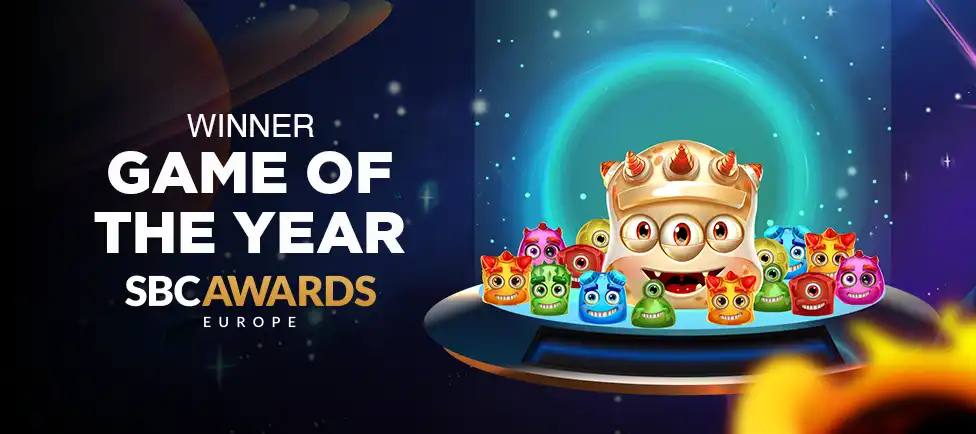
Play’n GO has announced that Reactoonz 100 has been named Game of the Year at the SBC Europe Awards 2026, held last week in Malta.
The award recognizes the outstanding creative ambition, commercial performance and cultural impact of Reactoonz 100, which has quickly established itself as one of the most significant releases in Play’n GO’s history. Building on the legacy of the much-loved Reactoonz series, the title has delivered exceptional engagement across regulated European markets since launch.
Reactoonz 100 was supported by a record-breaking launch campaign as part of Play’n GO’s 20th anniversary celebrations, most notably sending the series’ iconic character Garga into space – a first for the iGaming industry, since copied. The activation captured attention far beyond traditional industry channels and reinforced Play’n GO’s reputation for creativity that extends well beyond the game itself.
“Winning Game of the Year is a huge moment for Reactoonz 100 and for everyone across Play’n GO who brought this project to life,” said Andrew Pink, Head of Brand & Communication at Play’n GO. “Reactoonz is one of the most important franchises in our history, and with Reactoonz 100 we set out to push both the creative and cultural boundaries of what a game launch could be. This award is a powerful validation of that ambition, and of the belief that bold ideas, executed properly, still cut through in this industry.”
Since its release, Reactoonz 100 has achieved near-universal rollout across Play’n GO’s partner network in more than 35 regulated markets, delivering strong and sustained performance well beyond launch. Its success reflects both the enduring appeal of the Reactoonz brand and Play’n GO’s continued focus on innovation within a responsible, regulation‑first framework.
The Game of the Year award at the SBC Europe Awards reinforces Play’n GO’s position as a leading supplier of premium casino entertainment, capping a year marked by standout launches, creative ambition and industry recognition.