

Home Blog Page 658

Construction weighs on LVS results in 2Q24, despite strong yearly upticks in Macau and Singapore

Las Vegas Sands’ Macau operations saw a 3.1 percent sequential decrease in revenue during the second quarter of the year, to $1.75 billion, despite rising some 7.73 percent compared to 2Q23.

In results filed on Wednesday, the group indicated that Sands China generated net income of some $246 million, up by 31.5 percent yearly but down by 17.7 percent quarterly.

The Venetian Macau, Sands China

The company notes that overall for the market, the recovery in premium mass has been strong, but that bass mass, in particular in unrated play, still remains below 2019 levels.

Chinese visitation to the SAR still remains below pre-pandemic levels.

But a major disruptor for the group’s Macau operations has been its ongoing renovations at The Londoner and the Venetian Cotai Arena.

The group indicates that this ‘disruption impact will peak in 3Q24, with new Londoner Grand casino and suite capacity and The Venetian Cotai Arena expected to be back online by December 2024’.

Adjusted property EBITDA rose by some 3.7 percent yearly, to $561 million, lowered by the hold in rolling play, resulting in an 8 percent quarterly decrease.

Macau properties

Of the group’s Macau properties, the Venetian continued to generate the most revenue, at $686 million, up 5.1 percent yearly, with casino revenues rising by 33 percent yearly, to $556 million.

Meanwhile The Londoner generated some $444 million, up 10.4 percent yearly, on the back of casino revenues of $318 million, up 37 percent yearly.

The Parisian brought in $265 million in revenue, up 10.9 percent yearly, with casino revenues of $207 million, a 24 percent rise.

The Four Seasons saw revenue of $250 million, a 12.1 percent yearly rise, with casino revenues of $178 million, up 28 percent yearly.

Sands Macau, meanwhile saw a 6 percent yearly drop in revenue, to $79 million, with casino revenue falling by 6 percent yearly, to $70 million.

Marina Bay Sands
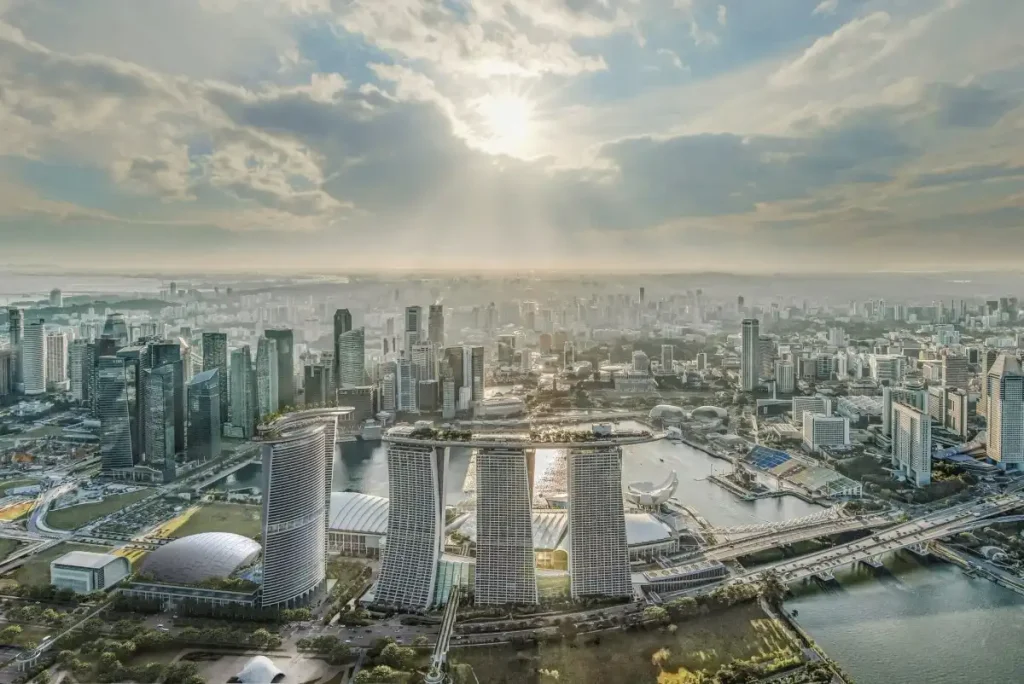
Marina Bay Sands

Looking to Singapore, the group’s Marina Bay Sands property generated some $1.01 billion in revenue, a 9.8 percent yearly increase but down by 12.26 percent from the first quarter of the year.

Adjusted property EBITDA fell by some 14.2 percent quarterly, but rose by 18.5 percent compared to the same quarter of last year, totaling $512 million.

The Singapore property was also affected by ongoing renovations and refurbishment, which is expected to be finalized by the second quarter of 2025.

Casino revenue during the quarter totaled some $706 million, up by 57 percent yearly, while room revenue increased by 20 percent, to $124 million.

Total LVS results

Overall, Las Vegas Sands reported second quarter revenues of some $2.76 billion, an 8.6 percent yearly rise but a fall of 6.69 percent from the previous quarter.

Adjusted property EBITDA topped out at $1.07 billion, up by 10.27 percent yearly, but down by 11.1 percent sequentially.

Net income totaled $424 million, up by 15.2 percent yearly but down by 27.27 percent compared to the first quarter of the year.

Speaking of the results, Robert G. Goldstein, Chairman and CEO of Las Vegas Sands noted that “Our financial and operating results for the second quarter of 2024 reflect growth in both Macau and Singapore compared to the second quarter of 2023.

“Our financial strength and industry-leading cash flow continue to support our ongoing investment and capital expenditure programs in both Macao and Singapore, our pursuit of growth opportunities in new markets, and our program to return excess capital to stockholders”.

POGO workers ordered to leave amidst request for ban exemptions by PAGCOR

Foreign workers employed by now banned POGOs have been ordered to leave the Philippines amidst news that some operators may avoid the ban.

The situation around the recently announced Philippines Offshore Gaming Operator (POGO) ban continues to develop, as Bureau of Immigration (BI) Commissioner Norman Tansingco announced that all workers employed by these companies must leave the country in 60 days. The measure also includes workers employed by Internet Gaming Licensees (IGLs), the successor type of company to POGOs.

The measure comes after President Ferdinand Romualdez Marcos Jr. banned all POGOs during his third State of the Nation Address on the 22nd of July.

Tansingco stated that an estimated 20,000 foreign workers will have to leave the country and that pending applications and new applications for visas relating to POGO and IGL workers will be denied by the BI.

He added that pending and new applications for visas for POGO and IGL workers will be denied by the BI. The Immigration Chief also said that his office has a list of workers employed by these entities which it received from the Philippine Amusement and Gaming Corporation (PAGCOR).

POGO, POGO ban, PAGCOR

PAGCOR itself, meanwhile, was at the center of a story that the regulator is asking for a dozen POGOs to be exempt from the ban. Local news outlets reported that the gambling authority made the appeal on the basis that 12 of the 43 legal POGOs in the country were only customer service agents for gaming companies.

A TV report on local news show 24 Oras reported that PAGCOR said thousands of employees and businesses will be affected by the ban. POGOs and IGLs not only employ foreigners, but also directly and indirectly employee thousands of Filipinos. Estimates range from 30,000 to 42,000 directly employed individuals, with many more providing ancillary services such as accommodation, catering, and travel.

No official statement was available from PAGCOR on the story about ban exemptions, as the regulator’s office was closed due to super Gaemi putting Metro Manila into a state of calamity, with roads flooded and most work in the public and private sector suspended.

E-Visa rollout expected to boost Philippine tourism numbers

The Philippine Department of Tourism (DOT) is urging the Department of Foreign Affairs (DFA) to expedite the implementation of an e-Visa system to meet its goal of attracting 7.7 million tourists by the end of 2024.

Tourism Secretary Christina Frasco stressed that the ease of entry through e-Visas is crucial for boosting tourist arrivals, especially from major markets like India, which is seeing increasing outbound travel. The DOT aims to leverage this demand to counterbalance the slow recovery of Chinese tourists.

President Ferdinand R. Marcos Jr. has prioritized the digital transformation of the visa system, emphasizing its importance in his recent State of the Nation Address (SONA). He has directed the DFA to streamline the e-Visa process for nationals from China, India, South Korea, and Japan.

The Tourism Secretary noted that although the e-Visa system for Indian nationals is currently in beta testing, it needs to be fully implemented promptly to capitalize on the high demand from Indian tourists.

In 2019, before the pandemic, China was the Philippines’ second-largest source of tourists, with 1.7 million visitors. However, in 2023, Chinese arrivals plummeted to 263,834, while South Korean tourists remained strong at 1.4 million. This decline underscores the necessity of targeting other burgeoning markets like India to achieve the DOT’s ambitious visitor goals.

To this end, the DOT is also engaged in talks to establish direct flights between the Philippines and India. Tourism Secretary Frasco revealed that discussions with the Civil Aviation Authority of the Philippines (CAAP) and Indian counterparts have been positive. The DOT is proposing initial charter flights to test the market, with the potential for regular flights in the near future. These efforts, in collaboration with the Department of Transportation, aim to facilitate group travel from India and demonstrate the growing demand for Philippine tourism.

Frasco highlighted that, despite the challenges, the Philippines has shown remarkable recovery in tourism revenues, surpassing pre-pandemic levels. In 2023, international tourism receipts reached over PHP480 billion ($8.2 billion), a significant increase from PHP214.5 billion ($3.66 billion) in the previous year.

Philippines House Speaker orders quick action on POGO ban implementation

The Speaker of the House of Representatives in the Philippines is calling for swift legislative action when it comes to implementing the newly announced POGO ban.

Speaker Ferdinand Martin G. Romualdez has instructed the House leadership to draft and ensure swift approval of legislation banning Philippine Offshore Gaming Operators (POGOs), following President Ferdinand R. Marcos Jr.’s directive.

Romualdez emphasized the need for ongoing investigations to uncover the masterminds behind illegal POGO activities, ensuring comprehensive coverage in the proposed legislation to prevent any resurgence. Multiple bills and resolutions on POGO operations are currently pending in the House, and Romualdez urged the relevant committees to prioritize and harmonize these measures into a single substitute bill.

Additionally, Romualdez highlighted the importance of enacting a robust law to institutionalize the anti-POGO stance beyond the current administration. The Department of Labor and Employment (DOLE) has already started profiling affected Filipino workers to assist them in transitioning to new opportunities, with plans for job fairs and training programs.

Various officials and agencies, including the Department of Justice (DOJ) and religious leaders, have expressed support for the POGO ban, citing the need to address associated criminal activities and prioritize the welfare of Filipino citizens. Lawmakers such as Senator Sherwin Gatchalian and Senator Bong Revilla have also backed the ban, acknowledging its importance in safeguarding the country’s future.

POGO ban sparks concerns over real estate sector impact

The announced POGO ban, set to be fully implemented by the end of the year, is expected to have the most immediate impact on the Philippines’ property sector, finance professionals told AGB.

In a significant move, Philippine President Ferdinand Marcos Jr. announced an immediate ban on Philippine Offshore Gaming Operators (POGOs) during his third state of the nation address, with operations to cease by December 31st.

This decision comes amidst the country’s growing gaming industry, which currently includes over 40 licensed offshore gaming operators and dozens of illicit gambling hubs, according to the country’s gaming regulator, the Philippine Amusement and Gaming Corporation (PAGCOR).

Juan Paolo Colet, the managing director at investment bank China Bank Capital, noted that while the POGO ban is unlikely to have a significant adverse effect on the overall stock market, its near-term impact will be felt most acutely in the property sector, leading to a selloff in some listed property companies.

“It’s important to remember that all the major real estate players have already limited their exposure to POGOs, so any loss in lease income should not materially affect their earnings outlook or long-term prospects,” Colet noted to AGB.

However, he cautioned that the market will need to absorb the additional supply of office spaces and residential units from POGO tenants and landlords, which could potentially lead to a glut and put downward pressure on real estate rents and prices in certain locations with high POGO exposure.

Meanwhile, Simoun Ung, a finance professional and the President and CEO of OmniPay, offered a more mixed perspective on the economic impact of the POGO ban, with real estate being one of many areas impacted.

For Ung, the economic impact of the POGO ban should “clearly be negative”, leading to “job losses for those employed by POGOs; reduced demand for businesses that cater to POGOs from landlords to restaurants” and an increase in vacancies, especially for offices which have yet to recover from the pandemic lockdown and a decrease in tax revenue from POGO operations.

“In the longer term, the costs associated with POGO operations, including increased crime, corruption and other societal ills may outweigh the short-term economic benefits. This is the justification of the government in the announcement. Nonetheless, I have reservations as this issue is more complex,” the finance expert stated.

Ung noted that land-based casinos will be unaffected by the ban but considered that the “societal costs of increased crime, corruption, and other societal ills associated with gambling” are still present.

“Moreover, if PAGCOR has granted licenses and awarded contracts to the POGOs that extend beyond December 31st 2024, then the ban will negatively impact the Philippines’ ability to attract more foreign investment,” he concluded.

King Gaming has gambling licenses cancelled by Isle of Man regulator

0

The Isle of Man Gambling Supervision Commission (GSC) has cancelled the online gambling licenses of King Gaming Limited and Dalmine Ltd.

The cancellation of both licenses was announced by the GSC in separate statements released on the 24th of July and is effective immediately.

It comes in the wake of the ongoing criminal investigation into the operator that saw police raids carried out on various Isle of Man properties back in April of this year.

The GSC stated that “This decision is made in furtherance of the Commission’s regulatory objectives as set out at section 5(2) of the Gambling Supervision Act 2010.” And that the Commission continues to liaise with partner agencies regarding aspects of Dalmine’s and King gaming’s affairs.

King Gaming was a prominent eGaming industry name on the Isle of Man, and the company was in the process of building a new headquarter on the island when police swooped in. All on-island activities seem to have stopped since and no further statements have been issued by the police or any other authorities into the ongoing investigation since.

Pronet Gaming and Betsolutions join forces to revolutionize iGaming experiences

Pronet Gaming, an award-winning iGaming platform provider of full turnkey solutions, proudly announces a strategic partnership with Betsolutions, a prominent software development company specializing in immersive gaming experiences.

This collaboration marks a significant milestone for both companies, as Pronet Gaming continues to expand its capabilities and enhance its offerings in the competitive iGaming space. By joining forces with Betsolutions, Pronet Gaming aims to leverage the company’s extensive expertise in software development and technology solutions to further innovate its platform and deliver unparalleled experiences for players worldwide.

“We are absolutely thrilled to partner with Betsolutions,” said Alex Leese, CEO, Pronet Gaming. “Their reputation for excellence in software development and their commitment to pushing the boundaries of gaming technology align perfectly with our vision. This partnership will enable us to further strengthen our platform’s capabilities and provide our clients with even more powerful tools to succeed in the dynamic iGaming industry.”

Betsolutions, known for its well-balanced set of technology skills and proven track record in delivering cutting-edge solutions, said in an official statement:

“We are thrilled to announce a significant milestone with our new partnership with Pronet Gaming, a leading supplier in the iGaming industry,” said Margarita, Head of Business Development, Betsolutions.

BetBlocker and Casino Guru announce strategic partnership to enhance player protection

BetBlocker, a charity providing free blocking software to help players managing their access to online gambling, and minimize gambling harms, is really please to announce a strategic partnership with Casino Guru, an online platform for casino reviews who have taken a sector leading position on player protection via a variety of initiatives.

This partnership is undertaken with the goal of promoting responsible gambling and player protection on a global level.

The new partnership will focus on integrating BetBlocker’s blocking software solution with Casino Guru’s long running Global Self-Exclusion Initiative. The two projects have a clear, natural synergy that will facilitate improved awareness amongst consumers of the protections that are available to them, both to manage day-to-day gambling and to respond if a crisis occurs.

It is the stated mission of both projects to ensure that players who need to take time away from gambling, either permanently or temporarily, are supported by easy to use technological solutions that facilitate a fast and simple process to restricting their access to gambling. However, the organizations do not intend to limit the partnership to currently active projects, and also intend to explore new opportunities that will positively impact the support available to players.

Duncan Garvie, Founder and Trustee for BetBlocker commented: “Casino Guru has a global audience reach that is amongst the largest in the sector.”

Šimon Vincze, Casino Guru’s Head of Sustainable and Safer Gambling added: “Partnering with BetBlocker is a natural progression in our mission to promote fair and safer gambling”.

LET Group to vote on disposal plan of Tigre de Cristal August 15th

The extraordinary general meeting by the LET Group to vote on the disposal of its Russian assets, including the Tigre de Cristal casino in Russia, is scheduled for August 15th.

According to a filing with the Hong Kong Exchange, this move aims to optimize the company’s assets.

LET Group stated that its subsidiary, including Summit Ascent, holds significant assets and operations in Japan and the Philippines. The ongoing development of these assets is financed by bank loans.

However, continuing to hold G1 Entertainment, the operational entity behind Tigre de Cristal, ‘carries risks of sanctions being imposed on these assets or LET Group and its subsidiaries by these countries and territories (namely, the Philippines and Japan), all of which are allied with the US’, the company noted.

Meanwhile, Major Success, a requisitioning shareholder, supports the disposal. Despite G1 Entertainment accounting for a significant portion of the group’s revenue and total assets in recent years, Major Success believes that continuing to hold G1 Entertainment ‘will bring too many uncertainties and risks to the development and prospects of LET Group’.

The same documents also indicated that the sale price should be ‘no less than $92.8 million’, which is 80 percent of the $116 million previously mentioned earlier this year.

In January, LET Group attempted to offload all its shares in G1 Entertainment to Dalnevostochny Aktiv, a Russian firm, for $116 million. However, the deal fell through, with the majority of directors of LET Group and Summit Ascent resigning in opposition to the sale.

DigiPlus reports no impact from POGO ban

0

Philippine retail gaming provider DigiPlus Interactive Corp has stated that its operations will remain unaffected by the announced ban on offshore online gaming operators in the country.

DigiPlus, listed on the Philippines Stock Exchange, runs gaming and leisure businesses, including digital bingo and a digital sportsbook platform.

After Philippine President Ferdinand Marcos Jr. announced a ban on the Philippine Offshore Gaming Operators (POGOs), DigiPlus President Andy Tsui stated on Tuesday, “DigiPlus is not a POGO or an Internet Gaming Licensee (IGLs) as defined under Philippine laws.”

DigiPlus noted that Philippine local gaming operators like them must establish physical gaming sites within the country before launching their digital gaming platforms, ensuring that all clients within the Philippine territory can access their services.

‘In 2023, DigiPlus paid PHP13.1 billion ($223 million) in taxes to the Philippine government. It provides jobs to over 2,000 employees in different parts of the country. DigiPlus allocated over PHP100 million ($1.7 million) towards corporate social responsibility projects under the BingoPlus Foundation,’ mentioned the statement.

For 1Q24, the company posted a net income of PHP2 billion ($35 million), marking a 358 percent increase from 2023.

In 2023, DigiPlus reported PHP4.1 billion ($73 million) in net income, marking a more than 596 percent increase from the previous year.