

The Star Entertainment has announced the successful execution of long-form documentation for a new debt facility totaling AU$200 million ($129.2 million).
The new facility consists of two tranches, each valued at AU$100 million ($65.1 million). The company is currently collaborating with its lenders to meet the conditions precedent necessary for drawing down the first tranche, which will be available until December 20th, 2024.
Additionally, The Star has confirmed that its lenders have granted a covenant waiver that will apply to the upcoming quarterly testing date on December 31st, 2024. This waiver provides the company with added flexibility as it navigates its financial commitments.
The Australian gaming operator fell to negative EBITDA in its first financial quarter, ending September 30th, amongst a ‘challenging operating environment and the continued implementation of mandatory carded play and cash limits’.
Treasure Brisbane Casino
During the quarter, the operator managed to increase its available cash to AU$149 million ($98 million) – up from AU$130 million ($85.5 million) on August 31st, boosted by net proceeds of AU$60.4 million ($39.72 million) from the sale of the Treasury Brisbane Casino building, which it received on September 27th.
The new debt facility had long been hoped for by the company, helping it secure an additional lifeline following a prolonged period of financial uncertainty.
Fast Track, a disruptive technology company recognized as the CRM leader in the iGaming industry, has announced that it has been certified by Great Place to Work® as one of the best employers in the technology sector for the third consecutive year.
This prestigious recognition reflects the positive feedback from employees about their experience of working at Fast Track, culminating in an impressive Trust Index™ of 88%. Fast Track has earned this certification for three consecutive years for its European offices, beginning with its Malta office in 2022, then adding Sweden in 2023, and now Spain in 2024.
Fast Track’s score is above the benchmark for Great Place to Work® organizations in the IT Software and Solutions space, showing dedication to building a world-class work environment across offices. This achievement reflects the leadership team’s commitment to a positive, thriving culture as the company continues its high-growth journey.
“We are committed to staying a world-class employer, and this certification reaffirms our efforts to attract and retain the best talent. Our focus on listening to employee feedback and having an inclusive and supportive environment enables our team to thrive, ultimately benefiting our partners and the company as a whole. The work is never over, and we’re dedicated to using our team’s feedback to keep making Fast Track a place where people can genuinely envision a truly rewarding career, “ says Jenny Arnell, Chief People Officer of Fast Track.
“Being a Great Place to Work for the third year in a row reflects how much Fast Track values its people and culture. I’ve had the pleasure of working closely with their Leadership Team, and their focus on fairness, transparency, and developing leaders from within truly sets them apart. Fast Track’s commitment to its people makes them a standout in the tech industry,” comments Linda Löfman, Senior Consultant, Great Place to Work®.
Fast Track employees, with a 100% survey participation rate, appreciated the company’s sense of camaraderie, with a welcoming community and a fun, supportive atmosphere. Employees also valued fair treatment across sexual orientation, race, age, and gender, with equitable opportunities, appreciation, and pay. Management was seen as impartial, with decisions and promotions based on merit.
Simon Lidzén, CEO, Fast Track
“Fast Track is a people-centric business, and our employees are the engine of everything we do. I am honored by this recognition, which highlights our commitment to attracting and keeping top talent. One of our strategic pillars is to grow our leaders from within, and we are achieving this by empowering our team and fostering an amazing organizational culture,” remarks Simon Lidzén, Co-Founder and CEO of Fast Track.
Research by Great Place to Work indicates that job seekers are significantly more likely to find great managers at certified workplaces. Professionals in these environments are also more likely to feel excited about coming to work and perceive fair compensation and promotional opportunities, enhancing their overall satisfaction and life quality.
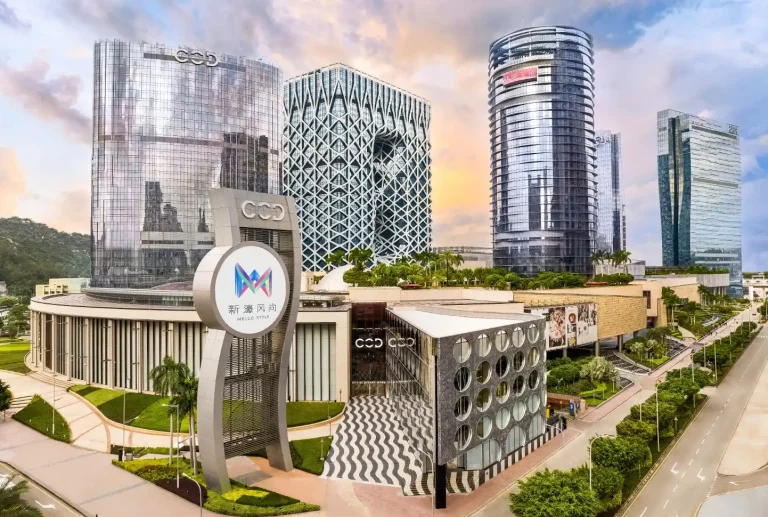
Good morning. If you gamble like a king, you should also sleep like one. Macau’s operators’ efforts to lure and keep premium players has caused a shift in its hospitality focus – moving towards more luxurious accommodations to keep players happy, and on the gaming floor. And this appears to be working, with GGR in the world’s gaming mecca topping $1.26 billion in the first 17 days of the month, overcoming weather and large-scale events. Looking to Singapore, Marina Bay Sands is going all out on its $8 billion IR2 expansion, expecting an EBITDA increase of some 40 percent once operational.
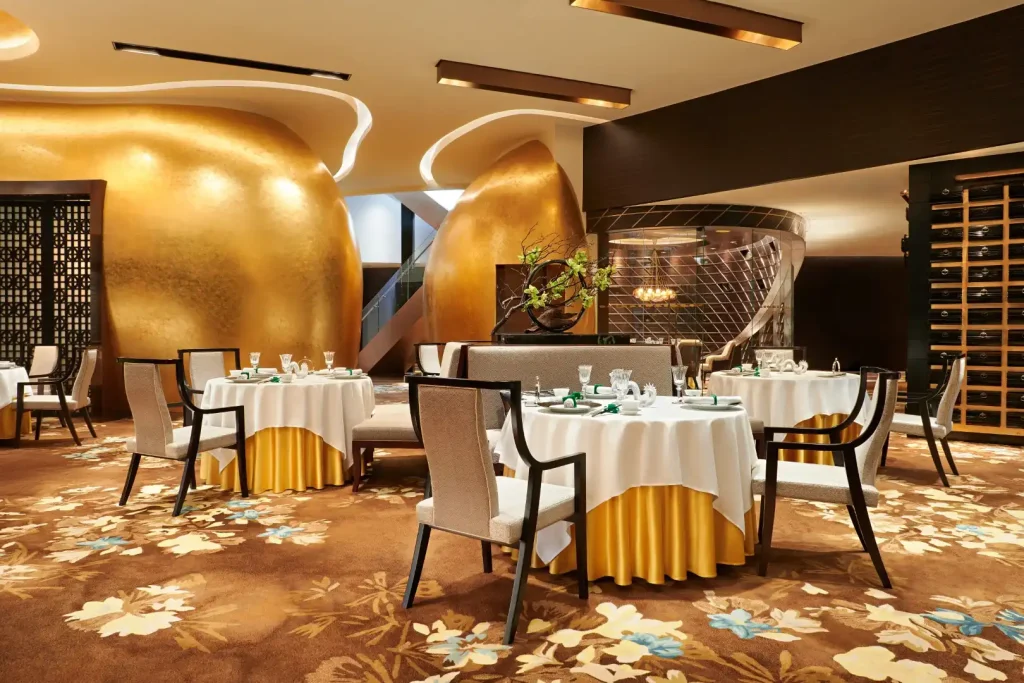
Macau’s gaming landscape continues to evolve, with the death of the VIP sector and the rise of mass prompting a transformation of gaming floors but also of hospitality offerings. And one thing operators will never turn away is a premium player. But this has also prompted a need for more high-end hotel rooms and suites to cater to their lavish tastes and urge them to stay and play for longer. This play has also been accelerated by new smart tables, which allow for more money wagered in less time.
Asia is the most populated continent on the planet and Football is the No. 1 sport in most countries. The World Cup qualifying matches are traditionally watched by billions of fans in the region, but FIFA has decided to reward Asia with a significant representation at the tournament only now.
Altenar, a leading sportsbook provider is bringing its global expertise to Asia, looking to expand its operations. Since 2011, Altenar has powered hundreds of online sports betting sites worldwide and is a major B2B provider in Europe and Latin America licensed markets.
The crackdown on Offshore Gaming Operators (POGOs) in the Philippines continues, but a troubling new development is complicating matters.
Local and national authorities in the Philippines are now facing an “alarming trend” of guerrilla scam operations taking over the void left by POGOs. These illicit activities, harder to detect and regulate, are raising new challenges for law enforcement and regulatory bodies.
Interior Secretary Juanito Victor Remulla recently urged local government units (LGUs) to intensify inspections of businesses even after issuing occupancy permits. He warned that illegal POGOs are disguising their operations as legitimate establishments, such as resorts and restaurants, to evade detection ahead of the government-mandated deadline to cease operations (December 31st).
Citing a recent incident in Lapu-Lapu City, where a POGO hub posing as a hotel and restaurant was raided, Remulla emphasized the need for vigilance. “It is really up to the mayors to ensure that what the establishments claim to be is what they truly are,” he stressed. For unauthorized scam hubs operating without permits, the Philippine National Police (PNP) and the National Bureau of Investigation (NBI) are tasked with enforcement.
President Ferdinand Marcos Jr. ordered the outright ban of POGOs during his State of the Nation Address in July, mandating PAGCOR to wind down all operations by the end of the year. However, Senator Risa Hontiveros has highlighted a disturbing shift: scam operations are now replacing POGOs.
Speaking during Senate budget debates, Hontiveros noted that these new schemes no longer use POGOs as a regulatory shield, making them more difficult to identify. She specifically asked the Department of Information and Communications Technology (DICT) how its Cybercrime Investigation and Coordinating Center (CICC) plans to address the issue.
The CICC, according to Senator Sherwin Gatchalian, has already apprehended 11 scam hubs linked to both legal and illegal operations. He credited the center’s cooperation with the PNP and NBI, alongside the use of advanced technology and public hotlines, for these successes. Still, the DICT has opted to keep its detection methods confidential, requesting an executive session to delve into its strategies.
Despite these efforts, the emergence of guerrilla scam hubs underscores the challenges of enforcing the POGO ban. Hontiveros has expressed concern that these operations could escalate if left unchecked, potentially leading to greater harm to consumers and local communities.
As the December deadline looms, both local and national authorities are doubling down on efforts to shut down illegal gambling and related scams. The crackdown is part of a broader push to restore public trust and eliminate the social and economic harms associated with POGOs and their successors.
For LGUs, the directive is clear: increased inspections and stricter compliance checks. Meanwhile, national agencies like the CICC, PNP, and NBI are leveraging technology to root out these elusive operations. With President Marcos’ administration maintaining a firm stance on the POGO ban, the hope is that these coordinated efforts will prevent the rise of new illicit schemes and ensure a safer digital landscape for Filipinos.
International Game Technology (IGT) has been hit with a cybersecurity breach and a disruption of ‘portions of its internal information technology systems and applications’ as a result of the breach.
According to a filing with the United States Securities and Exchange Commission (SEC), the company ‘became aware that an unauthorized third party gained access to certain of its systems’ on November 17th.
In response, the group ‘activated its cybersecurity incident response plan and launched an investigation […] to assess and remediate the unauthorized activity’.
As part of this, the group also took ‘certain systems offline to help protect them’.
The group notes that its investigation continues, and its response includes ‘efforts to bring its systems back online’.
The company did not detail exactly which systems were targeted but did note that it ‘has not yet determined whether this incident is material’.
It furthered that it ‘has implemented alternatives for certain operations in accordance with its business continuity plans to mitigate disruptions and continue servicing its customers’.
The International Betting Integrity Association (IBIA) has announced a major upgrade to its technology platform, which supports its global integrity monitoring network covering over $300 billion in betting transactions annually.
The entity considered that this enhancement to its platform, developed in partnership with Bluehouse Technology, aims to equip IBIA and its growing membership with advanced tools to safeguard regulated betting markets, protect consumers, and uphold the integrity of sporting events worldwide.
Khalid Ali, CEO, IBIA
Khalid Ali, CEO of IBIA, stated that, with the new platform, the entity could now analyze its members’ customer account data more effectively, covering over $300 billion in betting transactions each year.
“It’s designed to keep up with the integrity needs of our expanding membership and the extensive market data we handle. This will be a crucial part of our efforts to protect the integrity of sporting events and regulated sports betting markets around the world”, Ali added in an announcement by the association.
The IBIA’s global monitoring network serves as an anti-corruption tool – detecting and reporting suspicious activities in regulated betting markets through transactional data linked to individual customer accounts.
Some 42 alerts were issued by the IBIA during the third quarter of this year, which were said to have contributed to the investigations and subsequent successful sanctioning of 21 clubs, players and officials.
The upgraded platform introduces several key technological advancements to enhance this process, all of which were said to have successfully passed an independent security audit by Bulletproof, a Gaming Laboratories International (GLI) company.
The upgraded platform is designed to meet the specific operational needs of IBIA, streamlining the process of identifying and reporting suspicious betting activity, and allowing for a faster and more efficient response to potential integrity threats.
‘The new platform enhances the ability to monitor suspicious activities, improve data analysis, and share actionable insights with key stakeholders, including gambling regulatory authorities’, the IBIA pointed out.
‘This boost in interaction and collaboration is essential for supporting important investigative activities and reinforcing trust in the integrity of global betting markets.’
The organization recently commissioned a study that indicated that the sports betting market in Asia is witnessing significant growth, especially in basketball and football betting.
The new platform launch also comes shortly before the sports betting market opening in Brazil, which is forecast by H2 Gambling Capital to reach $34 billion in sports betting turnover by 2028, with IBIA members representing over 70 percent of the market’s gross gambling revenue.
The dynamics driving gross gaming revenue (GGR) growth in Macau have evolved significantly over time, with the current trend being significant spend by premium players, requiring more high-end hotel rooms.
In the past, the traditional model was straightforward: increasing the number of hotel rooms would naturally lead to higher GGR. However, this logic has shifted, and the focus has now moved toward catering to the premium mass segment, where larger, more luxurious hotel suites play a pivotal role in driving revenue.
In the latest report entitled “Recipe for FY25E GGR Growth” by Citigroup analysts George Choi and Timothy Chau, it is mentioned that historically, the formula for GGR growth was simple: more hotel rooms, and increased gaming activity. However, this approach is no longer as effective in the current market.
The new growth driver in Macau’s gaming sector is the expansion of high-end hotel suites tailored to premium mass players. These players, who tend to place higher wagers, benefit from staying in more spacious and exclusive accommodations, which directly influences the number of hands they play at the tables during their stays.
Set to open in mid-2025, Capella at Galaxy Macau will become the resort’s ninth hotel brand, following the recent introductions of Andaz and Raffles.
This shift in focus toward premium mass players reflects broader trends in global gaming markets, where the emphasis has moved from quantity (more rooms) to quality (larger, more luxurious suites). The impact of this shift is clear: although the total number of hotel keys may decrease, the increase in the supply of high-end suites is expected to bolster GGR, as these suites attract higher-spending players who are likely to stay longer and play more.
Several key developments in hotel supply are expected to further fuel the growth of the premium mass market. Major casino operators are set to expand their suite offerings in the coming years, particularly in 2025, which will have a significant impact on GGR growth.
For instance:
Sands’ Londoner Grand will introduce approximately 1,500 new suites.
MGM‘s properties will contribute around 70 new suites.
Smart tables and new side bets
The implementation of smart gaming tables and new side bets is also seen as a key growth driver for 2025. Citigroup notes that smart gaming tables with RFID chips are increasing gameplay speed. For example, a player betting HK$10,000 ($1,285) per hand at a traditional baccarat table typically plays 40 hands per hour, generating HK$400,000 ($51,390) in gaming volume.
Switching to a smart table reduces the game time by just 5 seconds per hand, and the player’s gaming volume increases to HK$423,529 ($54,413), a 5.9 percent rise in GGR per hour. This faster gameplay allows casinos to generate more revenue per player.
Meanwhile, baccarat side bets, such as Lucky 6, Big 6/Small 6, and Lucky 7, have become increasingly popular since their introduction. These bets contribute to a higher house edge, which increases the theoretical hold rate from around 2.85 percent to over 3.15 percent. The growth in the popularity of side bets directly impacts GGR, providing casinos with an additional revenue stream.
Visitation to increase mid-single digits
But bringing in more visitors overall is still important.
In the first half of 2024, China added ten cities to the Individual Visitor Scheme (IVS), increasing the number of cities from 49 to 59. As a result, visitation from mainland China grew significantly, with visitors from these new cities rising by 54 percent year-on-year, contributing to a 36 percent increase in overall mainland Chinese visitation.
Analysts George Choi and Timothy Chau note that the growth in visitors, along with the impact of the new IVS cities, is expected to drive a mid-single-digit increase in tourist arrivals, reaching around 35.7 million in FY25. This will lead to a boost in both the number of players and GGR.
Citigroup forecasts Macau’s GGR to grow by 7 percent year-on-year in FY25, reaching MOP242.5 billion ($30.4 billion), or 83 percent of the 2019 level.
For FY26, GGR is expected to increase by 8 percent year-on-year, reaching MOP261.9 billion ($32.8 billion), or 90 percent of the 2019 level.
The Macau government has projected FY25 GGR at MOP240 billion ($30.04 billion), slightly lower than Citigroup’s forecast. Historically, the government has underestimated GGR by 10 percent to 60 percent in most of the last decade, suggesting that Citigroup’s forecast may have significant upside potential.
The Tasmanian government is walking back its promise to introduce mandatory carded play for pokies that was initially promised back in 2022.
The Australian state’s government now says it has ‘deferred progress’ on the issue, claiming it prefers to work with other states on a pre-commitment solution.
The issue has resulted in a motion of no-confidence in the state’s Premier, Jeremy Rockliff.
The idea for mandatory carded play was initially announced on the recommendation of the state’s gaming and liquor regulator – aiming to establish pre-set loss limits of up to AU$100 ($65) per day or AU$5,000 ($3,250) per year, in a bid to curb problem gambling and reduce gambling harm.
The card had been expected to be implemented by the end of 2024, a date later pushed back to the end of 2025 due to the complexity of the system.
Authorities say this is based on a report by MaxGaming, who is tasked with implementing the system, which mentioned the complexity of the system as well as a “likely significant cost increase and implementation delays”, notes ABC.
“But there are many other ways that we can support people in Tasmania, vulnerable Tasmanians with gambling addiction,” he stated.
The original proponent of the plan, former treasurer Michael Ferguson, noted his “great disappointment that the government and the cabinet have made the decision that they have, it may be that they have information that I don’t have access to”.
However, Ferguson did indicate that statements by officials “made very clear that this is a deferral, not a destruction, of what is nation-leading, evidence-based, pro-family, pro-freedom policy”.
Independent MP Kristie Johnston
Independent MP Kristie Johnston noted that “it’s obvious that the THA (Tasmanian Hospitality Association) is running this government […] they secured big tax cuts to their pokies’ revenue in advance of the introduction of a mandatory player pre-commitment card. Their profits went up by 40 to 60 percent,” cites the publication.
According to government data cited by The Guardian, Tasmanians have lost more than AU$1.14 billion ($749 million) on pokies since the March 2018 Tasmanian election (which proposed the removal of the machines from pubs and clubs). There are reportedly some 2,300 pokie machines located across 91 venues in the state.
New South Wales, Victoria and Western Australia have already introduced carded play, with casino operators such as Crown Resorts, The Star, and SkyCity (who is also introducing it at its New Zealand casinos) already rolling out the measure.
P&O Cruises Australia is possibly facing a class action lawsuit for predatory behavior by encouraging guests to gamble regardless of knowing their financial ability to repay possible debts.
The claim was sparked by the death of a man who jumped (or fell) off P&O’s Pacific Adventure cruise ship in May of this year on the vessel’s approach to Sydney.
According to the law firm investigating the possible lawsuit, the passenger reportedly lost thousands of dollars over two evenings at the ship’s casino.
The law firm in question, Carter Capner Law, has accused the cruise ship operator of incentivizing guests to gamble by offering credit and plying them with free alcohol and other incentives such as free cruises.
The law firm’s director Peter Carter has reportedly been ‘inundated’ with complaints from other former cruise passengers, including claims that self-exclusion was not optional and that passengers were questioned and held onboard by staff when unable to settle their gambling debts.
In statements to ABC Radio Sydney, Carter noted that “The cruise lines think that once they’re in international waters everything goes”.
“The main protagonist, according to the numbers who’ve already expressed their interest to us, is Carnival and their brands P&O and other Carnival cruises. Royal Caribbean featured to some extent — they’re the only two that are featuring at the moment and they’re the ones that [have] operated out of Australia over the last six years,” Carter told the broadcaster.
A P&O Cruises Australia spokesperson indicated that the company had “Responsible Conduct of Gaming Policies in place on all P&O ships and take those policies seriously”.
P&O Cruises Australia is set to re-brand into its parent company Carnival Corporation under the Carnival Cruise Line in March of next year.
In an update to the Korea Stock Exchange on Tuesday, South Korea’s leading foreigner-only casino operator, Paradise Co., announced that construction on its new flagship hotel project is set to begin in the first quarter of 2025, with the opening scheduled for 2028.
The estimated cost of constructing the hotel is between KRW500 billion and KRW550 billion ($360 million – $400 million). This move is part of a revamped strategy aimed at attracting more international high-rollers to its properties.
When the company first announced the project in July, CEO Choi Jong-hwan said that the goal is to establish a premier hotel in Seoul, which will set a new benchmark in the hospitality industry. The hotel will feature all-suite accommodations, premium services for foreign VIPs, luxurious Korean-style cuisine, and wellness amenities.
The hotel will stand 18 stories tall, with approximately 200 rooms and an additional five basement levels, spanning 13,950 square meters.
Meanwhile, in September, Paradise Casino Walkerhill opened a new space optimized for high-roller games exclusively for VIPs, covering 383.31 square meters.
The company has projected steady business growth in the coming years, forecasting that its sales will reach KRW1.32 trillion ($952 million) by 2026. This projection is based on its 1H24 results, which revealed that its estimated sales, including affiliates not subject to consolidated financial statements, totaled KRW569.9 billion ($410 million), with an operating profit of KRW91.2 billion ($66 million).